
Agia Anna Beach Naxos: Fishing Village, Rina Cave Pier
Profile
Agia Anna Beach, Naxos: The Fishing Village Where the Chapel Watching Over the Bay Is Dedicated to Agios Nikolaos, Not Agia Anna, and the Pier Now Departs for Rina Cave and the Small Cyclades
Greece | Agia Anna | Naxos, Cyclades
The chapel that watches over the Agia Anna bay from its rocky perch is not dedicated to Saint Anna at all. It is dedicated to Agios Nikolaos — Saint Nicholas, protector of sailors — the specific naming mismatch that almost nobody notices because the white chapel has become so thoroughly identified, photographically and popularly, with the beach beneath it that visitors assume the obvious connection. The actual Agia Anna the beach is named for is honoured elsewhere; the chapel that anchors every photograph of this bay answers to a different saint, the patron whose presence makes sense given what the bay has always been: a fishing harbour.
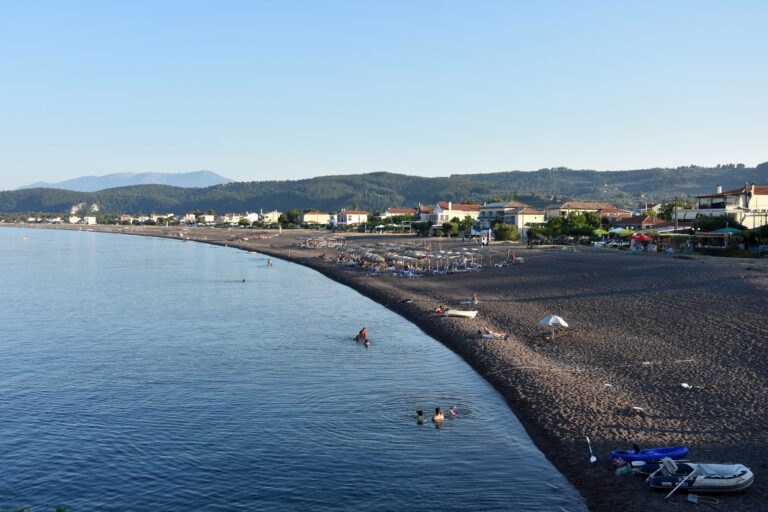
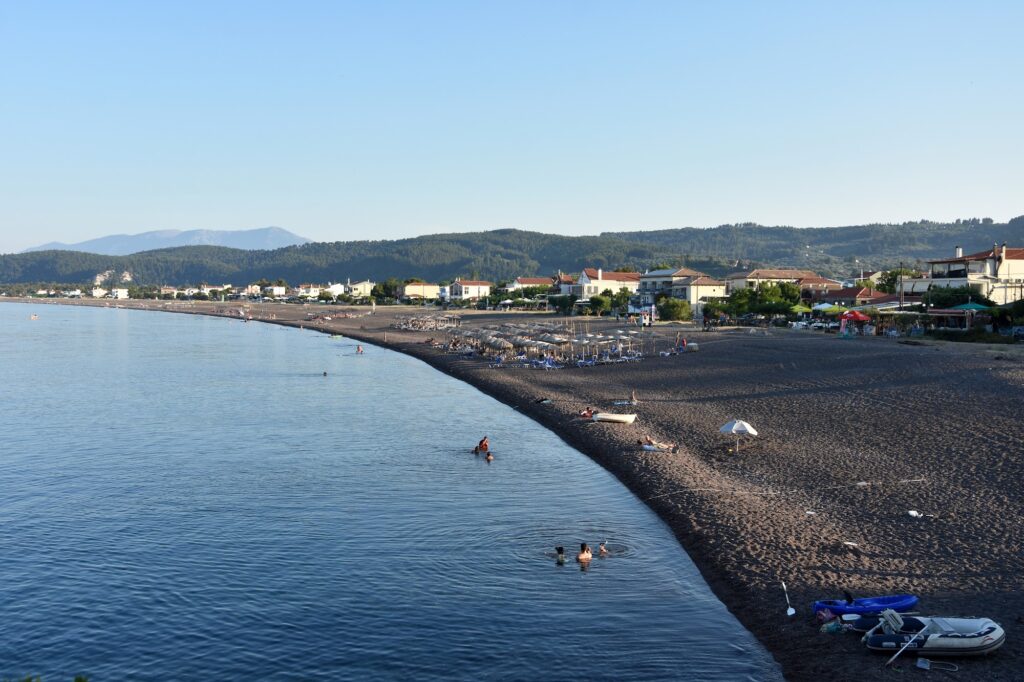
Agia Anna was a humble fishing village before tourism, and the small wooden boats moored at its pier are a direct continuation of that history — they still supply the fresh daily catch to the local restaurants, the same boats and the same families doing the same work that predates the sunbeds and the beach bars by generations. The pier has taken on a second function alongside its original one: it is now the departure point for excursion boats heading to the Rina Cave on the southern coast and to the Small Cyclades — the scatter of small islands including Koufonisia that lie southeast of Naxos. The fishing boats and the tour boats share the same short stretch of quay, the village’s working past and its tourism present moored side by side.
Agia Anna sits 1 kilometre south of Agios Prokopios — the two beaches function as a continuous stretch rather than separate destinations, with Agia Anna as the direct southward continuation. In the 1970s and 1980s, before its current organised form, Agia Anna was a significant camping destination for young Greek and international travellers seeking an unspoiled coastal base. It has since been fully developed into one of the most organised beaches on the island, though the contrast between its commercial present and informal past is part of what longtime visitors still talk about.
Getting There: 6km From Naxos Town (15 Minutes), 5 Minutes From the Airport, Bus #1 or #10 Every 30 Minutes, Two Road Options From Chora
From Naxos Town (Chora), the drive to Agia Anna covers approximately 6 kilometres on a fully asphalted road, taking 10 to 15 minutes. Two routes work: follow the signs for Agios Prokopios and continue south past it, or take the main road toward the airport and turn right at the junction approximately 500 metres before the airport, heading directly to Agia Anna’s small pier.
Public buses #1 and #10 run from Chora every 30 minutes during the high season, a single ticket costing approximately €1.80, the journey taking about 15 minutes. Naxos Airport is just 5 minutes away by car — one of the most airport-proximate good beaches on the island.
The Beach: Long Sandy Stretch in Smaller Bays, Calm Sheltered Cove by the Port, Sunbeds Cheaper Toward Agios Prokopios, Busy After 11am in Peak Season
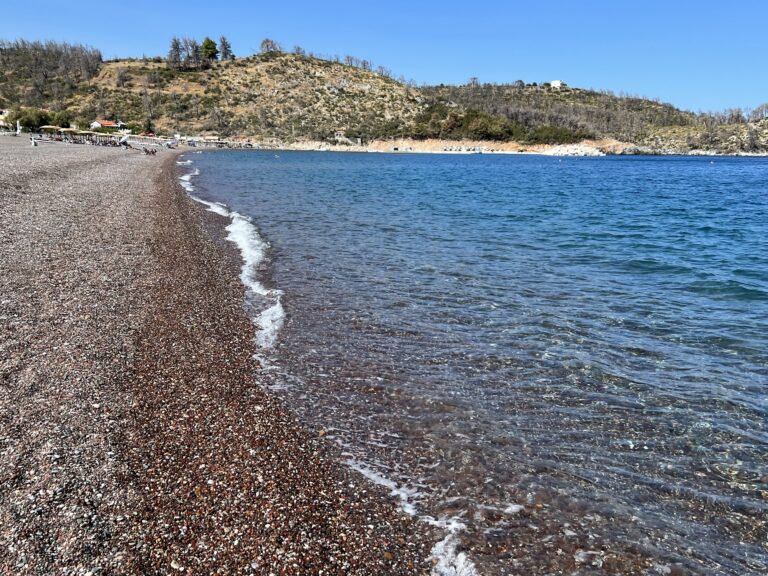
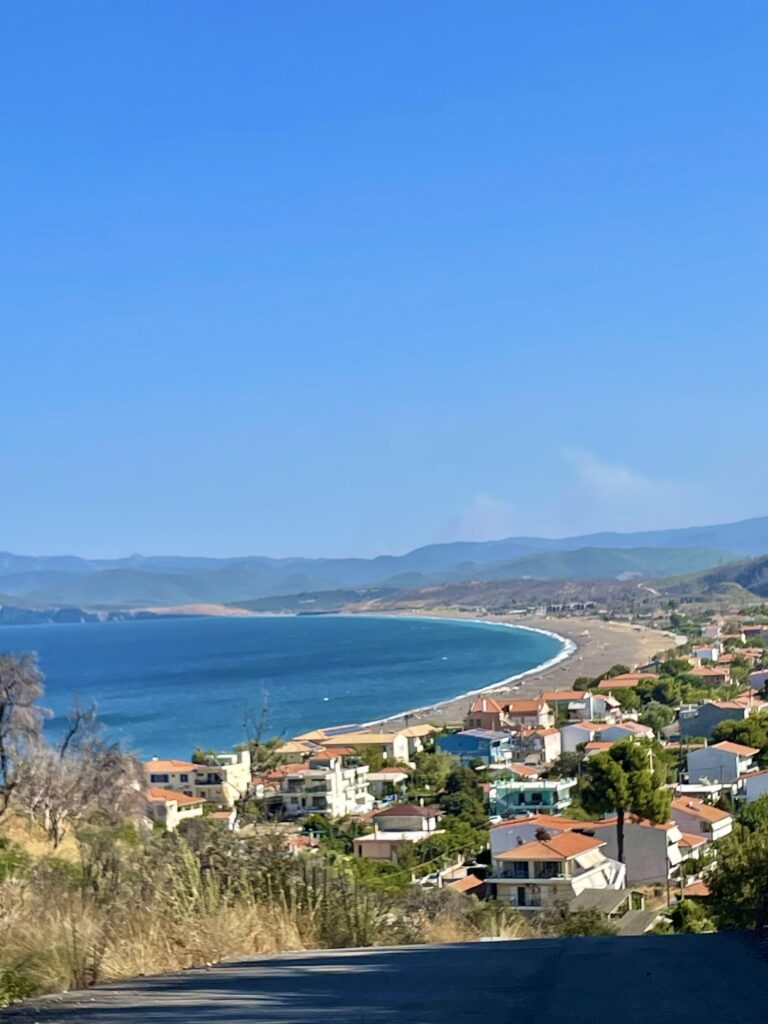
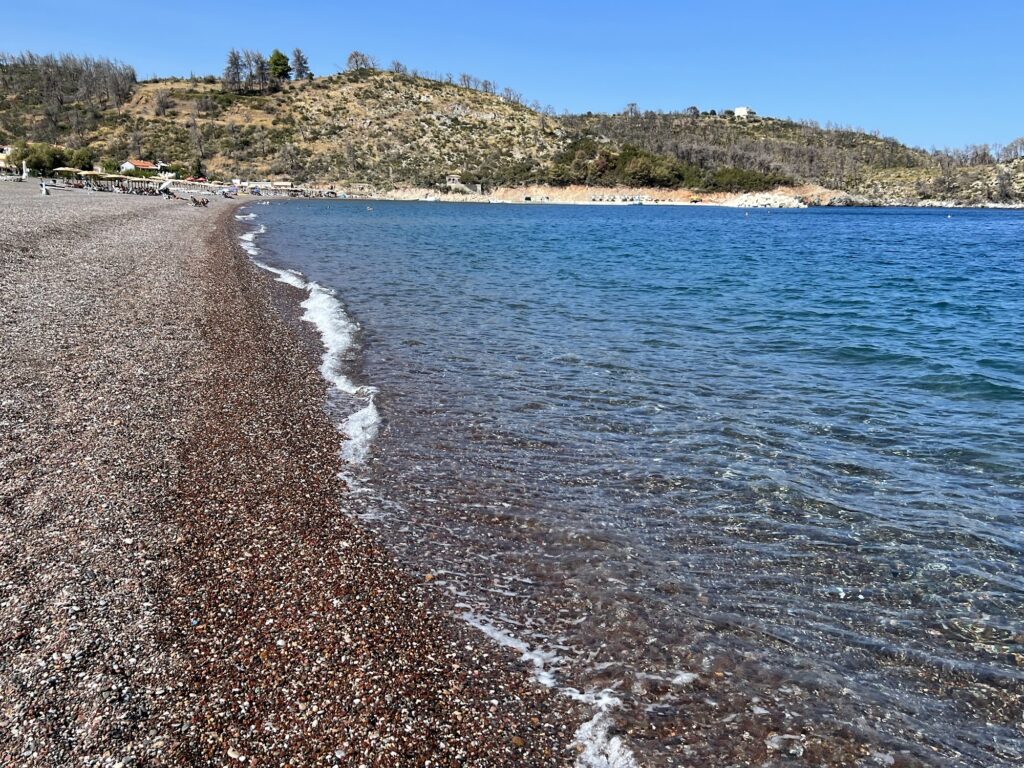
The beach is sandy and divided into a series of smaller bays along its length rather than running as a single uninterrupted shore. The small cove directly beside the fishing port is specifically protected from the wind and stays calm even when the rest of the coastline ripples under the Cycladic meltemi — making it a reliable swimming spot regardless of conditions elsewhere.
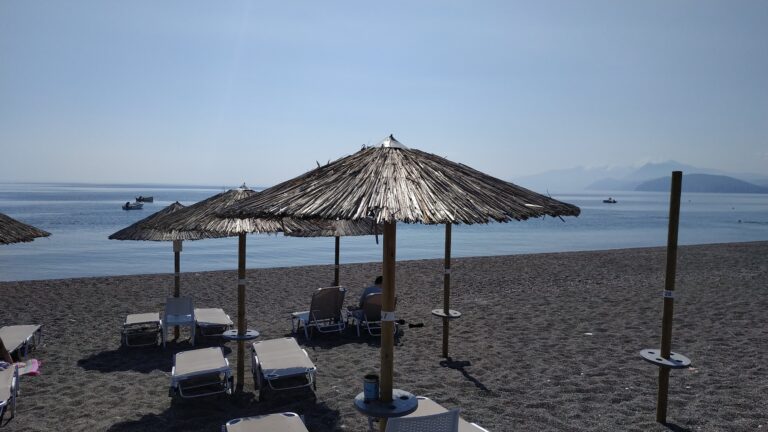
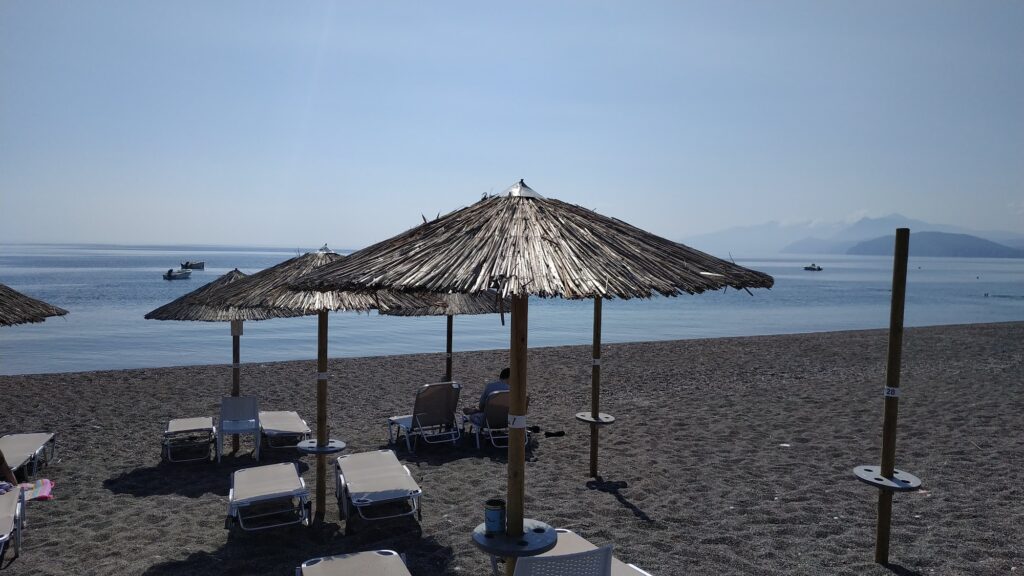
Sunbeds and umbrellas can be brought independently or rented from the beachfront tavernas; prices drop the further a section sits from the boat dock, toward Agios Prokopios. Some establishments offer two free sunbeds and an umbrella with a minimum food or drink purchase — the specific arrangement that makes a day at Agia Anna more flexible in cost than the standard per-sunbed model. Arriving after 11:00am in June through August typically means competing for whatever seating remains; the shoulder seasons of April, May, September, and October are considerably calmer, and the beach is essentially empty through the winter months.
The Cedar Forest and the Chapel of Agios Nikolaos
On the southern edge of Agia Anna, a small cedar (or juniper, depending on the source) forest offers a shaded walk away from the open beach, with views over the bay full of fishing boats and access to secluded sections of rockier coastline. The Chapel of Agios Nikolaos — the same dedication as the better-known chapel on the headland — sits within this forest, a quieter, less-photographed counterpart to the more famous structure on the rocky promontory.
A nudist section of the beach is located behind the promontory, away from the main organised stretch.
The Beach Chain: Agios Prokopios, Agia Anna, Maragas, Plaka
Agia Anna is one link in a continuous chain of beaches running down the western coast of Naxos: Agios Prokopios to the north (the famous golden-sand beach, named for its own chapel, 1.5 kilometres long), Agia Anna itself, then Maragas and Plaka continuing south — a sequence walkable end to end along the shore, each beach blending into the next with only subtle changes in character and crowd density. Agios Prokopios served as the medieval port of Naxos, and a shipwreck visible at the end of its beach is a remnant of that older maritime history.
Agia Anna Beach on Naxos is the former fishing village 1km south of Agios Prokopios — the photographed chapel on the headland is Agios Nikolaos, not Agia Anna, the small pier still moors working fishing boats alongside excursion boats departing for Rina Cave and the Small Cyclades, sandy beach divided into smaller bays, a calm sheltered cove by the port regardless of wind, sunbeds cheaper toward Agios Prokopios (some free with a purchase), busy after 11am June–August, near-empty in winter, a cedar forest and second Agios Nikolaos chapel on the southern edge, a nudist section behind the promontory, 6km from Naxos Town (15 minutes), 5 minutes from the airport.
Take the bus from Chora. Arrive before 11am. Walk south to the cedar forest when the main beach fills.
Map
Sorry, no records were found. Please adjust your search criteria and try again.
Sorry, unable to load the Maps API.