Duboka Draga Beach Vir Island: The Red Cliff FKK Cove
Profile
Duboka Draga Beach, Vir Island: The Red-Cliff Cove and the Wild Northwest Tip of the Zadar Archipelago
Croatia | Vir Island | North Dalmatia
Vir Island is a different kind of Adriatic island from the more celebrated names of the Dalmatian chain. It is 22 square kilometres of karst limestone connected to the mainland by a bridge near the town of Nin, flat enough in its central zone to accommodate a village of 3,000 permanent residents and enough holiday accommodation to multiply that population many times over in July and August. The island’s southern and eastern shores are the settled, road-accessible side — the development that the bridge access encouraged over the decades of Yugoslav and post-independence coastal tourism. The northwestern coast is different: rougher, less accessed, and defined by the specific geological feature that makes Vir’s outer coast distinctive among the Zadar archipelago islands.
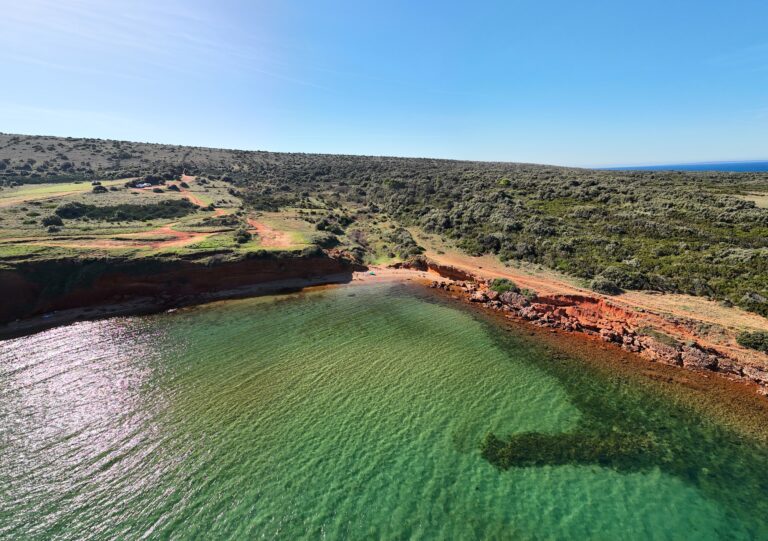
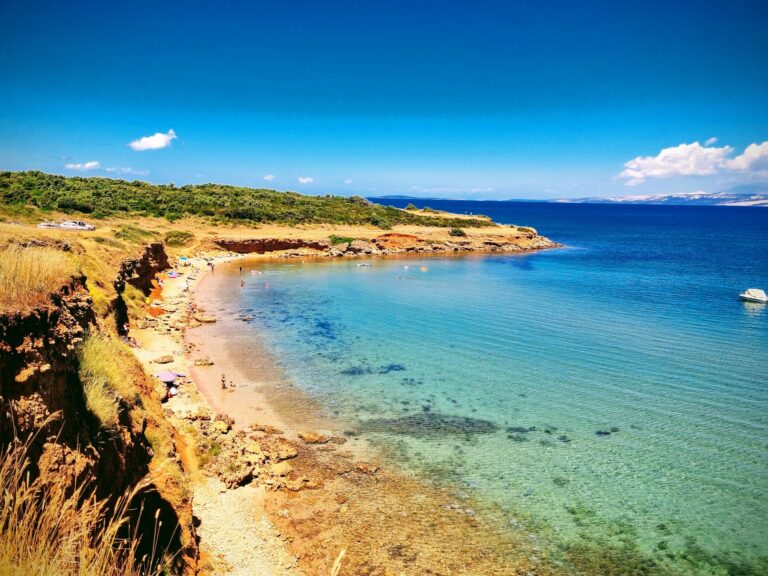
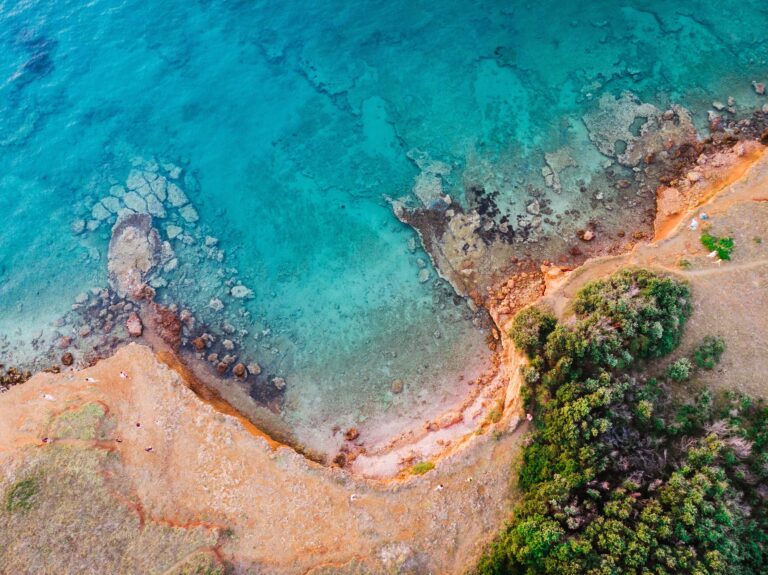
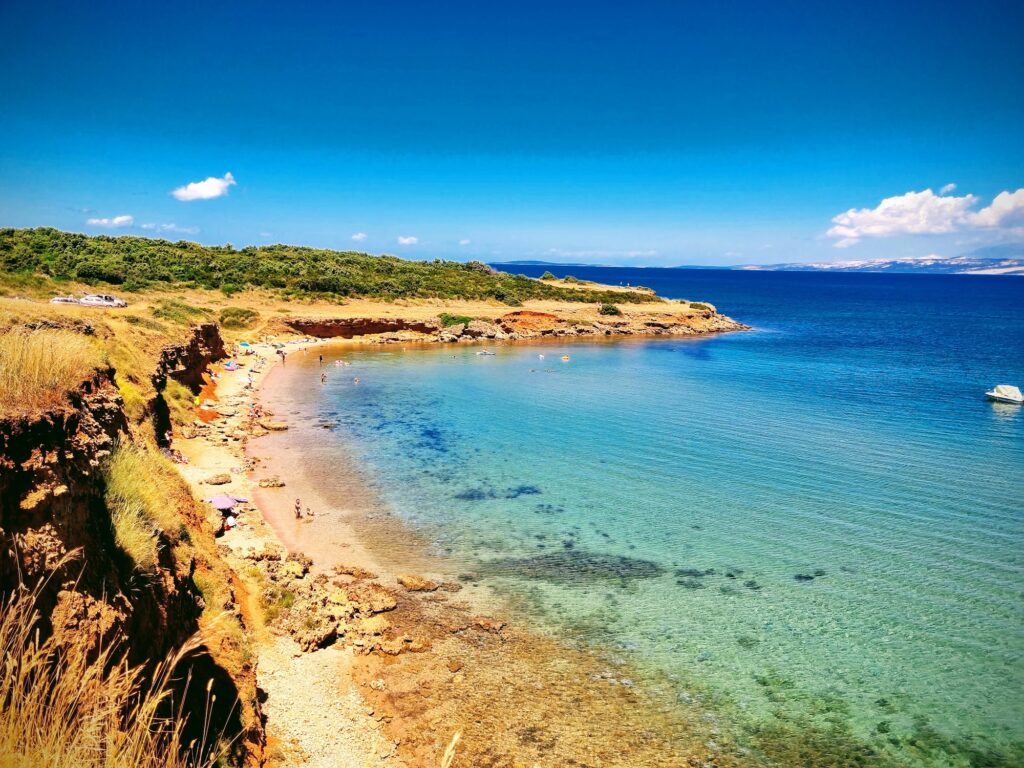
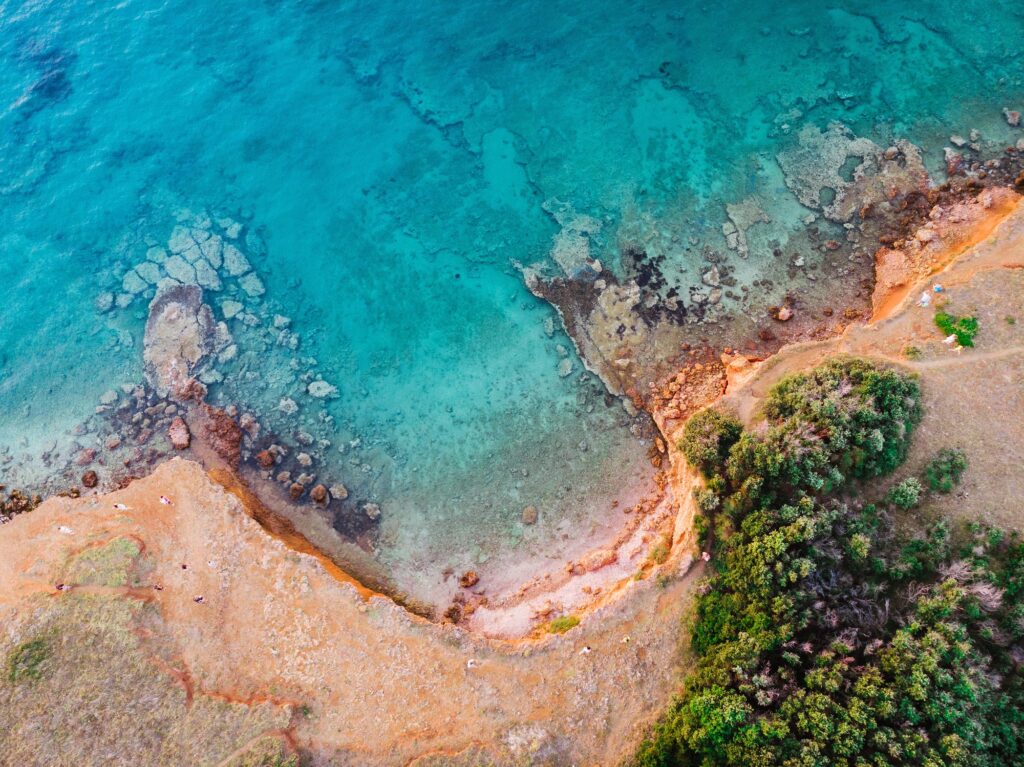
The red soil and clay of Vir’s northwestern coast is the visible consequence of the island’s iron-rich limestone weathering under Mediterranean conditions — the same oxidised iron chemistry that produces the red-earth landscapes of the Istrian interior, here deposited on the cliffs and along the paths that descend to the water. The contrast between the crimson-red cliff face and the turquoise sea at the base is the specific visual quality that gives Duboka Draga its identity as the “Red Beach” of Vir in visitor accounts, and that the source article’s comparison to Mars only partially captures.
Duboka Draga Beach is approximately 250 metres long, with a gentle slope into the sea from the shoreline. It is completely unspoiled, with no services of any kind. It attracts snorkellers and is suitable for families with children despite its wild character. The nearest settlement of Lozice is 1.9 kilometres away, and the beach is reached by driving to the northwestern tip of the island and then descending on foot from the unpaved parking area above the cliffs.
Getting There: Northwest from Vir Town Toward Lozice, Then on Foot Down the Cliff Path
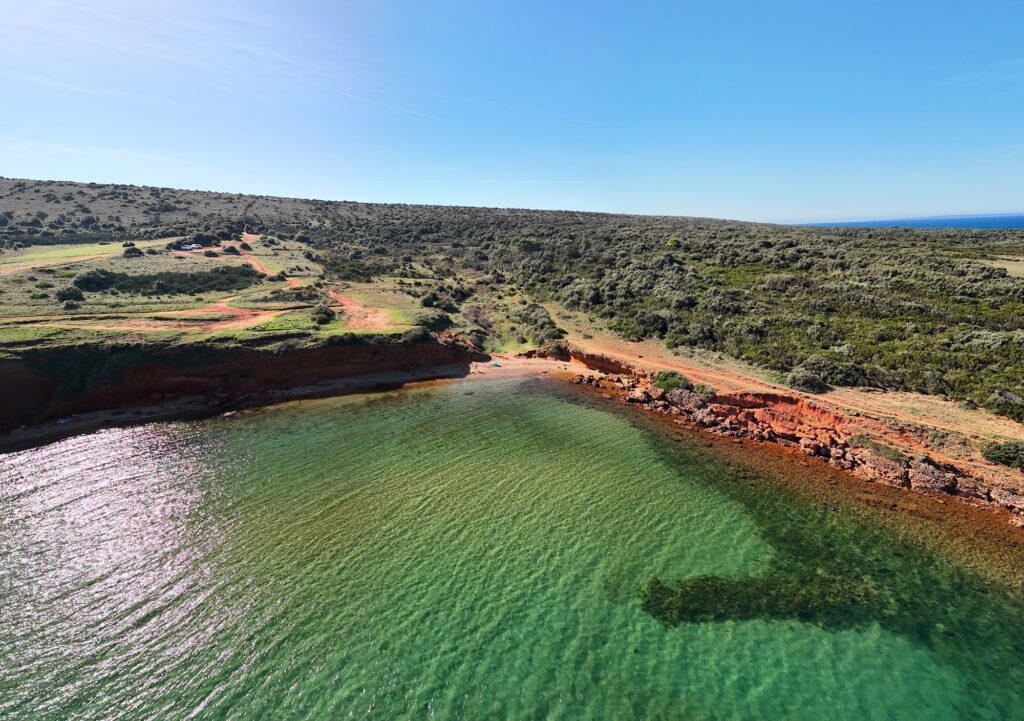
From Vir town centre, the drive northwest toward the Lozice district takes approximately 10 minutes along the island road. The road ends at or near the cliff top above the beach, where an unpaved parking area accommodates a limited number of vehicles. From the parking, a path descends the cliff face to the beach — steep enough to warrant attention and appropriate footwear, 5 to 10 minutes of descent.
The narrowness of the final road approach and the limited parking capacity are the practical constraints that keep the beach quieter than the island’s southern shores in peak season. The unpaved road and the cliff path filter visitors in the same way that difficult-access beaches consistently do: the effort required produces a beach population that chose the wild option deliberately rather than stopped at the nearest available shore.
By bicycle, the island road from Vir to the northwestern coast passes through the agricultural and residential interior before reaching the wilder outer coast — a moderate ride of approximately 20 to 30 minutes from the centre. The bicycle approach avoids the parking limitation and provides the more gradual introduction to the landscape change between the developed southern island and the wild northwest.
No public transport serves this end of the island. The car, scooter, or bicycle approach from Vir town or from the Lozice settlement are the practical options.
The Shore: Red Clay, Pebble and Sand, 250 Metres, Gentle Entry, No Facilities
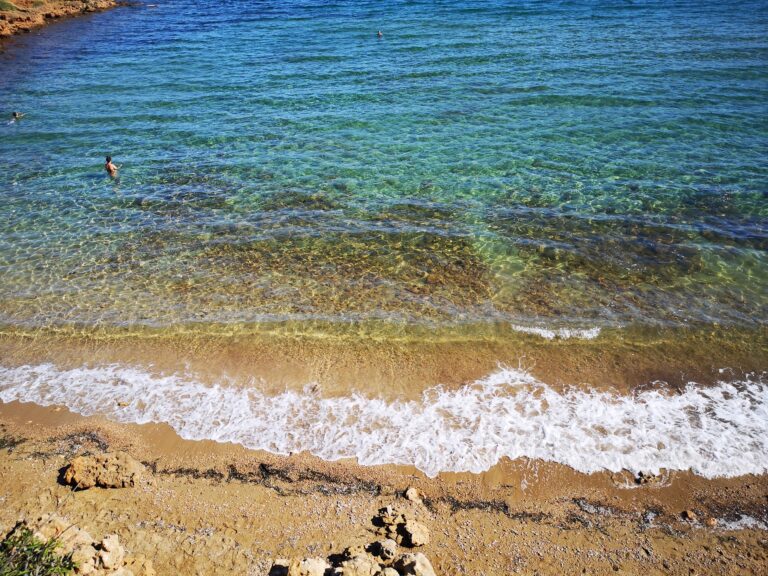
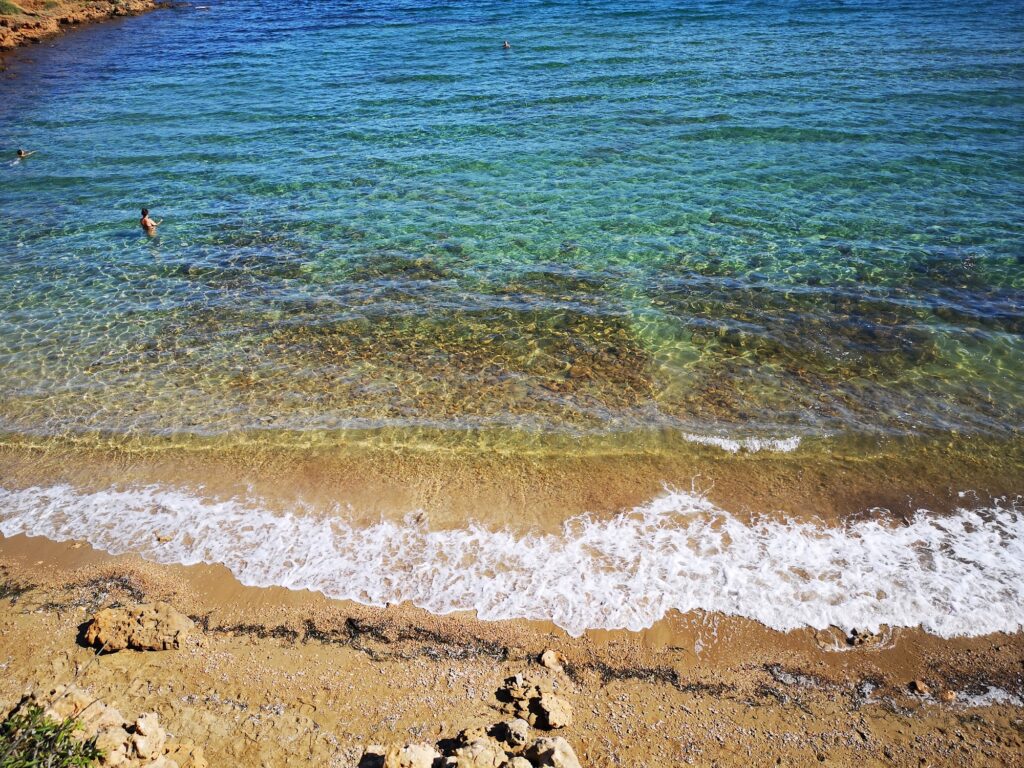
Duboka Draga is 250 metres of pebble and sand beach at the base of the red-clay cliffs — the gentle slope into the water that makes the beach accessible for children and for older swimmers who need the gradual entry that the steeper Dalmatian rocky beaches do not provide. The sandy sections give the beach its character as an exception within the mostly pebble and rock coastline of the Zadar archipelago islands — a specific quality that the beach-listing sources note as attracting both the naturist community and families comfortable with the wild beach context.
The red clay of the cliff face is the tactile material that children who have visited the beach consistently mention in the accounts that reach online travel forums — the specific activity of painting skin and swimwear with the red clay being the particular Duboka Draga beach experience that the source article also identifies. The clay is iron-rich, non-toxic, and washes off in the sea.
Snorkelling at the rocky base of the cliffs is the active water use that the beach-listing sources specifically identify as a draw: the undisturbed cliff-base environment, the lack of boat traffic and anchor damage, and the clear water circulation that the outer coast position maintains make the underwater rock architecture of Duboka Draga one of the more productive snorkelling environments on Vir Island.
FKK Culture and the Naturist Tradition on Vir Island
Croatia’s relationship with naturism predates the post-war Yugoslav period in which most European countries first encountered FKK culture — the Kvarner coast had organised naturist facilities from as early as the 1930s, and the country’s acceptance of nudism as a legitimate form of coastal recreation has been consistent through all changes of government and economic system. Croatia was among the first European countries to open its borders to naturist centres and naturists as early as 1953. FKK indicates nudist or naturist campsites and beaches in Croatia, with naturism tolerated or designated at hundreds of locations along the coast.
Duboka Draga’s FKK character is of the informal rather than the designated type — no entry fees, no warden, no membership requirement, no facilities, and no physical separation from the main beach. The naturist tradition of the beach is maintained by the community of regular visitors whose use of the location has established the convention over time. The remote position, the absence of facilities, and the cliff-descent access are the conditions that make an informal FKK beach sustainable — the location filters out the drive-by visitor and rewards the deliberate one.
Vir Island: The Bridge-Connected Island 28km from Zadar
Vir Island is among the most accessible of the Zadar archipelago islands — connected to the mainland by the bridge at Nin, 28 kilometres from Zadar city, and reachable without a ferry. The island’s accessibility has driven its development as a summer destination for the Zadar area’s resident and tourist population, and the contrast between the developed southern shore and the wild northwestern coast is in part the product of that accessibility: the bridge brought the infrastructure to the southern settlement zone and left the outer coast to the hikers and naturists.
The island’s permanent population is small — approximately 3,000 residents — and the summer influx transforms the island’s character substantially. The Duboka Draga beach zone is the part of Vir that the summer influx does not transform, precisely because the access conditions that the cliff path imposes maintain the natural filtering that the southern beaches lack.
The town of Vir has restaurants and konobas serving the Dalmatian coastal kitchen — the grilled fish, the lamb, the Pag cheese from the adjacent island whose salt-meadow grazing produces the most celebrated Adriatic cheese — and the combination of the wild day at the red-cliff beach followed by the conventional Dalmatian dinner in the village is the specific Vir programme that the source article correctly identifies as the island day’s natural completion.
Vir Island in the Zadar Archipelago Context
The Zadar archipelago — the island chain that extends northwest from Zadar city through Vir, Pag, Rab, and the outer islands — is the specific geographic zone within which Duboka Draga sits. Vir is the closest major island to Zadar city and to the mainland bridge connection at Nin, making it the most visited of the chain’s islands by day-trippers from Zadar and by the large domestic tourism market that uses the A1 motorway connection to the coast.
The wild FKK character of Duboka Draga is the specific contrast within Vir’s tourism offer that the source article correctly frames as the alternative to the “paved resorts and crowded city centers” — not as a rejection of the island’s more developed zones but as the other end of the same island’s coastal range.
Duboka Draga Beach on Vir Island is the 250-metre wild pebble and sand cove below the red-clay cliffs at the northwestern tip of the island — no facilities, no lifeguard, the clay in the cliff face available for painting, the sea clear for snorkelling, and the informal FKK tradition maintained by the regulars who make the cliff-path descent.
Drive northwest from Vir town toward Lozice. Park at the cliff top. Descend on foot.
The red clay will be there at the base of the cliff. The sea will be the turquoise that the contrast makes more vivid.
Map
Sorry, no records were found. Please adjust your search criteria and try again.
Sorry, unable to load the Maps API.
Near by places: