FKK Kandarola Beach Rab: Croatia's Oldest Naturist Shore
Profile
FKK Kandarola Beach, Rab: Croatia’s Oldest Naturist Shore and the Royal Swim of 1936
Croatia | Rab Island | Kvarner Bay
In August 1936, the luxury yacht Nahlin anchored in the harbour of Rab. On board were King Edward VIII — then still the Prince of Wales’s heir, months before his abdication — and Wallis Simpson, the American divorcée whose relationship with the king was being carefully ignored by the British press while the rest of Europe watched. The couple visited the Rab old town. The town fathers of Rab approved their request to bathe naked in Kandarola Bay, marking the beginning of a tradition that has endured for nearly a century.
The photograph of that swim was never published. The abdication crisis consumed the autumn that followed. But the permission granted by the Rab town council to the heir to the British throne became the founding story of FKK Kandarola — a beach that locals have also called “Engleska Plaža” (the English Beach) ever since, and that is now recognised as the oldest naturist beach in Croatia and one of the oldest in the world. The story is the most important historical fact about the beach, but it is worth stating clearly: naturism on Rab predates the 1936 royal visit. A Czech writer recorded naturist practices here in 1907 and a professor in 1912, and the first formal naturist beach was opened in 1934 by Richard Ehrmann, president of the International Naturist Federation, with Rab hotels reportedly reserving 50 beds for naturist guests before the turn of the 20th century. The royal swim is the most celebrated moment, but not the origin.
Getting There: Water Taxi from Rab Harbour, by Car via Suha Punta, or on Foot
The most atmospheric arrival at FKK Kandarola is by water taxi. Taxis depart from Rab harbour directly to Kandarola Beach and from the Škver harbour to the adjacent Komunčica cove, from where the beach is a ten-minute walk. The crossing takes approximately 15 minutes. The taxi boat schedule operates through the summer season with morning departures and evening returns — confirming times before the visit is advisable, as the last boat back determines the length of the day.
By car, the drive from Rab town to the beach takes approximately 20 minutes, following the road toward Kampor and the Frkanj peninsula in the direction of the Valamar Suha Punta hotel complex. Free parking is available at the beach. The western entrance from the Suha Punta complex involves a 15 to 20-minute walk along the coast and through the forest to Kandarola.
On foot from Rab old town, the walk around St. Euphemia Bay to the beach covers approximately 4.5 kilometres — a route through the Rab residential and suburban zones and then into the pine forest of the Frkanj peninsula, taking around 60 to 75 minutes at a comfortable pace. The approach from the Suha Punta side is the shorter walk from the car park and the route that most visitors arriving by car combine with their drive.
The Beach: 1.5 Kilometres of Rocky Coves and Three Pebble Bays
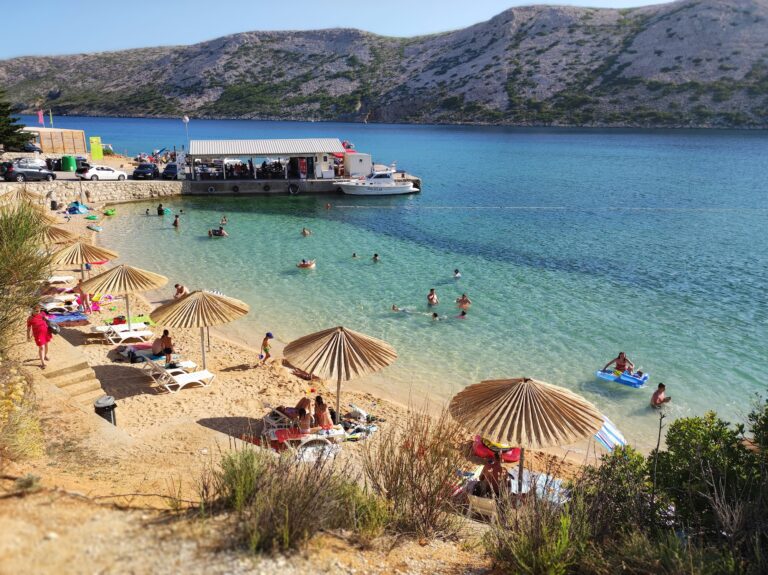
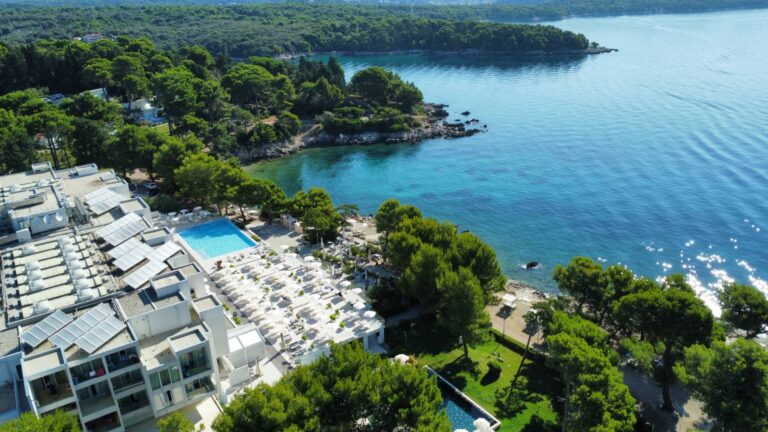
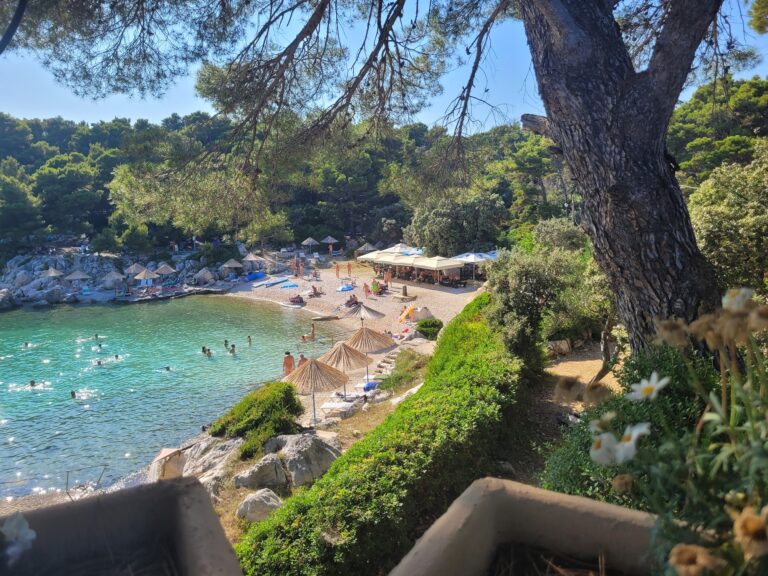
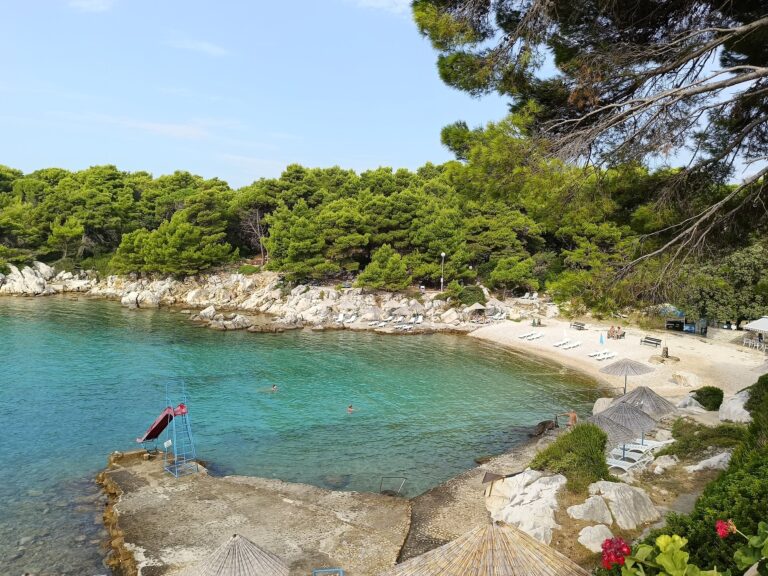
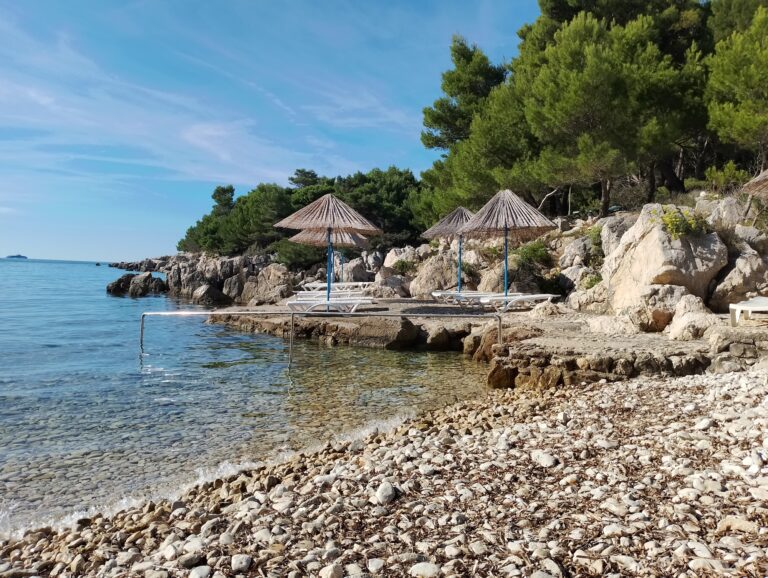
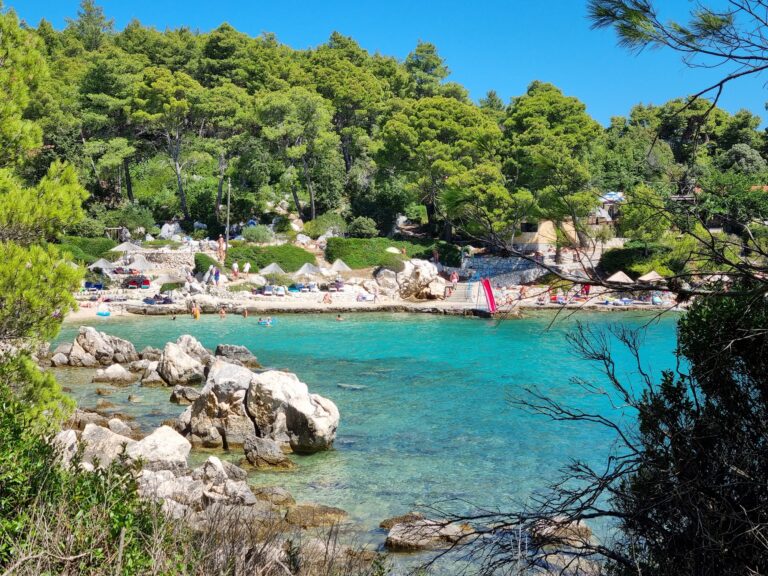
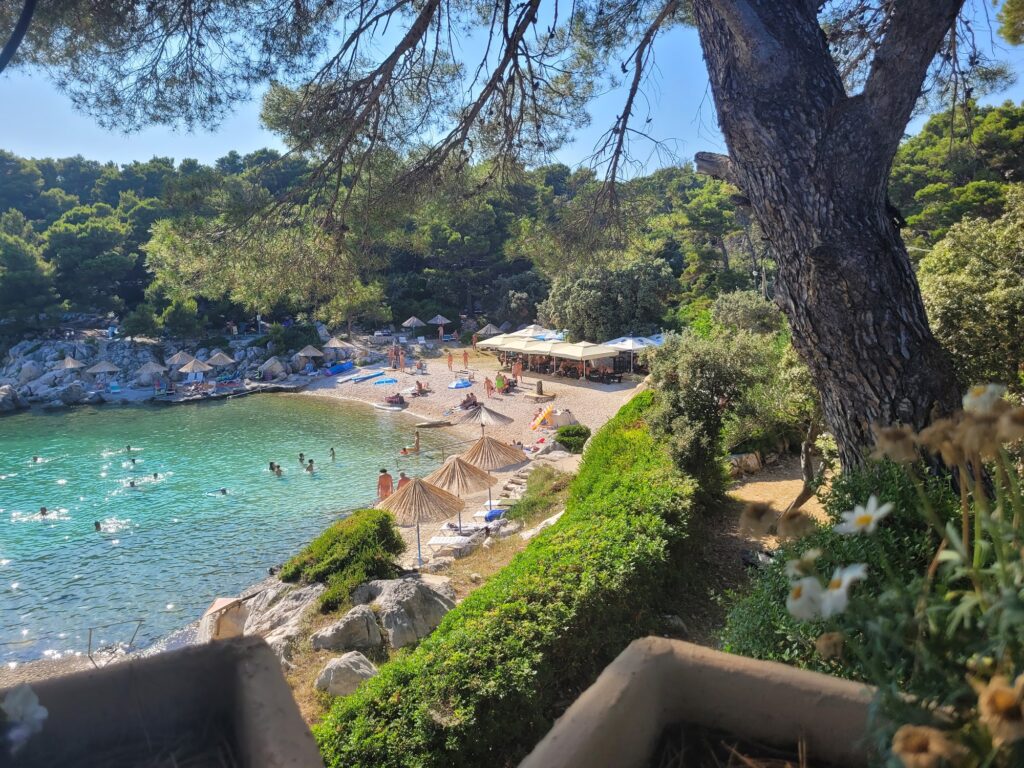
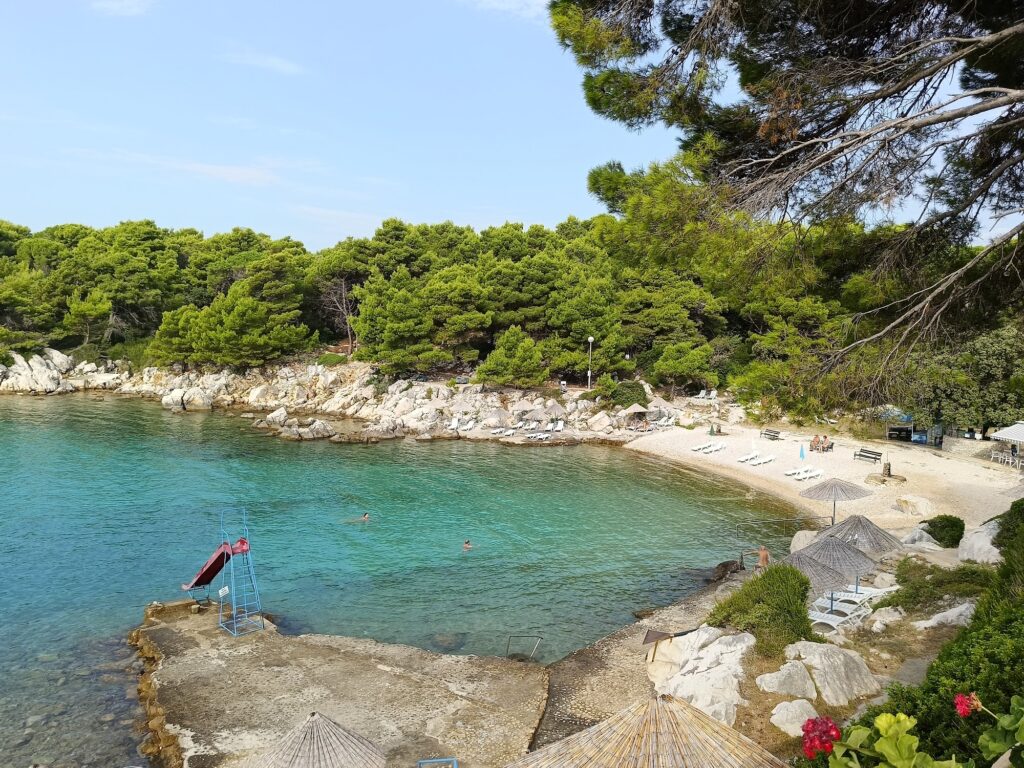
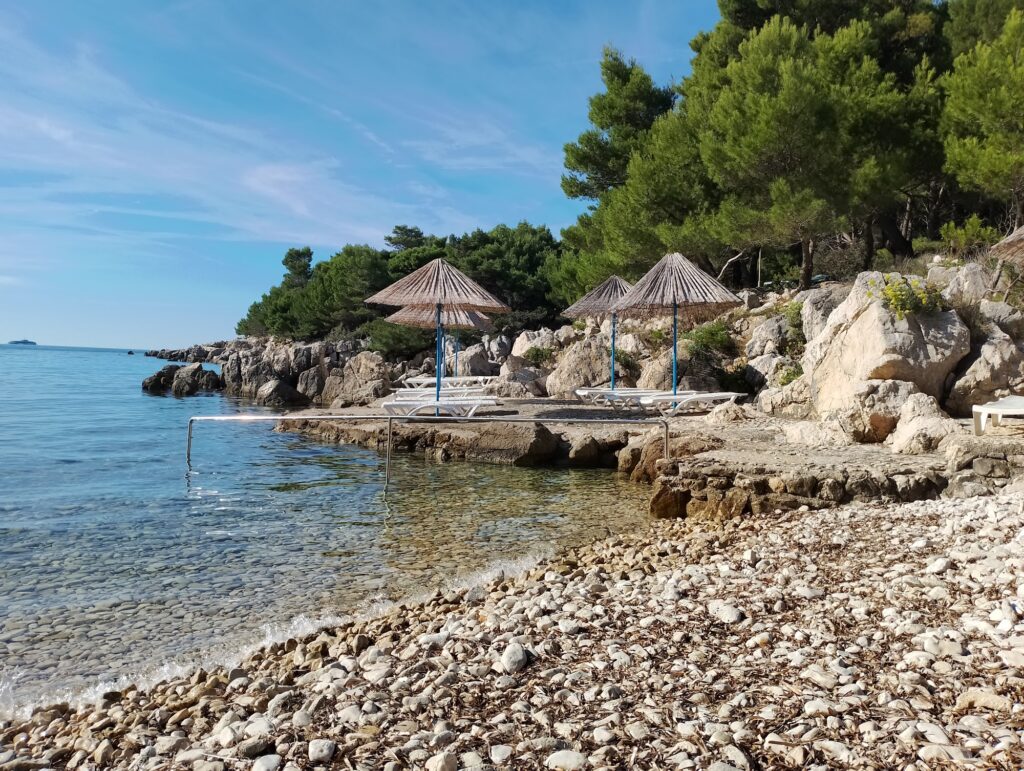
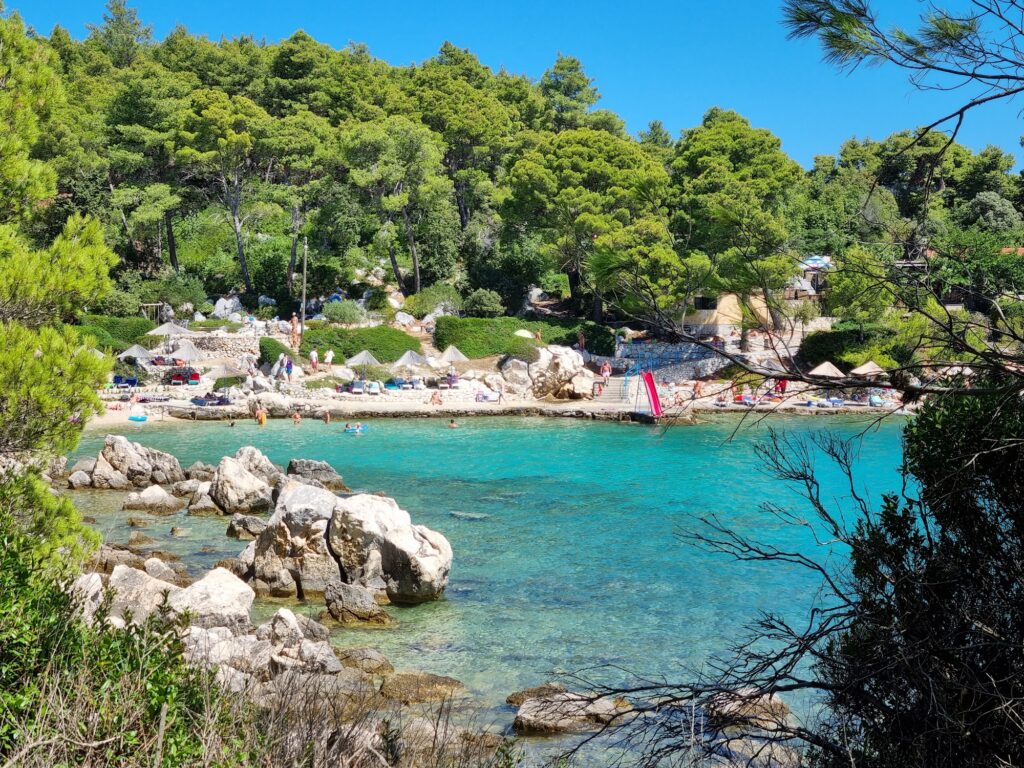
Kandarola beach is approximately 1.5 kilometres long and situated on the southern side of the Frkanj peninsula, which is itself part of the larger Kalifront peninsula. The terrain is mostly rocky with three pebble coves distributed along its length. The rock surfaces are used for sunbathing and diving from the flat limestone areas at the water level. The pebble coves provide the gentler entry points for swimming without the abrupt depth changes of the rock sections. Pine trees cover the peninsula above the shore, providing the shade canopy that makes extended days at the beach comfortable through the hottest summer months.
The variety of surface within the 1.5-kilometre length means different sections serve different visitor preferences: the rocky platforms for those who want the elevated sun exposure and the deep-water dive; the pebble coves for the more gradual sea entry and the family with children; the shaded sections under the pines for those who spend the hottest hours in the forest before returning to the water. Grassy areas, sandy stretches, rocky sunbathing spots, and a dock where water taxis arrive are all part of the beach’s composition.
Water shoes are recommended throughout — the rocky sections require them for comfortable movement, and the pebble coves are navigable without but improved with them for longer beach days.
The Water: Clear, Protected, and the Colour of the Pine-Shaded Kvarner
The water at Kandarola is the quality that the Kvarner bay’s combination of depth, open circulation, and undeveloped peninsula coastline produces — clear, cold enough in the mornings to register the temperature differential between the air and the sea, and warming through the afternoon in the sheltered pebble sections. The visibility is consistently good, and the rocky sections at the beach margins support the small fish populations that have made the beach’s snorkelling character well known — shoals of fish that gather around the rock faces and that are sufficiently habituated to swimmers to approach rather than scatter.
The Frkanj peninsula’s position on the western side of St. Euphemia Bay means the beach faces south and west, catching both the morning sun on the south-facing sections and the afternoon sun through the western approach. The Velebit mountain range is visible across the Velebit Channel to the north from the higher points of the peninsula — the same massif visible from the mainland Kvarner coast, here seen from the island position that reverses the perspective.
Entry Fee, Facilities, and the Jurešić Family Farm Restaurant
Entrance to FKK Kandarola costs €5 per person. The beach is equipped with showers and toilets, sports and recreational facilities for adults and children, a beach bar, and sunbed and umbrella rental. The beach volleyball court and the small water slide for adults are the specific active recreation provisions that give the beach a daily programme beyond swimming and sunbathing.
The Restoran Biser Kandarola — run by the Jurešić family who manage the beach — is the on-site restaurant serving food prepared with vegetables and fruits grown on the family’s own 10,000 square metre farm adjacent to the peninsula. The menu is rooted in local produce: fresh fish, meat, and the organic kitchen garden output that distinguishes a family-run operation from a concession catering van. The combination of the naturist setting and the sit-down restaurant — where remaining unclothed during lunch is the norm rather than an exception — is the specific quality of Kandarola’s social character that visitor accounts mention most consistently.
The beach bar provides cold drinks and the lighter refreshment option for those who want a drink on the rock rather than a table at the restaurant. Both operate through the beach opening hours of the summer season.
Naturism at Kandarola: Who Comes and Why
FKK Kandarola attracts both the long-established naturist community — visitors who have been returning to the beach for decades, some for 50 years or more according to the reviews — and the curious first-timer for whom the beach’s historical status and the accessible setting make it a considered introduction to naturist beach culture rather than an intimidating commitment. The atmosphere is consistent in visitor accounts: relaxed, respectful, and without the social self-consciousness that non-naturist visitors sometimes anticipate.
The beach is family-friendly within the naturist framework — children are part of the regular visitor picture, and the calm and managed character of the site means the environment is not one that raises child-safety concerns for parents who practise the naturist lifestyle. The dog-friendly section provides for visitors travelling with pets, which is a specific practical provision that the managed character of the beach makes possible.
For visitors who have not visited a naturist beach before, Kandarola is one of the more considered first options on the Croatian coast — the historical significance, the restaurant and bar provision, the water taxi arrival, and the active management of the site all reduce the uncertainty that a self-managed wild naturist beach carries, and the beach’s multi-generational visitor community provides a social context rather than an isolated experience.
August 1936: The Context of the Royal Visit
The 1936 royal swim at Kandarola takes on additional historical weight when placed in its full context. Edward VIII abdicated the British throne in December 1936 — four months after the Rab visit — in order to marry Wallis Simpson, an act whose consequences reshaped the British monarchy through the 20th century. The summer of 1936 was therefore the last summer of his reign, and the Nahlin cruise through the Adriatic was one of the final public appearances of the couple before the abdication crisis consumed the autumn.
The Rab town fathers who granted permission for the nude swim were not granting a favour to a reigning king whose future was secure. They were accommodating a traveller passing through on a yacht, enjoying the Dalmatian coast in the last months before a life that became, by his own choice, entirely different. That specific timing gives the Kandarola founding story a poignancy that the sanitised version — “the king swam here in 1936” — does not fully convey.
FKK Kandarola Beach on Rab’s Frkanj peninsula is the oldest naturist shore in Croatia — three pebble coves and a kilometre and a half of rocky coastline under pine forest, with a history that goes back past the abdication crisis of 1936 to the turn of the 20th century, and a family restaurant that serves the organic farm kitchen three hundred metres from the same water that Edward VIII swam in eight decades ago.
Take the water taxi from Rab harbour in the morning. Pay the €5 at the entrance. Stay for lunch at Biser Kandarola.
The pines and the clear Kvarner water will take care of the rest.
Map
Sorry, no records were found. Please adjust your search criteria and try again.
Sorry, unable to load the Maps API.
Near by places: