Beach Straško Pag Island: Forest Shore Near Novalja
Profile
Beach Straško, Pag Island: Two Kilometres of Pebble Shore and Oak Forest South of Novalja
Croatia | Pag Island | Kvarner Gulf
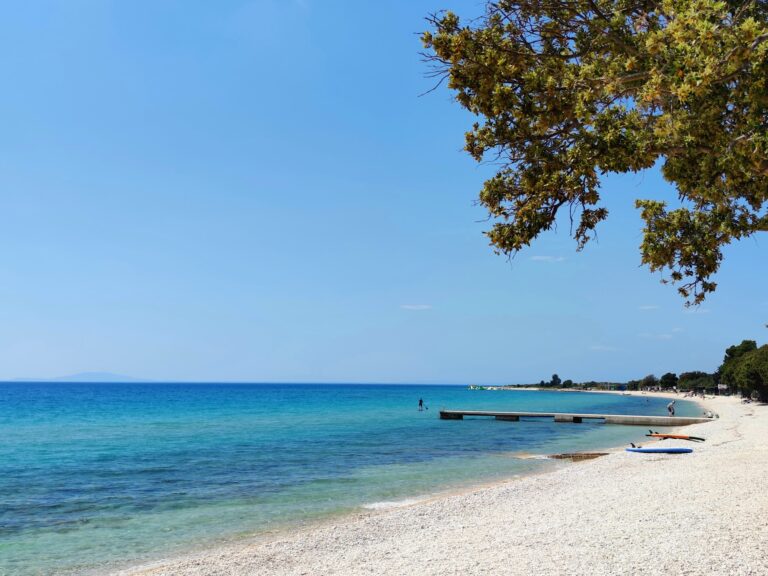
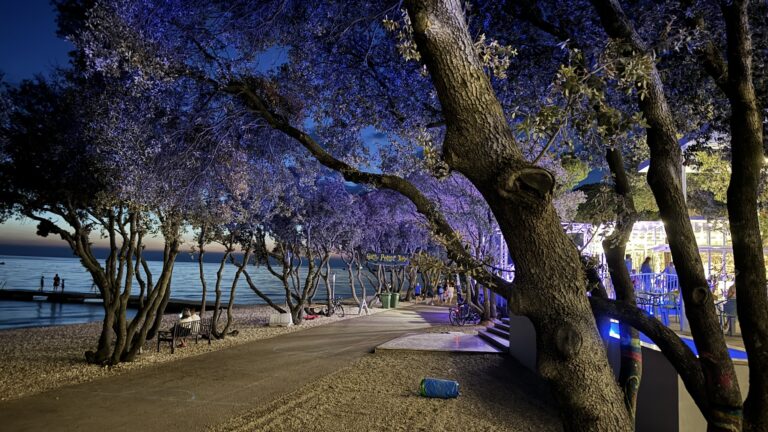
The thing that separates Beach Straško from almost every other beach on Pag Island is immediately obvious before you reach the waterline. The oak and olive trees that back the shore for nearly its full two-kilometre length are an anomaly on an island whose landscape is defined by bare limestone, minimal vegetation, and the specific lunar austerity that Pag’s terrain is known for across the northern Adriatic. That forest — Dalmatian oak and olive, aromatic in the heat — gives Straško a character that no other beach in the Novalja area replicates, and it shapes the experience of the place as decisively as the water does.
Beach Straško sits just south of Novalja on the western coast of Pag Island, facing the Pag Channel with the same exposure to channel circulation that maintains water quality along this section of the island’s shore. The beach has held the Blue Flag certification for over twenty years — a record that reflects both the water quality the channel position produces and the management standard the site has maintained across those seasons. Those two things together, the forest and the water record, are what define Straško before any individual visit adds its own details.
Getting There: On Foot, by Tourist Train, or by Car from Novalja
Beach Straško is one of the few beaches on Pag Island that is comfortably reachable from a town centre on foot. From central Novalja, the seaside promenade runs south along the shore directly to the beach — a walk of fifteen to twenty minutes that follows the waterfront and requires no navigation. That connection to Novalja on foot is practically useful and changes the character of a day at Straško: it is possible to begin at the beach, return to town for lunch, and walk back without a car involved at any point.
During the summer season, a tourist train runs regularly between Novalja harbour and the Straško camp entrance — an option that families with young children find particularly practical when the afternoon heat makes the walk less appealing. By car, the beach is at the southern end of Novalja with an organised parking facility at the resort entrance. The drive from the town centre takes a few minutes.
Visitors arriving from further afield — from Zadar to the south or from the mainland via the Prizna–Žigljen ferry — will pass through or near Novalja in any case, and Straško is the first significant beach south of the town on the coastal road.
The Shore: Two Kilometres of Pebble, Sand Seafloor, and Forest Shade
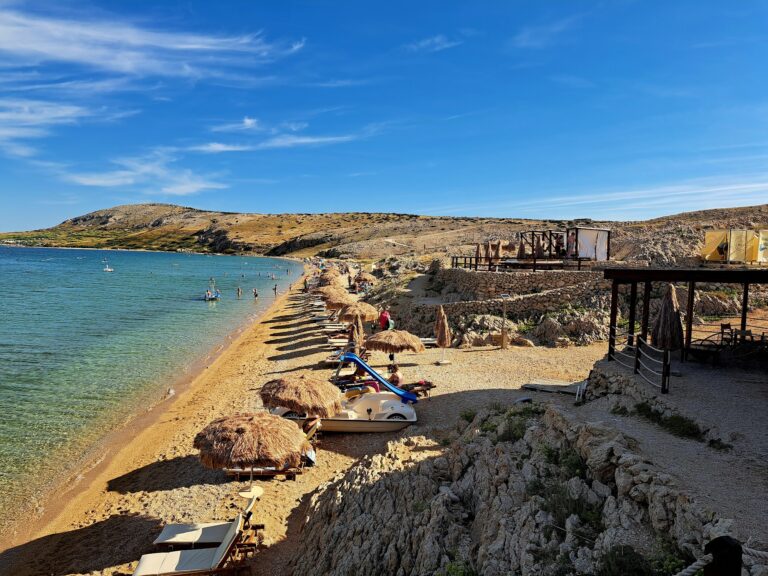
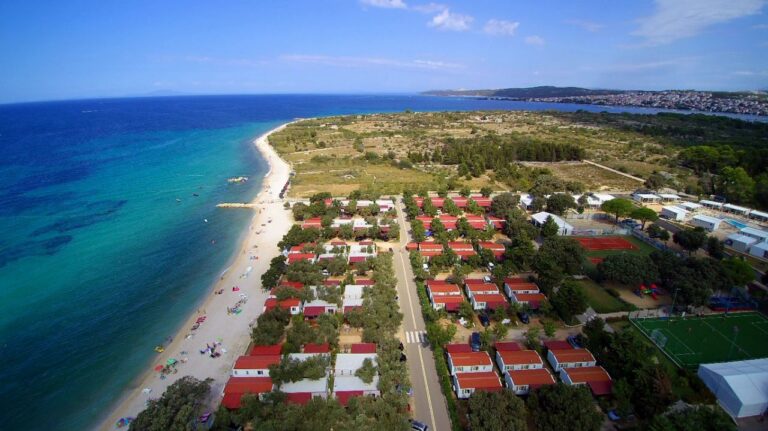
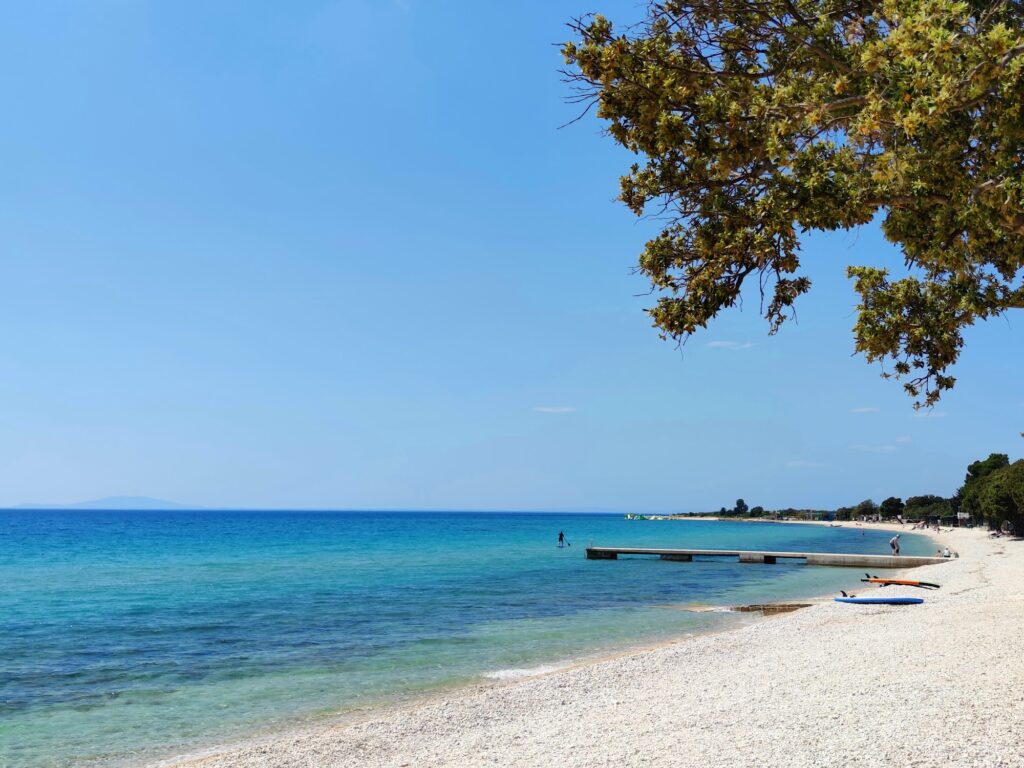
The shore at Beach Straško is smooth, sun-bleached pebble running for nearly two kilometres — long enough that the beach never reaches the density that shorter, more enclosed bays accumulate during peak weeks in July and August. The pebble surface transitions to a sandy seafloor as the water deepens, which produces the combination of firm footing at the waterline and soft bottom underfoot once swimming — a geological detail that makes the entry comfortable and the shallow swimming zone particularly clear.
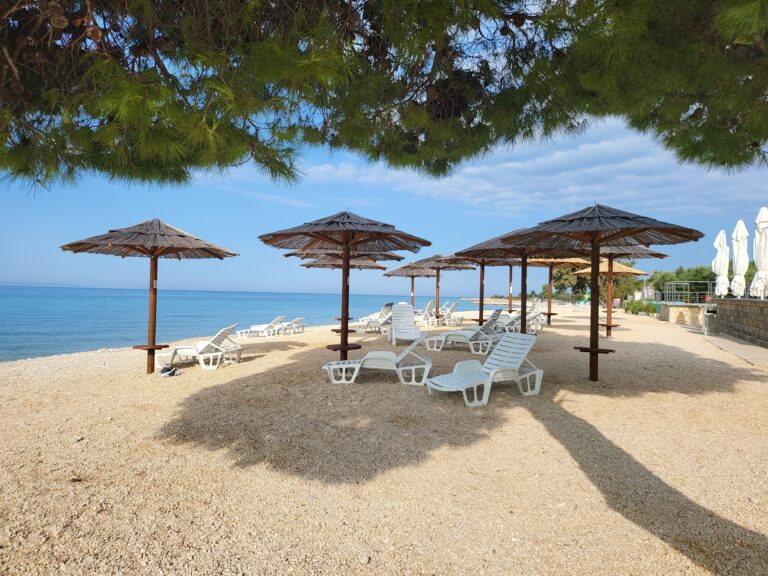
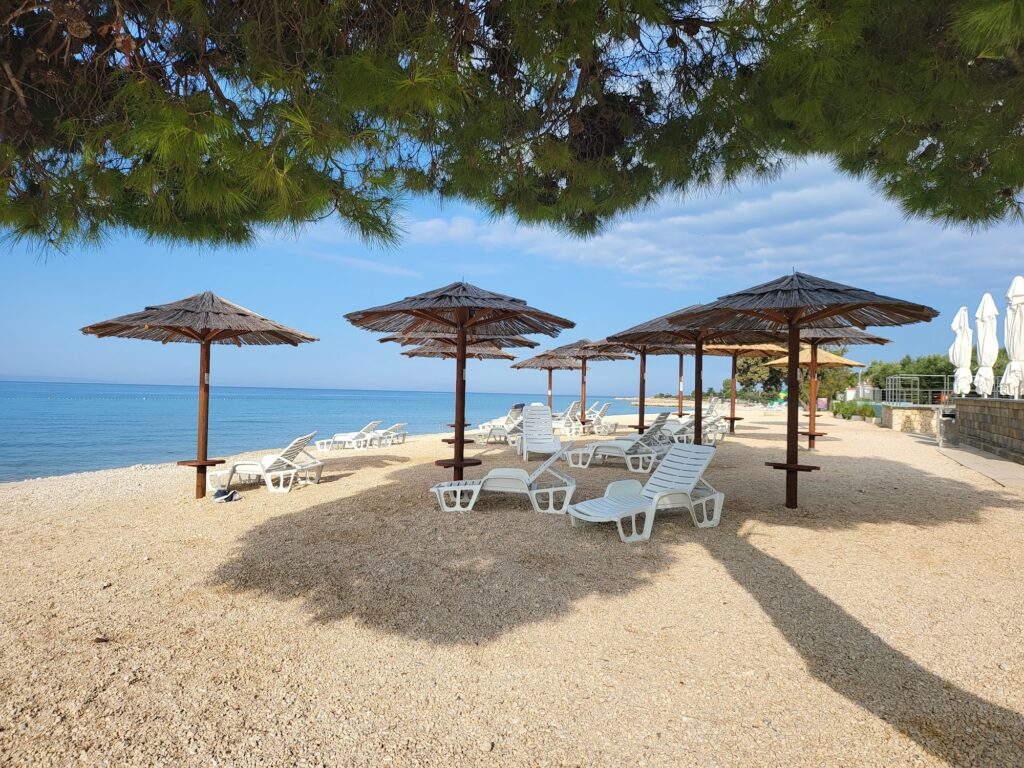
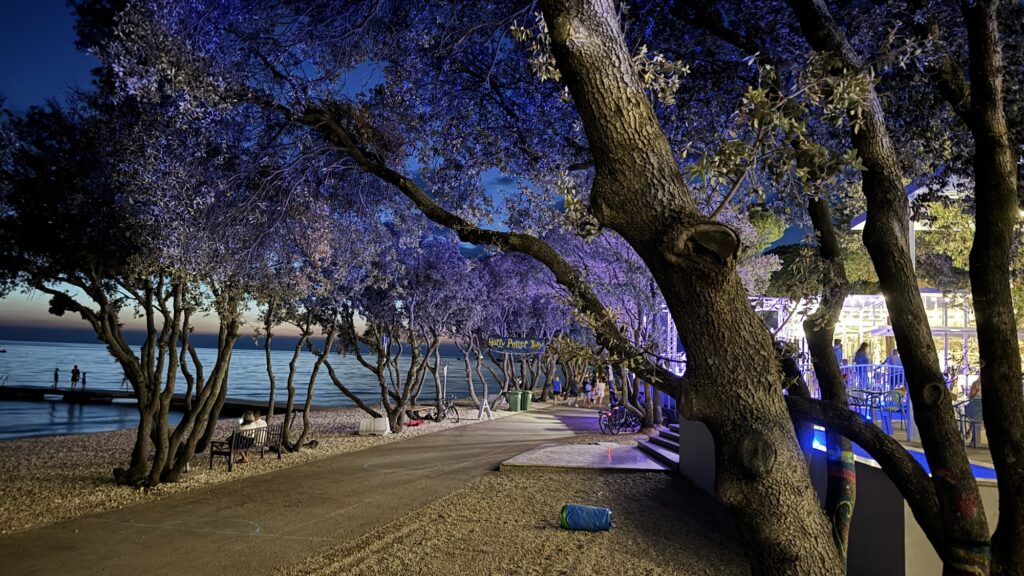
The forest that backs the shore along most of its length provides natural shade that is genuinely rare on Pag Island. At most beaches on Pag — including Plaža Čista Pag Island a few kilometres further south — shade means a hired umbrella or nothing. At Straško, the oak and olive canopy above the upper shore creates a cool, aromatic zone that functions as a natural retreat from the midday sun and that gives the beach a sensory identity — the smell of warm resin and dry leaves mixing with the salt air from the channel — distinct from anything the open limestone coast produces.
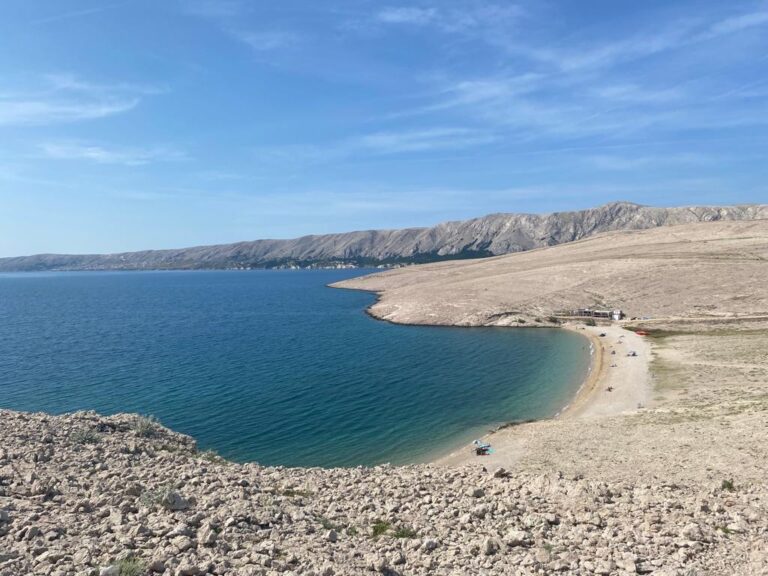
The Pag Channel faces the beach directly, and the channel circulation that characterises this section of the western Pag coast keeps the water in consistent motion. On clear days the Velebit mountains are visible on the mainland horizon across the water — the same view that the channel-facing beaches of the island share, here framed by the specific width of Straško’s long, open shore.
Water Quality: Twenty-Plus Years of Blue Flag Certification
The water quality at Beach Straško is the beach’s most formally documented characteristic. Holding the Blue Flag for over twenty years places Straško among a small number of Croatian beaches whose water quality record extends across multiple decades of consistent monitoring rather than reflecting a single strong season. The Pag Channel circulation that refreshes this section of the coast continuously is the underlying reason, but the management of the site — waste handling, boat access restrictions within the swimming zone, maintenance of the surrounding land — sustains that natural advantage through active practice.
The water displays the turquoise-to-cobalt progression characteristic of the channel’s shallow-to-deep colour range, with visibility sufficient for independent snorkelling across the bay. The seabed is clearly readable from the surface in the shallower sections, and the rocky formations at the margins of the swimming area carry the sea bream and other Adriatic species typical of the channel’s clean, well-circulated water.
A professional diving centre operates from the beach, reflecting both the underwater visibility the water quality produces and the depth profile of the channel beyond the bay. Sailing lessons are also available — the channel provides the open water and consistent wind exposure that sailing instruction requires without the more exposed conditions of the open Adriatic to the west.
Facilities at Beach Straško
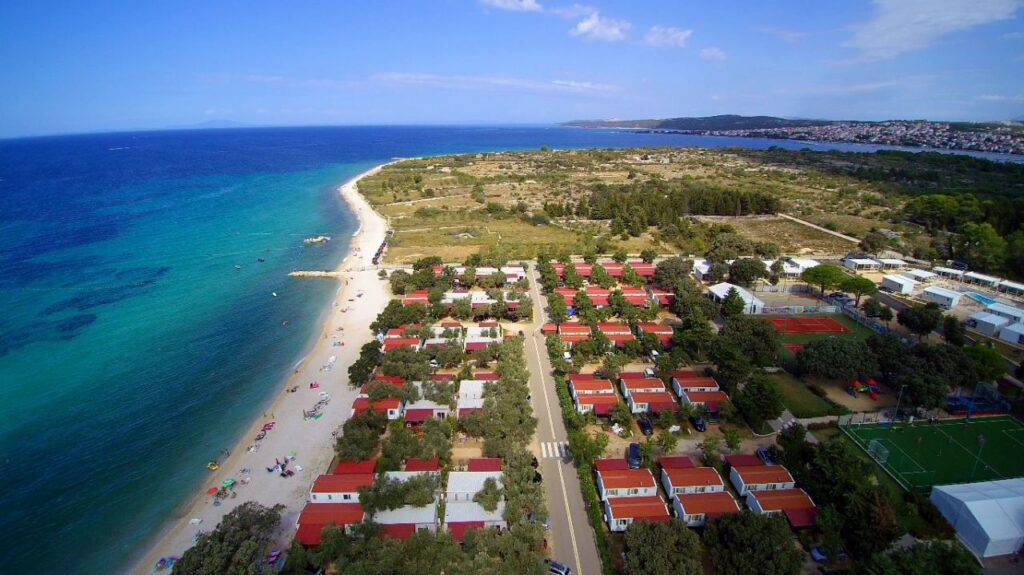
The facilities at Beach Straško are organised across the full length of the shore rather than concentrated at a single point — a practical necessity for a beach of nearly two kilometres that receives the visitor numbers the site attracts through the summer season. Freshwater showers, changing cabins, and restrooms are distributed at intervals along the beach, removing the walk back to a central facility that shorter beaches can require.
Sunbed and umbrella rental is available, though the forest shade above the upper shore means that visitors who position themselves beneath the tree canopy have a genuine natural alternative. The inflatable aqua park in the water is the most visible active recreation provision — visible from the promenade and from most of the shore’s length — and caters to the age group for whom the structured activity of an aqua park is the main event rather than the supplement.
The beach includes adapted access infrastructure for visitors with disabilities — ramps and sea access designed to make the shore reachable for guests for whom the standard pebble entry would be impractical. This provision is noted specifically because it is not universal across Croatian beaches of this scale, and its presence at Straško reflects the management standard the site’s long Blue Flag record requires.
Beach Straško with Families and Young Children
Beach Straško with children benefits from a combination of provisions that few beaches on the island match in breadth. The water entry is gradual, the shallow zone is clear and sandy-bottomed, and the forest shade removes the sun exposure problem that makes long beach days difficult for young children at most Pag locations. The promenade that borders the shore provides a safe, flat surface for prams and for children who need to move between beach and facilities without navigating pebbles.
The camp that backs the beach includes a Baby Club, creative workshops, and a mini-zoo — provisions that extend the day’s activity beyond the water and that give parents a structured option when the beach itself has been exhausted. Playgrounds within the forest zone add to that infrastructure. Medical services and shops are accessible within the camp, which reduces the logistical calculation that remote beach locations require.
For families choosing between the organised infrastructure of Straško and the quieter, sandy-entry bay further south, Plaža Čista Pag Island offers a calmer and less structured alternative — smaller in scale, without the camp provisions, but with the sandy shingle entry and the channel water quality in a more intimate setting.
The Promenade: Pag Lamb, Adriatic Calamari, and Olive Oil
The promenade that runs along the inland edge of the shore is the social infrastructure of Beach Straško — a continuous stretch of beach bars and restaurants that faces the water and catches the afternoon light across the channel toward the Velebit coast.
The food is grounded in Pag Island’s specific produce. Pag lamb — janjetina — carries a flavour shaped by the limestone pasture and the salt-laden Bura wind that defines the island’s terrain, and it appears on menus here as a matter of course rather than as a tourist feature. The island’s olive oil, produced in small quantities from groves that survive in the sheltered pockets of the karst, finishes the fresh Adriatic calamari that is the seafood counterpart to the lamb. Paški sir — the aged sheep’s milk cheese produced from animals that graze the same herb-covered limestone — is the thing to begin with, as it is at every Pag location where the kitchen takes the island’s ingredients seriously.
Coffee on the promenade in the afternoon, the Velebit mountains across the channel catching the light as the sun moves toward them, is the standard-issue pleasure of the western Pag shore. At Straško, the scale of the promenade and the length of the beach behind it give that afternoon hour a different quality — more spacious, more social — than the smaller terrace settings elsewhere on the island.
Seasonal Timing at Beach Straško
The peak season concentration at Straško differs from the pattern at Zrće Beach Pag Island a few kilometres to the north, where festival events drive visitor numbers to specific peak dates. Straško draws a more consistent family and resort tourism crowd through July and August — the numbers are high but predictable, and the length of the beach distributes them across the shore without the intensity that shorter beaches accumulate.
The shoulder months — late June, the second half of August, and September — offer the beach in its most comfortable form. The water temperature holds from the accumulated warmth of summer into early autumn, the promenade remains open, and the forest shade that is a practical necessity in July becomes an atmospheric rather than functional feature as the season cools. The tourist train between Novalja and the beach operates through the summer season; confirming current end-of-season dates before a late September visit is advisable.
Beach Straško on Pag Island is defined by the two things that set it apart from the rest of the island’s coastline: the length of the shore, which absorbs visitor numbers without the compression that shorter bays produce, and the oak and olive forest that backs it, which gives the beach a shade, a scent, and a sensory character that the bare limestone coast of Pag does not otherwise offer.
Walk south from Novalja along the promenade. The forest starts before the beach does.
That is the clearest indication you have arrived somewhere different.
Map
Sorry, no records were found. Please adjust your search criteria and try again.
Sorry, unable to load the Maps API.
Near by places: