Blue Cave Cres Island: Plava Grota Lubenice Croatia
Profile
Blue Cave Cres Island: The Glowing Sea Cave Below the Cliffs of Lubenice
Croatia | Cres Island | Kvarner Gulf
The light inside Plava Grota — the Blue Cave at the base of the Lubenice cliffs on the western coast of Cres Island — does not arrive the way light normally arrives in an enclosed space. It enters from below, through an underwater passage in the cave floor, refracting off the white sandy bottom and filling the entire limestone cavern from underneath with a neon blue that has no equivalent in natural light above the waterline. The walls glow. The water glows. Swimming inside it, you cast a blue shadow.
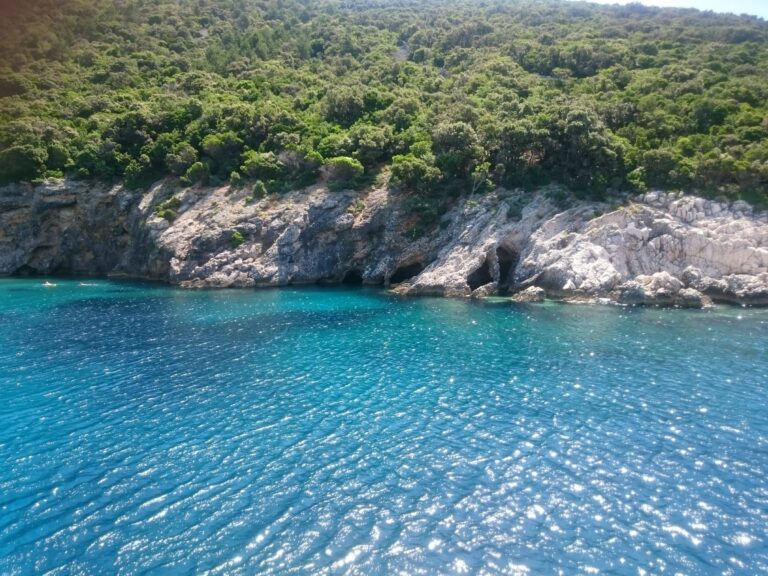
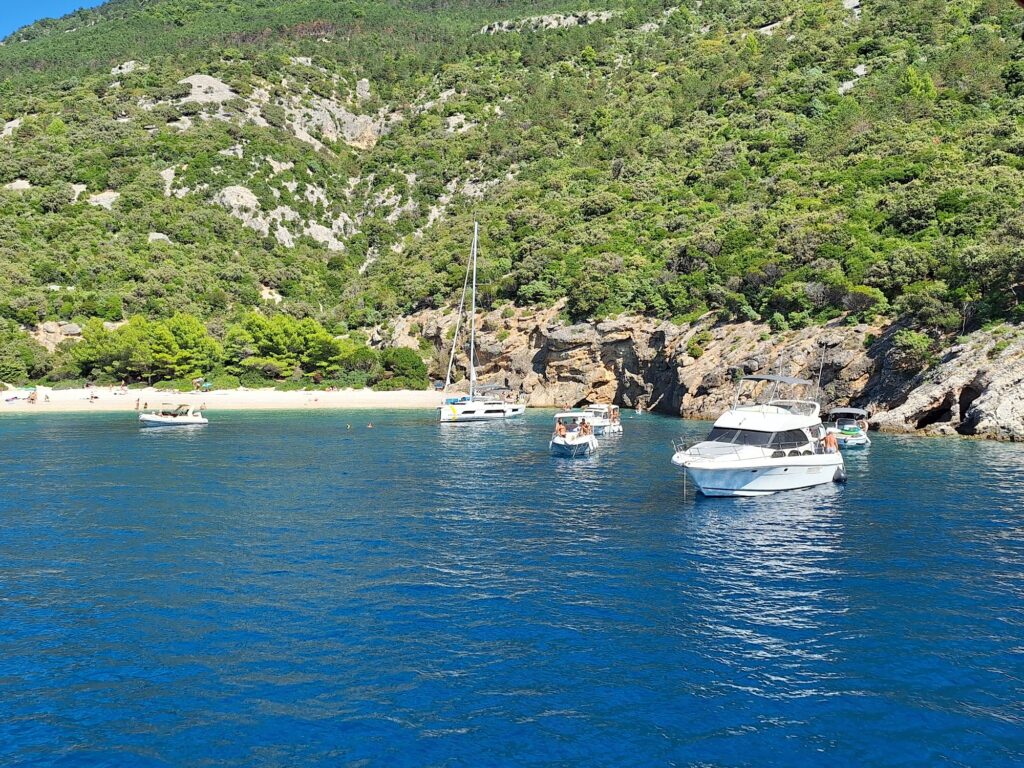
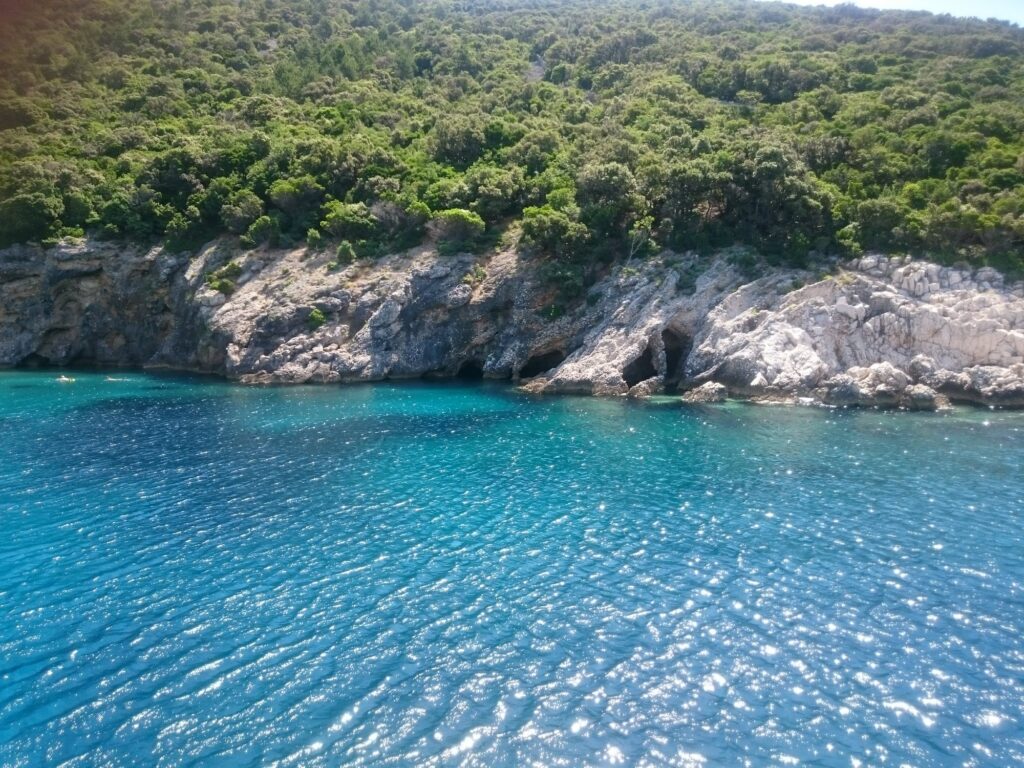
I reached the cave by kayak from Valun, paddling north along the western Cres coast for approximately two hours — a route that follows the base of the island’s dramatic limestone cliffs and passes several smaller coves before the cave entrance becomes visible as a dark opening at the cliff base. The approach by water is the correct approach. Seeing the cave from the sea, from a kayak at the waterline, gives the full scale of the cliff above it and the full darkness of the entrance before the interior light reveals itself. Entering the passage and having the blue fill the space around you is an experience that no photograph of the cave’s interior prepares you for, because the photographs show the light but not the spatial and physical quality of being inside it.
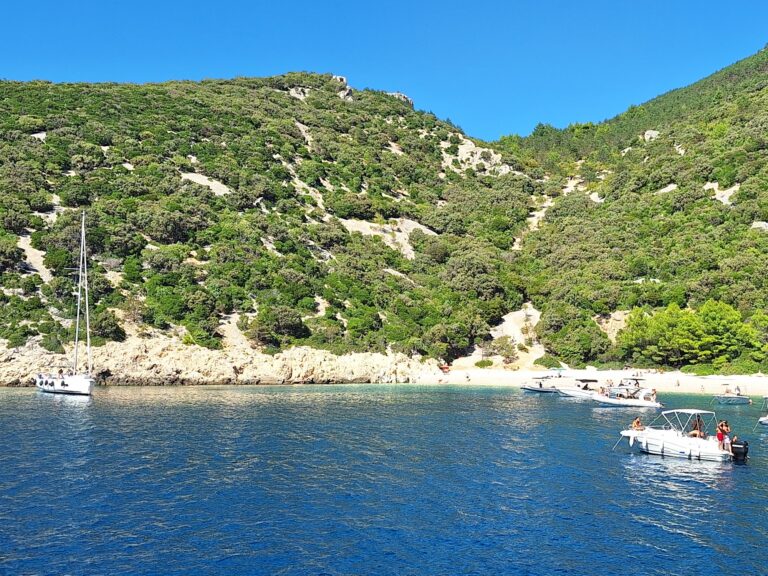
Plava Grota is situated on the open western coast of Cres Island, below the medieval hilltop village of Lubenice — one of the most dramatically positioned settlements in the Kvarner Gulf, sitting at 378 metres above the sea on a limestone ridge with a view across the open Adriatic that extends to the Italian coast on clear days. The relationship between the village above and the cave below is one of the more specifically charged pairings on the Croatian coast — the medieval settlement and the geological wonder connected by forty minutes of steep cliff path or by an hour of open water.
Getting There: Three Routes, One Destination
How to get to the Blue Cave on Cres Island requires choosing between physical effort, nautical convenience, or the specific and thoroughly rewarding option of the kayak.
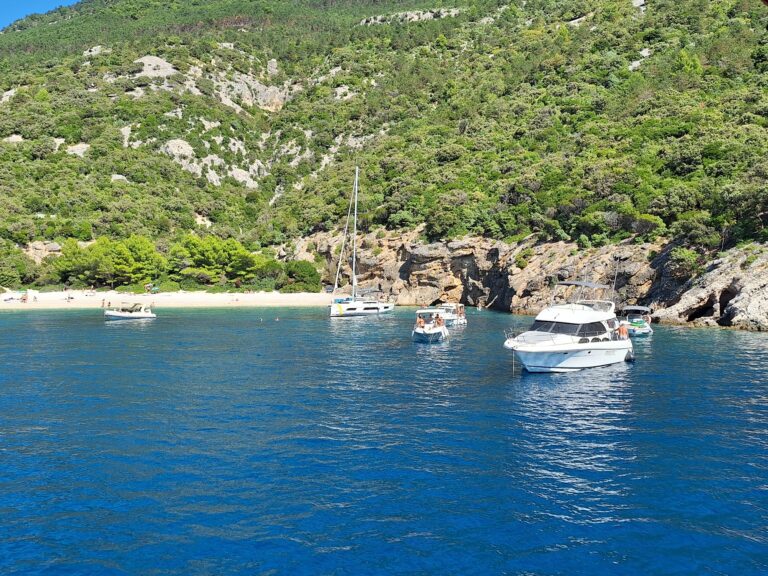
The boat excursion from Cres town or Martinšćica is the most accessible option for visitors without kayaking experience or physical fitness for the descent — organised tours depart regularly during the summer season and deliver passengers directly to the cave entrance by sea. The boat approach provides the correct introduction to the cave’s setting, the cliff visible from the water, the cave entrance dark against the limestone before the interior light becomes apparent. For visitors whose priority is reaching the cave rather than the journey to it, the excursion boat is the practical choice.
The hike from Lubenice is the option that places the cave within the full context of its extraordinary setting. Parking in the village above, the steep rocky path descends for approximately forty minutes — the coastal views throughout the descent being among the finest available on foot anywhere on the island, the western Adriatic extending to the horizon with the open quality of a coast that faces nothing between itself and Italy. The descent is steep and the surface requires attention, but it is manageable for fit adults and older children in appropriate footwear. The return climb in the afternoon heat is the physical commitment that visitors should assess realistically before beginning the descent.
The kayak from Valun or Miholašćica is the approach that rewards the most — a self-paced journey along the western cliff coast of Cres that passes hidden coves and sea caves before arriving at Plava Grota having understood the landscape that contains it. The paddle takes approximately two hours from Valun in calm conditions. The morning hours provide the flattest water on the western coast before the afternoon wind develops, and timing the arrival at the cave for mid-morning — when the sun angle produces the most intense version of the underwater light effect — is the practical optimisation that experienced visitors to the cave recommend.
The Cave: Geology, Light, and the Underwater Entrance
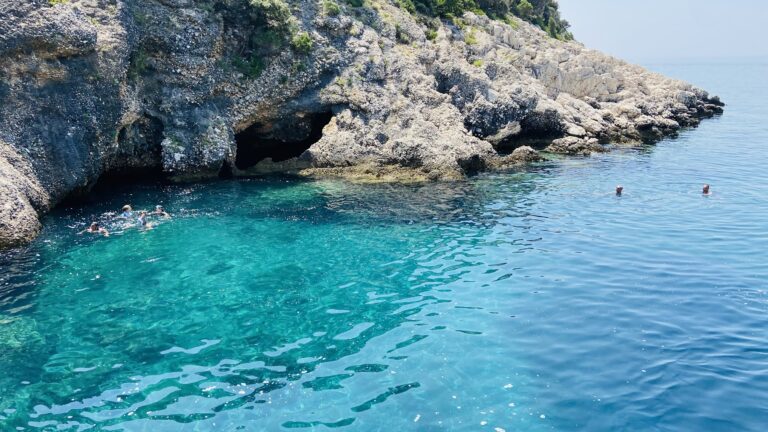
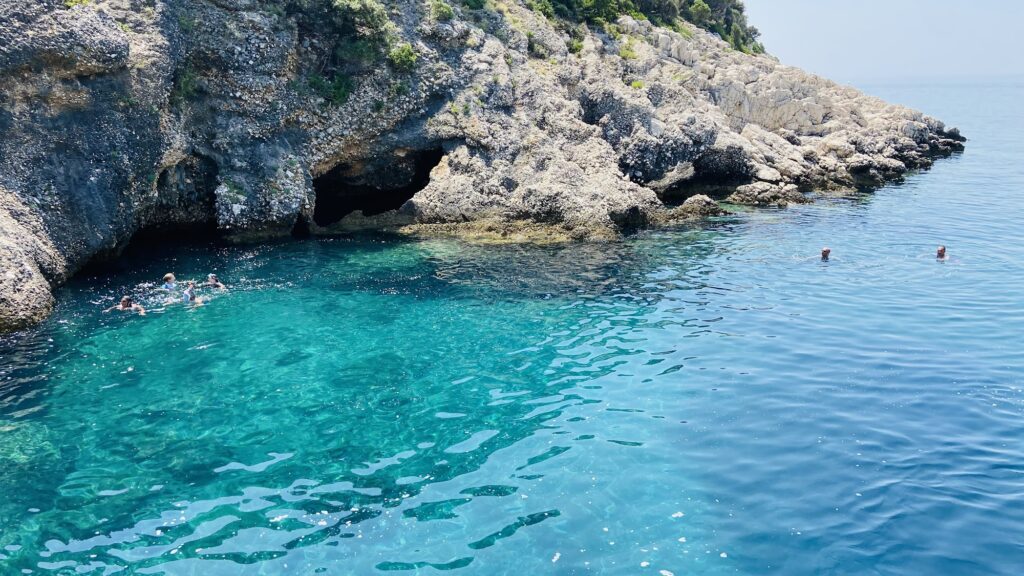
Plava Grota is a sea cave formed in the limestone cliff of the western Cres coast — the same geological formation that produces the island’s dramatic cliff faces throughout its western shore. The cave is entered by swimming through a narrow underwater passage at the base of the cliff, emerging inside a limestone hall large enough to float in and look up at the ceiling while the light fills the space from below.
The light effect that gives the cave its name and its reputation is produced by the refraction of sunlight through the underwater entrance — the sun illuminating the white sandy floor of the shallow water outside the cave, the refracted light passing through the entrance passage and entering the cavern from below. The colour it produces is a vivid, saturated neon blue that is consistent throughout the interior on a clear day with adequate sun angle — most intense between mid-morning and early afternoon when the sun is positioned to enter the passage at the correct angle.
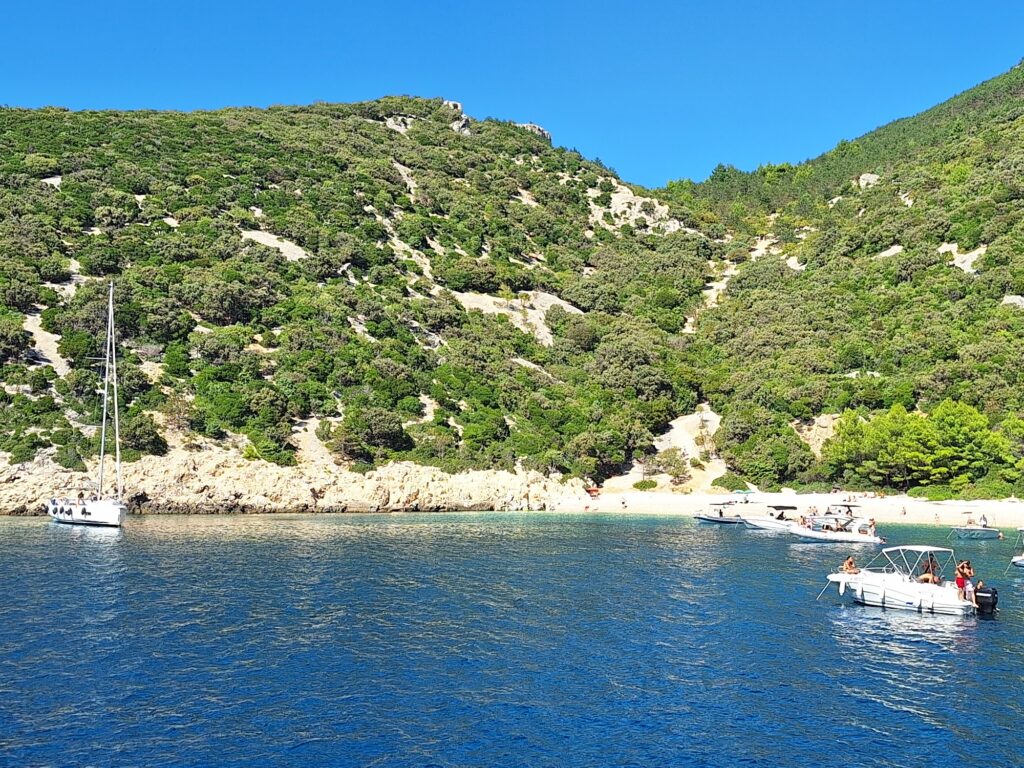
The cave sits at the base of the cliff that rises to the village of Lubenice above — the limestone of the cave wall is the same formation as the cliff face and the village foundations, the geology connecting the sea cave and the medieval settlement in the most direct possible way. The small pebble beach of Žanje sits immediately adjacent to the cave entrance — a narrow strip of white pebbles at the cliff base, large enough for a small group of swimmers to rest between sessions in the water, entirely without shade or facilities.
The water inside the cave is the open-sea quality of the western Cres coast — clean, cold, and well-circulated by the deep-sea currents that move along the island’s western shore. The transparency extends to the sandy bottom of the cave’s interior, visible in the blue-lit clarity that the light effect produces, and snorkeling inside the cave with the blue light overhead and the white bottom below is an experience that has no equivalent on the Croatian coast.
The Žanje Beach and the Immediate Setting
The Žanje pebble beach adjacent to the cave entrance is small — a narrow strip of white stones at the base of the cliff, squeezed between the cliff face and the waterline. It provides a resting point between swims rather than a conventional beach day destination, and its scale reflects the wild and entirely undeveloped character of this section of the western Cres coast.
There are no facilities of any kind at Žanje or at the cave — no showers, no restrooms, no shade, no food or drink, no sunbed rental, no organised infrastructure of any description. The beach is a leave no trace zone, and the remoteness of the location, reachable only by boat, kayak, or steep cliff path, is the primary mechanism that keeps it in its current condition. Arriving prepared — sufficient water for the full duration, food for the day, sun protection applied before reaching the beach, footwear appropriate for the rocky entry — is the non-negotiable precondition for a good day at Žanje.
The cliff jumping from the rocks around the cave entrance — at various heights above the deep, clear water — is an activity that the geology of the site naturally provides and that visitors with the confidence for it find among the more specifically memorable physical experiences the Kvarner coast offers. The water depth at the cliff base is sufficient and the transparency makes assessing it straightforward, but the activity is unsupervised and requires the judgment appropriate to an unmonitored natural setting.
Safety and Practical Considerations
There is no lifeguard at Plava Grota. The cave entrance passage requires swimming underwater — a short distance, navigable without specialist equipment, but requiring the confidence and the breath control to complete the transit calmly. The tidal movement through the passage is a factor to be assessed before entry, particularly in conditions of wind or swell on the open coast. The western Cres coast is exposed, and conditions at the cave can change significantly with wind direction — the excursion boats operating from Cres town and Martinšćica cancel departures in conditions that make the cave inaccessible safely, which is the most reliable weather assessment available for visitors without direct experience of the site.
The hike from Lubenice in midsummer requires carrying sufficient water for the descent, the time at the beach, and the return climb. The path is steep, unmaintained in the conventional sense, and requires appropriate footwear. The return in afternoon heat after a full day at the cave is physically demanding in a way that the descent does not fully indicate.
Lubenice: The Village Above
Lubenice is not incidental to the experience of the cave below it — it is the architectural and historical element that gives the setting its full character. The village sits on a limestone ridge at 378 metres above the sea, with a population that has been declining for decades and currently numbers fewer than twenty permanent residents. The medieval stone buildings, the church, and the terraces with their views across the open Adriatic are among the most dramatically situated in the Kvarner Gulf.
The local tavernas in Lubenice serve Cres lamb — the same product available in the town further north at Beach Kovačine — and the island’s sheep’s milk cheese, with the specific flavour that the aromatic scrubland pasture of the Cres interior produces. Eating on a stone terrace in Lubenice at 378 metres above the sea after a day at the cave below is one of the more complete day arcs available on Cres Island, and the elevation, the view, and the food combine in a way that the cave alone, extraordinary as it is, does not provide.
For Families
Blue Cave Cres Island with children is appropriate for older children and teenagers who are strong swimmers, comfortable with an underwater cave entrance passage, and physically capable of either the forty-minute cliff descent or the two-hour kayak from Valun. The experience of swimming inside a cave filled with neon blue light is, for children of the right age and swimming ability, genuinely and lastingly memorable.
For families with young children, toddlers, or children who are not confident in open-water conditions, the logistics and the safety requirements of the cave make it unsuitable. Beach Kovačine north of Cres town provides the family-appropriate beach alternative on the island, with full facilities and calm bay water that the cave’s wild setting does not offer.
Plava Grota — the Blue Cave on Cres Island — is one of the most specifically extraordinary natural experiences available on the Croatian coast, and it is extraordinary in a way that is genuinely difficult to prepare for through description or photography. The light inside the cave is the light. Being in the water inside the cave with that light surrounding you is the experience. Nothing else on this coast produces it.
Reach it by kayak from Valun if you can. Arrive in the morning when the sun angle is correct. Bring enough water. Eat lamb in Lubenice at the end of the day.
The forty minutes up the cliff path will feel entirely reasonable by the time you reach the top.
Map
Sorry, no records were found. Please adjust your search criteria and try again.
Sorry, unable to load the Maps API.
Near by places: