Saint Konstantin Elena: Bulgaria's Oldest Beach Resort
Profile
Saint Konstantin and Elena Beach, Bulgaria: The Oldest Resort on the Bulgarian Black Sea, Founded 1908 for Tuberculosis Patients, With Seven Thermal Springs Between 40 and 60 Degrees
Bulgaria | Saint Konstantin and Elena | Varna Province
The first guests weren’t coming for a holiday. When Saint Konstantin and Elena was founded in 1908 by the municipality of Varna, its purpose was to receive patients sick of tuberculosis. The thermal mineral springs — seven of them, drawing water from depths between 1,800 and 2,050 metres at temperatures between 40 and 60 degrees centigrade — were the attraction, not the beach. The beach came with the location. The healing came from the springs.
More than a century later, the tuberculosis sanatorium is long gone and the resort has grown into a complex of over 50 hotels, but the seven thermal springs are still there, and the mineral water is still flowing at 175 litres per second. The specific conditions they treat today overlap with what they’ve always treated — cardiovascular conditions, musculoskeletal disorders, psoriasis, functional nervous system conditions, diabetes, gout — because the water chemistry hasn’t changed. What has changed is the infrastructure around it.
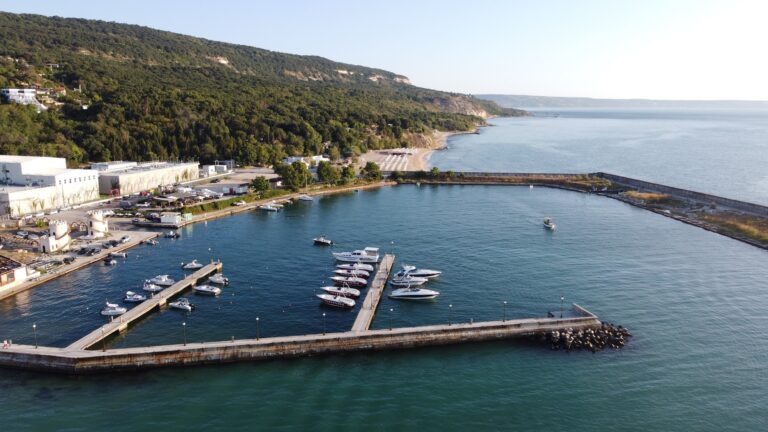
This is Bulgaria’s oldest resort. Not the biggest, not the most famous internationally, but the first. It sits 8 kilometres north of Varna between the city and Golden Sands, on a natural terrace about 25 metres above the sea, in 55 hectares of park planted partly in the period 1913 to 1918 with black pine seeds brought from France. The oldest tree in the resort is a 300-year-old Polish Elm near the Astor Garden Hotel, protected as a tree of special significance.
Getting There: 8km From Varna Centre, Bus Every 10 Minutes, 16km From the Airport
Bus routes 9, 31a, 109, 209b, and 409 run from Varna to Saint Konstantin and Elena every ten minutes between 6am and 11pm — a frequency that makes it one of the most accessible resort beaches from a major Bulgarian city. The journey takes about 20 minutes from the city centre. From Varna International Airport (16 kilometres), a taxi takes under 20 minutes.
By car, the resort is 8 kilometres north on the main coastal road toward Golden Sands. Signs lead directly into the complex, where hotel parking is available. Visitors using public transport can access the beach directly from the bus stops at the resort gates.
The Beach: 3.5km of Small Coves, Sandy Bays, Rocky Formations, and Thermal Spring Pockets in the Sea
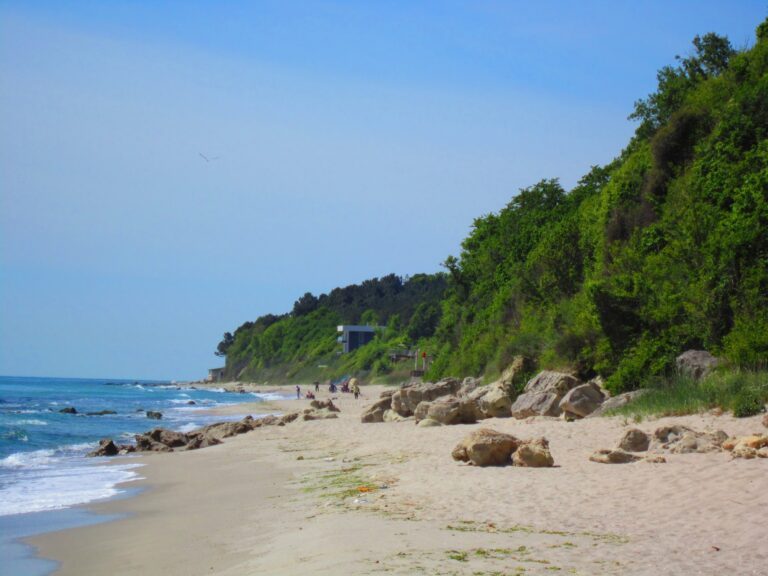
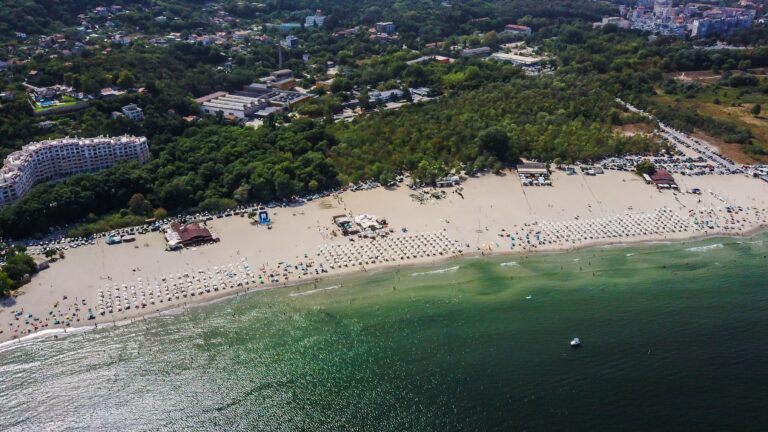
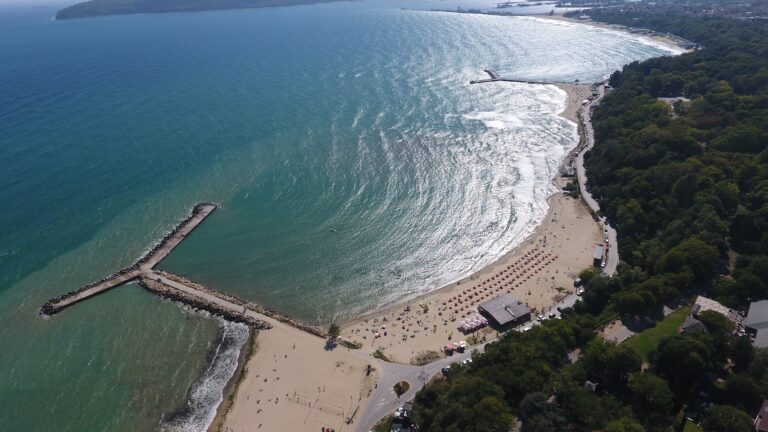
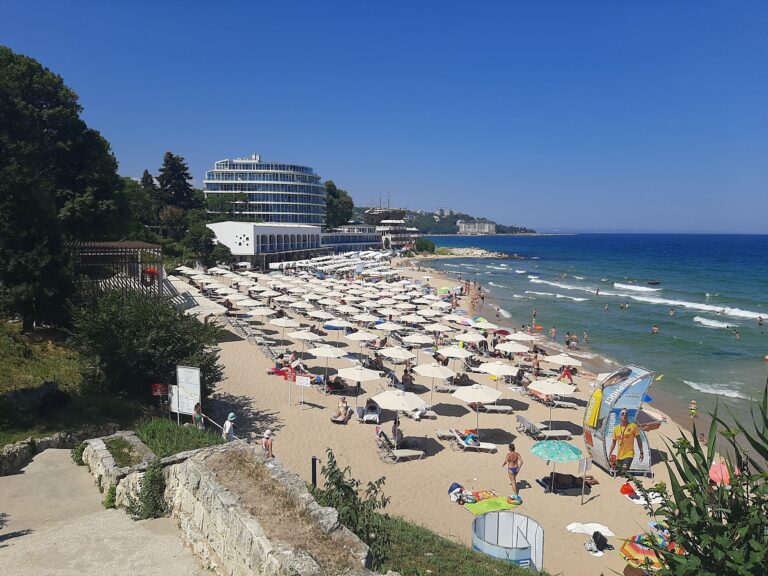
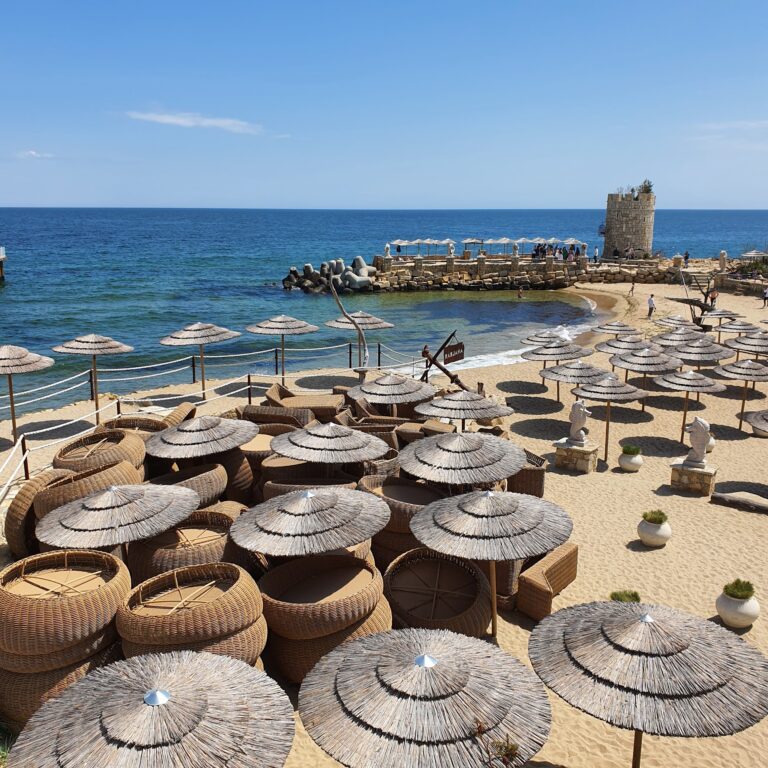
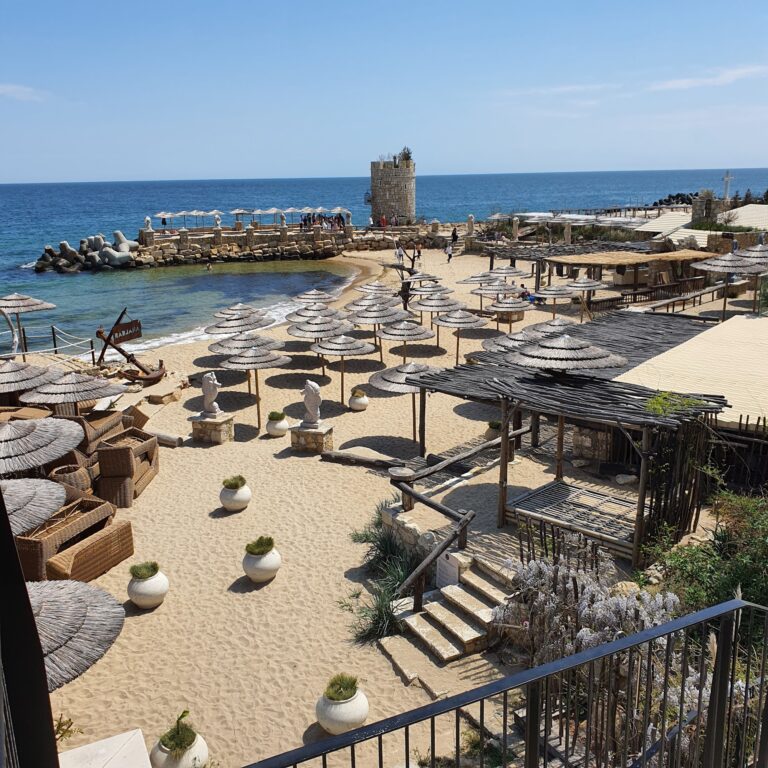
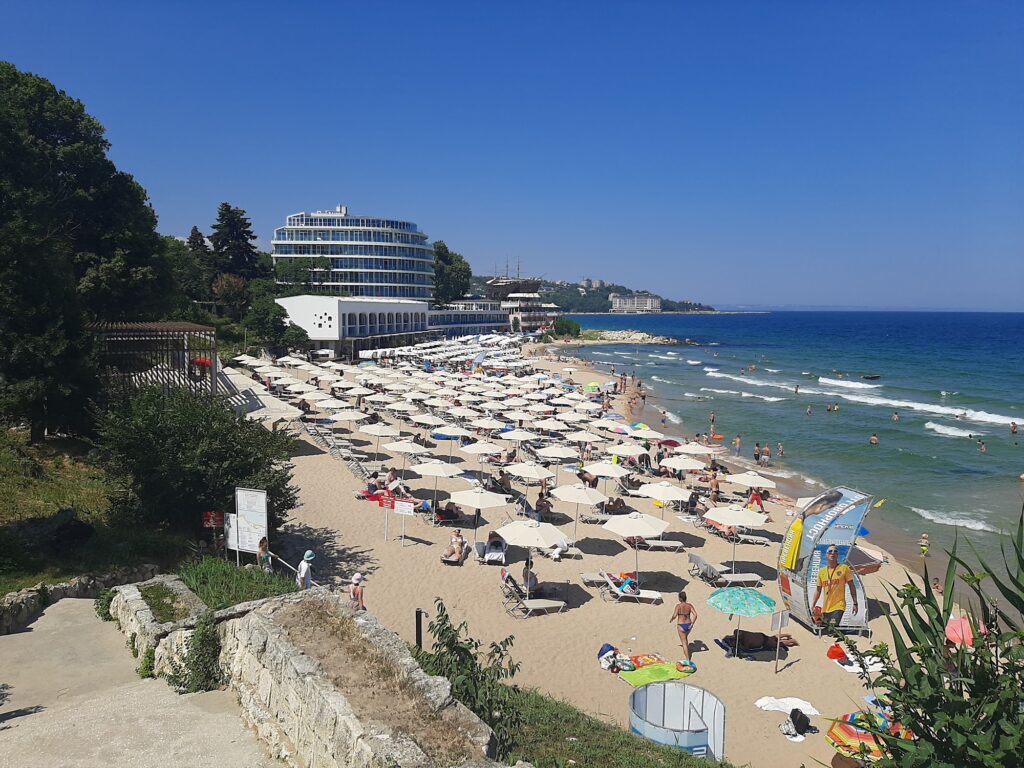
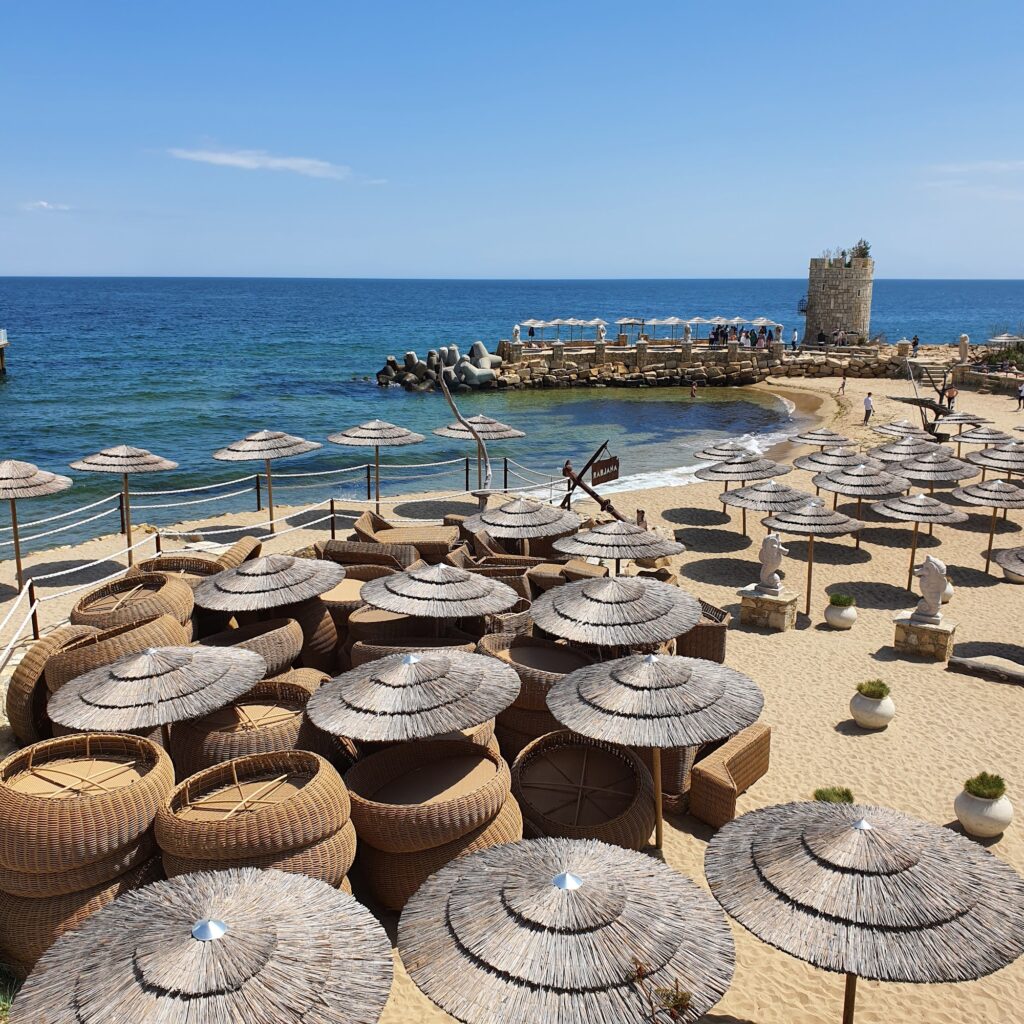
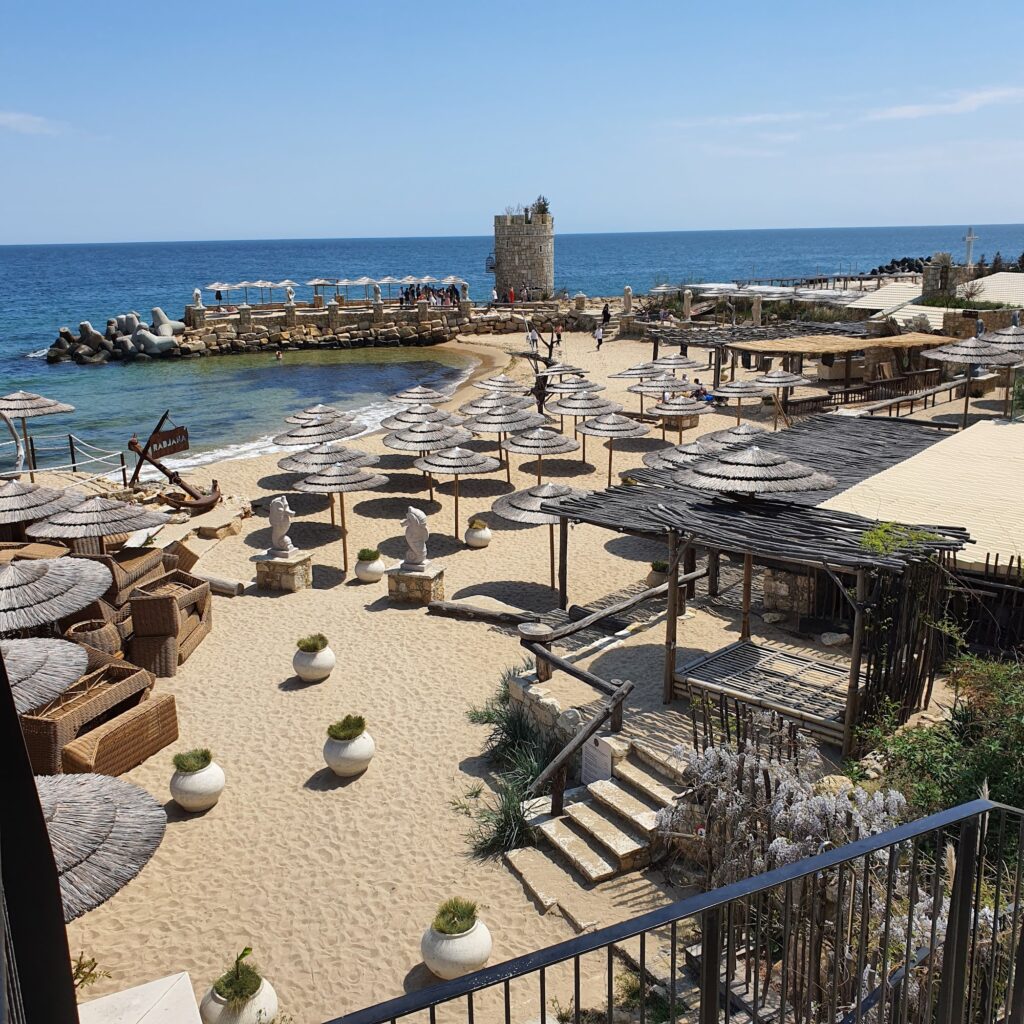
The beach at Saints Constantine and Elena is 3.5 kilometres long — but unlike the straight, uniform strips of Sunny Beach or Albena, this is a chain of intimate coves and bays separated by rocky outcrops, each slightly different in character. Some sections are sandy and organised with sunbeds and umbrellas; others are rocky and quieter. The variety is the specific quality.
The geological phenomenon that the source article correctly describes is real: natural thermal mineral springs flow directly into the sea at certain points, creating pockets of noticeably warmer water that mix with the cooler Black Sea. Swimming through a warm spring pocket in otherwise cool water is the specific sensory experience of this beach that you won’t encounter at any other resort on the coast.
The water is consistently described as clean and clear, with visible sand on the seabed. The cove geometry and the rocky breakwaters suppress much of the open-sea swell, leaving the inner bays calmer than the exposed beaches to the south.
The Seven Thermal Springs: What They Treat, What They Cost, Where to Find Them
The springs are between 1,800 and 2,050 metres deep with an average constant flow of 175 litres per second, and their temperature is between 40 and 60 degrees centigrade. The mineral water is known for its beneficial effects in treating cardiovascular conditions, with its impact further enhanced by the local climate. It also has a positive influence on disorders of the endocrine system, including diabetes, obesity, gout, as well as conditions affecting the musculoskeletal system and the functional nervous system. It is recognised as one of the most suitable destinations for recovery following myocardial infarctions.
The thermal complex at the Astor Garden Hotel has 14 outdoor and indoor pools and water facilities of different depths and temperatures, powered by mineral water. Most of the large 4-star and 5-star hotels have their own mineral pools accessible to guests and, in some cases, to day visitors. The open-air pools with hot mineral water are the specific infrastructure to look for when booking — not every hotel accesses the springs equally.
The Monastery, the Park, and the 300-Year Elm
The resort takes its name from the Saint Konstantin and Elena Monastery, which was rebuilt in the first half of the 19th century by the Kantarjievi brothers from Veliko Tarnovo, who spent their personal wealth on it over 34 years until their deaths in 1866 and 1867. The small church — half underground — is the only surviving monastery structure and still holds regular services.
The Czech park designer Anton Nowak — famous for work on the Schönbrunn and Belvedere palaces in Vienna and the Varna Sea Garden — is credited with the resort’s green infrastructure. The 300-year-old Polish Elm near the Astor Garden Hotel is the oldest living thing in the complex.
Euxinograd Palace: The Royal Residence 2km Away
The Euxinograd Palace — the former summer residence of Bulgarian monarchs Alexander I, Ferdinand I, and Boris III — is 2 kilometres from the resort. The palace grounds include a winery producing the Euxinograd label wines, a park, and the palace building itself. For visitors based at Saint Konstantin and Elena, Euxinograd is the afternoon excursion that connects the resort’s 19th-century aristocratic history to its spa present.
Between the Oldest and the Biggest: Golden Sands Next Door
Nirvana Beach Golden Sands Bulgaria — the northern section of the Golden Sands resort — begins immediately north of Saint Konstantin and Elena. The contrast between the two is the specific Varna north coast duality: Saint Konstantin quiet, wooded, thermal, medical, old; Golden Sands large, loud, party-oriented, modern. Eight kilometres of road separates the thermal spring resort from the party strip, and the contrast is visible the moment you cross from one to the other.
Saint Konstantin and Elena Beach is the oldest resort on the Bulgarian Black Sea coast — founded 1908 for tuberculosis patients, seven thermal springs still flowing at 40 to 60 degrees, 3.5 kilometres of intimate coves with warm spring pockets in the sea, 55 hectares of park planted with French black pine seeds, the 300-year-old elm near the Astor Garden Hotel, buses from Varna every 10 minutes, the Euxinograd royal palace 2 kilometres away, and Golden Sands immediately to the north for anyone who decides they need the noise.
Take the bus from Varna. Find the thermal pool at the beach. The springs are 1,800 metres deep and they’re still running.
Map
Sorry, no records were found. Please adjust your search criteria and try again.
Sorry, unable to load the Maps API.
Near by places: