Plazh Dalan Zvërnec: Albania's Flamingo Beach
Profile
Plazh Dalan (Zvërnec Beach), Albania: The Sand Spit Between the Flamingo Lagoon and the Adriatic, With a 13th-Century Monastery on the Island
Albania | Zvërnec | Vlorë County
Narta Lagoon behind the beach holds up to 3,000 flamingos.
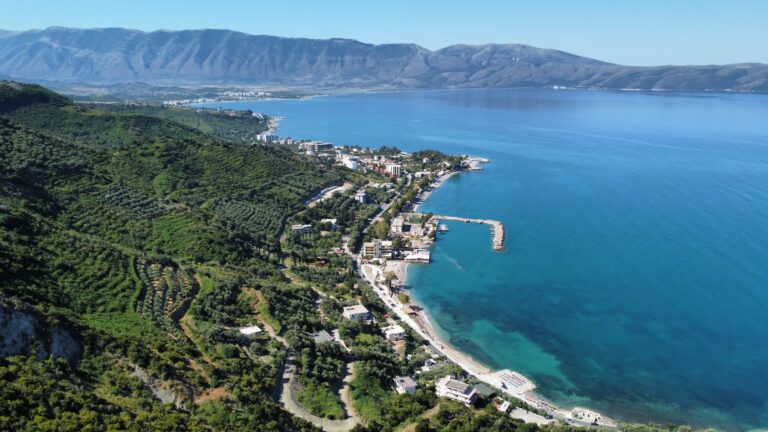
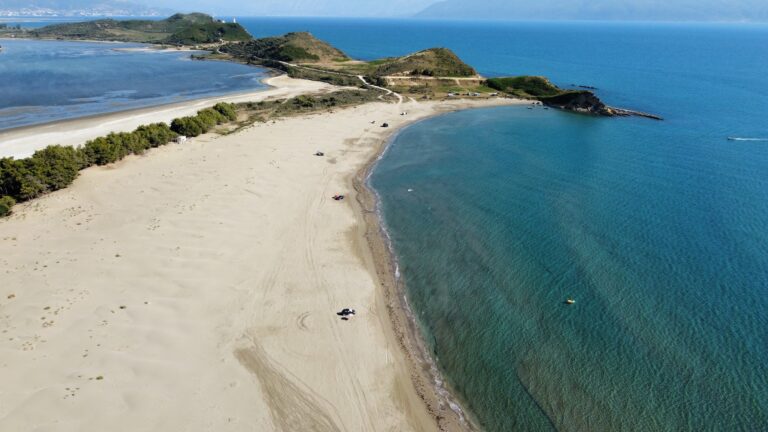
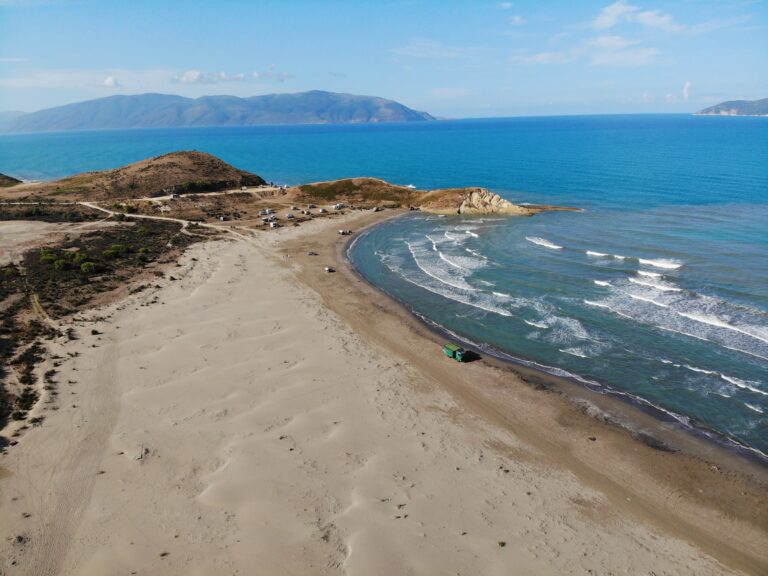
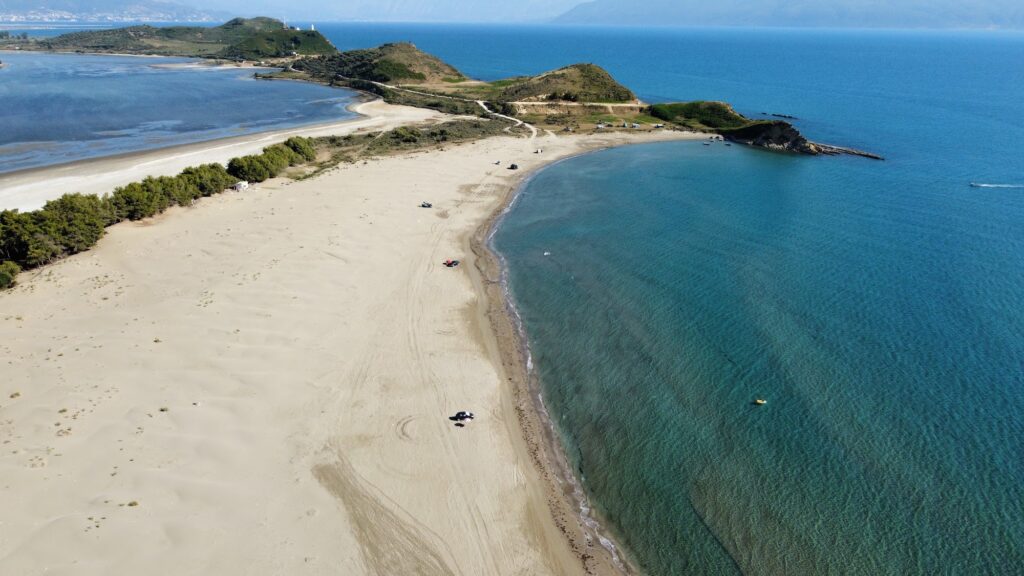
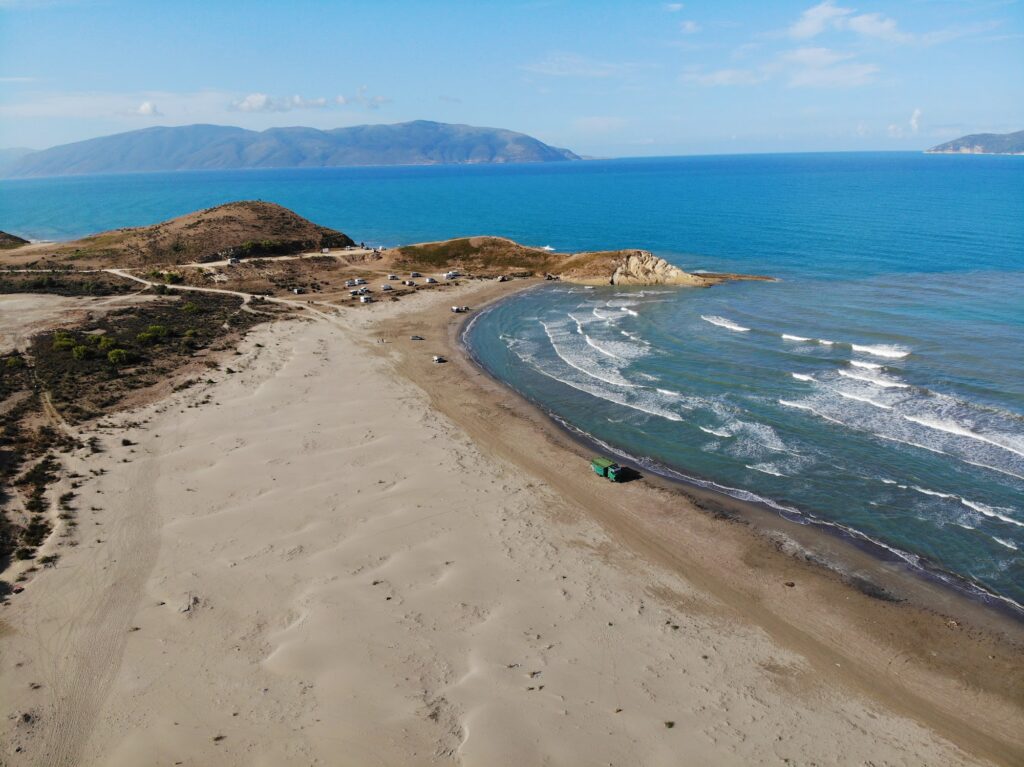
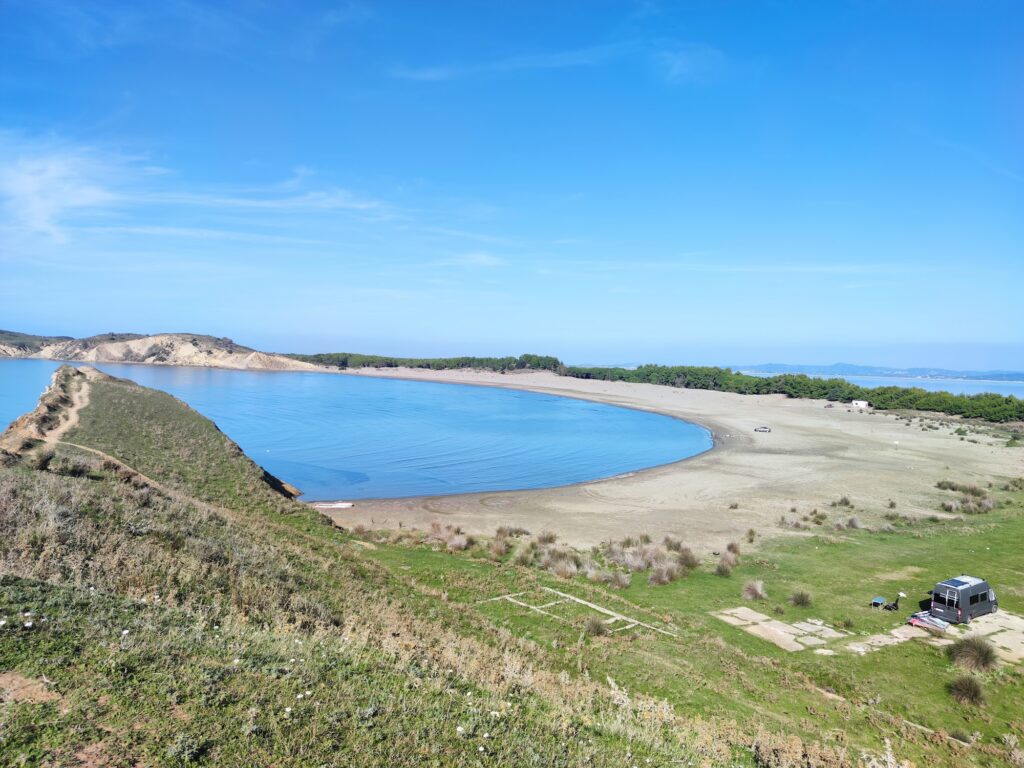
This is the fact that reorders everything else about Plazh Dalan. The beach is a narrow sand spit running between the Adriatic Sea on its western face and one of Albania’s most important wetland nature reserves on its eastern side. On the lagoon side, the shallow saline water hosts Greater Flamingos — the specific wading bird that the Narta Lagoon is classified as a Ramsar-listed internationally important wetland habitat to protect. The flamingos are present from autumn through spring in their greatest numbers, but visible throughout the year to those who walk to the lagoon edge.
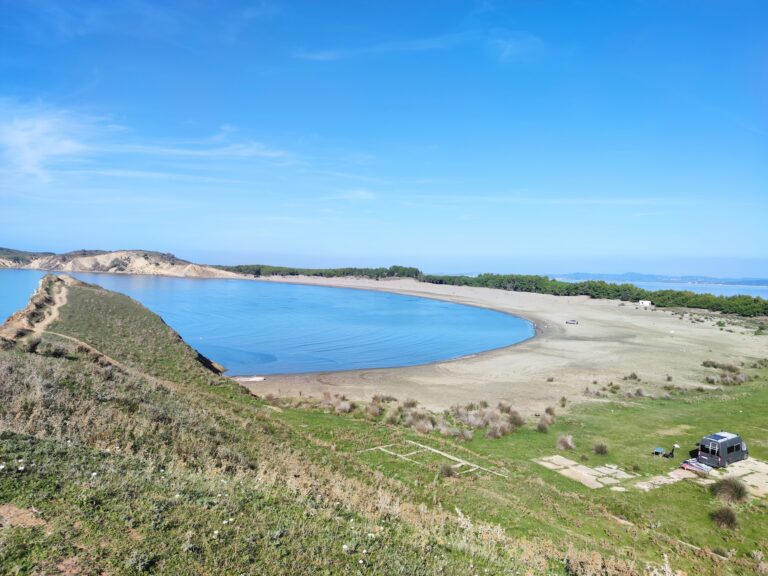
Plazh Dalan — also called Zvërnec Beach — is a wild, undeveloped stretch of Adriatic sand 12 to 14 kilometres north of Vlorë, accessible by a road through the pine forest that ends at a gravel track. The beach is backed continuously by pine trees and the lagoon, and its length depends on the measurement method: the narrow dune strip runs approximately 700 metres at its widest coastal point, but the accessible beach along the forest edge extends considerably further.
The character is established in the source article’s own most useful phrase: “hippie flair.” The beach has maintained a camp-and-beach counterculture since the communist-era military restrictions on coastal access were lifted — the combination of no permanent infrastructure, pine shade, shallow warm water, reliable kite wind, and the flamingo lagoon behind produces the specific type of visitor who comes deliberately rather than arriving by default.
Getting There: 12–14km North of Vlorë Through Pine Forest, Gravel Road Final Section, Bus to Zvërnec Then Walk
From Vlorë city centre, drive north on the road toward Zvërnec village — approximately 15 to 20 minutes. The road is tarmac to the village, then a gravel track continues to the beach through the pine forest. A standard car can navigate the gravel track in dry conditions; after rain it becomes more challenging.
By bus, the local service to Zvërnec from Vlorë main station takes approximately 30 minutes and drops passengers in the village, from which the beach is a 20-minute walk through the pine trees. A taxi from Vlorë port costs approximately €15 to €20 one way.
The pine forest approach — the final section of any arrival route — is the specific transition that the beach produces before revealing itself: the road narrows through the trees, the sea smell builds before the water appears, and the open sand arrives without preamble.
Zvërnec Island and the 13th-Century Byzantine Monastery: 270 Metres on a Wooden Footbridge
Zvërnec Island sits in the Narta Lagoon adjacent to the sand spit, connected to the shore by a 270-metre wooden footbridge over the shallow lagoon water. The island holds the Monastery of the Dormition of the Theotokos (the Monastery of Zvërnec) — a Byzantine Orthodox monastic site dating from the 13th century, one of the oldest religious buildings in Albania, rebuilt in the 16th century and used as a functioning monastery until the communist-era religious suppression of 1967 when Hoxha’s government declared Albania the world’s first atheist state and closed all religious sites.
The monastery is now restored and open to visitors. The wooden footbridge walk across the lagoon — with the flamingo habitat visible in the shallow water on both sides and the old monastery walls and cypress trees ahead — is the specific crossing that makes the monastery visit a distinct experience from a standard historical site. The combination of the flamingo lagoon, the wooden footbridge, and the medieval monastery at the end of it is the triple encounter that accounts consistently describe as the most memorable part of the Zvërnec visit.
The Hoxha Bunkers on the Hill: Drawings of an Invasion Fleet
On the hill behind the beach, Hoxha bunkers sit in the typical mushroom-shaped configuration of the regime’s coastal fortification programme. The specific detail that makes these bunkers distinctive from the many others that dot the Albanian coastline: the bunkers here have drawings of an invasion fleet on their walls — the paranoid regime’s own visual record of the attack it was fortifying against, rendered on the concrete that was meant to stop it.
The invasion never came. The bunkers remain, with their drawings, on the hill above the flamingo lagoon and the 13th-century monastery and the sand spit where kitesurfers fly in the reliable afternoon wind.
Kitesurfing: Winds Up to 40 Knots, Best in Afternoon, Thermal Conditions
The beach is exposed to the full fetch of the Adriatic from the northwest, and the thermal wind conditions that the interaction between the pine forest, the lagoon, and the open sea produces in the afternoon makes Plazh Dalan one of the most reliable kitesurfing sites in Albania. Wind speeds up to 40 knots are recorded. The morning hours are calmer — the window for families and swimmers before the kite wind builds.
The shallow water over the flat sandy seabed is the specific safety quality for kitesurfing beginners: you can walk 50 metres from the shore and remain in waist-depth water, which reduces the consequence of a kite fall compared to deep-water sites. Equipment hire and instruction are available from operators at the beach.
Camping: The Van Community, the Pine Shade, the Flamingos at Dawn
The pine forest behind the beach and the open sand spit make Plazh Dalan one of the most functional wild camping sites on the Albanian coast. No camping fees are charged. The pine forest provides natural shade and wind shelter. The combination of the silent lagoon edge at dawn, the flamingos visible in the shallow water, and the beach empty before the day visitors arrive is the specific camping payoff that repeat visitor accounts describe as the primary reason they return.
Narta Lagoon: 3,000 Flamingos, Ramsar Listed, Bird Watching Year-Round
Narta Lagoon is a Ramsar-listed wetland, covering approximately 42 square kilometres of shallow saline lagoon north of Vlorë. The flamingo count varies by season — up to 3,000 birds have been recorded at peak counts. The lagoon also hosts breeding colonies of the Little Tern, Avocet, Black-winged Stilt, and the Kentish Plover, alongside significant numbers of wintering and migrating waders and waterfowl. The lagoon is visible from the beach’s eastern edge at any point along the sand spit.
The combination of the Adriatic beach and the Ramsar wetland in the same location — separated only by the sand spit — is the specific ecological quality that makes Plazh Dalan unusual. Most beaches require driving to a separate nature reserve; here, the reserve is the immediate neighbour.
Plazh Dalan (Zvërnec Beach) 12–14km north of Vlorë is the sand spit between the Narta Lagoon flamingo reserve and the Adriatic Sea — 270-metre wooden footbridge to the 13th-century monastery on the island, Hoxha bunkers with drawings of an invasion fleet on the hill, kitesurfing winds up to 40 knots in the afternoon, free camping under the pine trees, 3,000 flamingos in the lagoon at peak season, gravel road access, no permanent facilities, and the hippie flair that the undeveloped character produces.
Drive north from Vlorë through the pine forest. Walk across the footbridge.
The flamingos are on the lagoon side. The kite wind arrives after noon.
Map
Sorry, no records were found. Please adjust your search criteria and try again.
Sorry, unable to load the Maps API.
Near by places: