Rana e Hedhun Albania: The Thrown Sand Dune Beach
Profile
Rana e Hedhun (Thrown Sand), Albania: The Wind-Made Dune That Was a Communist Military Zone Until the 1990s
Albania | Shëngjin | Lezhë County
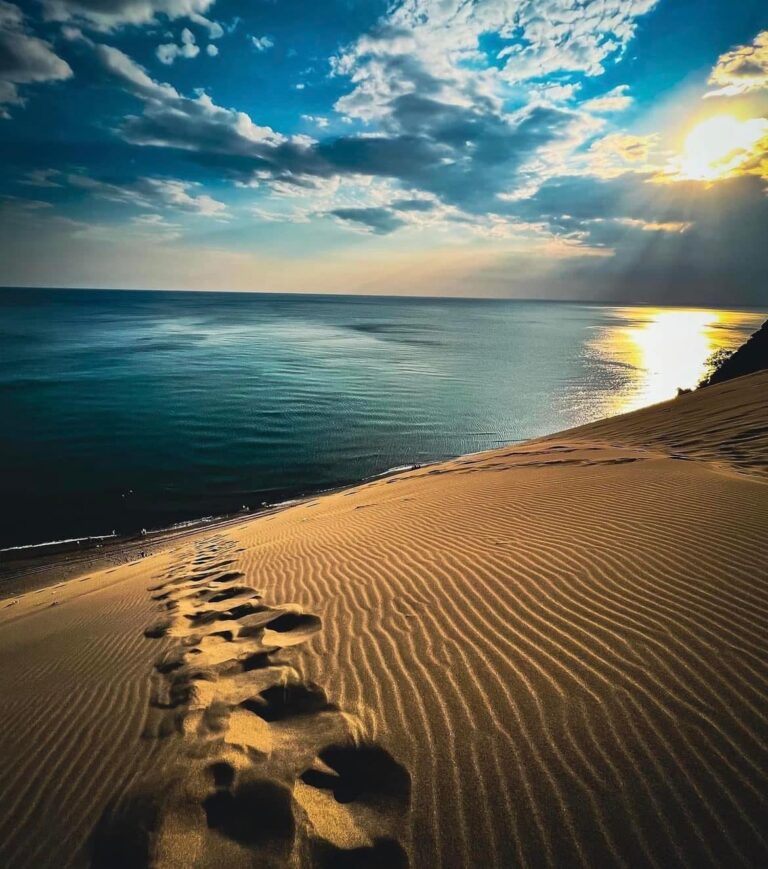
Rana e Hedhun was once a military zone during Albania’s communist era, inaccessible to the public. The dune and the beach beneath it were behind the wire for decades — part of the coastal fortification network that Enver Hoxha’s regime deployed along the full Adriatic and Ionian coastline to defend against the foreign invasion that never came. When the communist system collapsed in the early 1990s and the population that had never been permitted to see their own northern coastline finally arrived, what they found at Rana e Hedhun was a sand dune unlike anything else on the Balkan coast: a massive quantity of fine sand deposited by the persistent Murlani wind onto the steep slopes of the coastal mountains, creating the geological formation that the name describes — thrown sand, sand that the wind has thrown against the cliff face and left there.
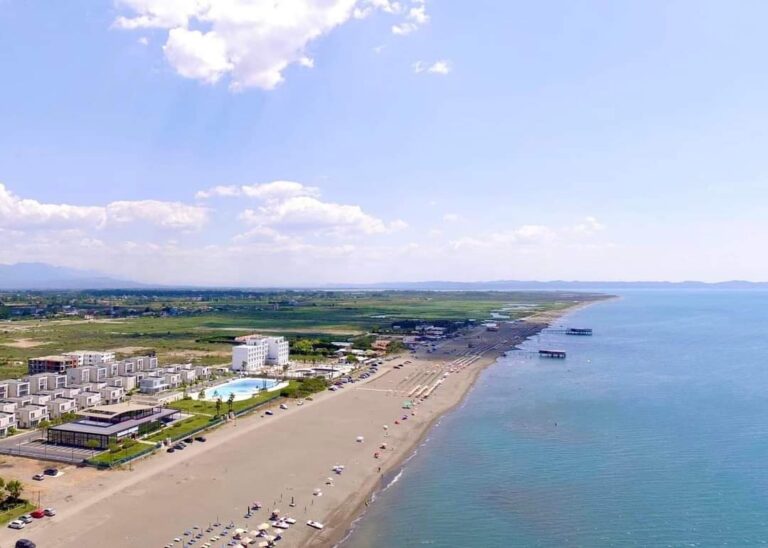
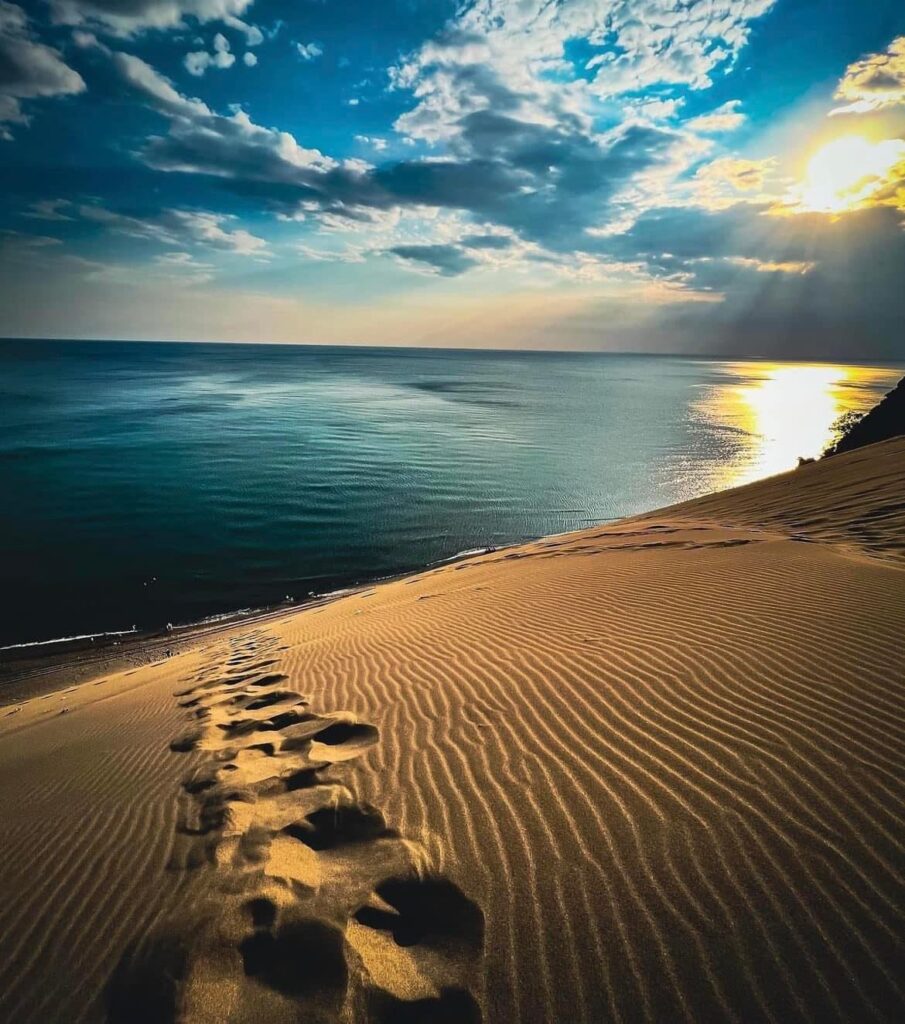
Rana e Hedhun, also known as Rëra e Hedhur, is a captivating beach located approximately 4 kilometres northwest of Shëngjin, Albania. Its name, translating to “Thrown Sand,” aptly describes the unique landscape where sand dunes meet the Adriatic Sea. These dunes, formed by the persistent northern wind called ‘Murlani,’ offer a rare sight in the Balkan region, setting it apart from the typical rocky beaches.
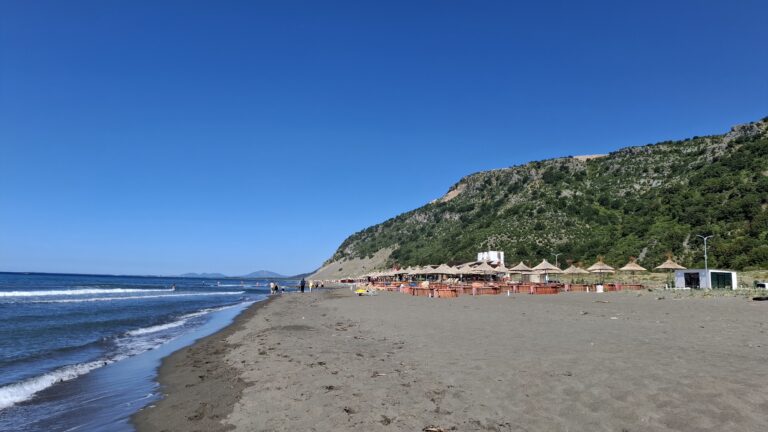
The quite unusual beach of Rana e Hedhun is located about three kilometres north of Shëngjin in a place where the wind has created dunes on the steep slope of the coastal mountains. It’s worth climbing to the top of the dunes, which are lined with pine trees, for a wonderful view of the sea and the surrounding hills.
Getting There: Narrow Asphalt Road 4km from Shëngjin, Free Parking, Taxi 10 Minutes, or Hike Along the Coast
The dunes can be reached almost by car from Shëngjin on a narrow asphalt road. Drive along the coast north for 10 minutes from Shëngjin to reach the main parking area. The road isn’t the best.
From Shëngjin town centre, the drive takes approximately 10 to 15 minutes north along the coastal road. A taxi from the centre of Shëngjin to Rana e Hedhun takes about 10 minutes. Expect to pay around 500 to 800 lek for the ride.
Parking is available near the beach and is generally free. There will be more people in the main parking area since it’s the easiest to get to, but if you walk for a bit toward the sand dunes, you should have more space.
A new road from Shëngjin runs along the coast to the resort town of Velipojë. It climbs up a hill to a viewpoint called Ballkoni Panoramik, which sits right above Rana e Hedhun beach. From there, you can see the whole northern Albanian coastline, from Cape Rodon to the Montenegrin border.
By foot from Shëngjin, the coastal walk takes approximately 45 to 60 minutes. The walk passes the area where the road-bent trees create their own specific mystery (see below).
The Dune: Sand Thrown by the Murlani Wind, Rare in the Balkans, Driveable on the Beach
The dunes, some covered in hardy shrubs, create a sense of secluded beauty. <strong>Rana e Hedhun</strong> is a wild and scenic spot, more about raw nature than developed resorts.
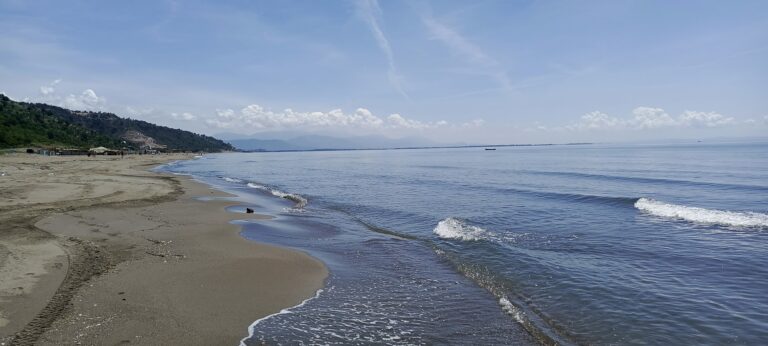
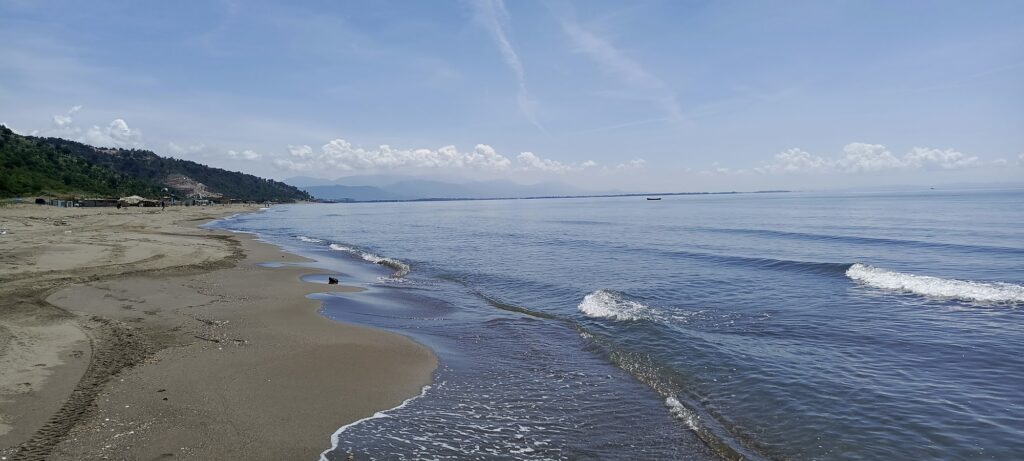
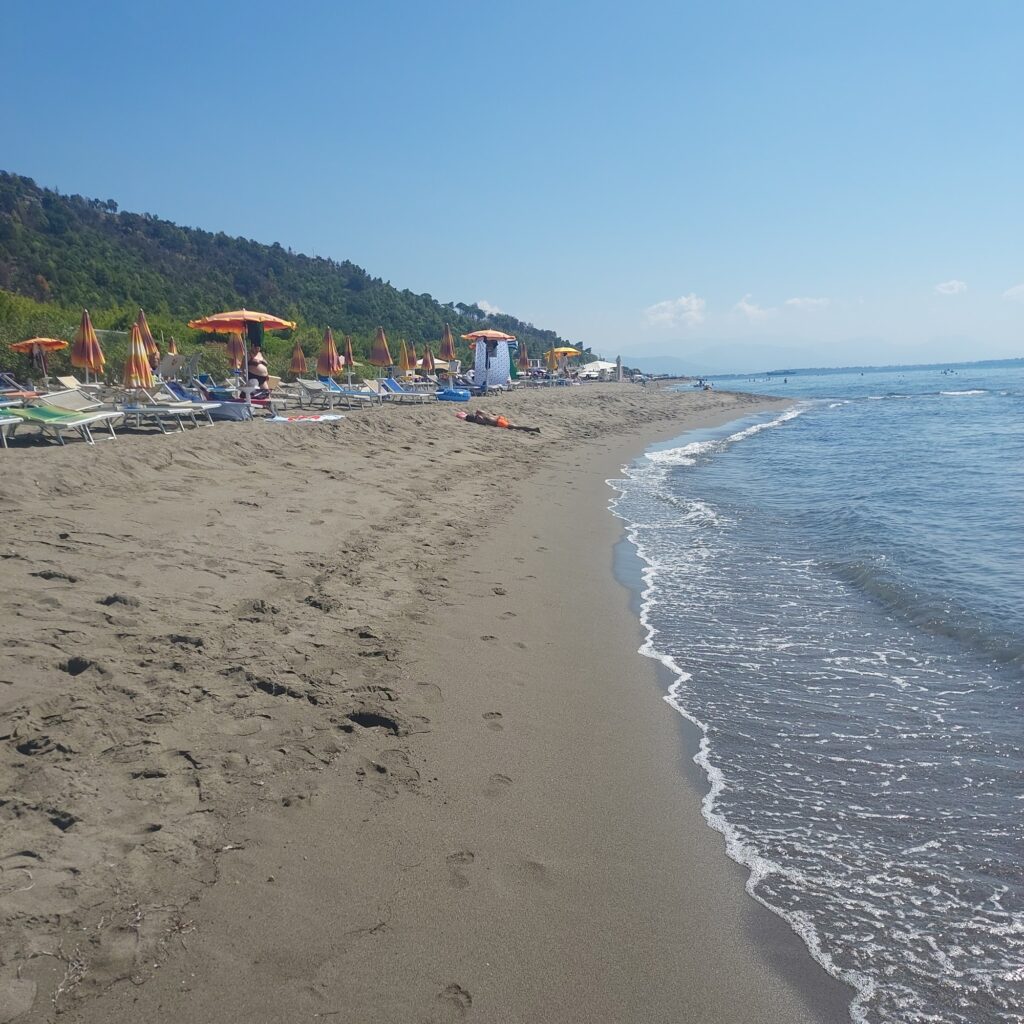
The beach itself is quite large and completely natural. Many Mediterranean beaches can be smaller so they get crowded easily. Rana e Hedhun has lots of space to walk and be far from others. Since there is so much space, you can do many fun things here. Besides normal water sports, you can play typical beach games. And since it is a long stretch of beach, many choose to drive on it.
Sand dunes of this scale are genuinely rare in the Balkans. If you’re familiar with the Balkan region of Europe, you’ll know sand dunes are not common at all, so this really sets this beach apart. The Murlani wind — the persistent northerly that blows down from the Dinaric Alps across the Adriatic — is the specific meteorological agent that built Rana e Hedhun over centuries. The dune’s position against the coastal mountain slopes, where the cliff face catches and holds the wind-transported sand rather than allowing it to disperse, is the geological coincidence that created the formation.
Climbing to the dune crest is the defining activity at Rana e Hedhun — the climb takes approximately 15 to 20 minutes on loose sand, and the view from the top encompasses the full northern Albanian coastline, the Adriatic horizon, and the mountains of Montenegro visible to the north on clear days.
The Trees Bent Toward the Sea
The trees along the road between Shëngjin and Rana e Hedhun face toward the sea — bent in the direction of the water despite a cliff directly behind them that should protect them from any onshore wind. Since a cliff face is directly behind them, protecting them, it seems unlikely that wind would come from land to bend them. How they became bent is still currently a mystery.
The bent trees facing the sea, the sand dune built by the onshore wind, and the cliff that protects vegetation behind it from wind while the dune builds in front of it — the specific microclimate of Rana e Hedhun is the result of a coastal wind geometry that the area’s topography produces in an unusual way. The trees record the wind history. The dune records the sand history. Both are unusual enough that the beach is described as striking even by visitors who have seen dunes elsewhere.
The Beach: Calm, Clear, Less Developed Than Shëngjin, €5 Sunbeds
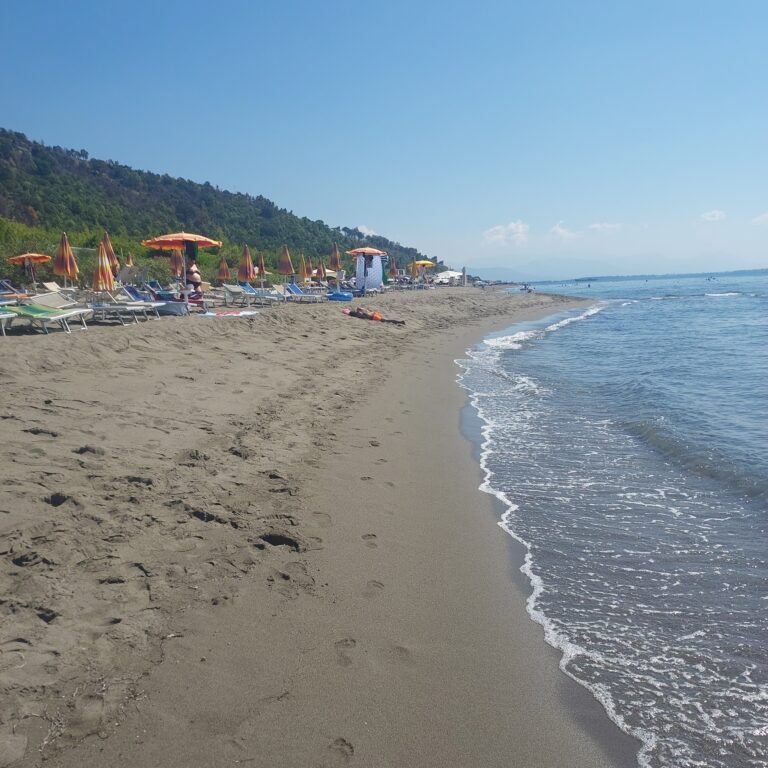
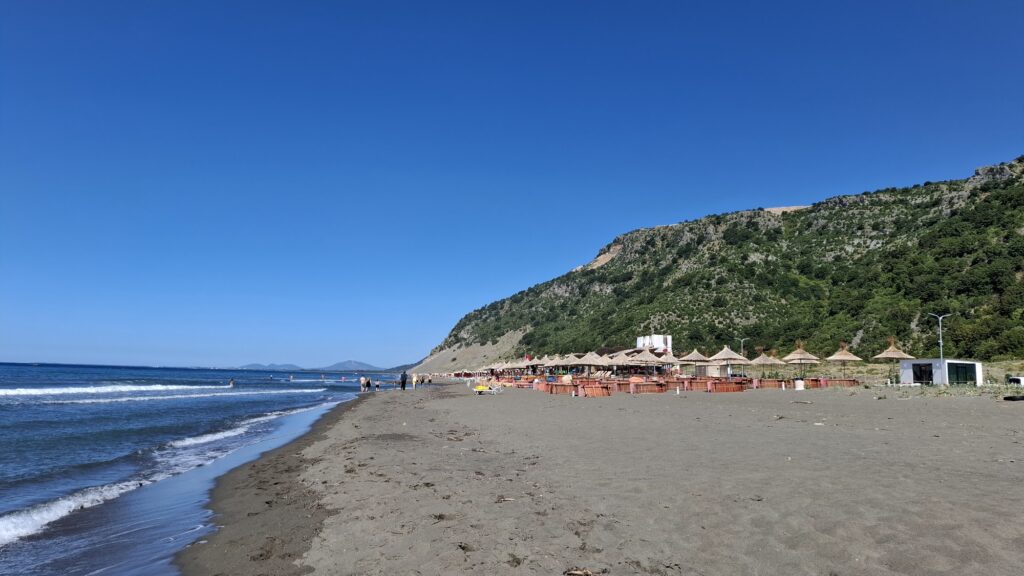
The sand is soft and pale, sloping gently into water that shifts from turquoise to deep blue. The dunes, some covered in hardy shrubs, create a sense of secluded beauty. It’s rarely crowded, offering a peaceful escape with the sound of waves and wind. While facilities are minimal, its unspoiled character is the main appeal. The access road is unpaved, adding to the off-the-beaten-path feel.
There is a beautiful sandy beach, very large, ideal for children because there is foot away and free parking everywhere. There are bars and we rented deckchairs and umbrella for 5 euros all. We really liked this beach because it is quiet, far from the crowds of Shëngjin beach where there are only deckchairs on top of each other. It is only 5km from the city.
The €5 sunbed price is the specific value detail that makes Rana e Hedhun the better-value option relative to Shëngjin town beach (€10 to €15 per set). The quieter atmosphere, the larger space, and the cheaper organised facilities are the three practical advantages that Rana e Hedhun consistently offers over the main town beach.
The UNUM Festival and the Electronic Music Connection
In 2019, the electronic music festival UNUM took place in Rana e Hedhun — the first such event to be organised on the Adriatic Sea coast of Albania, rivalling similar events along the Albanian Riviera.
The choice of Rana e Hedhun as the UNUM festival venue was the specific event that introduced the dune to the international electronic music community — the dramatic natural backdrop of sand, mountains, sea, and pine forest providing the visual setting that distinguishes the festival from its competitors in Ksamil and Dhërmi to the south.
The Ballkoni Panoramik: The Elevated View of the Full Northern Coast
The Ballkoni Panoramik viewpoint sits right above Rana e Hedhun beach on the new coastal road to Velipojë. From there, you can see the whole northern Albanian coastline, from Cape Rodon to the Montenegrin border.
The viewpoint is accessible from the road that bypasses the dune above — the new asphalt road built between Shëngjin and Velipojë that opened the northern coast to traffic more conveniently than the beach road below. Stopping at the Ballkoni Panoramik before descending to the beach gives the complete orientation: the dune below, the coastline north and south, the mountains inland, and the Adriatic horizon.
Just a heads-up: the area is known for snakes, so watch your step!
Rana e Hedhun and Shëngjin: The Two-Beach Programme
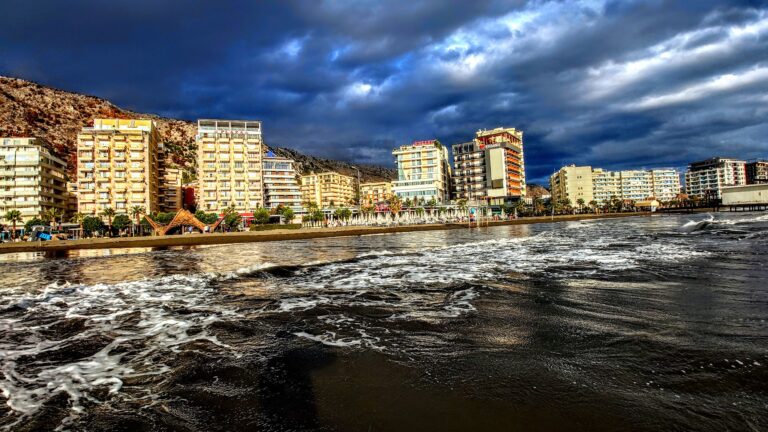
Shëngjin Beach Albania is 4 kilometres south — the 3km sandy resort town that is the accommodation and service base for visitors to this part of the northern coast. The standard programme: base in Shëngjin, drive 10 minutes north to Rana e Hedhun for the beach day, return to Shëngjin for the evening restaurant and promenade.
For visitors who want the dune experience and none of the crowded town beach, staying in one of the smaller guesthouses in the Rana e Hedhun area directly — the few accommodation options that have opened in the dune zone since the area opened after the communist era — is the specific programme that maximises the specific quality of the location.
Rana e Hedhun (Thrown Sand) near Shëngjin in northern Albania is the sand dune built by the Murlani wind against the coastal mountain slopes — former communist military zone, opened after 1990, €5 sunbeds and free parking, trees bent inexplicably toward the sea, the Ballkoni Panoramik viewpoint above on the new coastal road, the dune climb 15 to 20 minutes to the top, the UNUM electronic festival in 2019, snakes in the vegetation (watch your step), and Shëngjin 4 kilometres south for accommodation and services.
Drive north from Shëngjin for 10 minutes. Park free. Climb the dune.
The view from the top is the full northern Albanian coast. The trees facing the wrong way are still unexplained.
Map
Sorry, no records were found. Please adjust your search criteria and try again.
Sorry, unable to load the Maps API.
Near by places: