Laguna Beach Ksamil: Albania's Famous Ionian Resort
Profile
Laguna Beach Ksamil, Albania: One of Several Named Beaches in the Communist Village That Became the Albanian Riviera’s Most Famous Resort
Albania | Ksamil | Albanian Riviera
Ksamil was built in 1966 during the communist era and is located south of Sarandë off the road to Butrint. In 1992, the village was inhabited by a mixed population of Muslim Albanians (1,125), Greeks (520) and Orthodox Albanians (210). The village that Albanian communist urban planners built as a coastal settlement in 1966 is now Albania’s most talked-about beach resort, with property prices climbing year on year as the international travel media continues to describe it as “undiscovered” while simultaneously ensuring that it is not. The Caribbean white sand beaches in Ksamil gave the town a great tourism boost. Albanians from Kosovo and other Albanian-speaking areas visited Ksamil in recent years, but more and more international tourists are visiting the beach. This leads, for example, to new hotel facilities, but also to more expensive prices.
In 2010, national authorities demolished over 200 illegal structures in Ksamil that violated the town’s master plan and the integrity of Butrint National Park. The remains of the demolished buildings have yet to be removed by authorities.
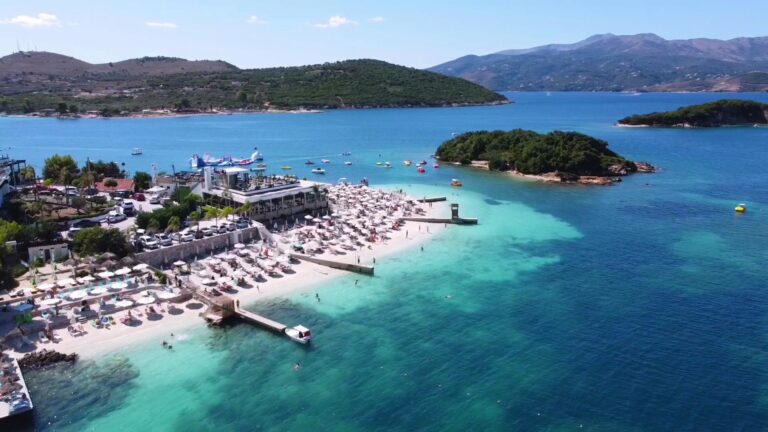
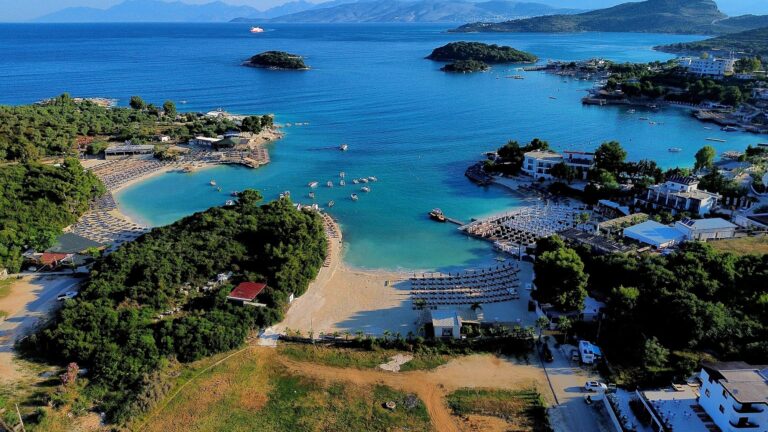
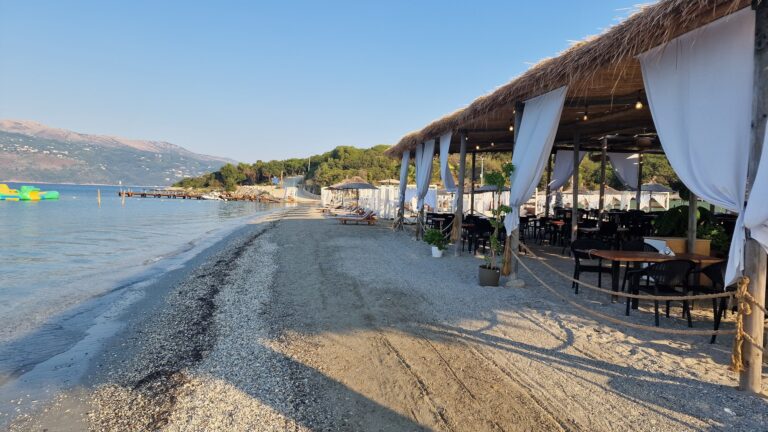
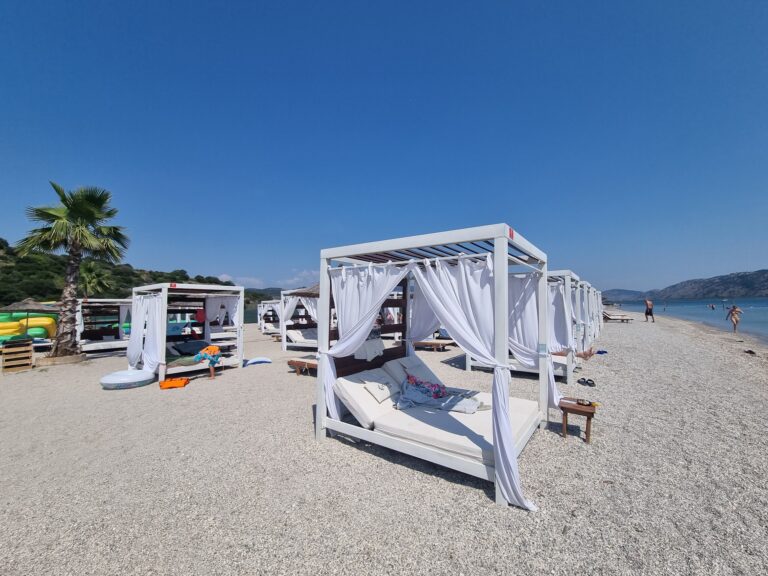
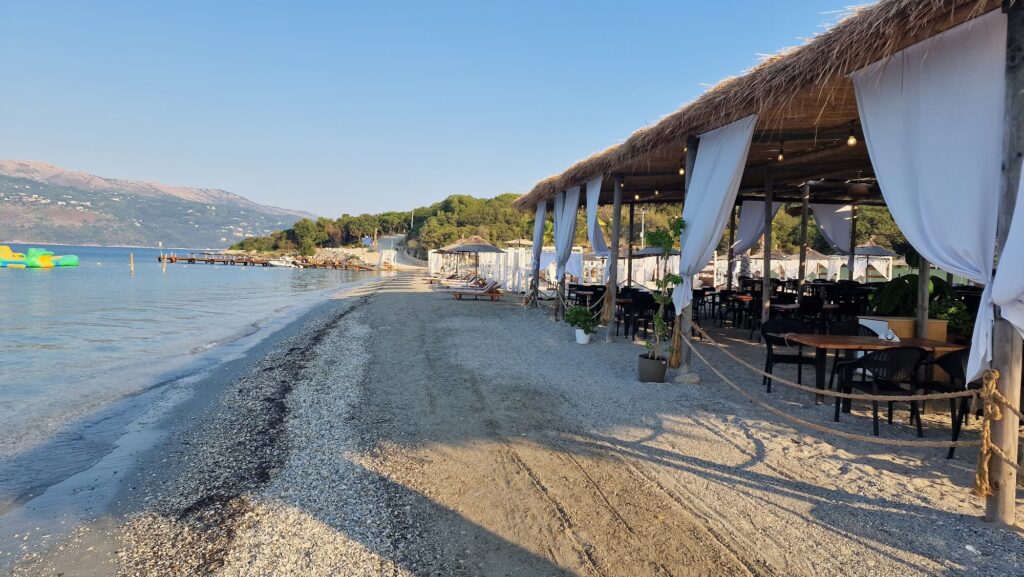
Laguna Beach is one of several named beach sections in Ksamil — alongside Bora Bora Beach, Lori Beach, Mirror Beach (Plazhi i Pasqyrave), and the main Ksamil Beach — each occupying different positions around the bay. The specific character of Laguna is the sheltered position within the bay, the white sand, and the managed beach club setup that the boutique hotel adjacent to the section provides. It is the same Ionian water as the rest of Ksamil’s beaches — the same turquoise colour, the same excellent clarity, and the same four islands visible offshore.
Getting There: 14km from Sarandë by Bus (150 Lek), Saranda-Butrint Road, Corfu Ferry Connection
Ksamil is 14 kilometres south of Sarandë along the SH81 road toward Butrint. To come to Ksamil from Sarandë you can use the bus — it costs 150 lek per person — or you can get a taxi. You can also use the same bus to go to Butrint and come from Butrint to Ksamil.
From Tirana, the drive takes approximately 4 to 4.5 hours via the SH8 coastal highway south. By bus from Tirana to Sarandë (approximately €15 to €20), then the local bus the remaining 14 kilometres to Ksamil.
Sarandë is accessible from Corfu by ferry — 2 hours by standard ferry or 50 minutes by hydrofoil. This is the most popular approach from western Europe: fly to Corfu, take the ferry to Sarandë, bus to Ksamil. Corfu is visible from Ksamil beach on clear days — approximately 2 kilometres across the Ionian at the narrowest channel point.
From the bus stop at Ksamil town centre, Laguna Beach is a 5 to 10-minute walk along the coastal path following the signed beach sections.
The Four Ksamil Islands: Three Accessible by Boat, the Closest by Swimming
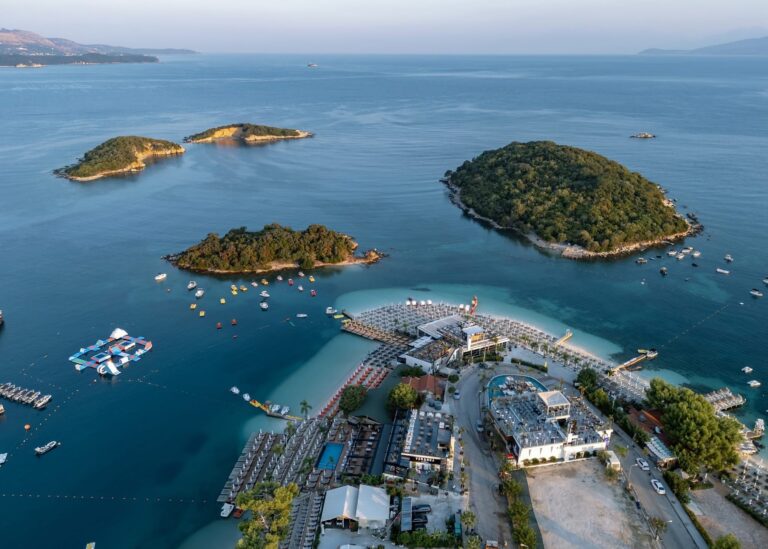
The first island is one you can easily swim to from the main beach. Isole Gemelle di Ksamil was a favourite spot. From above, the two adjoining islands look like wings. One of the highlights was discovering a secluded cove where we swam and sunbathed undisturbed. We spent a few hours island hopping and did a full loop around the big Ksamil Island.
The rocky Islands of Ksamil that are remote can only be accessed by boat.
The four small islands — the three closest to the main Ksamil bay, plus the larger Ksamil Island — are the specific visual feature that distinguishes Ksamil from the mainland beach experience. The island nearest the main beach section can be swum to (approximately 200 to 300 metres in calm conditions); the others require the boat taxi service that departs from the beach piers throughout the day. Each island has a small pebble or sand beach on at least one side. The boat taxi fare is negotiated with the boatmen at the pier.
The kayak rental from Bora Bora Beach (adjacent to Laguna) is the alternative to the boat taxi — renting a kayak and island-hopping independently gives the flexibility to land where the boats haven’t deposited organised tour groups.
Laguna Beach Specifically: White Sand, Boutique Bar, Shallow Clear Water
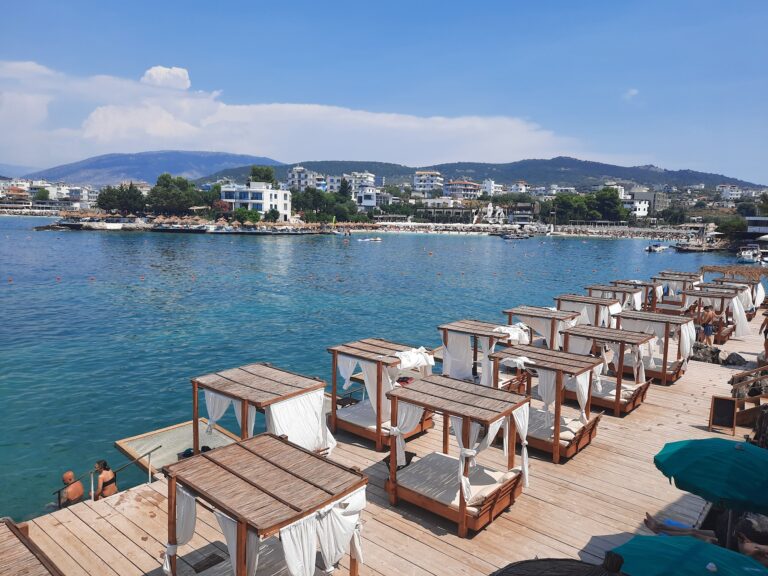
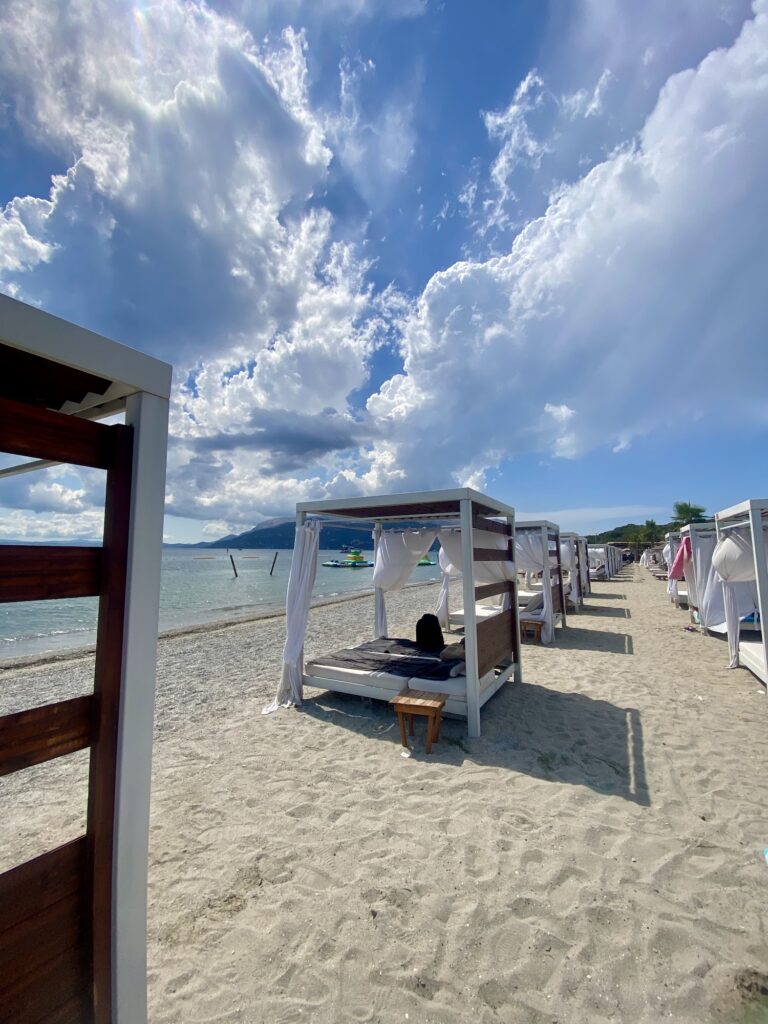
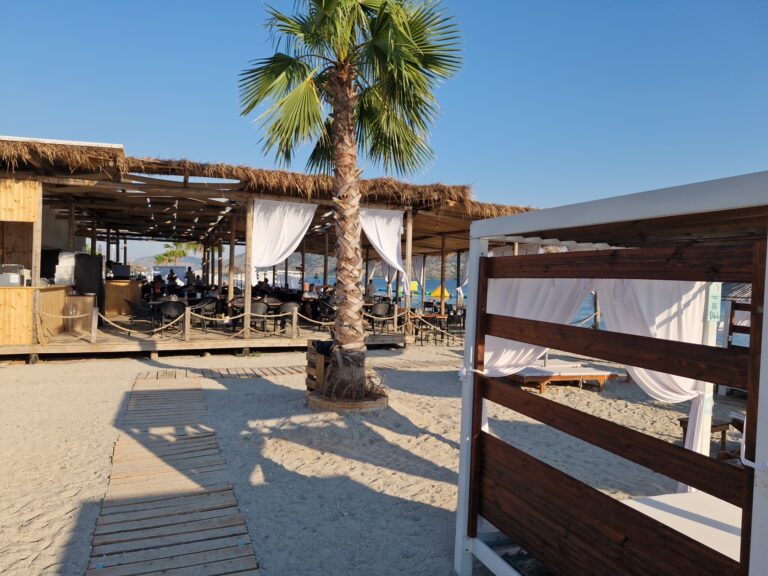
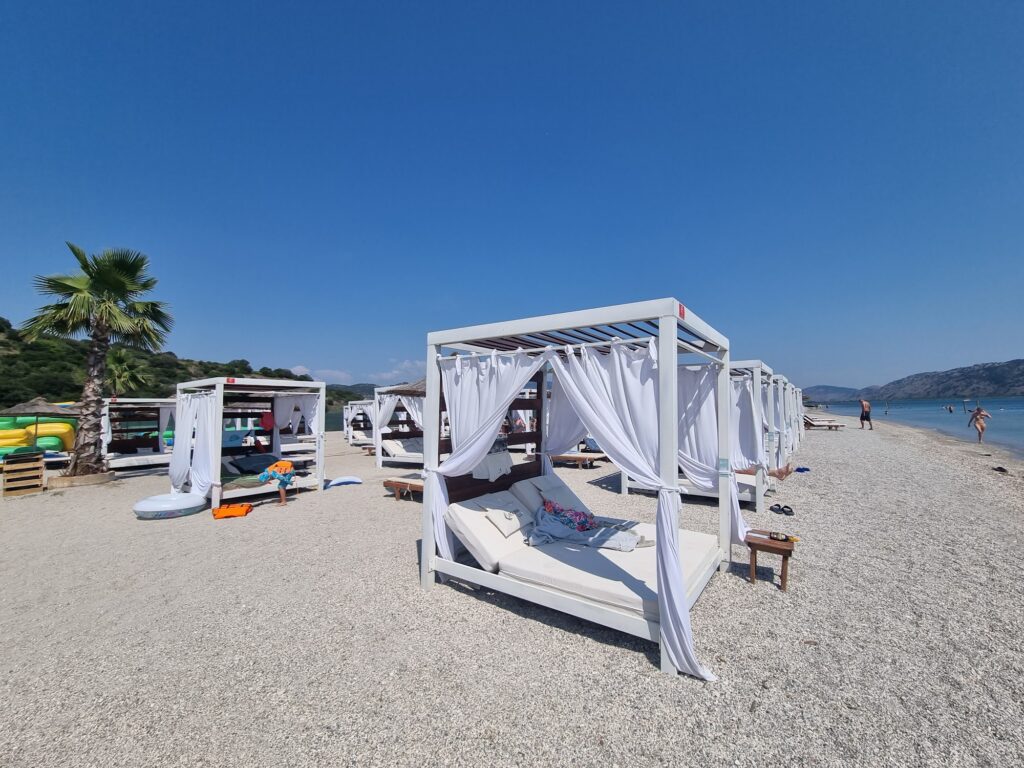
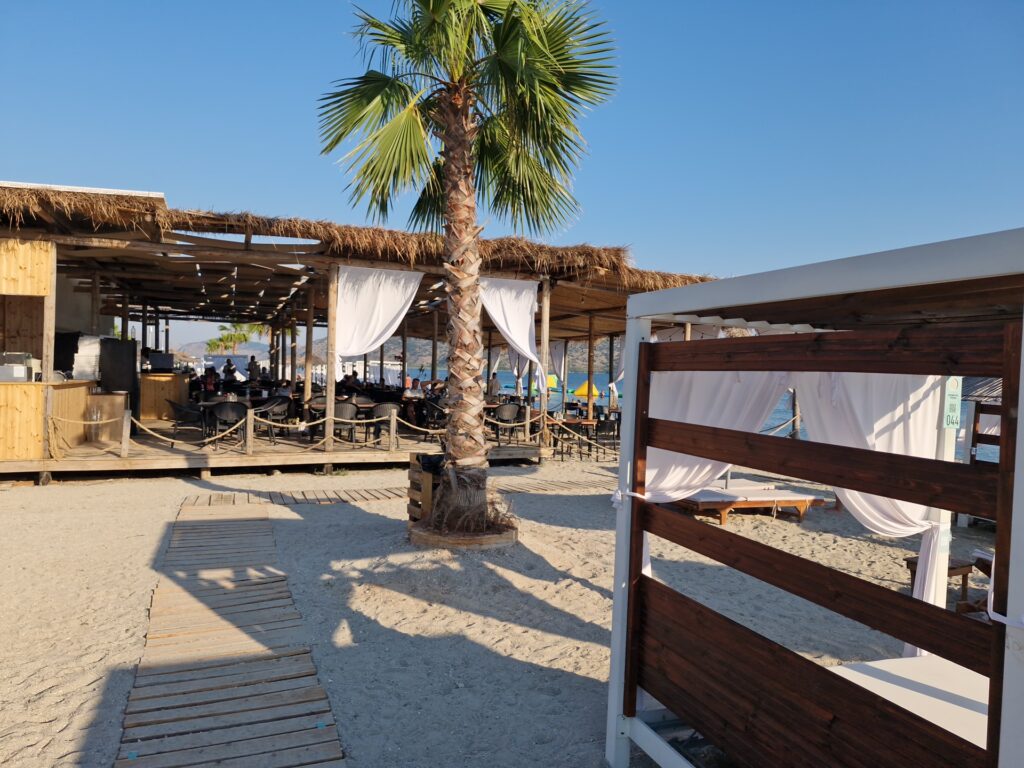
Laguna Beach in Ksamil is one of the smaller, more curated beach sections — white sand, wooden sunbeds with cushions, a beach bar and restaurant, and the shallow Ionian water clarity that makes the bottom visible throughout the swimming depth. The section is boutique rather than expansive: capacity is limited, the atmosphere is quieter than the adjacent Bora Bora Beach section (which the visitor accounts describe as the livelier alternative), and the beach bar service delivers to sunbeds.
The honest context: every beach in Ksamil is within a short walk of every other. The “different beaches” of Ksamil are more like different sections of the same continuous bay shoreline than genuinely distinct destinations. The specific choice of which named section to base a beach day at is largely about which beach bar you want to eat and drink at, since the water quality and the island view are effectively identical across the Ksamil bay.
Butrint National Park: UNESCO Site, 2,500 Years of History, 15 Minutes Away
The 2,500-year-old city of Butrint, which was the first Albanian site to be declared a UNESCO World Heritage Site in 1992, occupies 11 square miles of the 35-square-mile national park of the same name. Butrint National Park is located a little less than 12 miles from the Greek-Albanian border.
Butrint National Park is a 15-minute drive from Ksamil. We spent a few hours wandering through the remains of this ancient city, which features Greek, Roman, Byzantine, and Venetian influences. The ancient theater, Roman baptistery, and Venetian castle were particularly impressive.
The Butrint visit is the cultural programme that every Ksamil beach day is adjacent to. The town’s founding myth traces to Trojan refugees fleeing the fall of Troy — Helenus, the son of Priam, is said to have founded it. The standard programme: morning swim at Ksamil, afternoon Butrint visit (1.5 to 3 hours), return to Ksamil for the beach bar sunset.
The Blue Eye (Syri i Kaltër): The Day Trip North
Syri i Kaltër (the Blue Eye) — a karst spring near Muzinë, approximately 25 kilometres north of Ksamil — is the most popular day excursion from the area. The spring produces brilliant deep blue water from an underground source at 18°C year-round, the colour produced by the light refracting through the deep spring pool. The short walk from the car park to the spring passes through dense oak forest. Swimming in the spring pool is possible but extremely cold — most visitors wade in briefly and leave the sustained swimming to the few who can tolerate 18°C for longer.
The Price Warning: Rising Fast, Still Below Greece
Ksamil prices for accommodation, food, and beach clubs have risen substantially from the levels that made the place famous as the “budget Mykonos” of the Adriatic. The price trajectory is upward and fast. Visitor accounts from 2022 and 2023 describe prices significantly lower than the same accounts from 2025 and 2026. The advantage over comparable Greek island experiences remains, but it is narrowing.
The practical advice: visit in May, June, or September for the best combination of weather, water temperature, prices, and crowd levels. July and August are peak season with the highest prices, the most crowded beaches, and the accommodation that requires advance booking.
Laguna Beach Ksamil in Albania is one of several named beach sections in the communist-era village that became the Albanian Riviera’s most famous resort — founded 1966, 200 illegal structures demolished 2010, four islands visible offshore, the closest swimmable, Butrint UNESCO World Heritage Site 15 minutes away, Corfu visible across 2 kilometres of Ionian, prices rising fast, best in May/June/September.
Take the bus from Sarandë for 150 lek. Walk to the beach.
Swim to the first island. Go to Butrint in the afternoon.
Map
Sorry, no records were found. Please adjust your search criteria and try again.
Sorry, unable to load the Maps API.
Near by places: