
Paralia EOT Alexandroupolis: Where Odysseus Fought
Profile
Paralia EOT Alexandroupolis Greece: The City That Changed Names, the Beach That Changed Everything Around It
Greece | Alexandroupolis | Evros, Eastern Macedonia and Thrace
The coastline where Paralia EOT now sits was not always considered appropriate for swimming. The western shore of Alexandroupolis was officially recognised as suitable for bathing only in 1990, when the Greek National Tourism Organisation — EOT — took the site under its management and began the process that turned an unremarkable stretch of urban coast into the city’s principal organised beach. That date is specific enough to anchor something important: the beach is younger than most of the people who swim at it regularly, a fact that sits oddly against the very old landscape it occupies.
The land around Alexandroupolis has held people since the Neolithic period, roughly 4,500 to 3,000 BC, and the people who occupied this coast when it was still anonymous were the Cicones — the Thracian tribe that Odysseus and his crew encountered, fought, and were driven away from after raiding their city of Ismaros on the return journey from Troy. That coastline is the same water the beach looks out onto now, the Thracian Sea extending south toward Samothrace, the island visible on clear days from the water’s edge. The beach is recent; the history is not.
The city itself is also newer than it looks. Alexandroupolis began as Dedeağaç, a small fishing settlement founded in the 19th century under Ottoman rule by fishermen from Ainos and the villages of Makri and Maroneia. It grew into a regional trading centre, benefited from the arrival of the Istanbul–Thessaloniki railway in 1896, passed between Bulgaria and Greece multiple times across the early 20th century, and was officially incorporated into Greece on 14 May 1920 — a date still celebrated annually as Eleutheria, Freedom Day, with a parade and cultural programme that runs through the entire month of May. The city was renamed in honour of King Alexander I of Greece after his visit, abandoning the Ottoman name entirely.
Getting to Paralia EOT Alexandroupolis Greece: In the Western City, Walking Distance From the Centre
The beach occupies the western end of the city’s seafront, adjacent to the city centre and reachable on foot from the main commercial streets within a few minutes. Arriving by car means parking along the coastal avenue or in the streets immediately behind it, with spaces generally available outside the mid-morning to mid-afternoon peak on summer weekends when the beach is at its busiest. The coastal promenade runs from the city centre westward toward the beach, making the walk along it as much a part of arriving as the beach itself.
From Thessaloniki, the drive covers approximately 340 kilometres on the Egnatia Odos motorway — the modern version of the ancient Via Egnatia that connected the Adriatic to Constantinople — and takes between three and a half and four hours. Trains connect Thessaloniki to Alexandroupolis on the main Thessaloniki–Istanbul line, the journey taking between four and five hours. The city airport operates domestic flights from Athens, with the airport approximately seven kilometres from the city centre. From Athens by road, the distance runs to roughly 680 kilometres via the Egnatia Odos.
Paralia EOT Alexandroupolis Greece: Sandy Shore, Blue Flag Water, a Complex Rather Than Just a Beach
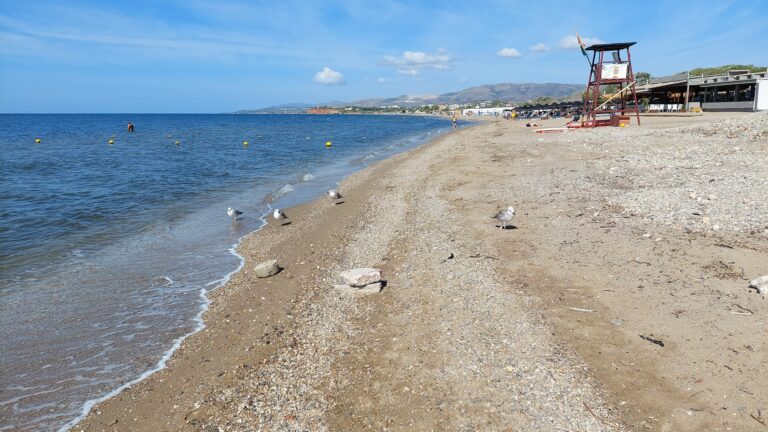
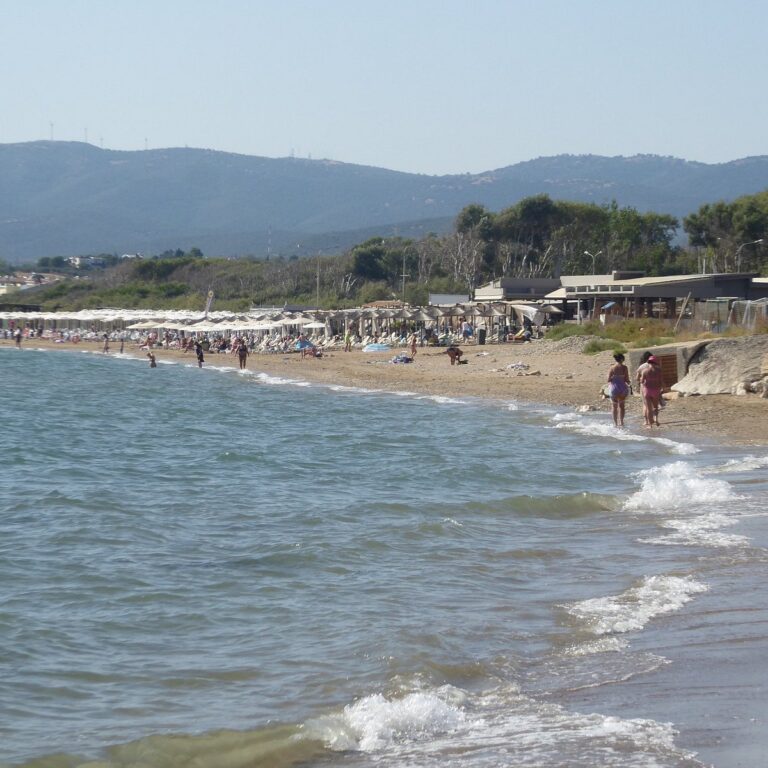
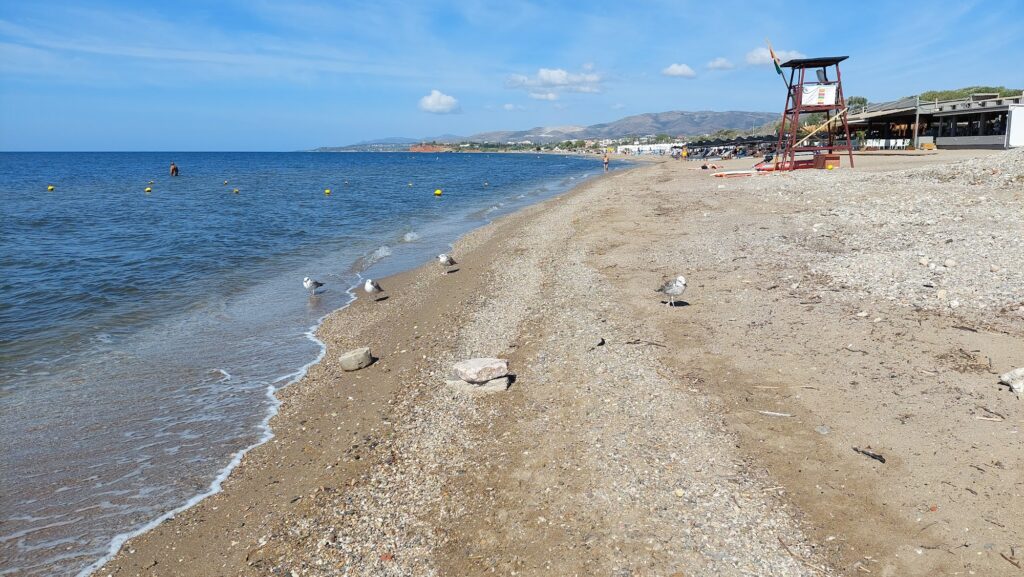
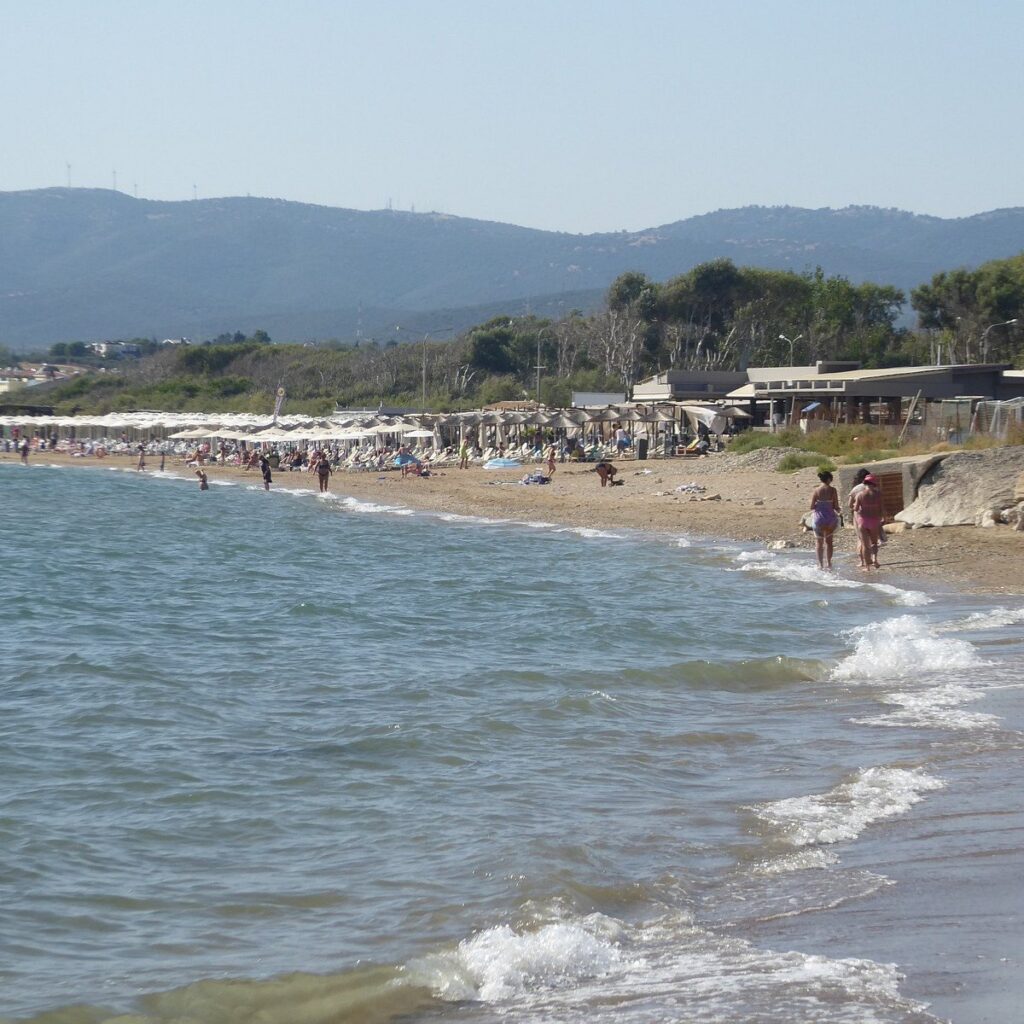
The beach is sandy, the slope into the water gradual enough for confident use by children and less experienced swimmers, and the water holds Blue Flag certification — the annual standard for water quality and environmental management that has applied consistently since the beach’s organised infrastructure was established. The sand extends as a wide strip between the water and the road, with enough depth to accommodate the summer numbers that arrive from the city and from visitors using Alexandroupolis as a base for the region.
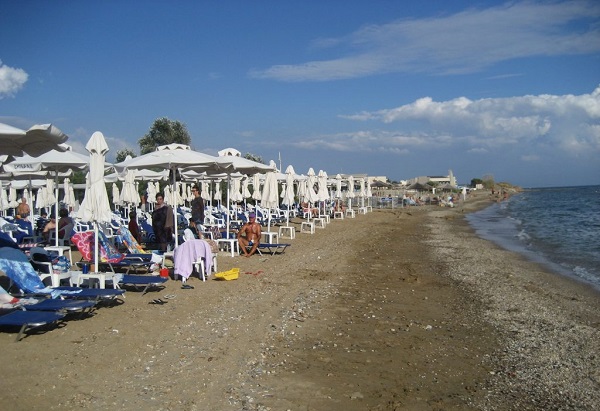
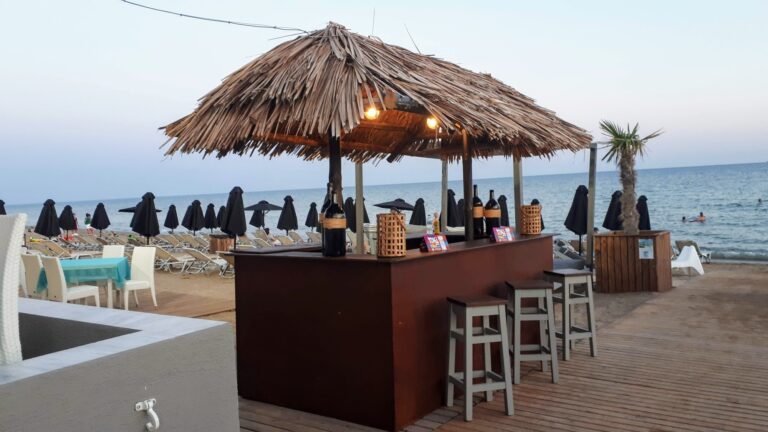
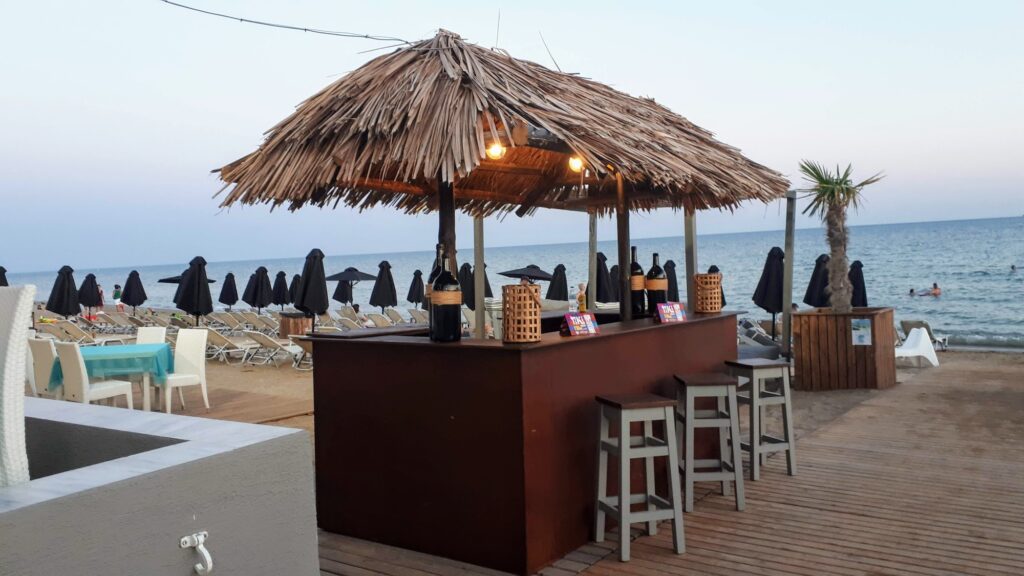
The organised complex behind the beach extends the experience considerably beyond swimming. Tennis courts, basketball courts, and volleyball courts give the site a sports centre character alongside its beach function — a combination that makes the EOT beach a daily destination for city residents through the summer rather than purely a weekend excursion point. Sunbeds and umbrellas are available for rent, with free zones alongside the organised sections. A cafeteria and mini-market provide food and drink on site. Camping facilities exist for anyone wanting to overnight rather than day-visit. Showers and changing facilities are maintained as part of the complex’s infrastructure. The entrance fee, a specific quality that sets this beach apart from many of the unorganised alternatives along the Evros coast, pays for the maintenance standards that support the Blue Flag designation.
Directly adjacent to the beach, the Municipal Grove — a shady public park — provides an alternative to the open sun of the beach itself, and the two together function as a combined leisure space rather than simply a beach with a road behind it. The connection between the grove and the beach means that a full day here does not require choosing between the water and shade at any particular hour.
The Ethnological Museum of Thrace and What the City Offers Beyond the Shore
The Ethnological Museum of Thrace sits 1.5 kilometres from the beach and holds one of the most significant collections documenting the material culture, traditions, and history of Greek Thrace and the wider region. The museum preserves objects and records from the various peoples who have inhabited this territory across the centuries — Thracian, Byzantine, Ottoman, Bulgarian, and Greek — alongside documentation of the refugee communities who arrived after the population exchanges of the early 20th century. The collection reflects the specific complexity of a region that has changed administration more times than most parts of Greece and carries the layered cultural result of that history.
The lighthouse in the port, visible from the beach looking east toward the city, is one of the landmarks that photographs of Alexandroupolis use to establish the city’s identity. The port itself functions as the departure point for ferries to Samothrace, the nearest island, with crossings running approximately two hours. The daily ferry connection makes Samothrace a realistic day trip from the beach, and the island’s combination of mountain terrain, ancient sanctuary of the Great Gods, and the natural rock formations of its coastline provides a specific counterpoint to the organised urban beach character of Paralia EOT.
The Evros Delta and What the Region Adds to a Stay in Alexandroupolis
The Evros River Delta, one of the most significant wetlands in Europe and a protected Ramsar site, lies to the east of the city. The delta provides habitat for hundreds of bird species, including rare migratory visitors, and the region around it carries the specific character of a landscape shaped by the river and its cycles rather than by human settlement or agricultural logic. Alexandroupolis functions as the most practical base for visiting the delta, with organised birdwatching tours departing from the city and the delta itself accessible by car in under an hour.
The Dadia Forest, further north in the Evros regional unit, holds one of the largest populations of birds of prey in Europe, including black and griffon vultures, and is part of the same protected zone as the delta. The combination of delta, forest reserve, and coastal city within a single regional unit gives Alexandroupolis a range that few similarly sized Greek cities can offer, and the beach on the western seafront is simply the most immediately accessible of the region’s attractions rather than its primary one.
The thermal springs of Traianoupolis, a short drive west, were used in Roman and Byzantine times and remain in operation today — the ruins of a Byzantine staging post on the ancient Via Egnatia sitting adjacent to the working spa infrastructure. Makri, the nearest beach resort to the west, has an organised beach of its own and a character more specifically oriented toward the summer visitor than Alexandroupolis city itself.
The beach is the accessible version of a region that rewards considerably more than a single afternoon. Swim in the morning before the sea temperature peaks. Walk east along the promenade toward the lighthouse afterward. Take the ferry to Samothrace at least once if the trip allows. The beach is organised, reliable, and specifically Greek in the particular way that the Thracian north is Greek — an overlay of administered modernity on a coast where Odysseus once fought the Cicones and where the treaties that determined the city’s current name were written less than a century ago.
Map
Sorry, no records were found. Please adjust your search criteria and try again.
Sorry, unable to load the Maps API.