
Agia Paraskevi Beach Spetses: The Island's Own Scent
Profile
Agia Paraskevi Beach Spetses Greece: The Island Calls Itself the Island of Aromas, and This Beach Is Why
Greece | Agia Paraskevi | Spetses, Saronic Islands
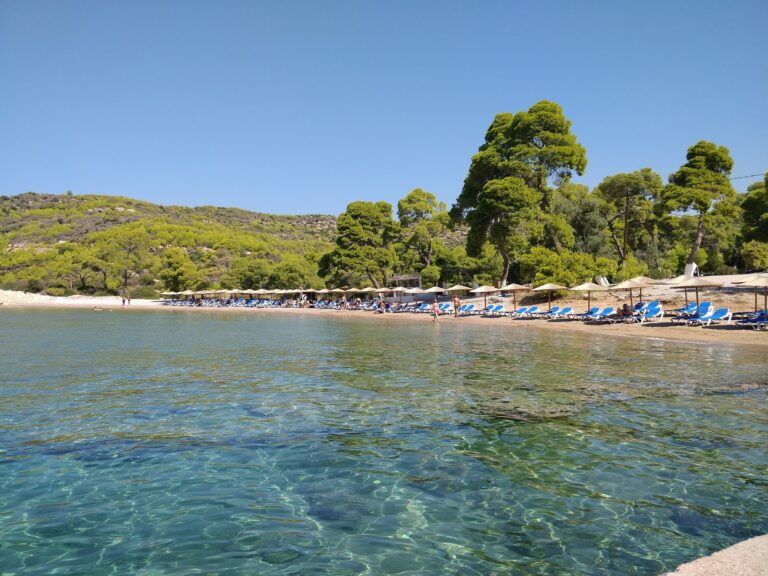
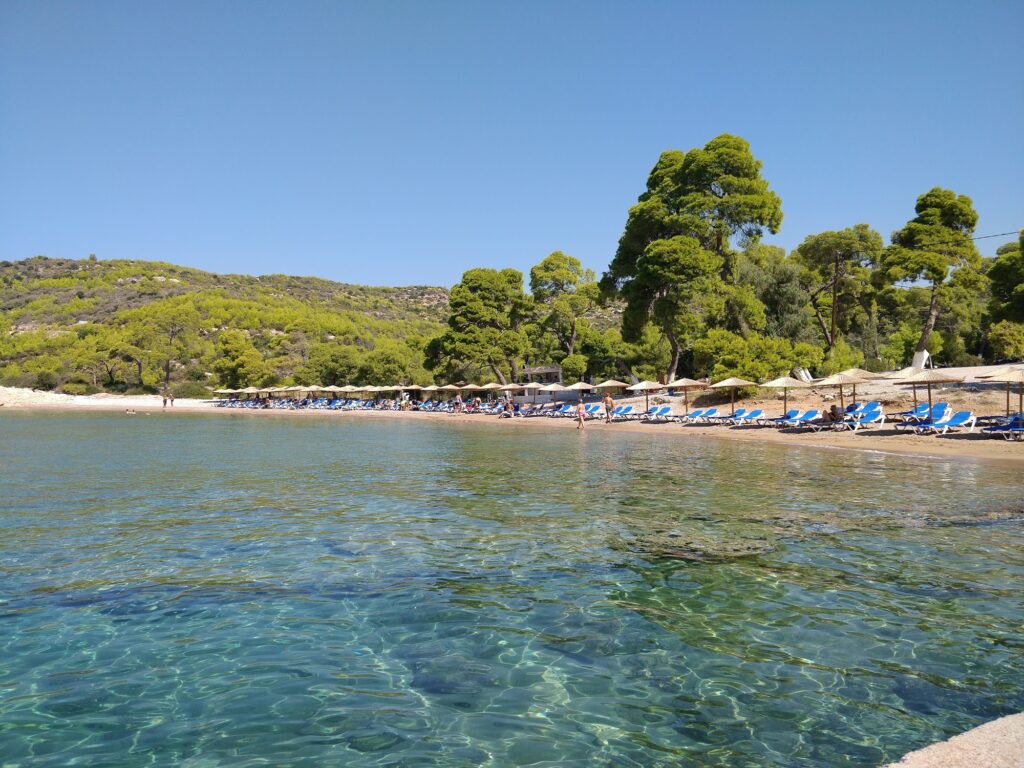
Spetses calls itself the island of aromas, and the description earns its place the moment you step off the boat. The pine resin, the bougainvillea in the mansion courtyards, the salt air coming off the Saronic — these things arrive as a single compound rather than separately, and they do not dissipate as you move around the island. At Agia Paraskevi, ten kilometres from the port of Dapia on the southwestern coast, the pine forest is dense enough that the trees grow all the way to the water’s edge, their canopy extending over the pebbles and providing shade that no umbrella can replicate in quality. The scent of resin and salt together at the shoreline is the most concentrated version of what the island offers.
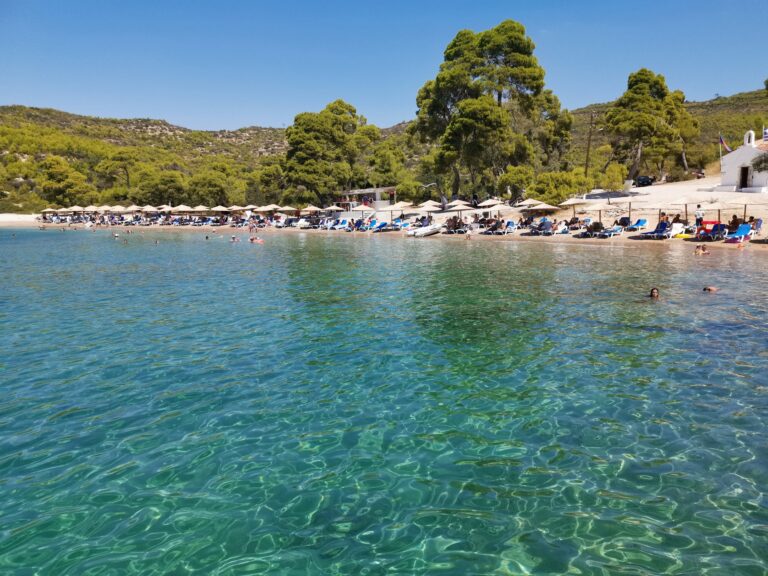
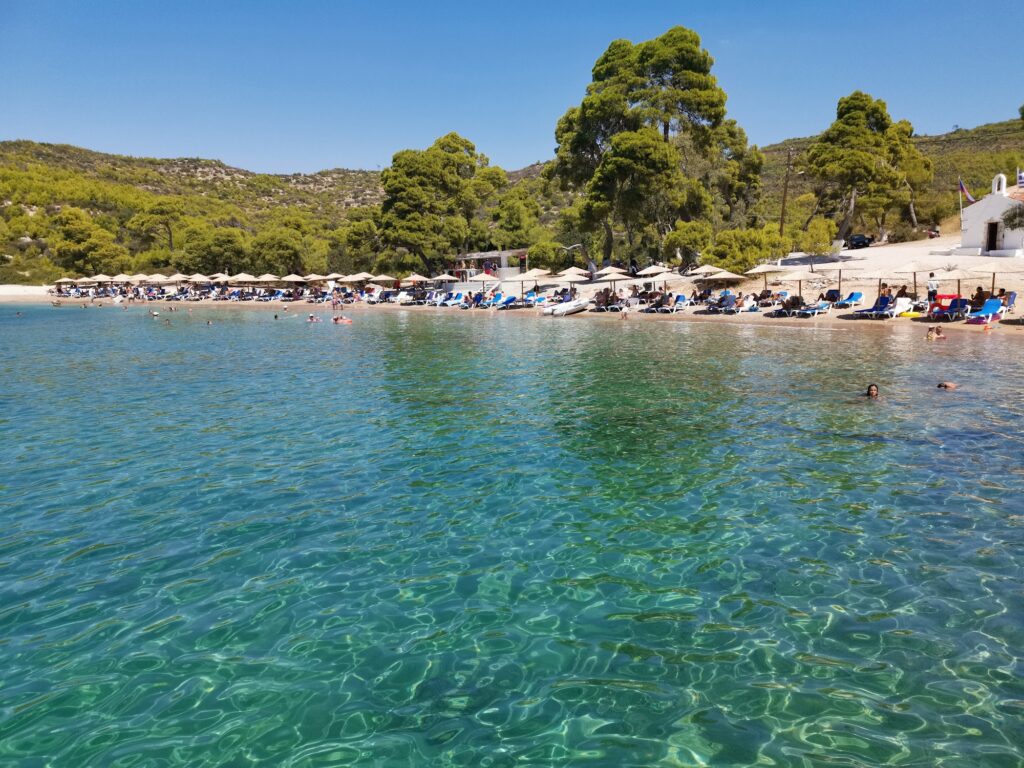
The beach takes its name from the small chapel standing directly on the sand, cube-shaped in the way of the older Greek Orthodox island chapels, whitewashed, with the proportions of a building that was built to serve devotion rather than to impress. Every year on July 26th, the feast day of Saint Paraskevi, the chapel becomes the centre of a celebration that runs from the religious service into the night: traditional music, dancing, food, the beach transformed from a quiet swimming spot into the social heart of the western coast for one evening. The rest of the season it sits quietly at the edge of the pebbles, a reference point that makes Agia Paraskevi immediately identifiable in photographs and distinguishable from every other pine-backed bay on the island.
Getting to Agia Paraskevi Beach Spetses Greece: The End of the Bus Route, or the Start of the Sea Approach
Spetses does not permit private cars across most of the island — it is one of the defining facts of being there, and it shapes how every beach is reached. The options for Agia Paraskevi are the bus that terminates here after running from Agios Mamas beach through Agia Marina, Kouzounos, Xylokeriza, and Agioi Anargyros, or a water taxi from Dapia harbour taking fifteen to twenty minutes, or a scooter on the coastal ring road with the pine forest on one side and the sea visible on the other.
The water taxi is the approach that most accounts recommend, not because it is faster but because arriving at the beach by sea, with the bay opening ahead and the chapel visible on the shore, gives the place a different first impression than arriving dusty from the road. The scheduled boats from Dapia also serve this route, departing at set times through the summer season and making the crossing affordable rather than requiring a private hire.
By scooter, the coastal road passes through some of the most satisfying terrain on the island. Spetses is not large, and the ring road completes a full circuit, so reaching the southwestern coast from town involves passing the Kaiki beach in front of the Anargyros and Korgialenios School, Ligoneri, and Vrellos before the road turns toward the main western beaches. The pine canopy over the road makes the ride itself worthwhile independent of the destination.
Agia Paraskevi Beach Spetses Greece: Sand and Pebble, Emerald Water, Natural Shade
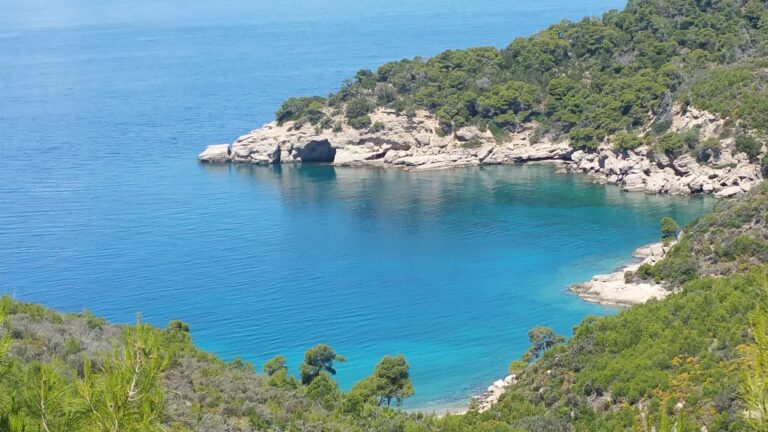
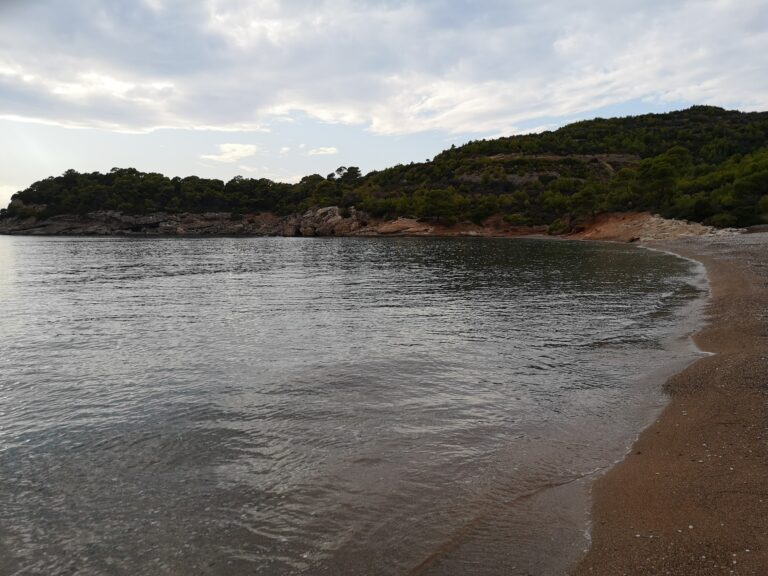
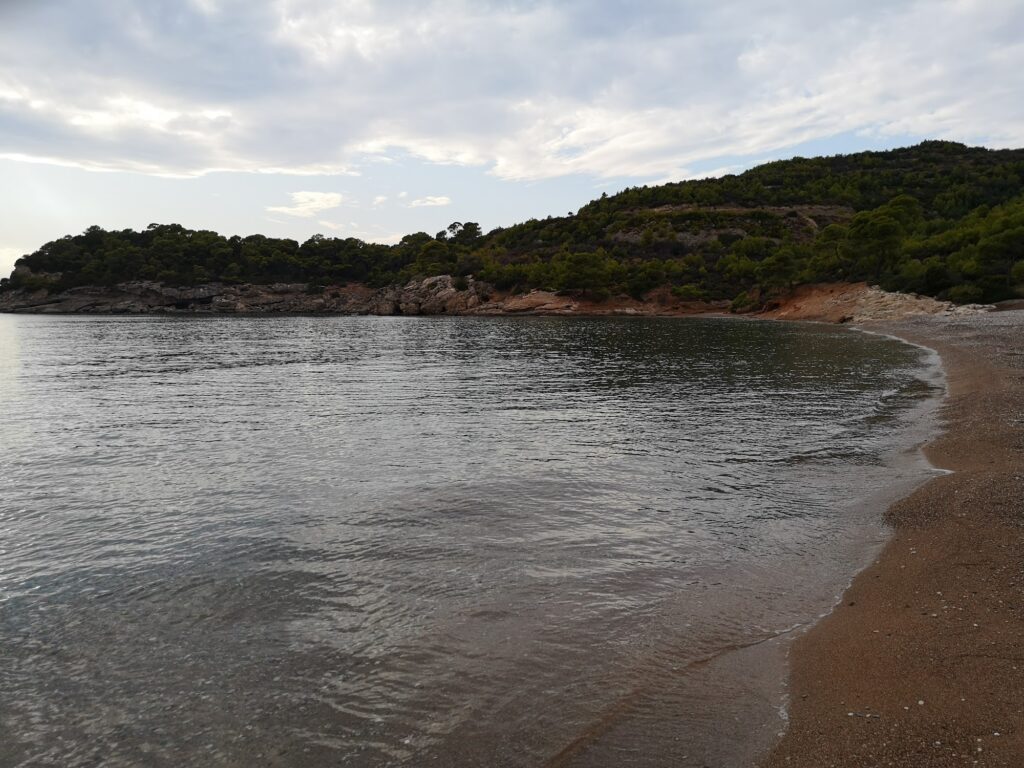
The beach is described variously as sandy, as pebbled, and as a mix of both — the honest answer is that it combines fine sand and small pebbles in a way that changes across the bay, the composition soft enough underfoot that water shoes are not necessary but varied enough that different sections will suit different preferences. What does not vary is the water quality: consistently described as among the clearest on Spetses, the emerald-to-turquoise gradient caused by the forest reflection giving the bay a colour that photographs tend to make look more tropical than it does in person, and that looks equally good in person.
The bay is sheltered enough from the afternoon winds that affect more exposed parts of the island’s coastline to hold calm conditions through most of the season. Sunbeds and umbrellas are available from the beach bar operating on site, though the natural shade from the pine canopy means that anyone who prefers not to rent equipment has an alternative that most beaches cannot offer. Water sports facilities operate here, and the beach bar serves food and cold drinks throughout the day. Changing cabins and showers cover the practical requirements.
Bouboulina, the Armata Festival, and What Spetses Holds Beyond Its Beaches
The island’s historical identity centres on a naval battle fought on September 8, 1822, when the Spetsiote fleet defeated the Ottoman fleet in an engagement that played a significant role in the Greek War of Independence. The Armata Festival, held annually on the second Saturday of September, commemorates this battle with a week of cultural events culminating in the burning of a wooden effigy of the Ottoman flagship in the harbour, accompanied by fireworks visible across the water. The festival has run in its current organised form since 1931, drawing visitors who come specifically for it rather than the beaches.
Laskarina Bouboulina, whose statue stands in Poseidonion Square at Dapia, was a Spetsiote ship owner and naval commander who led her own fleet in the War of Independence and is recognised as the only female admiral in the Greek navy. Her house on the island is now a museum, the building itself notable for its neoclassical architecture and the collection of period weapons, furniture, and documents inside. The Poseidonion Grand Hotel on the harbourfront, a landmark of early 20th-century Saronic tourism, is where the island’s aristocratic character is most visible in physical form.
The Beaches Near Agia Paraskevi Spetses: Zogeria, Agioi Anargyros, and Xilokeriza
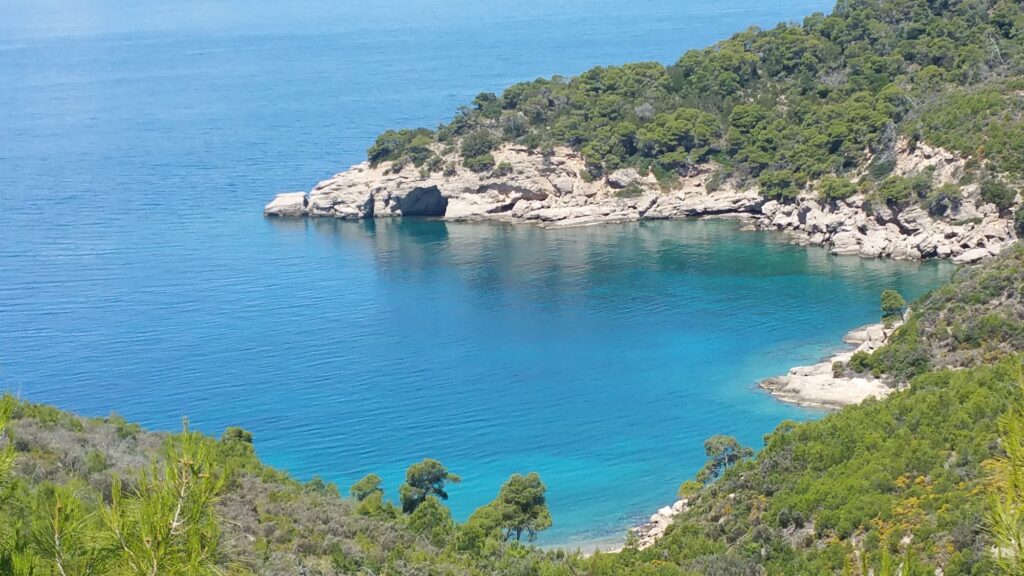
The southwestern coast of Spetses groups its best beaches in close enough proximity that a day exploring the circuit makes sense rather than committing to a single spot. Zogeria, further north along the coast, is described consistently as one of the most beautiful bays on the island, its pine trees extending to the water’s edge in the same way as at Agia Paraskevi but its bay smaller and its atmosphere more secluded. Agioi Anargyros, the largest and most organised beach on the island at 12 kilometres from Dapia, is a long sandy and pebbled bay with the full range of water sports, tavernas, and beach infrastructure that Agia Paraskevi offers in a quieter form. Xilokeriza, between the two, is deep water and more isolated, with the specific character of a beach that fewer visitors reach — a point in its favour or against it depending entirely on what someone wants from a beach day.
The July 26th feast is worth planning around if the date allows it. The chapel fills, the music begins after the service, and the beach that during the rest of the season functions as a quiet swimming bay becomes something recognisably and specifically Spetsiote for an evening. The pine resin in the air does not go anywhere; it simply competes with the smell of food and the sound of dancing rather than functioning as the day’s main sensory event.
Map
Sorry, no records were found. Please adjust your search criteria and try again.
Sorry, unable to load the Maps API.