Agathopes Beach Syros: Where Monk Seals Give Birth
Profile
Agathopes Beach, Syros: Where Critically Endangered Monk Seals Give Birth Each Spring
Greece | Poseidonia | Syros, Cyclades
Agathopes carries a protection that goes beyond the rare sea daffodils, Pancratium maritimum, that bloom across the sand from August through October — the flower’s white blooms and sweet scent are real, and stepping on or picking them is genuinely prohibited rather than merely discouraged. The more striking fact, and one I hadn’t expected before researching the beach properly, is that Agathopes functions as a documented spring birthing site for the Mediterranean monk seal, Monachus monachus, one of the most critically endangered marine mammal species in the world, listed in conservation Red Books across Europe. A beach that draws sunbathers and families through the summer becomes, in a different season, a place where one of the rarest seals on the planet comes ashore to give birth — two entirely different uses of the same stretch of sand, separated by the calendar rather than by any visible boundary.
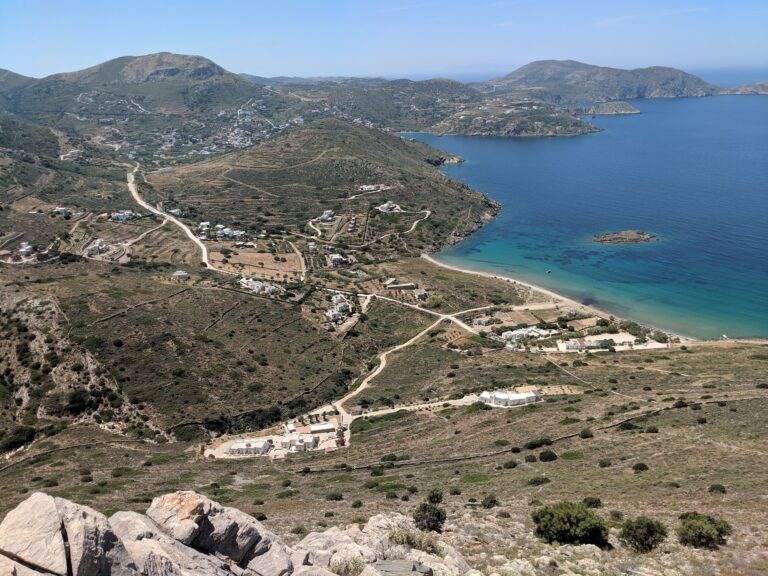
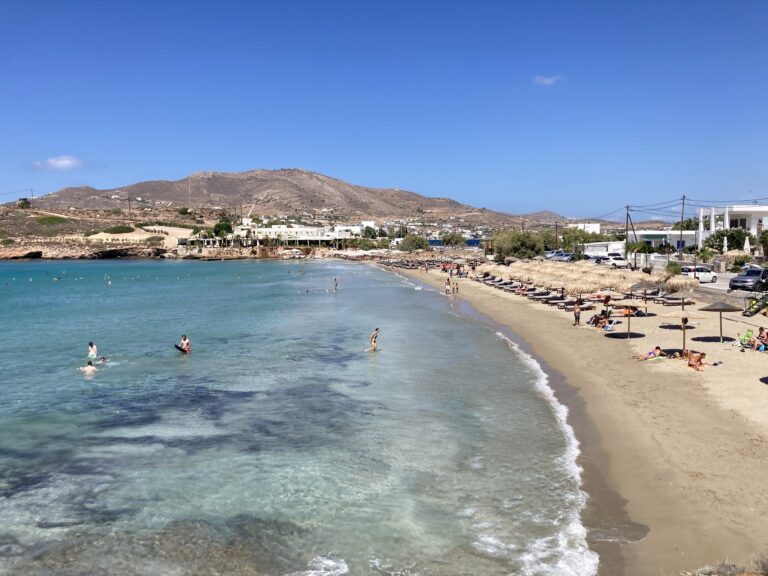
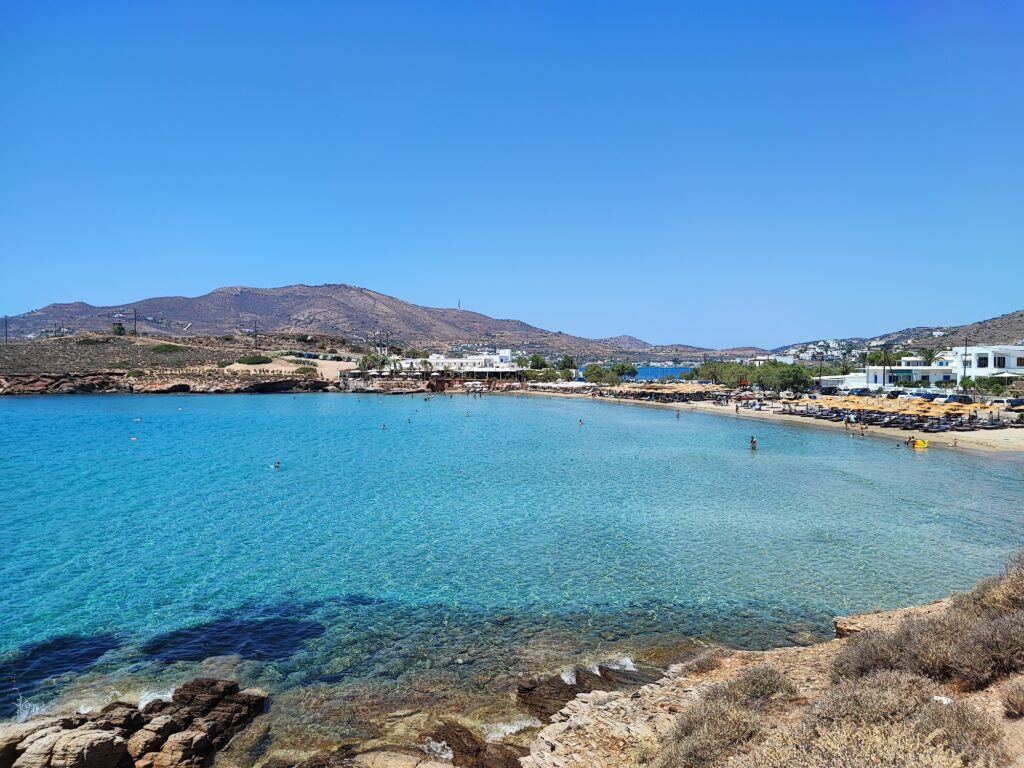
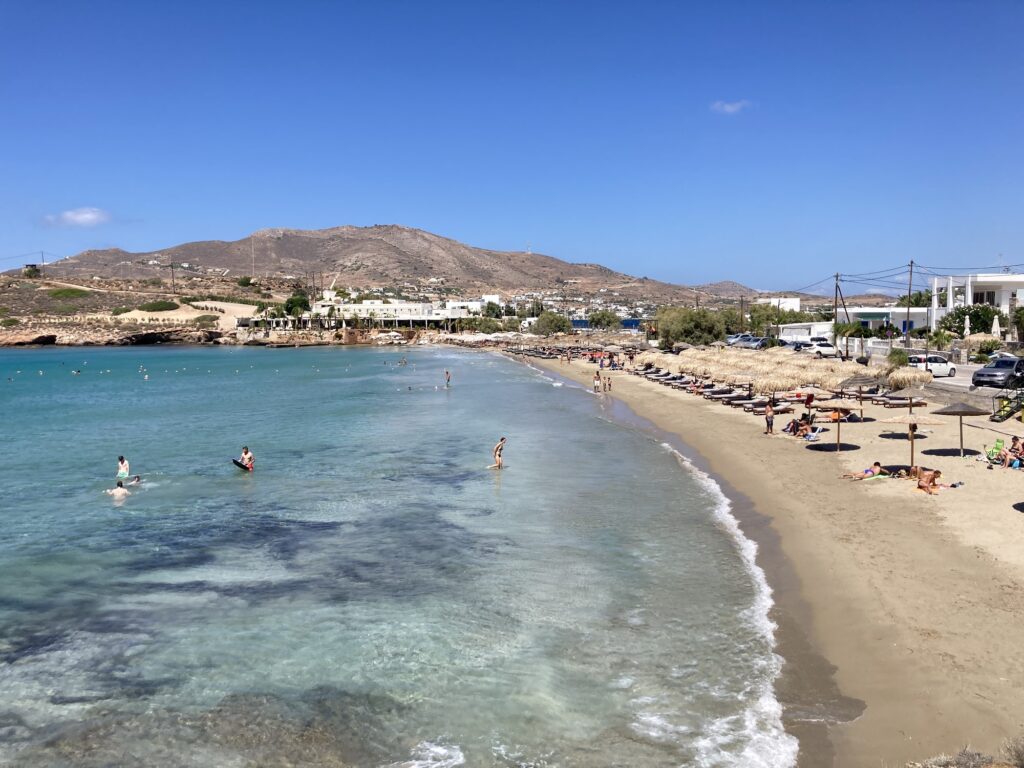
The bay sits sheltered by two small islets, Schinonisi and Stroggilo, visible from the shore and especially striking at sunset, when ships occasionally pass between them in the fading light. The nearby village, properly Poseidonia but still commonly called Dellagrazia, takes its older name from the small Catholic church of Santa Maria della Grazia, while its formal name honours Poseidon directly — a village of nineteenth-century neoclassical mansions built by Syros’s wealthy merchant class as a summer retreat, the turrets and gardens still standing as a fairly literal monument to that earlier prosperity.
I should mention, since I found this detail tucked away in an otherwise glowing account, that one edge of Agathopes carries the remains of a former military base, visibly unsightly by most descriptions and apparently the reason some visitors rate the beach lower than its general reputation suggests. I’d treat this as a genuine, if minor, blemish rather than something to ignore entirely — the rest of the beach earns its reputation, but that one stretch is worth knowing about in advance rather than discovering on arrival.
Getting There: 14 Kilometres From Ermoupoli, Bus, Car, or Taxi
The drive from Ermoupoli, Syros’s capital, covers roughly fourteen kilometres southwest toward Poseidonia, the road tracing the island’s interior and passing the grand nineteenth-century villas along the way. Free public parking is generally available nearby.
The local KTEL Syrou bus departs frequently from the Ermoupoli port, the ride taking around twenty-five minutes and stopping close to the sand — a straightforward option I’d recommend over driving if avoiding the parking search appeals. A taxi from Miaouli Square runs roughly twelve to fifteen euros for a quick, direct transfer.
The Beach: Fine Golden Sand, Shallow Gradual Entry, Tamarisk Shade
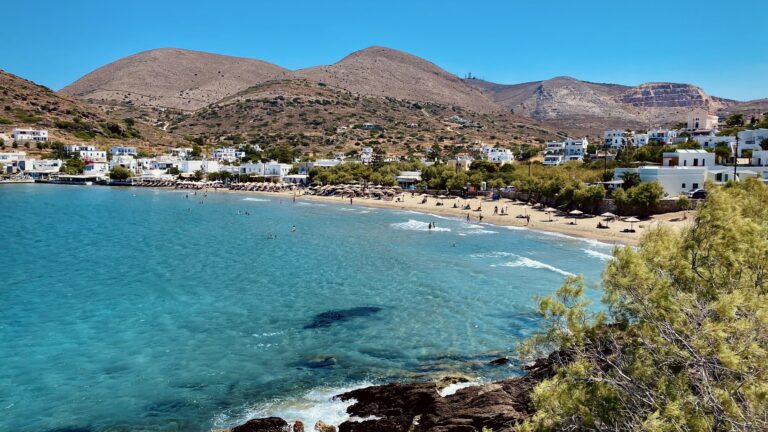
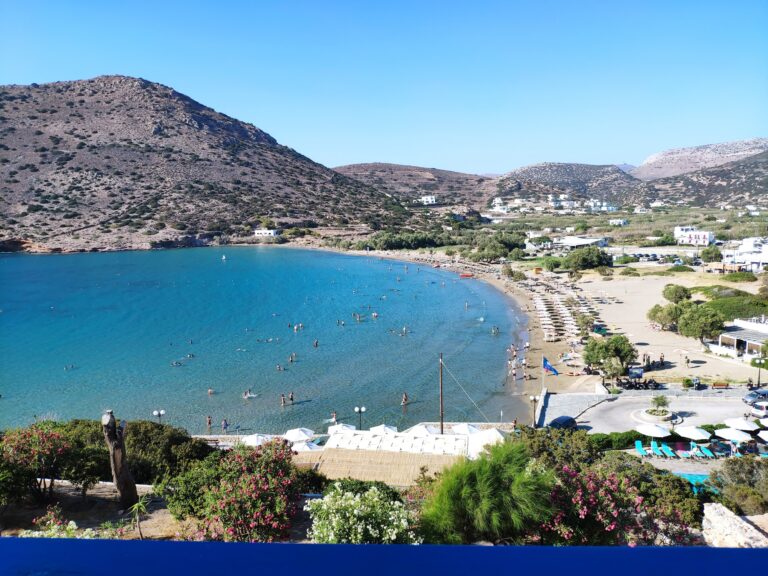
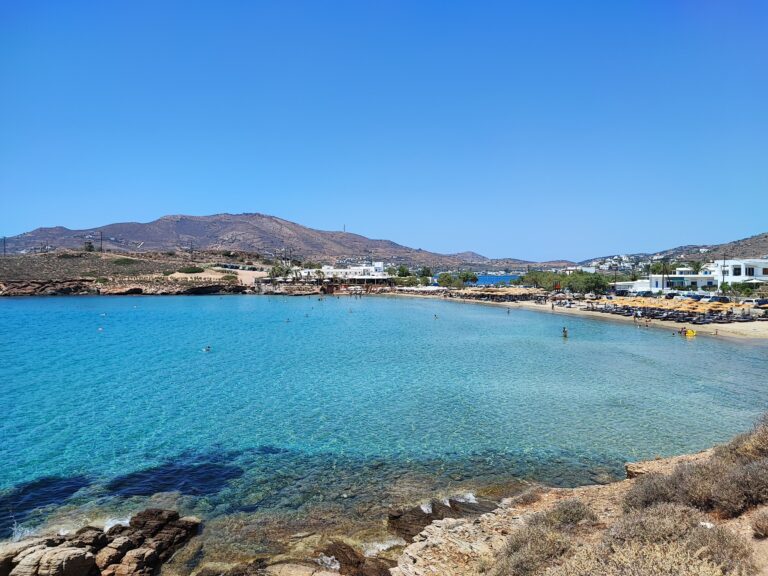
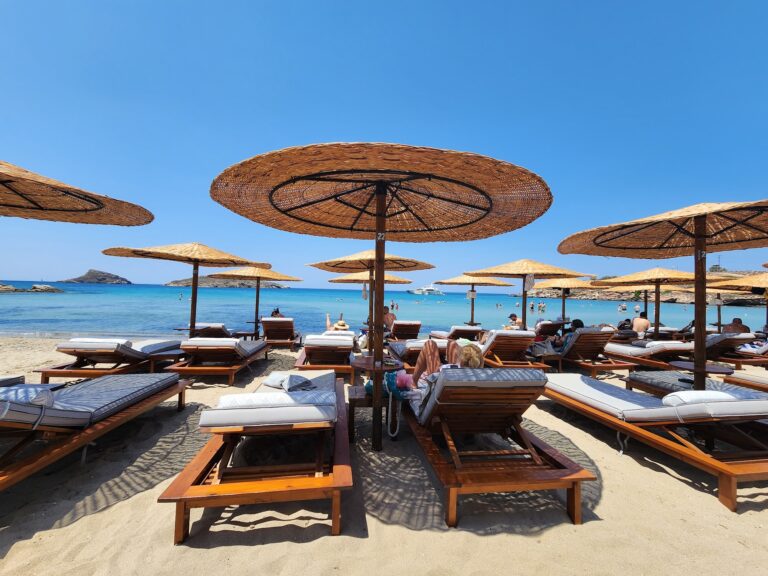
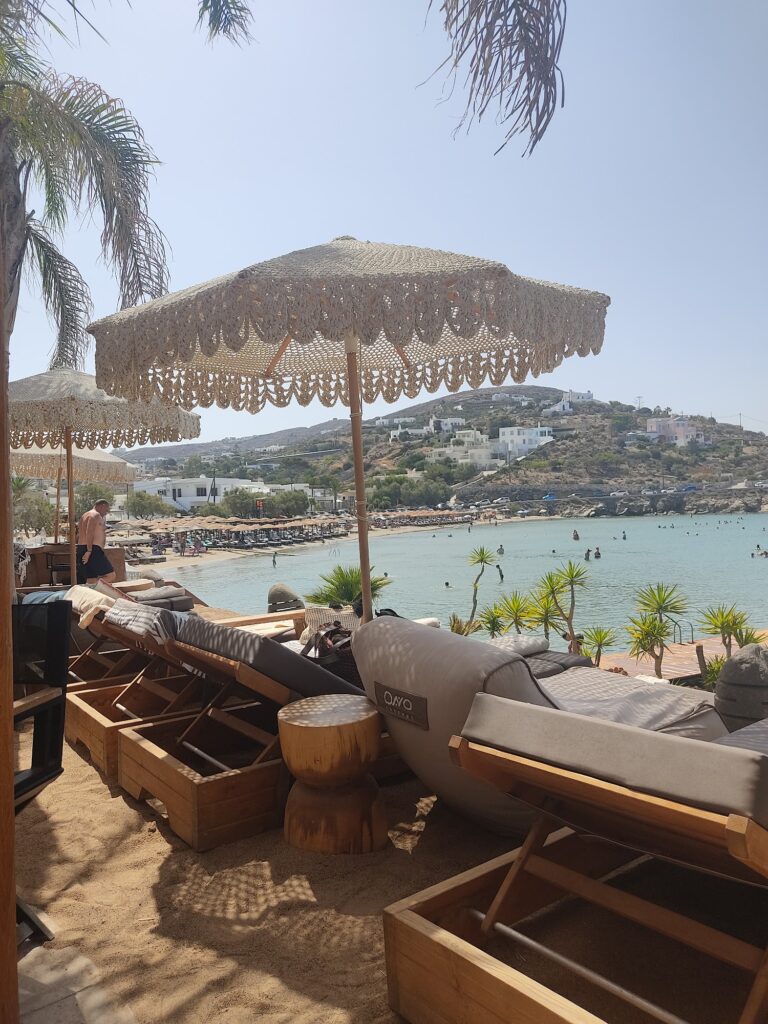
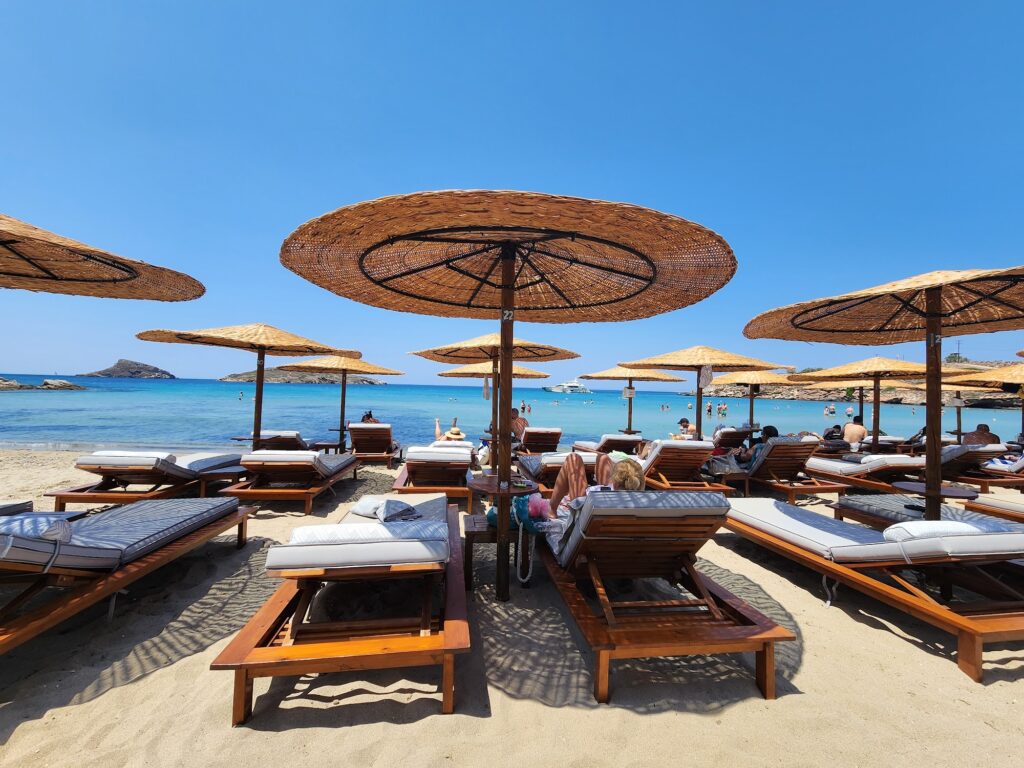
The sand is fine and golden, the seabed sloping gently enough that Agathopes is consistently rated among the best family beaches on Syros, the water staying calm even on days when wind troubles more exposed parts of the island, thanks to the shelter the two islets provide. Tamarisk and pine trees along the back of the beach offer genuine shade through the hottest hours, and sunbeds and umbrellas, priced roughly ten to twenty euros depending on the operator and season, line organised sections without overwhelming the entire shore.
Diving centres operate nearby for those wanting to explore the rocky formations around Schinonisi and Stroggilo, and the beach’s left side has developed a livelier character with music and a younger crowd, distinct from the calmer, more family-oriented stretches elsewhere along the same sand.
Agathopes Beach, near Poseidonia (also called Dellagrazia) on Syros, is protected for two genuinely significant ecological reasons: the rare sea daffodil that blooms white across the sand from August to October, and its documented role as a spring birthing site for the critically endangered Mediterranean monk seal. Fine golden sand, a shallow gradual entry sheltered by the islets of Schinonisi and Stroggilo, tamarisk shade, and organised sunbeds, though the remains of a former military base on one edge are worth knowing about before arrival. Fourteen kilometres from Ermoupoli, reachable by car, bus, or taxi.
Take the bus or drive from Ermoupoli. Avoid stepping on the sea daffodils if they’re in bloom. Ask locally whether seals have been sighted that season before assuming the beach is purely a summer destination.
Map
Sorry, no records were found. Please adjust your search criteria and try again.
Sorry, unable to load the Maps API.
Near by places: