
Kalamos Beach Avlonari: Good Cove, Wicked Cove
Profile
Kalamos Beach, Avlonari: Locals Call the Two Coves Good and Wicked, Not for Their Facilities but for Their Water
Greece | Avlonari | Kymi-Aliveri, Southern Evia
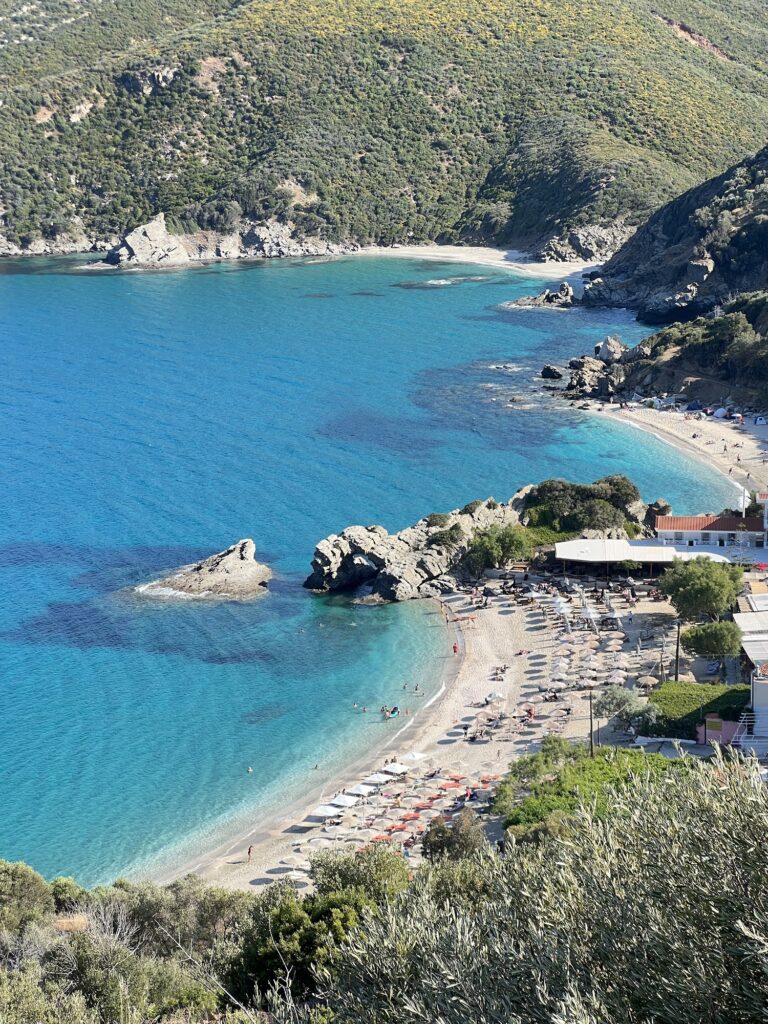
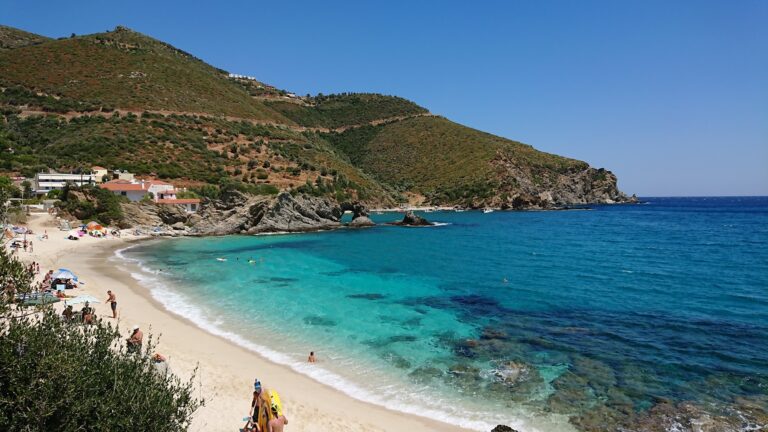
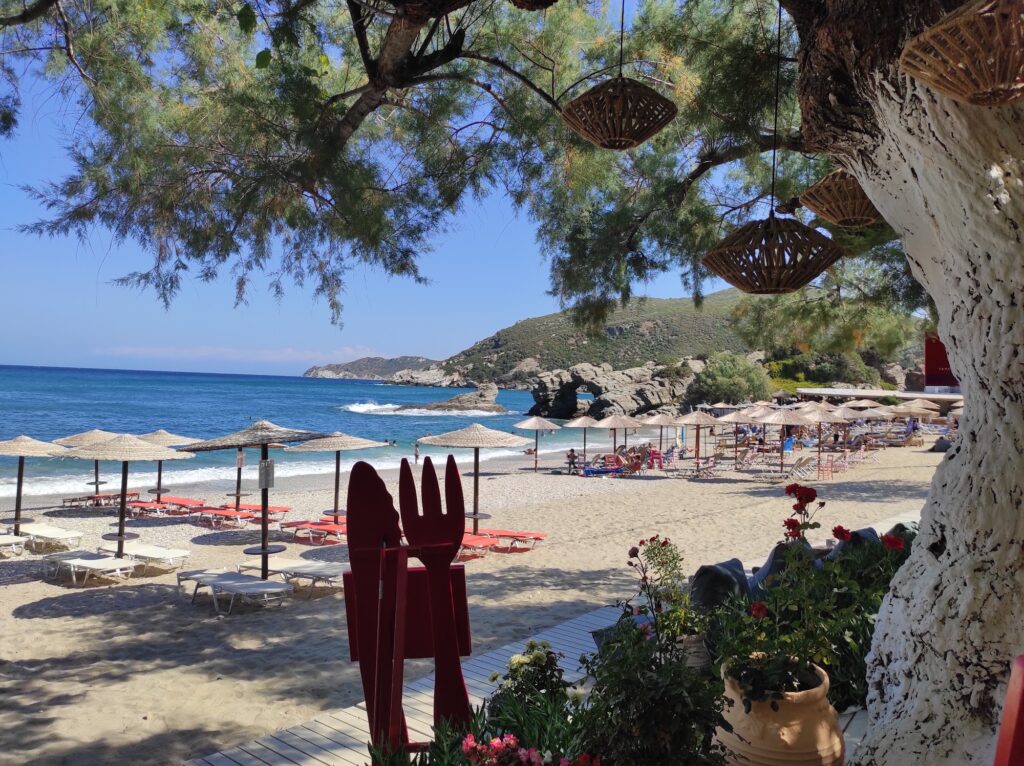
The two coves at Kalamos, separated by a large rock, carry names that are easy to mistranslate if taken too literally. Locals call the first Kali, meaning good, and the second Kakia or Kaki, meaning bad or wicked — but the distinction refers specifically to the calmness of the water in each cove, not to any difference in facilities or character beyond that. Kali, on most days, holds genuinely calm water; Kakia, when the wind picks up, becomes noticeably rougher. Both are covered in similar white sand mixed with light-coloured pebbles, and the Kali side happens to be where the tavernas and cafés cluster, while Kakia has historically drawn free campers pitching tents rather than renting sunbeds — a practical difference that has grown up alongside the naming rather than being the reason for it.
I should note, since the name Kalamos appears elsewhere in Greece with no connection to this beach whatsoever, that there is a separate, larger Kalamos — an island in the Ionian Sea near Lefkada and Kastos, known in antiquity as Karnos, with its own harbour, abandoned villages, and yacht-charter culture. The two share nothing beyond the name, and I would not want anyone planning a trip to confuse the small Evia beach with the Ionian island.
A specific and repeatedly noted feature of Kalamos beach itself is a high rock from which visitors dive directly into the sea — a detail that several independent guides mention as one of the beach’s defining attractions, alongside the water’s clarity. That clarity comes paired with a genuine caution: the seabed drops sharply within three to five metres of the shore, deep enough quickly enough that this is consistently described as unsuitable for children swimming without close supervision, regardless of how calm the surface looks on the Kali side.
Getting There: No Buses, a Descent of About Ten Kilometres From Avlonari
There is no bus service to Kalamos, and a private vehicle is, as with several other beaches on this stretch of Evia’s coast, effectively required. From Avlonari — itself a substantial inland village with stone houses, Byzantine churches, and a nineteen-metre Venetian watchtower later occupied by Bavarian soldiers after the Greek War of Independence — the road descends roughly ten kilometres to the coast, winding enough that I would take the curves at a measured pace rather than rushing the descent.
From Chalkida, the drive covers approximately 67 to 70 kilometres and takes a little over two hours from Athens in total, reached most directly via the inland village of Neochori. A large free parking area sits close to the beach.
The Beach: White Sand and Pebble, Free Sunbeds With a Purchase, About 200 Metres
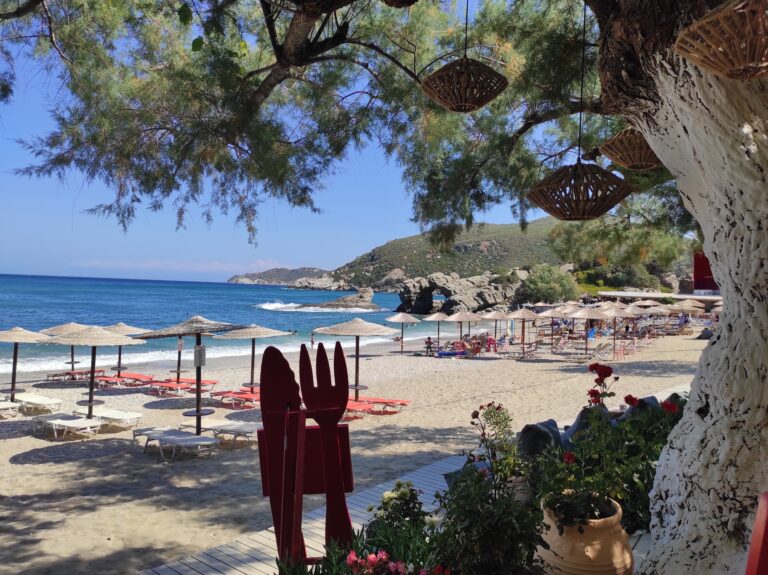
Kalamos measures roughly 200 metres, the water depth increasing within three to four metres of the shore as noted above. Sunbeds and umbrellas are generally available without a separate rental fee, provided a purchase is made from one of the nearby tavernas or café bars — a familiar arrangement I have encountered at several other organised Greek beaches in this series. Showers are available, and while the beach is not generally overcrowded, even in season, it does become noticeably windy at times, a factor worth checking before committing to a swim on the Kakia side specifically.
Avlonari, Korasida, and the Wider Coast
Avlonari itself is worth the inland detour independent of the beach, its Potiri Castle ruins dating to the Byzantine period and tied to the Genoese knight Licario, who led a local rebellion against Venetian and Lombard overlords. Along the same stretch of coast, Korasida Beach, known for its rock formations and turquoise water, and Mourteri Beach, a wider, more open shore, sit within a short drive, while Agioi Apostoloi Petries Beach Evia Greece, lies further along the same general coastline to the south.
Kalamos Beach near Avlonari splits into two coves, Kali and Kakia, named by locals for the relative calmness of their water rather than for any difference in organisation. White sand mixed with pebbles, a seabed that drops sharply within a few metres of shore, a high rock for diving, and sunbeds typically free with a purchase from the nearby tavernas. Kakia has traditionally drawn free campers; Kali holds the cafés. No buses reach the beach, and the descent from Avlonari covers roughly ten kilometres. This is an entirely different Kalamos from the Ionian island of the same name near Lefkada.
Drive via Avlonari. Choose Kali for calmer water, Kakia if you prefer the rougher side or want to camp. Watch the depth near the shore if children are with you.
Map
Sorry, no records were found. Please adjust your search criteria and try again.
Sorry, unable to load the Maps API.