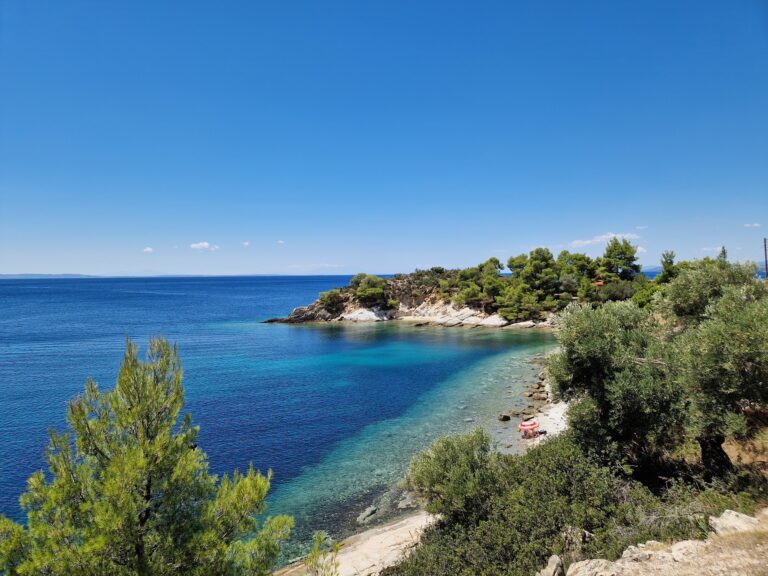
Agios Ioannis Beach Nikiti: Camping Ground to Resort
Profile
Agios Ioannis Beach, Nikiti: A Camping Ground Until 2016, Now the Finish Line for a Twenty-Six-Kilometre Swim Across the Gulf
Greece | Nikiti | Sithonia, Halkidiki
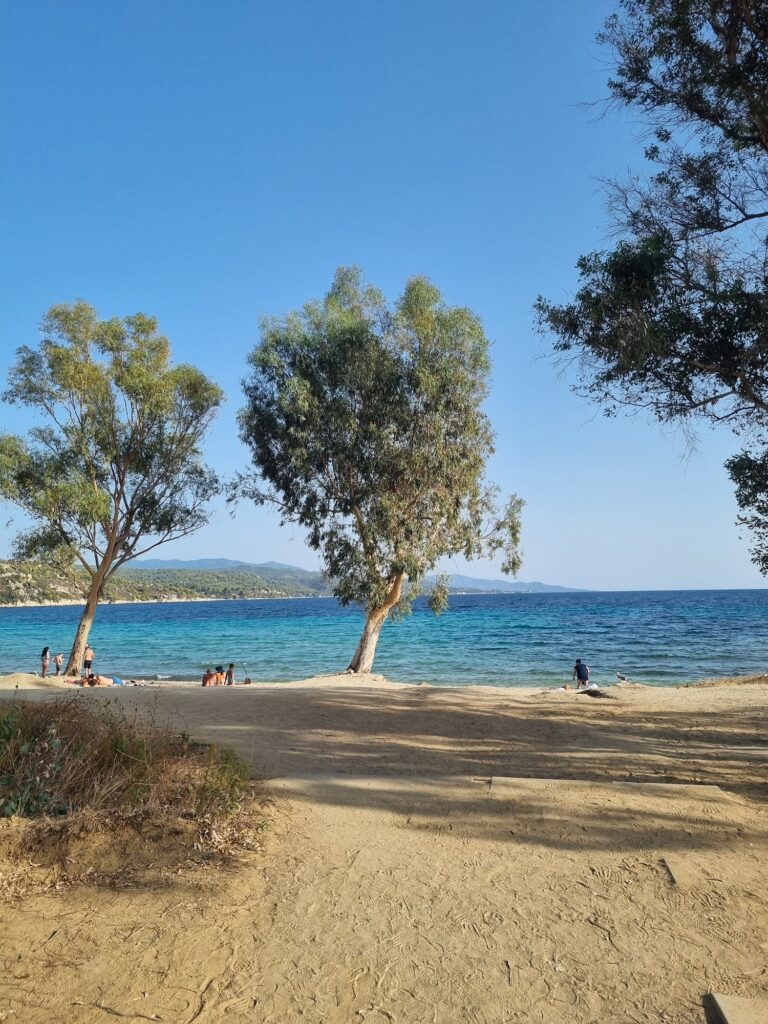
Until 2016, the coastline at Agios Ioannis functioned as an informal camping ground, used by visitors who pitched tents along the shore without any organised infrastructure to support them. The tents have since been replaced by beach bars, the most recent and substantial of which, called Riviera, opened with sunbeds, showers, a lounge area, and a kitchen serving a broadly European menu. The transition from free camping to organised beach club took place within a relatively short span and is recent enough that several long-term visitors to the area still recall the earlier version of the beach directly, rather than from secondhand accounts.
Nikiti, the nearest town and the administrative point of reference for the beach, carries its own specific distinction. In the fourteenth century, the village was recorded as the largest producer of honey in Europe, a fact that sits oddly alongside its present identity as one of the faster-growing resort towns on the Sithonia peninsula. The old part of the village, Palaia Nikiti, remains a protected traditional settlement on the hills above the modern coastal development, with restored Macedonian mansions, red-tiled roofs, and the tall chimneys characteristic of the regional architecture. The Church of Agios Nikitas, built in 1867, stands at the highest point of the old village and offers a view across the Toroneos Gulf.
Each July, Nikiti serves as the finish line for the Toroneos Swimming Marathon, an open-water event that has run for close to fifty years. Competitors begin at the Palini Beach hotel on the Kassandra peninsula and swim twenty-six kilometres across the gulf to Nikiti, a crossing that typically takes over six hours to complete. The event draws substantial crowds to the beach at Nikiti on the day of the race, and is among the more recognised long-distance swimming events held in Greece.
Getting There: Four Kilometres From Nikiti, an Hour and a Quarter From Thessaloniki
The drive from Nikiti covers approximately four kilometres south on the main road toward Neos Marmaras, taking roughly five minutes, with the beach clearly signposted on the right-hand side and a dedicated highway exit leading directly to free parking. From Thessaloniki, the journey takes approximately an hour and fifteen minutes by car, travelling through Polygyros and Ormylia.
Public transport in this part of Halkidiki is limited. KTEL bus services connect Thessaloniki with the main towns of Sithonia, but schedules are infrequent and subject to considerable variation, and a private vehicle is the more practical means of reaching the beach.
The Beach: Nearly a Kilometre of Sand, Shallow Throughout, Free Sunbeds After 17:30
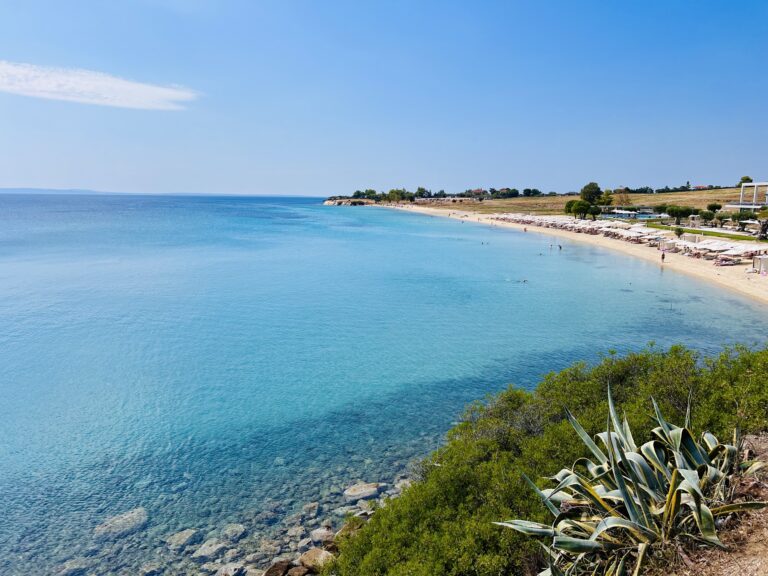
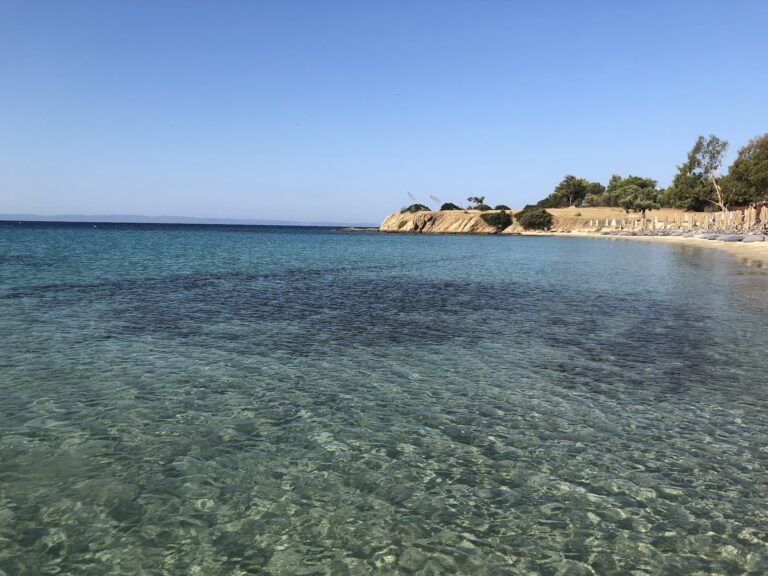
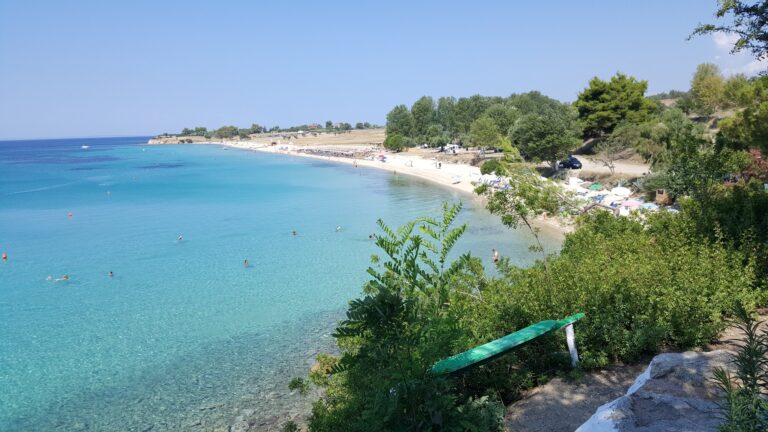
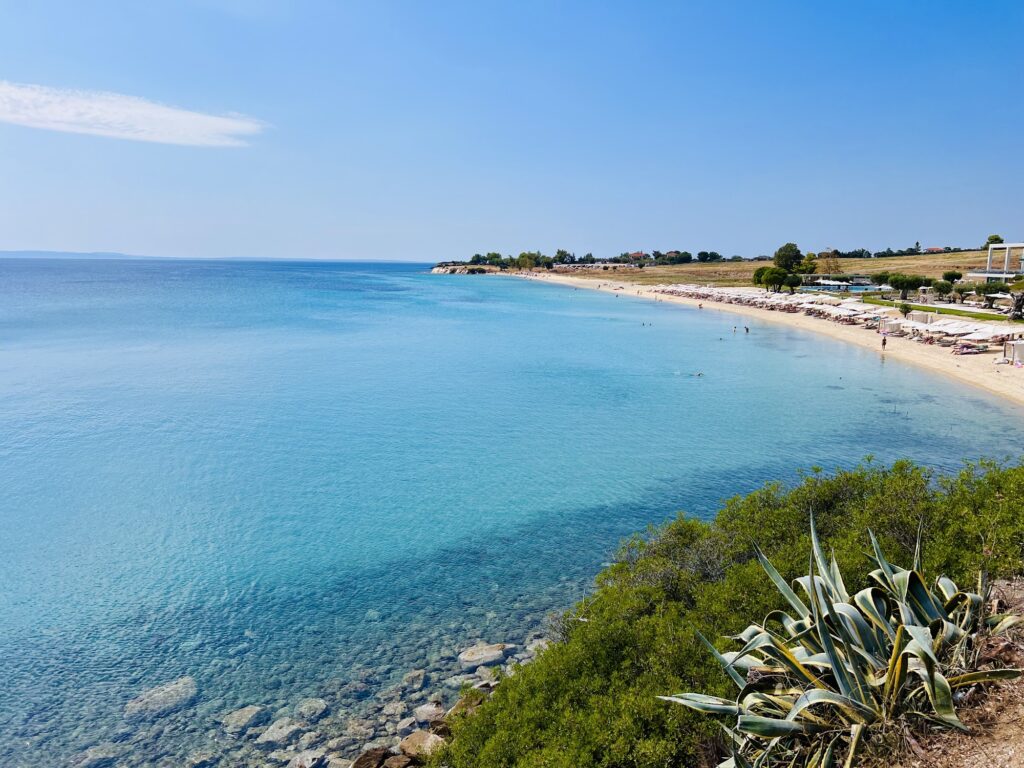
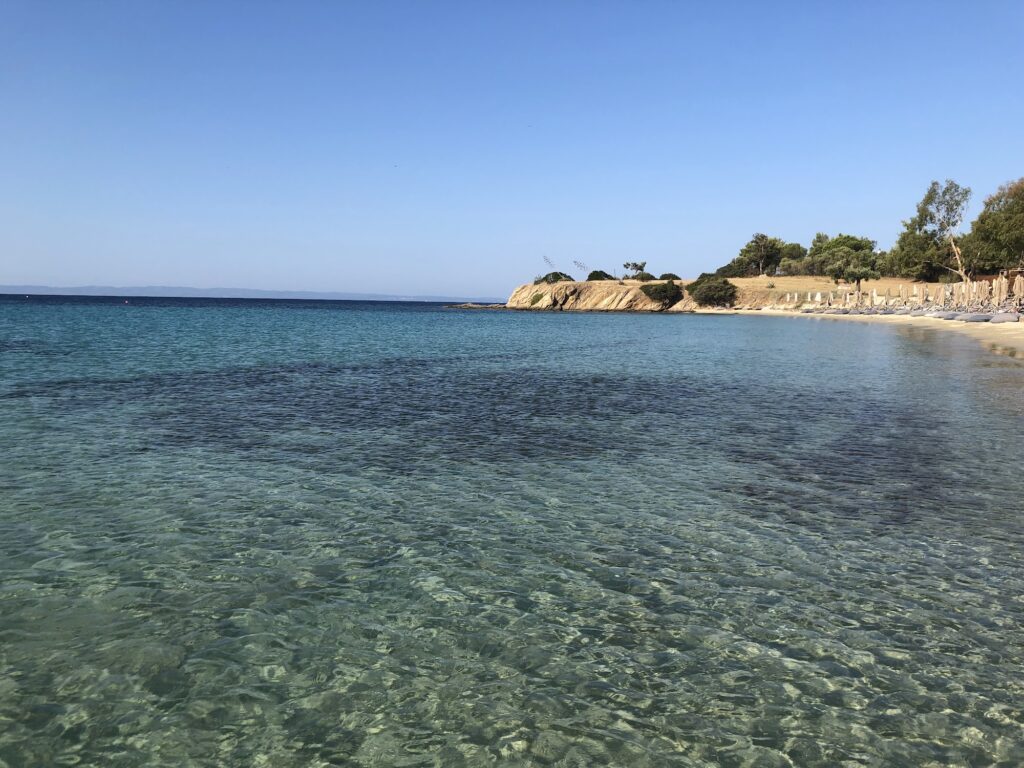
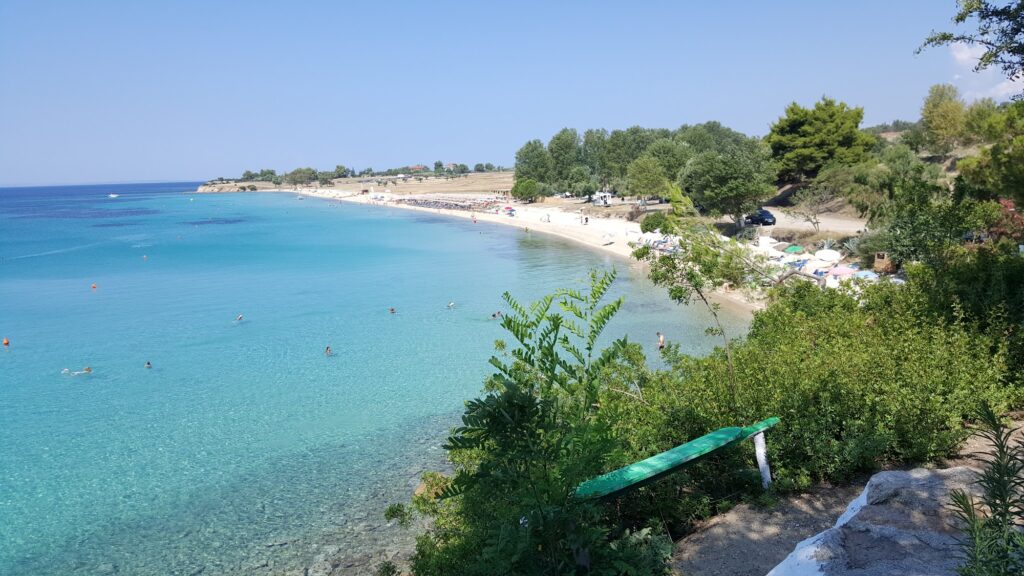
The beach extends for close to a kilometre along the Toroneos Gulf, composed of fine sand without the rocky patches or sea urchins found on parts of the coast further south. The water remains shallow for a considerable distance from the shore, allowing visitors to walk out dozens of metres while the water reaches no higher than the waist, a quality that has made the beach a consistent recommendation for families with young children.
The beach bars operate on the standard consumption model found across much of Halkidiki, though not uniformly: it is worth confirming with each establishment whether a drink purchase includes sunbed use before settling in, since the arrangement varies. One specific and useful detail is that arriving after 17:30 generally allows access to the sunbeds free of charge, as the bars wind down their paid service for the day. Showers, changing cabins, and lifeguard supervision are present during the peak season, and wooden walkways have been added in places to improve accessibility across the sand.
Agios Ioannis Beach near Nikiti in Sithonia is a beach that has changed character substantially within living memory, from an informal camping site used until 2016 to an organised stretch of beach bars and managed facilities today. Nikiti itself carries the unusual historical distinction of having been Europe’s largest honey producer in the fourteenth century, and now serves as the finish line for the annual Toroneos Swimming Marathon, a twenty-six-kilometre open-water crossing from the Kassandra peninsula that has run for nearly fifty years. The beach itself is shallow, sandy, close to a kilometre long, and four kilometres from Nikiti, with sunbeds generally available free of charge after 17:30.
Drive four kilometres south from Nikiti. Confirm the sunbed arrangement before ordering. Time a July visit to coincide with the marathon if the dates align.
Map
Sorry, no records were found. Please adjust your search criteria and try again.
Sorry, unable to load the Maps API.
Near by places: