Agios Pavlos Beach Rethymno: Where Paul Baptised
Profile
Agios Pavlos Beach, Rethymno: A Tenth-Century Church Marks the Spot Where Local Tradition Says the Apostle Paul Baptised Travellers on His Way to Rome
Greece | Agios Pavlos | Rethymno, Crete
The village and beach take their name directly from the Apostle Paul, and the connection is not merely a dedication chosen at some later date. Local tradition holds that Paul himself stopped at this exact stretch of the Libyan Sea coast during his journey to Rome, and that he baptised travellers at the site. A small Byzantine church, dating to the tenth century, stands on the hill directly above the beach to mark the spot. The same legend attaches itself to a handful of other locations along the southern Cretan coast, including Kali Limenes and Selouda, but it is at Agios Pavlos that the church and the beach sit closest together, and where the association feels most directly embedded in the landscape rather than recalled from a sign.
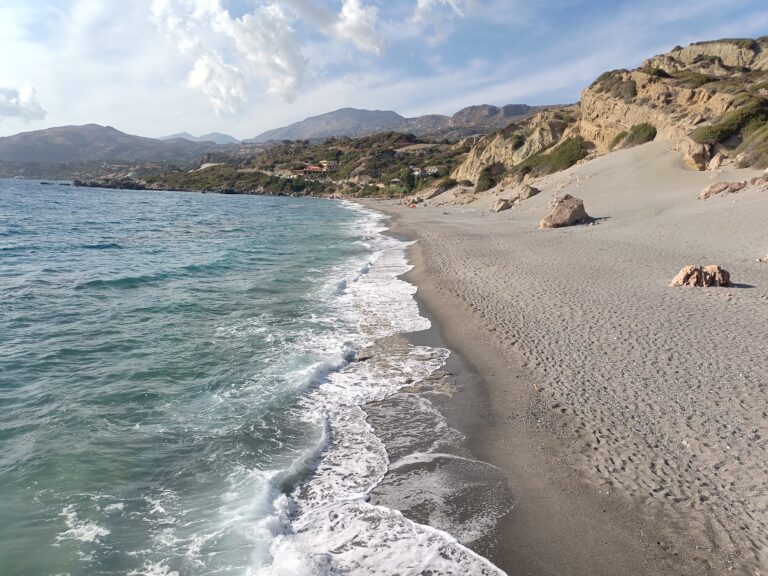
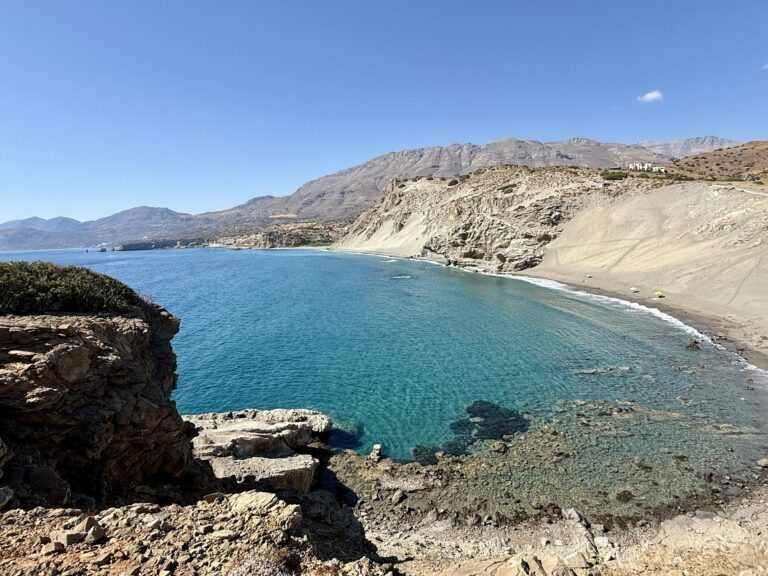
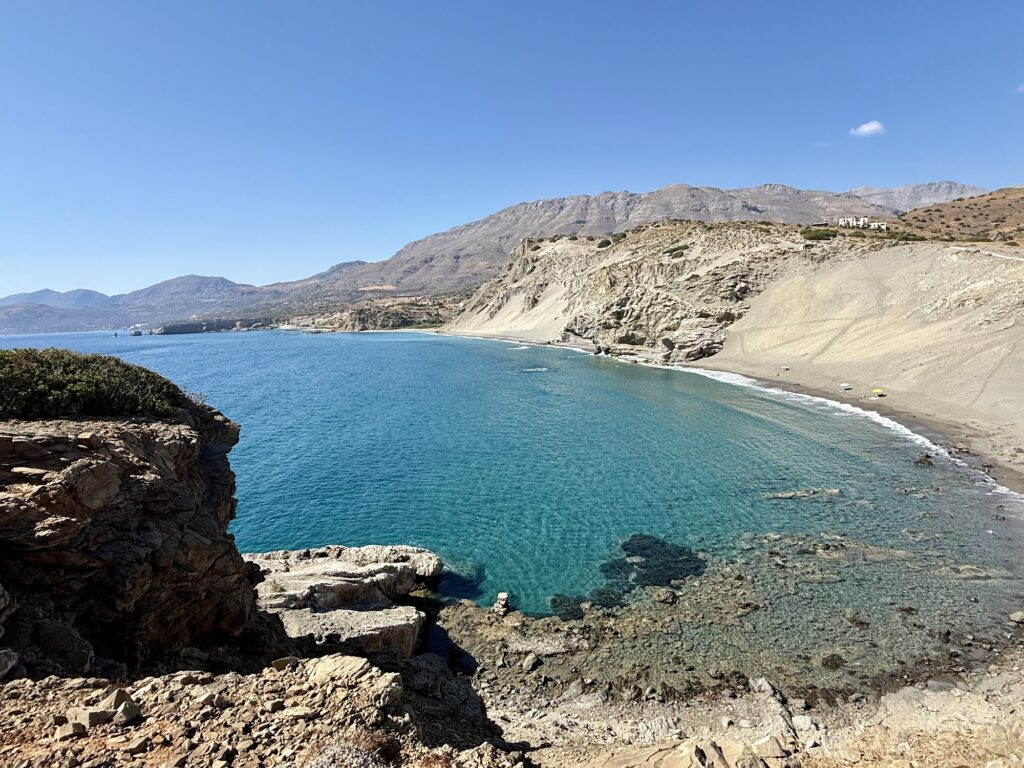
A short distance to the southwest, between Cape Melissa and the mouth of the Akoumianos river, the coastline rises into the sand dunes that have made this beach distinct on an island with hundreds of comparable shores. Locals refer to them as Alatsogremnos — the salt cliffs — and the formations reach heights of twenty-five to thirty metres, composed of soft sand that has accumulated against the cliff face over a long period. Their geological and visual significance is sufficient that local authorities have proposed listing them as a Natural Monument of Greece, a designation that, if granted, would formally recognise what visitors to this stretch of coast have already concluded informally for some time.
Above the dunes, Peak Thronos rises to roughly 300 metres directly over the beach, and is generally regarded as the finest point from which to watch the sun set over this section of the Libyan Sea. From the peak, the view extends to the Paximadia islets offshore, the island of Gavdos further south, and the White Mountains to the north — a single vantage point taking in much of southern and western Crete at once.
Getting There: Fifty-Eight Kilometres From Rethymno, No Bus Service, Car Required
The drive from Rethymno city covers approximately fifty-eight kilometres and takes roughly an hour to an hour and fifteen minutes, following the main road toward Agia Galini and then taking the turn for Saktouria, after which the road continues to Agios Pavlos itself. From the Tympaki or Agia Galini area, the journey is considerably shorter, at around forty-five minutes through olive groves and scrubland.
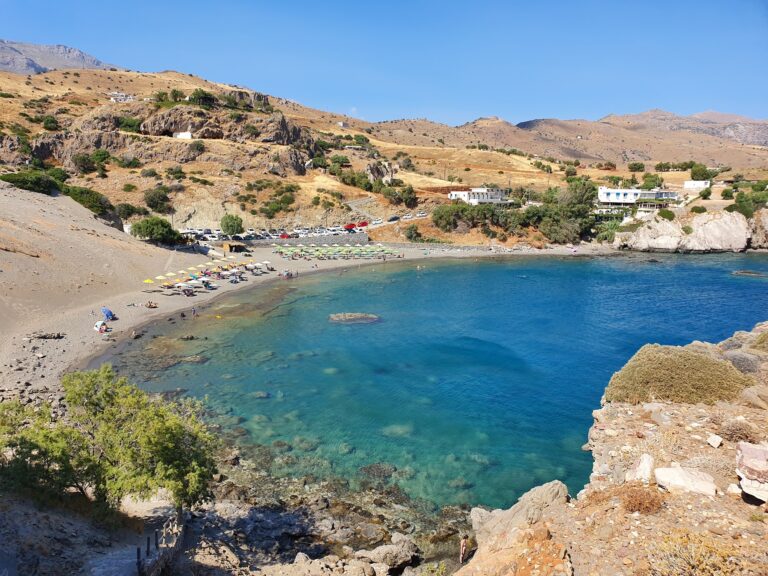
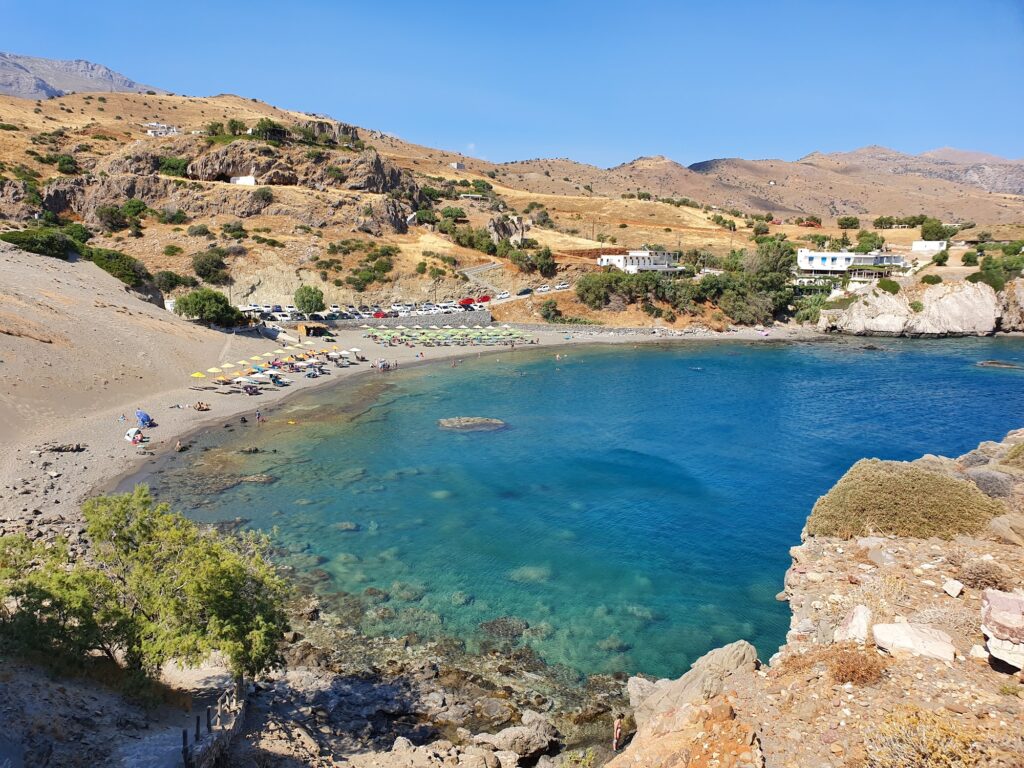
No public bus service reaches the village, and a private vehicle is effectively required. Parking is available near the tavernas at the top of the cliff, from which a defined path descends to the shoreline. For the dune section specifically, the more direct approach follows the road that runs west of Triopetra harbour for roughly five hundred metres, after which the beach and the Akoumianos river become visible below.
The Beach: Sand and Pebble, Deep Clear Water, Swimmable Year-Round
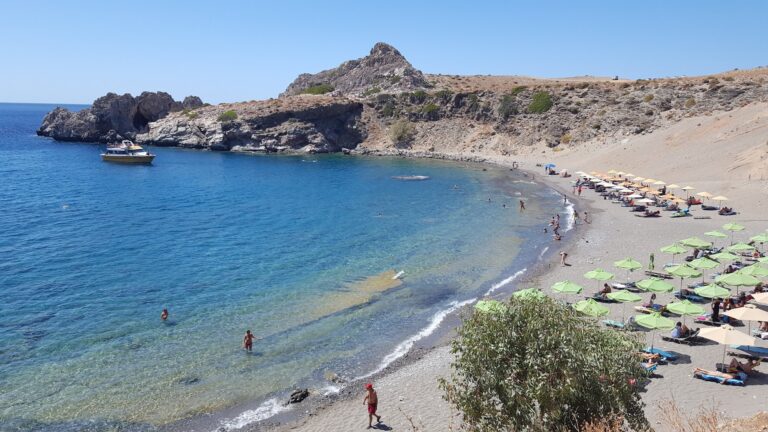
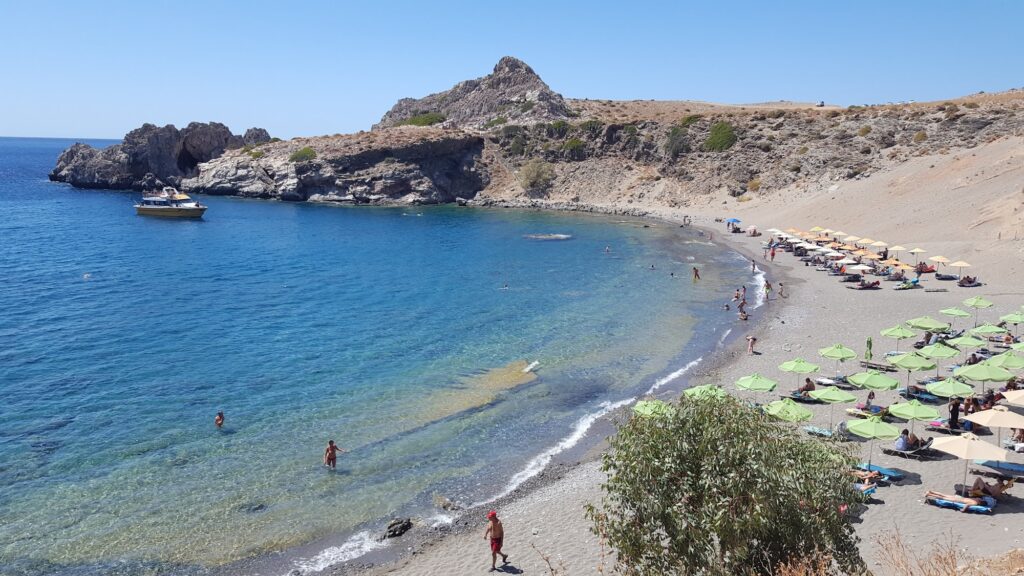
The main beach in front of the village is organised, with sunbeds, umbrellas, and pedal boats available for rent, and a handful of tavernas and rooms to let along the shore. The water here, as throughout the area, rarely falls below fifteen degrees Celsius, a consequence of the gulf’s exposure and depth that allows swimming through most of the year rather than only the summer months.
The dune section, separated from the main village beach, remains largely unorganised. The seabed is a combination of sand and rock, producing the conditions that make this stretch a recognised destination for snorkelling and free-diving, with visibility on calm days extending some distance and revealing silver bream moving through the rock formations beneath the surface. The coast is exposed to westerly winds, and visitors are advised to avoid the water when such winds are blowing, given the absence of permanent lifeguard supervision across the dune stretch.
Agios Pavlos Beach in southern Rethymno carries a direct association with the Apostle Paul, marked by a tenth-century Byzantine church on the hill above the shore, and is flanked to the southwest by the Alatsogremnos sand dunes, rising twenty-five to thirty metres and proposed for designation as a Natural Monument of Greece. Peak Thronos, roughly 300 metres above the beach, offers the recommended view across the Paximadia islets, Gavdos, and the White Mountains. The main beach is organised; the dune section is not, and carries no permanent lifeguard. The water is swimmable for most of the year, rarely dropping below fifteen degrees. Reaching the area requires a car, with the drive from Rethymno taking approximately an hour.
Drive via Saktouria. Walk to the dunes for the formations, the main beach for the organised facilities. Climb to Thronos before sunset.
Map
Sorry, no records were found. Please adjust your search criteria and try again.
Sorry, unable to load the Maps API.
Near by places: