Valtos Beach Parga: Castle, Ali Pasha, Onassis Islet
Profile
Valtos Beach, Parga: The Bay Below the Castle the British Sold to Ali Pasha in 1819, Facing the Islet Onassis Once Tried to Buy and Rename Christina
Greece | Valtos | Parga Municipality, Preveza, Epirus
In 1819, Britain — which had taken control of the Ionian Islands and Parga during the Napoleonic Wars as the town’s last Western protecting power — sold Parga to Ali Pasha of Ioannina, the powerful and feared Ottoman warlord who had spent years trying to bring the fiercely independent town under his control. It is a specific and unusual historical transaction: a fortified, free Greek town, garrisoned and defended for centuries by its own population alongside the rebels of Souli, simply sold by one foreign power to another. The Venetian-built castle above Valtos beach had been rebuilt for a third and final time in 1572 after Ottoman destruction, fortified with eight external towers and two water cisterns fed by the “Kremasma” fountain, housing as many as 400 dwellings packed into its narrow citadel — and none of that engineering ultimately prevented the town’s fate being decided by a treaty between two empires rather than by the people who had defended it.
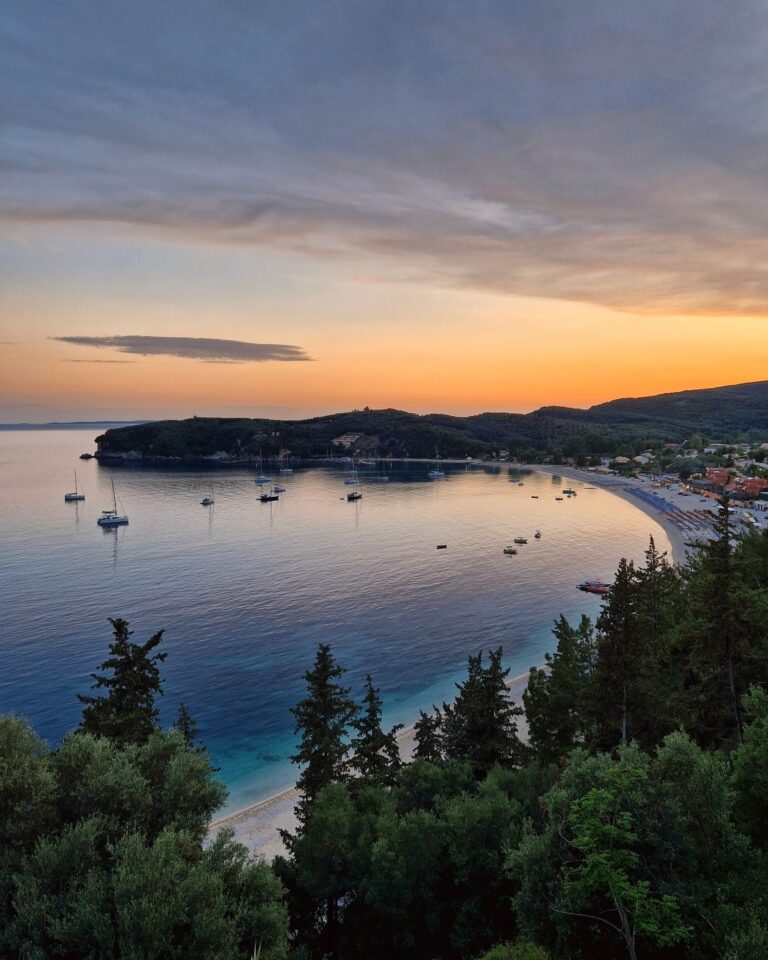
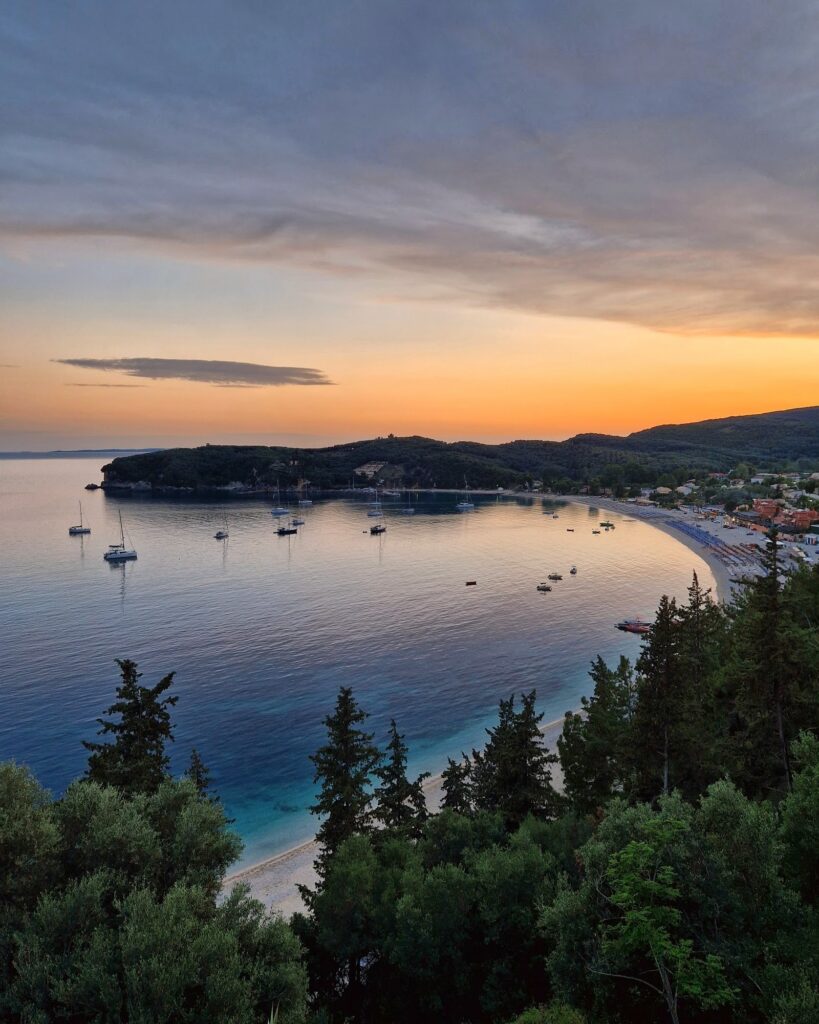
Across the water from Valtos, the small green islet of Panagia carries its own remarkable footnote: Aristotle Onassis, the shipping magnate, reportedly attempted to purchase the islet outright and rename it “Christina” — the same name he gave his famous yacht, after his daughter. The purchase never went through; Panagia remains privately owned today, its Venetian-era church and buildings drawing couples for summer weddings and photographers for sunset shots from the Parga waterfront, where the island is bathed in golden light as the sun goes down. Every 14th and 15th of August, the islet hosts the Panagina festival — folk music, boat shows, and fireworks marking the Assumption of the Virgin, drawing boats from across the bay for the two-day celebration.
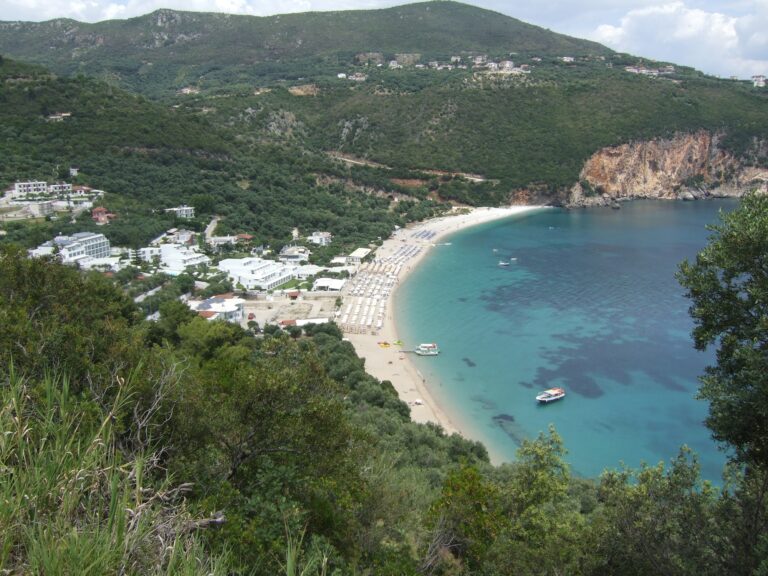
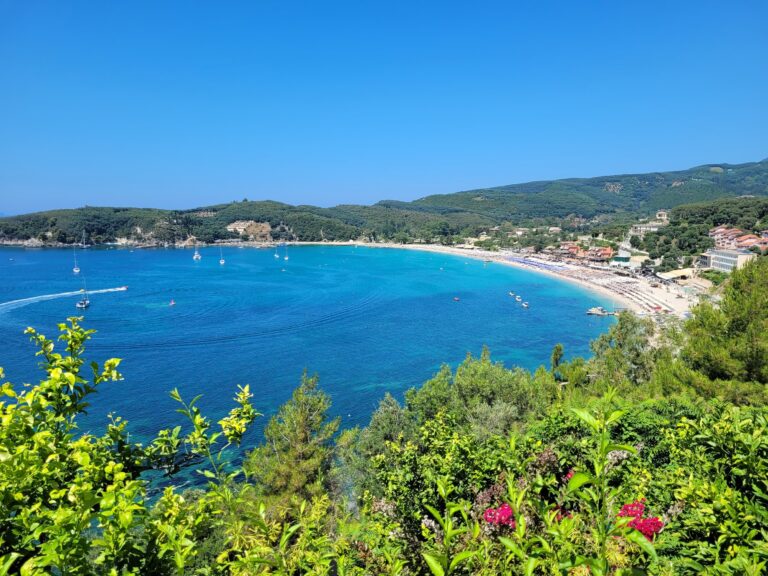
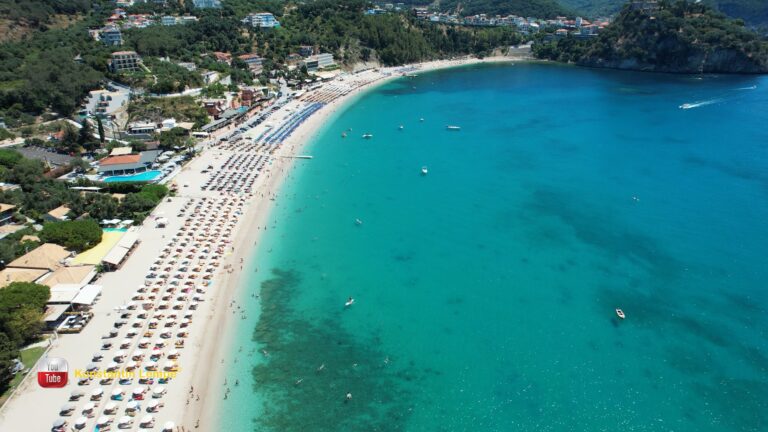
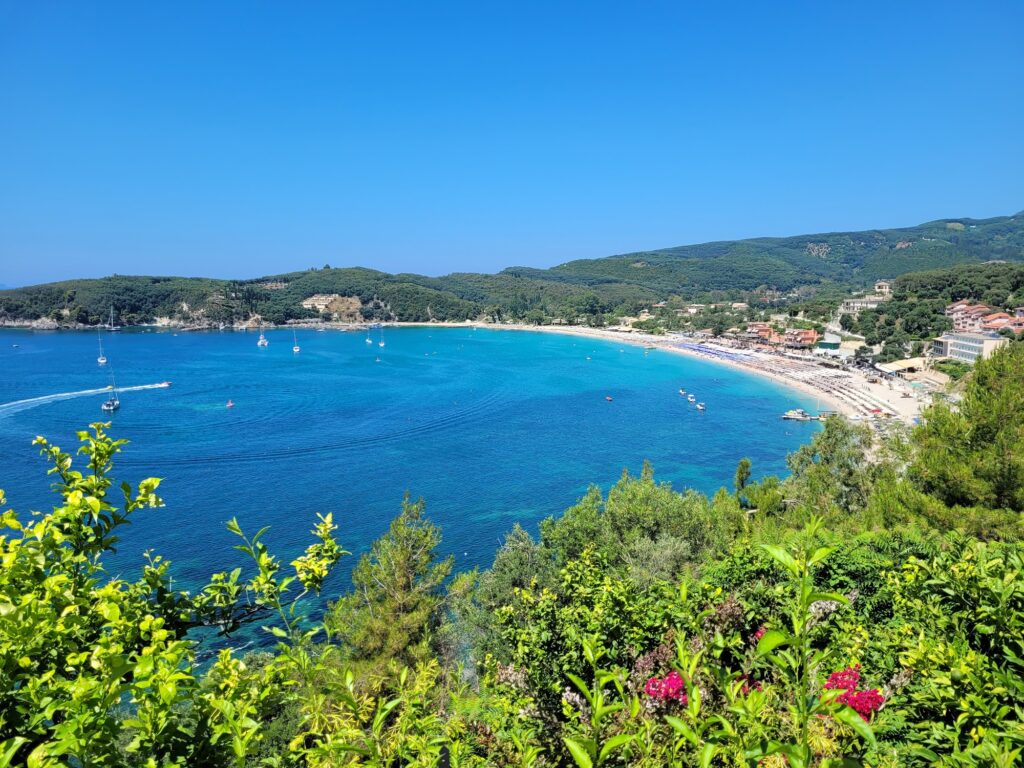
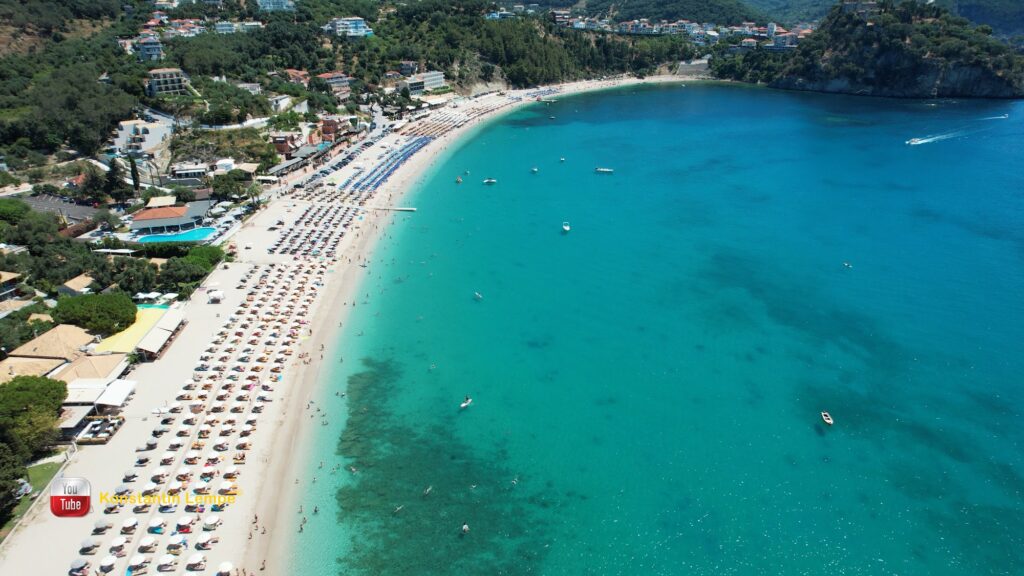
Valtos itself is the largest and most popular beach in Parga — a wide, gently shelving sandy bay stretching beneath the castle hill, with sources citing its length anywhere from roughly 1 to 3 kilometres depending on exactly which section is measured, though every account agrees it is large enough that finding space is rarely a genuine problem even at peak capacity.
Getting There: 20–25 Minutes on Foot Via the Castle Path, 5 Minutes by Car, Regular Water Taxi From the Harbour
From Parga’s old town, the most scenic approach to Valtos is on foot via the castle path: climbing the narrow streets and steps from the harbour, past the Venetian Castle entrance, and descending the paved road on the far side to the beach — a walk of roughly 15 to 25 minutes depending on pace, delivering the best panoramic photographs of the bay along the way. By car, the beach is approximately 5 minutes from Parga’s centre, with private and public parking behind the beach that fills quickly in July and August.
A regular water taxi runs from Parga’s main pier every 15 to 20 minutes in season, the roughly 5-minute crossing offering views of the castle from the water that the road approach cannot match.
The Beach: Sand and Small Pebbles, Gently Shelving Then Deepening, Snorkelling on the Left, Fully Organised With Water Sports
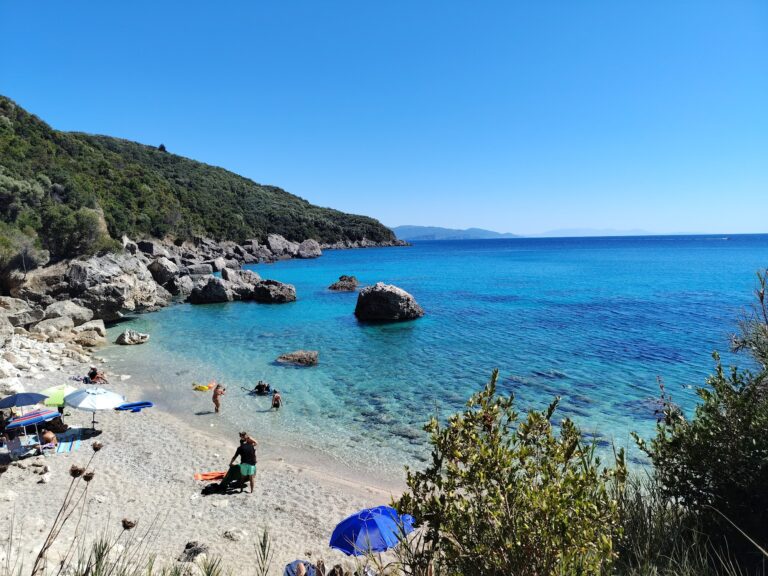
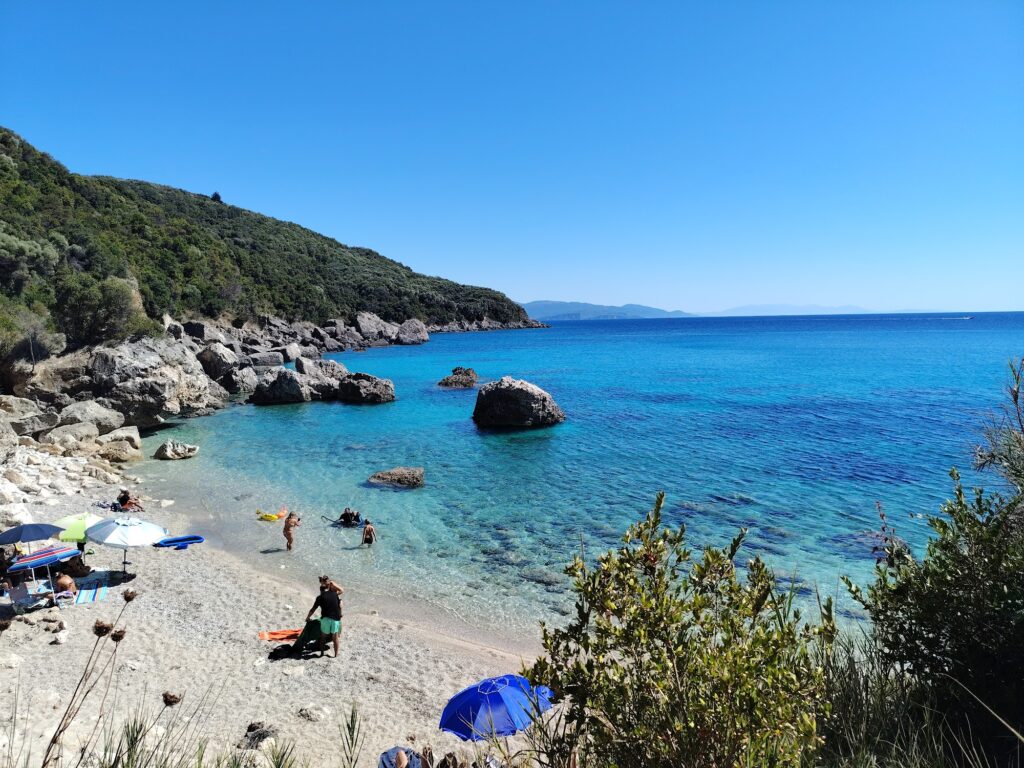
The shore mixes fine golden sand with small, smooth pebbles, and the water — clean, clear, and consistently praised — shelves gently before deepening more quickly than some of the area’s other beaches, making it well suited to confident swimmers and deep-water snorkelling along the rocky edges, particularly on the left side of the bay where the underwater visibility is specifically recommended. The bay’s width and openness to the Ionian keeps the water refreshed throughout summer.
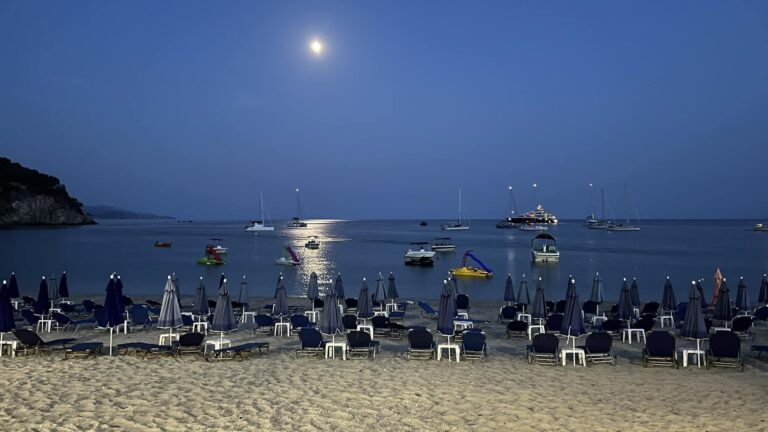
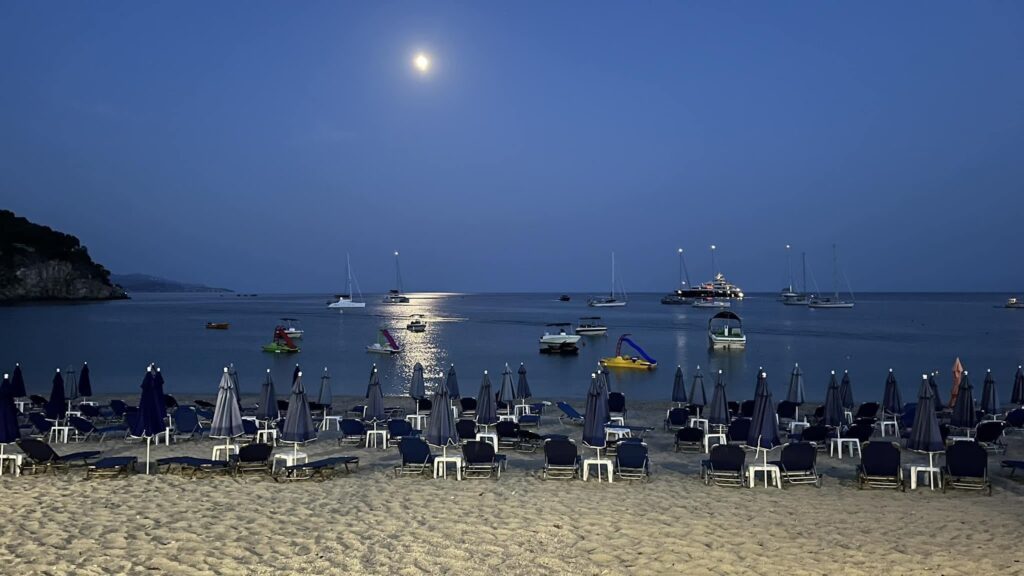
Valtos is fully organised: sunbeds and umbrellas managed by beach clubs and hotels along the shore, lifeguards stationed in season, showers and changing facilities at regular intervals, and the full range of water sports from jet skiing and parasailing through to the calmer kayaking, paddleboarding, and pedalo rentals — the latter specifically popular for the swim or paddle out toward Panagia islet itself, a crossing some visitors complete entirely under their own power when conditions allow.
The Venetian Castle: Eight Towers, 400 Houses, Two Bays for Supply
The castle’s defensive logic relied on the two bays flanking the citadel — Valtos to one side, Pogonia to the other — both used for resupply during sieges. Restoration work was carried out by the municipality in 2020 under the supervision of the Ephorate of Antiquities of Preveza, and the site remains one of Parga’s most visited historical attractions, with panoramic views across the town’s colourful rooftops, the Ionian Sea, and the coastline in every direction.
Kryoneri, Lichnos, and the Wider Parga Beach Sequence
Closer to Parga’s centre, Kryoneri and Piso Kryoneri offer smaller, quieter alternatives particularly suited to families with young children. Lichnos Beach Parga Greece lies a short drive further out, offering its own sheltered bay and the local legend of Aphrodite’s cave nearby. Together with Valtos, these beaches give visitors based in Parga a genuine range of character within a few kilometres of the town.
Valtos Beach at Parga is the wide sandy bay below the Venetian Castle that the British ultimately sold, along with the town itself, to Ali Pasha in 1819 — facing the privately owned Panagia islet that Onassis once tried to buy and rename Christina, host to the Panagina festival every 14th and 15th of August. Sand and small pebbles, gently shelving water that deepens for confident swimming and snorkelling (best on the left), fully organised with sunbeds, water sports, and waterfront dining, 1 to 3 kilometres of coastline depending on the section measured, reachable by a scenic castle-path walk, a 5-minute drive, or the regular harbour water taxi.
Walk the castle path from the harbour. Swim toward Panagia. Stay for the August festival if your dates align.
Map
Sorry, no records were found. Please adjust your search criteria and try again.
Sorry, unable to load the Maps API.
Near by places: