Voidokilia Beach Pylos: Homer, Nestor's Cave, Griffin
Profile
Voidokilia Beach, Pylos: The Omega-Shaped Crescent Where Homer’s Telemachus Was Welcomed by Nestor, Schliemann Explored the Cave in 1874, and a 2015 Tomb Discovery 100 Metres Away Rewrote Mycenaean History
Greece | Voidokilia | Pylos-Nestor Municipality, Messenia, Peloponnese
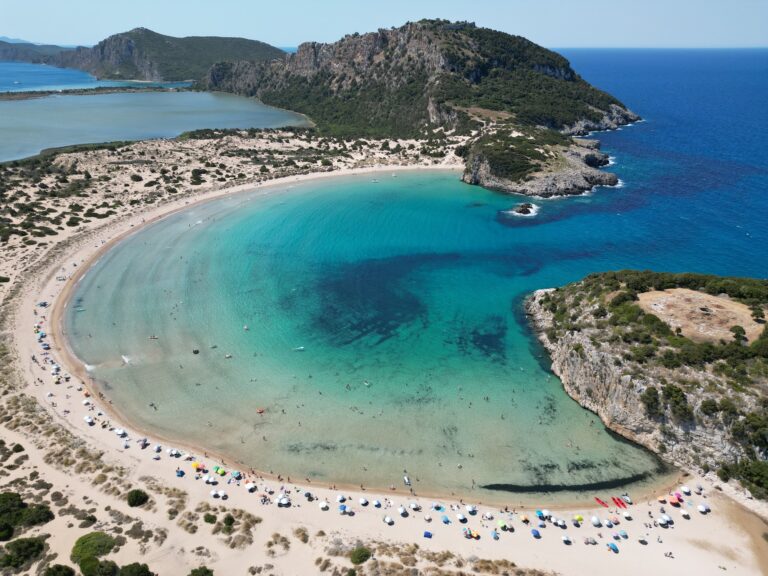
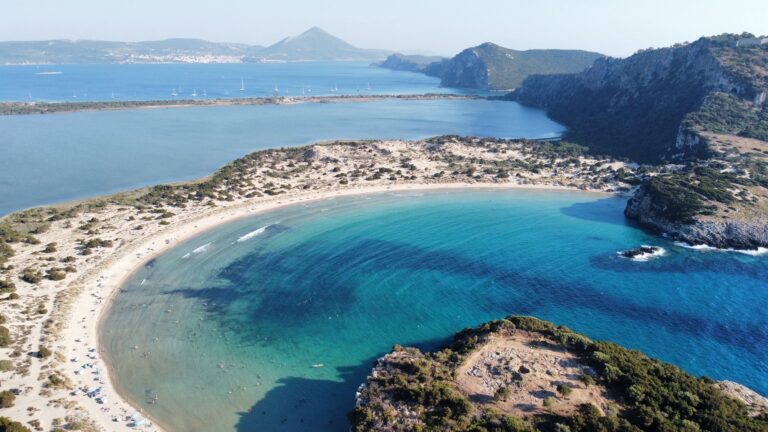
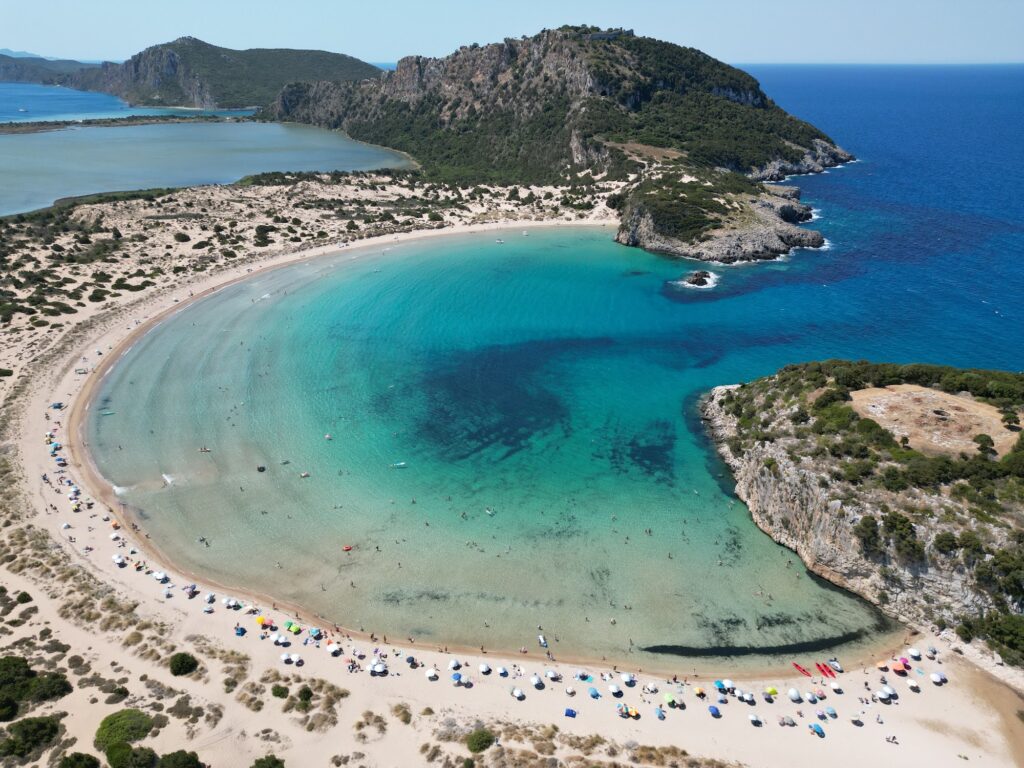
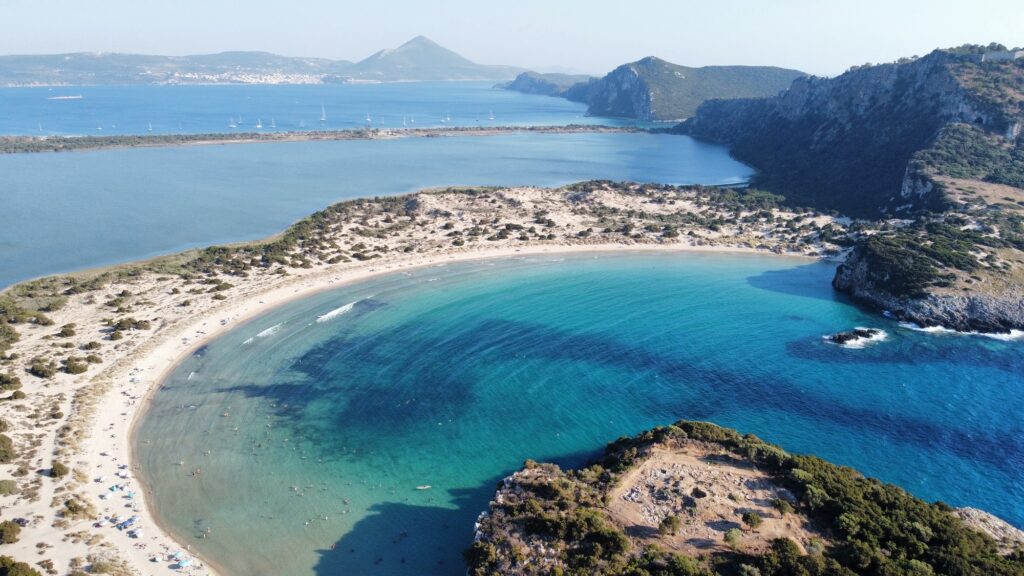
Heracles killed every son of Neleus, the king of Pylos, except one. Nestor survived and became king himself — the figure who appears in both the Iliad and the Odyssey as the elder statesman of the Greek forces, the wise old man whose advice everyone sought and whose long stories about how things were tougher in his own youth everyone endured. In the Odyssey, Telemachus, searching for news of his long-absent father Odysseus, comes to “sandy Pylos” and is warmly received by Nestor. The crescent beach now called Voidokilia — the name means ox belly, describing the shape — is presumed by scholars to be that same sandy Pylos, the place where Telemachus stood and where Nestor likely kept his ships, using the sheltered bay as a natural harbour for the kingdom Homer describes.
The cave below Paleokastro, at the southwestern end of the beach, has a different mythological assignment: this is where Hermes hid the fifty cattle he stole from Apollo, and where Neleus (Nestor’s father) once stabled his oxen. The cave — a chamber approximately 30 metres deep with a significant height and a hole in the roof through which light filters — contains pottery evidence of human presence from the Neolithic through the Classical periods. Pausanias mentioned the cave in his 2nd-century AD travels. Heinrich Schliemann — the archaeologist whose excavations at Troy and Mycenae established the historical core beneath Homer’s epics — explored the cave in 1874, drawn by the same mythological associations that drew him to Troy.
At the northern tip of the bay, the Mycenaean tholos tomb known since antiquity as the Tomb of Thrasymedes — Nestor’s son — has been excavated, though no inscription confirms the identification, only the tradition that Pausanias already recorded as established fact in his own time. In 2015, less than 100 metres from this tholos, archaeologists from the University of Cincinnati found an undisturbed warrior’s grave dating to around 1500 BC — the “Griffin Warrior,” buried with a bronze sword with a gold-coated hilt and approximately 1,500 grave goods. The discovery, made because the tomb had escaped the looting that emptied the nearby tholos centuries ago, provided archaeologists with the first substantially intact early Mycenaean elite burial ever found — a find significant enough to reshape scholarly understanding of the period when Mycenaean culture was first forming, before the famous palaces existed.
Getting There: 12km From Pylos (15–20 Minutes), Dirt Track Through the Dunes to Designated Parking, or the 40-Minute Lagoon Path From Paleokastro Car Park
From Pylos, follow signs toward Gialova and then Petrochori until the Voidokilia signs appear. The final approach is a narrow dirt track winding through the dunes to a designated parking area, a 2-minute walk from the sand.
On foot, the lagoon-side path from the Paleokastro car park (signposted “Nestor’s Cave,” officially closed but walkable) skirts the Gialova Lagoon and leads through the dunes to the beach in approximately 40 minutes — a route that delivers the Paleokastro ruins and the cave before the beach itself, the historical sequence arriving before the swim.
We covered Romanos Beach Pylos Greece — the large dune-backed shore beside Costa Navarino, 15 minutes north on the same coastal stretch — as the organised alternative for visitors who want facilities before or after the unorganised Voidokilia visit.
The Beach: Fine Pale Sand, No Pebbles, Perfectly Sheltered by Two Headlands, Gentle Gradual Entry, No Facilities Whatsoever, Natura 2000
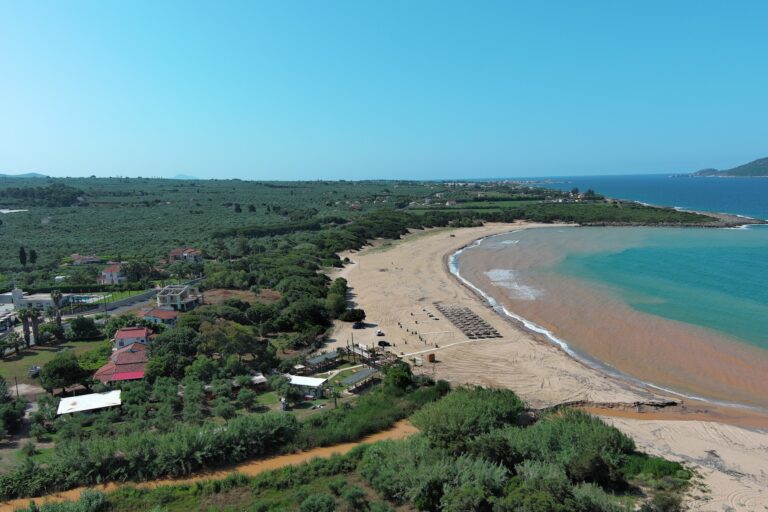
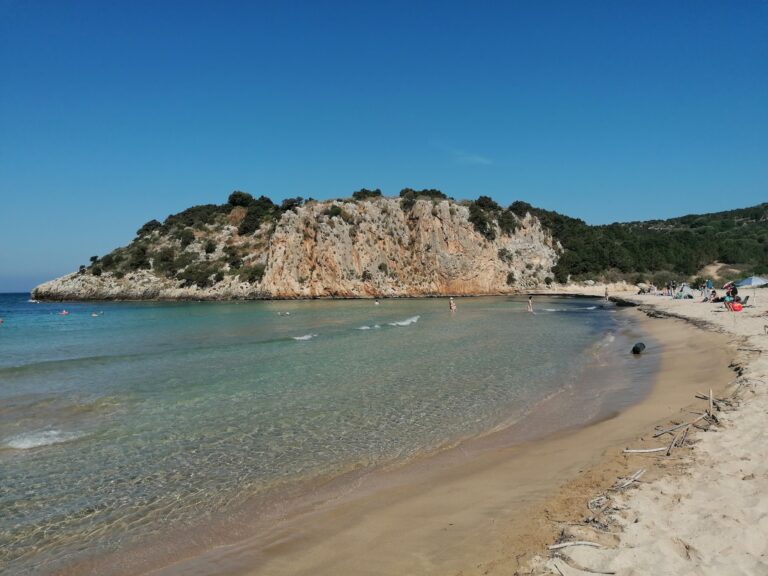
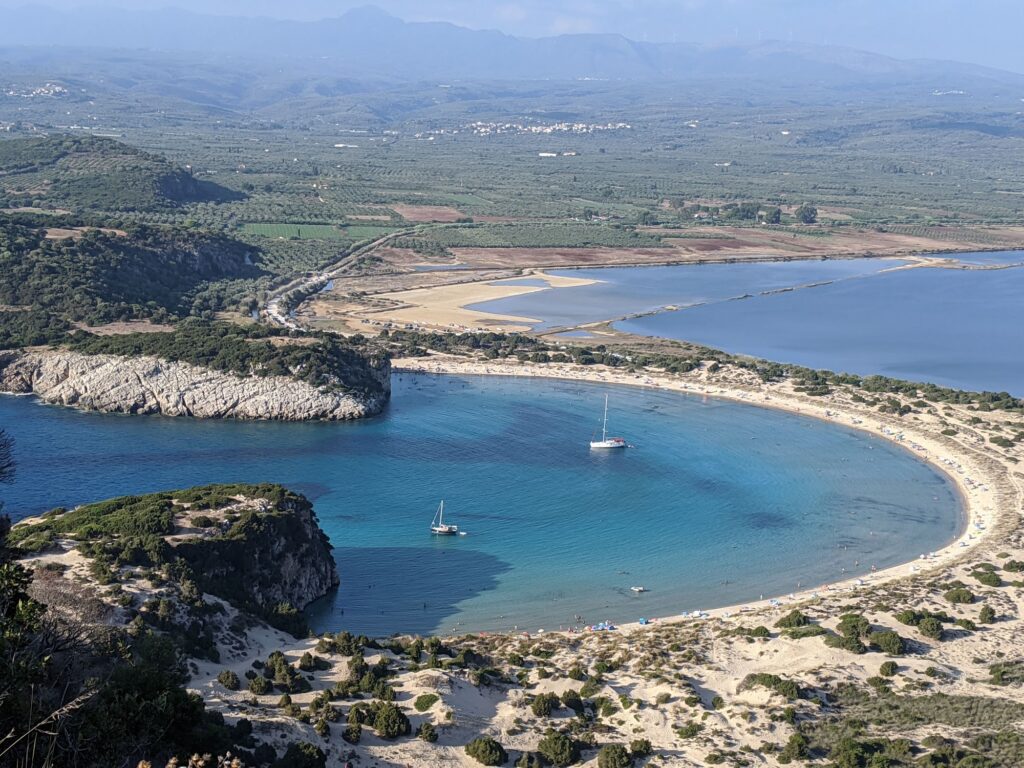
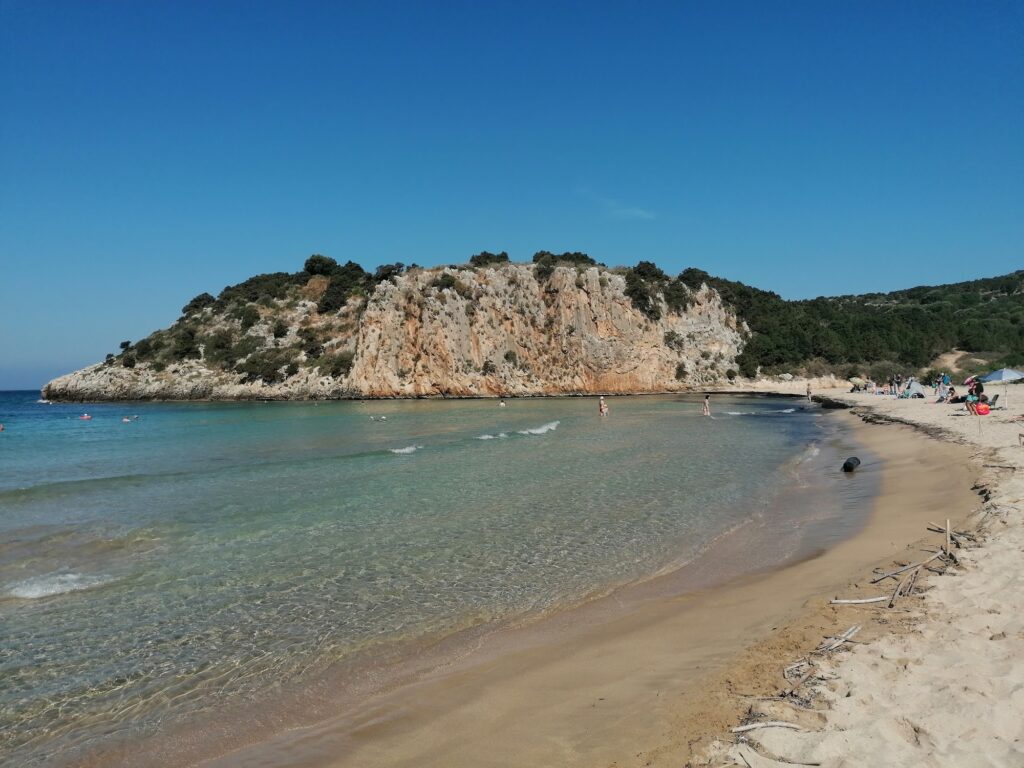
Voidokilia is fine, pale, powdery sand — no pebbles, no shingle, cool underfoot even in peak heat. The two rocky headlands enclose the bay almost completely, leaving a narrow passage to the open Ionian that keeps the interior water exceptionally calm. The entry is gentle and gradual — the “natural wading pool” quality that makes it comfortable for every age and ability.
There are no facilities: no sunbeds, no umbrellas, no showers, no changing rooms, no tavernas. The protected Natura 2000 status of the site and its position behind the ecologically sensitive Gialova Lagoon are the specific reasons development has been kept off the sand. Visitors bring everything and are expected to leave nothing. Motorised water sports are prohibited; kayaking and paddleboarding are the calm-water alternatives.
Arriving early is the practical necessity — the beach is small relative to its fame, and by midday in peak season both the sand and the narrow access road reach capacity.
Climbing to Paleokastro: The Crescent From Above, the Cave Below, the Full Panorama
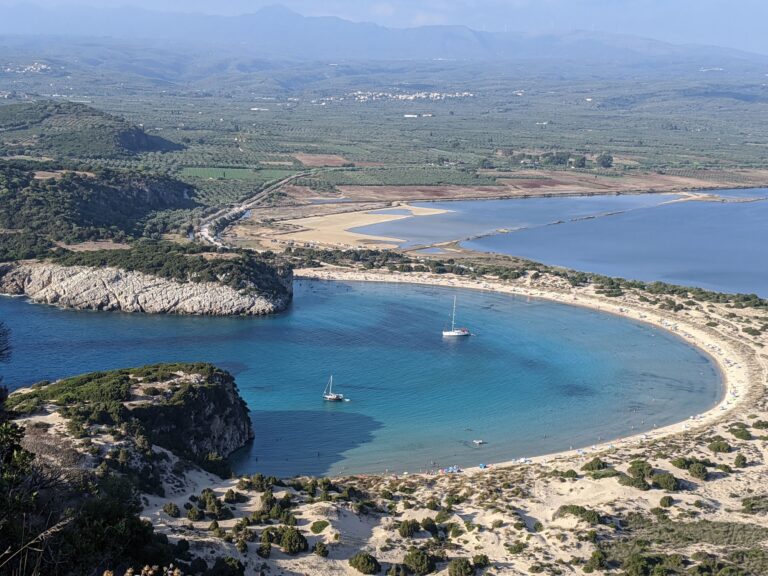
From the southwestern end of the beach, a path climbs over the dunes to Nestor’s Cave below the ruins of Paleokastro — the 13th-century Frankish castle built on the ancient acropolis of Pylos. The climb continues to the castle battlements, rewarded by the view that every account of Voidokilia singles out: the perfect omega crescent seen from above, the Gialova Lagoon, Navarino Bay, and the olive-covered Messenian hills in a single panorama. Combining the beach visit with the climb to the castle and the descent past the cave makes the complete circuit that the site rewards.
Voidokilia Beach at Pylos is the omega-shaped crescent presumed to be Homer’s “sandy Pylos” — where Telemachus was welcomed by Nestor, Nestor’s Cave below Paleokastro (Hermes hid Apollo’s cattle, Pausanias recorded it, Schliemann explored it in 1874), the Thrasymedes tholos tomb at the northern tip, the 2015 Griffin Warrior discovery 100 metres away that rewrote early Mycenaean history. Fine pale sand, no pebbles, two headlands enclosing the bay, gentle gradual entry, zero facilities (Natura 2000, bring everything), 12km from Pylos, the climb to Paleokastro for the full panorama.
Drive or walk from Pylos. Arrive early. Bring everything. Climb to the castle for the view of the omega from above.
Map
Sorry, no records were found. Please adjust your search criteria and try again.
Sorry, unable to load the Maps API.
Near by places: