Zagka Beach Koroni: Eye of Venice, Convent, Golden Sand
Profile
Zagka Beach (Zaga Beach), Koroni: The 2km Golden Shore Below the Castle That Was One of the Eyes of Venice, Where the Active Convent Inside the Walls Grows Oranges and Mandarins and the Miraculous Icon Has Been Venerated Since 1897
Greece | Koroni | Koroni Municipality, Messenia, Peloponnese
Venice controlled the strategic points of the Mediterranean the way a fleet commander controls the sea — not by holding territory comprehensively but by holding specific points of leverage. In the Peloponnese, two castles were the leverage points that controlled the entire southern maritime route: Methoni on the southwestern tip and Koroni on the southeastern edge of the Messinian Gulf. Both were held by Venice for long periods. Both were called the “Eyes of Venice” — the watchtowers from which the Republic could see and control the passage between the Ionian and the Mediterranean proper.
The Koroni castle was built on Byzantine foundations from the 7th century, taken by Venice in 1209, lost to the Ottomans in 1500 (after a siege), returned to Venice in 1685 (as part of the Morean War under Morosini), taken again by the Ottomans in 1715, and finally liberated by French General Maison in 1828 during the Greek War of Independence. The structure that stands is the accumulated architecture of eight centuries of contested possession: 62 acres, a 1,200-metre perimeter wall, triangular in plan, with nine orthogonal towers and five bastions. The Venetian engineering layers sit on Byzantine substructures; the Ottoman modifications are visible in the bath ruins and the powder magazine; the French barracks remains are from the liberation period.
What the castle contains now is not a museum but a living community. The Timios Prodromos Convent occupies the western acropolis of the castle — an active women’s monastery whose nuns grow oranges and mandarins in an orchard inside the ancient walls, maintain a small souvenir shop, and welcome visitors provided they observe the dress code. The combination of Venetian defensive architecture, Ottoman modifications, and a working Orthodox convent with a working orchard is specific to Koroni — no other castle on the Peloponnese coast is simultaneously a military heritage site and a place of active monastic cultivation.
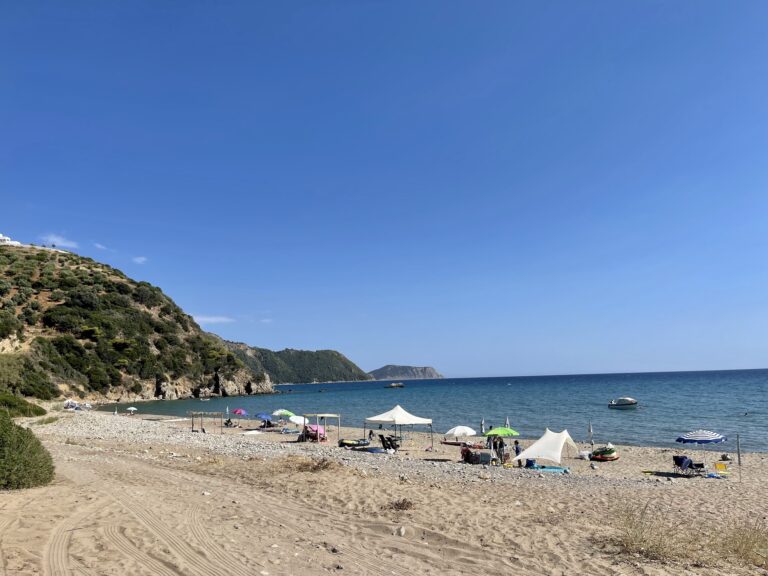
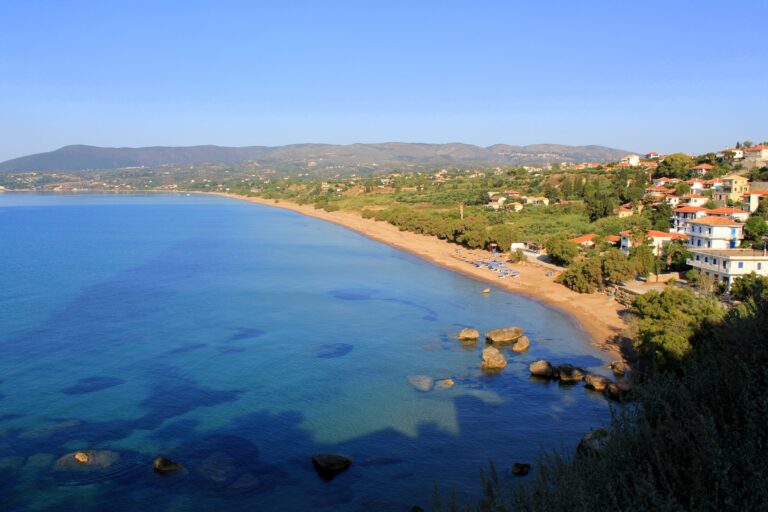
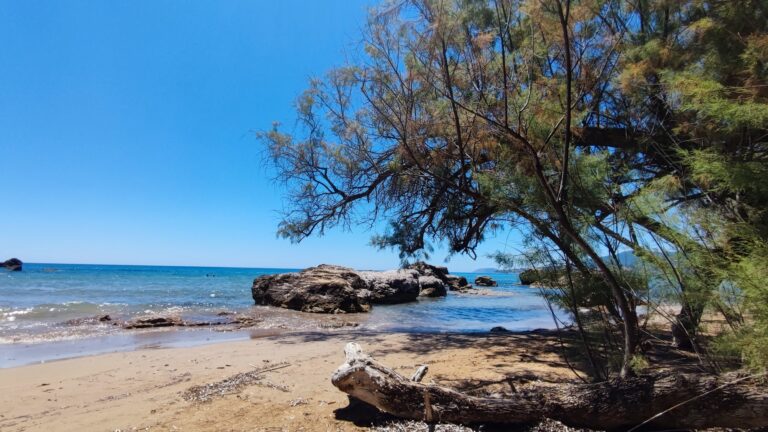
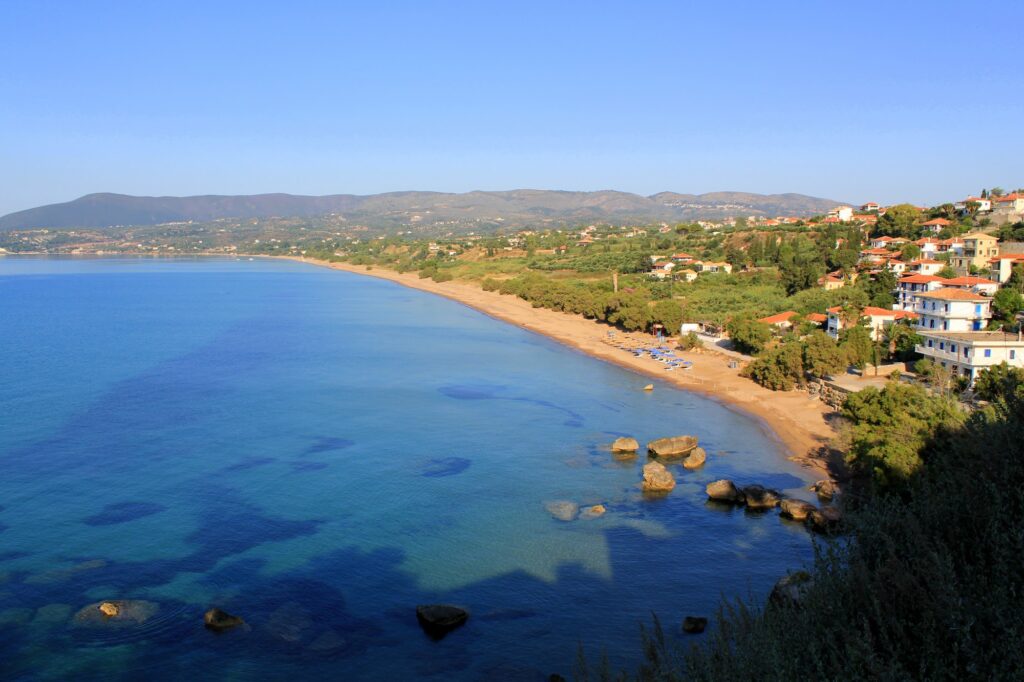
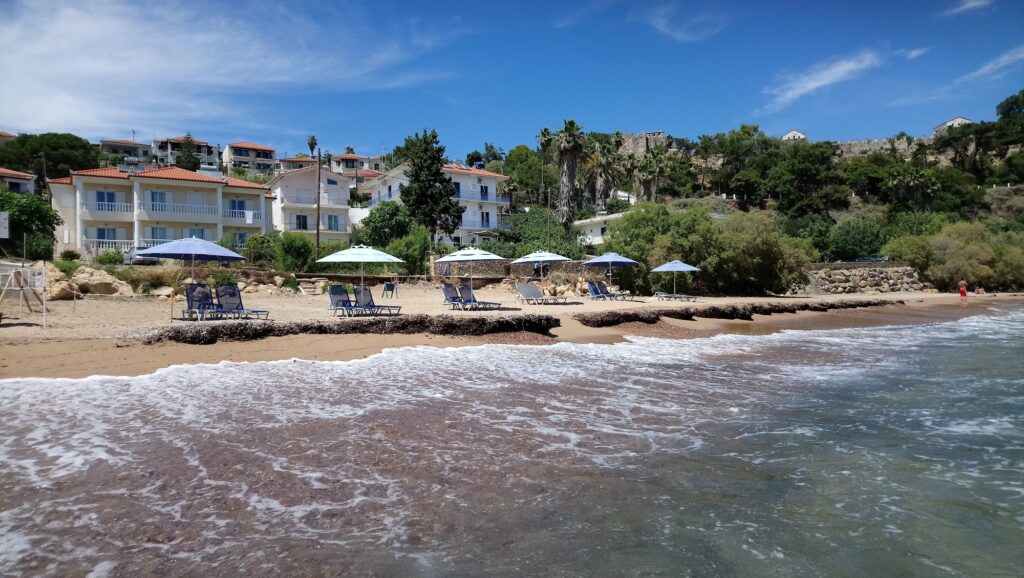
Zagka beach — also written Zaga — stretches 2 kilometres south of Koroni town, at the base of the castle hill, and merges with Memi Beach at its far end. The settlement was ancient Asine, mentioned by Pausanias in his Laconica as one of the Messenian cities.
Getting There: 50 Minutes From Kalamata, 20-Minute Walk From Koroni Town (or Cut Through the Castle), Parking Along the Beach Access Roads
From Kalamata, drive southwest toward Koroni — approximately 50 minutes by car. From Pylos (40km west), the drive takes a similar time. As you enter Koroni town, follow the signs for the beach; the roads descend from the castle hill toward the shore.
On foot from Koroni town, the beach is a 20-minute walk down. The castle offers a shortcut — entering at the main gate, walking through the convent area, and descending the southern castle slope brings you to the beach more directly and delivers the castle interior as a passage rather than a destination. The walk along the town’s narrow alleys down to the beach level is the alternative route.
Parking is available in the dedicated lots and along the access roads behind the beach.
The Beach: 2km Golden Sand, Merges With Memi Beach, Gradual Entry, Caretta Nesting, Organised Sections Near Town, Open Dune Sections Further Along
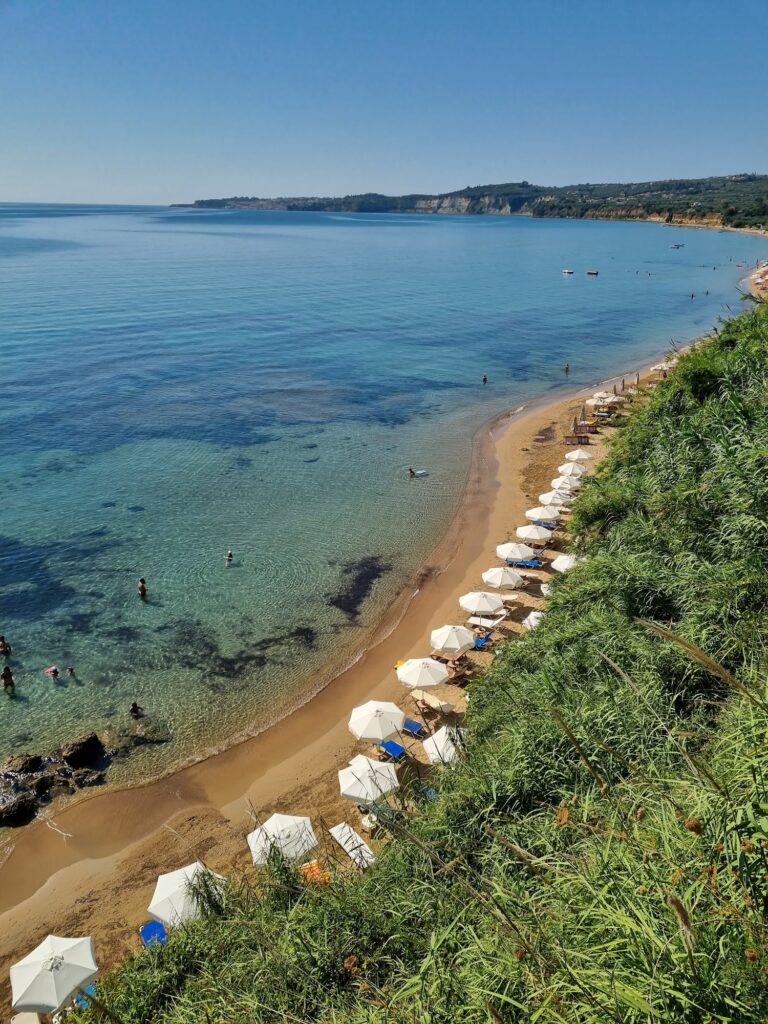
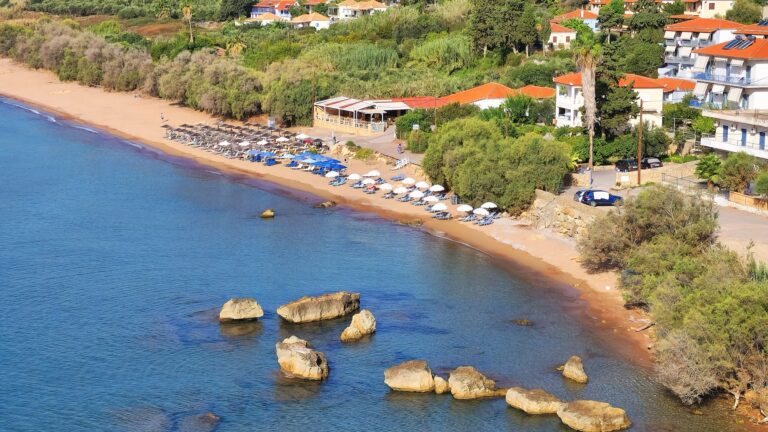
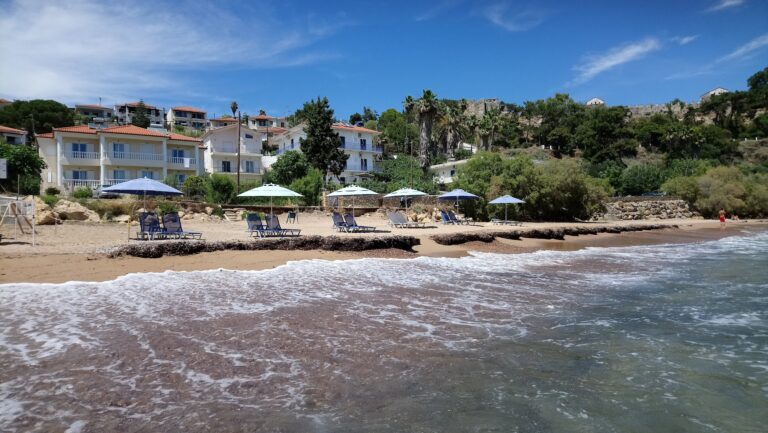
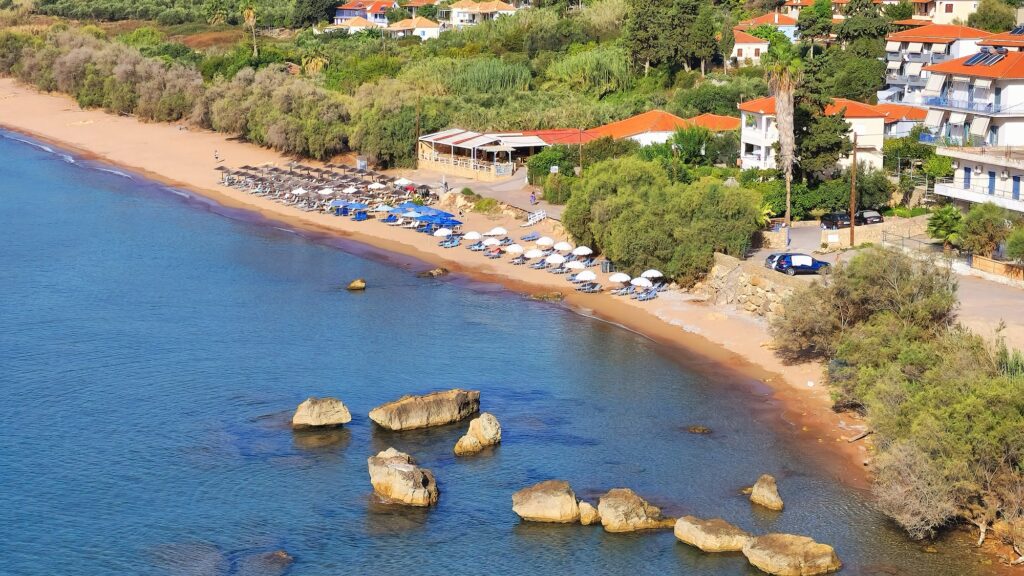
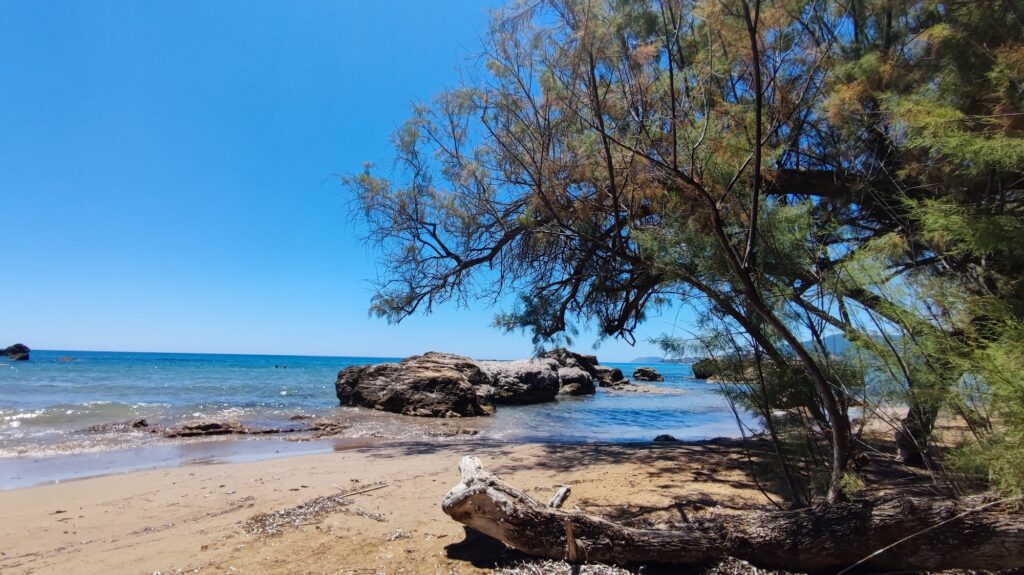
The beach is fine golden sand for the full 2 kilometres — one of the longest sandy beaches in Messenia, with a gradual entry and calm water in typical conditions. The section closest to Koroni town and the castle is the most organised: beach bars, sunbeds, umbrellas, the beach club infrastructure that a popular town beach develops. The further sections toward Memi Beach are quieter, with open dune areas and the specific wild character of a beach long enough to absorb its visitors without crowding.
Caretta caretta sea turtles nest on Zagka — the sandy beach and the relatively undisturbed dune sections provide the nesting substrate. ARCHELON monitors the bay. The standard rules apply in the nesting sections: remove furniture after sunset, no lights, no disturbance.
The Timios Prodromos Convent: Active Nuns, Oranges and Mandarins, Dress Code, Souvenir Shop
The convent inside the castle is the experience that separates Koroni from every other Venetian-era castle on the Peloponnese. Walking through the gate and into the castle precinct, the first thing that changes from the outside is the smell — the orange and mandarin orchard inside the walls produces a citrus scent specific to this enclosure, particular to a Mediterranean autumn and winter when the fruit is on the trees. The nuns maintain the orchard and sell the produce alongside other items in the small shop. Visitors are welcome on the condition that they dress appropriately — shoulders and knees covered, no shorts for men.
Inside the castle, in addition to the convent, there is the Agia Sofia basilica (7th–8th century, with a later 11th–12th century phase visible in the masonry), the ruins of the Ottoman bath, the powder magazine, and the French barracks remains from 1828.
The Resalto Monument: 48 Greeks, 13 February 1824
The Resalto Monument in Koroni commemorates 48 Greeks who attempted to retake the castle from the Ottomans on 13 February 1824, during the Greek War of Independence. They failed and were killed. The monument is the physical record of one of the small, failed actions that the independence struggle was composed of alongside its famous battles — 48 people who climbed toward the castle at night and died in the attempt. The date, the number, and the monument give the event the specific weight that collective memory preserves.
The Panagia Eleistria: The Patron Saint of Koroni, the Miraculous Icon of 1897
The Panagia Eleistria church at the southwest end of the castle is the church of Koroni’s patron saint — the miraculous icon found in 1897, housed in a three-storey church inaugurated in 1900. Three sculptural statuettes inside: the Crucified Christ, the Virgin Mary Vrephokratousa, and the Evangelist Luke. The church is the devotional centre of the town and the focus of the annual celebration of the patron saint.
Zagka Beach at Koroni in Messenia is the 2km golden sandy shore below the Eye of Venice — the castle that Venice held and lost multiple times between 1209 and 1715 (62 acres, 1,200m perimeter, 9 towers, 5 bastions), the Timios Prodromos active convent inside with the orange and mandarin orchard, Agia Sofia basilica (7th–8th century), the Resalto Monument (48 Greeks, 13 February 1824), the Panagia Eleistria miraculous icon (found 1897, three-storey church 1900), Caretta nesting on the dune sections, gradual golden sand entry, merges with Memi Beach, 20-minute walk from town or through the castle shortcut, 50 minutes from Kalamata.
Drive from Kalamata. Enter through the castle. Walk down to the sand. Look back at the walls.
Map
Sorry, no records were found. Please adjust your search criteria and try again.
Sorry, unable to load the Maps API.
Near by places: