Caldane Beach: An Island of Ancient Wrecks
Profile
Caldane Beach: An Island That’s Claimed Ships for 2,600 Years
Italy | Tuscany | Grosseto | Giglio Island
Giglio Island’s waters have claimed ships for an extraordinarily long time. In Campese Bay, on the island’s western side, divers discovered a sixth-century BC Etruscan merchant vessel in 1961, later properly excavated by Oxford underwater archaeologist Mensun Bound starting in 1982, now recognized as one of the best-preserved and most historically significant ancient shipwrecks ever recovered. A third-century Roman cargo ship, its hold loaded with fish sauce jars from North Africa, rests near Giglio Porto too, apparently caught by the same treacherous reef, Le Scole, that would prove significant again many centuries later. Recovered artifacts from these wrecks are now displayed at the Spanish Fortress museum in nearby Porto Santo Stefano.
In January 2012, that same stretch of water off Giglio Porto became the site of a genuine modern tragedy, when the cruise ship Costa Concordia struck rocks near the harbor and capsized, killing thirty-two people. The disaster reshaped the island profoundly, both in the immediate, difficult aftermath and in the years of salvage work that followed, and residents still speak of it as a defining, solemn chapter in the island’s more recent history rather than simply a curiosity for passing visitors.
Barbarossa’s own forces raided Giglio during the sixteenth century too, part of the same wave of Saracen attacks that led Cosimo I and later Ferdinando I de’ Medici to build the coastal watchtowers still standing at Giglio Porto and Campese today.
A Small, Sheltered Cove of Coarse Granite Sand
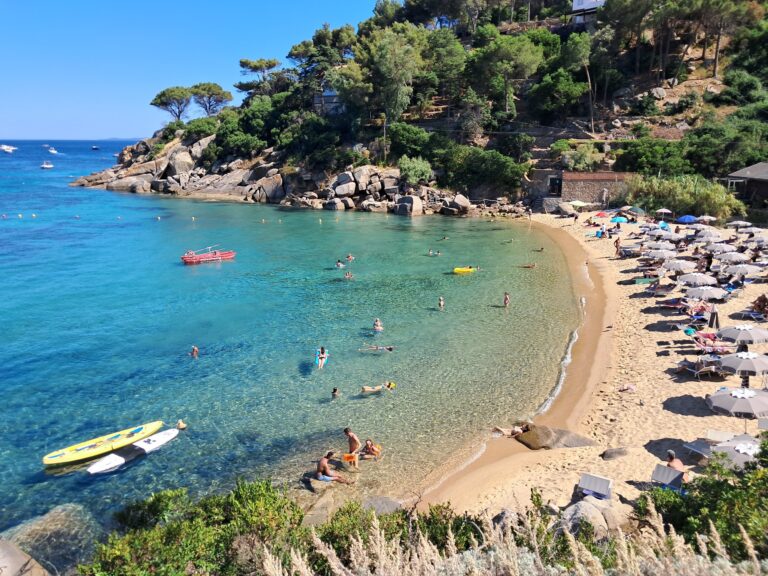
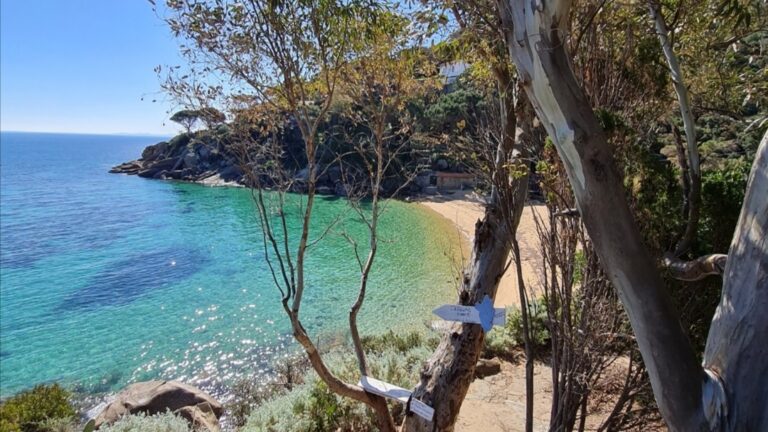
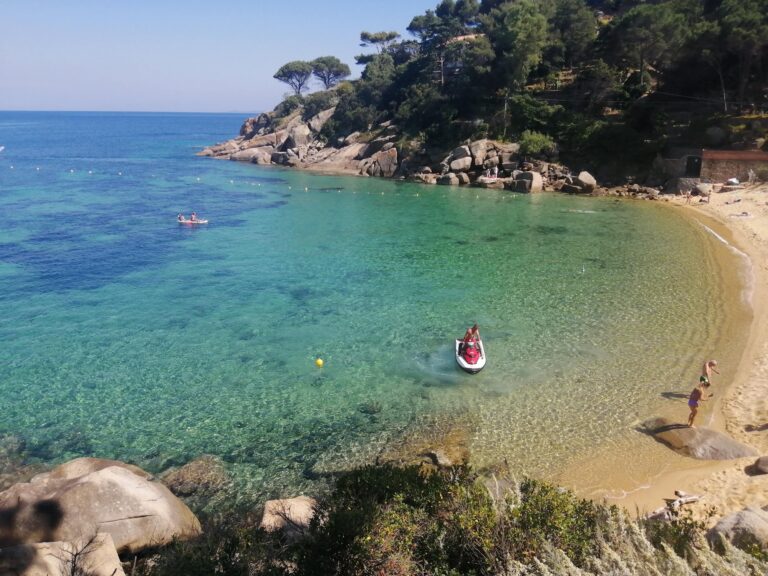
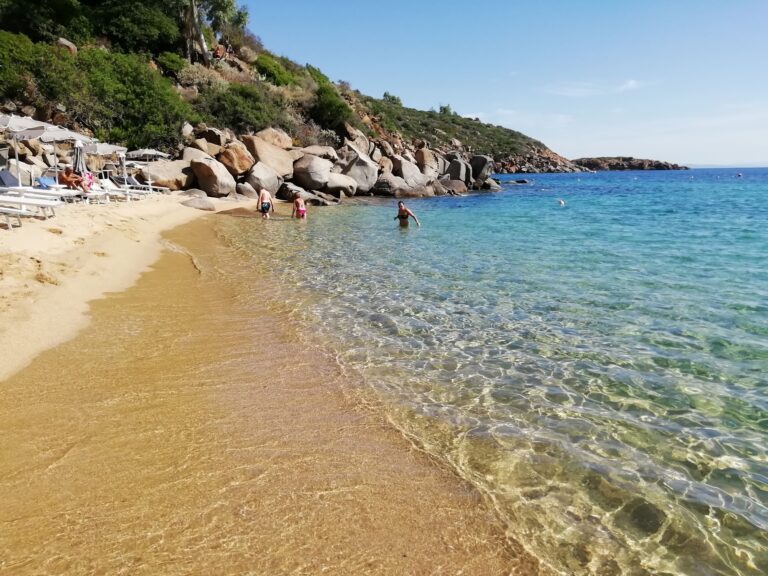
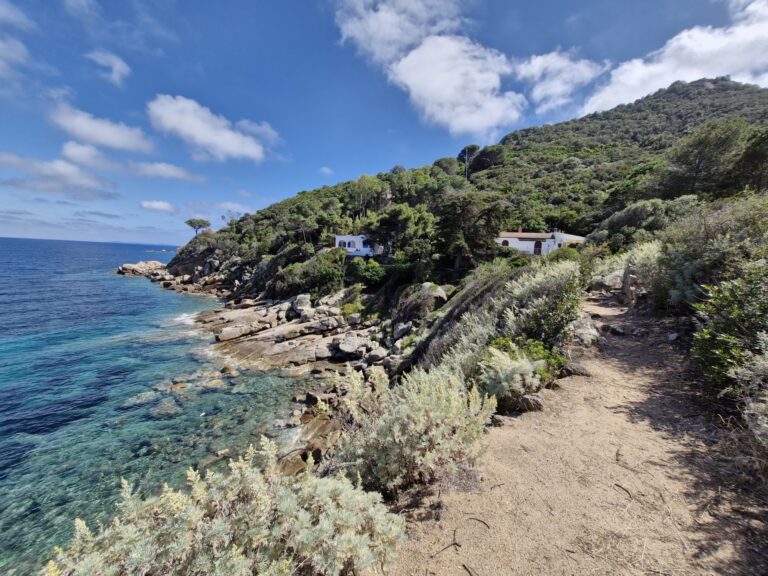
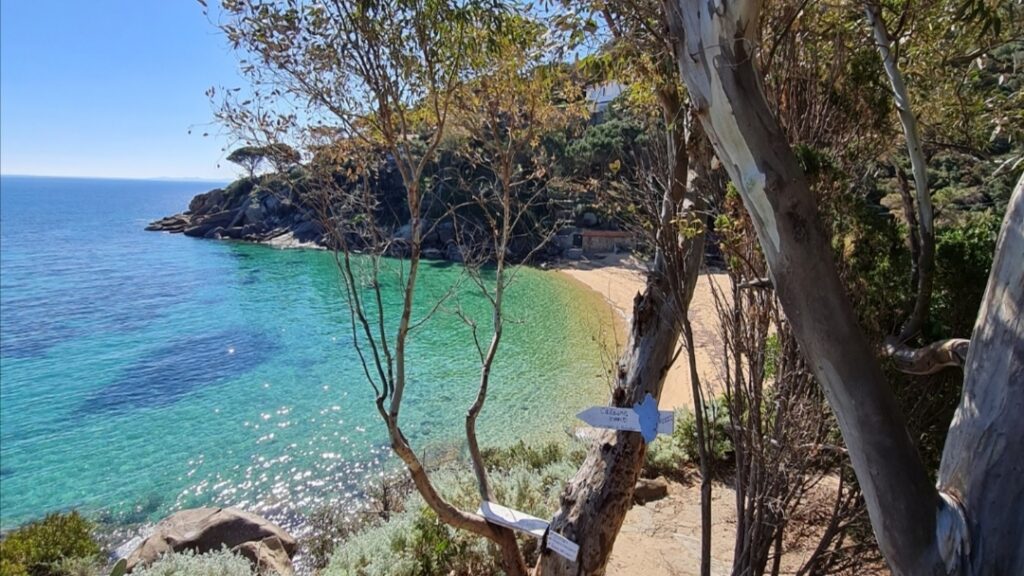
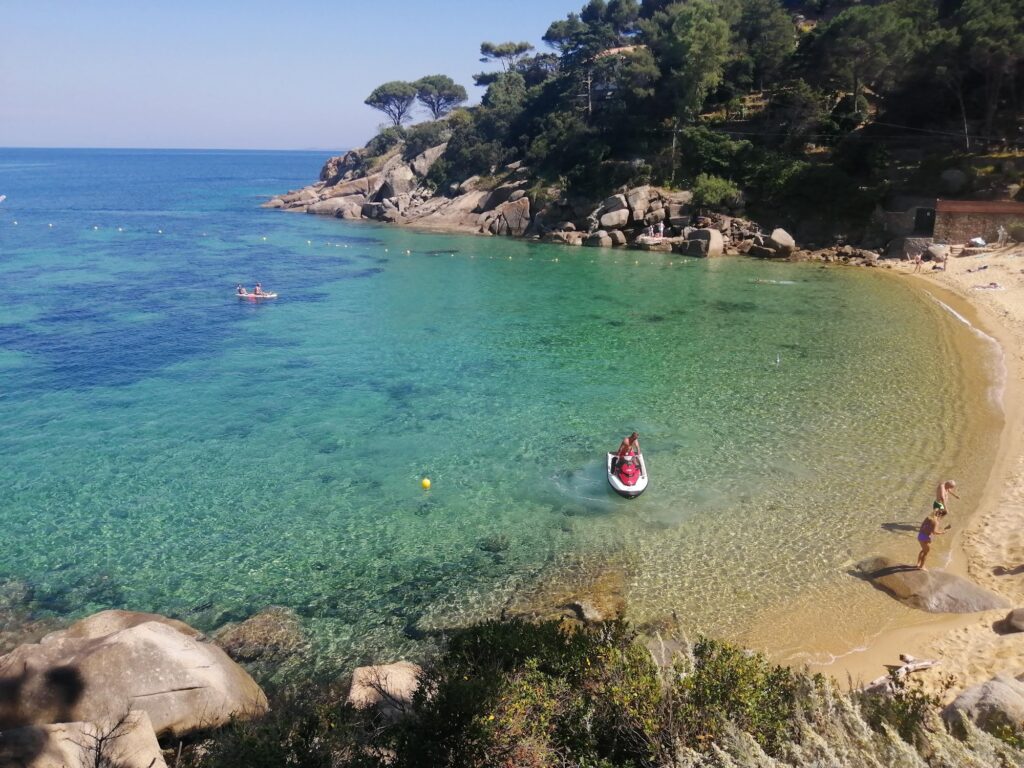
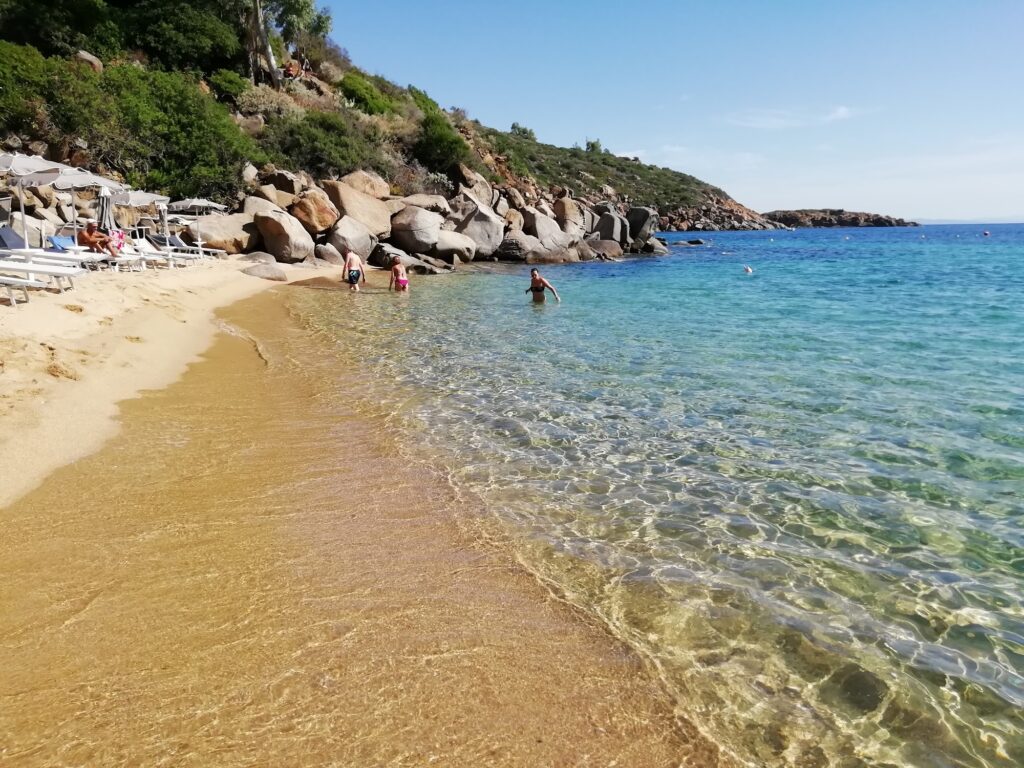
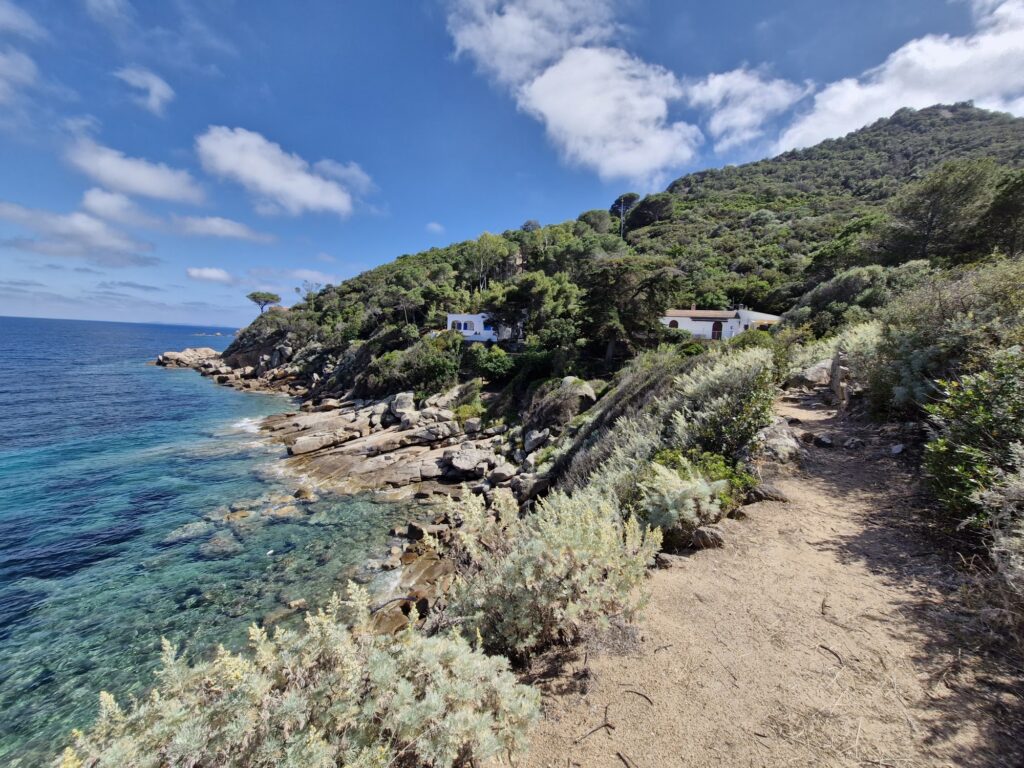
Caldane offers a genuinely intimate hundred-meter bay, coarse golden sand mixed with polished granite pebbles and reddish mineral fragments, enclosed by steep granite headlands thick with wild rosemary and prickly pear. I found the granite texture here genuinely pleasant underfoot, and the cove’s shape kept it well sheltered from incoming swell even when the open sea beyond looked considerably rougher.
Water Clear Enough to Justify the Walk Down
The seabed here deepens at a moderate pace into genuinely rich underwater terrain, and I found snorkeling along the granite reefs bordering the bay among the most rewarding I encountered anywhere on this coast, sea bream, octopuses, and sea anemones settled into crevices visible through remarkably transparent water.
Reached Only by Foot or by Sea
Given how genuinely remote Caldane stays, accessible primarily by hiking trail or water taxi, I found it stayed quiet even during peak summer, and I’d recommend proper walking shoes for the coastal path if arriving on foot. Given how undeveloped this cove remains, dogs would likely be fine here on a leash following Italy’s standard rule for public beaches.
Getting There and Settling In
Reaching Caldane means first taking the Toremar or Maregiglio ferry from Porto Santo Stefano to Giglio Porto, about an hour’s crossing; from there, a twenty-minute walk south along the coastal road to Cannelle Beach connects to a marked trail continuing another twenty to thirty minutes along granite cliffs down into the cove, while a water taxi from Giglio Porto’s harbor covers the same distance in about ten minutes, and kayaks or paddleboards rented at the port or at Cannelle offer a genuinely active alternative approach.
Standing Where the Sea Has Kept Its Own Long Memory
By the time I left Caldane on my last evening, I found myself thinking about how much this small island’s relationship with the water has held, ancient traders lost to the same reefs that claimed a modern cruise ship centuries later, an entire community that’s had to absorb both the deep past and a genuinely recent tragedy within sight of the same quiet coastline.
Map
Sorry, no records were found. Please adjust your search criteria and try again.
Sorry, unable to load the Maps API.
Near by places: