
Feniglia: Where Caravaggio's Story Ended
Profile
Feniglia: The Beach Where Caravaggio’s Final Days Remain a Mystery
Italy | Tuscany | Grosseto | Monte Argentario
Caravaggio, one of the most influential painters in Western art history, died near this exact stretch of coast on July 18, 1610, though the precise circumstances remain genuinely disputed even now. Fleeing north from Naples after years on the run following a killing in Rome, he was reportedly trying to reach Porto Ercole to recover three paintings, Saint John the Baptist, Saint John, and The Magdalene, intended as his ticket to a papal pardon. Some accounts describe him landing already dying on Feniglia’s own sand before being taken to a small hospital dedicated to Mary Help of Christians; official records attributed his death to fever, though later theories have proposed lead poisoning from his own paints, and even the possibility of murder by enemies who’d tracked him from Malta or Rome. A memorial now stands among the pines of the Duna Feniglia reserve, commemorating what one local source describes plainly as an uncertain event.
The mystery has never fully settled. Excavations in 1956 uncovered bones at Porto Ercole’s old San Sebastiano cemetery, and researchers marking the four-hundredth anniversary of his death in 2010 placed an open-air sarcophagus nearby containing what are described only as alleged remains, DNA testing having offered suggestive rather than conclusive evidence of their identity.
A Genuine Six-Kilometer Tombolo Between Sea and Lagoon
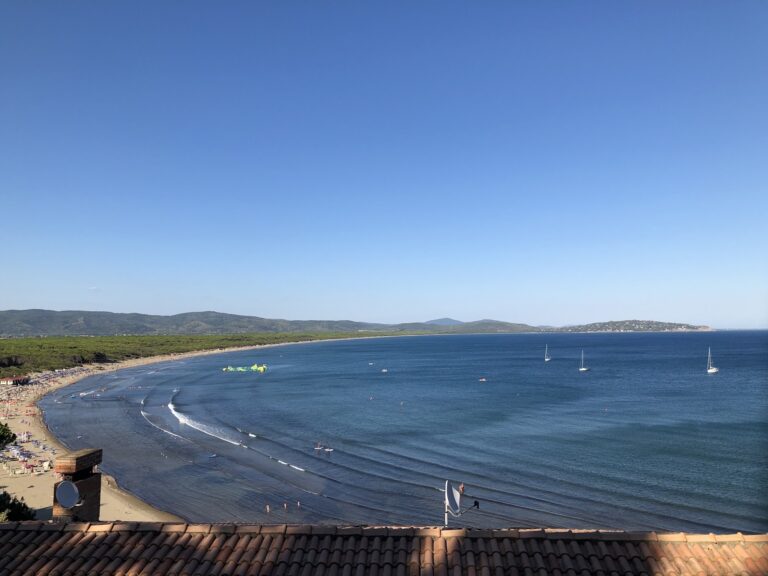
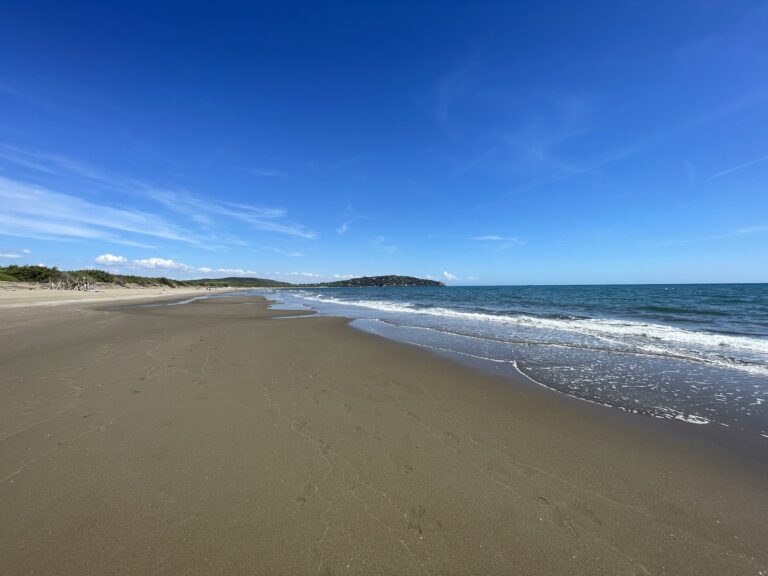
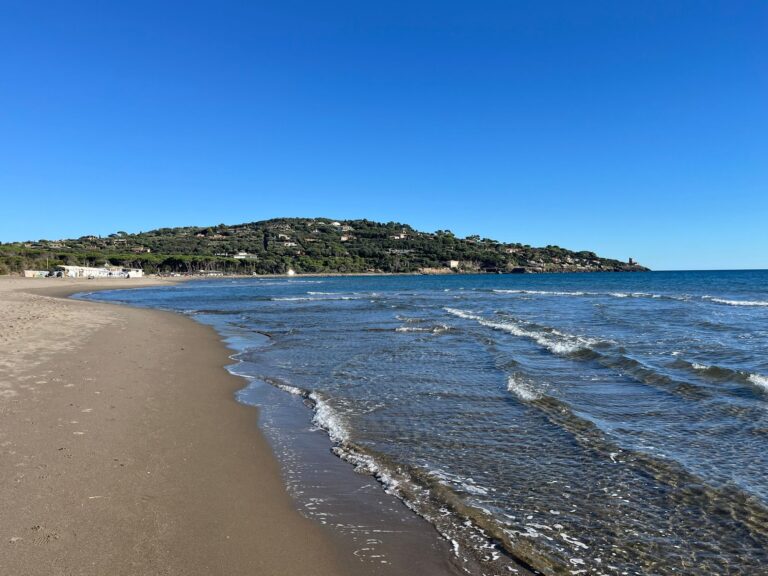
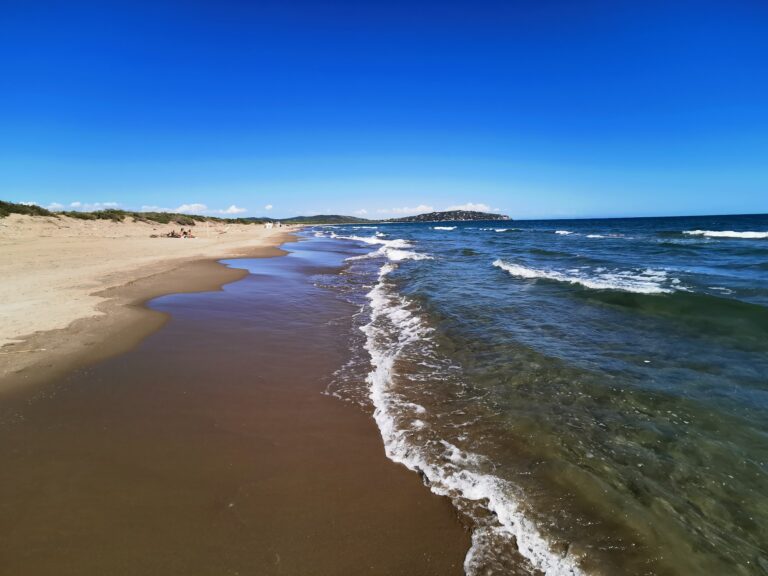
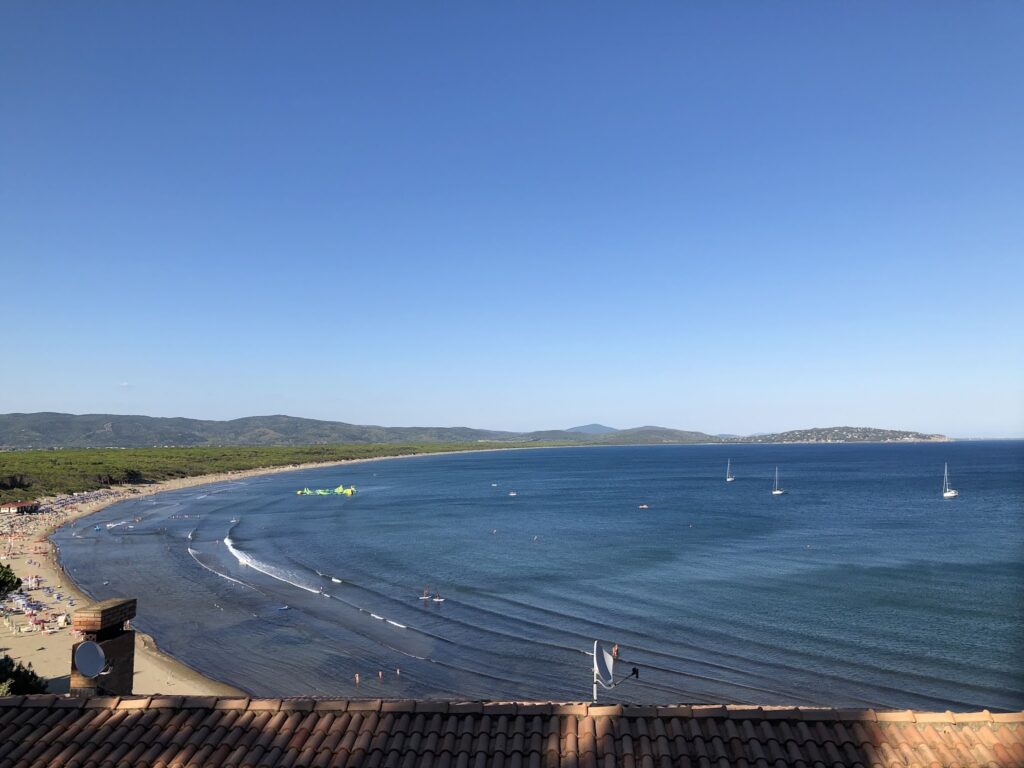
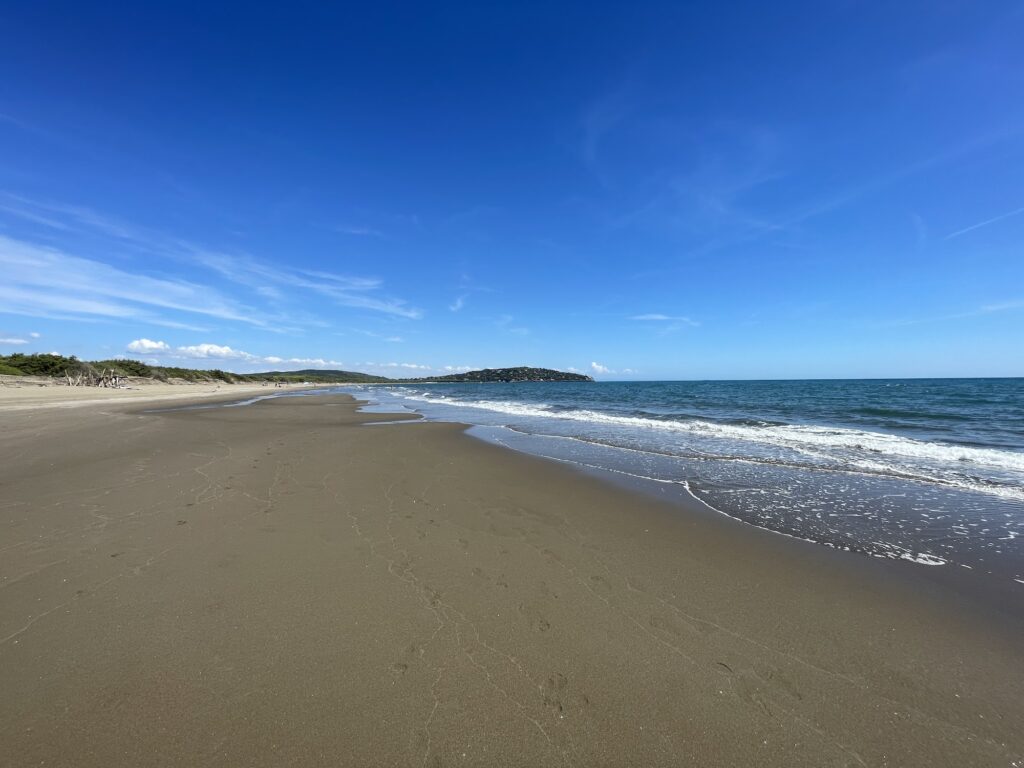
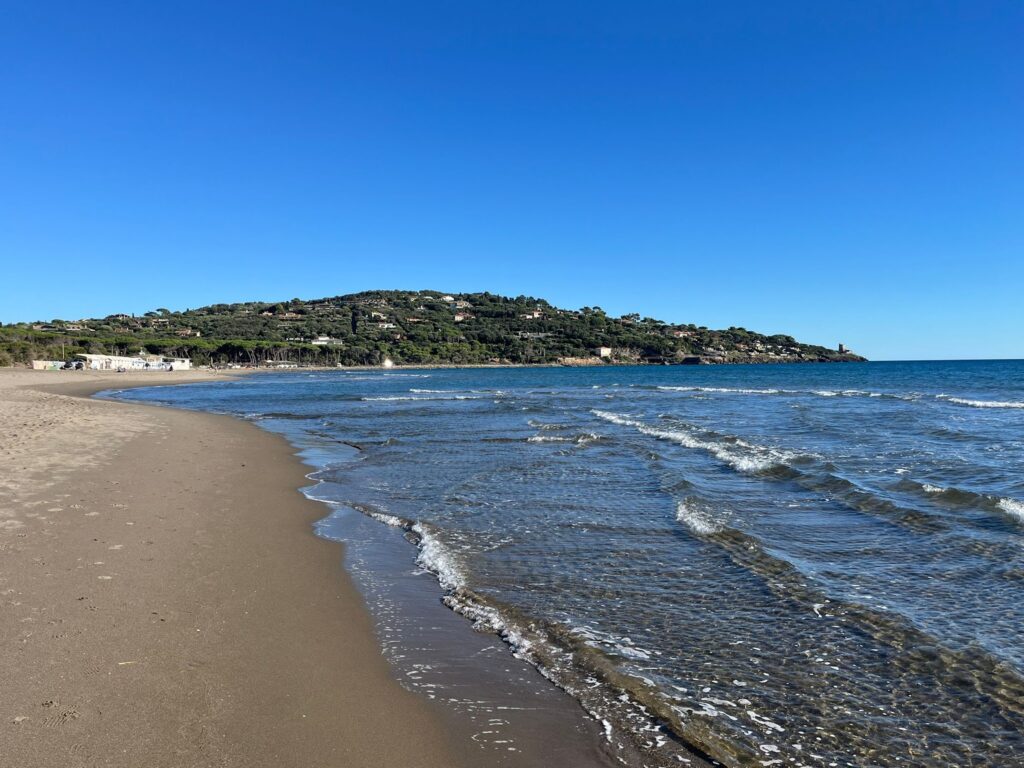
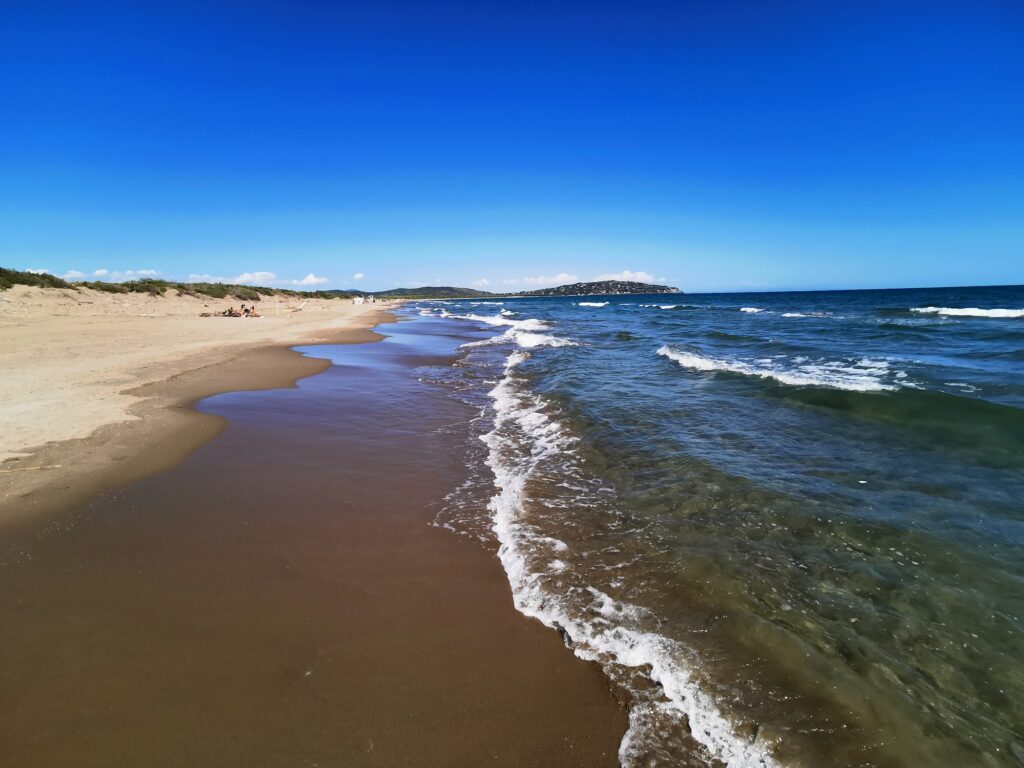
Feniglia stretches for six kilometers, a natural sand isthmus connecting the mainland near Ansedonia to Monte Argentario, separating the open Tyrrhenian from the calmer Orbetello Lagoon behind it. I found the entire protected reserve genuinely free of development, rolling dunes and maritime pine forest providing real shade along the tree line, and fallow deer occasionally visible at the forest edge added a genuinely wild note to what otherwise felt like an unusually pristine stretch of Tuscan coast.
Water Shallow Enough to Wade for Dozens of Meters
The beach’s southern orientation kept it sheltered from colder northern winds, and I found the water genuinely calm and mirror-like on most visits, the gradual sandy slope letting me wade a real distance out while staying comfortably in shallow water, pale turquoise and soft sapphire under clear morning light.
A Beach Built Around Bicycles Rather Than Sunbeds
Given the reserve’s protected status, I found cycling the flat dirt avenues through the pine woods a genuinely central part of the Feniglia experience rather than an afterthought, and given how strictly managed this nature reserve is, I’d expect dog access to be genuinely restricted here, worth checking current park regulations directly rather than assuming a standard leash rule applies.
Getting There and Settling In
Feniglia sits between Orbetello, Porto Ercole, and Ansedonia, reached via the E80/Aurelia highway toward Orbetello or Ansedonia with paid parking at either the Porto Ercole or Ansedonia entrance to the reserve; flat cycling paths connect Orbetello and Porto Ercole directly to the reserve gates, the Orbetello-Monte Argentario train station on the Rome-Pisa line connects via local bus to the beach stop, and a five-to-fifteen-minute walk along dirt avenues from any entrance leads to marked paths opening directly onto the sand.
Standing Where a Genius’s Story Never Quite Resolved
By the time I left Feniglia on my last evening, I thought about Caravaggio arriving on this same coast four centuries ago, exhausted and likely already ill, still hoping to talk his way back into Rome’s good graces, the actual truth of his final days apparently destined to stay exactly as unsettled as the small memorial among the pines admits it is.
Map
Sorry, no records were found. Please adjust your search criteria and try again.
Sorry, unable to load the Maps API.
Near by places:


