
Cala Violina: Singing Sand Below a Fortress
Profile
Cala Violina: Sand That Sings Below a Five-Sided Fortress
Italy | Tuscany | Grosseto | Maremma Coast
Scarlino, the hilltop town governing the reserve holding Cala Violina, has recorded a fortified settlement here since at least 973 AD, though nobody can say for certain what that original structure actually looked like. The Aldobrandeschi family fortified the site into the genuinely unusual pentagonal castle still standing today, five irregular sides and three oddly shaped corner towers, later remodeled by the Pisans after they took control in 1164 for their own commercial interests along this stretch of coast. Excavations conducted between 1979 and 1983 uncovered what’s now known locally as the Scarlino treasure, a hoard including gold florins and Spanish ceramics, evidence of genuine wealth passing through this small hilltop settlement over the centuries. The town itself sits well inland from the water for a practical reason: the plain below was, for much of its early history, an unhealthy, tide-flooded swamp, and building defensively on high ground made considerably more sense than settling directly on marshland.
I found myself thinking about that fortress while walking Cala Violina’s own famous sand, the fine quartz grains genuinely producing a faint musical hum underfoot in dry conditions, a natural acoustic phenomenon considerably gentler than anything the castle above was ever built to withstand.
A Protected Crescent of Genuinely Rare Quartz Sand
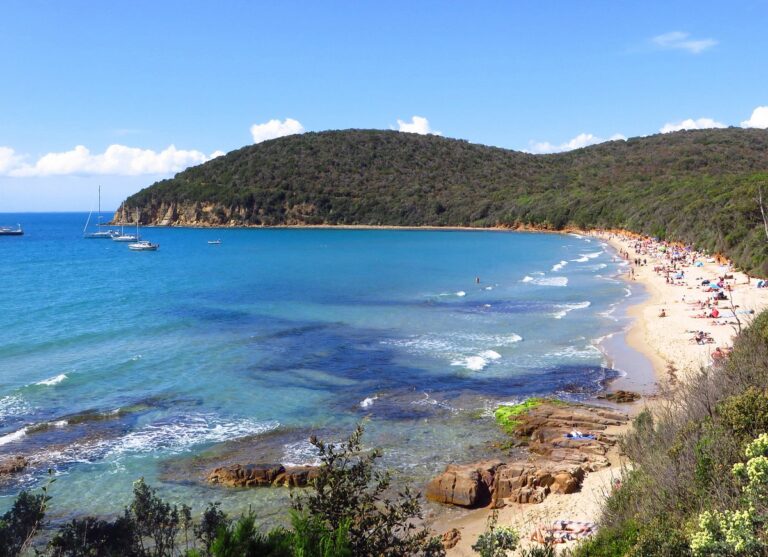
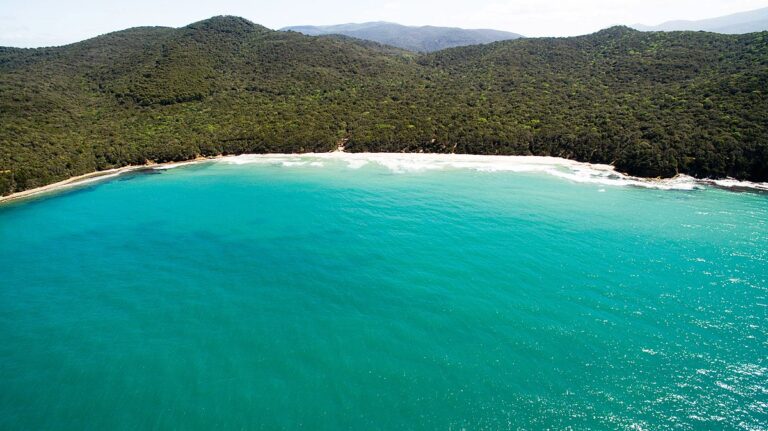
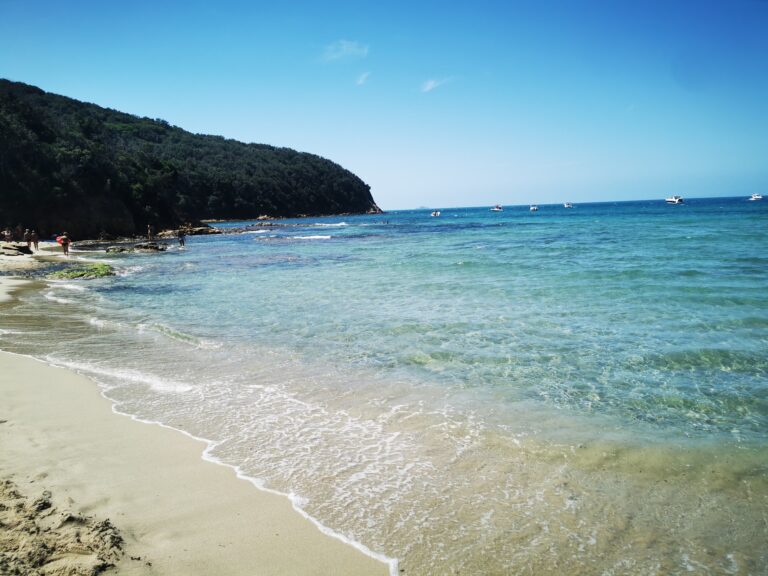
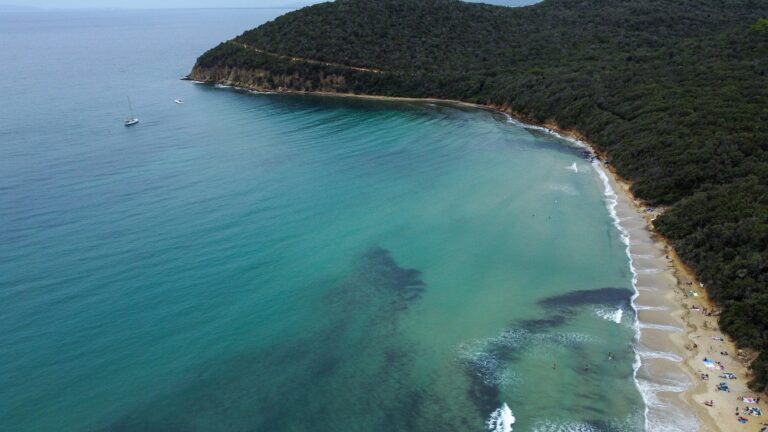
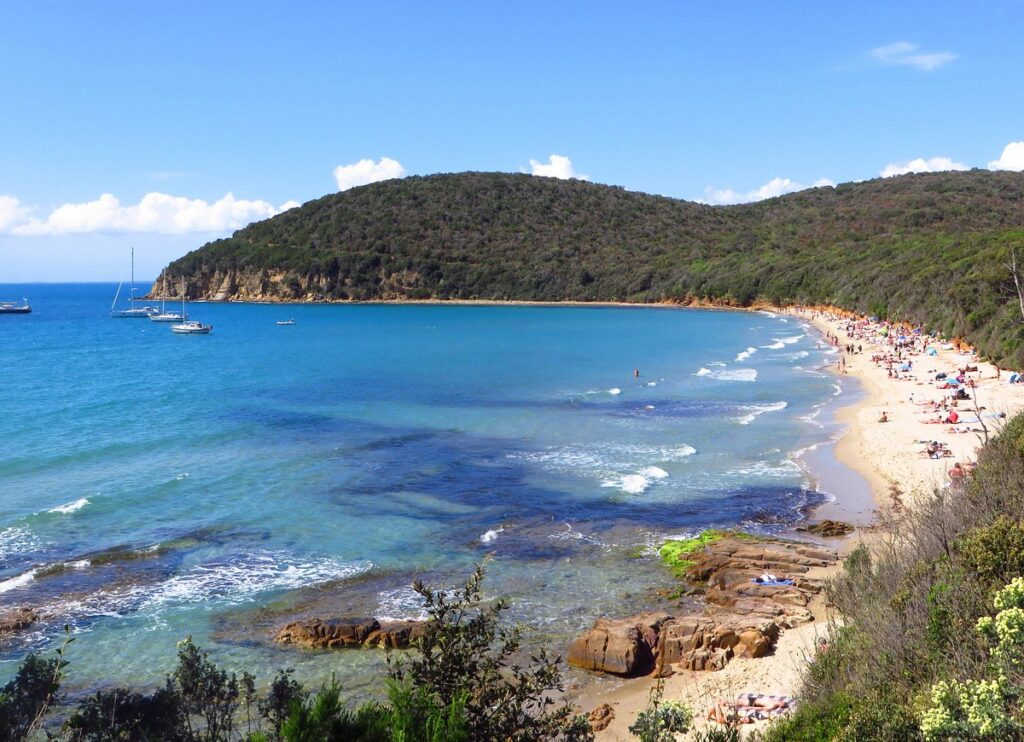
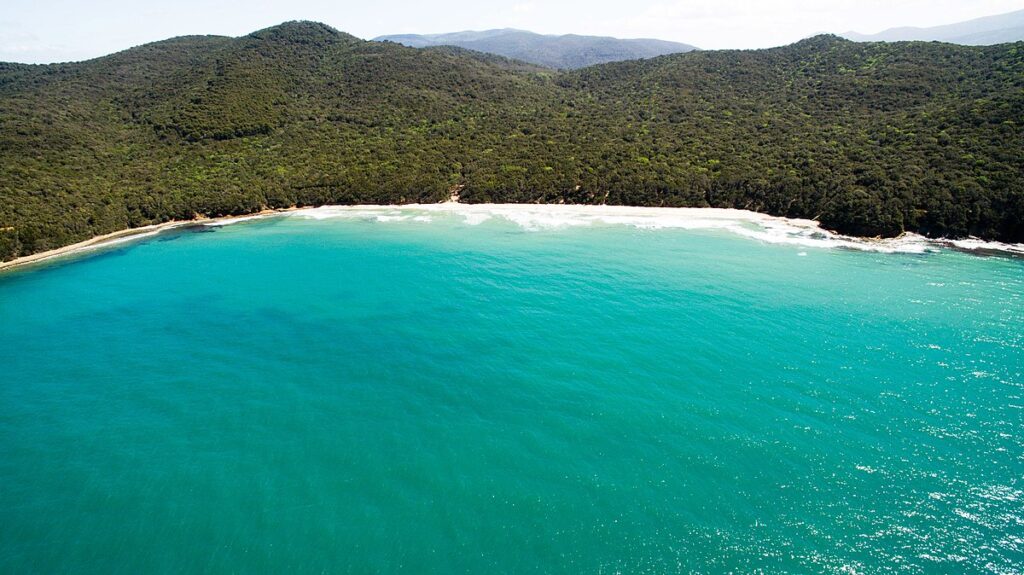
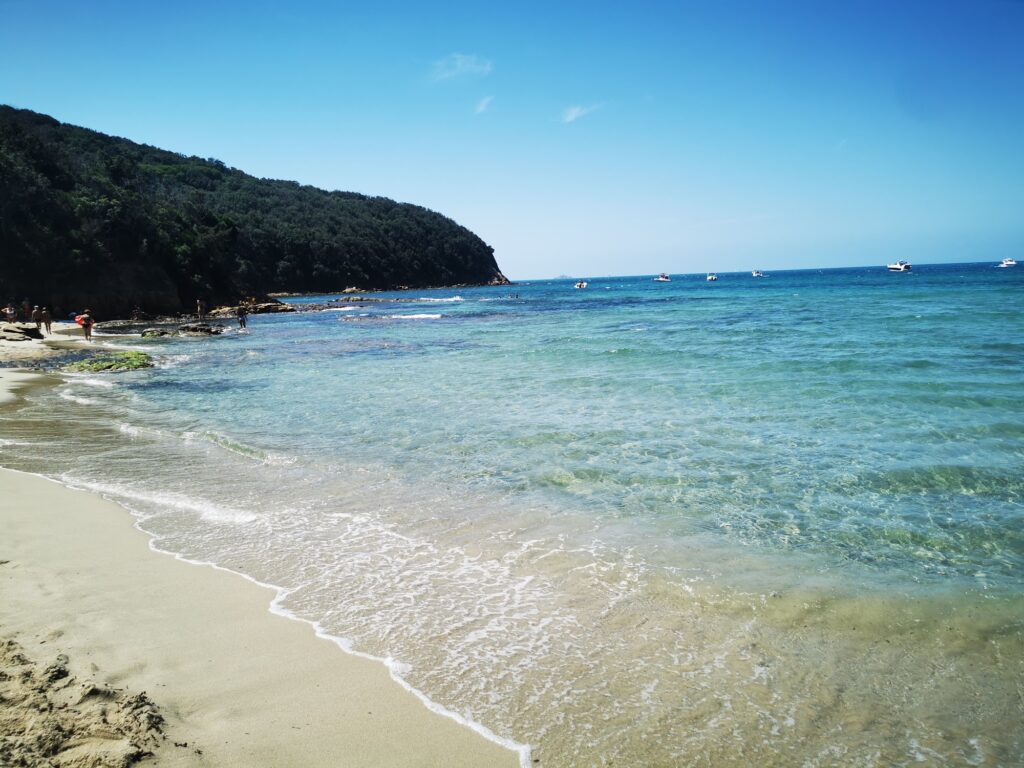
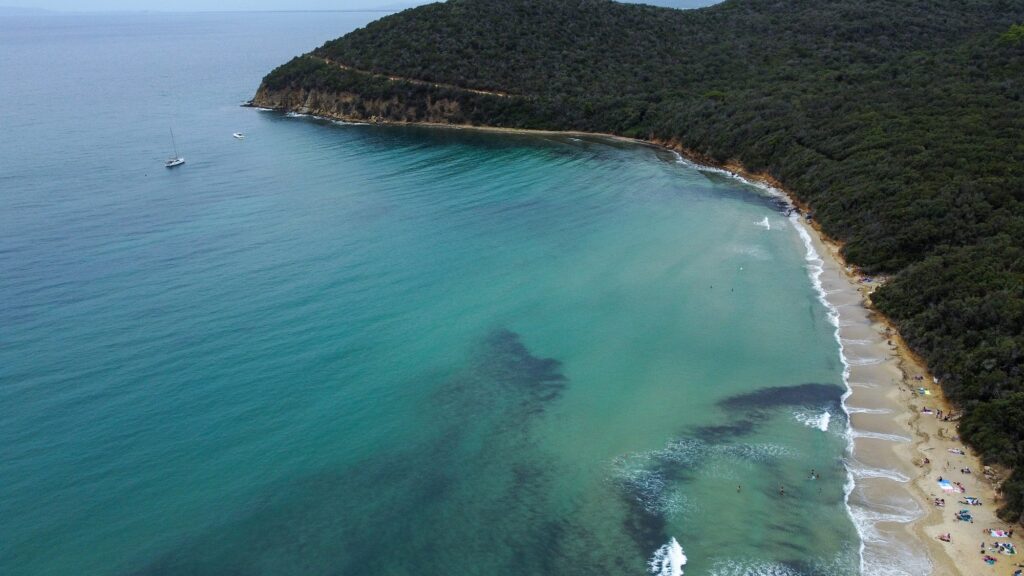
Cala Violina sits entirely within the Bandite di Scarlino Nature Reserve, and I found the beach itself framed by dense promontories thick with wild rosemary, myrtle, and holm oaks, the pale sand giving way to a shallow, pool-like aquamarine that stayed remarkably clear thanks to the complete absence of nearby motorized boat traffic. Because the reserve caps daily visitor numbers specifically to protect the fragile sand and surrounding ecosystem, I never found the beach uncomfortably crowded even during a summer visit.
Snorkeling Where the Water Never Really Clouds
The rocky promontories on either end of the bay offered genuinely excellent visibility, small schools of sea bream visible near the shallows and richer marine flora and rock crevices worth exploring further out with a mask.
No Restaurants, Just a Forest and a Seasonal Kiosk
Given the reserve’s protected status, I packed a proper picnic and used the wooden tables set up in the shaded pine forest behind the beach, a small seasonal kiosk covering basic drinks, coffee, and panini for anyone who hadn’t planned as far ahead. Given how strictly managed this beach is as protected reserve land, I’d expect dog access to be genuinely restricted here rather than assuming a blanket leash rule applies, and I’d check current reserve regulations directly before bringing one.
Getting There and Booking Ahead
Cala Violina requires a reservation during peak season, booked online through the Scarlino municipality’s official system before visiting between June and September; drivers should follow the SP158 between Follonica and Castiglione della Pescaia, turning toward Pian d’Alma to reach the Val Martina car park, from which a shaded, flat twenty-to-thirty-minute walk along Path 1 leads to the shore. More ambitious hikers and mountain bikers can approach via Path 301 from Portiglioni near Puntone di Scarlino, a considerably longer six-kilometer route passing Cala Martina along the way, and seasonal excursion boats from Scarlino or Follonica offer a genuinely different arrival, anchoring offshore for a swim straight into the cove.
Standing Where a Swamp Became a Sound
By the time I left Cala Violina on my last visit, I thought about that old, unhealthy plain the fortress above was built specifically to avoid, centuries of engineering and avoidance eventually giving way to a protected cove now celebrated for nothing more threatening than the quiet, musical sound its own sand makes underfoot.
Map
Sorry, no records were found. Please adjust your search criteria and try again.
Sorry, unable to load the Maps API.