Spiaggia di Barbarossa: Admiral or Simple Cliff?
Profile
Spiaggia di Barbarossa: Named for an Admiral, or Maybe Just a Cliff
Italy | Tuscany | Elba Island | Tuscan Archipelago
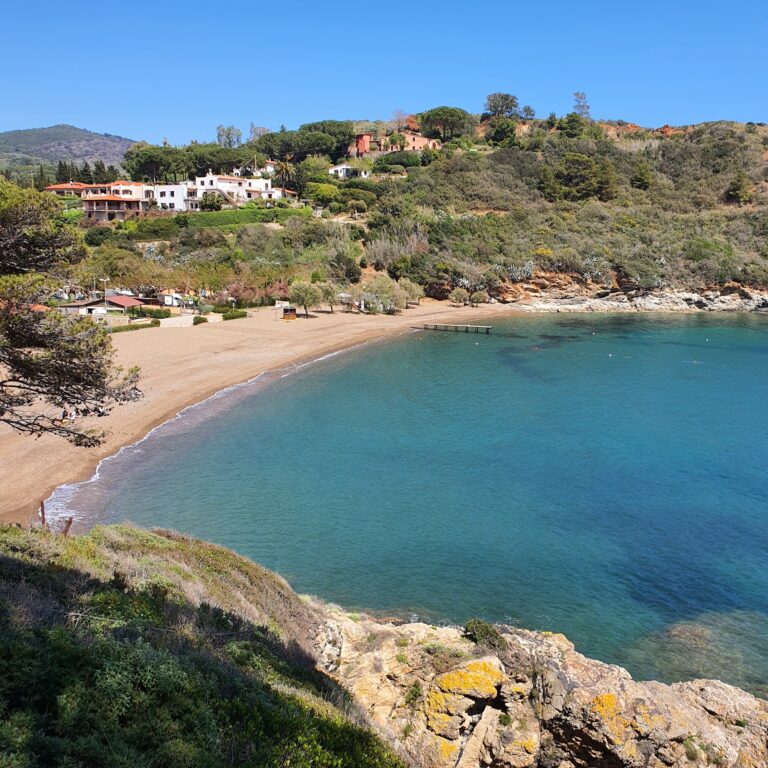
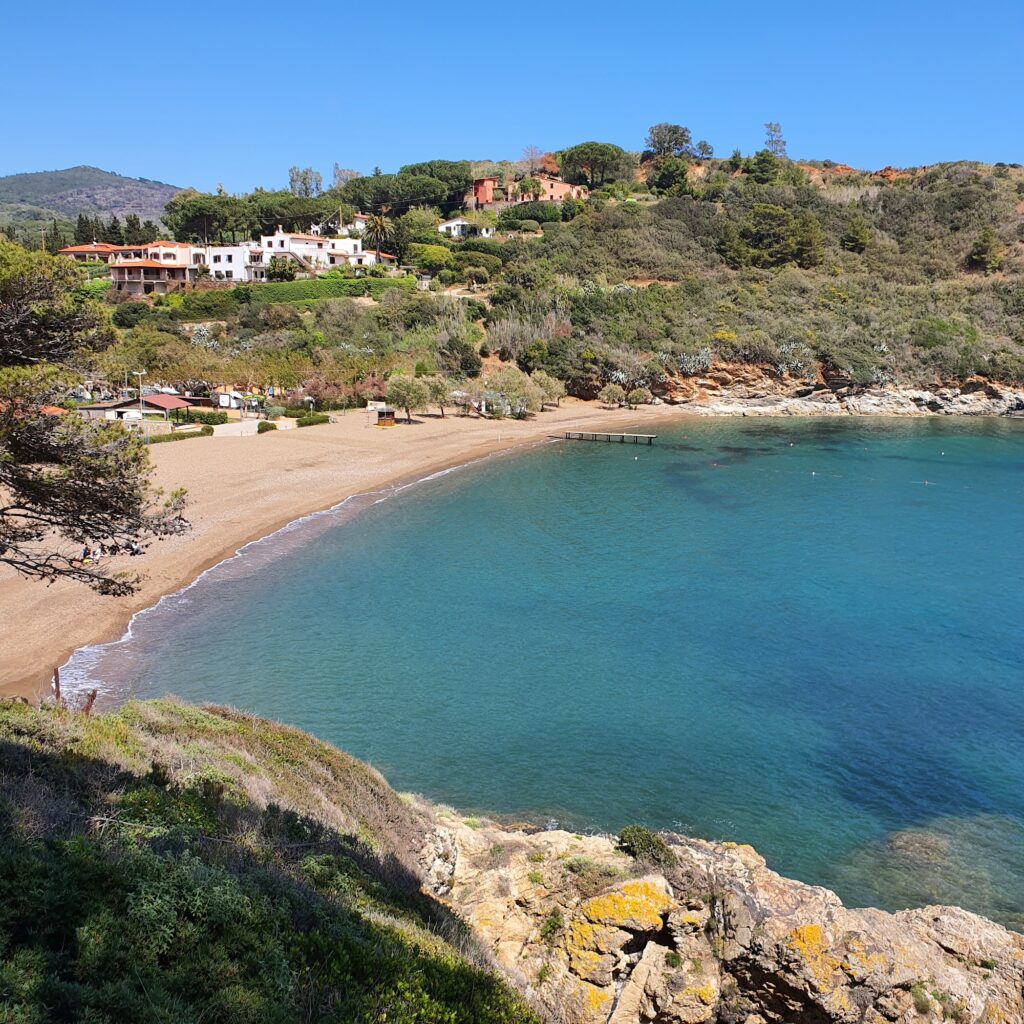
Spiaggia di Barbarossa carries two genuinely competing explanations for its name, and neither one has fully displaced the other. The more dramatic version credits Khair ad-Din, the Ottoman admiral known to Europeans as Barbarossa, who commanded the Turkish fleet responsible for destroying the medieval village of Grassera near Rio in the sixteenth century, a story I’d already traced along the road to nearby Nisportino. A considerably more prosaic theory holds that the name simply describes a small reddish earthen cliff overlooking a tiny inlet at the beach’s edge, which from a distance resembles nothing more exotic than a red beard, barba rossa in plain Italian. I found the coexistence of these two stories genuinely fitting, one crediting a genuine Ottoman naval commander with reshaping this stretch of coast by force, the other reducing the whole legend to a simple trick of coastal geology and imagination.
Whichever version holds, the town’s own culinary tradition still carries a direct nod to that Barbary-era history, schiaccia briaca, a dense pastry with roots traced to the same pirates, since revised with local Aleatico dell’Elba wine and now a fixture at Porto Azzurro’s pastry shops and town festivals.
A Wide Bay of Golden Gravel and Reddish Cliffs
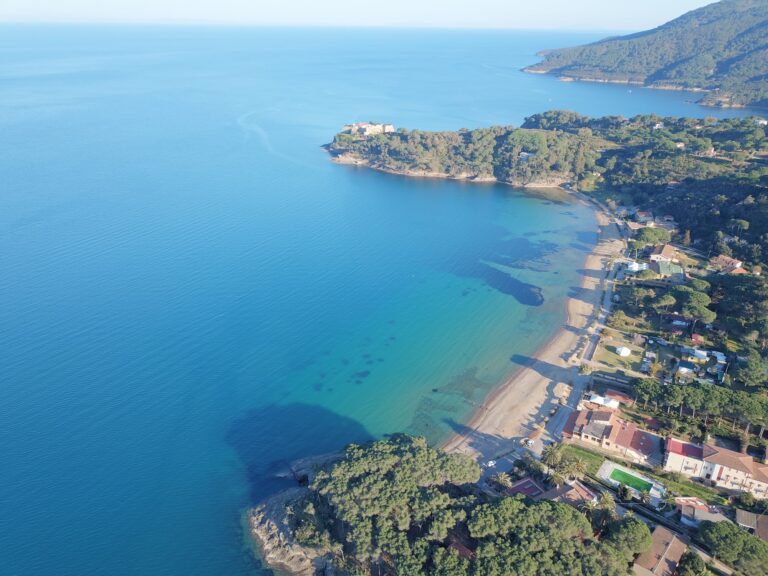
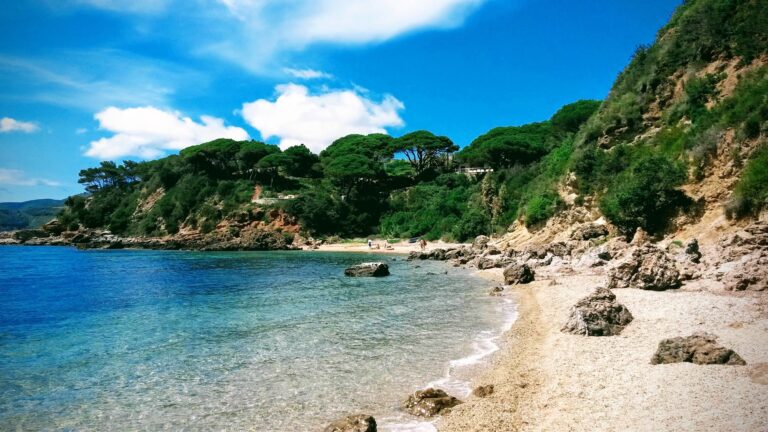
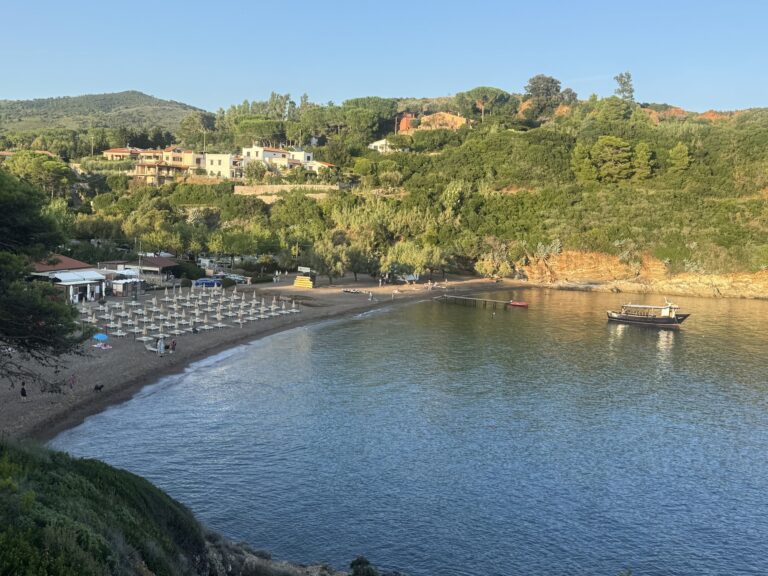
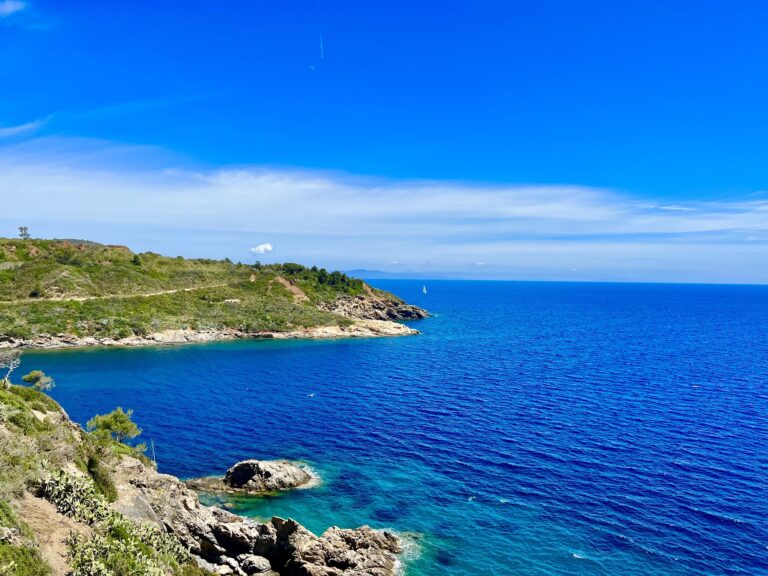
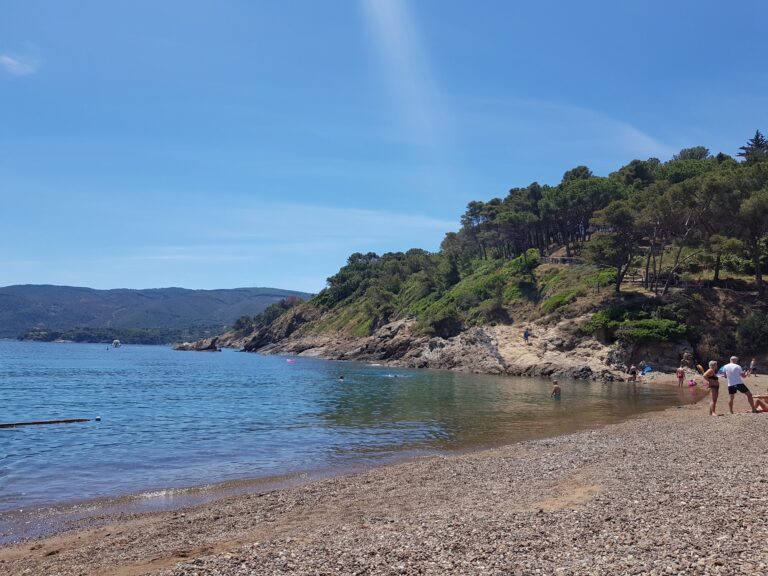
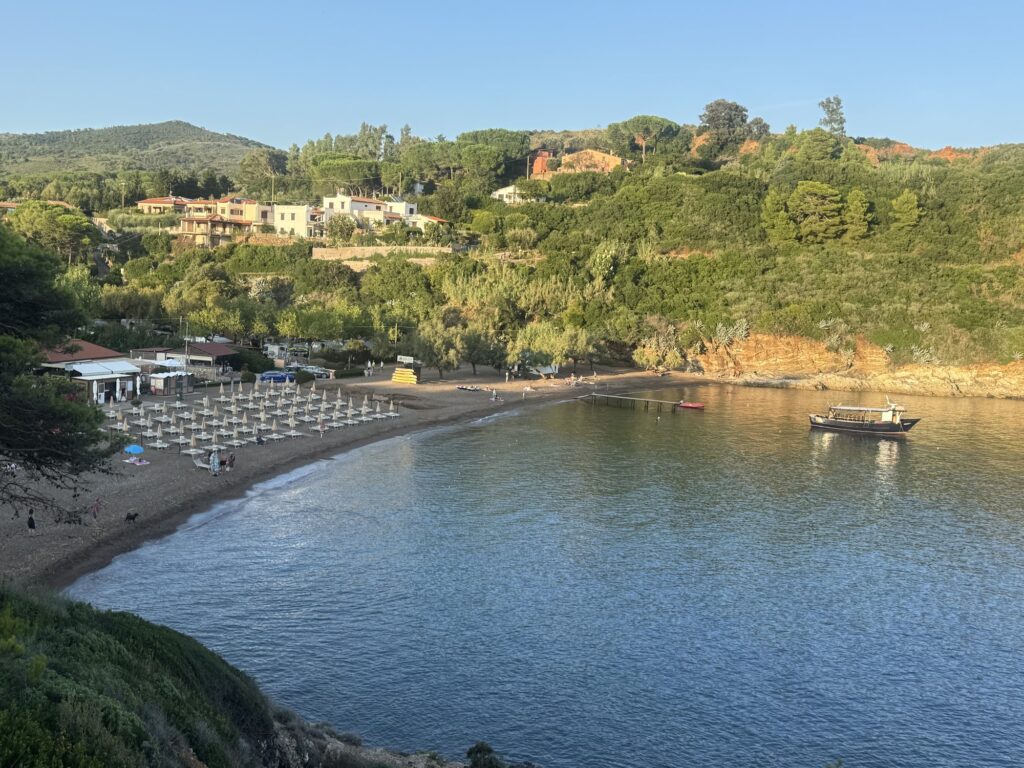
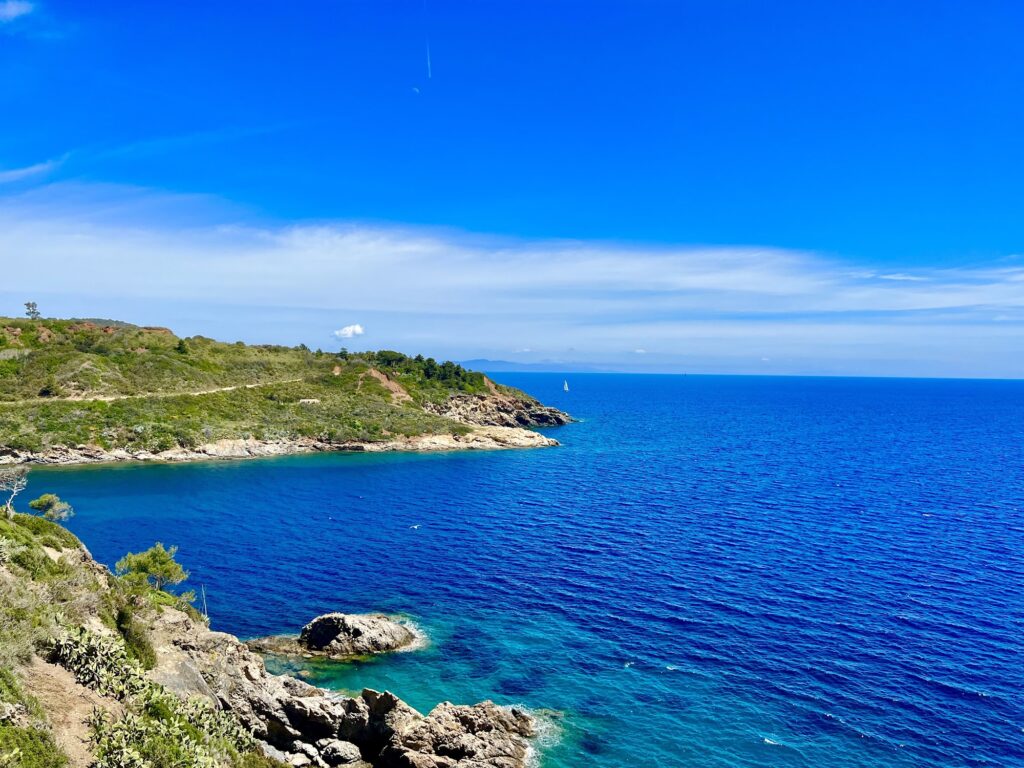
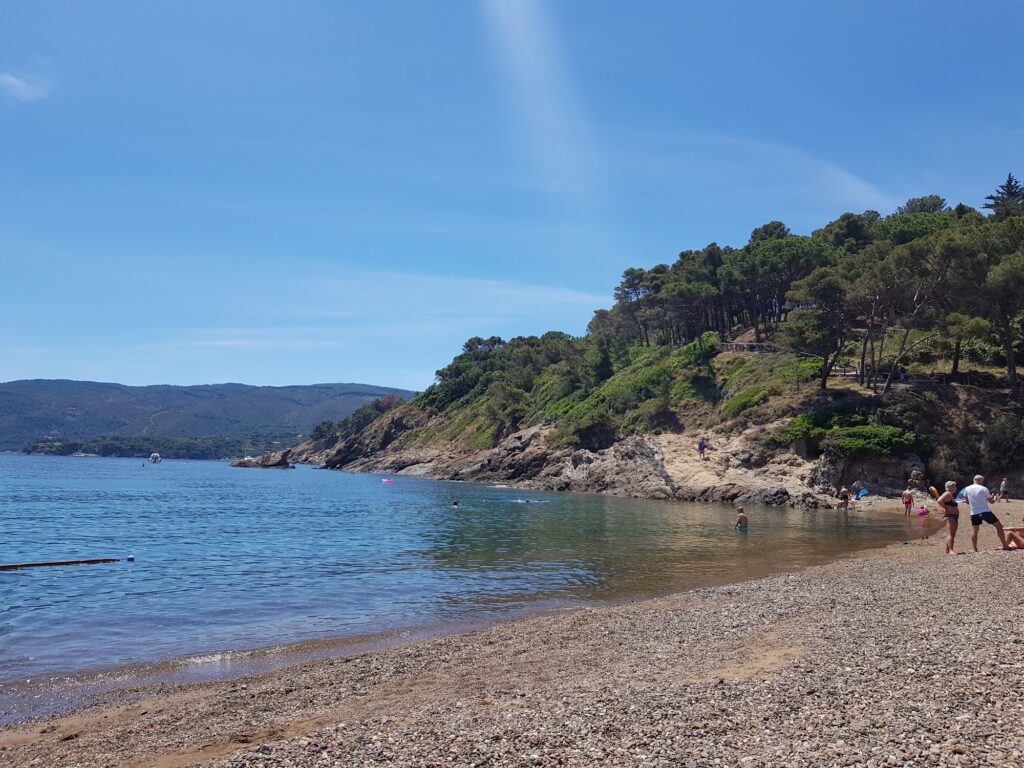
Barbarossa runs about 160 meters, a genuine mix of fine dark golden gravel, smooth pebbles, and coarse sand that stayed clean and comfortable underfoot throughout my visits. Low reddish cliffs frame both sides of the bay, aloe, prickly pear, and wild rosemary scenting the air on warm afternoons, and I found the horseshoe shape kept the water calm and current-free on most summer days.
Snorkeling Along Rock Formations on Both Flanks
The seabed slopes gently before deepening into rich blue water, and I found the rocky cliff edges on either side of the beach genuinely rewarding for snorkeling, sea bream, octopuses, and colorful anemones settled among the underwater formations.
A Beach That Never Quite Fills, Despite Being Popular
Given how close Barbarossa sits to Porto Azzurro, I found it drew a genuine crowd without ever feeling truly overwhelmed, a detail locals themselves point out with some pride. Given the beach’s generally organized but not overly commercial character, dogs would likely be fine here on a leash following Italy’s standard rule for public beaches, and I found the coastal walking path here genuinely well suited to a longer walk with a dog in tow.
Getting There and Settling In
Barbarossa sits about 1.5 kilometers from Porto Azzurro along the SP26 toward Rio Elba, with clear signage marking the turn; a large paid lot and limited free street parking sit directly behind the beach for a flat two-minute walk to the water, and anyone staying in Porto Azzurro can walk the scenic Passeggiata Carmignani, tracing the walls of the seventeenth-century Fortress of San Giacomo for fifteen to twenty minutes directly to the sand. Local Autolinee Toscane buses connect Portoferraio, Capoliveri, and Porto Azzurro to a stop near the cove entrance. Anyone touring this stretch of southeastern Elba will find Spiaggia di Naregno Capoliveri Elba and Zuccale Beach Capoliveri Elba both within easy reach, each offering its own distinct character alongside Barbarossa’s genuinely contested name.
Standing Where Two Stories Refuse to Settle
By the time I left Barbarossa on my last evening, the reddish cliffs had caught the last light in a way that made the beard comparison genuinely plausible, and I found myself no closer to deciding which version of the name I actually believed, an Ottoman admiral’s raid or a simple trick of the evening sun on old, weathered earth.
Map
Sorry, no records were found. Please adjust your search criteria and try again.
Sorry, unable to load the Maps API.
Near by places: