Fegina Beach: Monterosso's Broken Neptune
Profile
Fegina Beach: The Broken God Who Guards Monterosso
Italy | Liguria | La Spezia | Cinque Terre Coast
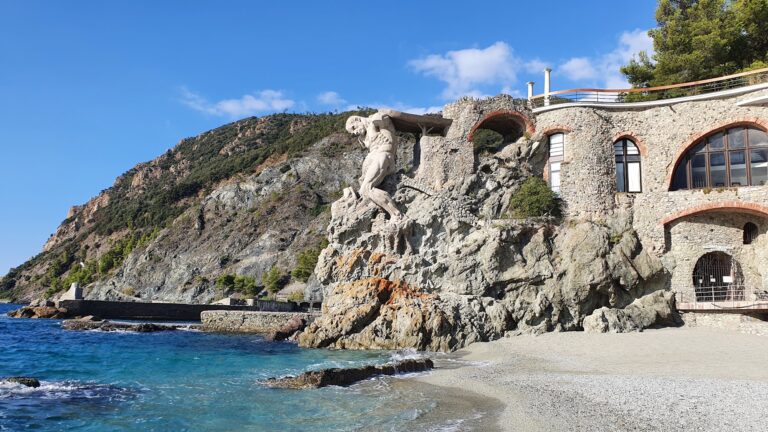
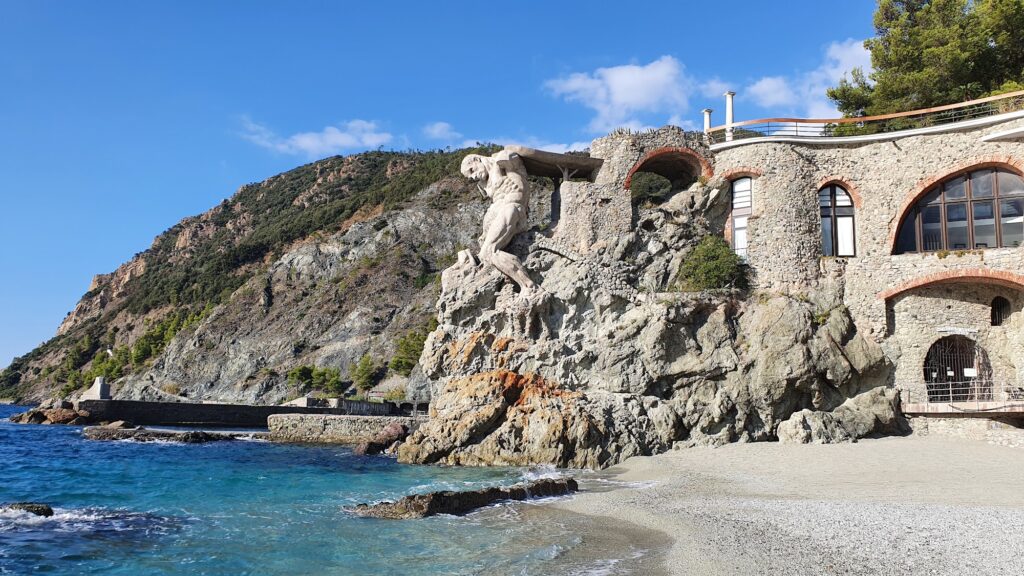
Arrigo Minerbi, the sculptor who built the fourteen-meter Neptune now standing broken at the edge of Fegina Beach, was Gabriele D’Annunzio’s favorite artist and later designed bronze doors for Milan’s Duomo, a commission interrupted in 1937 when Minerbi was forced into hiding because of his Jewish ancestry, the same religious persecution the cathedral doors he’d been designing were meant, with grim irony, to condemn. His statue has survived its own considerably more physical trauma. Allied bombing during the Second World War destroyed the shell-shaped terrace it once supported and much of the surrounding Villa Pastine, and a violent 1966 storm weakened what remained, leaving Neptune today without arms, trident, or a leg, a genuinely haunting ruin rather than the grand Belle Époque centerpiece it was built to be in 1910.
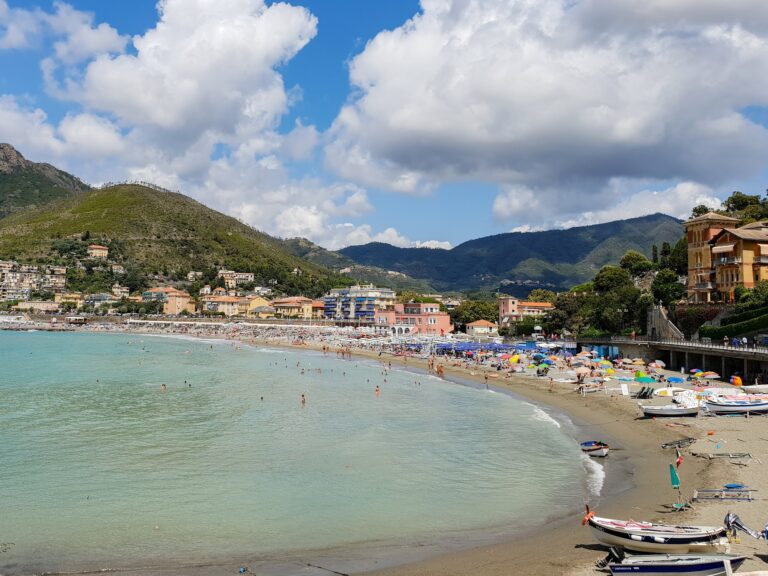
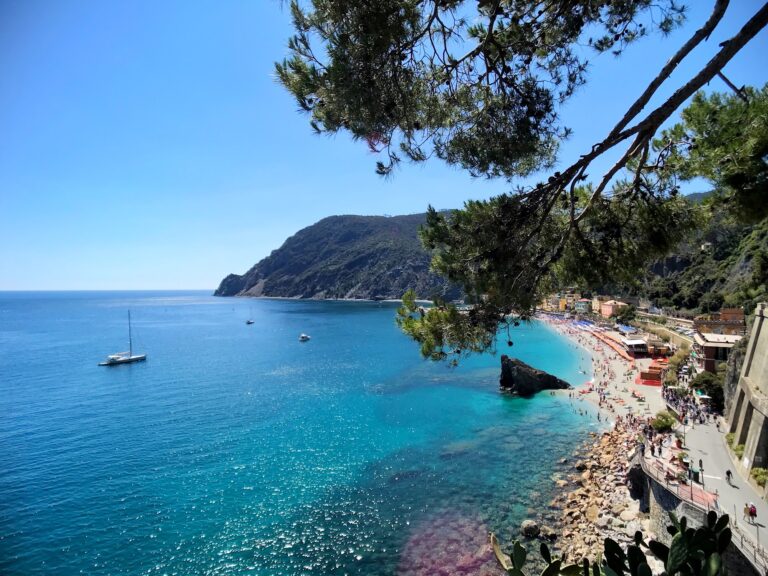
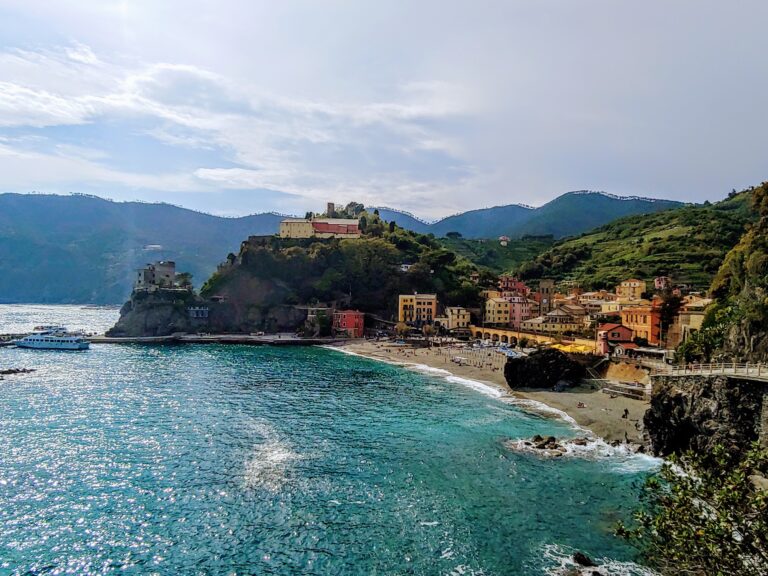
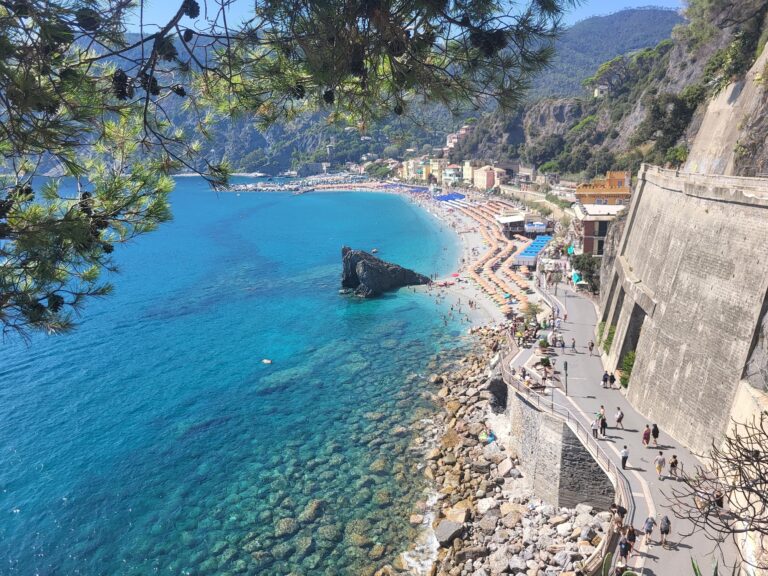
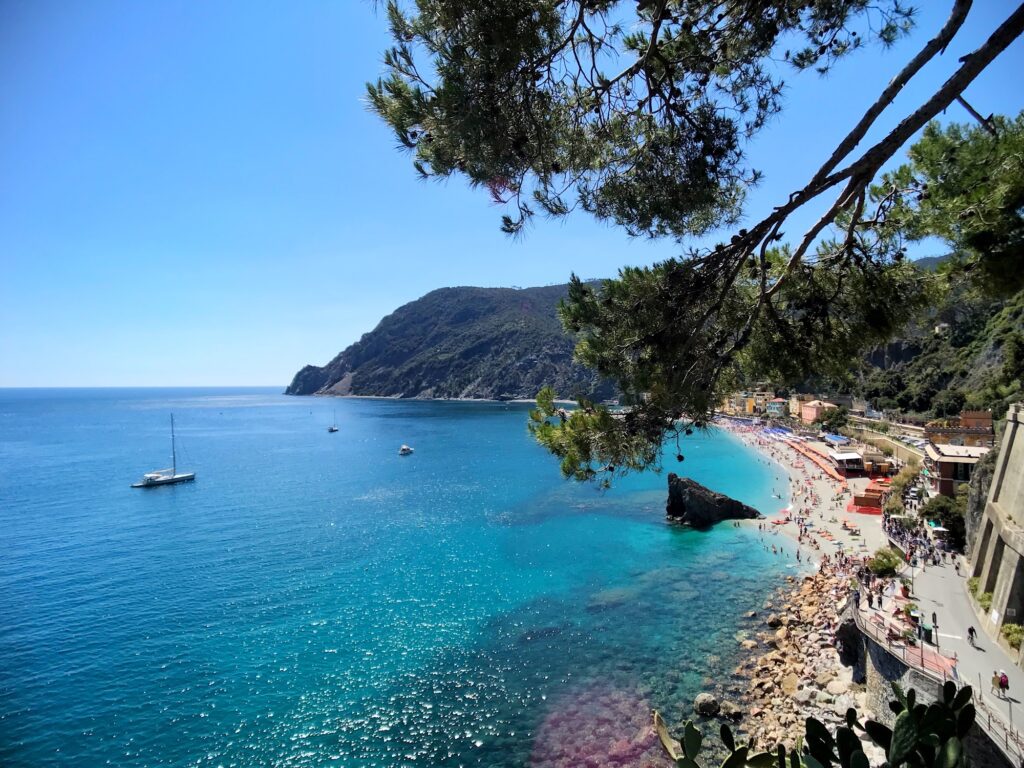
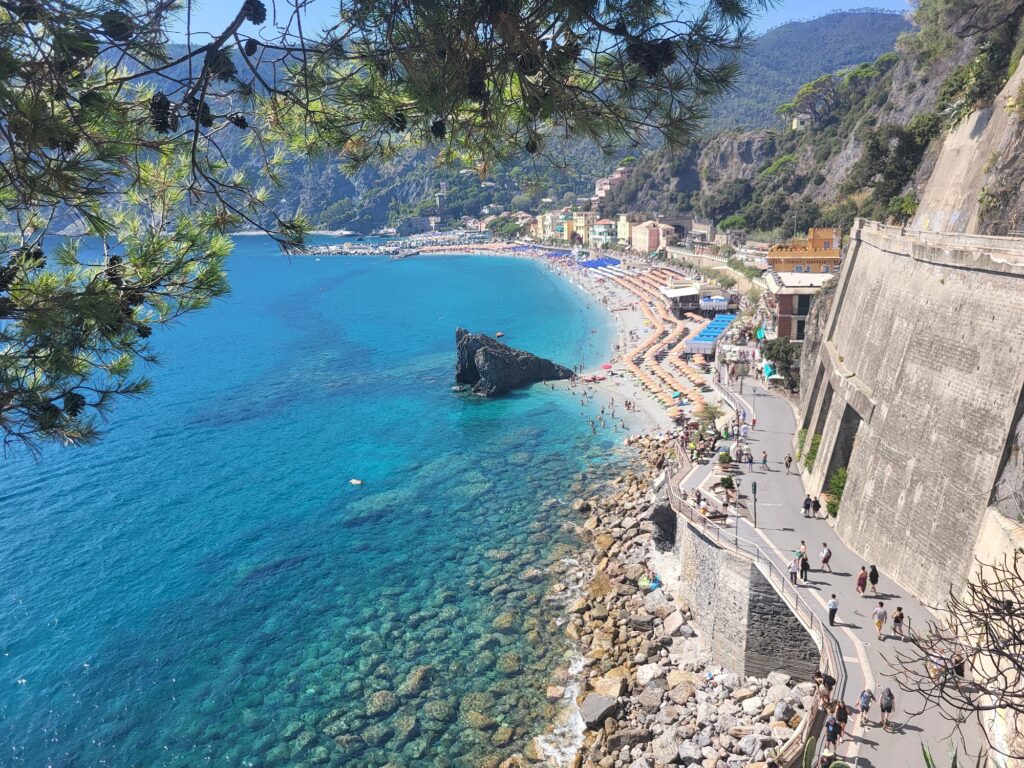
Fegina Beach itself stretches along Monterosso al Mare’s western edge, the only proper sand beach anywhere in the Cinque Terre, and the broken god at its far end has become something closer to the town’s unofficial mascot than a simple monument.
The Only Real Sand in the Cinque Terre
Where every other Cinque Terre village offers stone and pebble, Monterosso genuinely delivers sand, fine and golden, running the length of Fegina before giving way to smaller pebbles near the statue itself. I found the water clear and inviting, shifting from bright aquamarine in the shallows to deep sapphire further out, the seabed sloping gradually enough that swimming here felt considerably gentler than the sharp drop-offs I’d encountered at Riomaggiore just down the coast. Near the statue’s rocky base, snorkeling turned up genuinely active marine life, silver bream and small sea urchins visible clearly in the still-clear water.
A Genuinely Practical Beach for Families
Given the flat, stair-free approach from the pedestrian promenade and the gradual entry into the water, I’d call Fegina one of the more manageable Cinque Terre beaches for families with young children, no cliffside scramble required, and the broken statue itself doubles as an endlessly interesting backdrop for kids who treat it, reasonably enough, as something out of a fairy tale. Given the mix of managed beach clubs and free public sections along Fegina, I’d expect dogs to need explicit permission at the organized bagni specifically, with the free stretches likely following Italy’s standard leash rule outside the water.
A Treasure Hidden at the Giant’s Heels
In 1982, a golden rabbit prize from the Italian edition of the treasure-hunt book Masquerade was found hidden at the statue’s base, tucked, as the clue apparently specified, “alle calcagna del gigante,” at the giant’s heels. I found the detail a strange, fitting footnote to a monument that’s already spent a century absorbing considerably heavier weight than any buried prize, war damage and storm damage layered onto what was originally built as pure architectural indulgence for a wealthy local family who’d made their fortune in Argentina.
Lifeguards, Rentals, and a Beachfront Built for a Full Day
Private beach clubs manage sections of the sand with sunbeds and changing cabins, free public zones remain genuinely open elsewhere along the beach, and lifeguards watch the water through peak season from elevated towers. Kiosks near the shore rent paddleboards and kayaks for anyone wanting to see the statue and the cliffs from the water itself, a perspective several longtime visitors told me reveals the ruin’s front angle better than anything visible from the sand.
Trofie and Aperitivo in the Shadow of a Ruined Terrace
The promenade behind Fegina holds genuinely good seafood restaurants and gelaterias, and I ate well on trofie with basil pesto and fried calamari more than once, tables angled to catch a clear view down toward the statue as the light shifted through the afternoon. As evening arrived, the beachfront filled for aperitivo, a glass of local white wine in hand while the setting sun caught what remains of Neptune’s weathered profile.
Getting There and Settling In
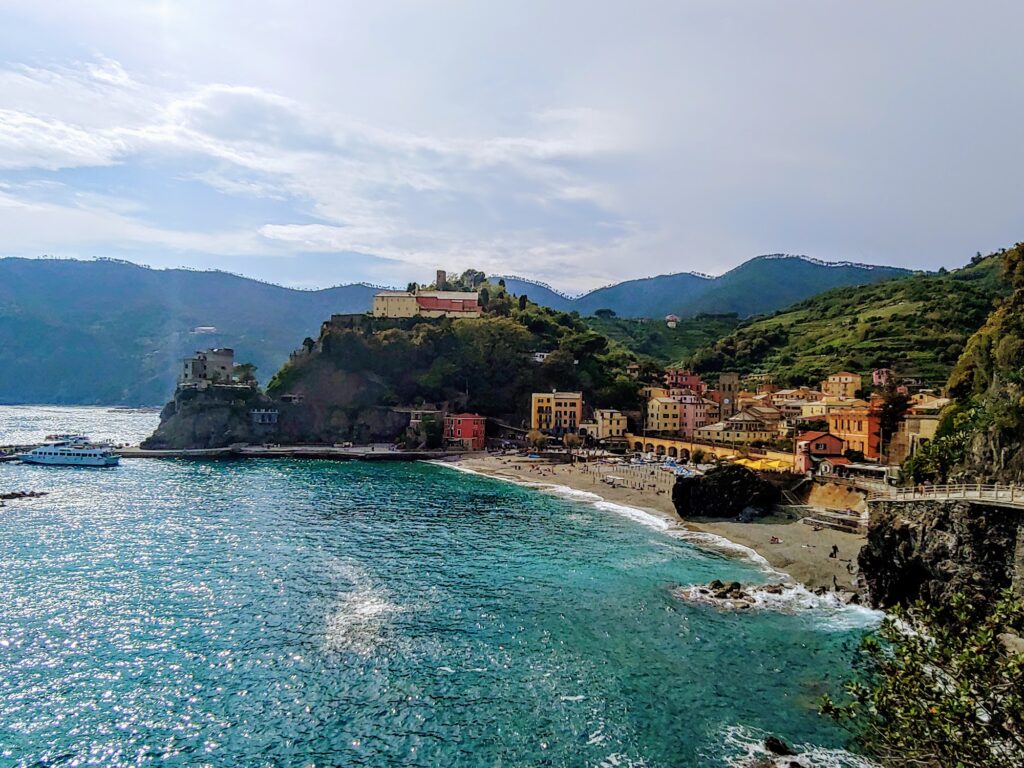
Monterosso al Mare sits directly on the Cinque Terre rail line between La Spezia and Levanto, and from the station a short pedestrian tunnel leads straight toward Fegina and the statue at its far end; the seasonal Cinque Terre ferry connects Monterosso with the other villages and La Spezia, and hikers can reach town via the scenic coastal trail from Spiaggia di Levanto, roughly two hours on foot along cliffs with steady sea views the whole way, a genuinely rewarding approach for anyone not pressed for time. Parking in Monterosso is limited and best avoided in peak season given how few spaces exist near the historic center.
Standing Where a God Lost His Arms Twice
By the time I left Fegina on my last evening, the statue had settled into deep shadow while the sky behind it still held color, and I thought again about Minerbi, forced into hiding not long after finishing this very sculpture, and about the villa it once supported, gone now except for a single tower, the whole scene a strange monument less to Neptune himself than to how much an ordinary beach can quietly absorb without ever stopping being, first and simply, a place people come to swim.
Map
Sorry, no records were found. Please adjust your search criteria and try again.
Sorry, unable to load the Maps API.
Near by places: