Bagni Germana: Below a Cave That Sheltered Neanderthals
Profile
Bagni Germana, Arma di Taggia: The Beach Below a Cave That Once Sheltered Neanderthals
Italy | Arma di Taggia | Imperia, Liguria
The name Arma di Taggia carries its whole origin story in its first word. Arma is pre-Roman Ligurian for cave, and the cave it refers to, the Grotta dell’Arma, sits at the western edge of the beach, considered one of the most significant prehistoric sites in Europe — excavations have found traces of Neanderthal occupation inside, making it a place of human presence stretching back tens of thousands of years before the Roman road running alongside it was even a plan on parchment. In the 15th century, that same cave was converted into a place of worship, the rock sanctuary of the SS. Annunziata, its vault literally the cave ceiling, an original 1625 plaque above the portal recording its consecration date alongside later restoration plaques from 1757 and 1814.
The watchtower directly above the sanctuary, the Torre dell’Arma, went up in 1565 in direct response to what had happened the year before: a devastating raid by the pirate Luzzalino, operating out of Cap Ferrat, who brought destruction across western Liguria in 1564. A plaque set above the tower’s door records its inauguration date, March 25th, 1565 — exactly nine months after the attack that prompted its construction. The tower’s strategic placement controls the only accessible route from the coast into the Argentina Valley, which is why fortifications of some kind have occupied this exact spot since at least Byzantine times, with the oldest identified remains dating to around 600 AD.
Taggia proper, three kilometres inland along the Argentina stream, is one of Italy’s designated Borghi più belli — the most beautiful villages — and carries its own substantial history: a Dominican convent holds multiple altarpieces by Ludovico Brea, the Ligurian-Nicoise painter, including a polyptych from 1478, a Madonna of the Rosary from 1513, and several others spanning four decades of his work. Moscatello, a white wine once served at the tables of popes and kings, came from these same hillsides before its traces were lost for nearly three centuries, recently revived by local producers. The Taggiasca olive, producing one of Liguria’s most celebrated extra virgin oils, originates from this valley and gives its name directly to the town.
Getting There: 12 Kilometres From Imperia, 12 From Sanremo
I drove from Sanremo along the coast, the A10 motorway accessible via the Arma di Taggia exit and a quick drop down to the seafront. Large public paid parking fields sit directly across from the beach, and the Riviera dei Fiori cycling path connects through Arma di Taggia on its 25-kilometre route along the old converted railway — I could reach Spiaggia Tre Ponti Sanremo Italy comfortably by bike going east, the path flat and sea-facing for most of the distance. A local bus from Arma di Taggia’s own train station drops passengers at the central promenade stop, a two-minute walk from the beach gates.
The Beach: Golden Sand, Gradual Entry, a Multi-Generational Club
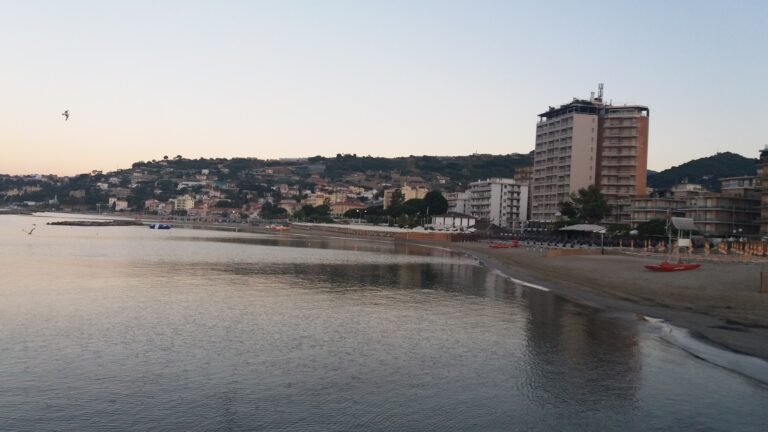
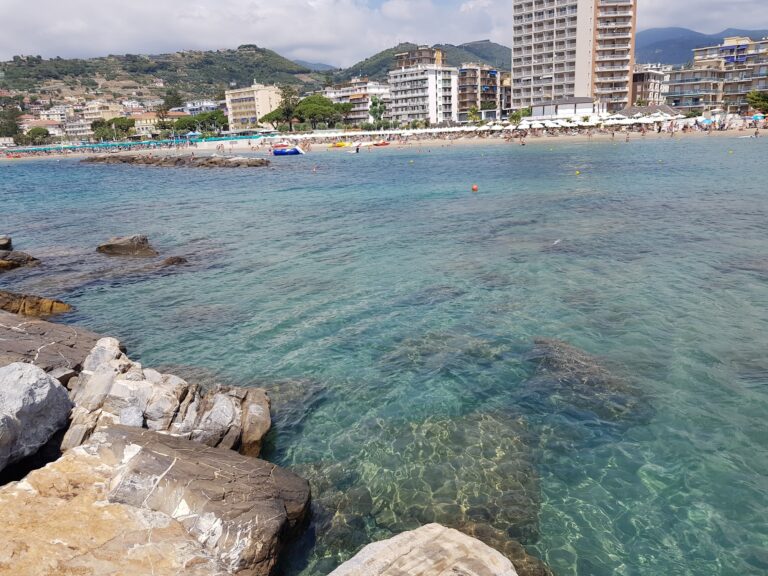
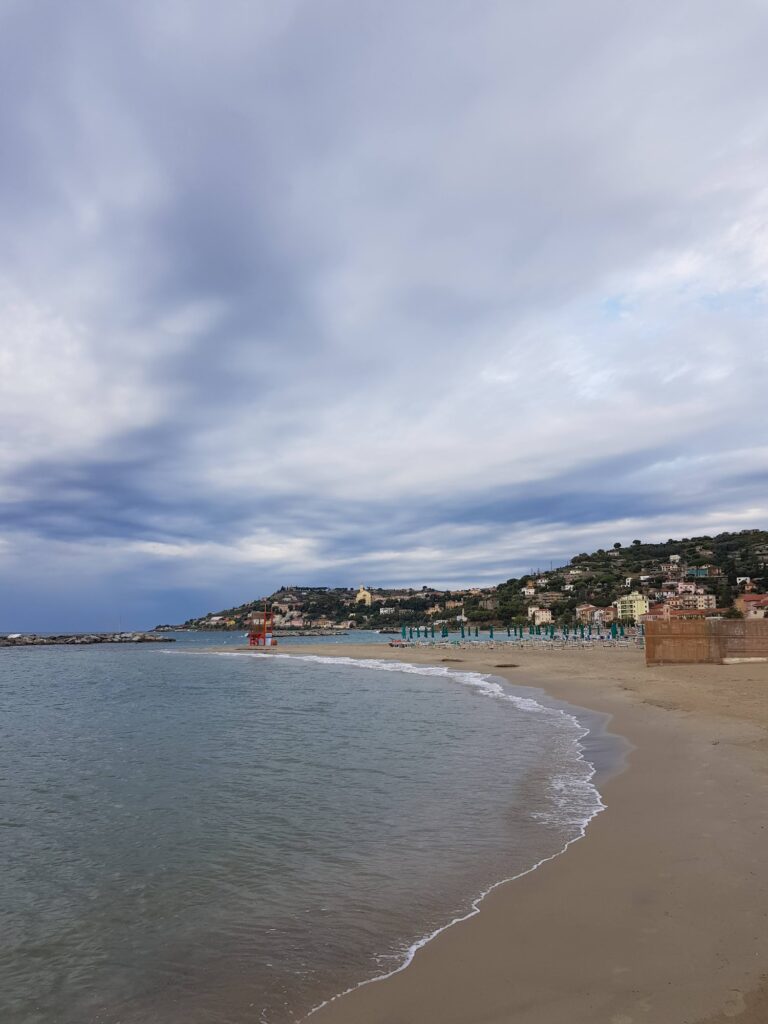
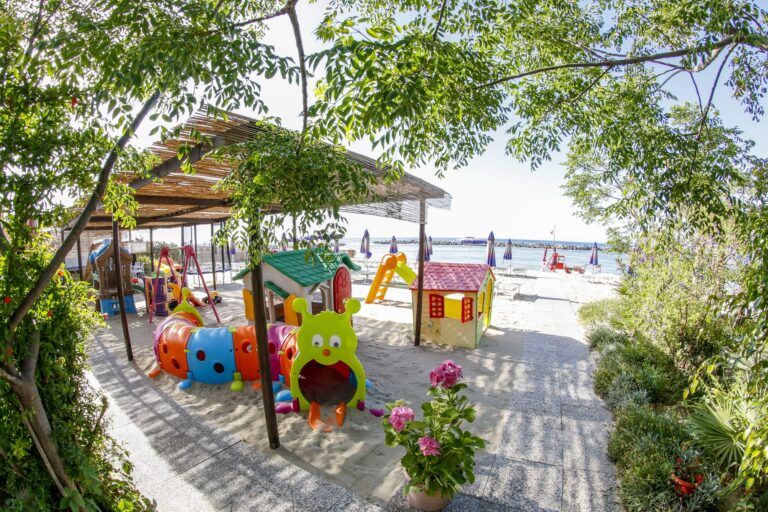
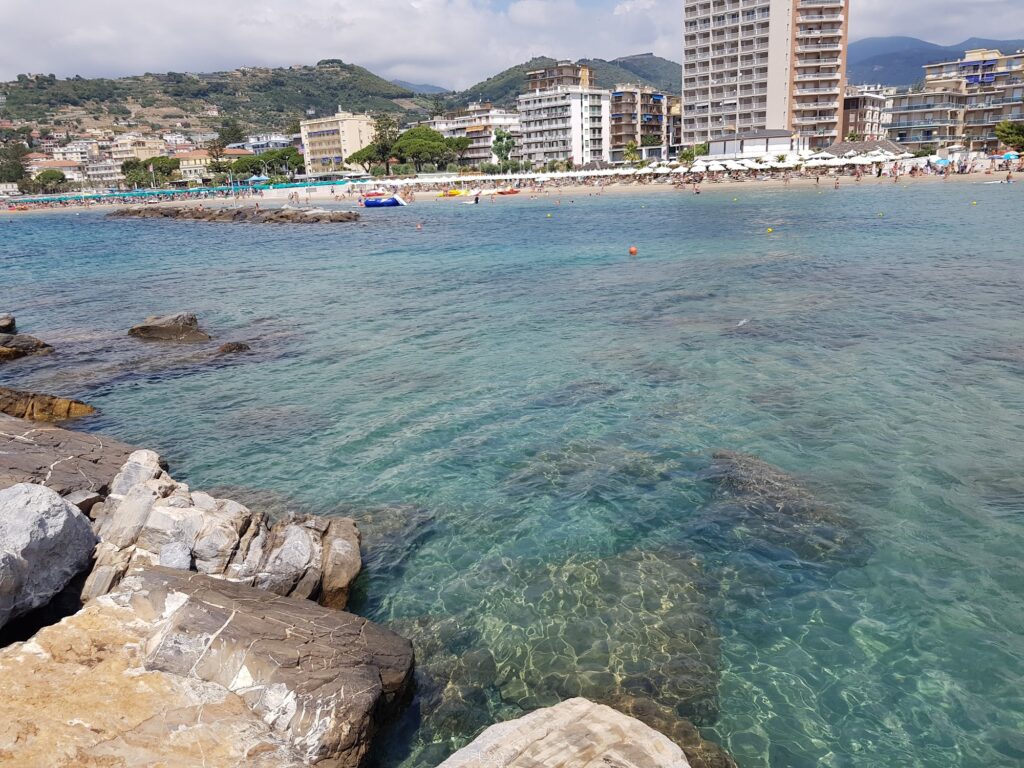
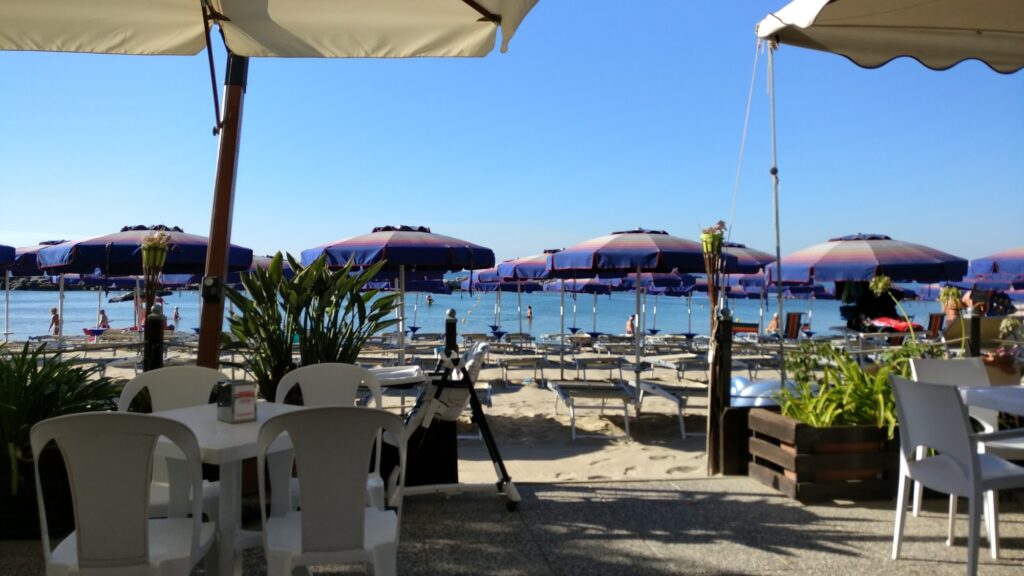
The beach at Bagni Germana is sandy rather than the pebble I’d encountered at several of the more western Ligurian beaches, the seabed sloping gradually and staying shallow enough for a comfortable distance — genuinely well suited to families with smaller children. The establishment has been running for multiple generations, the name still in the family, and the specific combination of attentive service and a setting without the self-conscious style of newer beach clubs gave the whole place a quieter, more settled quality.
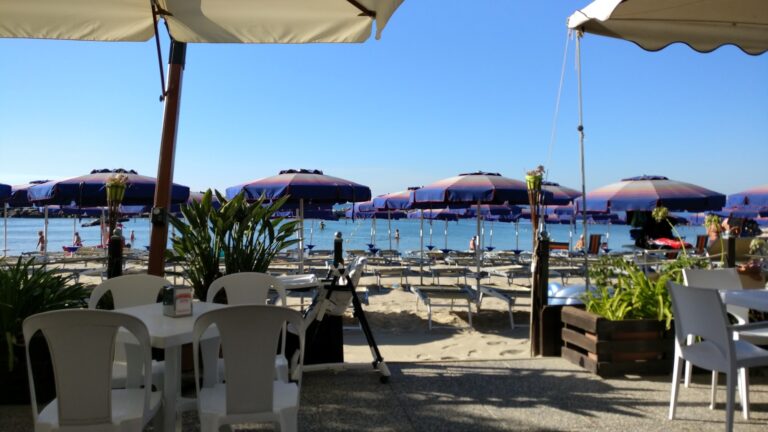
Sunbeds and umbrellas are available via advance booking, elevated wooden solarium terraces run behind the sand for anyone wanting a sand-free space to read or rest, and the restaurant on the wooden deck serves Ligurian specialities — the trofie with pesto and the fresh fried calamari are the obvious choices here, and the Pigato white from the hills above the coast is the local wine I’d ask for specifically alongside them.
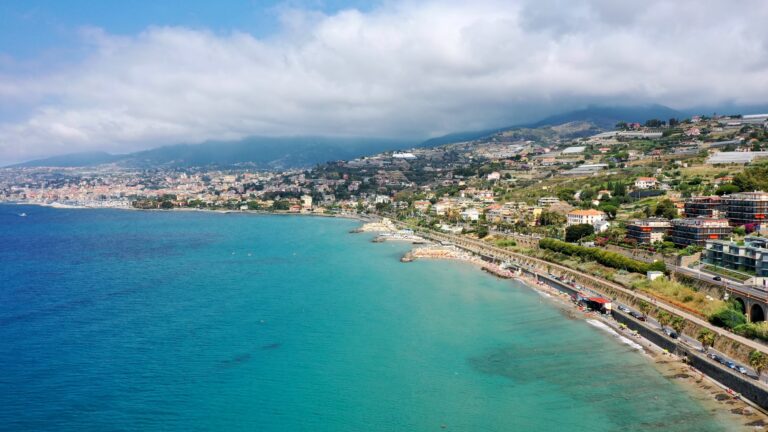
Bagni Germana, on the seafront of Arma di Taggia, sits below a cave whose name gave the whole town its identity — pre-Roman Ligurian arma, meaning cave, now the site of a 15th-century rock sanctuary with a vault made of the cave ceiling itself. The Torre dell’Arma above it was built in March 1565, nine months after a pirate raid devastated this coast, on a spot that has held fortifications since Byzantine times. Inland Taggia is one of Italy’s most beautiful designated villages, home to multiple Ludovico Brea altarpieces, the origin of the Taggiasca olive, and the birthplace of the once-papal Moscatello wine. Sandy beach, gradual entry, multi-generational family beach club with restaurant, the Riviera dei Fiori cycling path running directly through. Twelve kilometres from both Imperia and Sanremo.
Take the A10 to Arma di Taggia, or cycle from Sanremo along the converted railway path. Walk west along the seafront to find the Grotta dell’Arma and the Torre dell’Arma above it. Take a morning or afternoon to drive three kilometres up to Taggia proper and see the Dominican convent before the beach.
Map
Sorry, no records were found. Please adjust your search criteria and try again.
Sorry, unable to load the Maps API.
Near by places: