
Kechries Beach Corinthia: Paul's Harbour, Sunken Isis
Profile
Kechries Beach (Ancient Cenchreae), Corinthia: The Saronic Shore Where Paul Cut His Hair Before Sailing to Ephesus, the Harbour Moles Are Submerged 20 Metres Apart, and 100 Egyptian Glass Paintings Were Found on the Isis Temple Floor
Greece | Kechries | Xylokeriza Community, Corinthia, Peloponnese
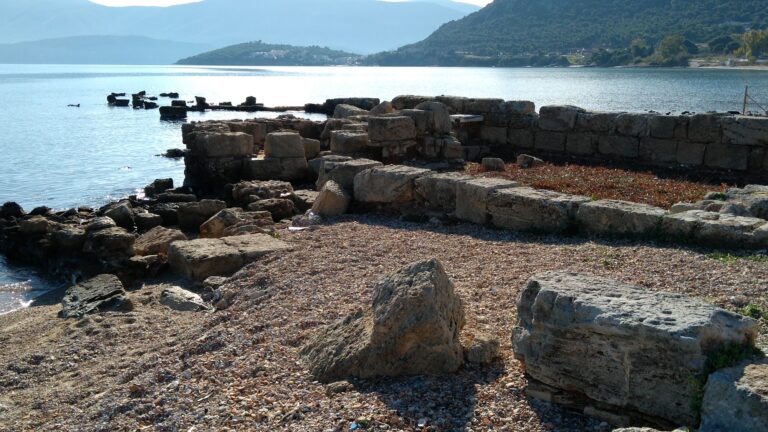
The harbour of Cenchreae had cults of Isis, Aphrodite, Poseidon, Asclepius, Dionysus, and Pan — a specifically cosmopolitan religious profile that reflects a port receiving ships from across the eastern Mediterranean. On the southern mole, the Temple of Isis was built facing the harbour entrance, where sailors making the crossing between Corinth and Asia Minor or Egypt could offer prayers for protection and thanksgiving. Inside this temple, investigators found more than 100 glass paintings packed in pairs on a ship from Alexandria, Egypt — coloured glass sections depicting harbour panoramas, exotic landscapes, animals, plants, and full-length figures of philosophers including Homer and Plato, along with ships and geometric decorative bands. These glass panels, dated to the 4th century AD, are now displayed in the Museum of Isthmia. The temple they decorated no longer stands above water — the earthquake of 365 AD (the same seismic event that generated a tsunami devastating the eastern Mediterranean from Alexandria to Cyprus) submerged the southern mole and with it the Isis temple. After the earthquake, a five-aisled early Christian basilica with mosaic floor was built on the ruins.
The harbour itself was named, according to Pausanias, after Kechrias — a son of Poseidon and Pirene, the same Pirene whose tears, when she wept for her son killed by Artemis, became the Peirene Spring that supplied ancient Corinth. The spring that watered the city and the harbour that traded its goods both bore the names of her children.
The Apostle Paul departed from this harbour in 51 or 52 CE after 18 months in Corinth, where he had written the Epistles to the Corinthians. Before departing, he cut his hair to fulfil a Nazirite vow — the specific act recorded in Acts 18:18, placing the exact location of the vow fulfilment at the water’s edge of Cenchreae. In his Letter to the Romans (Romans 16:1), he commends Phoebe, described as a diakonos (deacon or minister) of the church at Cenchreae — the first woman identified by name with a church leadership role in Christian scripture.
Getting There: 82km From Athens, 7–8km Southeast of Corinth, 4km Southwest of Isthmia, Parking at the Archaeological Site
From Athens, take the A8 (Olympia Odos) motorway toward Corinth. At the Epidavros interchange, exit onto the National Road 70 heading toward Epidaurus. After Isthmia (4km), follow signs for Kechries. The site is clearly visible from the road — the ancient harbour moles extend into the sea from the southern edge of the modern village. Total distance: approximately 82 kilometres from Athens, 1 hour.
From Corinth city, the drive takes 10 to 15 minutes southeast on the coastal road.
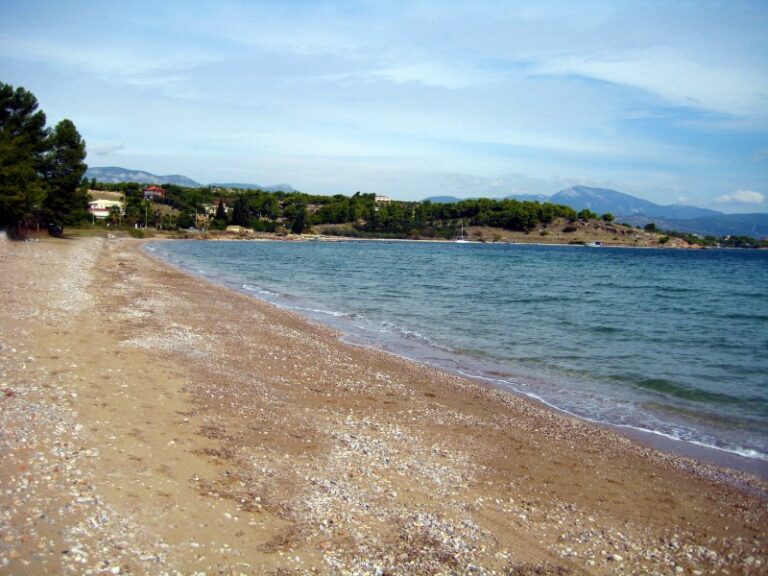
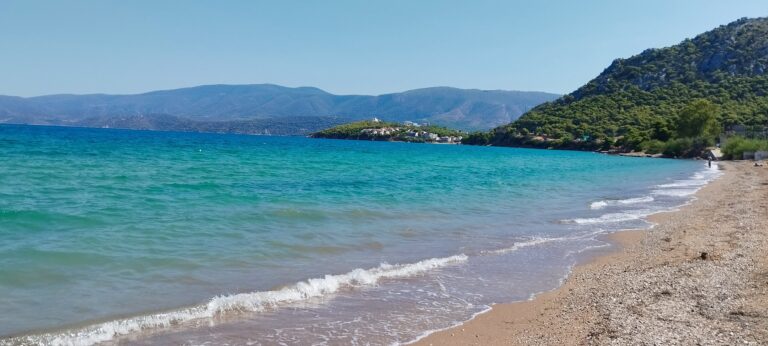
The Beach: Sandy and Shingle, View of Aegina and Angistri, Organised Sections, Ancient Harbour Ruins Visible From the Water
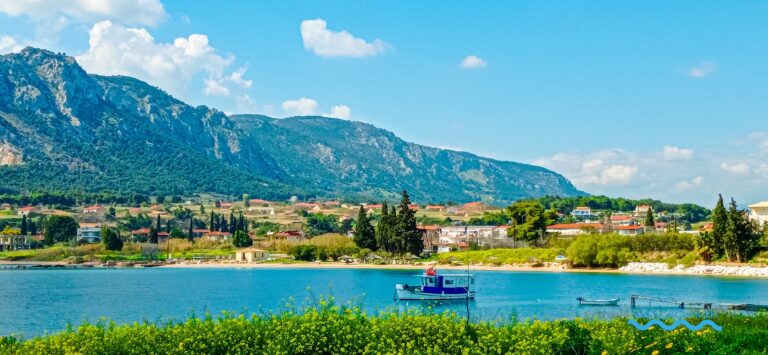
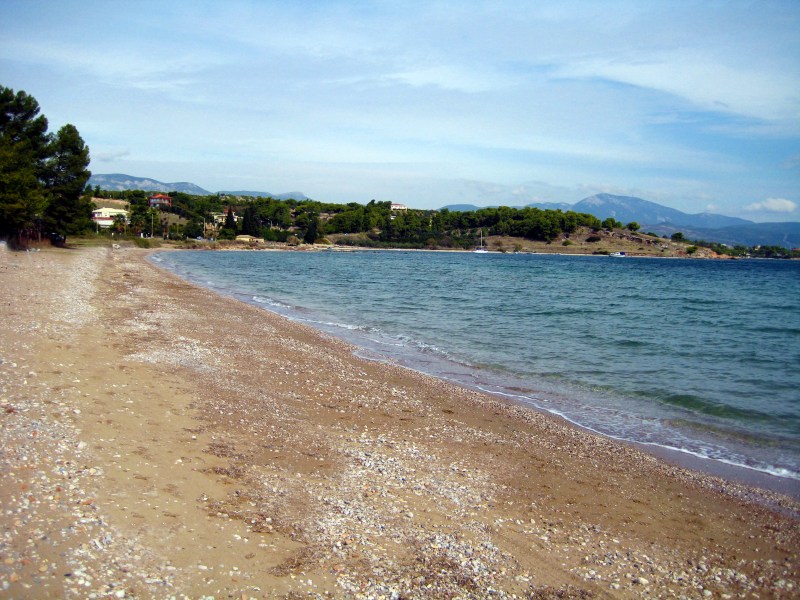
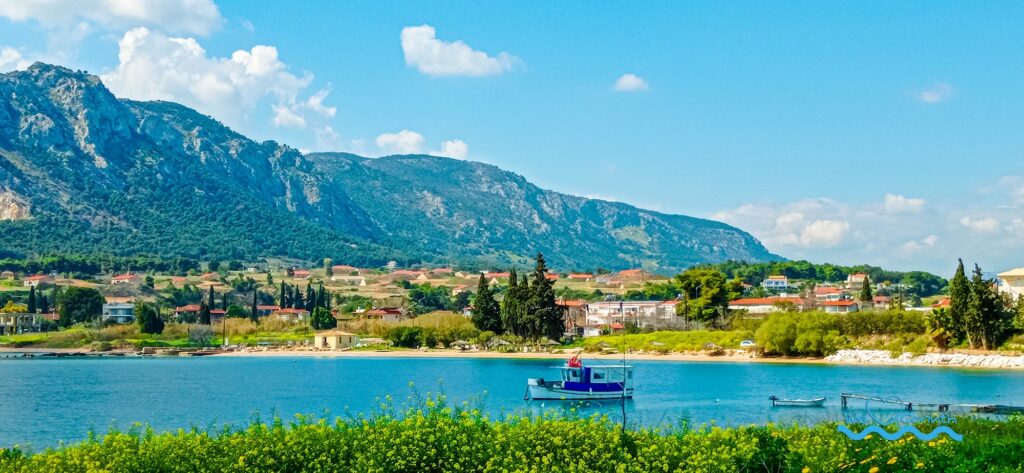
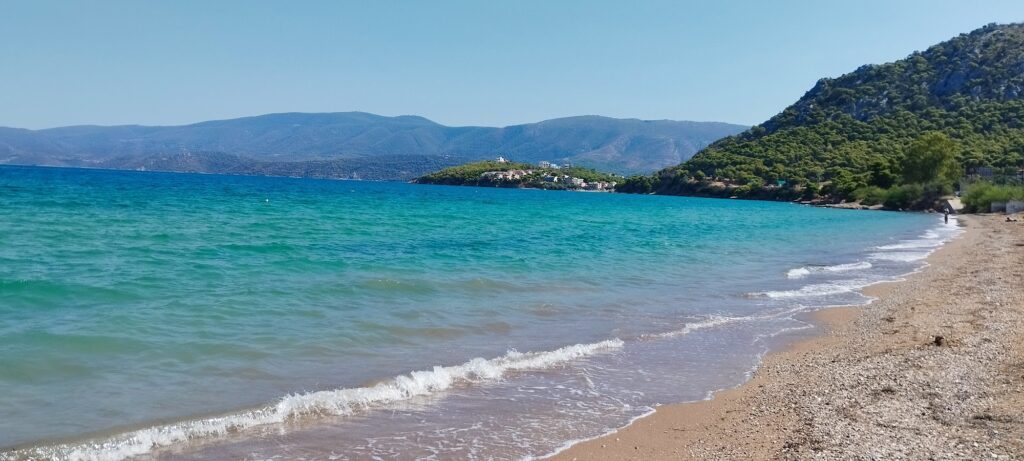
The modern beach at Kechries runs along the same bay that the ancient harbour occupied. The water is clear, the view toward Aegina and Angistri islands is direct, and the bay geometry produces the calm water that the archaeological excavations require for underwater work.
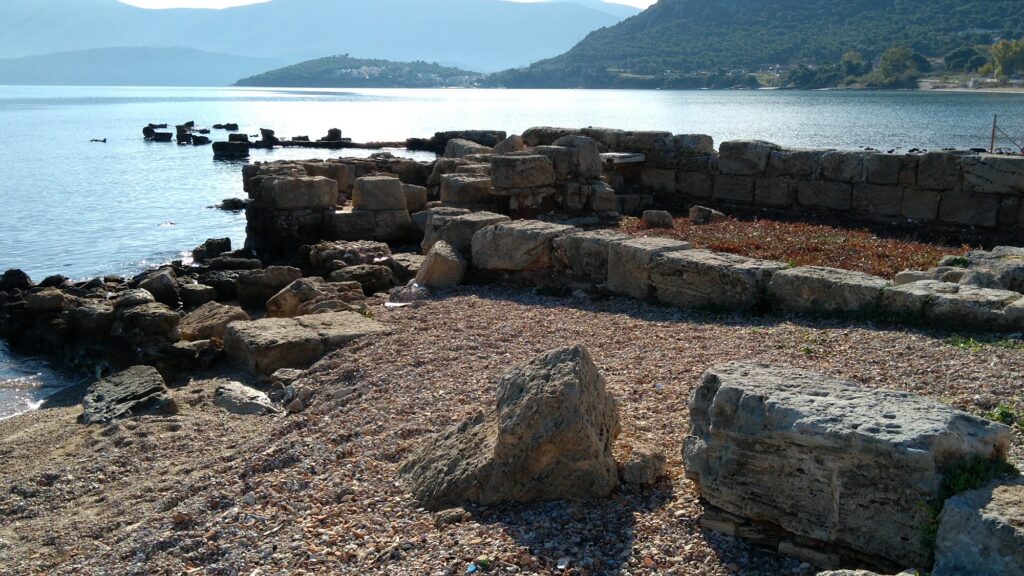
The ancient harbour structures — the two moles, 20 metres apart at the entrance, extending into the sea — are the specific underwater feature. The southern mole carries the submerged remains of the Isis temple; the northern mole has the Aphrodite sanctuary remains. The mole edges are visible from the surface in clear conditions. The Oxford Academic guide to Biblical sites in Greece is specific: “The underwater ruins there still suggest the history of famous travellers, such as the Apostle Paul, whose feet once walked on the sunken stones.”
The Archaeological Excavation: American School 1962–1969, Resumed 2000, Ongoing
The first systematic excavation of Cenchreae was conducted by the American School of Classical Studies at Athens from 1962 to 1969 under Professor Robert L. Scranton. The excavation uncovered the harbour structures, the Isis temple, the Aphrodite sanctuary, and the late antique basilica. The glass paintings from the Isis temple — found submerged on the temple floor — were the most spectacular find of the first excavation.
The excavation was resumed in 2000 by Professor Joseph L. Rife and has continued with modern underwater archaeology methods. The ongoing work is revealing the full extent of the harbour settlement — warehouses, cemeteries, and the range of cult buildings that a prosperous Roman port supported.
The Museum of Isthmia: 7km, The Glass Paintings and the Cenchreae Finds
The Museum of Isthmia at Isthmia village (7km north of Kechries) holds the finds from the Cenchreae excavations, including the 100+ glass paintings from the Isis temple. The museum also holds finds from the Sanctuary of Poseidon at Isthmia — the site of the Isthmian Games, one of the four Panhellenic Games of ancient Greece alongside Olympia, Delphi, and Nemea. Visiting Kechries beach and the Isthmia Museum on the same day covers both the site and its finds.
Cenchreae and the Diolkos: The Ship-Road That Made Two Harbours Necessary
The Diolkos — the ancient ship trackway built by the Corinthian tyrant Periandros in the 6th century BC to haul ships overland across the Isthmus between Lechaion and Cenchreae — was the technological solution to the problem of sailing around the Peloponnese. Ships arriving from the west at Lechaion were dragged across the 6.3-kilometre isthmus on wooden rollers and launched at Cenchreae for the eastern routes. The Corinth Canal, opened in 1893, cut through the same isthmus 2,400 years later.
Almyri Beach Corinthia Greece — the salty-named beach 4.5km south of Kechries — is the next beach on the same Saronic coast. Vrachati Beach Corinthia Greece — the Blue Flag Ottoman-named shore 12km west on the Corinthian Gulf side — is the contrasting coast.
Kechries Beach (Ancient Cenchreae) in Corinthia is the sandy and shingle Saronic Gulf shore at the site of ancient Cenchreae — named after Kechrias, son of Poseidon and Pirene, the eastern harbour of Corinth for trade with Asia Minor and Egypt. Paul cut his hair here before sailing to Ephesus (Acts 18:18), commended the deaconess Phoebe from this community (Romans 16:1), 100+ Egyptian glass paintings from the submerged Isis temple (now Museum of Isthmia, 7km north), the two moles 20 metres apart at the harbour entrance (still underwater), excavation ongoing since 1962, 82km from Athens, 7–8km from Corinth.
Stand at the harbour entrance. Look south. The stones Paul walked on are 3 metres below the water.
Map
Sorry, no records were found. Please adjust your search criteria and try again.
Sorry, unable to load the Maps API.