Polemarcha Beach Epidaurus: Two Coves, Pirate Monastery
Profile
Polemarcha Beach, Epidaurus: The Two Pebble Coves Below the Abandoned 1400 AD Monastery That Pirate Raids Emptied, 2km Down a Steep Dirt Road, With a Better Beach Hidden Behind the Church Than In Front of It
Greece | Ancient Epidaurus Area | Epidaurus Municipality, Argolida, Peloponnese
Panagia Polemarcha monastery was founded around 1400 AD, during the period when the Byzantine state was contracting under pressure from the Ottomans and piracy was the defining security threat on the coastal Aegean and Ionian routes. The monastery was built among pine and olive trees on the hillside above the coast between Palaia Epidavros and Nea Epidavros — a position with views of the Saronic Gulf that made it both beautiful and exposed. Pirate raids came repeatedly. At some point, the raids made the monastery impossible to sustain and the monks left. The church — a three-aisled basilica — is still standing. The interior has old framed religious paintings, wooden chairs still lined up in rows, a red curtain hanging across the altar. Everything is where the monks left it, preserved by abandonment rather than maintenance.
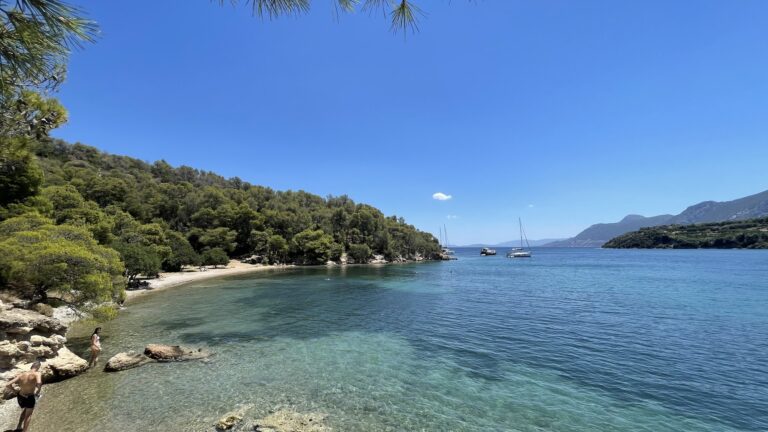
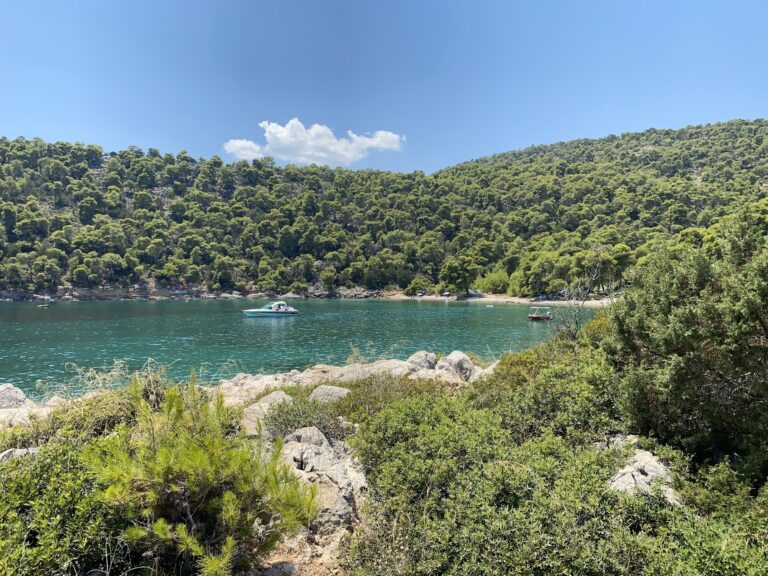
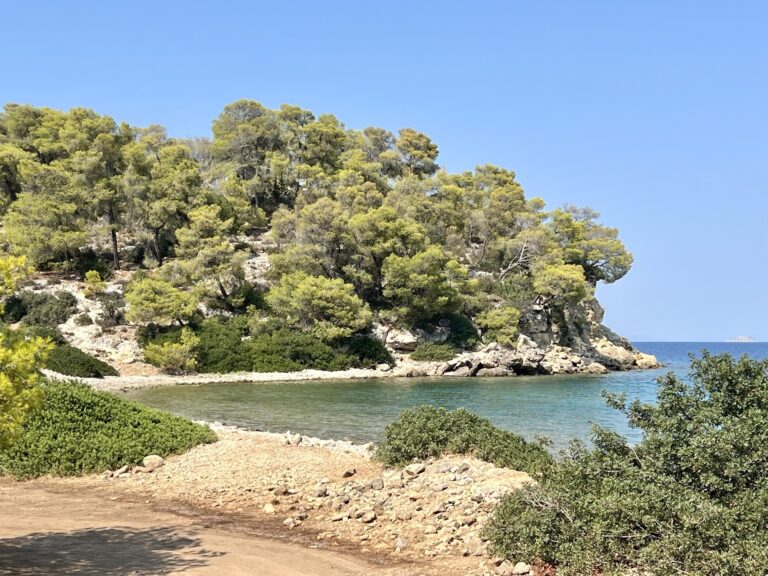
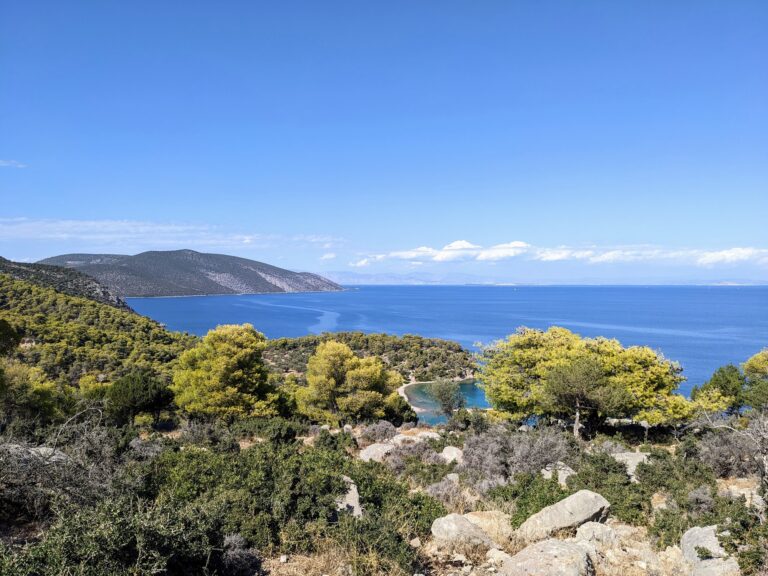
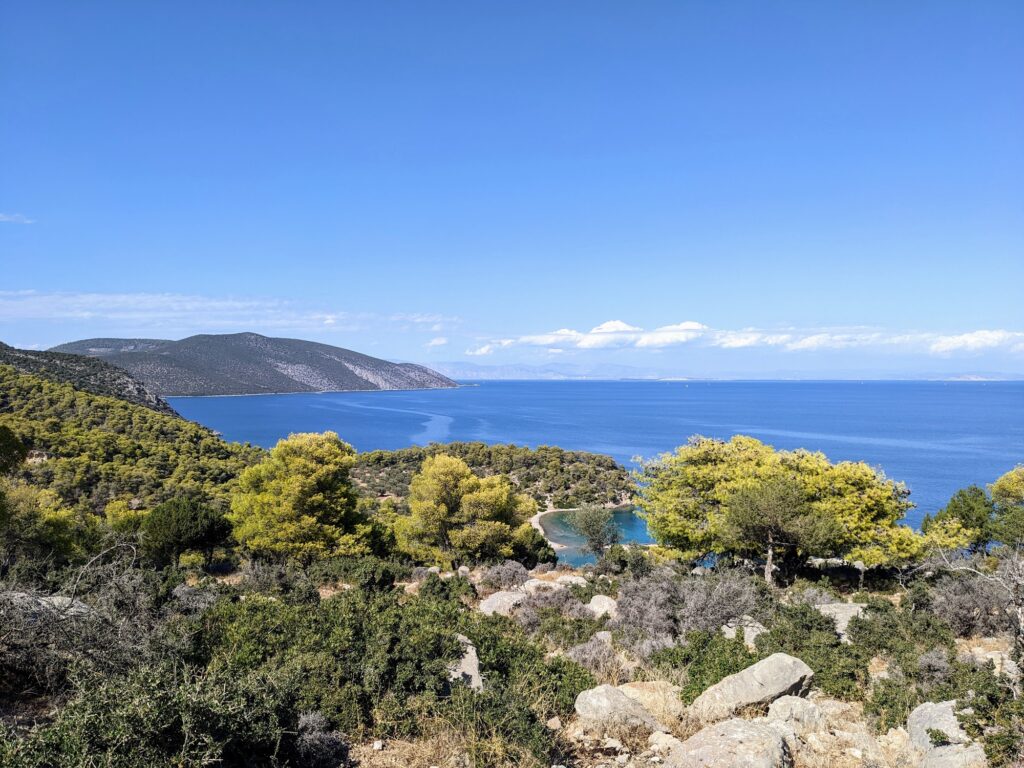
The beach is directly below the monastery — a few metres of descent from the church to the pebble coves at the water’s edge. It has the specific character that a monastery-adjacent coastal location produces: pine and olive trees overhanging the shore, the silence that comes from the absence of commercial infrastructure, the connection between the sacred building above and the clear water below.
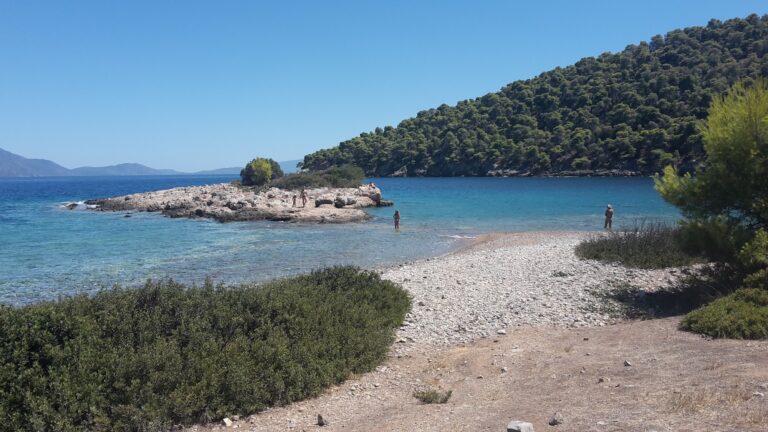
There are two distinct beaches at Polemarcha. The Yialasi Hotel guide from the Epidaurus area is specific: “The church and in front of it the right (beach is not visible from the street). You should continue a little left after the church. Park and walk a bit to explore the place. It will reward you!” The left cove — the one that requires walking past the church to reach, not visible from the road — is the better beach. The right cove is the visible one. This navigation detail is the single most useful piece of information for the visit.
Getting There: 2km Steep Dirt Road From the Main Road (800m Before the First Entrance of Ancient Epidaurus Village), 4WD Recommended, Left Cove Requires Walking Past the Church
From Palaia Epidavros (Ancient Epidaurus), drive north toward Nea Epidavros on the main road. Approximately 800 metres before the first entrance of Ancient Epidaurus village (from the Corinth direction), look for the turn-off on the left for the dirt road — there is also a sign for the Polemarcha Monastery. From the junction, the dirt road continues 2 kilometres to the monastery and beach. The road is steep. A 4WD is recommended but not absolutely required in dry conditions; standard cars manage slowly and carefully.
At the monastery, park in the space near the church. To find the better beach: walk past the church and continue left. Do not stop at the first visible beach on the right — the left cove is the reward the Yialasi guide refers to.
The beach can also be reached on foot from Palaia Epidavros via the coastal hiking trail — the Panagia Polemarcha Beach Loop covers approximately 7 miles (11km) total, following the coastline past Vagionia, Kalamaki, Sarandakoupi, and arriving at Polemarcha before returning inland via Mount Akros to the Little Theatre of Ancient Epidaurus. The hike takes 3.5 to 4 hours.
The Two Beaches: Right Cove (Visible, Adequate) and Left Cove (Hidden, Better)
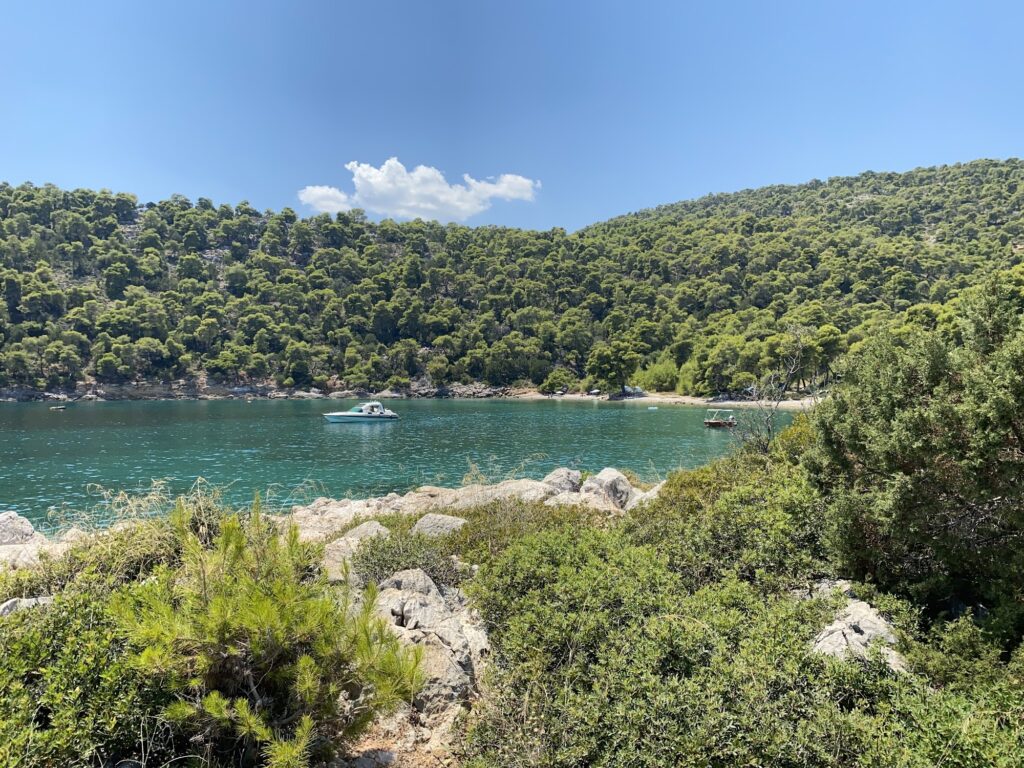
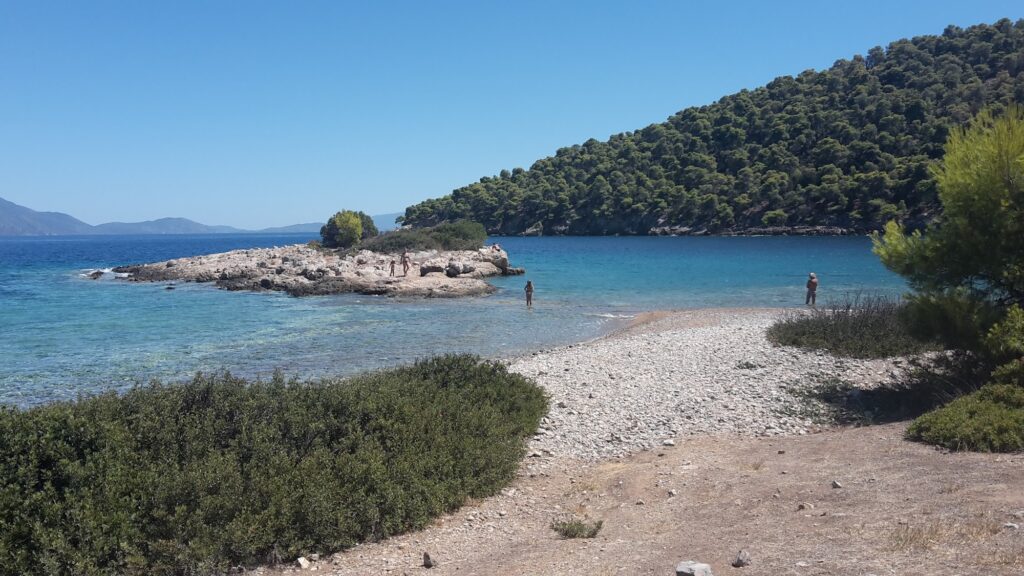
The right-hand cove is directly in front of the monastery — pebble, pine shade, clear water. It is the beach that visitors who park and walk directly to the water find. It is adequate.
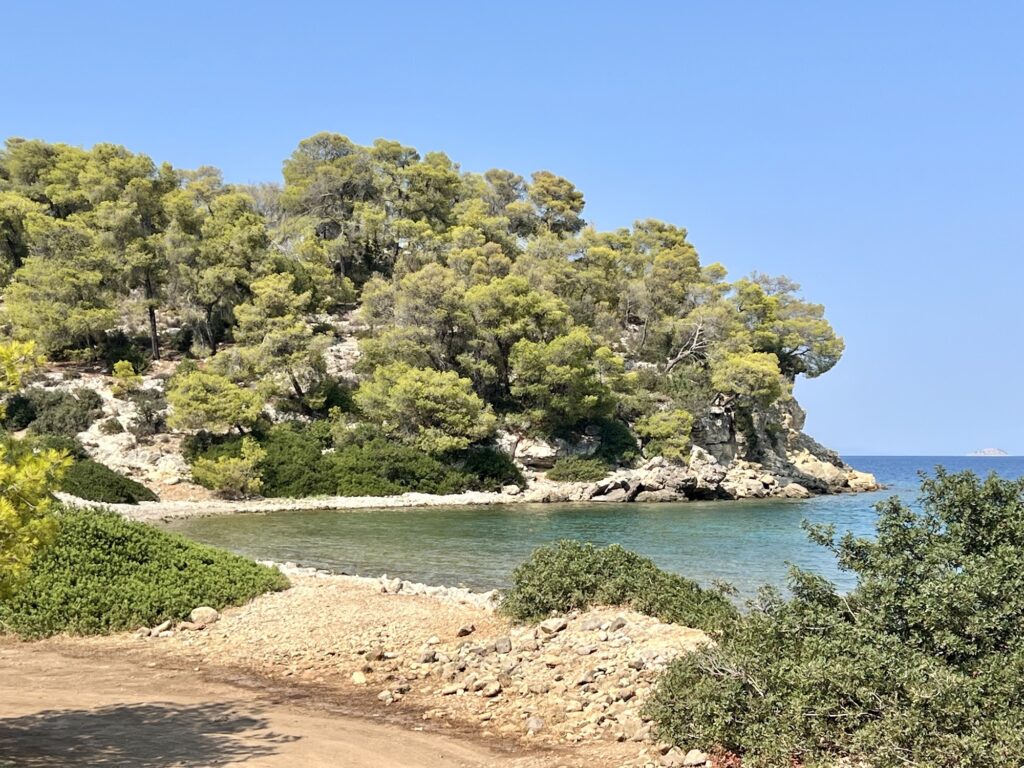
The left-hand cove requires walking past the church and around the headland — a few minutes on foot. It is described by the hotel guide as worth the extra distance specifically because most visitors do not find it. The pine and olive trees provide the natural parasol character that the source article accurately describes: the trees lean over the water, providing shade from above rather than requiring umbrellas from below.
Neither cove has any commercial infrastructure — no sunbeds, umbrellas, cafes, showers, or changing rooms. Everything needed for the day must be brought. The Yialasi Hotel guide’s specific note: “Make sure you have all the necessities.”
The Monastery of Panagia Polemarcha: Founded 1400, Abandoned by Pirate Raids, Church Still Standing
The monastery is the reason for the beach’s name and the specific atmosphere of the coves below it. The three-aisled basilica is in remarkable condition for an abandoned building — the combination of the Mediterranean climate, the pine forest shelter, and the stone construction has preserved it. Inside, the wooden chairs, the painted icons, the red altar curtain create the specific eerie quality of a space frozen at the moment of abandonment.
The monastery is still considered sacred — the AllTrails hiking guide notes visiting it as a highlight of the coastal loop. The monastery shop (noted in the Agnountos monastery description from the same area) sells items; it is not entirely abandoned in the administrative sense even if unpopulated.
The Coastal Walking Route: Vagionia → Kalamaki → Sarandakoupi → Polemarcha
The full coastal walking route from Palaia Epidavros north covers: Vagionia beach (the main village beach, accessible, disability-friendly) → Kalamaki beach (5 minutes through the pine forest, sunken Bronze Age city offshore — covered in Kalamaki Beach Palaia Epidavros Greece) → Sarandakoupi beach (further along the rocky shoreline) → Polemarcha (the monastery coves at the northern end of the route). Total one-way coastal section: approximately 5 kilometres.
Kondyli Beach Nafplio Greece — the most beautiful beach in Argolida, 17km northwest near Vivari, with the Agios Nikolaos chapel boat-only and the overlooked Venetian shipyard castle — is reachable from an Epidaurus base for a day trip.
Polemarcha Beach near Ancient Epidaurus in Argolida is the two pebble coves below the Panagia Polemarcha monastery (founded 1400 AD, abandoned by pirate raids, three-aisled basilica still standing with chairs and curtain in place) — 2km steep dirt road from the main Nea Epidavros–Ancient Epidaurus road (4WD recommended), the left cove the better and less-found beach (walk past the church), pine and olive trees providing natural shade over the water, no commercial infrastructure whatsoever (bring everything), the coastal hiking trail from Palaia Epidavros passes Vagionia, Kalamaki, and Sarandakoupi to reach it in approximately 5km, the Saronic Gulf views across to the islands.
Take the dirt road. Drive slowly. Walk past the church. Find the left cove.
Map
Sorry, no records were found. Please adjust your search criteria and try again.
Sorry, unable to load the Maps API.
Near by places: