
Sfantu Gheorghe Beach: Where the Waves Glow at Night
Profile
Sfântu Gheorghe Beach, Danube Delta: Where the Waves Glow on Moonless Nights
Romania | Sfântu Gheorghe | Tulcea County, Northern Dobruja
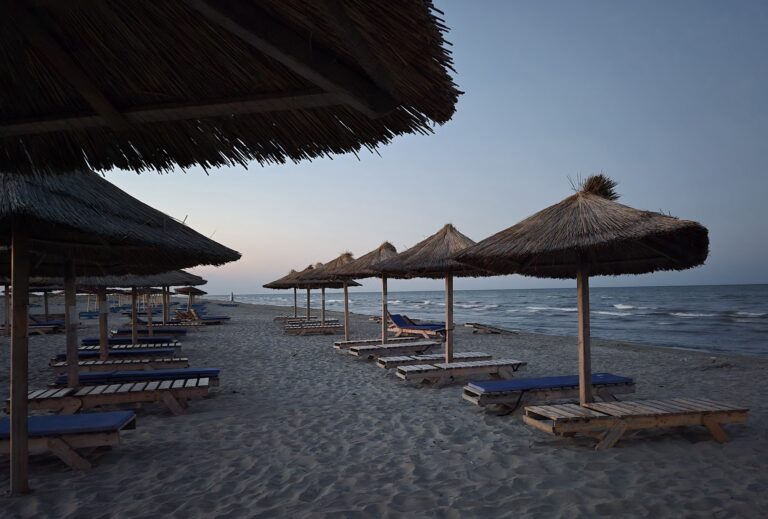
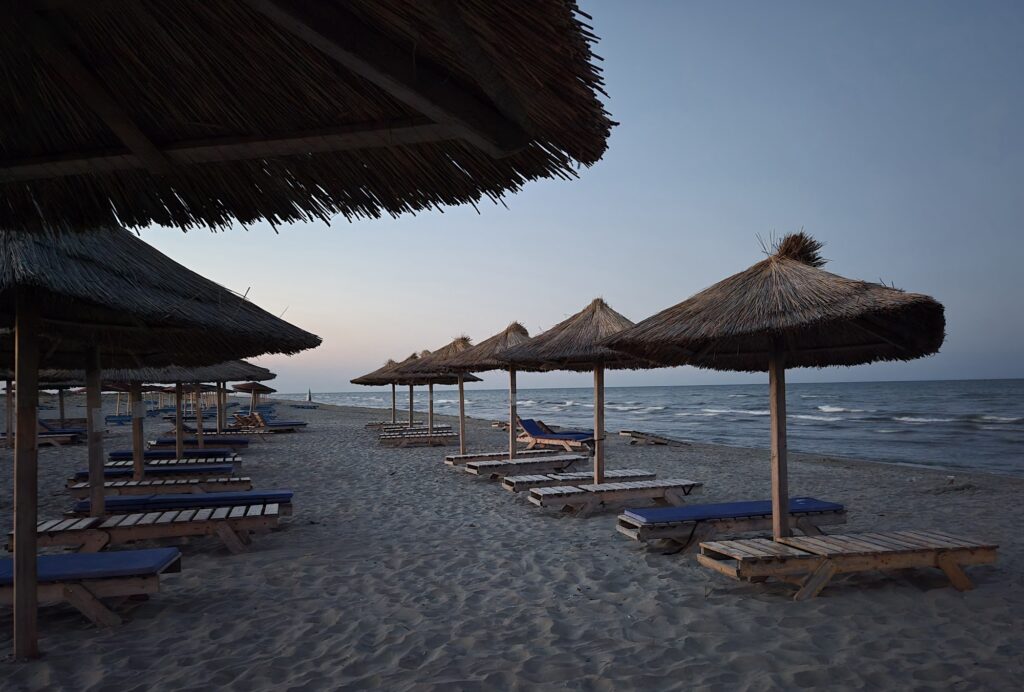
I want to lead with something I almost missed entirely in researching this beach, because none of the more polished descriptions mention it: on nights without a full moon, the sea and the sand at Sfântu Gheorghe can glow with a natural phosphorescence, locally described as fire beetles lighting up the water, especially visible where the waves break. I have no way of confirming exactly how reliably this appears on any given night, but multiple independent sources describe the same phenomenon in almost identical terms, and I’d treat a moonless evening here as worth specifically planning around if the chance to see it interests you.The village itself, first documented in 1318, sits at the genuine end of the line — the only settlement in the Danube Delta from which both the river and the Black Sea are visible at once, reachable exclusively by boat from Tulcea, Mahmudia, or Murighiol, since no road connects it to anywhere else. Archaeological evidence found nearby points to human habitation stretching back some 120,000 years, though the village’s documented modern population — Lipovan Russians, Ukrainians, and Romanians — settled here in distinct waves: Cossack refugees fleeing after the Battle of Poltava found shelter here from the early 18th century, Zaporizhzhian Cossacks arrived around 1775 under Catherine the Great’s reign, and Romanians from Transylvania settled in 1810. Today’s population numbers under 800, fishing and reed harvesting still the core local occupations alongside tourism. Each August, the village hosts the Anonimul International Independent Film Festival, a genuinely unlikely cultural event for a settlement this remote, drawing visitors specifically for the films rather than the beach.
Getting There: Boat Only, From Tulcea, Mahmudia, or Murighiol
There is no road into Sfântu Gheorghe, and reaching it means choosing among three river ports. From Tulcea, Navrom Delta ferries run a faster service of roughly two hours and a slower one of around five and a half hours, with fares in the region of 13 to 15 euros depending on the boat; sailings follow a fixed weekly pattern rather than running daily, so checking the current schedule in advance matters. Murighiol offers the shortest crossing, roughly two and a half hours, and Mahmudia sits in between the two at about two hours. Smaller private charter boats also operate from all three ports, typically a rougher ride but often faster and cheaper than the scheduled service.
Once in the village, the beach itself lies roughly a kilometre to a kilometre and a half away, reached by a sandy road that crosses a channel and a stretch of dunes — a walk of about 30 to 35 minutes at a steady pace, or a shorter, bumpier ride on one of the locally operated tractor-trailers that wait near the village for exactly this purpose.
The Beach: 14 to 33 Kilometres of Sand, Genuinely Wild, No Lifeguard
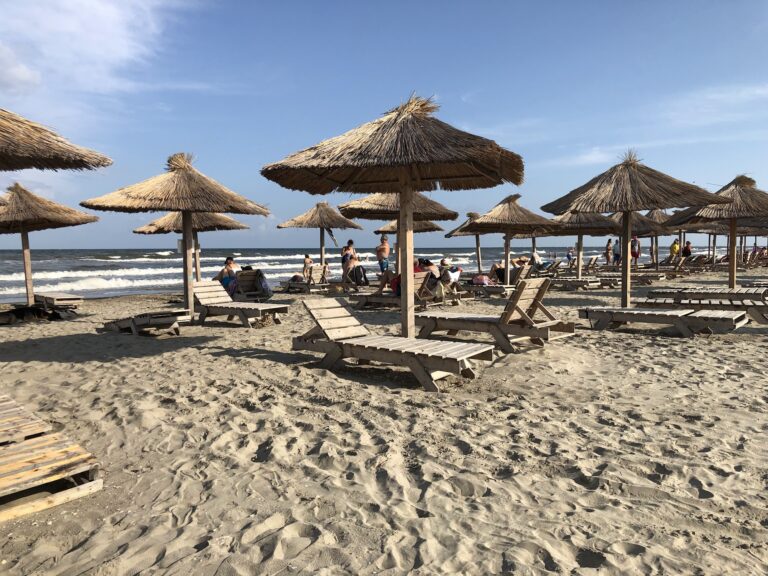
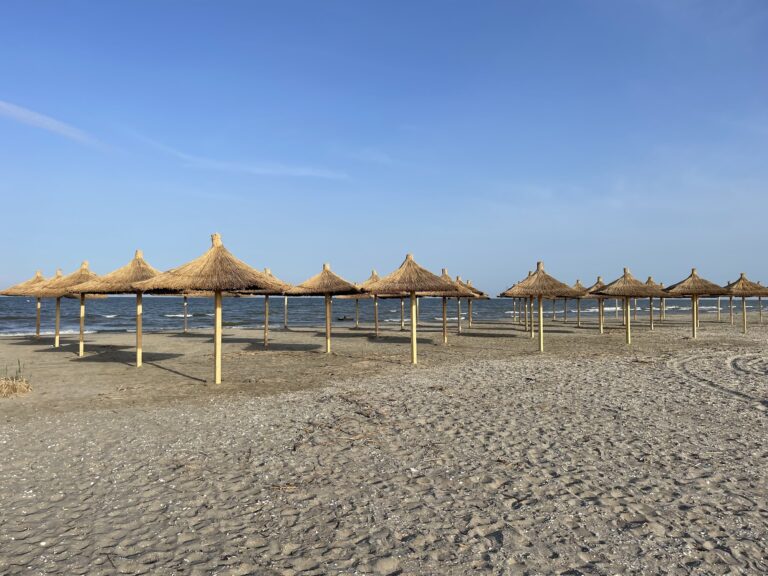
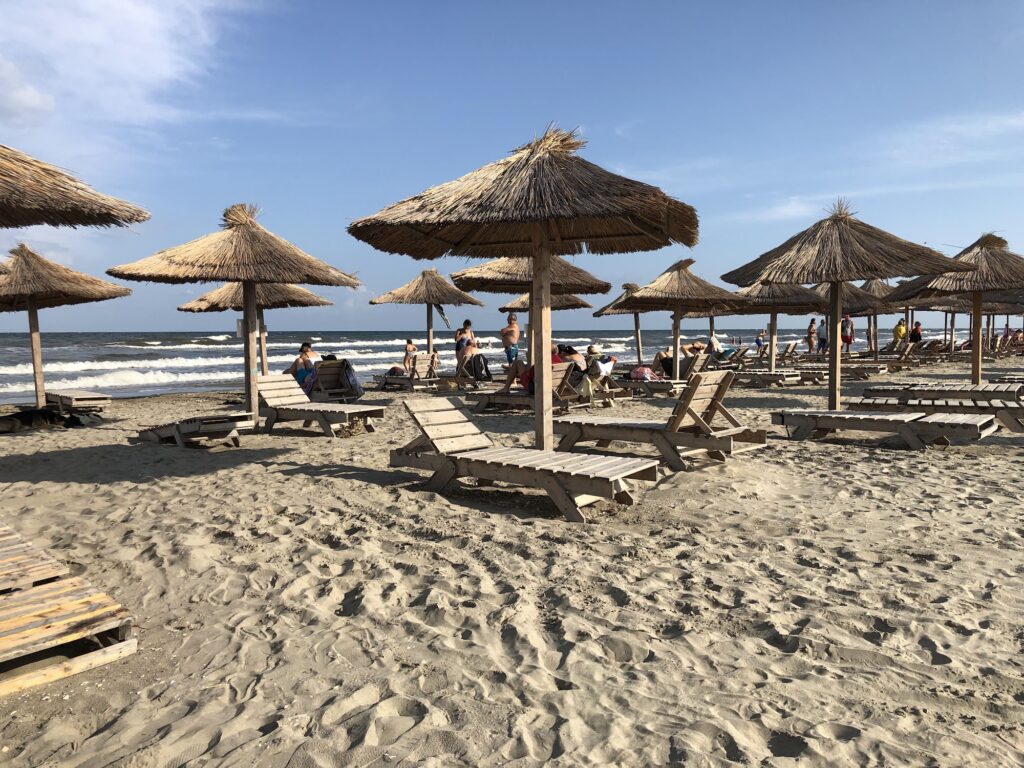
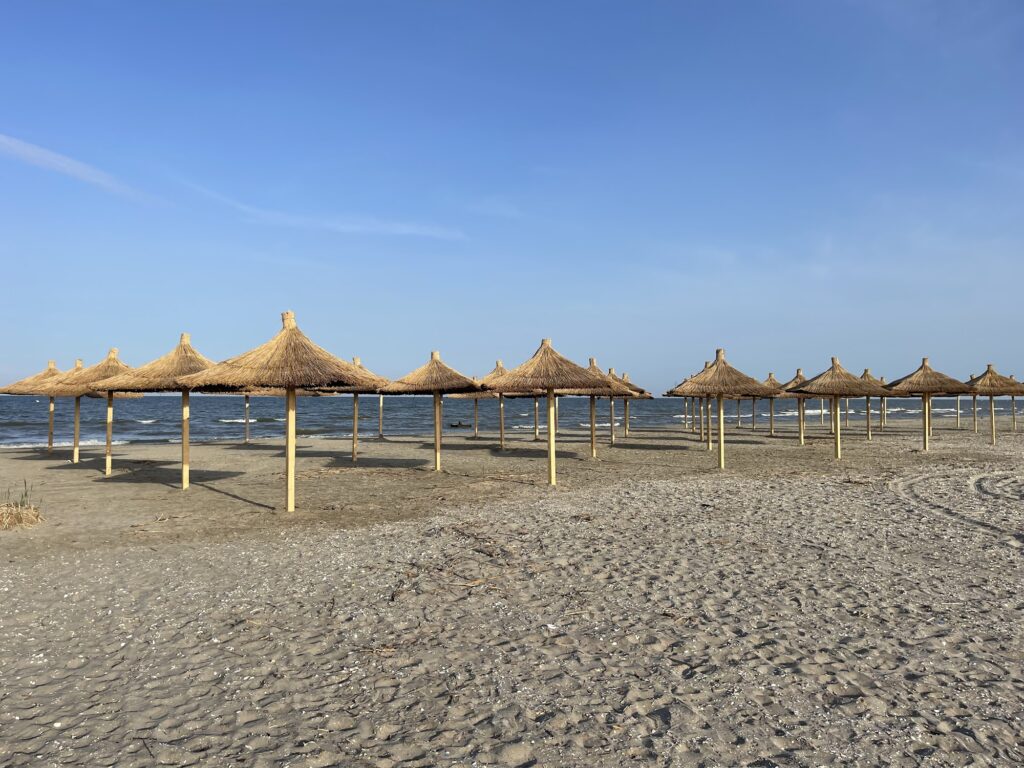
The beach’s exact length figures range from 14 to 33 kilometres depending on how far north toward Sulina the measurement extends — but every account agrees it is among the longest and least developed stretches of sand on Romania’s entire Black Sea coast. The sand itself is exceptionally fine, filtered by centuries of river sediment, and the water near shore is noticeably less salty than further south, owing to the constant freshwater output of the Danube, with at least one account describing it as tasting faintly sweet rather than properly briny.
This is a wild beach within the Danube Delta Biosphere Reserve, with no permanent upgrades and no lifeguard station, and swimming directly at the mouth of the Sfântu Gheorghe branch is specifically discouraged due to strong, unpredictable currents where the river meets the sea. Camping on the beach is technically prohibited as part of the reserve’s protections, though several accounts note enforcement here is noticeably less strict than at Corbu or Vadu beaches further south, both of which I have also catalogued elsewhere for this project.
Food: Sturgeon and Caviar, Not Much Else Nearby
The village’s culinary identity centres on sturgeon, served in most local eateries, and the traditional black caviar, icre negre, that the area remains genuinely known for despite the species’ endangered status elsewhere limiting its presence on menus further inland. Drinks and snacks are sold at the beach entrance, but anyone planning to spend a full day on the sand should carry food and water from the village, since walking back for supplies covers real distance.
Sfântu Gheorghe, at the southeastern edge of the Danube Delta, is reachable only by boat, a fishing village documented since 1318 and settled across centuries by Lipovan Russians, Cossack refugees, and Transylvanian Romanians, today numbering under 800 residents and hosting an unlikely independent film festival each August. The beach itself runs many kilometres of fine, river-filtered sand, the water gently fresh-tasting near shore, wild and unorganised within the Biosphere Reserve, with no lifeguard and currents to avoid specifically at the river mouth. On moonless nights, the breaking waves are reported to glow with natural phosphorescence. Sturgeon and caviar are the area’s culinary specialty. A 30-to-35-minute walk or a tractor-trailer ride separates the village from the sand.
Book the Navrom ferry from Tulcea, Mahmudia, or Murighiol in advance. Walk to the beach via the sandy road, or flag down a tractor. Time a visit for a moonless night if the phosphorescence interests you.
Map
Sorry, no records were found. Please adjust your search criteria and try again.
Sorry, unable to load the Maps API.