
Almyri Beach Corinthia: Salty Shore, Paul's Harbour, Helen
Profile
Almyri Beach (Kato Almyri), Corinthia: The Saronic Gulf Shore Named for its Salt, 4.5km From the Ancient Cenchreae Where Paul Departed for Ephesus, and Adjacent to the Baths of Beautiful Helen
Greece | Kato Almyri | Saronikos Municipal Unit, Corinthia, Peloponnese
Helen of Troy bathed in the springs at Loutra Oraias Elenis — or so the name says. Loutra is baths, oraias is beautiful, Elenis is Helen’s: the Baths of Beautiful Helen, the thermal spring village immediately north of Kato Almyri on the Saronic coast of Corinthia. Whether Helen herself (the mythological daughter of Zeus and Leda, whose abduction by Paris started the Trojan War) actually bathed in the springs is mythology rather than archaeology, but the name has held through the Byzantine period, the Ottoman period, and into the modern settlement. It is the kind of name that encodes a long tradition of the springs being considered exceptional — beautiful, beneficial, worth naming after the most beautiful person the Greek world could imagine.
The springs at Loutra Elenis are therapeutic — the visitcorinth site describes the settlement as offering “a pebble beach with crystal clear waters and therapeutic bath in the thermal springs.” The beach and the thermal springs coexist at the same settlement, which is the specific character of this Saronic coastal strip: the hot springs, the clear sea water, the historical sites within driving distance in every direction.
Almyri Beach is at Kato Almyri (Lower Almyri), immediately south of Loutra Elenis. The name is specific: almyros in Greek means salty — the beach is named for the quality of its water, or possibly for the salt marshes or springs that once characterised the coastal geography here. The settlement has a population of approximately 374 people, small enough to have the residential beach character of a village where the visitors are noticed rather than anonymous.
Getting There: 85km From Athens (1h10 Via A8), 15km Southeast of Corinth on the National Road 70 Toward Epidaurus, 4.5km From Kechries (Ancient Cenchreae)
From Athens, take the A8 (Olympia Odos) motorway toward Corinth. At the Epidavros interchange, exit onto the National Road 70 (the road between Corinth and Epidaurus). The road runs southeast along the Saronic coast of Corinthia. Kato Almyri and the Almyri beach are approximately 15 kilometres from Corinth, or 85 kilometres from Athens — approximately 1 hour 10 minutes.
From the Corinth Canal area (Isthmia), Kato Almyri is approximately 8 kilometres south.
The Beach: Pebble and Shingle, Clear Saronic Water, Organised in Parts, Calm Bay, Neon Turquoise Near Shore, Adjacent Thermal Springs at Loutra Elenis
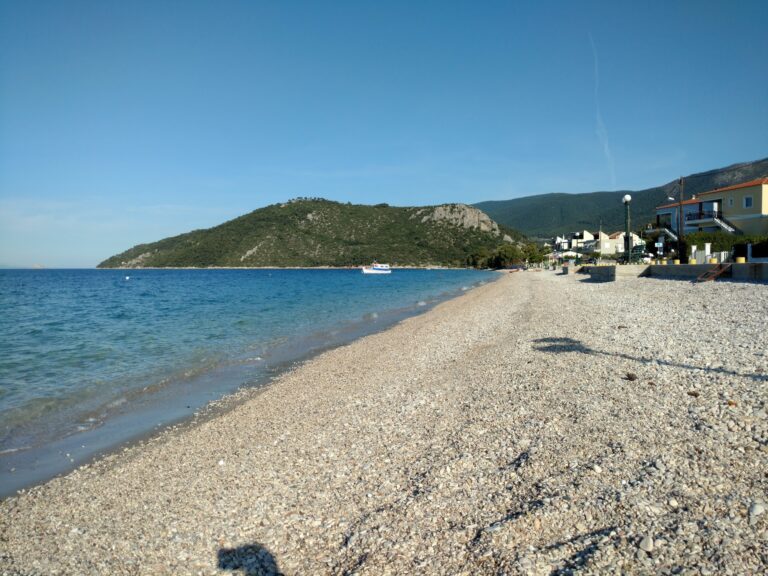
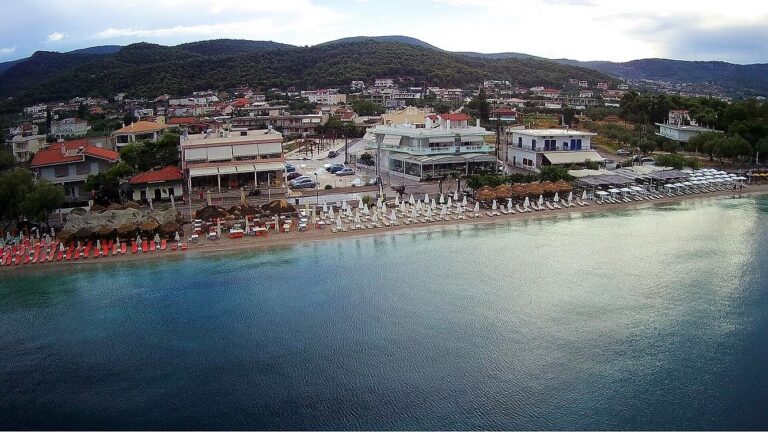
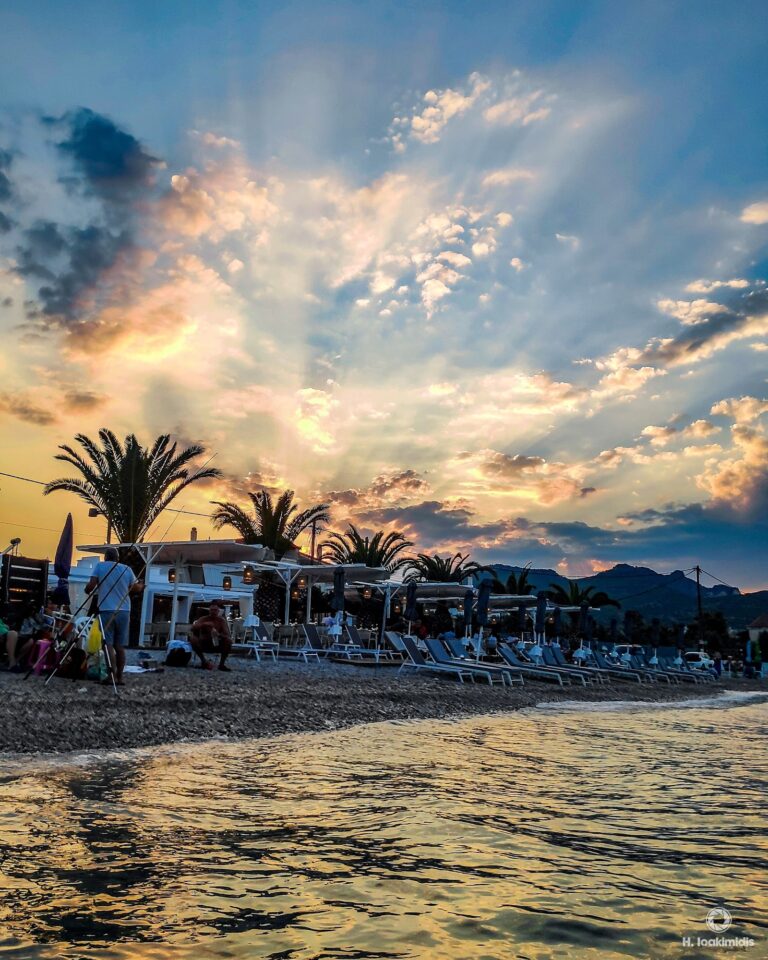
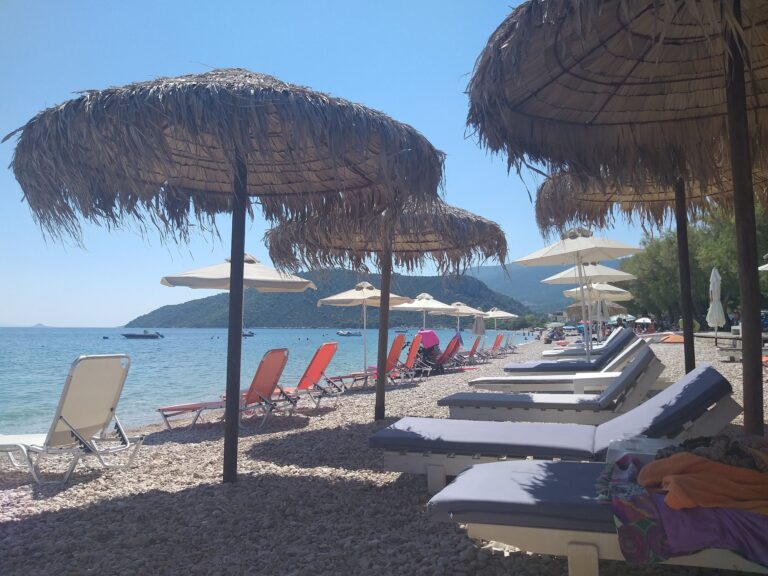
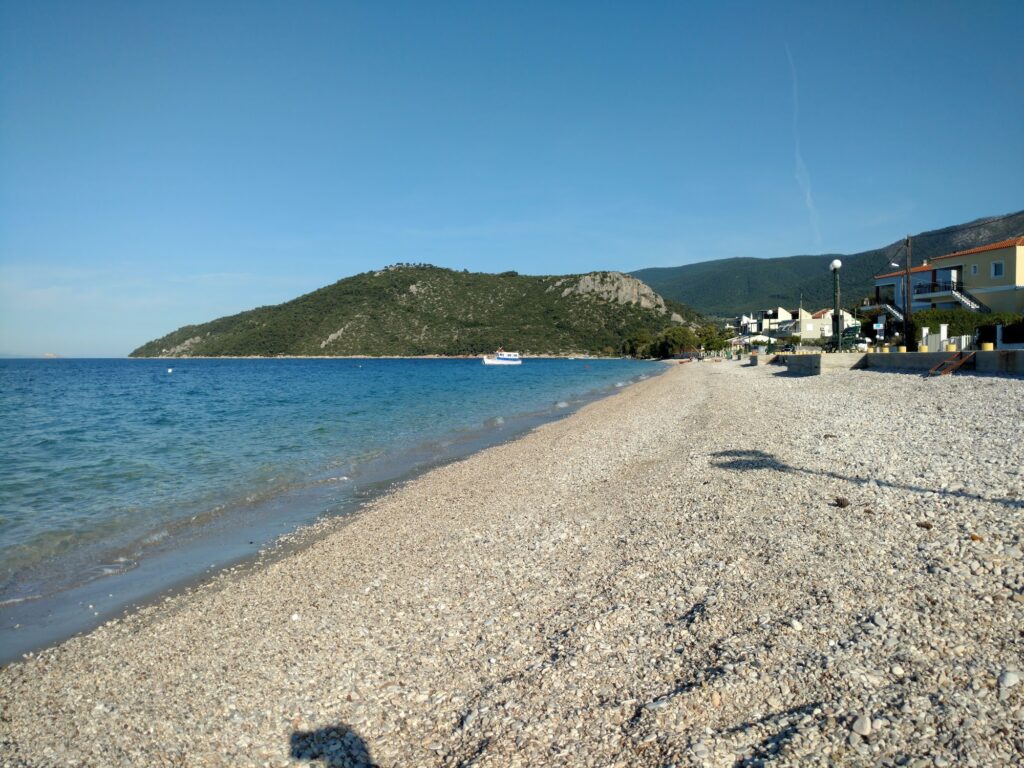
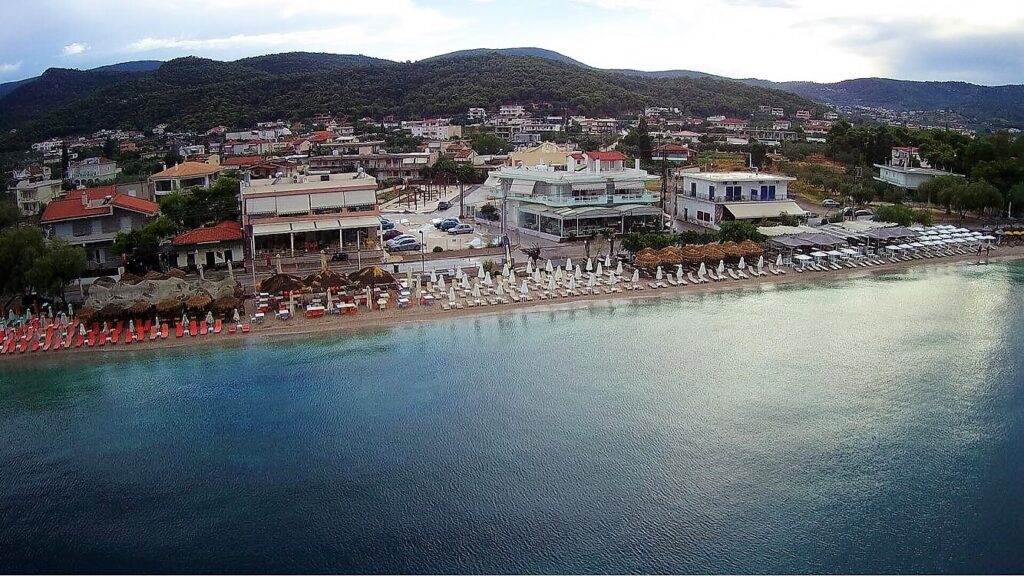
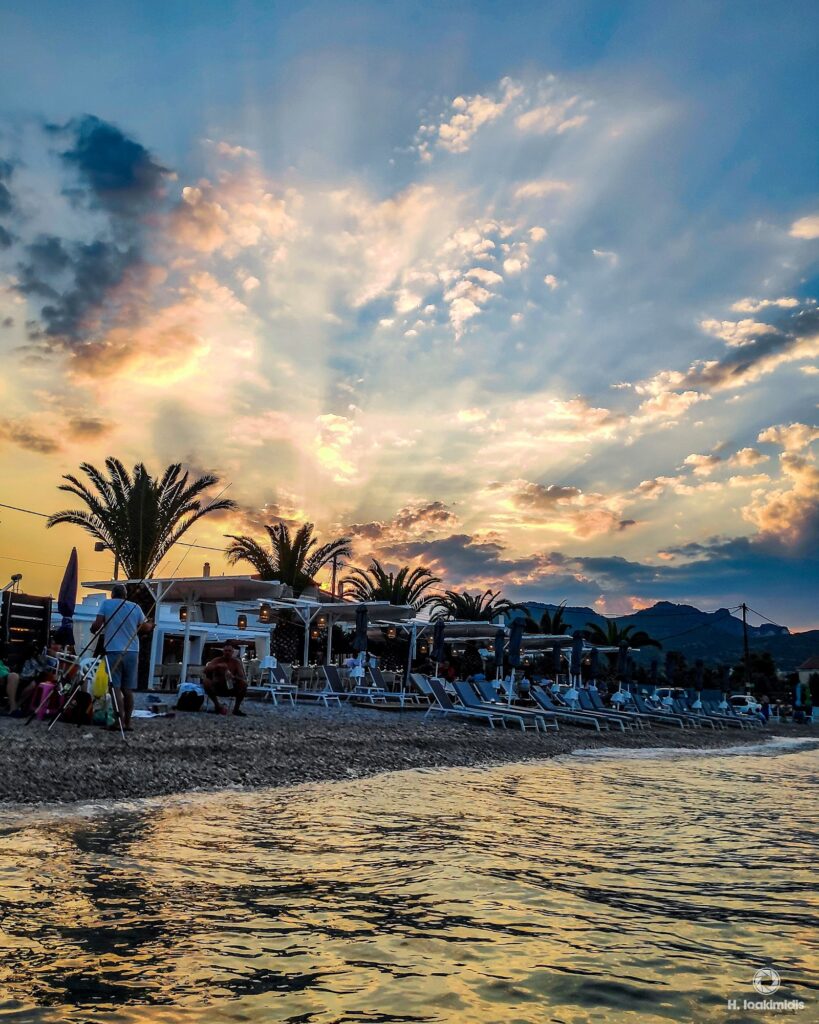
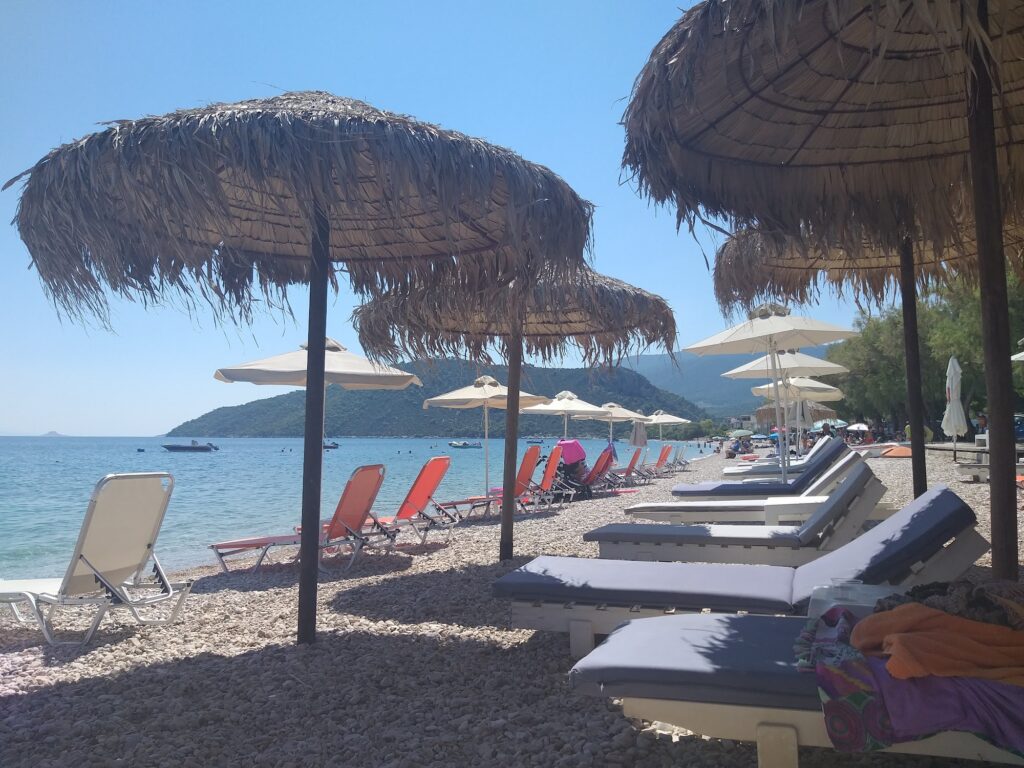
The beach is pebble and fine shingle, the water in the shallow section described consistently as neon turquoise — the colour that clear shallow water over a white rocky seabed produces. The Saronic Gulf at Kato Almyri is calmer than the open central Saronic because the coastal geography provides some protection. The beach has organised sections with sunbeds, umbrellas, and beach bars; the residential character of the village means the visitors are year-round as well as seasonal.
The specific observation from the Sandee guide: the beach has “golden sands that gently meet the calm waters of the Saronic Gulf” — though most descriptions identify pebble. The composition is mixed: shingle and pebble in the main, with sandy areas in places.
Kechries and Ancient Cenchreae: The Eastern Harbour of Corinth, 4.5km North
Kechries — 4.5 kilometres north of Kato Almyri — is built on the site of ancient Cenchreae, the eastern harbour of Corinth on the Saronic Gulf. Cenchreae was the port from which Paul departed for Ephesus after his 18-month residence in Corinth (Acts 18:18). Before leaving, he cut his hair as a vow — the specific Nazirite vow that the text records as his final act at Cenchreae. Excavations at Kechries have revealed harbour structures, warehouses, and the site of the sanctuary of Isis at the harbour entrance.
Cenchreae is also mentioned in Paul’s Letter to the Romans (Romans 16:1), where he commends the deaconess Phoebe of Cenchreae — the first woman named as a deacon in Christian texts, and the person who likely carried Paul’s letter to Rome.
Loutra Oraias Elenis: The Baths of Beautiful Helen, Therapeutic Springs, The Parallel With Loutraki
Loutra Oraias Elenis (also written Loutra Elenis) is the small coastal village 1 to 2 kilometres north of Kato Almyri. The thermal springs here have been known since antiquity — the name’s persistence through two and a half millennia suggests continuous use. The springs are therapeutic: traditionally used for rheumatic and skin conditions. The village has its own pebble beach alongside the spa access.
The parallel with Loutraki on the Corinthian Gulf side is specific: both towns are defined by thermal springs, both have beach promenades, both have Greek names meaning baths (loutra). Loutraki is the famous one; Loutra Elenis is the quieter one on the opposite coast.
The Saronic Gulf Side of the Isthmus: The Eastern Corinthia Circuit
The Saronic coast of Corinthia between Isthmia (the Corinth Canal southern entrance) and the Argolis border is a distinct coastal strip from the Corinthian Gulf promenades of Loutraki, Vrachati, and Loutraki. The National Road 70 connects: Isthmia (Isthmian Games site, 7km from Corinth) → Kechries (Cenchreae, Paul’s harbour) → Loutra Elenis (Beautiful Helen’s baths) → Kato Almyri (Almyri Beach) → Sofiko (mountain gastronomy) → Kalogerolimano (Monk’s Harbour, covered in this series) → Epidaurus. The circuit covers ancient Christian geography, mythology, spa history, and beach access in a continuous route.
Kalogerolimano Beach Corinthia Greece — the white pebble Monk’s Harbour pine cove at Pefkali — is the most beautiful natural beach on the same circuit, 20 kilometres further southeast. Vrachati Beach Corinthia Greece — the Blue Flag shore named after the Ottoman aga, 12km from Ancient Corinth — is on the Corinthian Gulf side of the same road network.
Almyri Beach at Kato Almyri in Corinthia is the Saronic Gulf pebble shore whose name means salty — 15km southeast of Corinth on the National Road 70 toward Epidaurus (23km), 4.5km from Kechries (Cenchreae, ancient eastern harbour of Corinth where Paul departed for Ephesus and commended the deaconess Phoebe), adjacent to Loutra Oraias Elenis (Baths of Beautiful Helen, therapeutic thermal springs), organised beach with bars and sunbeds, neon turquoise water in the shallows, 85km from Athens (1h10), Isthmus and Corinth Canal 8km north.
Exit the A8 at Epidavros. Drive south on the National Road 70. Look for the Kato Almyri signs.
Map
Sorry, no records were found. Please adjust your search criteria and try again.
Sorry, unable to load the Maps API.