
Shabla Beach Bulgaria: Where the Sun Rises First
Profile
Shabla Beach, Bulgaria: The White Sand Shore 5km From Town, Below the Oldest Lighthouse on the Balkan Peninsula, Where the Sun Rises First Over Bulgaria
Bulgaria | Shabla | Dobrich Province, Northern Black Sea Coast
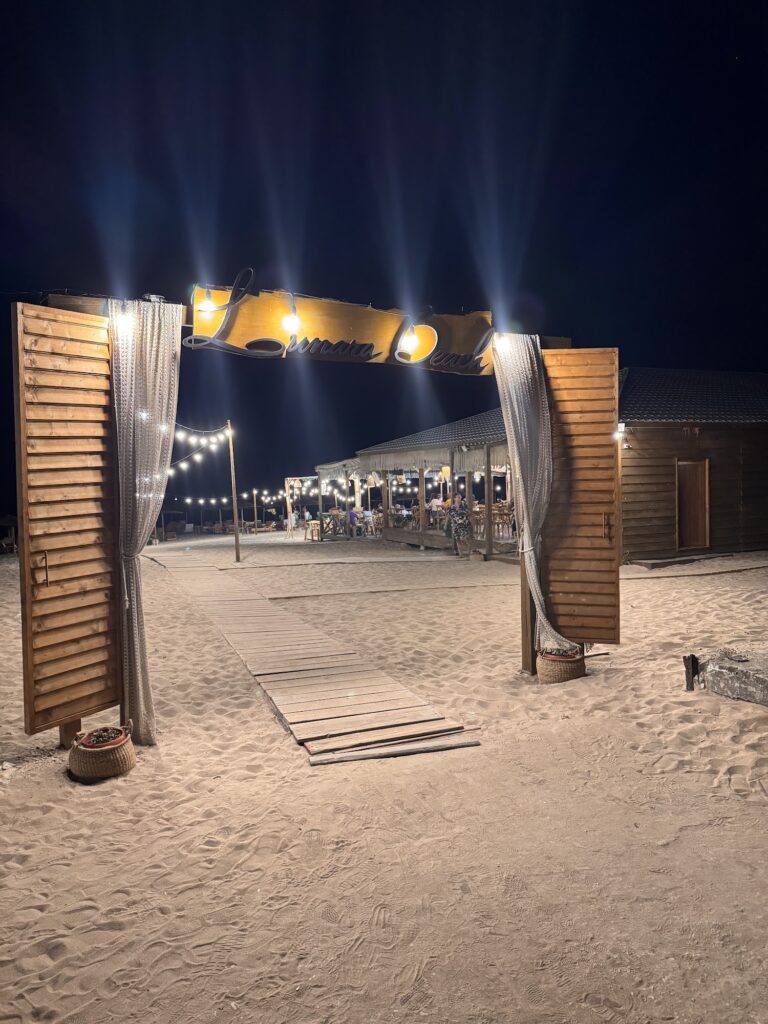
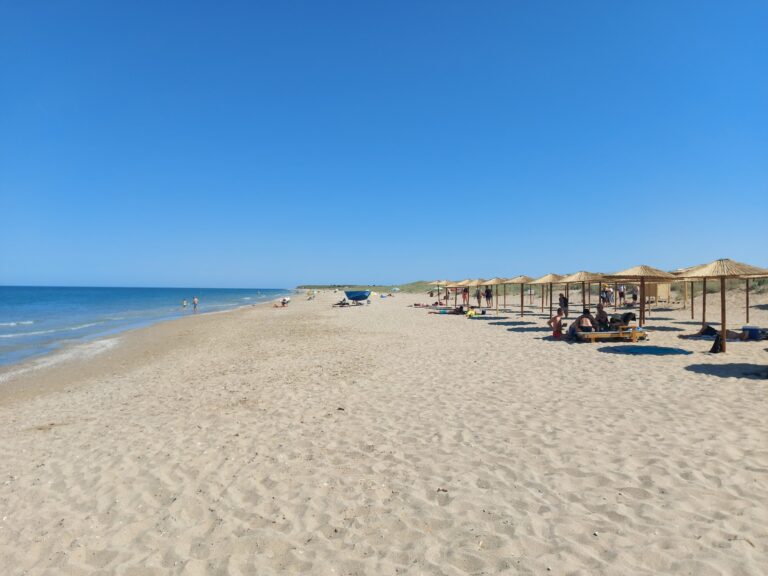
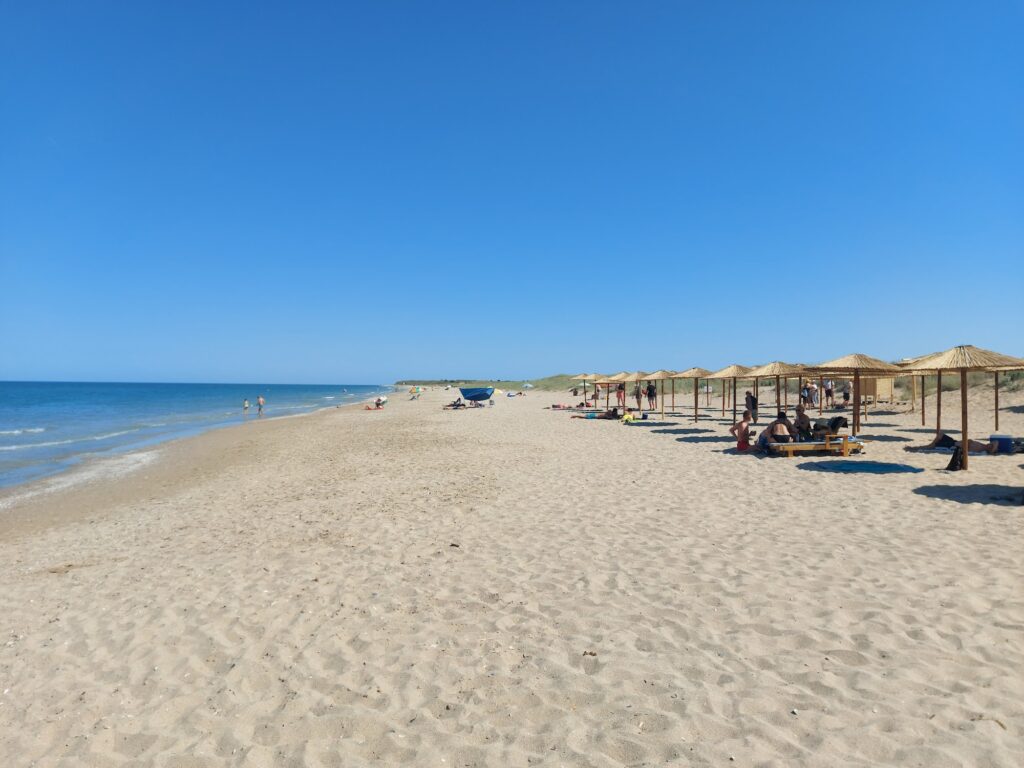
The beach itself is located some 5 km from the town via a road constructed under the EU Phare programme. On the main town beach there is a large car park and many old bungalows next to a large restaurant that serves today’s tourists in the summer months.
The 5-kilometre gap between the town and its beach tells you something useful about Shabla. It was never built as a resort in the way that Sunny Beach or Albena were designed from the ground up. The town is inland, and its beach is coastal, and the road between them was an infrastructure project rather than an obvious geographic fact. A shuttle runs in summer. In the rest of the year, you need a car.
Cape Shabla is the easternmost geographic point of Bulgaria. The oldest sea lighthouse on the Balkan Peninsula is situated here. The lighthouse — red and white, 32 metres tall, officially opened on 15 July 1856 by the Ottoman Empire — marks the point where the sun rises first over Bulgaria every morning. Today the lighthouse is a military zone and access to it is forbidden, though on special days in summer it opens to visitors. The monogram of Ottoman Sultan Abdulmecid is built into the sentry-box — a detail that makes it probably the only lighthouse in the world with royal Ottoman calligraphy inside it.
Getting There: 83km From Varna on the E87, 5km From Town to Beach, Shuttle Bus in Summer, Free Parking at the Beach
Shabla is located near Kavarna resort, 83 km northeast of the town of Varna and 24 km from the Romanian border. The E87 highway runs the full distance from Varna; the road is in good condition and continues north to the border. Regular buses connect Varna Central Bus Station with Shabla town. From the town, a shuttle runs to the beach in summer; out of season, a car or bicycle is the practical approach.
The beach has a large car park. The old bungalow complex and the restaurant near the entrance are the main facilities.
The Beach: White Sand, Open Sea, Dunes, WWII Submarines Offshore for Divers
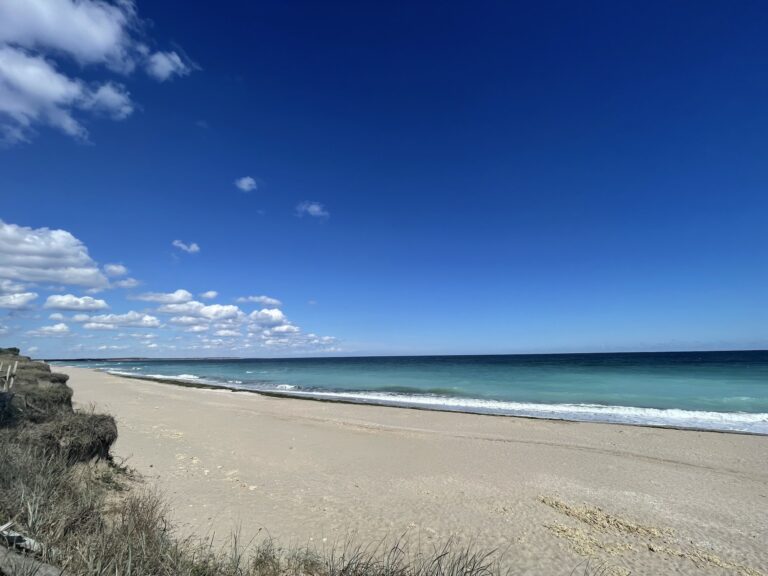
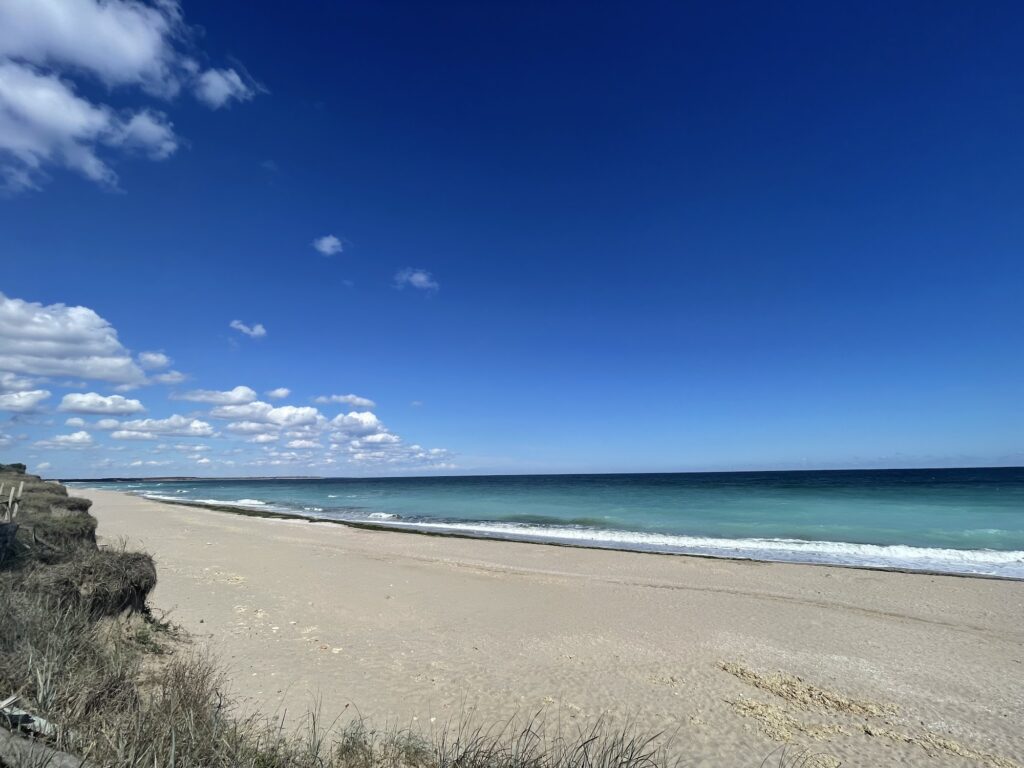
The beach is clean with white sand. The beaches, and generally the seaside in the municipality, are famous for the untouched nature and virgin beaches.
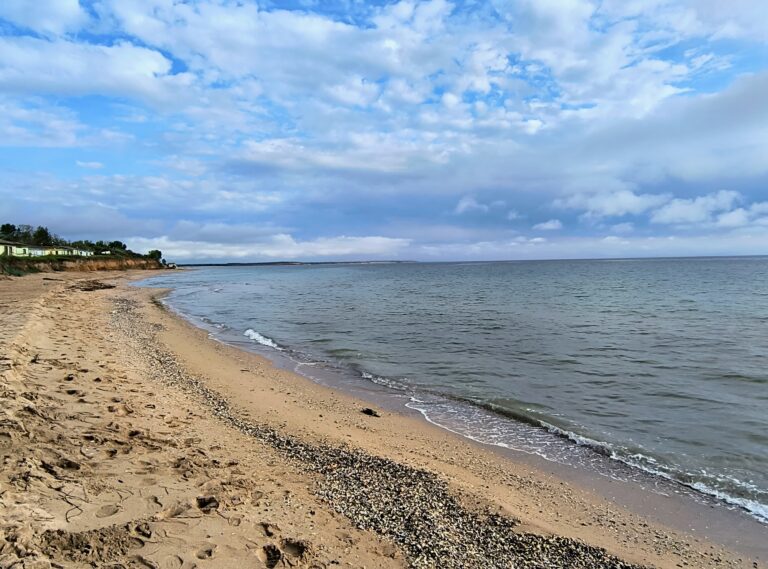
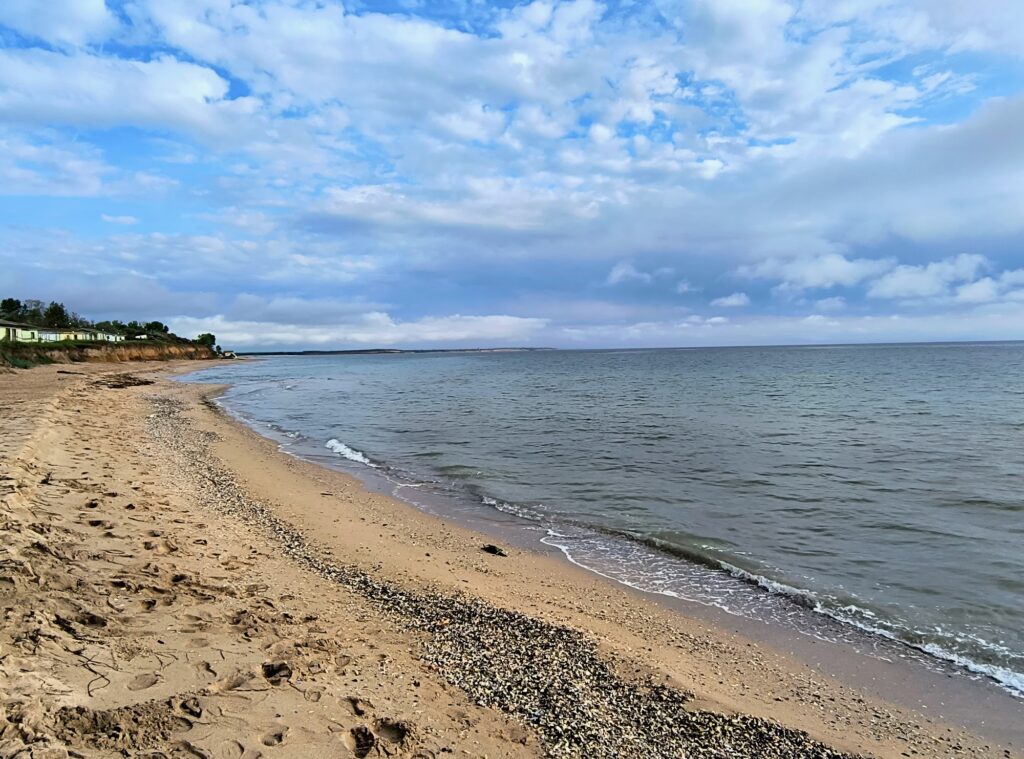
The open-sea position is Shabla’s defining quality and its honest caveat simultaneously. North of Cape Shabla the shores are sandy, to the south — rocky. The beach sits on the northern sandy section. The open exposure means rolling surf when the wind builds, and the seabed doesn’t have the extended shallow shelf of the sheltered bays further south. It’s a swimming beach for confident swimmers and a beachcombing and sand-dunes beach for everyone else.
In the sea around Shabla there are multiple sunken marine vessels, including submarines from the Second World War — the specific diving attraction that gives the offshore water around the lighthouse an unusual dimension beyond the beach itself.
Around the Shabla lighthouse was the only oil field in Bulgaria, and hot mineral water with high sulfur content is flowing from many drilling operations today.
Shablenska Tuzla: The Healing Mud Lagoon 6km From Town
Shabla Tuzla is a natural brackish lagoon — a shallow bay, separated from the sea by a narrow sand strip. Here, the highest dunes in the northern Black Sea coast can be found.
Shablenska Tuzla is a saline lake located in the northern part of the Bulgarian Black Sea coast, near the town of Shabla. The place is known for the healing properties of its mud and for the great diversity of the birds that can be seen here. It is located next to a sandy beach and to the campsite “Dobrudzha“, 6 km northeast of Shabla.
The mud at Shablenska Tuzla — hydrogen sulphide ooze on the lake bed — is the therapeutic provision. Visitors wade in from the narrow sand strip separating the lagoon from the sea, apply the mud, and rinse in the salt water. The same approach works here as at Pomorie and Balchik’s Tuzlata, because the same geological conditions produced the same result: saline lagoon, healing mud, adjacent sandy beach.
Shabla Lake and the Bird Life
Lake Shabla is among the most important wetlands in Bulgaria. The lake is a representative sample of natural coastal lakes of the firth type on the East Coast.
Shabla Tuzla Lake is home to diverse bird species. Birdwatchers can observe flamingos, herons, and other migratory birds in their natural habitat. The combination of Shabla Lake, Shablenska Tuzla, and the Durankulak Lake to the north creates one of the most important bird zones on the Via Pontica migration route — the same route covered in the Bolata Beach Bulgaria and Krapets Beach Bulgaria articles.
The Coastline North and South of Shabla
Following the coastline north, you can walk all the way to the Romanian border some 21 km to the north. The path from Campsite Dobrudzha at Shablenska Tuzla reaches Krapets Beach Bulgaria after 2.5 kilometres of beach and then a dirt path through the dunes — the wild coastal walk that connects the two northernmost areas of the Bulgarian Black Sea.
South of Shabla, the coast becomes rocky toward Tyulenovo and Kamen Bryag, where the cliff character takes over until Kavarna.
Shabla Beach in northern Bulgaria is the white sand shore at Bulgaria’s easternmost point — 5 kilometres from the town by shuttle or car, the oldest lighthouse on the Balkan Peninsula on the cape above, WWII submarines offshore for divers, Shablenska Tuzla healing mud lagoon 6 kilometres northeast with the highest dunes on the northern Black Sea coast, Shabla Lake for flamingos and herons on the Via Pontica, and the Romanian border 24 kilometres north.
Take the shuttle from town. The lighthouse is the thing you came for. The mud is the thing you didn’t expect to like.
Map
Sorry, no records were found. Please adjust your search criteria and try again.
Sorry, unable to load the Maps API.