
Central Beach Pomorie Bulgaria: Dark Healing Sand Shore
Profile
Central Beach Pomorie, Bulgaria: The Town Beach on the Iron-Rich Dark Sand Peninsula, 20km from Burgas, Between the Black Sea and the 20-Century-Old Salt Lake
Bulgaria | Pomorie | Burgas Province, Black Sea Coast
Pomorie is a unique seaside town on Bulgaria’s southern Black Sea coast, just 20 km from Burgas and near Nessebar and Sunny Beach. Renowned for its healing mud, salt lakes, and peaceful beach atmosphere, Pomorie is ideal for those seeking relaxation, wellness, and local charm.
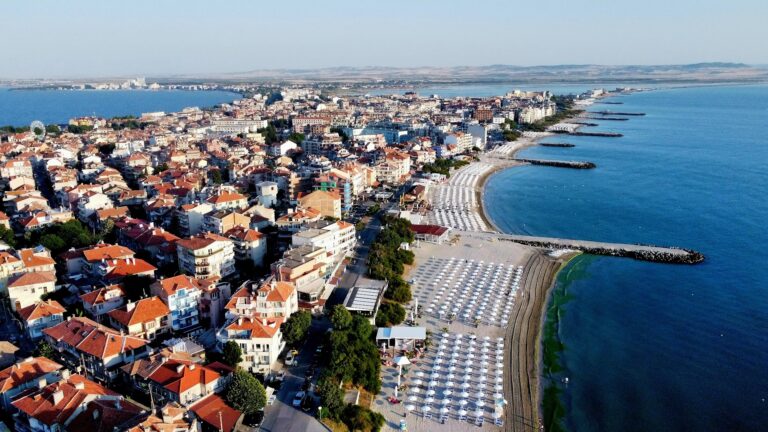
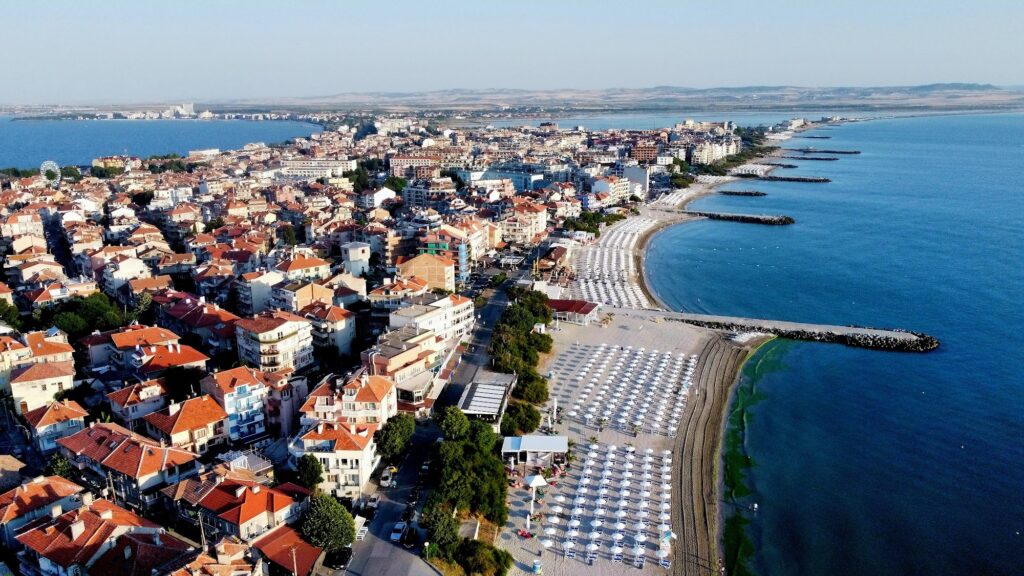
The beach is located on the eastern side of the Pomorie peninsula — the narrow rocky outcrop jutting into the Black Sea that the ancient Thracians and Greeks first settled, calling it Anhialo, a name used until 1934. The seashore in Pomorie is low and the coastal sand contains iron, which gives it favourable medicinal properties. The shallow and smooth coastal sea bottom provides greater conditions for medicinal sea baths.
The beach of Pomorie is approximately 5 km long, the coastal line is flat and shallow, the sea bottom has slight inclination.
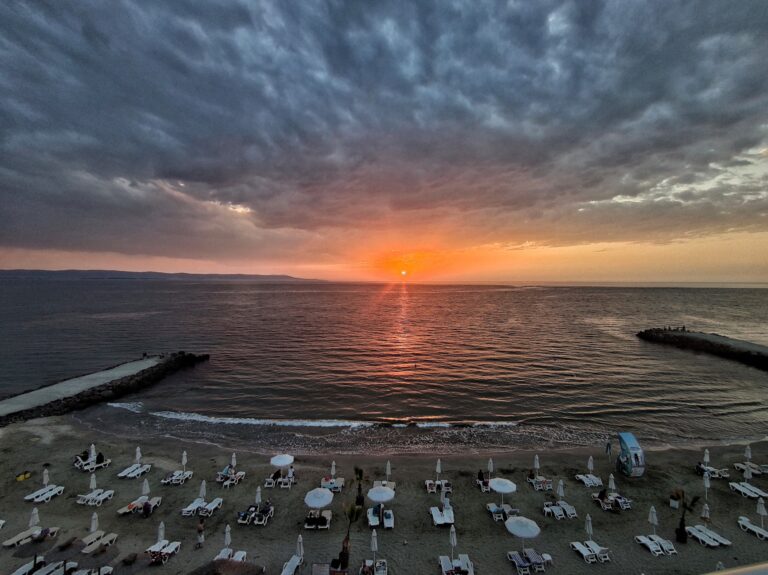
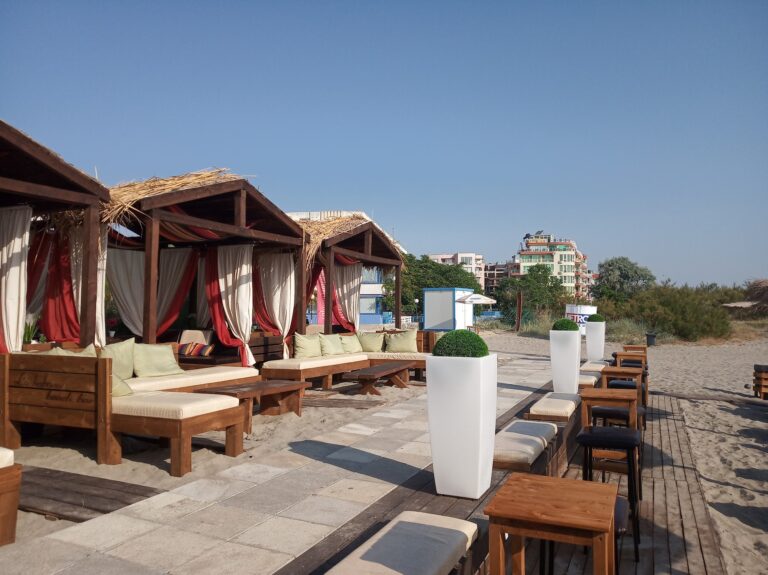
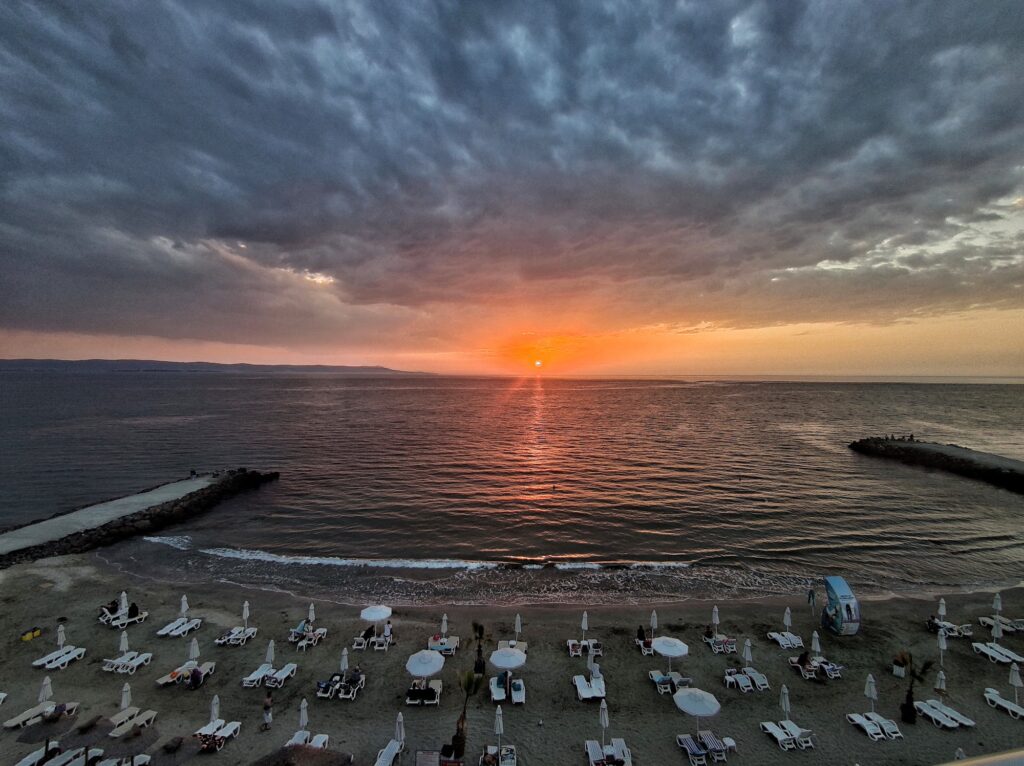
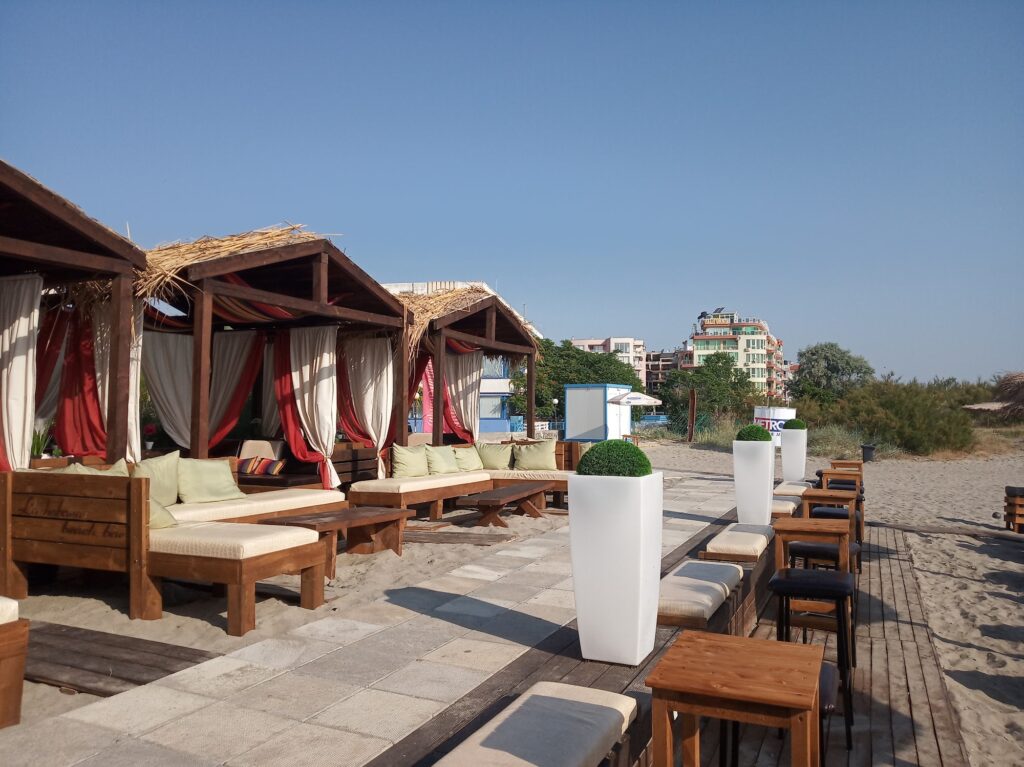
The central organised beach — the specific section adjacent to the old town promenade — is the most convenient and the most equipped section. The beach is considered the most civilised beach in Pomorie. It has a large free zone — you can come here with your own umbrella. The beach is convenient for vacationing with children: clean sand, comfortable descent into the sea, warm water and sandy bottom.
Getting There: 15 Minutes from Burgas Airport, Bus from Sunny Beach and Burgas, Car With Paid Parking Behind the Promenade
Pomorie is 20 kilometres north of Burgas, 15 minutes by car from Burgas Airport. The town sits between Sunny Beach (15 kilometres northeast) and Burgas city.
Frequent intercity buses run from Burgas, Sunny Beach, and Nessebar to Pomorie. The bus station is in the old town, a 5-minute walk from the central beach. For visitors coming from the major southern resorts, Pomorie is easily accessible as a day trip by bus.
By car, follow the E87 toward Pomorie and head into the old town. Paid parking is behind the promenade.
The Beach: Iron-Rich Dark Sand, 5km Total, Flat Sandy Entry, Organised Central Section, Wild Northern Spit
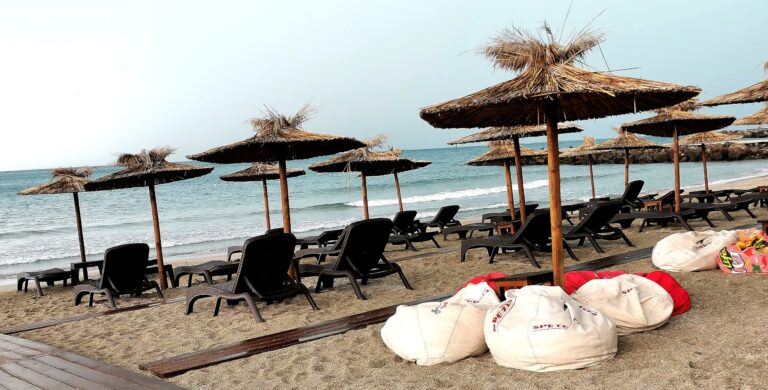
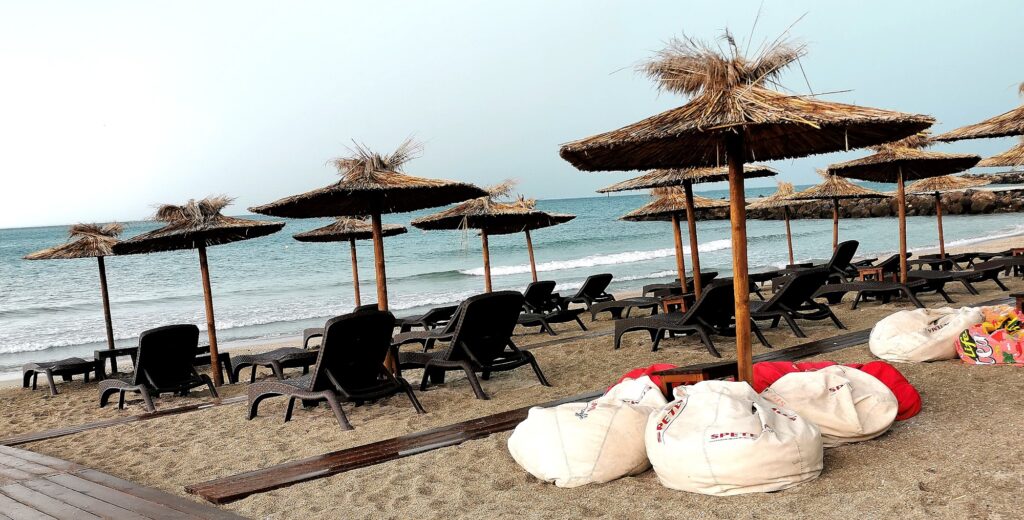
On some beaches the sand is dark, which indicates its therapeutic properties.
The sand colour — darker than the golden sands of Albena or Sunny Beach — reflects the iron and manganese content from the Pomorie Lake mud that the spit absorbs over time. The iron content is the specific health claim: the dark sand is believed to help with joint and skin conditions when used as a sun-heated sand application (burying the limbs in warm sand, a traditional Bulgarian balneotherapy practice).
The beach ranks first in cleanliness among the beaches of Pomorie. A big plus is the closeness of Pomorie Lake, famous for its healing mud.
The 5-kilometre total beach strip extends north from the old town toward the lake spit. For the first one kilometre, one can meet summer-residents, mud healing lovers and kite surfers, but for the rest of the sand strip, the traces of people disappear. The unguarded northern section: in case of intense excitement — avoid swimming. The currents here are hazardous, and in combination with the lack of lifeguards, it can be fatal.
Pomorie Lake: The Healing Mud, Ramsar Listed, 20 Centuries of Salt Production, Via Pontica Birds
Pomorie Lake is a natural ultra-saline lagoon, over twice as salty as the Black Sea, located between Pomorie and the northern spit. The healing mud rich in microelements and microorganisms is deposited at the bottom of Pomorie Lake.
The northern part of the lake is used for the production of salt — an activity going on for more than 20 centuries in the area.
Pomorie Lake is a coastal lagoon separated from the sea by a natural sand spit. Pomorie Lake, together with its adjacent territories, including the sand strip, was declared a protected area under Bulgarian law, also a Ramsar site under the Ramsar Convention, and was listed in the Natura 2000 European Ecological Network.
The lake is on the Via Pontica bird migration route — the same route that passes over Bolata and Krapets to the north. The mud lies on the bottom of the lake and you can easily take it and spread on the body. You should stay like this for 15 to 20 minutes and then wash with salty water from the lake.
The Salt Museum: One of the 100 Tourist Sites of Bulgaria, 20 Acres of Salt Pans
The “Museum of Salt” in Pomorie is one of a kind in Bulgaria and is present in the Bulgarian list of “100 Tourist Sites.” Here you can see the technology used by the medieval Pomorians to extract sea salt. The Museum has 20 acres of salt pans and an exhibition hall with models of the facilities used in the process.
The Salt Museum is the specific cultural attraction that makes Pomorie a day programme rather than just a beach stop — the only museum of its kind in Bulgaria, the working salt pans, the restored narrow-gauge railway line, and the documents showing 20 centuries of continuous salt production on this site.
The Thracian Tomb and the Wine
Pomorie contains a Thracian domed tomb — a 4th-century BC burial mound with a preserved circular burial chamber, one of the best-preserved Thracian tombs in Bulgaria. The ancient name Anhialo connects the settlement to the Greek colony period.
The wine is a specific local production: Pomorie is also attractive to wine connoisseurs — there are several wineries here that organise tasting dinners, and a wine festival takes place here summertime. The Pomorie brandy and white wines are specifically mentioned across multiple sources as the local food-and-drink programme.
Central Beach Pomorie is the town beach on the iron-rich dark sand peninsula — 5-kilometre strip from the old town north to the Ramsar-listed Pomorie Lake spit, 20 kilometres from Burgas, 15 minutes from Burgas Airport, organised central section with free zone, unguarded northern spit with hazardous currents (stay out), healing mud in the lake bottom for self-application at the spit edge, the Salt Museum (one of Bulgaria’s 100 Tourist Sites), the Thracian tomb, and the Pomorie wine festival in summer.
Arrive from Burgas by bus. Visit the Salt Museum before the beach.
Apply the dark mud at the lake edge. Rinse in the salt water.
Map
Sorry, no records were found. Please adjust your search criteria and try again.
Sorry, unable to load the Maps API.