
Vrachati Beach Corinthia: Blue Flag Since 1995, Apostle Paul
Profile
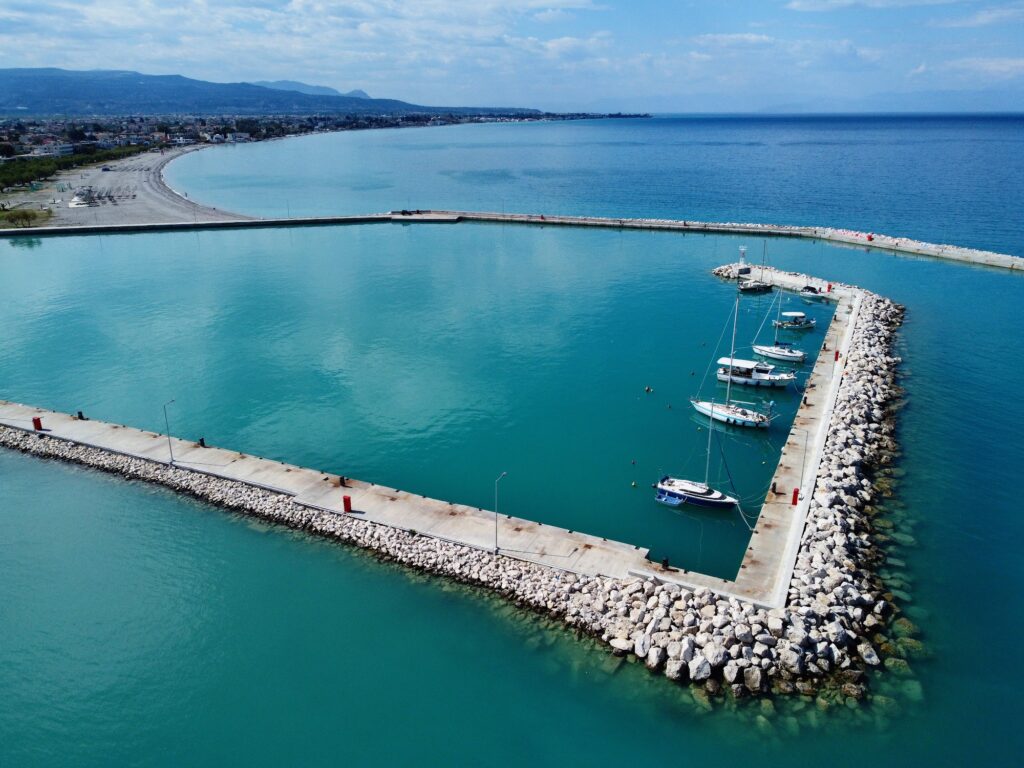
Vrachati Beach, Corinthia: The Blue Flag Shore Named After an Ottoman Land-Owner, 12km From Ancient Corinth Where Paul Wrote His Letters, Blue Flag Consecutively Since 1995, Divided by a Small Marina Into Two Sections
Greece | Vrachati | Vocha Municipal Unit, Corinthia, Peloponnese
The name Vrachati comes from the years of Ottoman rule. The area belonged to an Ottoman aga called Vrahat — a landlord of the occupying administration whose name, converted to the Greek possessive form, became the permanent designation of the place. The Ottoman aga is long gone; the name remained through the Greek War of Independence, through the 19th and 20th centuries, and into the beach resort of 3,603 residents that the town has become. The naming is a specific piece of the Ottoman administrative memory that persists in dozens of Greek place names without the connection being immediately obvious to visitors.
Vrachati is 12 kilometres west of Corinth and 5 kilometres from Ancient Corinth — the archaeological site where the Temple of Apollo (built 550 BC, seven of the original 38 Doric columns still standing) and the ancient Agora where the Apostle Paul preached are the primary visits. Paul lived and worked in Corinth for 18 months around 50–52 CE, establishing the congregation to which he subsequently addressed two letters — the First and Second Epistle to the Corinthians — that are among the most widely read texts in human history. He stood before the proconsul Gallio at the Bema (judgement seat) that is still visible at the site. He departed from the Cenchraea harbour on the Saronic Gulf side of the Isthmus.
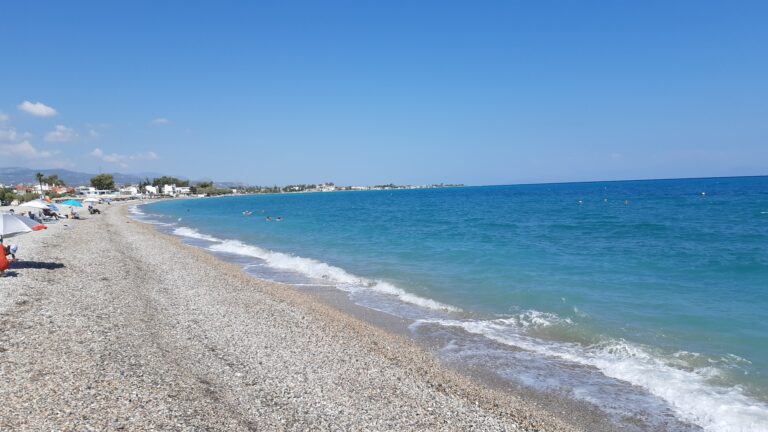
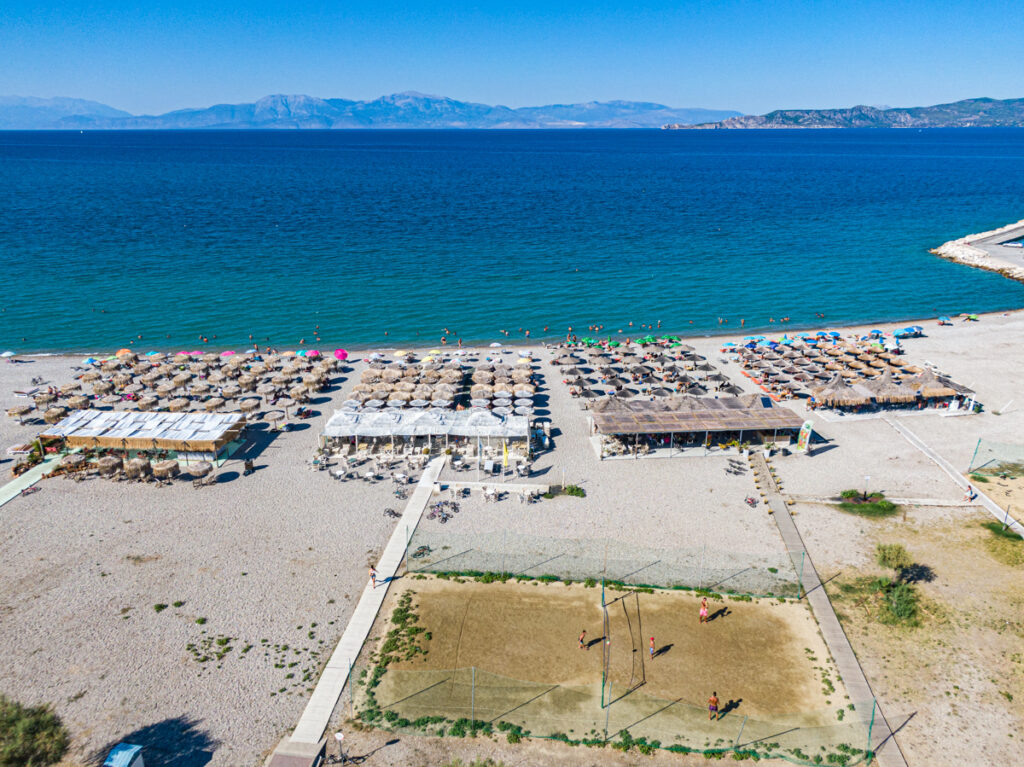
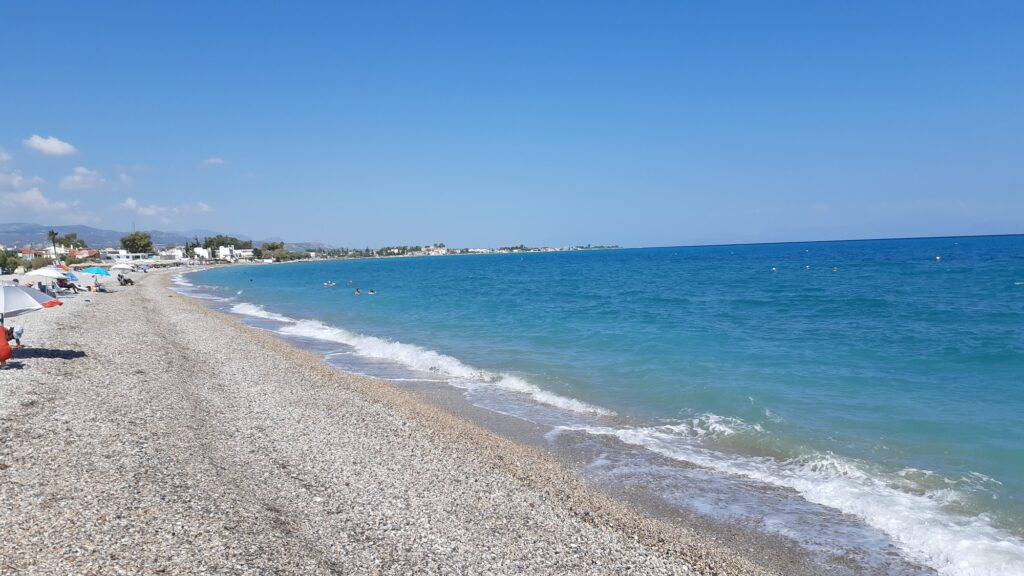
The beach has held the Blue Flag continuously since 1995 — one of the longest unbroken Blue Flag records in the Peloponnese. The water is blue-green and clean, relatively deep for a northern Peloponnese gulf beach, consistently calm in the protected Corinthian Gulf position.
Getting There: 93km From Athens (1h15 by A8 Motorway), Train From Athens to Kiato (5km West) or Zevgolatio, Old National Road Through the Town, Free Parking
From Athens, take the A8 (Olympia Odos) motorway toward Patras. After the Corinth interchange, continue west. Vrachati is 12 kilometres from Corinth on the old national road — the new motorway bypasses the coastal settlements, so exit at the Kiato junction and take the old coastal road east. Total distance: 93 kilometres, approximately 1 hour 15 minutes.
By train, the Hellenic Train (formerly Proastiakos) runs from Athens to Kiato — a journey of approximately 1 hour 20 minutes. Kiato is 5 kilometres west of Vrachati; a taxi covers the connection in 5 minutes. The train station at Zevgolatio is closer — the source article notes this.
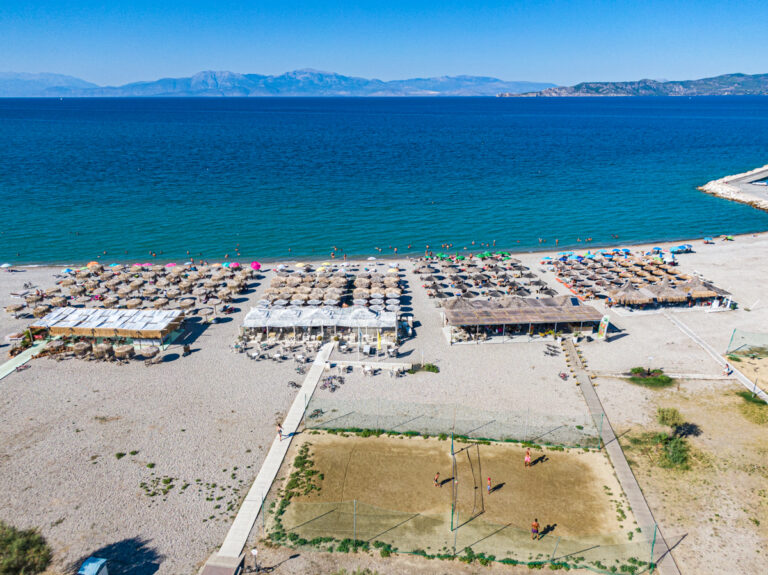
The Beach: Pebble, Relatively Deep, Clear Blue-Green, Divided by the Marina Into Two Sections, Blue Flag Since 1995, Water Sports
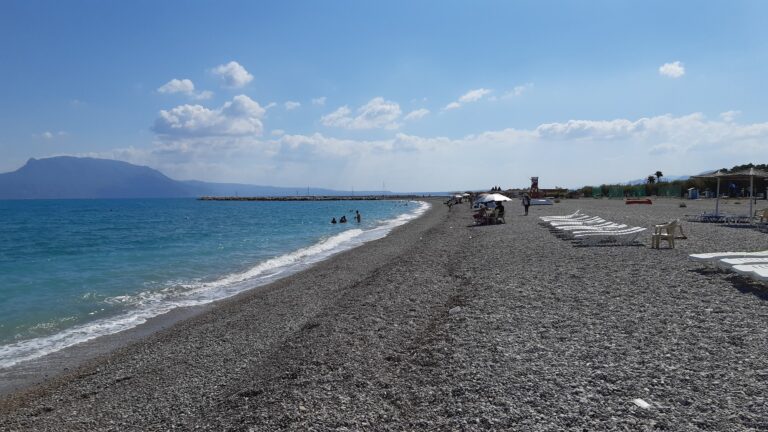
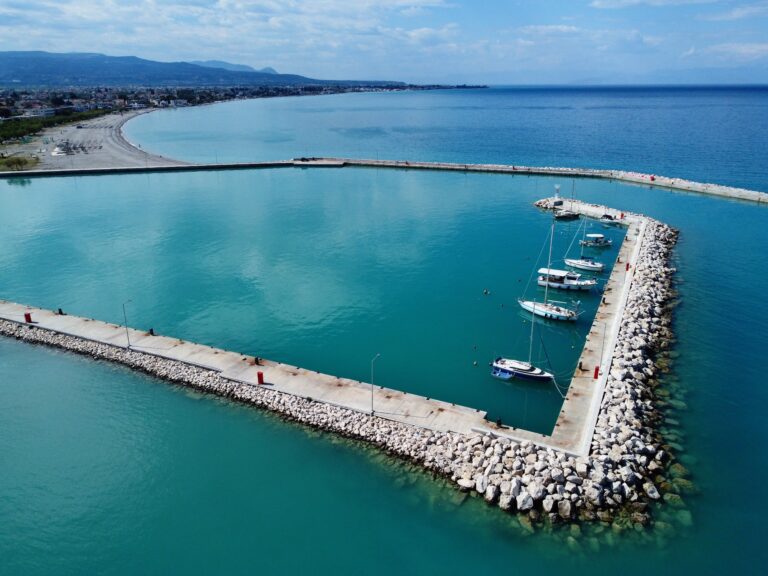
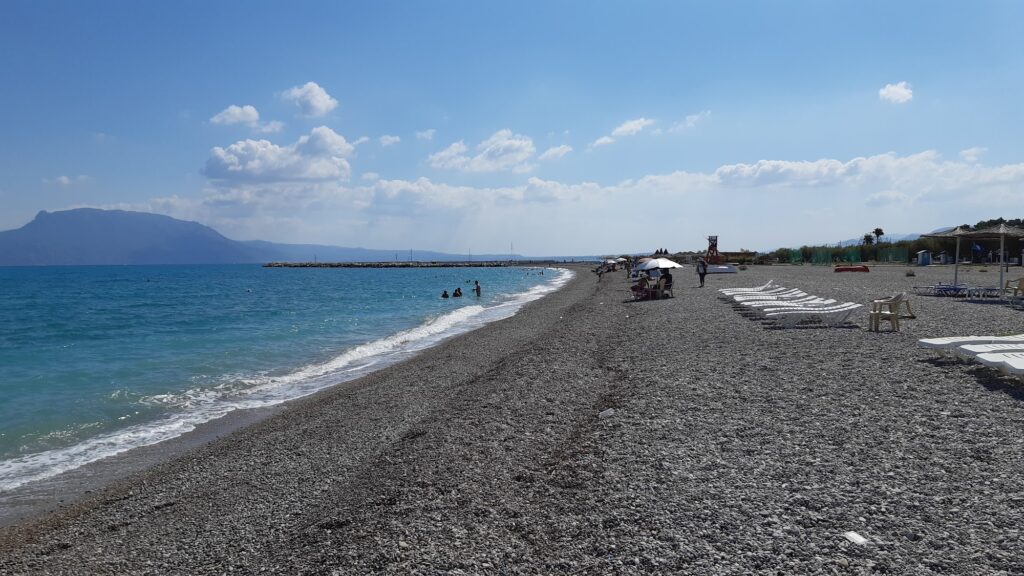
The beach surface is pebble throughout. The water is described consistently as relatively deep for a Gulf of Corinth beach on this stretch — the seabed drops away faster than at the shallower beaches nearby, which makes it the preferred spot for swimmers rather than waders. The two sections divided by the small marina/port are the main organised beach (east of the port) and a separate section (west of the port).
The Blue Flag since 1995 is the specific quality marker — 30 consecutive years is a significant environmental management achievement. The beach is organised with sunbeds and umbrellas, showers, changing rooms, and lifeguards in season.
Water sports are available: kite surfing, surfing, snorkelling, and diving are specifically mentioned by the PassioneGrecia guide. The deep-water approach and clear visibility make snorkelling productive.
Ancient Corinth: 5km, Temple of Apollo, the Bema, Acrocorinth
Ancient Corinth is 5 kilometres south of the beach. The site has the Temple of Apollo — built around 550 BC, making it one of the oldest standing Doric temples in Greece, with seven of the original 38 monolithic columns still intact. The ancient Agora has the Bema — the raised stone platform where the proconsul Gallio heard the case against Paul, the specific judicial scene described in Acts 18:12–17.
Acrocorinth — the massive natural rock rising 575 metres above the ancient city, with fortifications from Classical, Hellenistic, Roman, Byzantine, Frankish, Venetian, and Ottoman periods layered on top of each other — is directly above the archaeological site. The view from Acrocorinth covers both gulfs of Corinth — the Corinthian to the north and the Saronic to the east — simultaneously, making it one of the most strategically significant natural positions in Greece.
The Corinth Canal: 13km East, the Cut That Took 11 Years to Complete
The Corinth Canal — 6.3 kilometres long, 8 metres wide, 79 metres deep, the cut through the Isthmus of Corinth that separates the Peloponnese from mainland Greece — was completed in 1893 after 11 years of construction. The Roman Emperor Nero began the original digging in 67 CE, using 6,000 Jewish prisoners from the Jewish War, but abandoned the project. The modern canal was completed under the Greek state. Ships crossing from the Corinthian to the Saronic gulf save 700 kilometres of sailing around the Peloponnese.
From Vrachati beach, the Corinth Canal is 13 kilometres east — a 15-minute drive. The viewing bridge above the canal is one of the most photographed points in the Peloponnese.
The Nemea Wine Region: Agiorgitiko, PDO Red Wine, 30km South
Nemea — 30 kilometres south of Vrachati — is the PDO wine region that produces Agiorgitiko, the indigenous red grape that makes the richest and most structured wines of the Peloponnese. The Nemea Wine Roads project connects the region’s wineries with mapped circuits. The combination of a Vrachati beach morning and a Nemea wine tasting afternoon is the specific Corinthia programme.
The Feast of Agia Paraskevi on 26 July is the town’s specific annual celebration — the patron saint of the village, celebrated with the specific combination of religious observance and local festivity that the Greek calendar produces.
For a contrasting beach experience in the same gulf, Mylokopi Beach Loutraki Greece — the twin earthquake bay 45 kilometres west — is the most dramatic natural beach in Corinthia, requiring a 4WD for access.
Vrachati Beach in Corinthia is the Blue Flag pebble shore 12km west of Corinth named after an Ottoman aga — Blue Flag continuously since 1995 (30 years), relatively deep clear water, divided into two sections by the marina, water sports (kite surfing, diving, snorkelling), Ancient Corinth with the Temple of Apollo and the Apostle Paul’s Bema 5km south, Acrocorinth fortress above, the Corinth Canal 13km east, Nemea PDO wine 30km south, Feast of Agia Paraskevi 26 July, 93km from Athens on the A8, train to Kiato (5km west) or Zevgolatio.
Drive from Athens or take the train to Kiato. Swim at Vrachati. Drive to Ancient Corinth in the afternoon.
Map
Sorry, no records were found. Please adjust your search criteria and try again.
Sorry, unable to load the Maps API.