Borsh Beach Albanian Riviera: Albania's Longest Shore
Profile
Borsh Beach, Albanian Riviera: 7km of White Pebble Shore, a Waterfall Café, and a €15 Fish Lunch for Three
Albania | Albanian Riviera | Himarë Municipality
In 2026, a fish lunch for three people in Borsh costs €15. In Dhërmi, which was once comparable, the prices are now approaching Mykonos. Ksamil lost its silence long before that. The 7-kilometre beach at Borsh is the specific place on the Albanian Riviera where the combination of things that are disappearing elsewhere is still intact: the sunbeds not lined up in rigid rows but scattered freely, the free space available without obstruction, the village market opening at 8am with the owner inviting you in, and the table where no one tries to move you in 30 minutes.
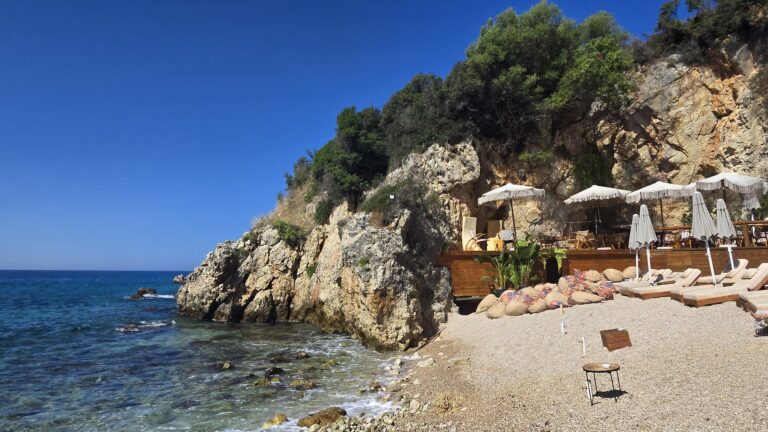
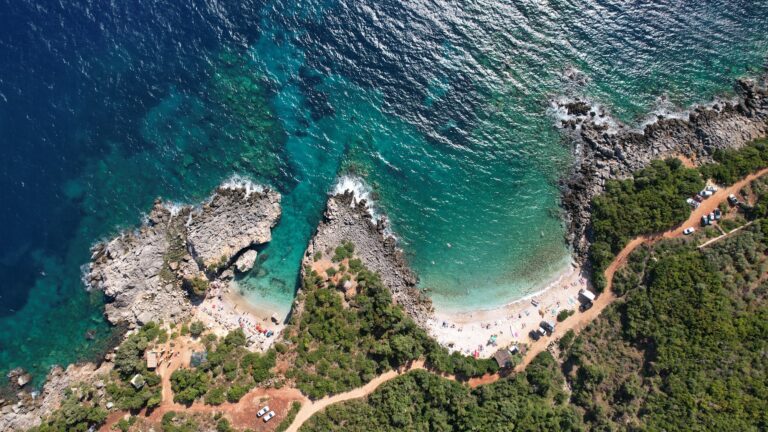
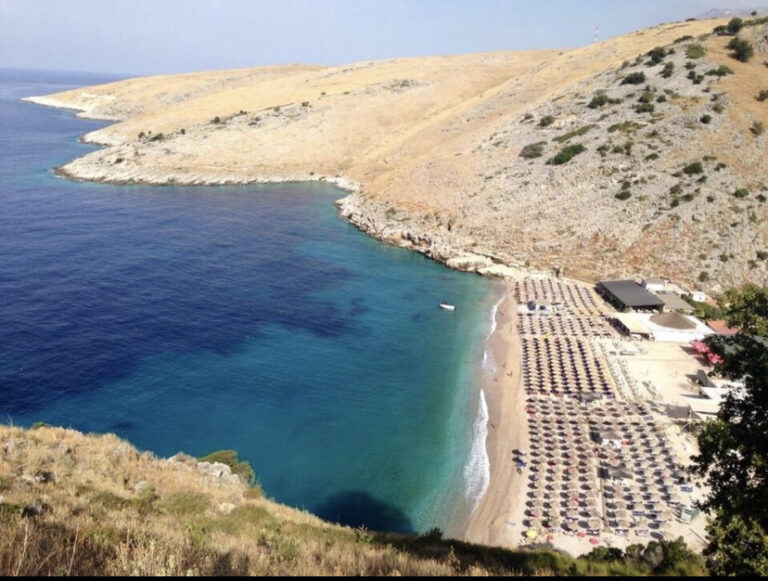
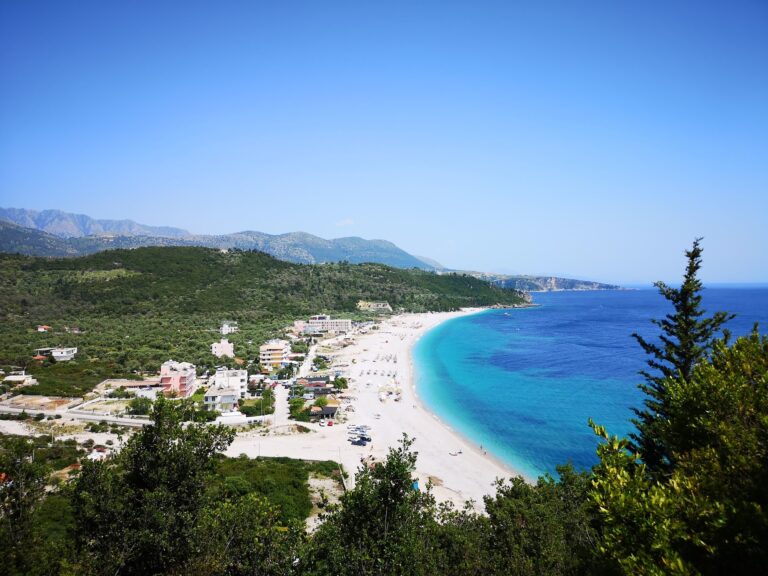
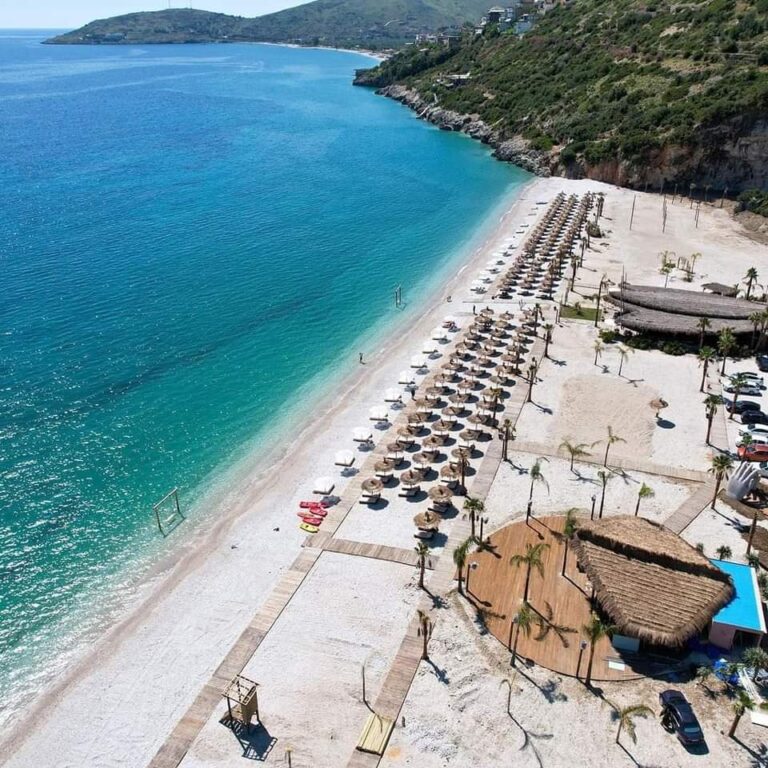
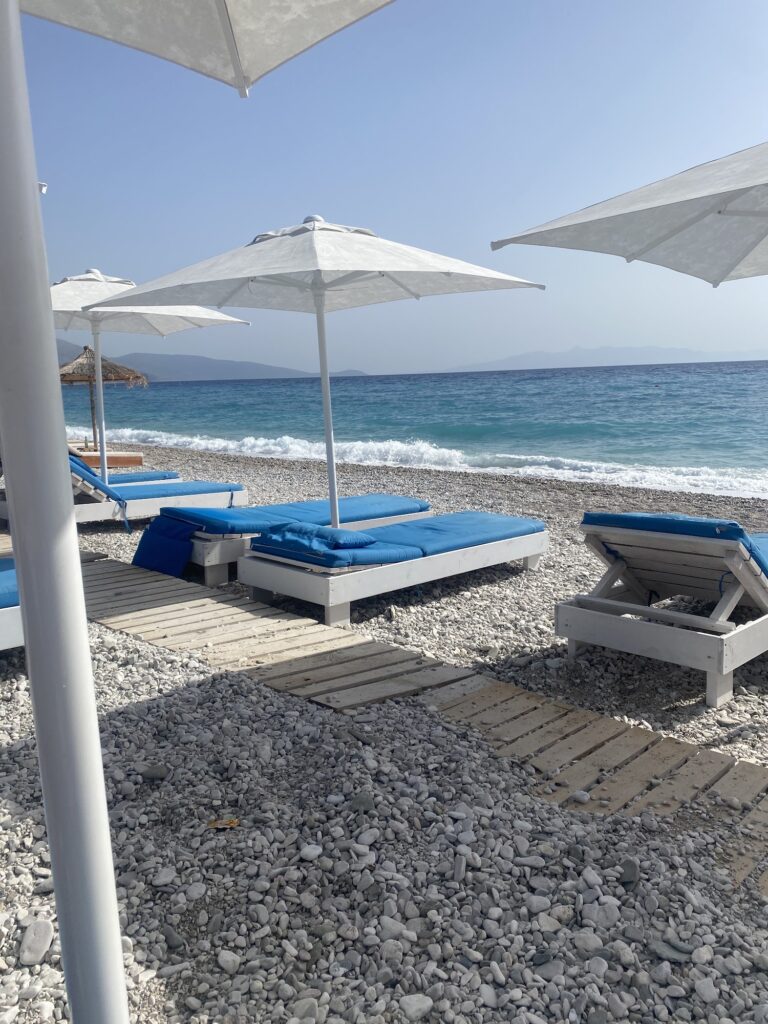
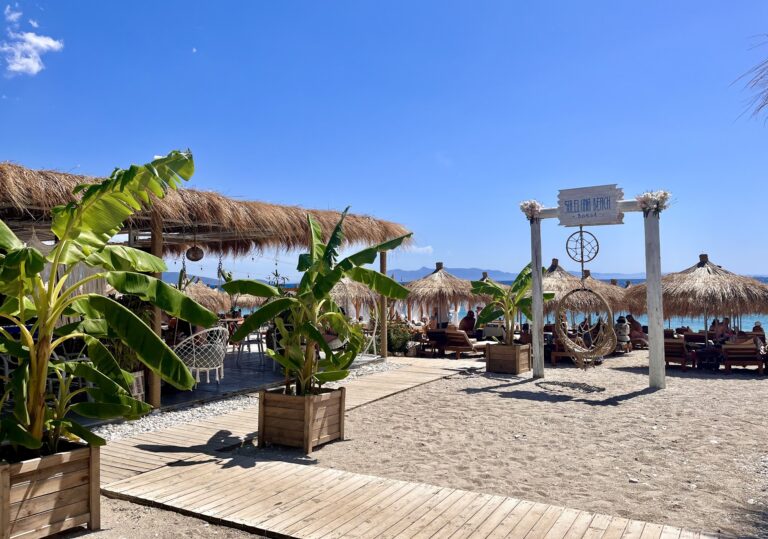
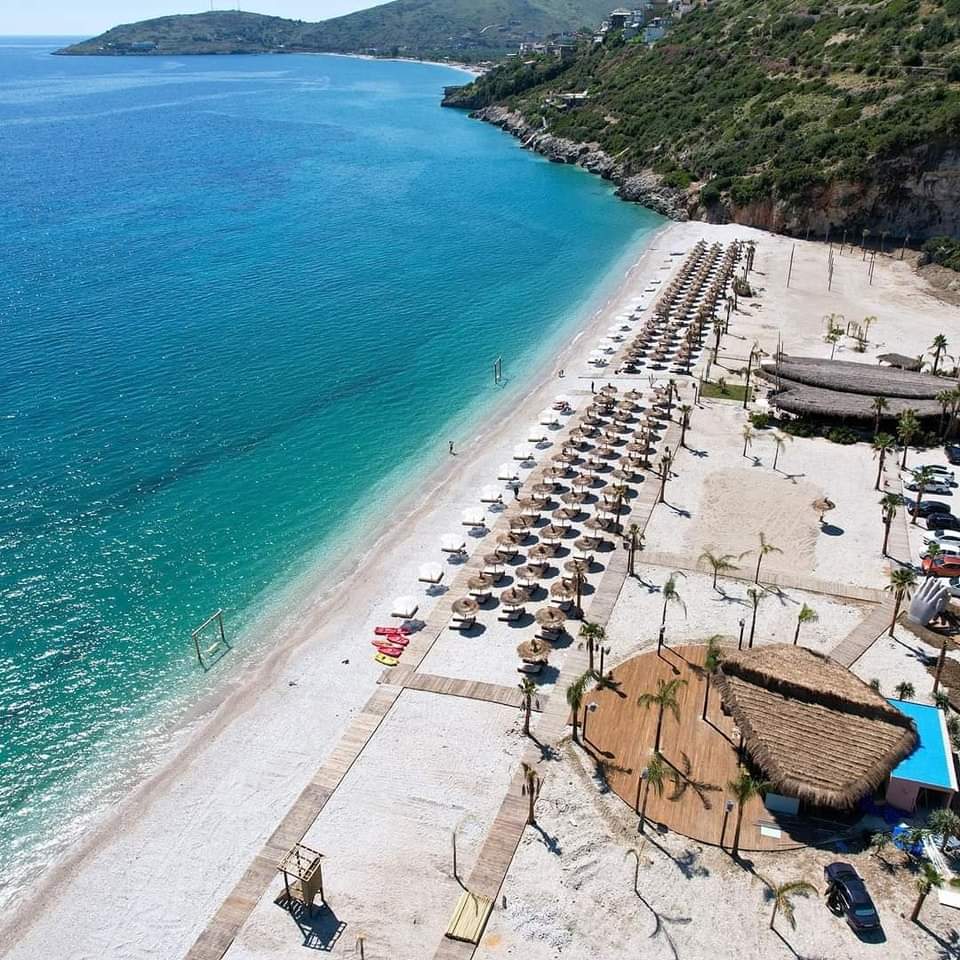
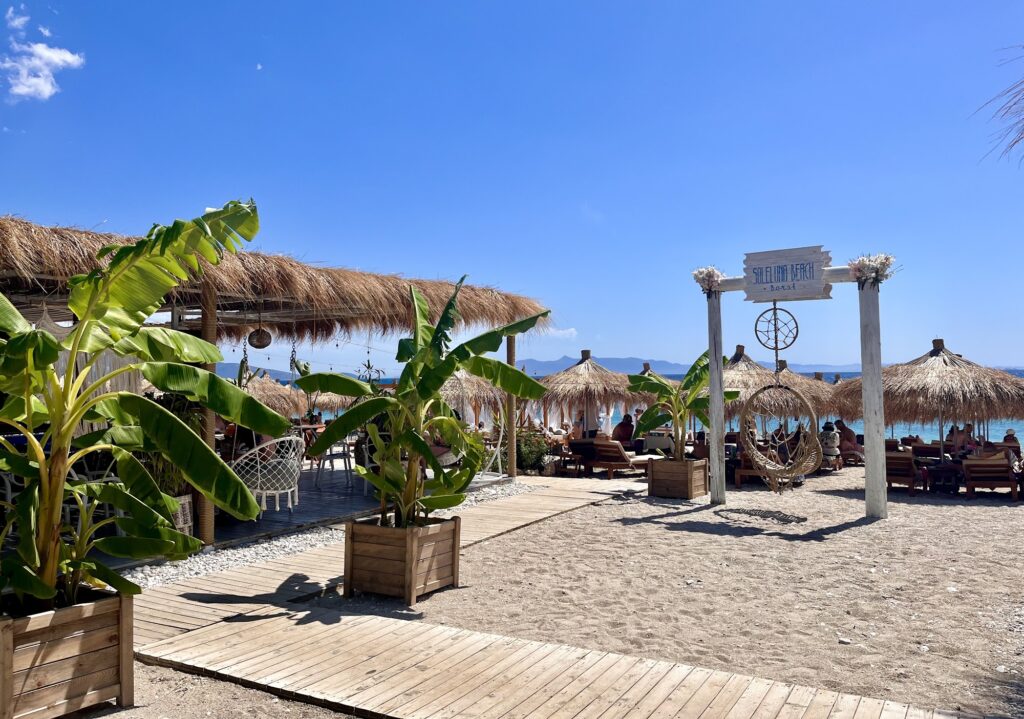
Borsh Beach (Plazhi i Borshit) is Albania’s longest uninterrupted pebbly beach, stretching approximately 7 kilometres along the Albanian Riviera, backed by olive groves and high mountain peaks. Despite its beauty, it is one of the least visited beaches in the country. The sea is turquoise blue and clean and invites you to swim. Along the promenade there are several hotels, restaurants and beach bars, but because of the amount of space it never feels overcrowded.
The specific mechanism that keeps the water clean is documented: the ground beneath Borsh is overflowing with underground spring water — every household has fresh drinkable water connecting to it — and this water runs off into the sea, maintaining both the freshness and the clarity that the Ionian position alone cannot account for. The pebble seabed sustains the visibility further, preventing the sand suspension that reduces clarity at sandy beaches.
Borsh is located on the Albanian Riviera, one hour north of Sarandë or 70 kilometres south of Vlorë — the midpoint of the riviera’s length, accessed off the SH8 coastal highway.
Getting There: Drive South from Himarë or North from Sarandë, Village 2km from Beach, Walk 20-30 Minutes
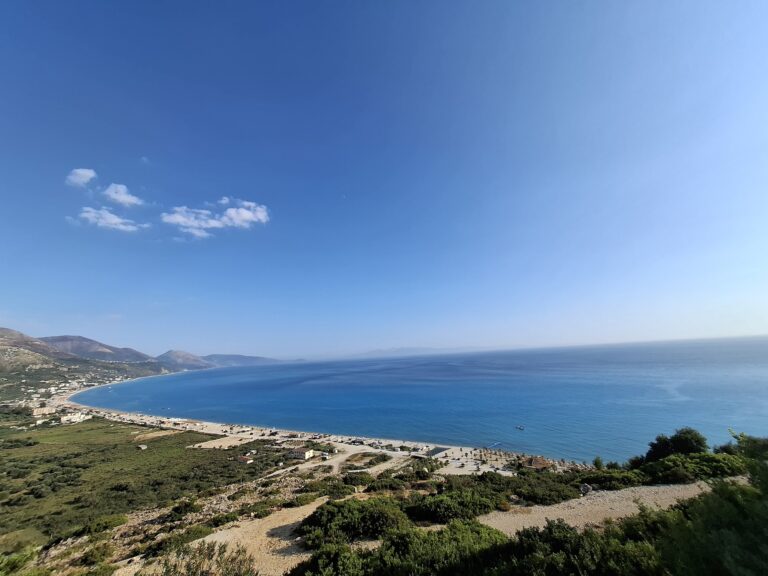
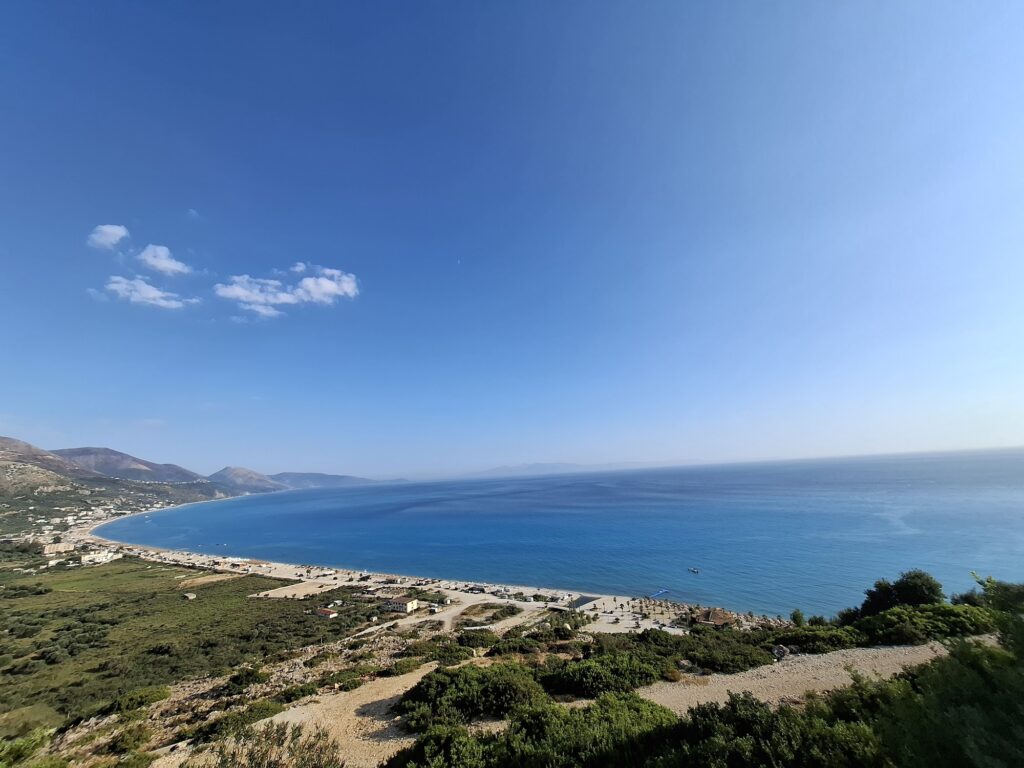
From Himarë, the drive south takes approximately 20 to 25 minutes along the SH8. From Sarandë, the drive north takes approximately one hour. The SH8 coastal road descends into the Borsh valley visible from the heights above, with the 7-kilometre beach spread across the flat coastal plain below the mountain walls.
The village of Borsh is approximately 2 kilometres from the beach — a 20 to 30-minute flat walk through the olive groves, or a short drive on the road connecting the village to the shore. The walk through the olive groves is the specific introductory experience that distinguishes the Borsh approach from every beach accessed by a promenade or a clifftop road — arriving through centuries-old olive cultivation rather than through a tourist strip.
By bus, the furgon minibuses running between Sarandë and Himarë/Vlorë stop in Borsh village — from the village centre, the beach is the 2-kilometre walk or a taxi. The bus journey from Sarandë takes approximately 45 minutes to one hour.
Parking is available along the beach-front promenade road — free, plentiful by the standards of the riviera’s more visited beaches, and not a source of the peak-season stress that Gjipe and Livadhi parking produces.
The Castle: 4th Century BC Chaonian Fortification, 500 Metres Above Sea Level, Ottoman Mosque Inside
Borsh Castle — also known as Sopot Castle — is a fortified settlement originating in antiquity as part of the Chaonian defense system in ancient Epirus, with initial constructions dating to the 4th century BC and subsequent Hellenistic reinforcements expanding the site to about 3 hectares. The castle was subsequently occupied and modified by the Byzantine, Norman, Venetian, and finally Ottoman empires. The most prominent surviving feature is the mosque built by the Ottoman conquerors within the castle walls.
The castle is located approximately 500 metres above sea level — the specific altitude that provides the panoramic view of the coastline and the Ionian Sea that makes the 30-minute uphill walk or the short drive up the access road the most rewarding elevated viewpoint of the beach. The view from the castle walls looks directly down the full 7-kilometre beach length, the olive groves behind it, and the mountain backdrop that frames the scene — the same view that prompted the observation that this is an unspoilt magic carpet of pure-white pebbles unfurling for 7km, rinsed by the preternaturally blue Ionian Sea.
The Waterfall Café: A Restaurant Built on Top of a Flowing Waterfall
Borsh has a waterfall. A stream of water comes from the hills behind the town not far from the castle and flows down into the Ionian Sea. A restaurant has been built on top of the waterfall, making it a special place where visitors can sit on the terrace above the water and enjoy the natural sounds of the flowing water.
The waterfall café is the specific Borsh attraction that appears in every visitor account and that distinguishes the village from the other Albanian Riviera beach settlements — the specific combination of a working natural waterfall, a functioning restaurant terrace above it, and the sound of running fresh water audible from every table. It is the place that the accounts recommend combining with the beach day and the castle visit for a full Borsh programme.
The Spring Water: Every Household Has It, and It Flows to the Sea
The underground spring water that runs beneath Borsh village and connects to every household before flowing to the sea is the specific geological feature that maintains the beach water quality as a living system rather than as a consequence of simply being a remote pebble beach. The fresh spring water mixes with the Ionian salt water at the shoreline, and the constant freshwater input prevents the stagnation that enclosed bays can develop in high summer.
The result is fishing that the restaurants capitalise on directly: the sea is rich with fish, and many visitors sit on the beach with their own fishing equipment. The local restaurants serve almost exclusively locally caught fish — the supply chain between the sea, the boats, and the table being the one-day circuit that the small scale of the village and the richness of the inshore waters supports.
The €15 Fish Lunch: The Price That Defines the Destination
A fish lunch for three people costs €15 in Borsh in 2026. The comparison with Dhërmi (approaching Mykonos pricing) and Ksamil (long since discovered and priced accordingly) is the specific value context that contemporary accounts use to explain why Borsh matters for the budget-conscious European traveller seeking the Mediterranean quality at Balkan prices.
The restaurants along the Borsh promenade serve fresh seafood from the local catch — grilled sea bream, octopus, calamari, and the freshwater fish from the springs — at the prices that the village economy rather than the tourist economy sets. The window of this pricing is acknowledged in the same accounts that cite it: the development trajectory is clear, the influx of visitors is accelerating, and the gap between Borsh prices and Dhërmi prices will narrow.
The Shpella e Pëllumbasit Cave: Stalactites and Underground Waterfalls
Near Borsh, the Shpella e Pëllumbasit (Pigeon Cave) is a natural cave known for its underground waterfalls, stalagmites, and stalactites. Guided tours are available. The cave adds the specific underground landscape to a destination whose above-ground qualities — the beach, the castle, the waterfall café, the olive groves — already cover a wider range of natural and cultural experiences than most single-village beach destinations anywhere on the Adriatic or Ionian coast.
Porto Palermo and Qeparo: The Day Trips Within Range
Porto Palermo Castle — the 19th-century fortress built by Ali Pasha of Ioannina, also known as Ali Pasha Castle — is approximately 45 minutes south of Borsh, in the bay between Himarë and Sarandë. The fortress is on an island connected to the shore by a causeway and is the most dramatic single visual of the southern Albanian Riviera — the three-tower castle reflected in the still bay water.
Qeparo Beach is the smaller and quieter alternative just north of Borsh — the beach that Culture Trip describes as rather like having a slice of the Amalfi Coast but for half the price.
Borsh Beach on the Albanian Riviera is Albania’s longest beach at 7 kilometres — the white pebble shore, the underground springs that keep the water clean, the Chaonian castle at 500 metres above the beach, the waterfall café with running water audible from every table, the fish lunch for three at €15 in 2026, and the 2-kilometre walk through olive groves from the village to the shore.
Drive south from Himarë for 20 minutes or north from Sarandë for an hour. Walk to the beach through the olive grove. Have lunch.
The window of these prices will not stay open indefinitely.
Map
Sorry, no records were found. Please adjust your search criteria and try again.
Sorry, unable to load the Maps API.
Near by places: