Stončica Beach Vis Island: Sandy Bay Below the Lighthouse
Profile
Stončica Beach, Vis Island: The Sandy Bay at the Base of the 1865 Lighthouse
Croatia | Vis Island | Central Dalmatia
The lighthouse on Cape Stončica has been showing the way to sailors entering the northeastern approach to Vis Island since 1865. At 38 metres, it is the dominant vertical element of the cape, visible from the sea well before the sandy beach at the base of the bay becomes visible. The lighthouse keeper who maintains it is known among the sailing community for a specific additional occupation: he makes sculptures from materials washed up on the beach — driftwood, worn plastic, rope, shell — and positions them around the lighthouse base and the path down to the water. The works change with the seasons and with what the sea provides.
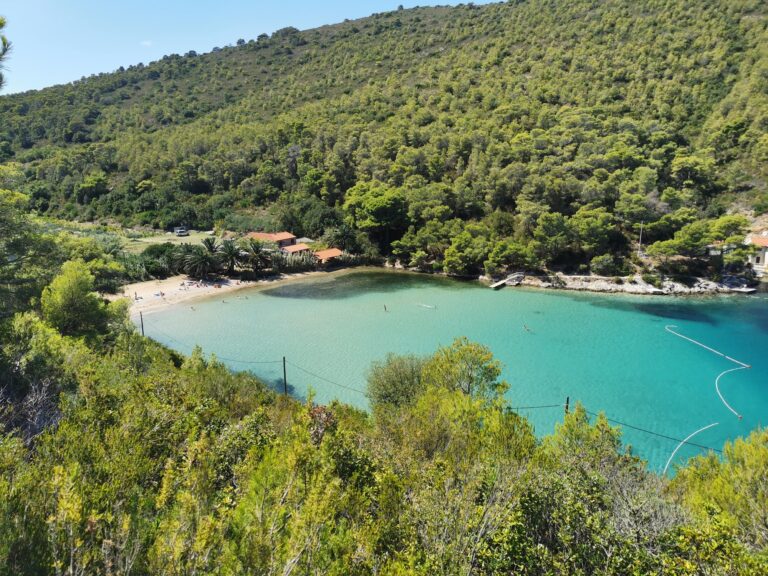
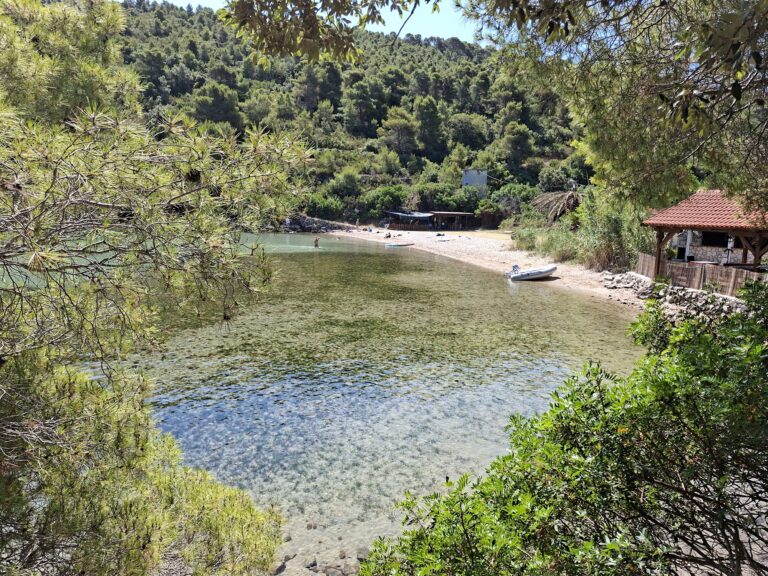
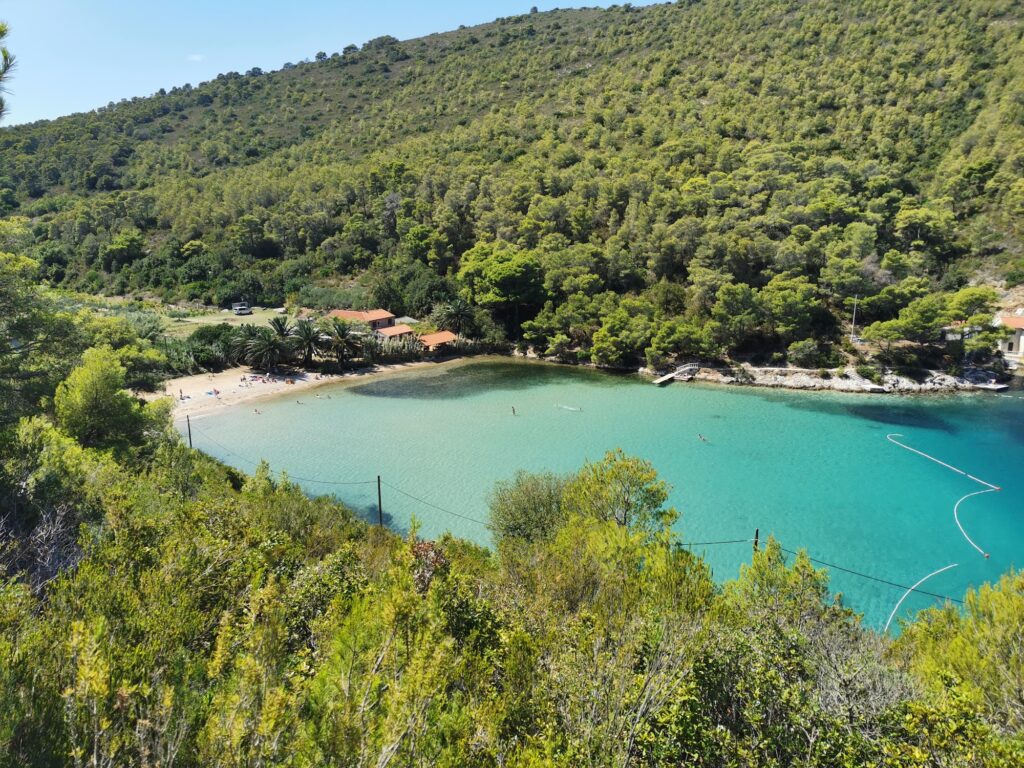
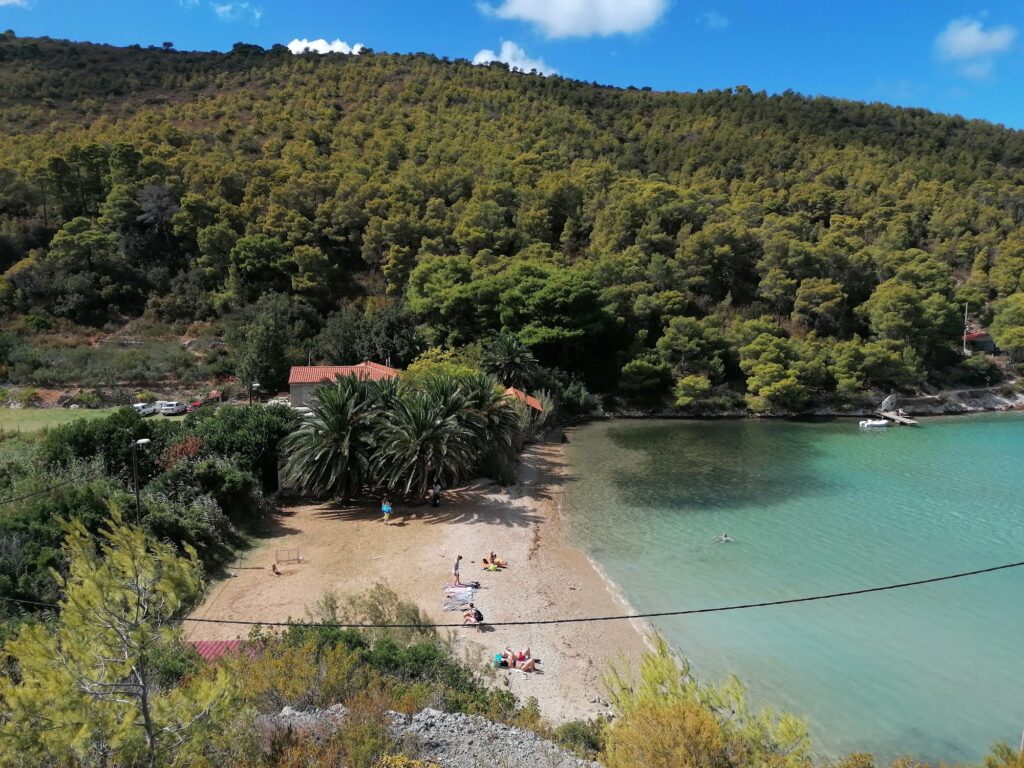
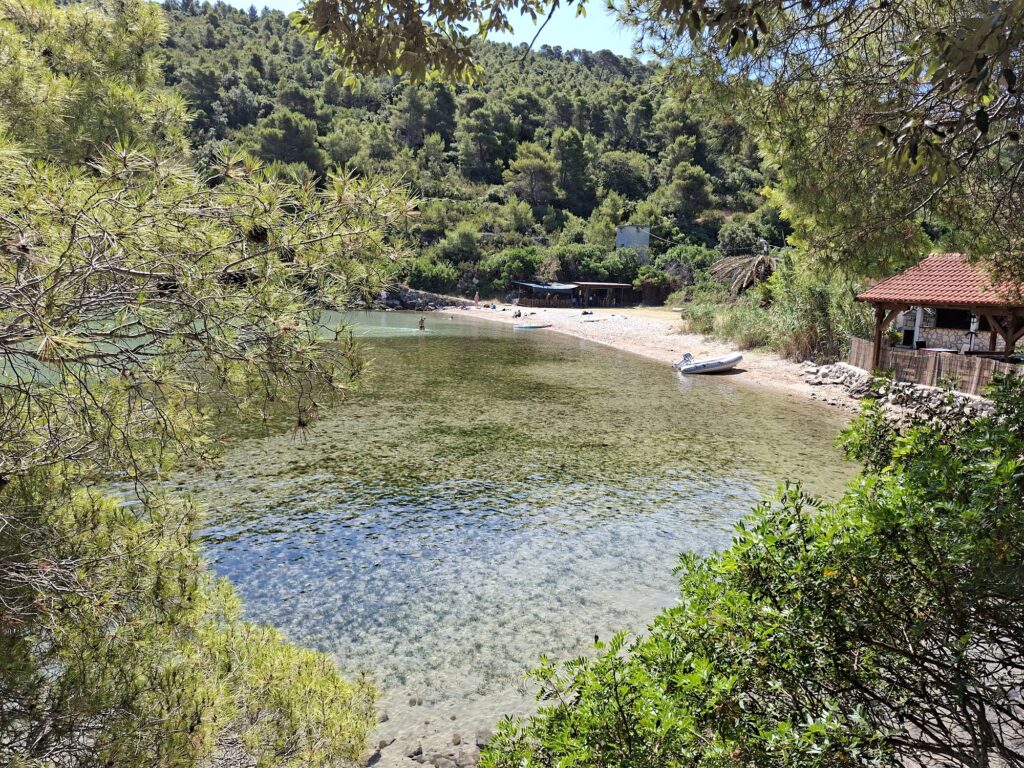
Stončica Beach is at the inner end of that bay — the sandy and pebble shoreline at the foot of the cape, approximately 170 metres long, with the shallow water and sandy seabed that visitor accounts consistently identify as the specific quality that makes it the family beach of choice on the northeastern side of the island. Stončica is a charming, secluded cove, ideal for families — pebbles and fine sand, a gentle slope to the seabed, and up to 30 metres from the coast the sea barely reaches waist height, making it ideal for children and non-swimmers. The beach has a restaurant with excellent gourmet specialities and a beach volleyball court. Sea urchins occupy the rocky edges and some underwater sections — visitor accounts specifically flag this, and water shoes for movement near the rock margins are the standard recommendation.
Getting There: 9km from Vis Town by Car or Scooter, 15-20 Minutes, Short Walk from Parking
From Vis town centre, Stončica beach is 9 kilometres by road — a 15 to 20-minute drive or scooter ride through the northeastern coastal landscape of the island, following the road toward Cape Stončica and the lighthouse. Parking is available at the top, from which a 5-minute walk on the path through the Mediterranean macchia descends to the beach. The path may be steep in sections and requires appropriate footwear.
By scooter, the ride from Vis town follows the island’s northeastern coast road with the sea and the islands of the Vis archipelago visible through the vegetation — visitor accounts consistently recommend the scooter as the preferred arrival mode for the combination of freedom, views, and the ability to stop at the roadside viewpoints without the parking constraints of a car.
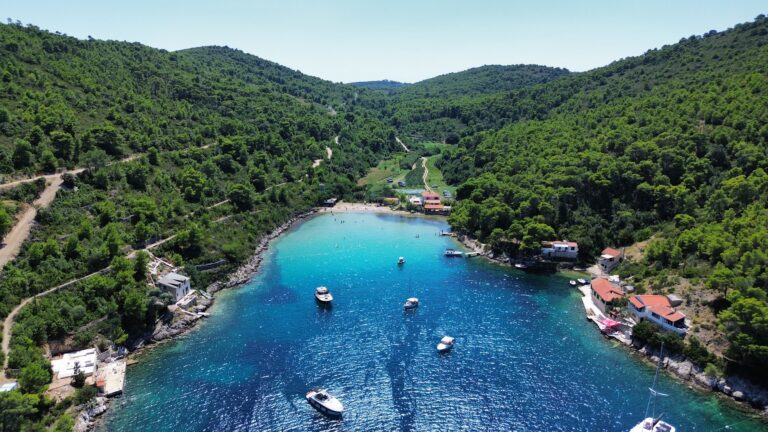
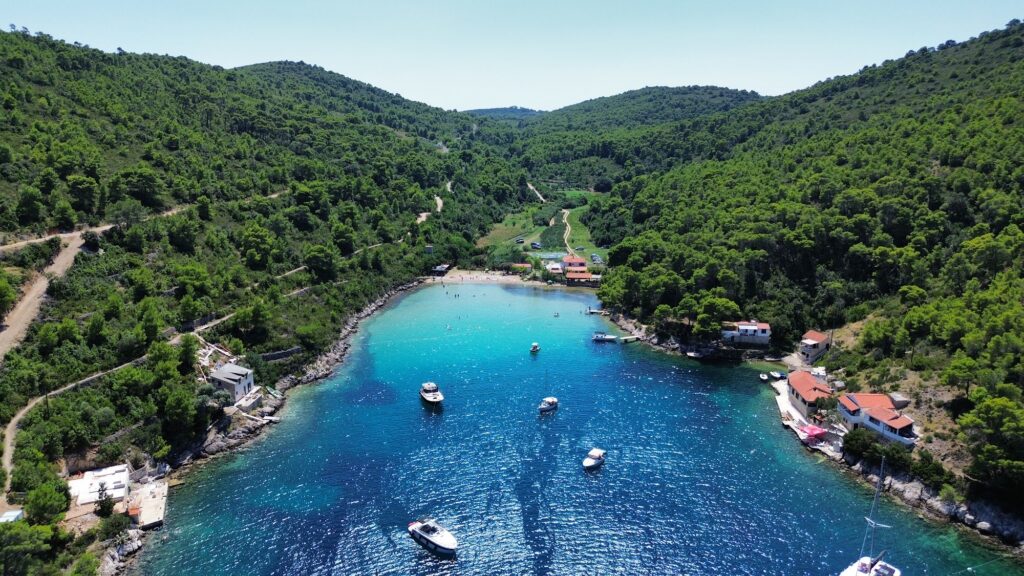
By boat from Vis harbour, the 15-minute coastal cruise rounds the cape and enters the bay from the sea — the arrival mode that provides the specific view of the lighthouse from the water that the land approach through the macchia does not give. The bay has approximately 10 buoys operated by the Vis Port Authority for mooring, with additional anchoring space for visiting boats in the 5 to 15-metre depth section.
The Beach: 170 Metres, Sandy Entry, Palm Trees, Sea Urchin Warning
The beach itself is small relative to its reputation — 170 metres of sandy and pebble shore in the narrow bay, which means it fills visibly in high season when the sailing anchorage in the outer bay and the car visitors from Vis town converge simultaneously. Visitor accounts note that in July and August, the swim zone becomes constrained by the number of anchored yachts visible from the shore, and the beach surface fills by mid-morning.
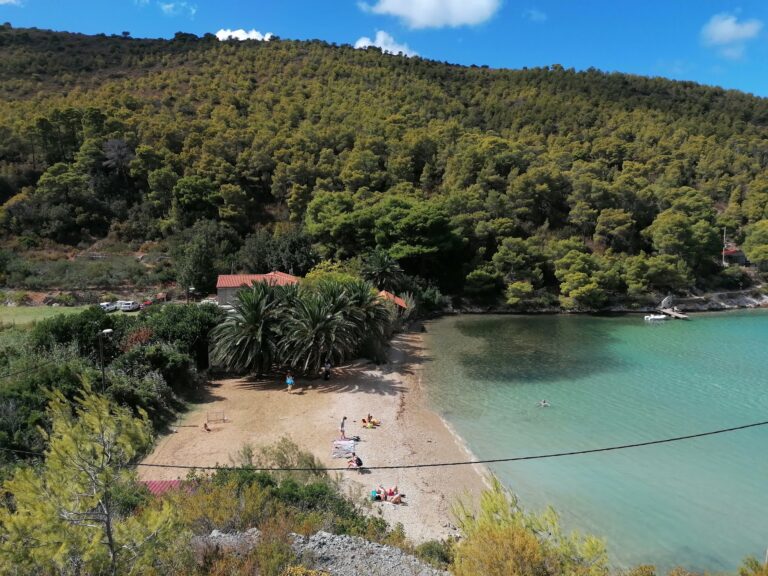
The gentle sandy seabed is the quality that distinguishes Stončica from most Vis beaches: the descent into the water is gradual and the depth remains shallow enough for children to stand in the swim zone for the first 30 metres from the shoreline. No water shoes required in the sandy entry section — the specific quality that families with toddlers value and that the beach’s reputation as the accessible family beach of northeastern Vis is built on.
The sea urchins are concentrated at the rocky margins and in the deeper sections where the sandy bottom transitions to rock. The warning to wear water shoes in those sections is the consistent practical advice from visitor accounts. The sandy central entry section is urchin-free.
The palm trees on the shore and the tamarisk (tamarix) shrubs that border the beach are the shade structures — limited, but providing the specific Mediterranean filtered shade of the palm canopy that photographs of the beach consistently feature. There is no dense pine canopy of the type that the southern coast beaches provide; the shade at Stončica is palm-filtered and partial.
Konoba Stončica: Organic Food, the Unique Fish Soup, and Secret Potatoes
Konoba Stončica is the restaurant that has made the beach as well known in sailing circles as the lighthouse. It is described by the Croatia Yachting Charter anchorage guide as one of the best restaurants on Vis Island, offering excellent organic food. The konoba has a specialty of the house: a really unique fish soup for which people come back to Stončica specifically. The other specialty is potatoes grown in their own backyard, prepared to a secret recipe. Working hours start at 10:30 AM. Reservations are recommended.
The organic food emphasis — vegetables from the kitchen garden, fish from the surrounding bay, the wine from the island’s vineyards — is the specific character of the konoba that distinguishes it from the resort restaurants of the more visited Dalmatian islands. The terrace overlooks the beach and the anchored boats, and dining there in the late afternoon when the light on the bay water is at its most specific is the Stončica programme that both sailing visitors and day-trip visitors from Vis town consistently recommend.
The pogača od slane ribe — the salted fish pie that is one of the traditional specialities of the Vis island kitchen — is the specific dish that the source article correctly identifies as characteristic of the Vis food culture. The island’s isolation, which preserved its fishing and agricultural traditions through the Yugoslav military period, also preserved the food culture that the mainland and the more accessible islands allowed to erode.
Stončica Lighthouse: 1865, 38 Metres, and the Sculptor on the Cape
The Stončica Lighthouse was built in 1865 and stands 38 metres tall on the cape that divides the northeastern Vis bay from the open sea. It is a working navigational aid and a registered accommodation venue — the lighthouse keeper’s dwelling available for rental as a private holiday property in the tradition of the Croatian lighthouse rental programme that has turned several dozen lighthouse keepers’ houses into unusual coastal accommodation.
The current keeper’s sculpture practice — the figures and objects made from sea-washed materials found on the beach, positioned along the path and around the lighthouse base — is the specific personal dimension of the lighthouse that the sailing guides mention. The works are ephemeral in the sense that the materials are already worn and the positioning changes; they are not permanent installations but an ongoing practice of making from what the sea provides.
The path from the beach to the lighthouse and the cape viewpoint is the specific land activity that extends the beach day beyond the sandy shore — a walk through the macchia, past the sculptures, to the lighthouse tower and the panoramic view of the northeastern Vis archipelago that the cape position provides.
The Bay in the Vis Context
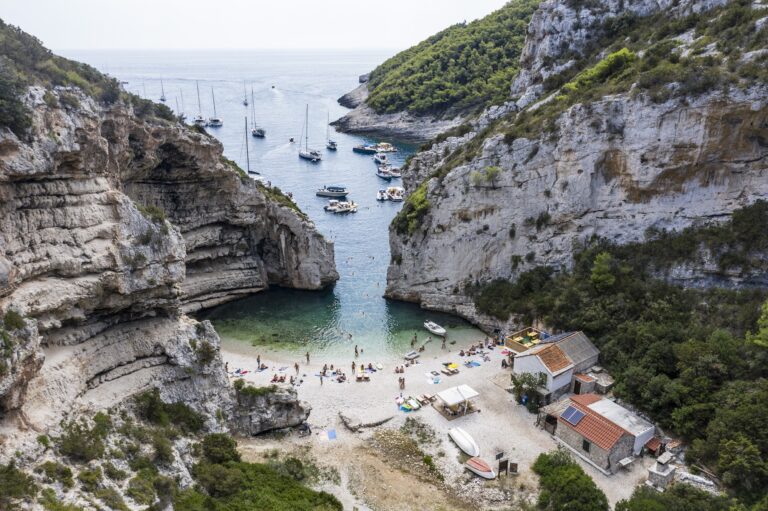
Stončica Bay is the sailing anchorage reference for the northeastern approach to Vis Island — the bay that protects from all winds and provides the sandy-bottom anchorage that the Vis Port Authority buoys serve. Stiniva Beach Vis Island — the famous pebble cove between limestone cliffs that won the European top beach title in 2016 — is on the southern coast of the same island, accessible from Vis town in the other direction. The contrast between Stiniva (dramatic, rocky, cliff-framed, inaccessible except on foot or by boat) and Stončica (shallow, sandy, family-accessible, with parking and a konoba) maps the two ends of what Vis Island offers as a beach destination.
Stončica Beach on Vis Island is the 170-metre sandy bay below the 1865 lighthouse — 9 kilometres from Vis town by scooter or car, the lighthouse keeper’s sculptures on the cape path, the palm shade and the shallow sandy entry for children, sea urchins at the rocky margins, and the konoba’s fish soup and secret-recipe potatoes.
Drive or scooter northeast from Vis town. Walk down from the parking.
Book the konoba before noon.
Map
Sorry, no records were found. Please adjust your search criteria and try again.
Sorry, unable to load the Maps API.
Near by places: