Hawaii Beach Červar Porat: The Turquoise Cove Near Poreč
Profile
Hawaii Beach, Červar Porat, Poreč: The Pine-Backed Rocky Cove North of the Old Town
Croatia | Červar Porat | Poreč Riviera
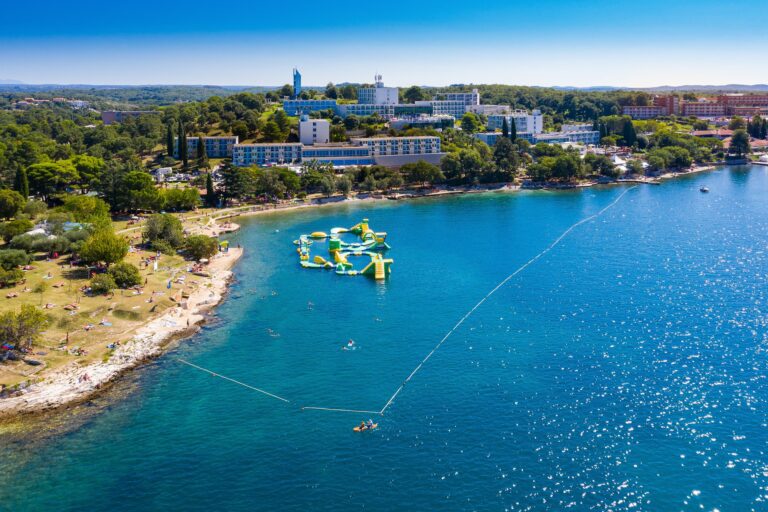
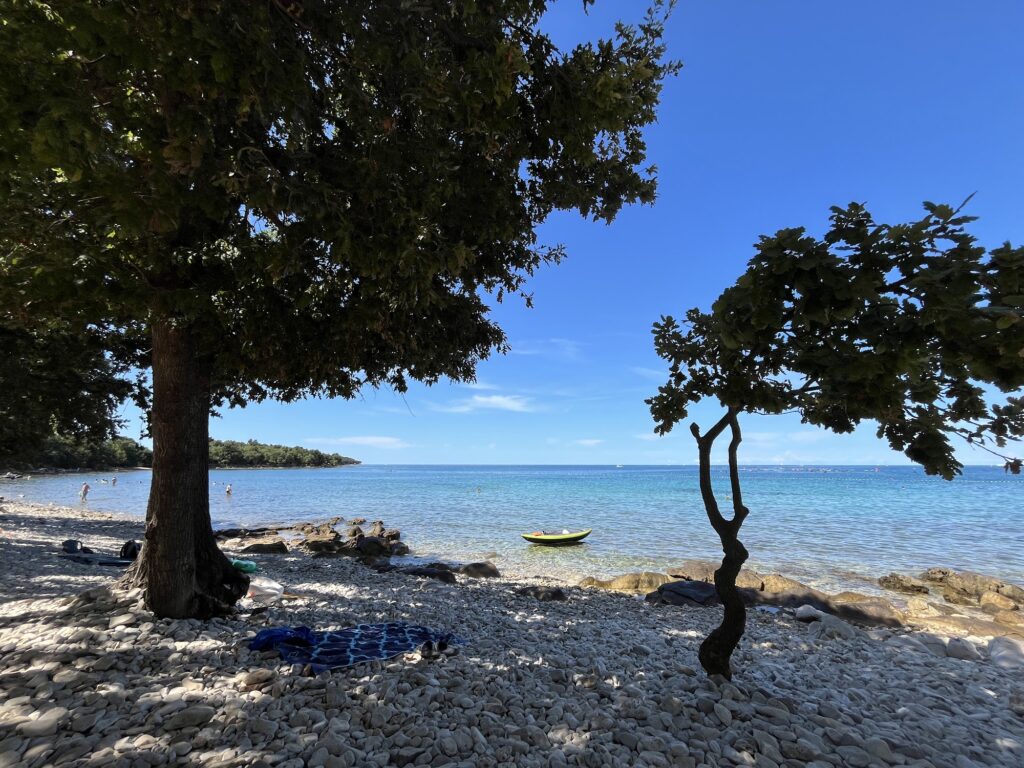
The name Hawaii Beach was not given by a tourism authority or a resort developer. It was given informally by visitors and locals who kept arriving at a rocky and pebble cove one kilometre west of the Červar Porat settlement, seeing the specific colour the water makes when the Istrian limestone meets the open Adriatic in a sheltered, pine-edged bay, and deciding that it looked like something from a different ocean entirely. The turquoise is intense enough and the pine green above the shore vivid enough that the tropical comparison arrives without forcing. The name stuck.
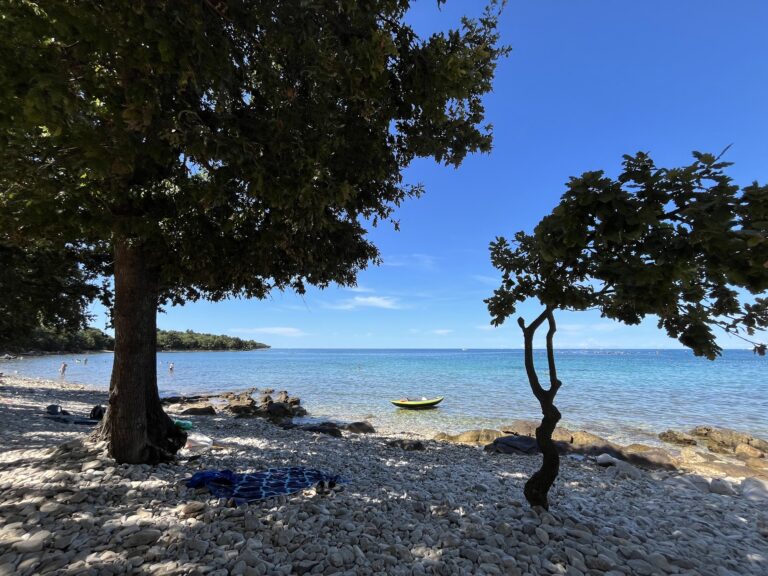
Hawaii Beach is four kilometres north of Poreč old town, not south, and it is not part of the Brulo resort district. It is a natural, unmanaged cove in a secluded position west of the small tourist settlement of Červar Porat on the Poreč Riviera — rocky and pebble shore with a slight deepening from the shoreline, pine forest immediately behind the beach, a fast food bar and beach bar on site, lounger hire, parking nearby, and high rocks at the southern end of the beach that provide the cliff jumping positions that the more adventurous visitors come for. There are no lifeguards. The water gets deep relatively quickly after the initial gradual entry, which makes the beach more suitable for confident swimmers and older children than for non-swimmers and toddlers who need extended shallow wading.
Getting There: North from Poreč to Červar Porat, then 1km West on Foot
From Poreč old town, the drive north to Červar Porat covers approximately 4 kilometres and takes around ten minutes along the coastal road. The Červar Porat settlement has parking, and the beach is approximately one kilometre west of the village centre — a short walk along the coastal path or a five-minute drive on the track that approaches the beach. Parking is available directly near the beach in several areas, though spaces fill quickly in the peak season. The beach is accessible without a car on foot from Červar Porat, and the flat coastal terrain makes the one-kilometre walk manageable.
By bicycle, the cycling infrastructure of the Poreč area extends north toward Červar Porat and Nova Vas, and the approach from Poreč by bike along the coastal path takes approximately 30 minutes. The Parenzana cycling trail network passes through this area of the Istrian peninsula, and visiting Hawaii Beach can be combined with a longer ride through the coastal zone north of Poreč.
There is no tourist train service to Hawaii Beach — the tourist train operates between Poreč town and the southern resort zones of Zelena Laguna and Plava Laguna. The only practical connections to the beach are car, bicycle, or the walk from Červar Porat.
The Shore: Rocky and Pebble, Pine Forest Edge, and the Cliff at the Southern End
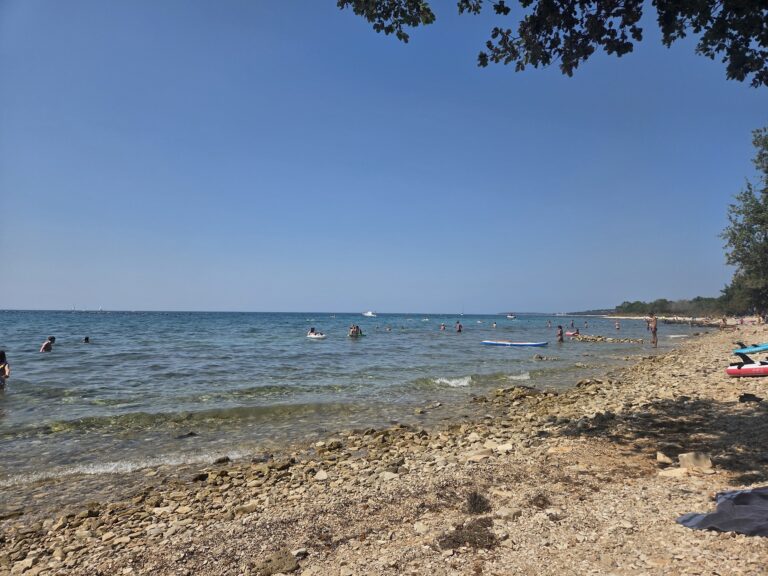
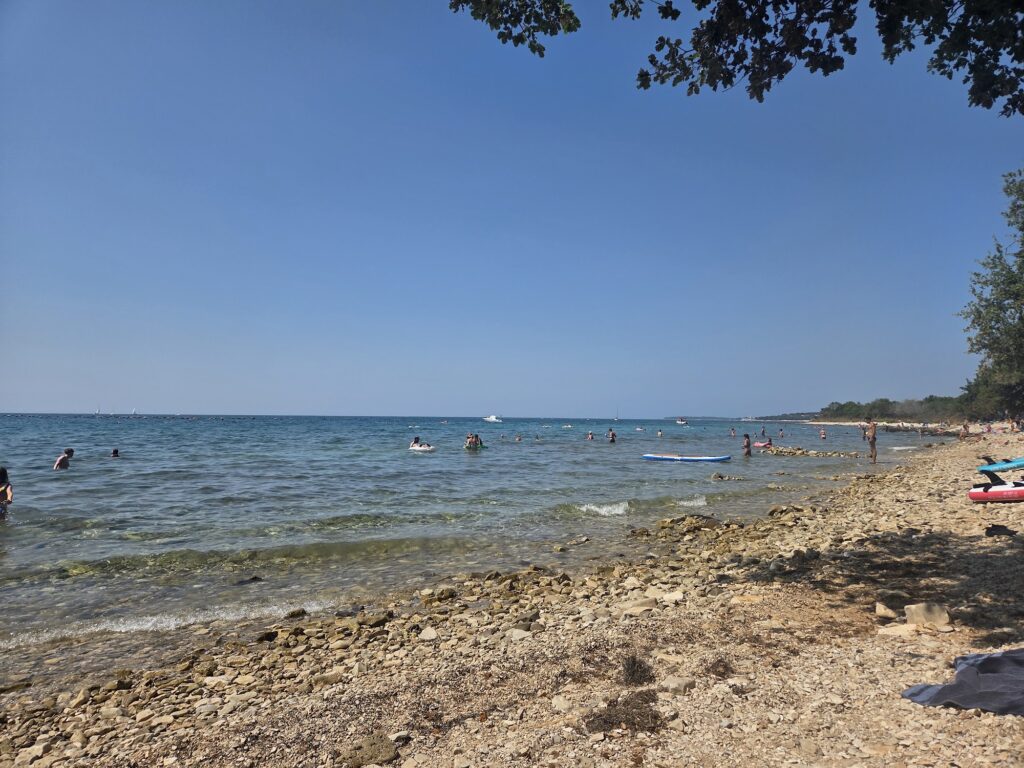
The beach covers approximately 400 metres of coastal length, following the profile of the small peninsula west of Červar Porat — a natural limestone headland whose coastline alternates between rock platforms, pebble sections, and the deeper water entries at the rocky margins. The shoreline slopes gently from the waterline in the central pebble sections, which is the specific quality that makes the beach accessible for families with children who are old enough to handle a rocky sea entry and the relatively quick deepening a few metres out.
The pine forest begins immediately above the upper shore and provides the dense natural shade that the beach’s reputation is built on — the quality of the shade under old Istrian pine in the midday hours is one of the things the internet photographs of the beach capture and that visitor accounts consistently confirm as the single strongest physical quality of spending a day here. The grass between the forest edge and the upper beach provides the soft surface for towels and mats that the rock and pebble shore does not.
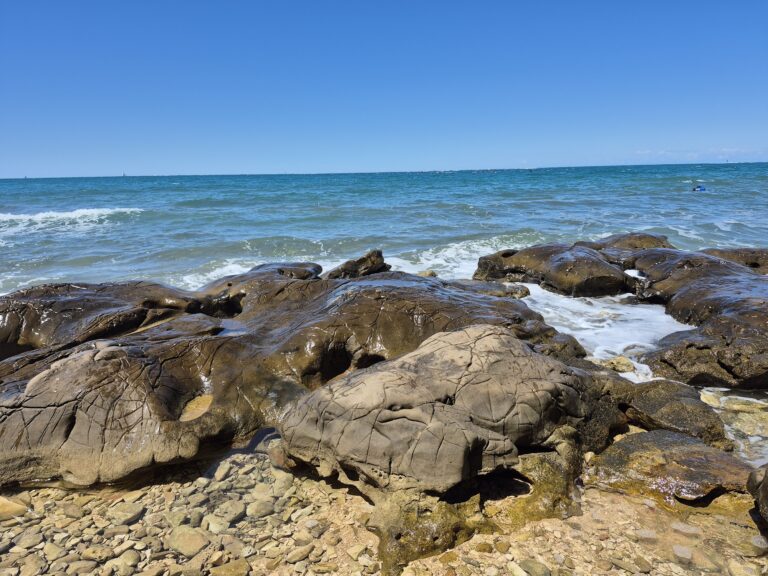
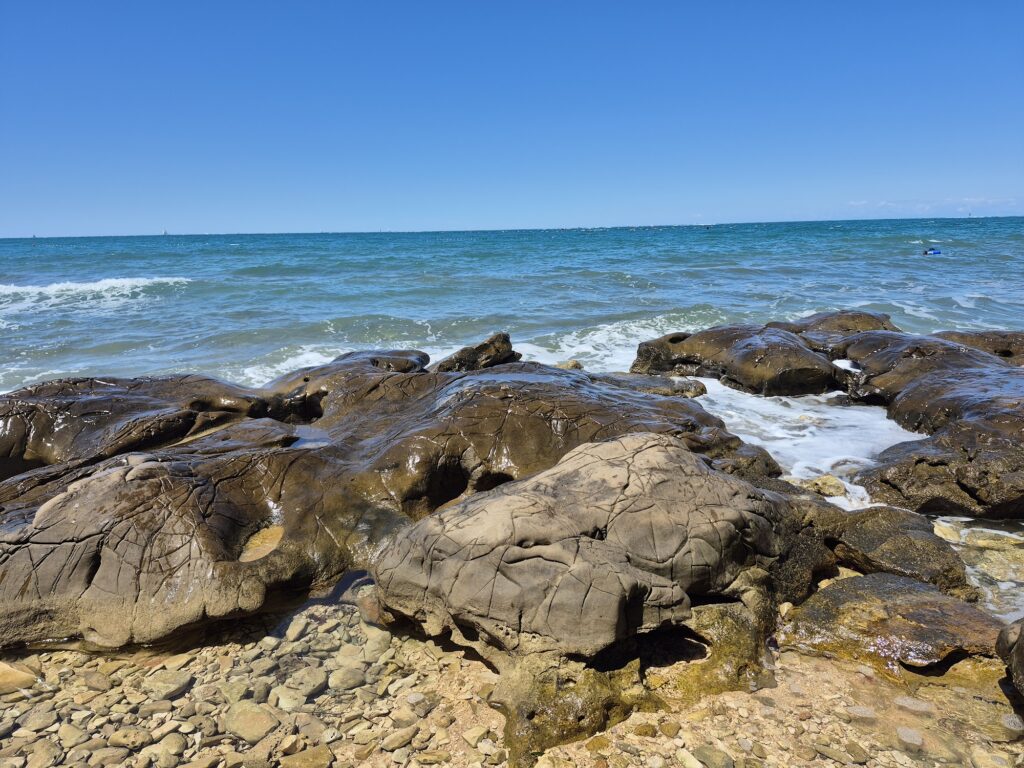
The high rocks at the southern end of the beach are the cliff jumping positions — not the extreme heights of Galebove Stijene or the Verudela Canyon coves further south, but the accessible elevated rock faces that give the more confident visitors the jumping experience that the gradual pebble entry at the main beach does not. Water shoes are recommended for navigation across the rocky sections and for the sea entry throughout the beach.
Water Quality: The Turquoise That Earned the Name
The water quality at Hawaii Beach is what the name refers to. The Adriatic off the western Istrian coast produces a specific palette in sheltered, clear conditions over a pebble and limestone seabed — the pale turquoise in the shallows transitioning to electric green and then to sapphire in the deeper water beyond the swim zone — and at Hawaii Beach the combination of the pine forest backdrop, the limestone headland geometry, and the open but sheltered bay position concentrates that colour to a degree that photographs of the beach are among the most shared images of the Poreč area online.
The water is clear throughout the swim zone, and snorkelling at the rocky margins of the beach is productive — the undisturbed limestone crevices at depth support the small fish populations that the cleaner, less trafficked Istrian coastal coves consistently produce. No formal water quality monitoring data is publicly published for this beach, but visitor accounts over multiple years confirm the cleanliness consistent with an unmanaged natural cove away from boat traffic and resort discharge.
There are no buoy-marked swimming zones and no lifeguards. Swimming safely here requires personal judgement about depth and conditions, water shoes for the rocky entry, and awareness that the depth increases faster than the initial gradual entry suggests.
Facilities: Fast Food Bar, Beach Bar, Lounger Hire, and Parking
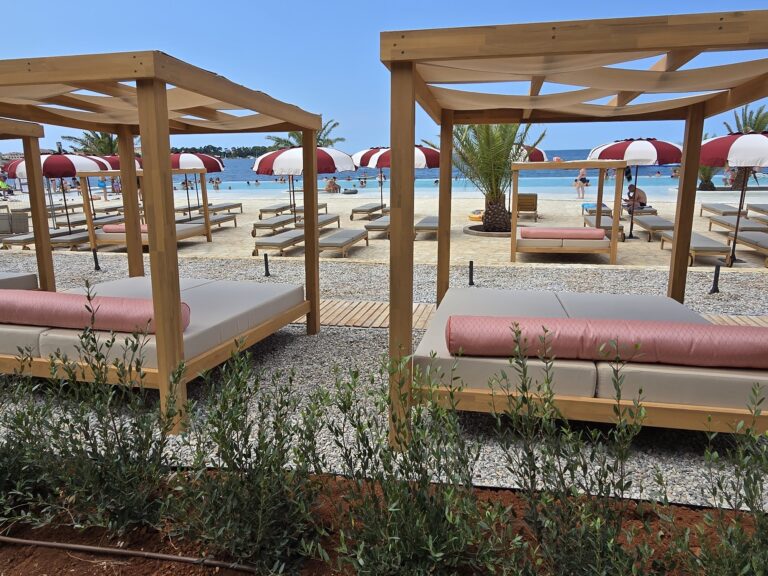
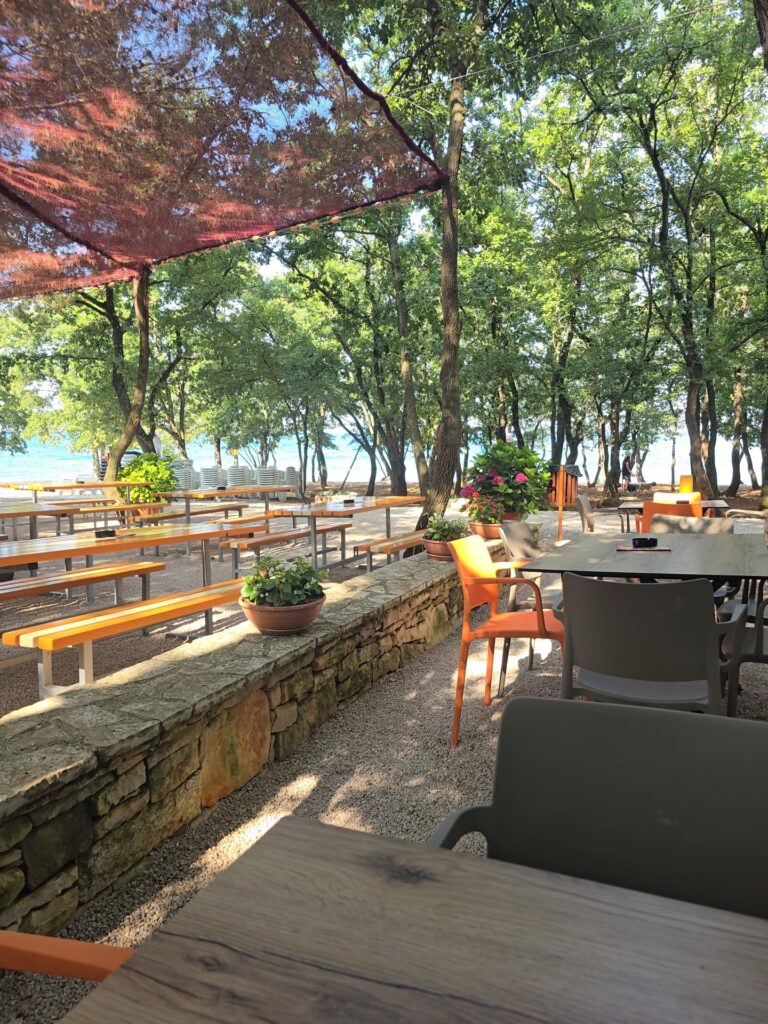
The on-site facilities at Hawaii Beach are minimal and intentionally so — the beach’s character as a natural, semi-secluded cove would not survive the resort infrastructure that the Poreč town beaches carry. What is present: a fast food bar and a beach bar connected to it, providing the cold drinks, quick snacks, and ice cream that a summer day at a natural beach requires without the full restaurant service that organised resort beaches provide. Lounger hire is available. Parking is available in several areas near the beach.
The nearest restaurants are approximately one kilometre away in Červar Porat village — the settlement has a small number of konobas and cafes serving the local resident and tourist population, and the combination of the beach day and an evening meal in the village is the natural programme for visitors who are not returning directly to Poreč after the beach.
The beach has no lifeguard, no Blue Flag certification, no changing cabin infrastructure, and no formal managed swimming zone. These absences are the defining character of Hawaii Beach relative to the organised resort beaches of the Poreč area — it is a natural cove that the local reputation has made popular, maintained in its natural state by the municipality and the beach bar operators rather than developed into a managed facility.
Hawaii Beach in the Poreč Area Context
The Poreč Riviera beach offer extends from Materada on the northern edge of the town zone through Červar Porat and Nova Vas north toward Tar and Umag, and south through Brulo, Zelena Laguna, and Plava Laguna toward Vrsar and Rovinj. Hawaii Beach at Červar Porat sits in the northern section of that range — less organised and less visited than the resort zones to the south, more characteristic of the wilder, pine-backed cove character that the northern Istrian coast maintains.
For visitors comparing Hawaii Beach with the organised Blue Flag resort beaches of Poreč — Beach Parentino Poreč ten minutes south by tourist train or Zelena Beach Poreč at the Zelena Laguna resort — the distinction is between a natural cove with minimal facilities and the active choice to be away from managed infrastructure on one side, and the organised resort beach with lifeguards, sunbed hire, restaurants, and water sports on the other. Both options are within the same short drive of Poreč old town; the choice is a beach character preference rather than a distance decision.
The Parenzana Trail and the Červar Porat Area
The Parenzana cycling trail — the converted narrow-gauge railway that ran between Trieste and Poreč from 1902 to 1935 — passes through the Istrian hinterland north of Poreč near Červar Porat, providing the cycling context for a wider day that combines the beach with a ride into the Istrian agricultural interior. The trail connects the coastal settlements of the western Istrian shore to the hilltop villages of the interior — Višnjan, Vižinada, Grožnjan — whose truffle, wine, and olive oil culture is the Istrian food and landscape identity that the coastal resort beaches are adjacent to without ever fully representing.
Baredine Cave — the stalagmite and stalactite cave system 10 kilometres northeast of Poreč — is the inland attraction most consistently combined with a beach day at Hawaii Beach by visitors who want to see something geologically significant during their stay.
Hawaii Beach at Červar Porat is the turquoise cove four kilometres north of Poreč old town that earned its name from visitors who couldn’t think of anything more accurate for the colour of the water under the pine trees. Natural, rocky, pebble, shaded, no lifeguard, no Blue Flag, a fast food bar, lounger hire, and cliff jumping at the southern end.
Drive north from Poreč. Park near Červar Porat. Walk west one kilometre through the pine trees.
The colour of the water will be there when you arrive.
Map
Sorry, no records were found. Please adjust your search criteria and try again.
Sorry, unable to load the Maps API.
Near by places: