Stiniva Beach Vis Island: Most Beautiful Adriatic Cove
Profile
Stiniva Beach, Vis Island: Inside the Most Photographed Cove in the Adriatic
Croatia | Dalmatia | Vis Island
The approach matters at Stiniva. Not just practically — though practically it matters enormously, since the only land access is a steep twenty-minute descent down a rocky goat path from the parking area near Žužeca village — but experientially, because the way you arrive at this cove shapes what the arrival means.
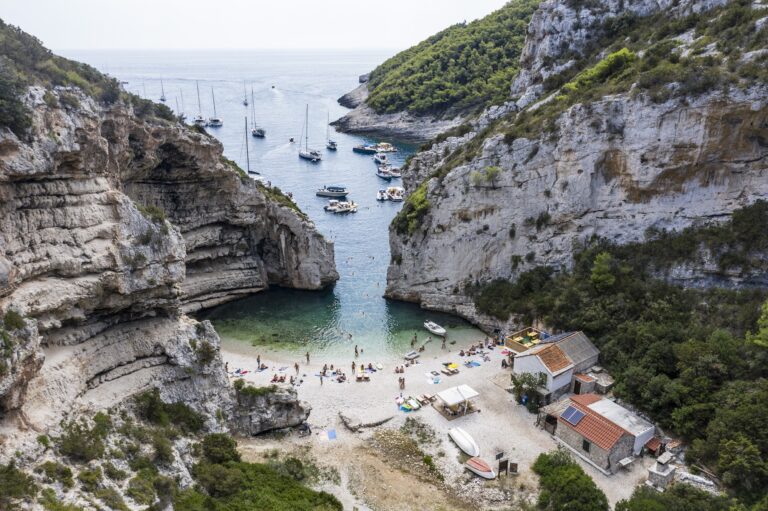
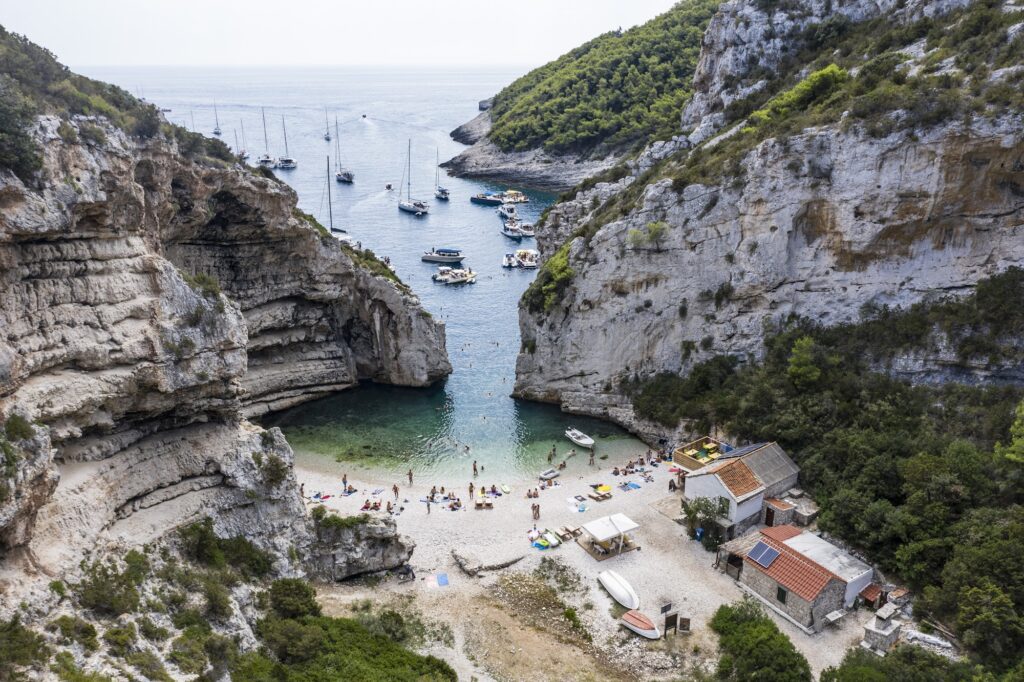
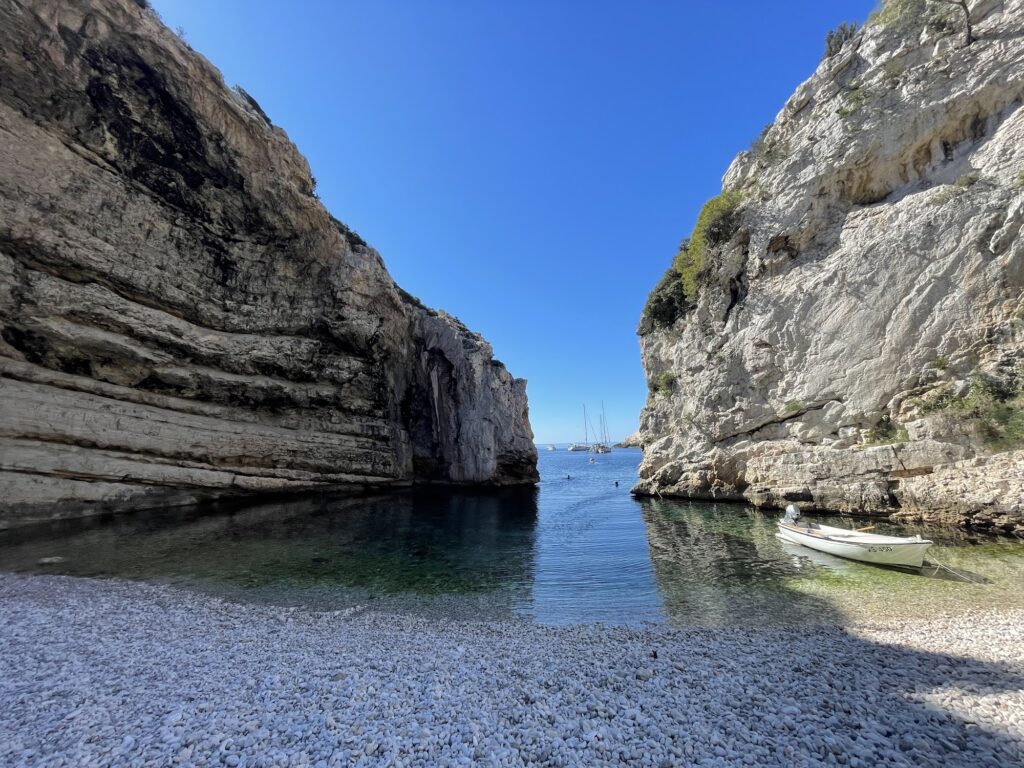
Coming by sea, the two limestone cliffs that frame the beach’s entrance converge as the boat approaches until the gap between them appears barely navigable, and the turquoise interior visible through that narrow stone gateway looks less like a beach and more like a separate and private body of water that the cliff walls have been arranged to protect. Coming by foot, the descent through the scrubland above the southern Vis coast deposits you at the pebbles from above, the full amphitheatre of the cove visible from the path before you reach the shore, the scale of the cliff walls and the colour of the water inside them arriving simultaneously as a single composition.
Both arrivals work. Both produce the specific response that Stiniva generates in almost everyone who reaches it for the first time — a pause, a recognition that the photographs that preceded the visit were accurate but not sufficient, and the immediate understanding of why this cove was voted one of the most beautiful beaches in Europe.
I have arrived at Stiniva by each of the three available methods across four visits — the goat path twice, by kayak from the southern coast once, and by excursion boat from Komiža once. The kayak approach is the finest introduction to the cove’s setting. The goat path is the most physically demanding and the most satisfying on its own terms. The boat is the most practical for visitors for whom the path is not an option.
Getting There: Three Routes, One Cove
How to get to Stiniva Beach on Vis Island requires choosing between three genuinely different experiences, each of which approaches the cove from a different direction and at a different pace.
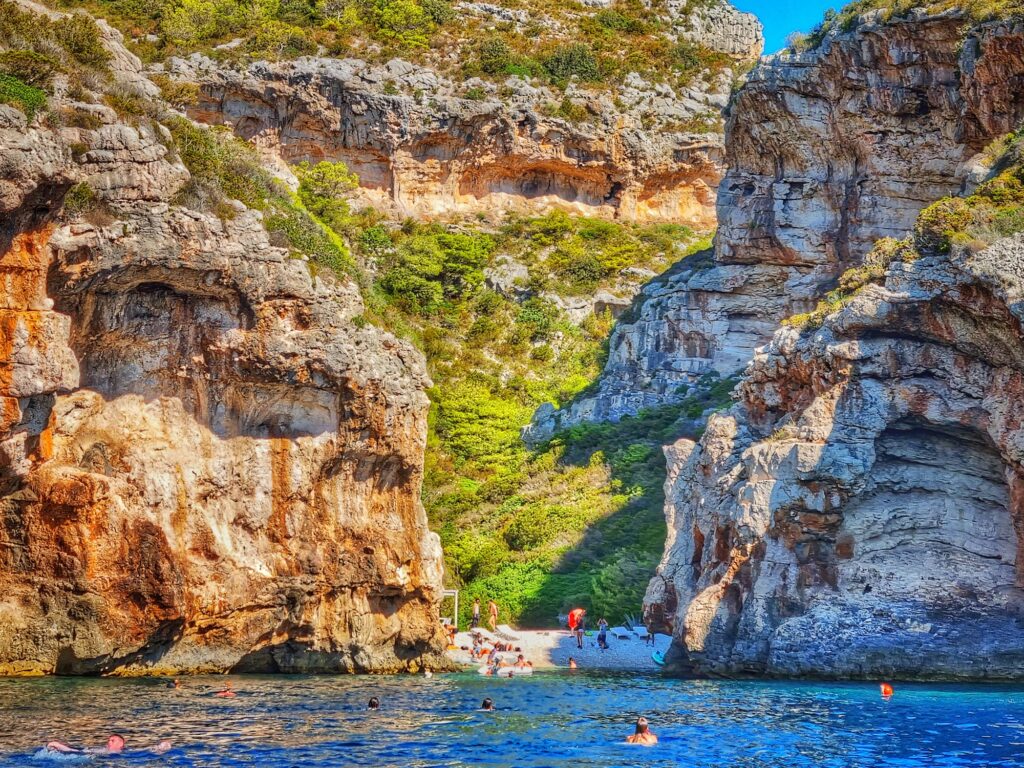
By boat from Komiža or Vis town, the excursion boats and water taxis that serve Stiniva through the summer season deliver visitors to the cliff entrance by sea. Larger vessels anchor outside the stone gateway and passengers transfer to small dinghies or swim the final distance into the cove — the passage through the narrow gap between the cliffs being the moment that the interior of the beach reveals itself. It is the most accessible option for visitors who cannot manage the land descent and for families with children for whom the path is not practical. The approach from the open sea, watching the cliffs converge as the boat approaches, is the most visually dramatic introduction to the location.
On foot from the parking area near Žužeca village, the marked trail descends steeply for approximately twenty minutes through the limestone scrubland of the southern Vis coast. The path requires appropriate footwear — the surface is rocky and uneven throughout — and the return climb in the afternoon heat is the physical commitment that every piece of advice about Stiniva correctly identifies as the most demanding element of the land access. The descent is manageable for fit adults and older children. It is not suitable for pushchairs or for visitors with significant mobility limitations.
By kayak from the southern coves of the island, the paddle along the vertical cliff coast of southern Vis to the Stiniva entrance takes several hours depending on starting point, and it provides the most complete engagement with the landscape that contains the cove — the cliff faces, the hidden sea caves, the open Adriatic to the south, the gradual approach to the stone gateway from the water level. The morning hours before any wind develops are the optimal conditions for the paddle, and timing the arrival at the cove for mid-morning produces the best version of the interior light.
The Cove: Cliff Walls, Stone Gateway, Amphitheatre
Stiniva is a geological formation rather than simply a beach — a cove enclosed on all sides by limestone cliffs that rise to a height that makes the beach below feel not merely sheltered but contained within the rock in the way that a room is contained within its walls. The two cliffs that converge at the seaward entrance are the feature that defines the visual identity of the place and that produces the specific and immediately recognisable profile visible in every photograph of the cove.
The stone gateway between those cliffs is narrow enough that larger vessels cannot enter — the operational reality that has prevented any substantial commercial development inside the cove and that, more than any formal protection status, has kept Stiniva in the condition it is in. The beach inside is accessible only by swimming through the gap, by dinghy, or by the land path descending from above. Each access method imposes a natural limit on the number of visitors the cove holds simultaneously, and the result is a beach that, even at peak season, operates at a scale consistent with its size rather than at the capacity a more easily accessible comparable location would receive.
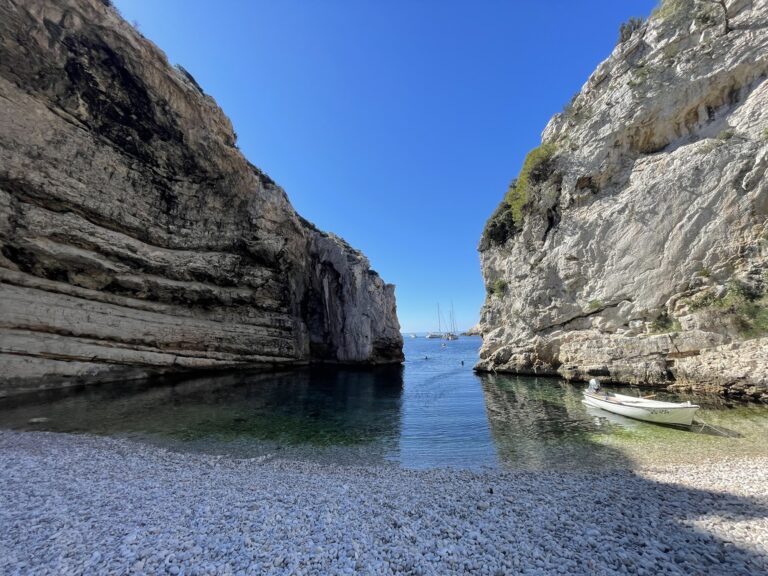
The shore is large, smooth white pebbles — rounded and polished, bright under direct sun, and warm through the afternoon to a temperature that makes lying on them without a towel entirely comfortable. The cliffs cast moving shade across the beach throughout the day as the sun moves, providing the natural cooling at different hours and in different sections of the cove that planned shade structures attempt to replicate. By late afternoon, significant portions of the beach are in shadow, and the light that remains is angled and warm in the specific quality that cliff-enclosed bays with a western opening tend to produce.
The Water
The water quality at Stiniva Beach Vis is the quality that the beach’s international reputation rests on and that the cliff enclosure and the open-sea position of southern Vis Island together maintain at an exceptional standard.
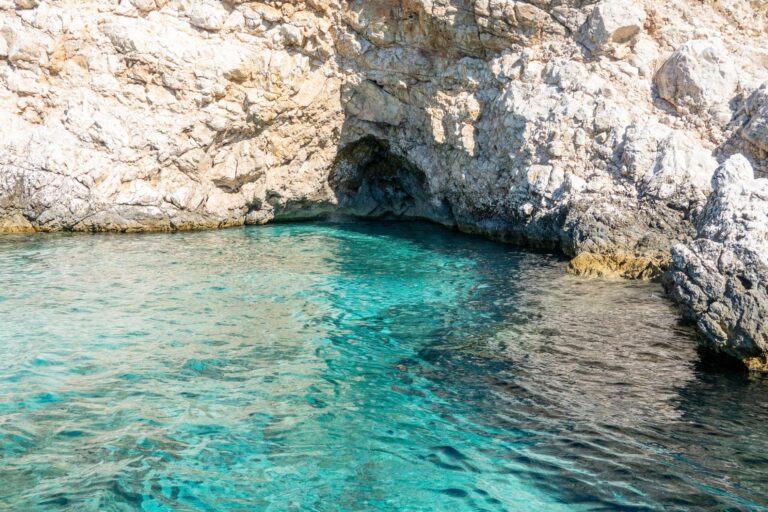
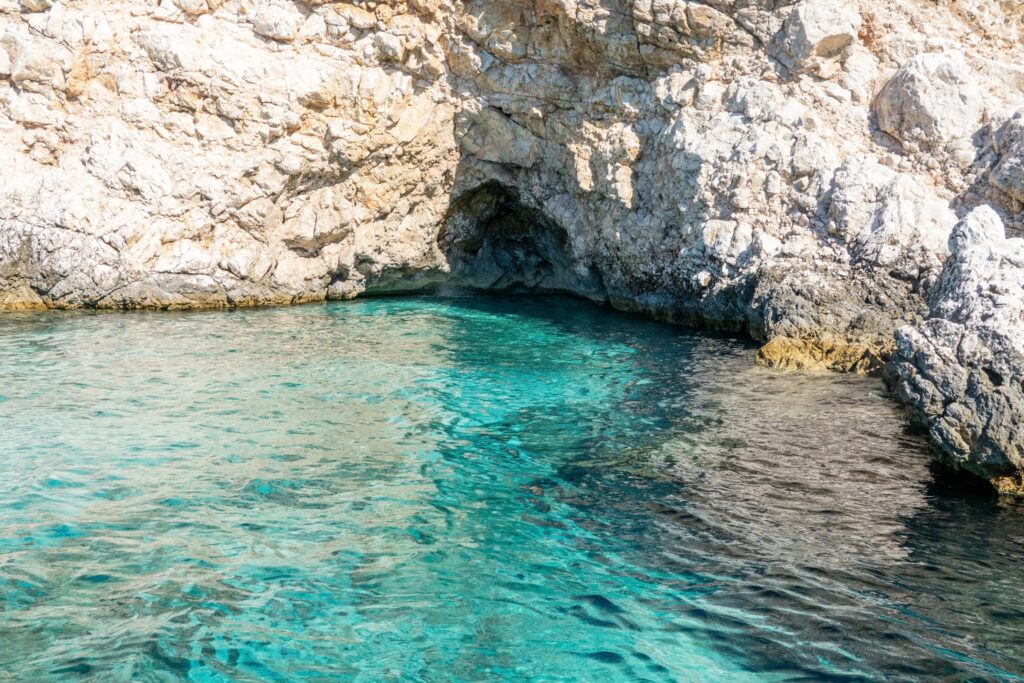
The cliff walls that enclose the cove reduce wave action to near zero inside the bay — the water inside Stiniva is calm even when the open Adriatic south of the island is actively moving, and the stillness of the interior water combined with the pale pebble bottom and the overhead light produces the vivid turquoise colour that the cove’s photographs consistently and accurately show. The transparency is extraordinary — the seabed clearly visible in detail at depth, the colour shifting from pale turquoise in the shallows to a deep emerald where the cliff base descends steeply into the darker water.
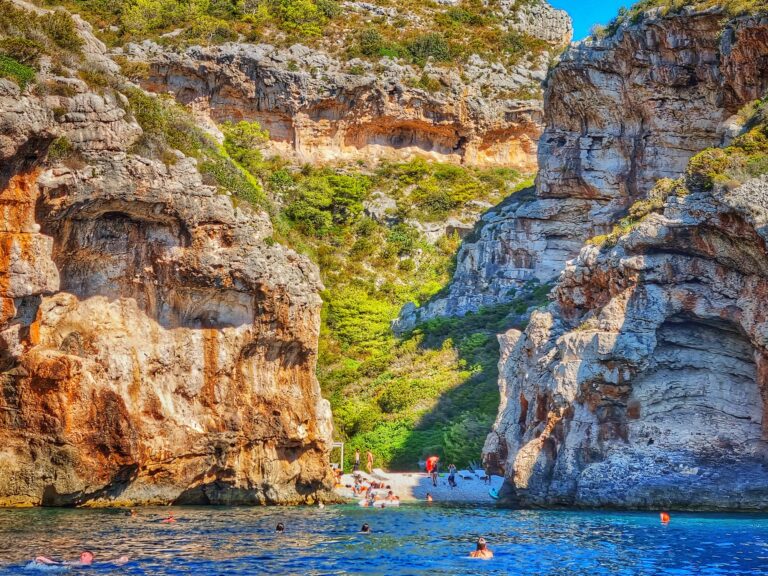
Snorkeling at Stiniva along the cliff base on both sides of the interior is the underwater activity the cove most richly supports. The cliff faces continue below the waterline with the same vertical and varied character as above it — formations, crevices, cave openings — providing the structural complexity that supports varied marine life in the clean, well-oxygenated water of a genuinely undisturbed southern Dalmatian coast location. The visibility makes the underwater detail of the cliff base formations clearly readable from the surface, and the cave entrances accessible by swimming under calm conditions provide the specific and memorable exploration that the cove’s geological character naturally offers.
The experience of swimming inside Stiniva — treading water in the clear turquoise interior, looking up at the cliff walls rising above the waterline on all sides, the stone gateway visible at the seaward end — has no equivalent at any other beach covered in this series. It is a specifically spatial and physical experience that photographs of the cove from above or from the entrance do not fully communicate.
For visitors who have experienced Plaža Dubovica on Hvar Island — the cliff-enclosed cove with the historic manor house on its shore — the water quality at Stiniva is comparable in clarity while the geological enclosure is considerably more dramatic. Both reward the effort of reaching them in proportion to what that effort requires.
Facilities: The Stone Beach Bar and Nothing Else
Stiniva Beach facilities are, deliberately and appropriately, minimal.
A small family-run stone beach bar tucked into the rocks at the base of the cliff provides cold drinks, coffee, and basic snacks — the only commercial infrastructure inside the cove, and the provision that makes extending a full day at the beach viable without carrying everything down the path. The bar’s position — built into the rock rather than imposed upon the shore — reflects the same sensitivity to the cove’s character that the absence of sunbed rentals and showers reflects.
There are no showers, no changing rooms, no sunbed rental, no lifeguard, and no other facilities. The beach operates on a leave no trace basis — the natural mechanism that an access-limited cove in a protected island landscape tends to enforce — and the condition of the shore reflects that standard consistently.
The lack of a lifeguard is the safety consideration that requires specific acknowledgement. The cliff bases and the cave entrances accessible by swimming present the specific hazards of a complex underwater environment in an unmonitored location. Swimmers should exercise the judgment appropriate to those conditions, particularly in relation to the cave swimming and the cliff base snorkeling.
For Families
Stiniva with children is the specific recommendation that most clearly reveals the nature of the beach — excellent for families with older children and teenagers who are strong swimmers, confident on rocky terrain, and physically capable of the twenty-minute descent, and entirely inappropriate for families with toddlers, pushchairs, or children who are not comfortable in deep, cliff-enclosed water.
For the first category of family, Stiniva is one of the most specifically memorable beaches available on the Dalmatian island coast — the cliff entrance, the turquoise interior, the cave snorkeling, the scale of the geology. These are things that children of the right age engage with genuinely and remember specifically.
For the second category, the boat excursion from Komiža or Vis town provides a version of the Stiniva experience that removes the land access entirely — the approach by sea, the cliff gateway, the swimming inside the cove — and is the practical alternative for families with young children for whom the path is not an option. Families who want a fully-serviced, family-appropriate Vis Island beach day with calm shallow water and facilities should look to the northern coast of the island rather than the dramatic southern shore.
The Konoba and the Island Food
The small beach bar at Stiniva serves coffee and cold drinks in a setting that the cliff walls and the turquoise water make entirely sufficient as a dining environment regardless of menu complexity. I have sat there with a coffee on two of my four visits to the cove, and the combination of the drink and the view is one that the most elaborate terrace restaurant on the island’s coast cannot improve upon in terms of the specific quality of sitting inside those cliff walls with the water in front.
For a full meal, the return to Vis town or Komiža is the necessary conclusion to a day at Stiniva — and both towns provide it with the quality that Vis Island has developed a specific culinary reputation for. Viška pogača — the local flatbread filled with salted anchovies and capers, baked in the traditional way and specific to Vis in the Dalmatian island tradition — is the thing to order before anything else. The island’s olive oil, the fresh fish from the waters that the cove itself faces, the local wine from the island’s vineyards — all of them are available in both towns at a standard that the isolation and the limited tourism infrastructure of Vis have, paradoxically, helped to preserve.
Final Thoughts
Stiniva Beach on Vis Island is one of the specific places on the Croatian coast that genuinely justifies every superlative applied to it. The voted ranking — one of the most beautiful beaches in Europe — reflects a quality that is immediately evident on arrival and that does not diminish with the familiarity of repeat visits. The cliff walls are as vertical as the photographs show. The water is as clear. The stone gateway is as narrow. The interior, once you are inside it, is as specifically and unusually beautiful as any description of it suggests.
The goat path is steep. The boat excursion works. The kayak approach is the finest.
All three reach the same place. All three are worth it.
Map
Sorry, no records were found. Please adjust your search criteria and try again.
Sorry, unable to load the Maps API.
Near by places: