Plaža Dubovica Hvar Island: Historic Cove South Hvar
Profile
Plaža Dubovica, Hvar Island: The Bay With a Manor House and No Compromise on Water Quality
Croatia | Dalmatia | Hvar Island
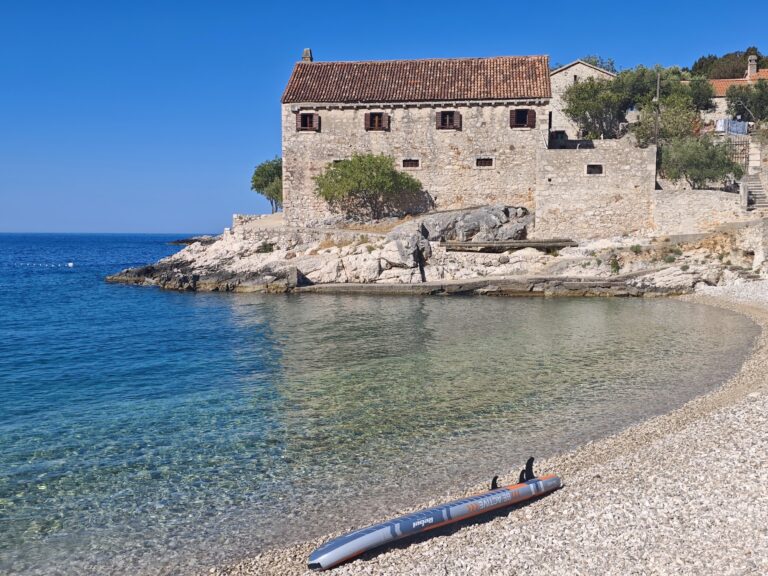
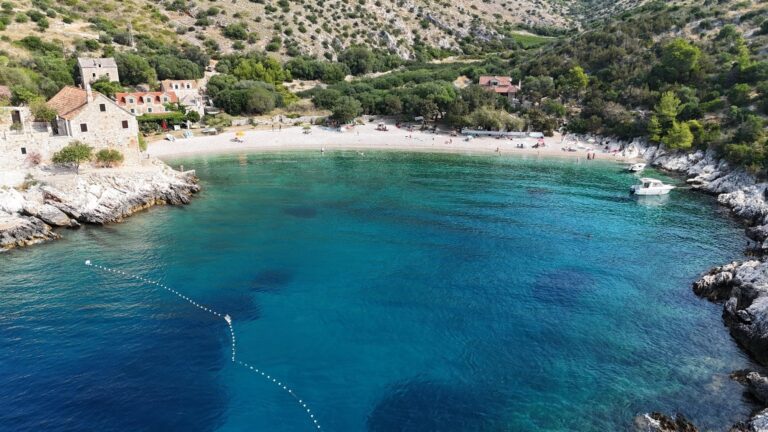
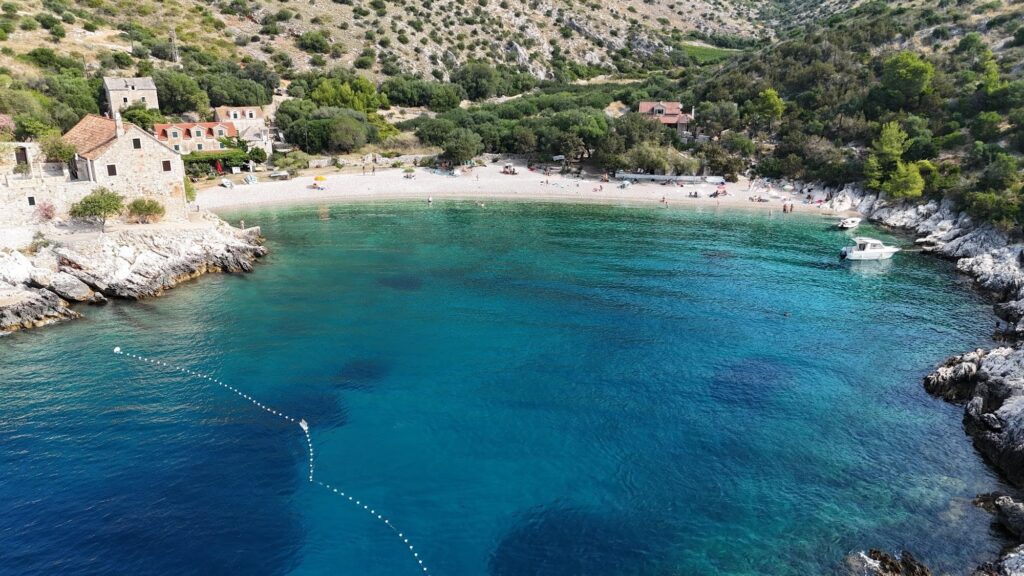
Most beaches are defined by their natural geography. Plaža Dubovica on the southern coast of Hvar Island is defined by something else entirely — a centuries-old noble manor house that sits at the edge of the cove, its stone walls rising directly above the pebbles, its presence giving the bay a quality of inhabited history that no geological feature alone can produce. I had seen photographs of it before I visited and assumed, reasonably, that the building was the kind of detail that looked more impressive in photographs than in person. I was wrong about that. Standing on the shore and looking up at the manor against the limestone cliffs, with the boat masts visible in the bay behind you and the water doing what Hvar water does in direct summer light, the overall composition is more striking in person than any image of it that I have encountered.
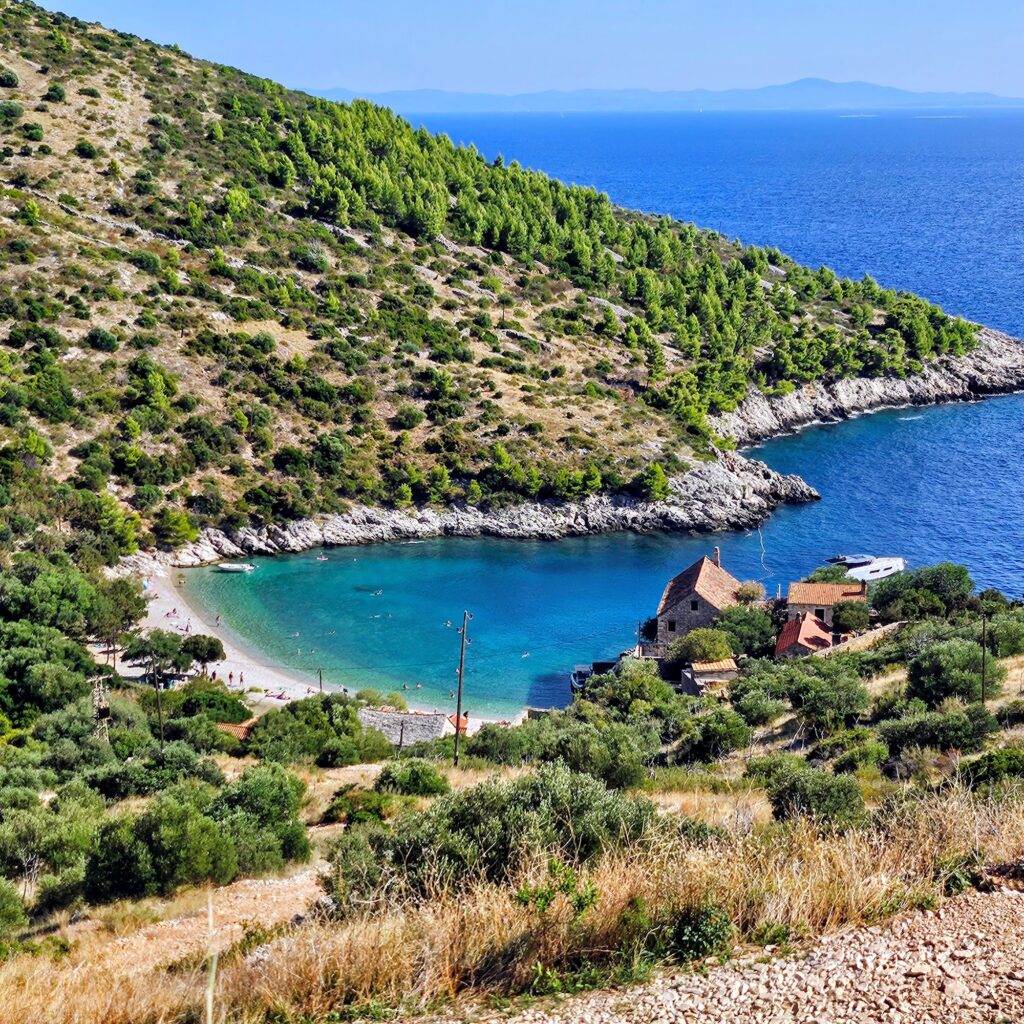
I arrived by the steep goat path from the parking area above the bay on a clear morning in late June. The descent takes ten to fifteen minutes, the path winding through dry scrub and exposed limestone with the bay becoming progressively visible through the vegetation below. By the time I reached the pebbles, I had been given enough gradual disclosure of the setting to understand what I was arriving at — which made stepping onto the shore and seeing the full composition for the first time, with the manor to the left and the open bay ahead and the water that colour, feel exactly like the kind of arrival that justifies the effort of the descent.
Getting There: The Effort Is the Point
How to get to Plaža Dubovica from Hvar Town involves a straightforward drive and a descent that is steep enough to matter but short enough not to deter.
By car, the road east from Hvar Town toward Stari Grad takes approximately ten minutes before a small parking area appears on the main road above the bay. The parking is limited — the spaces fill on busy summer days with the predictable speed of a beautiful beach accessible only by a path that filters visitors naturally — and arriving before mid-morning is the practical solution that the geography imposes. From the parking area, the goat path descends to the shore in ten to fifteen minutes. Sturdy footwear is not a precaution but a requirement; the limestone surface is uneven and the gradient is genuine.
By taxi boat from Hvar harbour, the approach from the sea delivers the cliff formations, the manor house, and the colour of the bay in a single progressive reveal as the boat rounds the headland — the most visually complete introduction to the setting available, and the one that most clearly communicates why the cove looks the way it does from above. For visitors without a car or those who want to experience the approach from the water at least once, the taxi boat is the option worth taking.
The effort required to reach Dubovica — whether the parking logistics, the path descent, or the boat journey — is inseparable from the character of what you find at the bottom. The beach is as pristine as it is partly because arriving requires something, and the people who make that effort tend to be the kind who treat the place with the care it warrants.
The Bay: Manor, Cliffs, and the Composition That Defines the Place
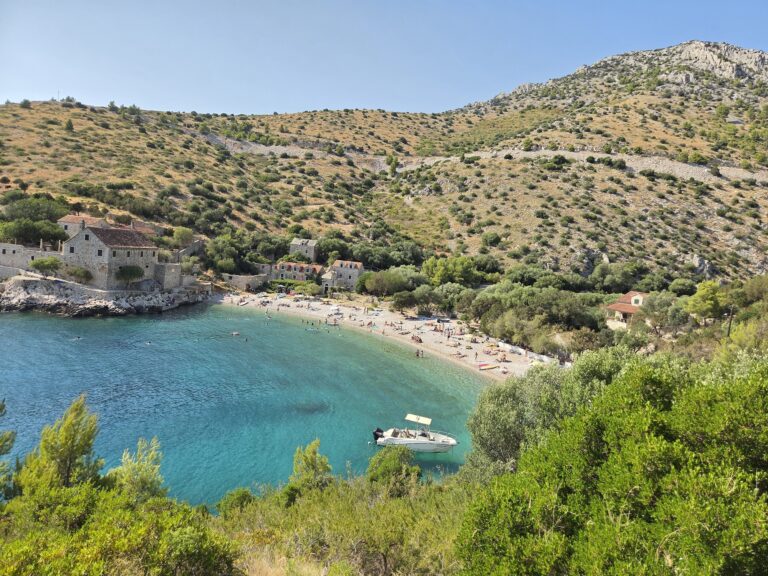
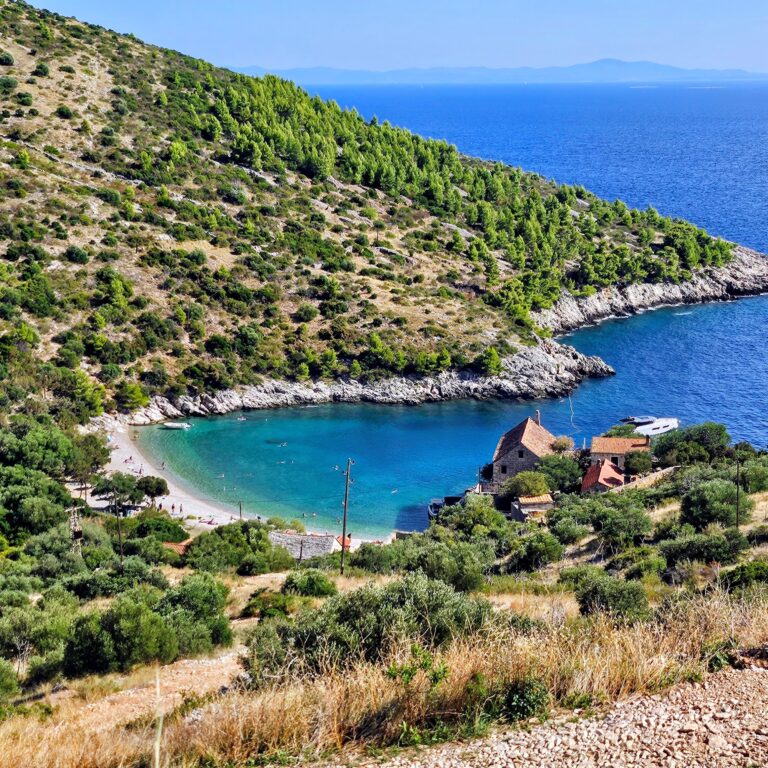
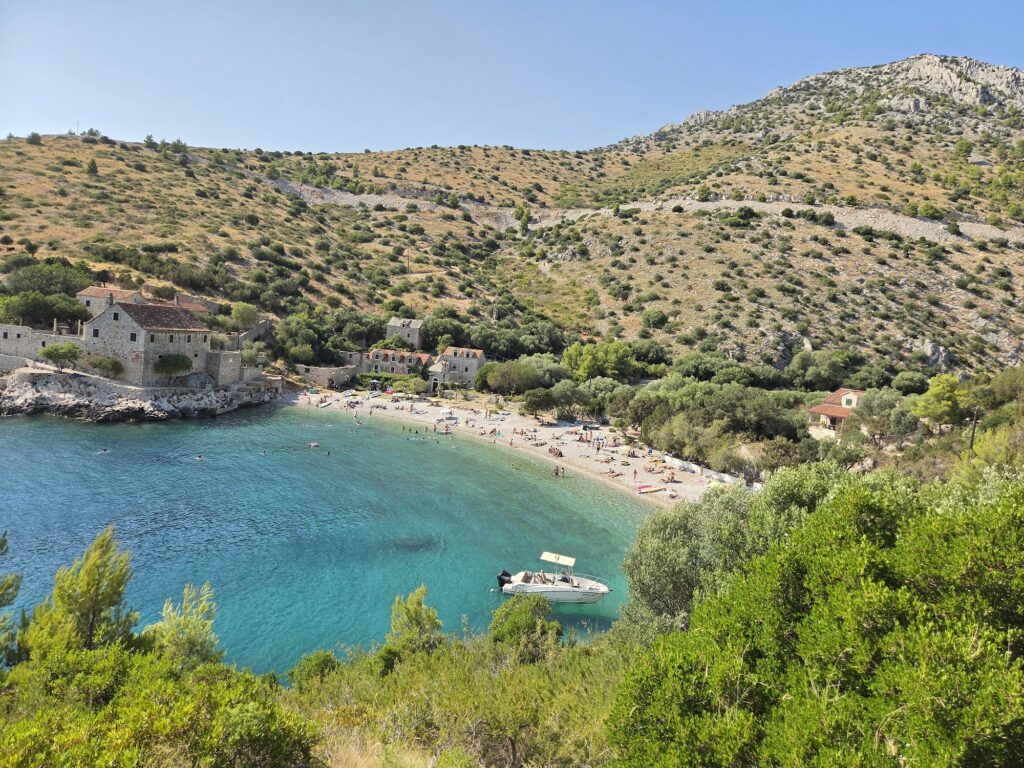
Plaža Dubovica is a crescent-shaped bay enclosed on three sides by rugged limestone cliffs that drop steeply to the waterline, their surface the warm grey of weathered Hvar stone. The bay opens southward to the open sea, and the combination of the cliff enclosure and the southern exposure gives the cove a sheltered quality and a quality of light that changes significantly through the day.
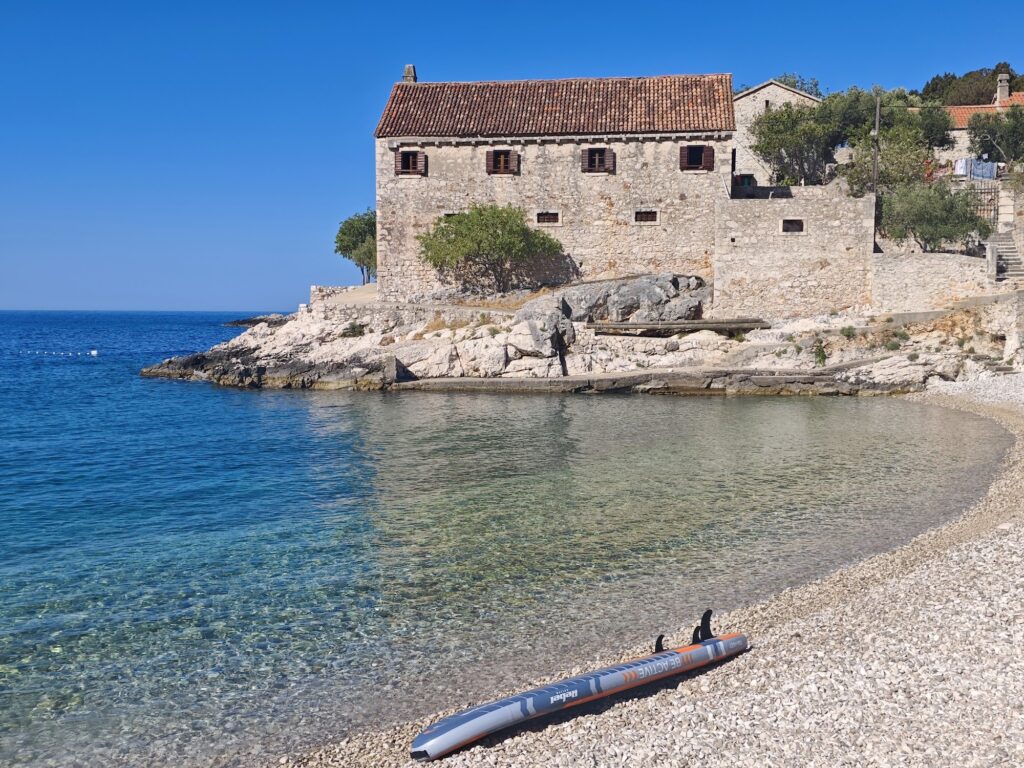
The noble manor house at the edge of the cove is the architectural element that makes Dubovica unlike any other beach on the island and arguably unlike most beaches anywhere on the Croatian coast. It is a working structure rather than a ruin — inhabited, maintained, its stone walls weathered to the same palette as the cliffs behind it — and its presence at the waterline gives the bay a sense of long occupation, of a place that has been known and valued for centuries rather than discovered by contemporary tourism. The beach bar and konoba that operate from the old stone building at the shore’s edge are housed within this architectural context, which gives even a simple coffee on the terrace a quality of setting that purpose-built beach bars cannot manufacture.
The Pakleni Islands are visible across the open water to the west — the same archipelago visible from Pokonji Dol on the other side of the headland — and the view from the bay over the open channel, with the islands in the middle distance and the open sea beyond, gives the southern horizon a layered quality that makes the setting feel larger than the enclosed cove geometry suggests.
The Shore and Water Quality
The pebbles at Dubovica beach Hvar are larger than at most beaches described in these pages — smooth, sun-bleached white stones that have been worked by the sea to a rounded finish, comfortable to lie on once settled but requiring water shoes for the entry and the rocky margins. This is not a beach for bare feet in the conventional sense, and knowing that before you arrive is more useful than discovering it on the first step onto the shore.
The water quality at Plaža Dubovica is exceptional throughout the bay. The cove’s position away from ports, marinas, and urban infrastructure means that the sea here maintains the ecological integrity of an undisturbed coastline — the clarity is immediate and consistent, the colour shifting from pale turquoise in the shallows to a deep sapphire in the centre of the bay where the depth increases most sharply.
Snorkeling at Dubovica Beach along the cliff bases and rocky margins is the activity the water quality most richly rewards. The underwater rock formations provide the structural complexity that supports varied marine life — sea bream moving through the seagrass meadows, the rocky crevices and cliff bases colonised by the urchins and anemones that only genuinely clean, undisturbed water sustains. I spent a long morning session working the eastern cliff base, and the quality of the underwater environment — its clarity, its variety, its evident lack of disturbance — was among the finest I have encountered on the southern Dalmatian coast.
The bay’s sheltered enclosure keeps the water calm through most conditions, and the southern exposure warms the shallows through the summer to a temperature that makes extended swimming comfortable without the oppressive warmth of entirely enclosed bays. It is, as a swimming environment, close to what you would design if you were designing from scratch.
Facilities: The Right Kind of Nothing
Plaža Dubovica facilities are minimal in a way that is clearly intentional rather than neglected, and understanding that distinction is essential to arriving with accurate expectations.
A simple freshwater shower is available for rinsing after swimming. There are no rows of plastic sunbeds — the pebbles are the lounging surface, and visitors arrange themselves accordingly. There is no lifeguard. There are no motorised water sports. The beach bar and konoba in the old stone building are the entirety of the commercial infrastructure, and they operate with the unhurried competence of establishments that have been doing exactly this for a long time.
The absence of these things is not a gap — it is a condition, and it is inseparable from the quality of the atmosphere, the water, and the setting. Dubovica remains what it is partly because it does not offer what it has chosen not to offer, and the visitors who arrive having understood that tend to be the ones who appreciate it most completely.
Water shoes are essential. Sufficient water and food for the duration are advisable, though the konoba covers the basics for those who want a meal or a drink without carrying everything down the path. Sun protection applied before the descent rather than after is the practical sequence that the path’s exposure and the bay’s limited natural shade make advisable.
For Families
Plaža Dubovica with children is an experience suited to a specific family configuration — one with older children and teenagers who are confident in the water, unbothered by large pebbles and the absence of playground infrastructure, and engaged by a setting that makes demands on their attention rather than providing passive entertainment.
For that family, the bay is exceptional. The calm, sheltered water provides safe swimming in conditions of genuine quality. The snorkeling along the cliff bases provides the kind of sustained underwater engagement that curious young swimmers find genuinely absorbing. The historical character of the manor house and the setting provide a context and a conversation that purely natural beaches cannot offer. The boat arrival option, if taken, adds an adventure dimension to the day that children tend to remember specifically.
For families with very young children, pushchairs, or requirements for consistent shade and immediate restroom access, the logistics of Dubovica work against a comfortable day at every point. Other Hvar Island beaches are better matched to those needs, and knowing the difference before committing to the path descent is the more useful information.
Food and Drink: The Konoba in the Manor
The beach bar and konoba at Dubovica operate from the old stone building at the water’s edge — the same structure that anchors the bay’s visual composition — and the experience of eating and drinking there is shaped as much by the setting as by the quality of the food.
Coffee on the shaded terrace, with the bay and the cliff face visible from the table and the sound of boat masts in the light wind, is the morning ritual that the place naturally invites. The cooking in the konoba is Dalmatian coastal cuisine at its most honest and most location-specific — fresh octopus salad dressed with Hvar olive oil, local goat cheese, the straightforward preparation of good ingredients in a kitchen that has no interest in complicating them. A glass of Hvar white wine — the island produces some of Croatia’s finest, the limestone terrain of the island’s interior giving the grapes a specific mineral quality — completes the meal with the regional appropriateness that the setting deserves.
Dining at the edge of the cove with the manor house behind you and the open sea ahead is a combination that the island’s harbour restaurants, however good, cannot replicate. The setting does most of the work, and the cooking is honest enough not to undermine it.
Plaža Dubovica on Hvar Island is a beach that asks something of you and returns something proportionate to what you give. The drive, the parking logistics, the path descent, the large pebbles, the absence of commercial infrastructure — none of these is accidental, and all of them contribute to the specific quality of what the bay provides in exchange.
What it provides is a setting of genuine and unusual distinction — the manor house, the cliffs, the extraordinary water, the historical depth that only a centuries-old inhabited coastline accumulates — in combination with the ecological integrity of a place that has been protected, in part, by the effort required to reach it.
The path down is worth taking. Water shoes are not optional. The konoba terrace in the late morning, with a coffee and the open bay in front of you, is one of the finer places to spend an hour on the Dalmatian coast.
Take the road east from Hvar Town. Park above the path. Descend carefully.
What is at the bottom justifies every step.
Map
Sorry, no records were found. Please adjust your search criteria and try again.
Sorry, unable to load the Maps API.
Near by places: