Murvica Beach Brač Island: Wild Cove West of Bol Croatia
Profile
Murvica Beach, Brač Island: The Quiet Cove Five Kilometres West of the Crowds
Croatia | Dalmatia | Brač Island
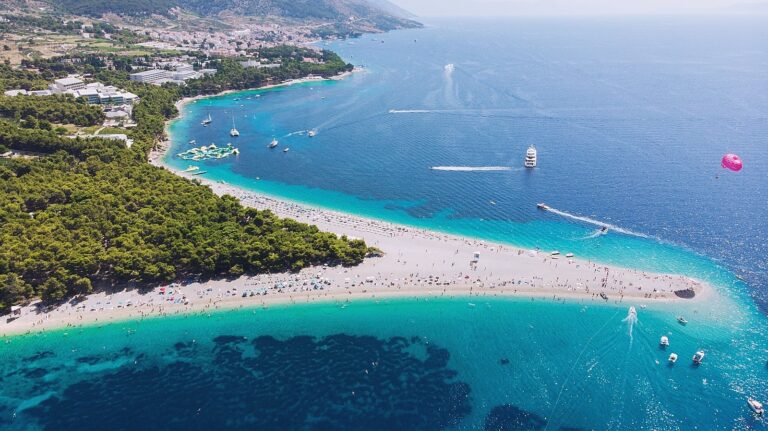
There is a particular satisfaction in finding somewhere excellent by the simple act of continuing past somewhere famous. Murvica Beach on Brač Island sits approximately five kilometres west of Bol along the southern coast road — close enough to reach in ten minutes by car, far enough that the overwhelming majority of visitors to the island never make the short additional journey. The result is a beach of considerable natural quality that operates at a fraction of the visitor density of its celebrated neighbour, and that offers something Zlatni Rat, for all its extraordinary qualities, cannot: the experience of a genuinely wild, cliff-framed cove where the dominant sound is the Hvar Channel moving against the stone.
I drove west from Bol on my second morning on the island, following the coastal road that climbs and winds above the southern cliffs before descending into the small settlement of Murvica village. I parked at the small area near the top of the village, found the path leading down through the terraced vineyards and dry stone walls to the shore, and arrived at the pebbles with the particular feeling — familiar to anyone who has spent time seeking less-visited places on the Croatian coast — of having made a good decision.
Getting There: The Short Drive That Most People Don’t Take
How to get to Murvica Beach from Bol presents three options of increasing effort and increasing reward.
By car, the coastal road west from Bol takes five to ten minutes and is scenic throughout — the Hvar Channel visible below the road on the left, the terraced hillside of the island’s southern slopes rising to the right. A small parking area near the top of Murvica village sits at the start of the path down to the beach. It fills on busy days, and arriving before mid-morning is the straightforward solution to that particular problem.
On foot from Bol, the coastal path offers a five-kilometre walk with consistent views of the southern coast and the channel below. It is a genuine hike rather than a stroll — the terrain is uneven and the sun exposure significant on a clear summer morning — but the arrival at Murvica after walking the cliff path provides a context and a physical engagement with the landscape that a five-minute drive does not. For visitors with the time and the inclination, it is the more complete experience.
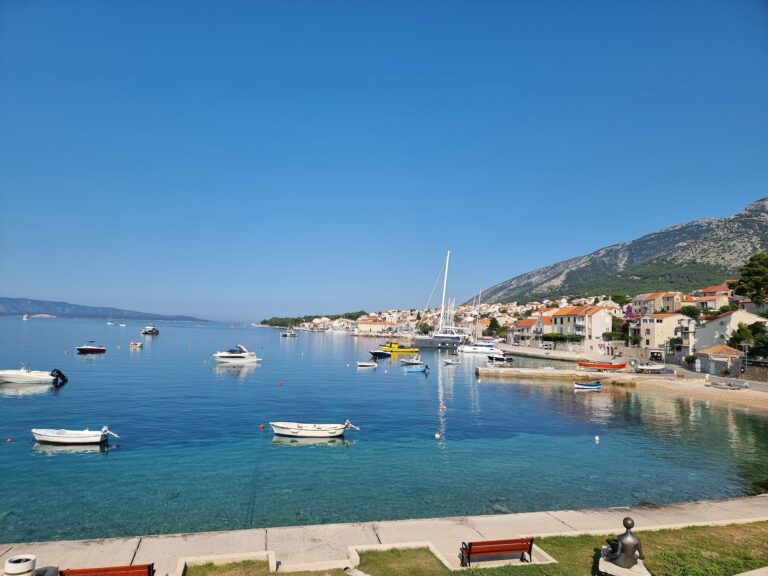
By taxi boat from Bol harbour, the approach from the sea allows the cliff formations of the southern coast to be appreciated in their full scale — the limestone rising almost vertically from the water, the small coves carved into its base at intervals, Murvica appearing as a break in the cliff wall with the village visible on the hillside above. It is, as an introduction to the beach, the most visually impressive of the three options and worth considering for at least the outward or return journey.
The Beach: Several Coves, One Character
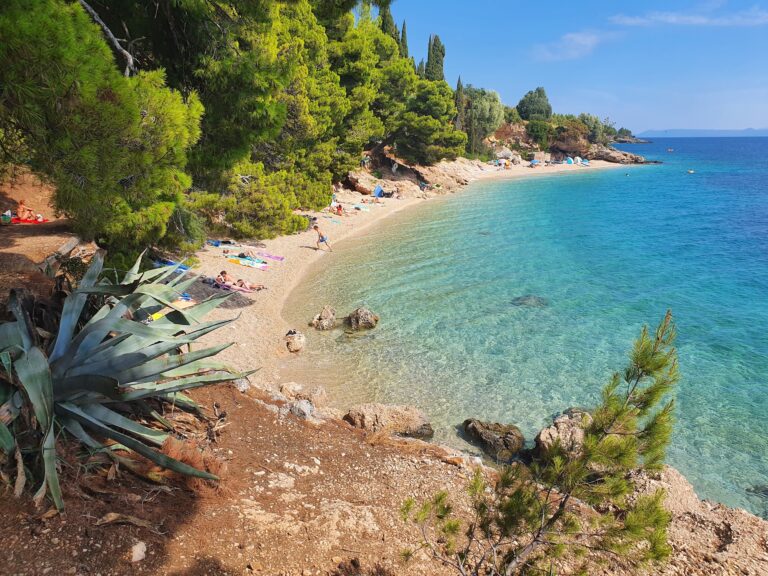
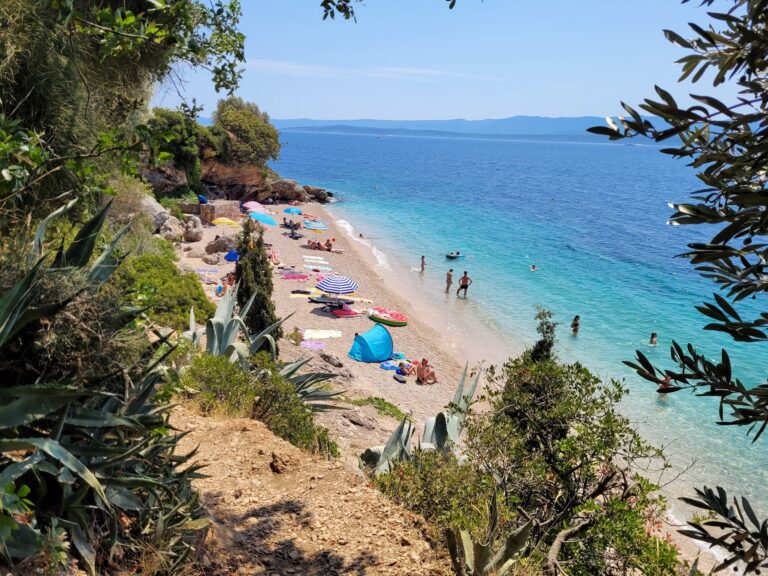
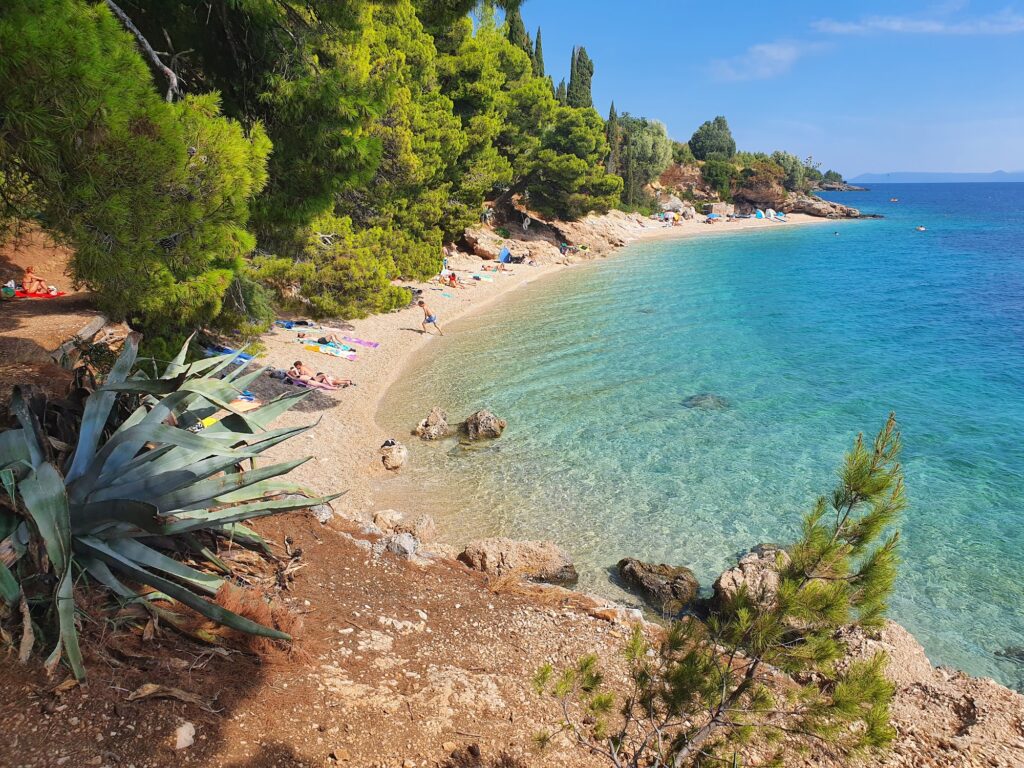
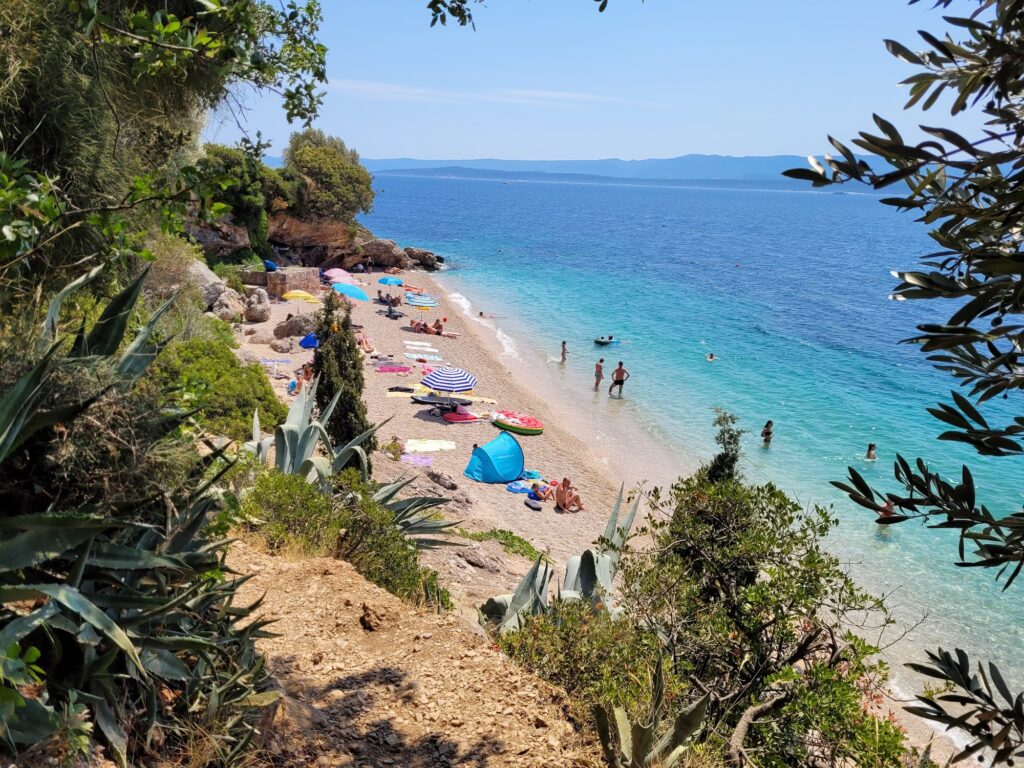
Murvica Beach is not a single continuous shore in the way that Zlatni Rat or the long pebble beaches of the Makarska Riviera are. It is a series of smaller coves carved into the cliff base, each separated from its neighbours by rocky outcrops, each offering a degree of enclosure and privacy that a single open beach cannot provide. On a busy summer day — and even at Murvica, the peak season brings visitors enough to fill the available space — the cove structure distributes people naturally, so that each section of the beach feels more private than the total visitor count would suggest.
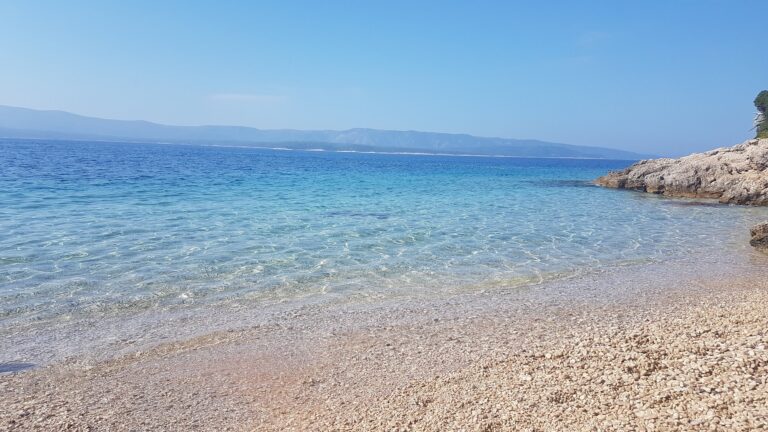
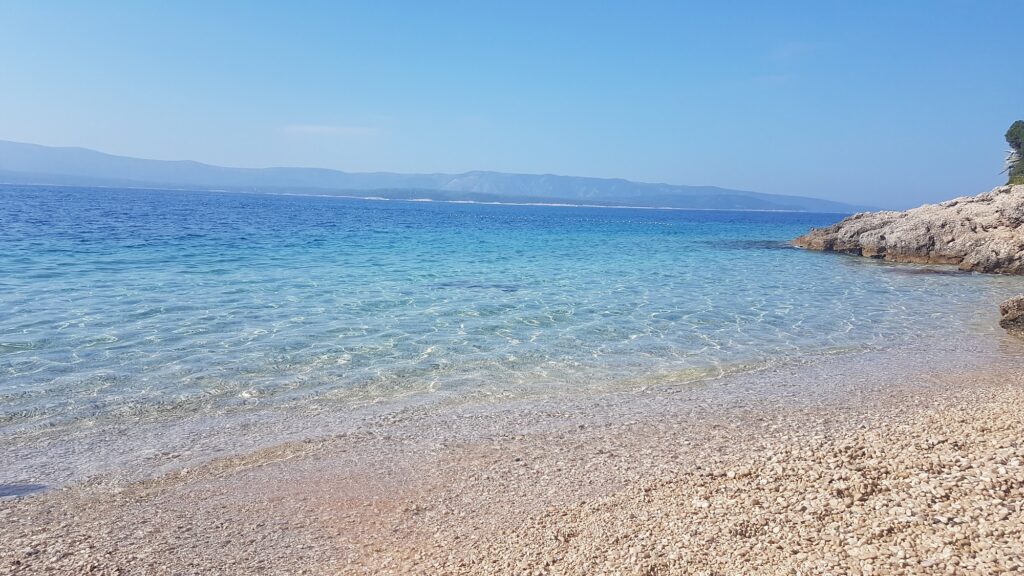
The shore is fine white shingles and smooth pebbles, glowing with the particular luminosity that this combination of pale stone and strong Mediterranean light produces. The cliffs rise steeply above the beach on the landward side — the dramatic limestone of Brač Island’s southern face, vegetated in places with the dry scrub and occasional tamarisk that the terrain supports. The vineyards of the village are visible on the hillside above, their terraced rows following the contour of the slope in the way that centuries of island agriculture have shaped this part of the coast.
The combination of cliff, vineyard, sea, and pebble gives Murvica beach Brač a layered visual quality — each plane of the landscape at a different distance and a different texture — that makes simply sitting on the shore and looking at the surroundings a genuinely engaging activity rather than a passive one.
The Water
The water quality at Murvica Beach benefits from the open-sea currents of the Hvar Channel circulating freely along the southern coast of Brač — keeping the sea clean, well-oxygenated, and at the standard of transparency that the island’s more famous locations have made visitors expect. The rocky seabed, visible in detail several metres down, shifts from pale stone to darker formations as the depth increases, and the clarity is consistent across the full extent of the coves.
Snorkeling at Murvica Beach is the activity that the beach is best suited to and that most rewards the time invested. The submerged boulders along the cliff bases provide the structural complexity that supports varied marine life — sea urchins colonising the shaded rock faces, fish moving through the underwater vegetation in the shallows, the occasional cephalopod occupying a crevice with the particular stillness that octopuses maintain when they believe they are unobserved. I spent the better part of an hour in the water on my first morning, working systematically through the rocky margins of two of the coves, and the quality of what I found justified the session entirely.
The central section of the main cove offers a gentler, pebble-bottomed entry that is more accessible for swimmers who find rocky entries uncomfortable — useful to know for families with children or for those who want to reach the open water without the care that the rockier edges require.
The Dragon’s Cave — the remarkable rock-carved shrine situated in the cliff face above and west of the beach, containing a remarkable series of medieval relief carvings — is accessible by a path from the beach and provides a cultural dimension to a visit at Murvica that no other beach on Brač Island can offer. The cave is worth the climb for its own sake, and the view of the Hvar Channel from the cliff path above the beach on the way up is among the finest perspectives on this stretch of coast available on foot.
Facilities: Honest Minimalism
Murvica Beach facilities are minimal and consistently so — a position that reflects the character of the place rather than a gap in local tourism infrastructure, and that is worth understanding clearly before arrival.
Basic freshwater showers are available on the path leading down to the beach — sufficient for rinsing salt before the return journey, positioned where they can be used without generating additional infrastructure at the shoreline itself. There are no sunbed rentals, no changing cabins, no beach bar permanent structure, no lifeguard. The cliff face and the tamarisk trees provide the only shade available — natural, variable, and sufficient in the late afternoon when the sun has moved sufficiently west to put portions of the beach in shadow.
This is a beach that rewards preparation rather than spontaneity. Sufficient water and food for the duration, sun protection applied before the descent rather than after, footwear appropriate for the path and the rocky sections of the shore — these are the straightforward requirements of a day at Murvica done properly. There are no motorised water sports and no organised activities of any kind. The quiet that results from this absence is not incidental — it is the defining quality of the atmosphere.
The path from the parking area down to the beach is steep and uneven. It is manageable for fit adults and for children old enough to navigate rough ground confidently, but it is not suitable for pushchairs or for visitors with significant mobility limitations. The terrain is the honest condition of a genuinely wild beach, and it is inseparable from the character of what the beach offers.
For Families
Murvica Beach with children is well-suited to a specific kind of family visit — one with older children and teenagers who are confident swimmers, interested in snorkeling, and engaged by a landscape that makes demands on them rather than servicing their comfort.
The central cove’s pebble entry provides accessible and calm-water swimming for children who want straightforward sea time. The rock pools and underwater formations along the cliff edges provide sustained engagement for curious young snorkelers. The Dragon’s Cave above the beach — its medieval rock carvings visible in the cliff face, its history specific and strange and unlike anything most children encounter in ordinary educational contexts — provides the kind of discovery that generates genuine rather than performed enthusiasm.
For families with very young children, pushchairs, or requirements for shade and restroom proximity, Murvica is not the right destination. The logistics work against it at every practical level, and Bol — five kilometres east — offers beaches and facilities better matched to those needs. But for the family that has been to the obvious resort beaches and is looking for something that feels like a genuine discovery, the short drive west from Bol is one of the better decisions available on Brač Island.
Food and Drink: The Village Above
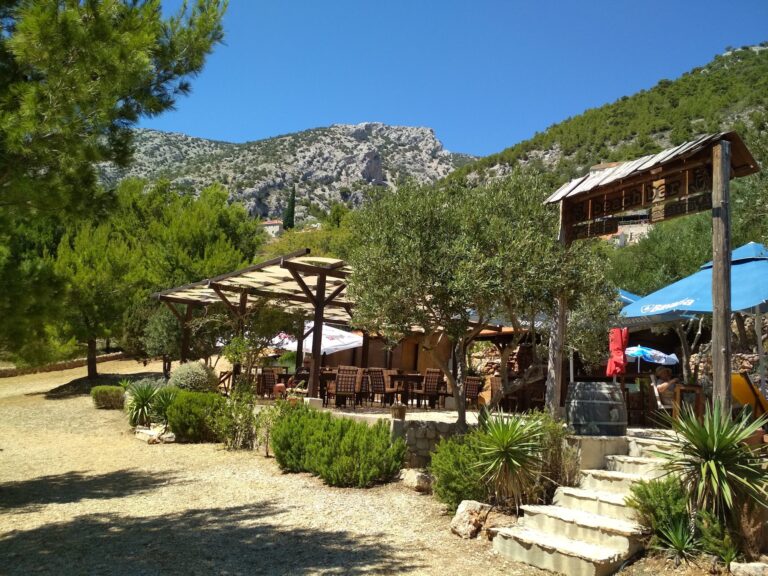
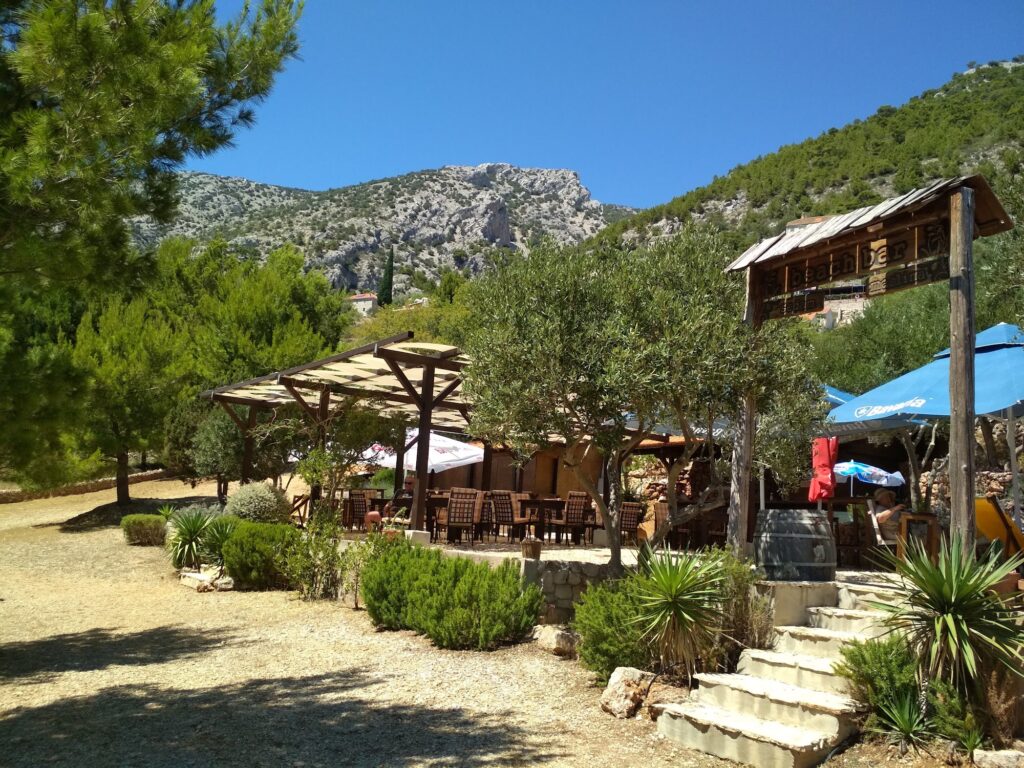
There is nothing to eat or drink at Murvica Beach itself, which is one of the reasons it remains as clean and as quiet as it does. The village above the beach — reached via the same path that descends to the shore — contains a small bar with a terrace looking south over the Hvar Channel, where coffee in the late afternoon, with the light shifting across the water and Hvar Island clearly visible on the horizon, produces one of the more quietly satisfying hours available on this part of the coast.
The tavernas in Murvica village serve Brač lamb from the island’s limestone pasture — the same terrain that shapes the cliff above the beach, feeding the same animals whose flavour reflects it — alongside local wine from the vineyards visible from the shore. Eating in the village after a full day at the beach, with the tiredness of hours in the sea and the sun and the smell of wild rosemary in the evening air, is the specific and entirely satisfying conclusion to a day at Murvica that no promenade restaurant, however good, can substitute for.
Murvica Beach on Brač Island operates at a completely different register from the island’s famous cape beach five kilometres to the east. Where Zlatni Rat offers scale, organisation, activity, and the specific satisfaction of a world-famous landmark experienced in person, Murvica offers the opposite of most of those things — smaller, quieter, wilder, less serviced, and more demanding of the visitor in proportion to what it returns.
What it returns is considerable. The water quality is equal to anything on the island. The snorkeling along the cliff bases is among the best in the broader Split region. The Dragon’s Cave provides a cultural layer that most Croatian beaches simply do not possess. The cove structure offers a sense of privacy rare at any beach this close to a major tourist hub. And the short drive from Bol means that the effort required to access all of this is genuinely modest.
Five kilometres is not far. Most people don’t take the drive. That is, for those who do, precisely the point.
Map
Sorry, no records were found. Please adjust your search criteria and try again.
Sorry, unable to load the Maps API.
Near by places: