Zlatni Rat Brač Island: Croatia's Most Iconic Beach
Profile
Zlatni Rat, Brač Island: A Personal Account of Croatia’s Most Iconic Beach
Croatia | Dalmatia | Brač Island
Every country with a coastline has one — the beach that has become the image by which the entire coast is known, reproduced so many times across so many surfaces that the gap between the representation and the reality becomes almost impossible to close before you actually stand there. For Croatia, that beach is Zlatni Rat.
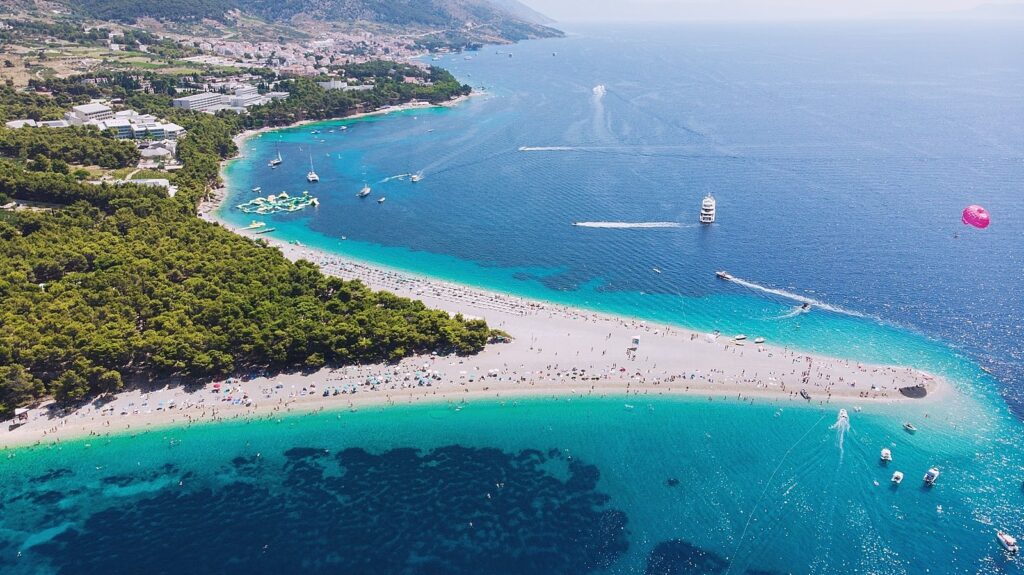
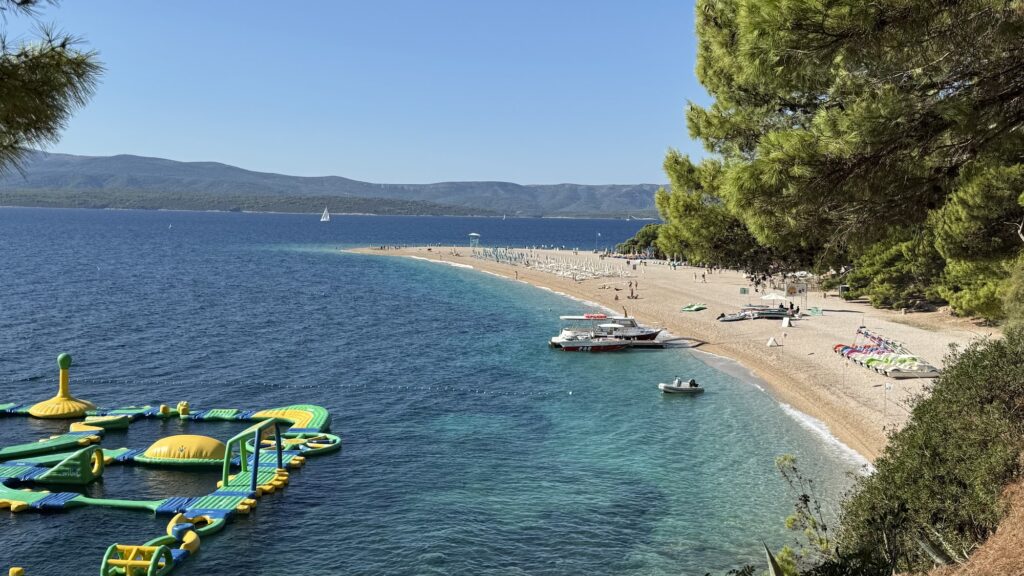
I arrived at the tip of the cape in the late morning of a clear July day, having walked the marble-paved promenade from Bol harbour through the pine grove, and I will say directly what I suspect anyone who visits eventually thinks: the photographs do not prepare you for it. Not because they are inaccurate — the white pebbles, the turquoise water on both sides, the way the horn extends into the Hvar Channel like a pointing finger — all of that is exactly as depicted. What they fail to convey is the spatial quality of standing on a narrow finger of land with deep blue water on both sides of you simultaneously, the horizon unobstructed in three directions, the wind arriving from across open sea with nothing to interrupt it. It is a beach that operates at a scale and in a configuration that photographs, by their nature, compress into something smaller than the experience itself.
I stayed for the full day. I came back the following morning. I have returned since. Zlatni Rat is one of the few beaches in this series that genuinely justifies the hyperbole attached to it, and understanding why requires more than a description of the pebbles.
Getting to Zlatni Rat: Three Ways to Arrive
How to get to Zlatni Rat from Bol presents three options, and each produces a different introduction to the beach that is worth choosing deliberately rather than by default.
The most popular approach is the promenade walk from Bol harbour — a twenty-minute route along a wide, marble-paved path that runs through the pine grove separating the town from the cape. The path is flat throughout, fully shaded by the pine canopy for most of its length, and stroller-friendly from end to end. On my first visit I walked it in the early morning before the main crowd had assembled, and the combination of the pine-scented shade and the periodic glimpses of the water through the trees to either side was an unexpectedly fine beginning to the day. This is the approach I would recommend to first-time visitors — it earns the destination by degrees rather than delivering it without context.
A small taxi boat service from Bol town centre runs every few minutes during peak season, depositing passengers directly at the beach from the sea. Arriving at Zlatni Rat by boat — watching the cape’s shape become clear as you approach from the water, the white pebbles and turquoise channel visible simultaneously as you near the shore — is the more visually dramatic introduction and well worth considering for a return visit or for those whose time is limited.
A tourist train loops between the town and the beach entrance throughout the day, a practical option for families with significant equipment and the particular appeal of any small train in any warm country to children of a certain age.
Parking in Bol is available in the town, from which the promenade walk begins. Driving directly to the cape is not possible — the beach is accessible only on foot, by boat, or by the tourist train from the town.
The Cape: What Makes Zlatni Rat Singular
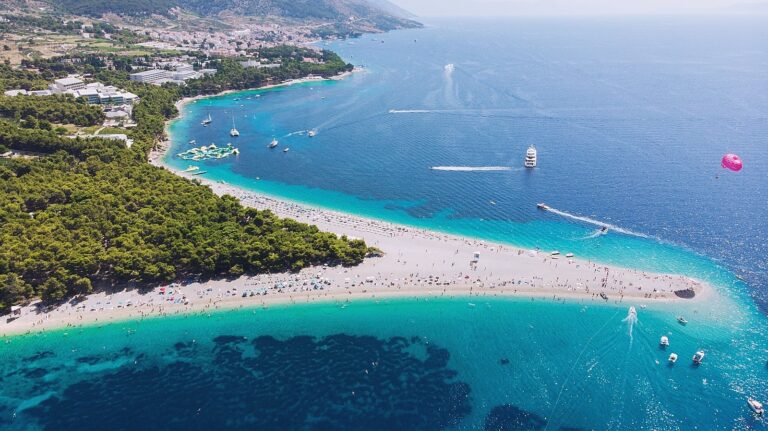
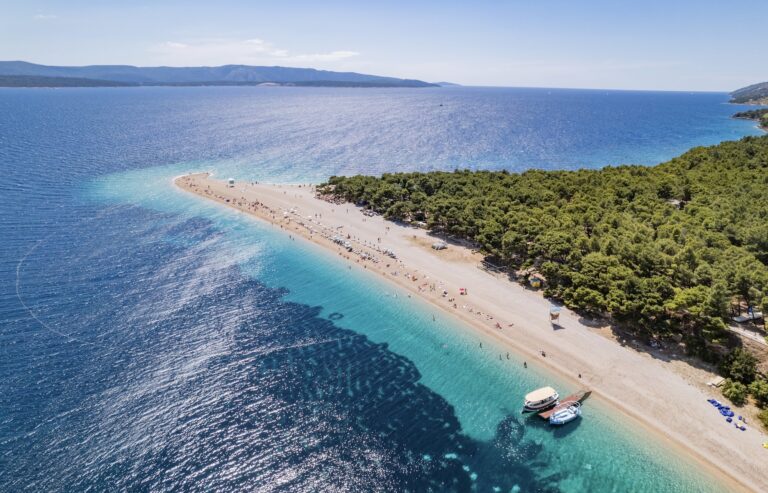
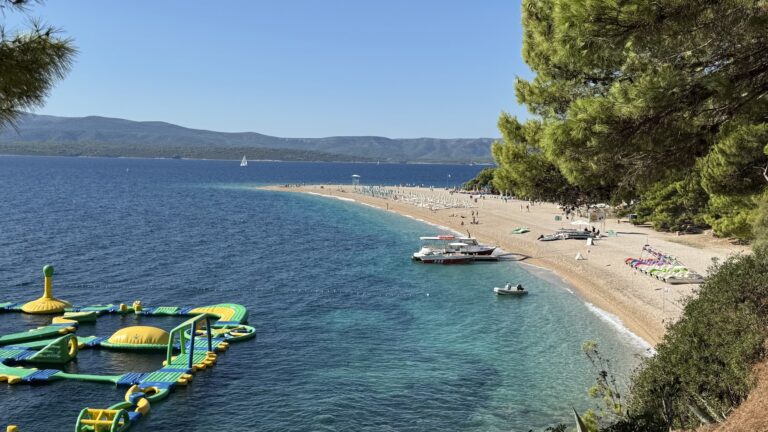
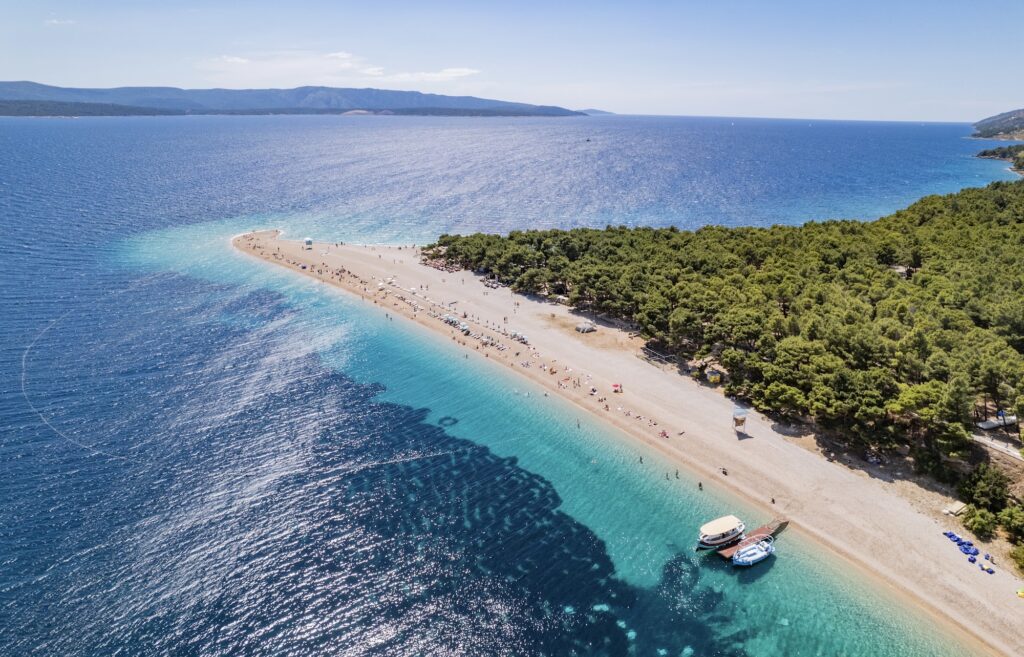
Zlatni Rat beach — the name translates as Golden Horn — extends approximately half a kilometre into the Hvar Channel from the pine-covered headland above Bol. The cape is composed of fine white pebbles that compact smoothly underfoot and give the shoreline a pale, almost luminous quality in direct sunlight that makes the turquoise of the surrounding water register with unusual intensity.
The quality that distinguishes Zlatni Rat from every other beach in Croatia — and from almost every other beach anywhere — is its capacity for movement. The tip of the cape shifts direction depending on the prevailing wind and current, curving east or west by as much as several metres over the course of a season. This is not a subtle variation detectable only in long-term photographs; it is a living geographical process that is visible in the changing shape of the waterline from visit to visit and that gives the beach a quality of instability, of gentle ongoing transformation, that no static shoreline possesses.
Standing at the tip of the cape with water on both sides, the ground literally narrowing to a point beneath you, is an experience that has no equivalent among the beaches I have visited in this country. The spatial sensation of being surrounded by open water on three sides while standing on solid ground is disorienting in the most pleasurable way — a reminder that this is a genuinely unusual landform rather than simply a very good beach.
The Water: Two Sides, Two Conditions
One of the practical consequences of the cape’s geometry is that the two sides of Zlatni Rat present meaningfully different swimming conditions simultaneously, which allows visitors to choose their experience rather than accepting whatever the day’s weather imposes.
The leeward side — sheltered from the Maestral wind that blows reliably from the northwest through most summer afternoons — offers calm, still water with gentle entry conditions well-suited to families with young children and less confident swimmers. On the days I visited, this side consistently had the flatter surface and the more accessible shallows.
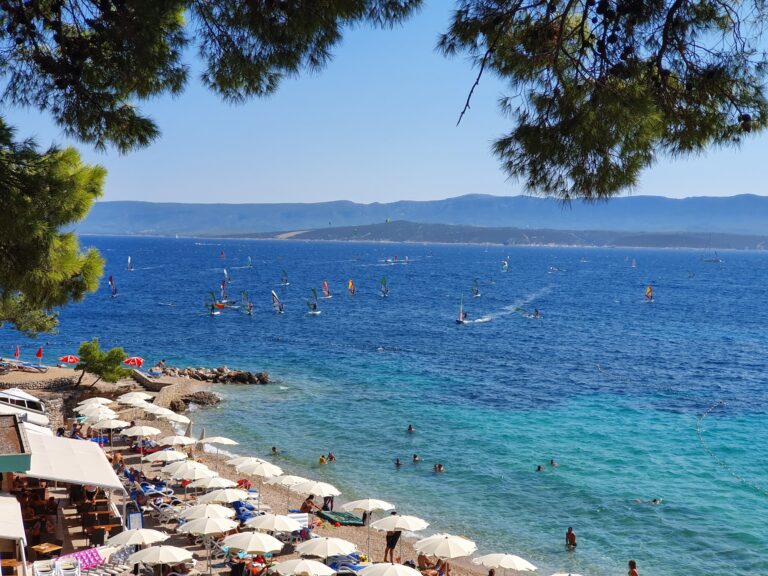
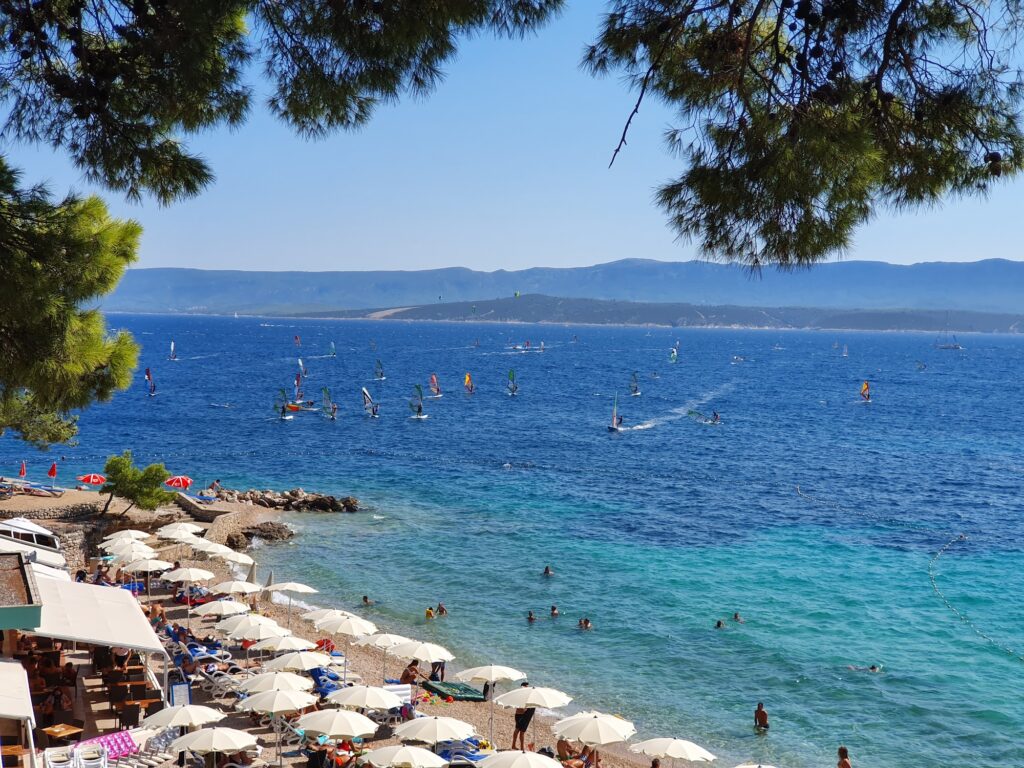
The windward side catches the Maestral directly and produces a choppier, more energetic surface that windsurfers and kitesurfers position themselves to exploit. The wind on this side is reliable enough — and the conditions well-understood enough by the local water sports operators — that Zlatni Rat has established itself as one of the premier windsurfing and kitesurfing destinations in Croatia, with professional schools operating directly from the beach. Watching experienced riders work the Maestral from a position on the pebbles a few metres away is, independently of any intention to participate, one of the more visually compelling things the beach offers.
The water quality at Zlatni Rat is exceptional throughout. The cape’s position extending into deep water means that fresh sea currents circulate around it continuously, maintaining a clarity and purity that the transparency of the water confirms immediately on entry. Snorkeling at Zlatni Rat along the underwater limestone formations below the cape reveals schools of fish and the kind of structural underwater complexity that only genuinely clean, well-circulated water supports.
The Pine Grove: The Beach’s Second Environment
The ancient pine forest that occupies the centre of the headland above the cape — through which the promenade passes and at the edges of which the beach bars and facilities are positioned — is as much a part of the Zlatni Rat experience as the water or the pebbles.
The trees are old and large, their canopy dense and high enough to create a genuine interior environment beneath them — cooler by a meaningful temperature difference from the open beach, acoustically separate from the sounds of the sea and the water sports, and scented with the specific quality of warm pine resin that is one of the defining sensory experiences of a Croatian summer day at its best.
Families occupy the pine shade through the hottest hours of the day in numbers that suggest a long-established understanding of where the most comfortable position on the beach actually is. I settled at the pine margin on both of my full days at Zlatni Rat and found that the movement between the open pebbles, the water, and the shade of the grove gave the day a natural rhythm that no single environment alone could have produced.
Facilities and Water Sports
Zlatni Rat beach facilities are organised with the efficiency of a destination that receives very large numbers of visitors and has developed its infrastructure accordingly. Sunbed and umbrella zones are extensive and well-managed along both sides of the cape. Freshwater showers and changing cabins are positioned at the forest edge at regular intervals. Certified lifeguards monitor both sides of the horn from elevated stations throughout the peak season — a provision that the cape’s geometry makes more complex than a conventional beach and that is correspondingly more carefully managed.
Water sports at Zlatni Rat Brač are among the most comprehensive of any beach in Dalmatia. Windsurfing and kitesurfing schools operate professionally from the beach, equipped for the Maestral conditions and available to visitors at all experience levels. Pedalo rentals, jet skiing, and an inflatable aqua park anchored in the channel cater to those whose interest in the water runs toward the active and the adrenaline-adjacent. The range is broad enough that the beach accommodates both the dedicated windsurfer and the child on a pedalo without either feeling misplaced.
For Families
Zlatni Rat with children works across a wider age range than most beaches of comparable visitor volume, largely because the range of environments and activities available on and around the cape covers different needs simultaneously.
The leeward side’s calm entry and shallow water suits young children and early-stage swimmers. The pine grove shade handles the midday sun problem without umbrella management. The promenade from Bol is flat and fully stroller-friendly throughout. The aqua park engages older children and teenagers. The tourist train satisfies the enthusiasm for small vehicles that most children between three and eight maintain regardless of circumstances.
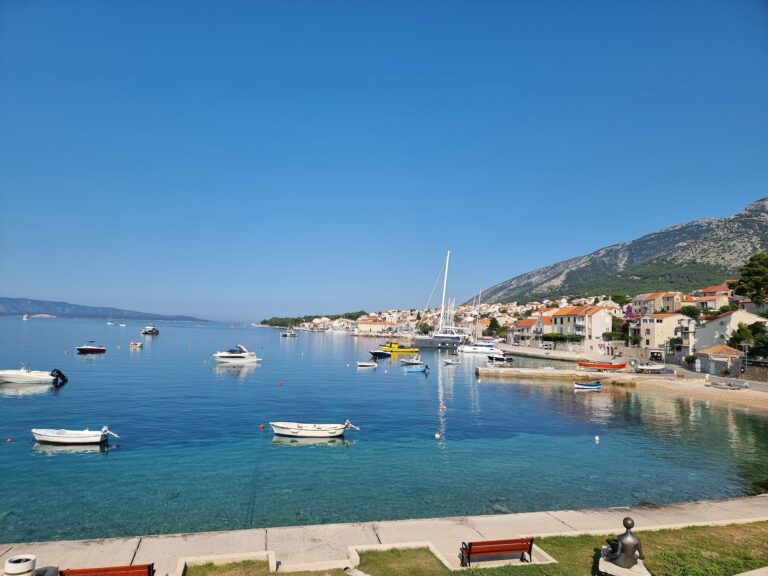
The proximity of Bol town — a twenty-minute walk along the promenade — means that practical necessities are never far, and the town itself is worth visiting before or after the beach for its own qualities: the harbour, the Dominican monastery at the water’s edge, the narrow lanes of the old centre that give the place a character independent of the beach that has made it famous.
Food and Drink: The Pine Grove Bars
The beach bars and bistros positioned within and at the edges of the Zlatni Rat pine grove operate at a standard that reflects both the volume of visitors they serve and the expectation level of an internationally known destination.
I ate in the grove on both full days at Zlatni Rat — grilled fish on the first afternoon, local Brač lamb on the second, both accompanied by the Plavac Mali wine from the Bol vineyards that produce one of Dalmatia’s more characterful reds from the same limestone terrain that shapes everything else about this island. The food is straightforward and honest, the service reflects years of managing large summer crowds without losing the relaxed quality that beach dining requires, and the setting — eating under old pines with the sound of the sea audible from both directions — is its own contribution to the experience.
The evening transition, as the day’s visitors thin and the pine grove bars shift toward a quieter, more ambient register, is worth staying for if your accommodation in Bol allows it. The cape at the end of the afternoon, when the Maestral has eased and the light on the Hvar Channel has deepened, is a different and in some ways more beautiful place than it is at midday.
Zlatni Rat on Brač Island is one of those rare places where the reputation is not a trap. The beach that has been reproduced on more Croatian tourism materials than any other location on the coast turns out, on arrival, to deserve that prominence — not because it is the most secluded or the most ecologically pristine or the most practically convenient beach in the country, but because it offers something genuinely and verifiably unique: a living landform that moves with the wind and the current, surrounded by open water on three sides, at the foot of a limestone island that rises to nearly 800 metres above it.
I have written about a considerable number of beaches in this series, each with its specific and honest claim on a visitor’s time. Zlatni Rat is the one I would recommend most without reservation to anyone visiting Croatia for the first time — not because it is the best beach in the country in every individual quality, but because it is the most distinctively Croatian thing the coastline has to offer.
Walk the promenade from Bol in the morning. Swim both sides. Stay for the afternoon wind. Eat in the pines.
You will understand the postcards, and you will also understand why the postcards are insufficient.
Map
Sorry, no records were found. Please adjust your search criteria and try again.
Sorry, unable to load the Maps API.
Near by places: