Plaža Pilatusa Pakoštane: Quiet Pine Beach Near Biograd
Profile
Plaža Pilatusa, Pakoštane: The Pine-Sheltered Cove That Earns the Drive South from Biograd
Croatia | North Dalmatia | Zadar Region Beaches
There is a specific quality that separates a beach you visit from a beach you return to — something beyond the water clarity or the facilities or the convenience of access. It has to do with how the place makes you feel after you have been there for an hour, when the initial impression has settled and what remains is either the desire to stay longer or the quiet acknowledgement that you have seen what there is to see. Plaža Pilatusa, situated along the Pakoštane coastline approximately ten minutes south of Biograd na Moru, produces the first of those responses reliably and without apparent effort.
I found it by following a coastal path south from Biograd on a morning when I had no fixed plan and a full day to fill. The path runs through a landscape that shifts character steadily as you move away from the town — the development thinning, the pine forest thickening, the sound of the road receding behind the treeline until it disappears entirely. By the time Pilatusa appeared through the pines, I had already been walking for twenty minutes in the kind of absorbed, purposeless way that only becomes possible when the surroundings are sufficiently engaging to excuse the absence of a destination.
The cove, when it appeared, looked exactly like the kind of place you hope to find at the end of a walk like that.
Getting There: South from Biograd
How to get to Plaža Pilatusa involves a choice between speed and experience, and on this occasion the slower option is clearly the better one.
By car from Biograd na Moru, the drive south toward Pakoštane takes approximately ten minutes on the coastal road. Signage for the Crvena Luka and Pilatusa area appears along the route, and a dedicated parking area sits in the shade of the forest a short two-minute walk from the beach. The shaded parking is a detail worth noting — on a hot July afternoon, returning to a cool car rather than one that has been absorbing direct sun for six hours is a small but genuine quality-of-life consideration. From Zadar, the drive south along the D8 takes around forty minutes; from Šibenik northward, a similar distance applies.
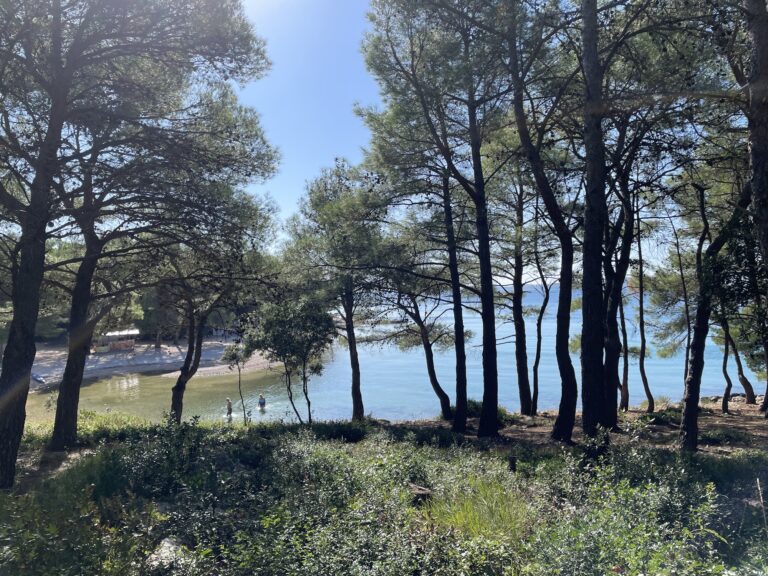
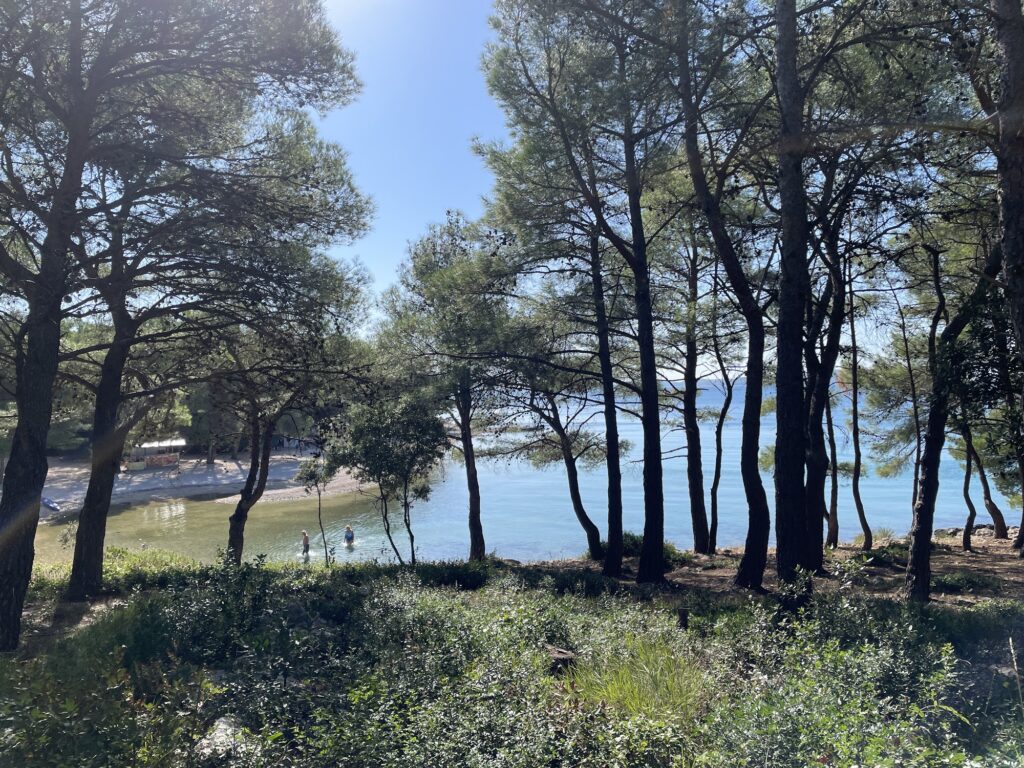
For those arriving on foot or by bicycle, the coastal path connecting the Biograd and Pakoštane villages passes directly through the Pilatusa area. The path is well-maintained, scenic throughout, and provides a genuinely different perspective on this stretch of coast from the road — the treeline close on one side, intermittent sea views on the other, the particular quality of light that filters through mature Aleppo pine canopy overhead. If your accommodation allows for it, this is the approach I would consistently recommend over the car for a first visit.
The Setting: Ancient Pines, Small Islands, Calm Water
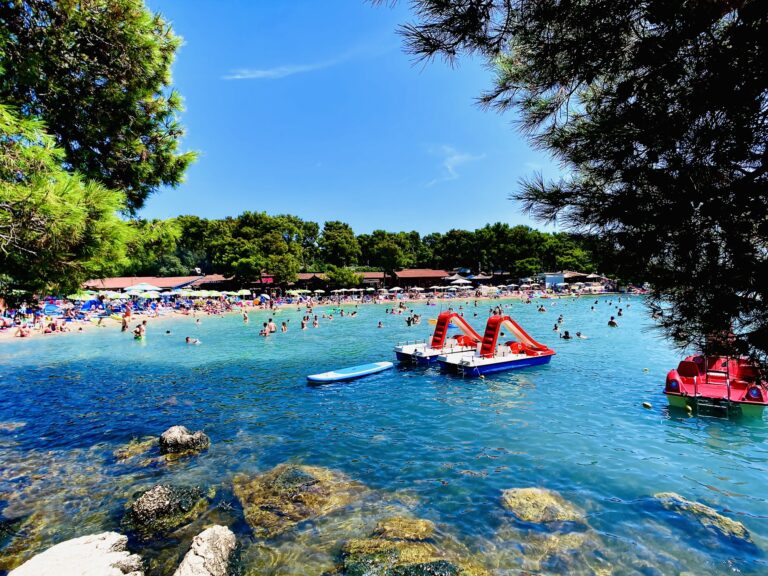
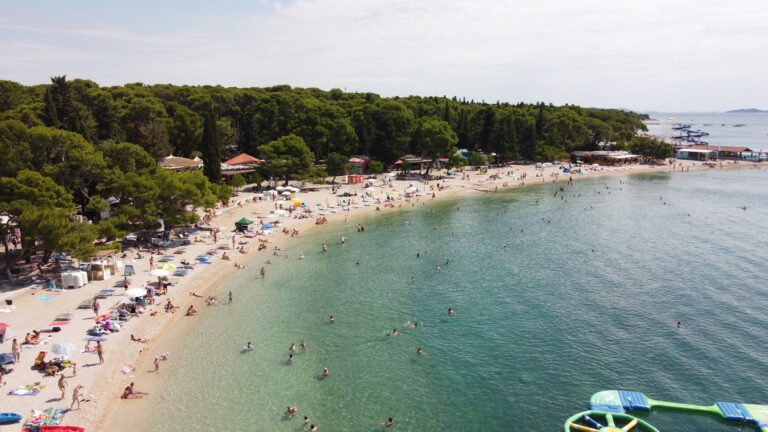
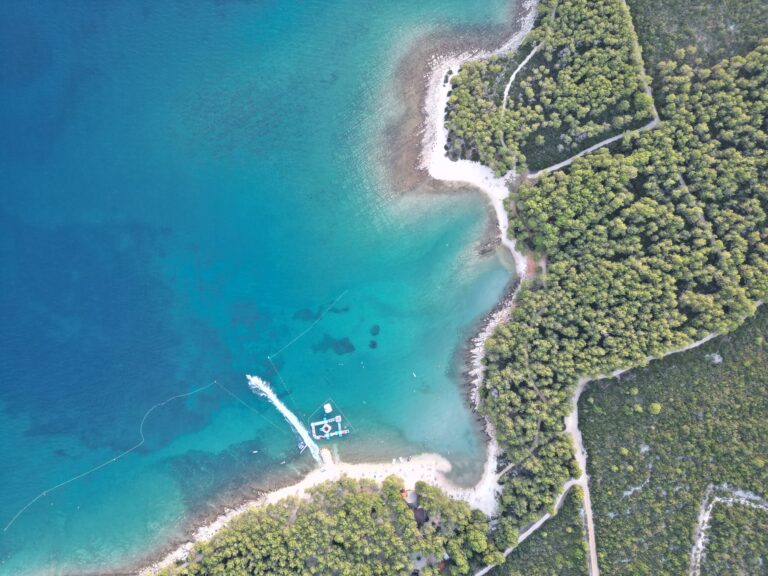
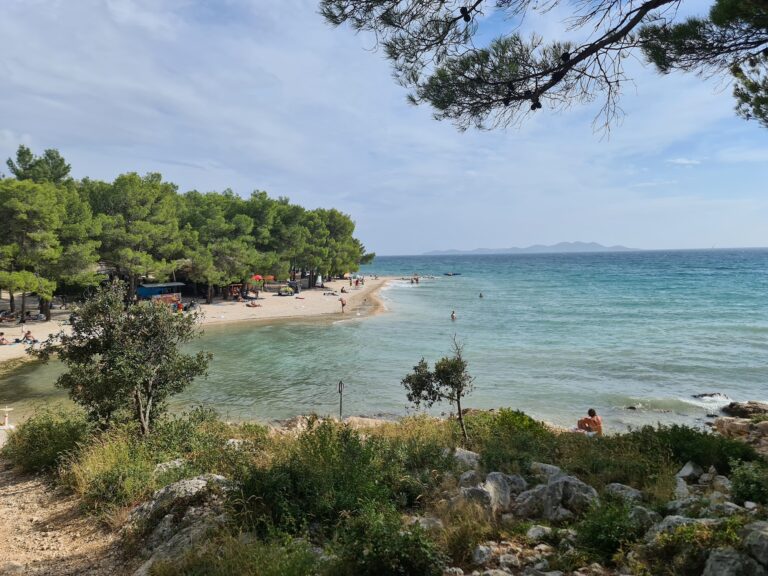
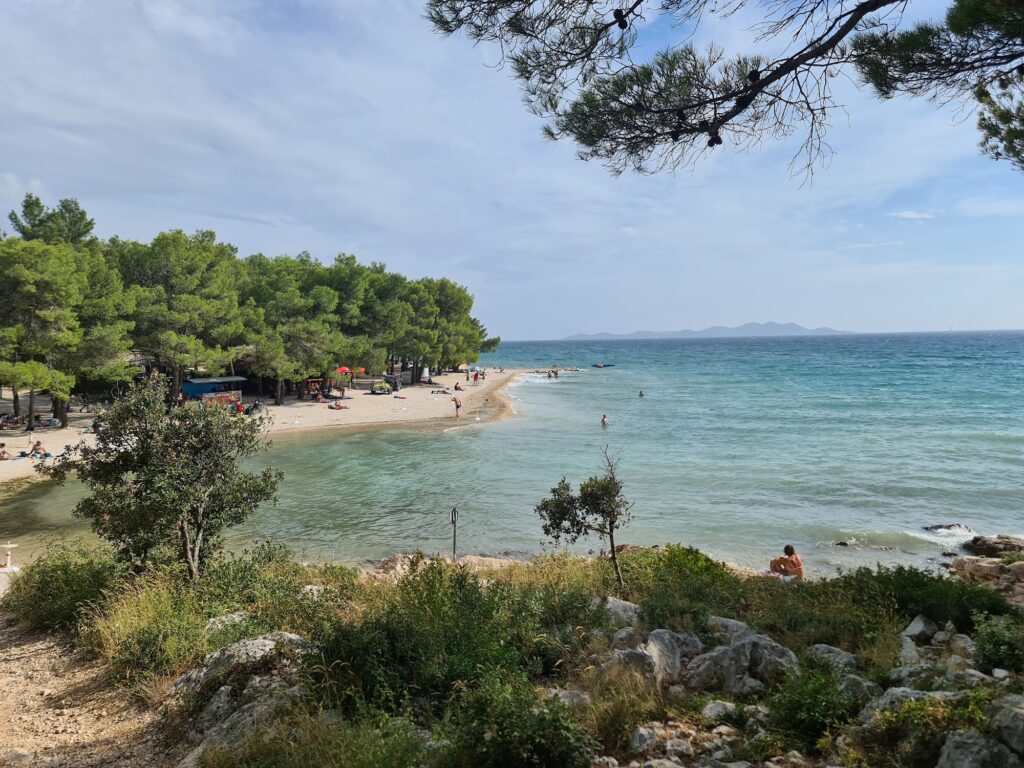
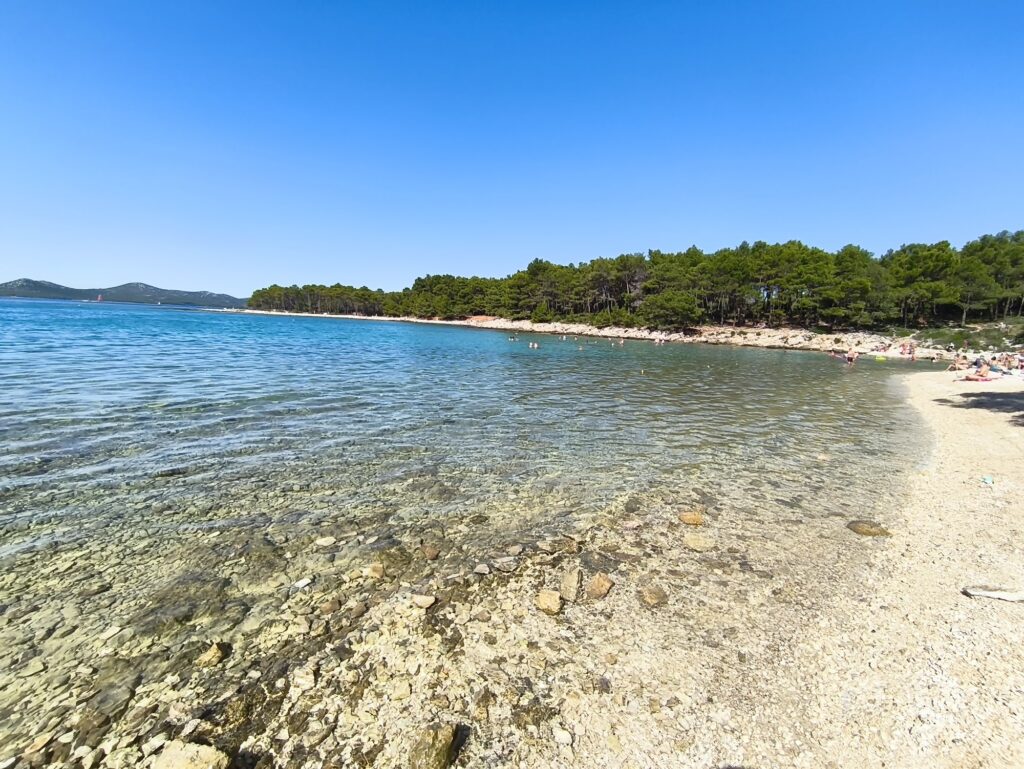
Plaža Pilatusa belongs to a category of northern Dalmatian beach that the region produces with some regularity but that never quite loses its capacity to impress: a pine-backed cove facing a sheltered channel, with the low profiles of small islands visible across the water and the mainland disappearing in both directions into more forest. It is a formula with a strong track record, and Pilatusa executes it particularly well.
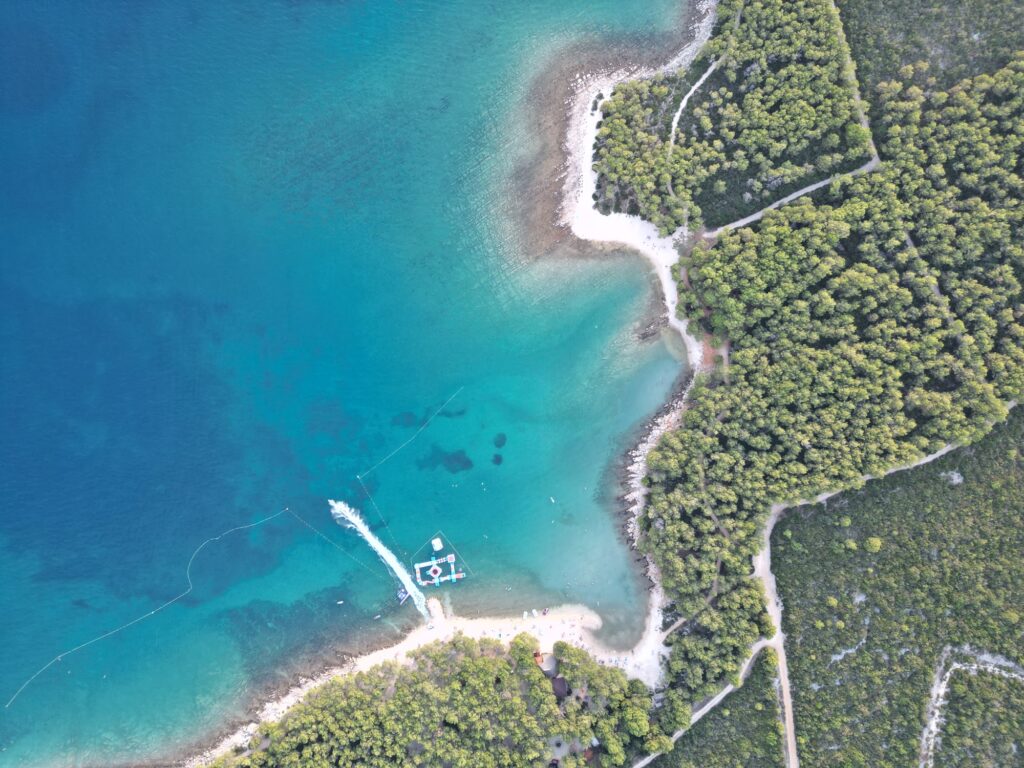
The pine forest here is not decorative in the way that planted beach landscaping tends to be — these are old trees, their trunks thick and their canopy high and genuinely dense, casting shade that reaches far enough onto the beach to make a meaningful portion of it comfortable through the hottest hours of the day without requiring sunbed or umbrella. The forest meets the shore directly in places, the treeline pressing almost to the water’s edge and creating a transition between environments that feels organic rather than designed.
The Pašman Channel facing the beach is dotted with small islands close enough to the shore to be identifiable from the pebbles — creating a visual middle distance that breaks the horizon and gives the view a layered, spatially interesting quality rather than the unbroken open-sea expanse that some locations offer. On calm mornings, these islands are reflected in the still surface of the channel with a clarity that makes the short paddle out to them by kayak or paddleboard feel less like a water sports activity and more like moving through a painting.
The Shore and Water Quality
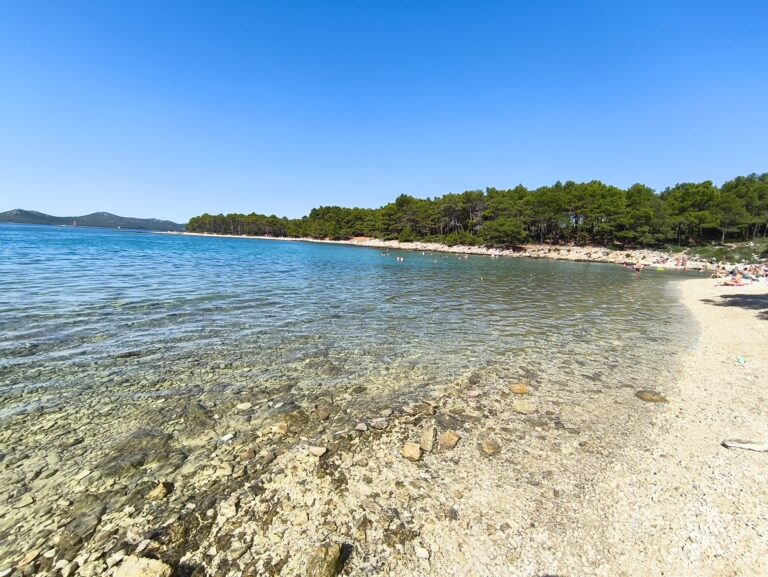
The shoreline at Pilatusa beach Pakoštane is a varied composition of fine pebbles, smooth stone plateaus, and sandy patches in the shallower water — a mixture that offers different surfaces to different preferences without any single one dominating. The stone plateaus sit flat at the water’s edge and warm steadily through the morning, making them well-suited for the particular Croatian beach ritual of lying on sun-warmed rock with your feet in the water — an experience that neither a sunbed nor a pebble section quite replicates.
The water quality at Plaža Pilatusa is excellent and consistently maintained. The sheltered channel position keeps the sea calm through most conditions, and the orientation toward the islands rather than the open Adriatic means that the water retains a stillness even when conditions elsewhere on the coast become choppy. The transparency is characteristic of the broader Pašman Channel — the seabed clearly visible at depth, the colours shifting from pale turquoise over the sandy patches to deeper blue above the rocky sections, the overall effect giving the water a quality that varies interestingly as you move through it.
I spent a productive hour snorkeling at Pilatusa along the rock and seagrass sections at the margins of the cove. Small silver fish moved through the underwater vegetation in the numbers that only genuinely clean, undisturbed water supports, and the variety of the seabed — the mixture of rock, sand, and sea plant — provided enough structural interest to hold my attention through the full session. The snorkeling near Pakoštane is not as dramatically rocky as some of the Kvarner Gulf locations I have written about in this series, but the quality of the water and the undisturbed character of the marine environment make it consistently rewarding.
Facilities: Present Without Being Intrusive
The facilities at Plaža Pilatusa are organised with a restraint that suits the character of the location well. Sunbeds and umbrellas are available for hire in prime positions, though the natural shade of the pine forest means that a significant portion of visitors — myself included — never feel the need for either. Freshwater showers and changing cabins are positioned accessibly but unobtrusively, clean and functional without announcing themselves. Certified lifeguards are on duty during peak summer months, monitoring the swimming zones with the attentiveness that a beach of this popularity warrants.
Waste management is visibly prioritised — disposal points are distributed throughout the beach area, and the condition of the shore and the immediate treeline reflects a consistent and genuine commitment to maintaining the ecological character of the cove. This is not universal on beaches of this accessibility and visitor volume in northern Dalmatia, and it deserves acknowledgement as a quality that is actively maintained rather than accidentally achieved.
SUP and kayaking at Pilatusa are the water activities best matched to the conditions and the character of the place. The calm channel water, the proximity of the small islands, and the absence of motorised water sports equipment in the immediate swimming area create conditions that are close to ideal for paddlers of any level. Morning sessions in particular — before the wind of the day has developed and when the channel surface is at its calmest — are worth rising early for.
For Families
Plaža Pilatusa with children works for reasons that overlap partially with Plaža Soline further north, but that are expressed differently by the specific character of this beach.
The pine shade is the primary advantage — dense, sustained, and extending far enough onto the beach that managing sun exposure through the midday hours becomes a matter of moving a towel rather than leaving the beach entirely. The gentle water entry in most sections of the cove, with sandy patches on the seabed in the shallower areas, makes the sea accessible for young children without the sharp pebble surface that causes most of the difficulties at conventional Dalmatian beaches. The calm channel conditions remove the wave energy that makes younger swimmers anxious at more exposed locations.
The atmosphere at Pilatusa also suits families who find the aqua parks and organised animation of larger resort beaches too stimulating for sustained enjoyment. The entertainment here is natural rather than engineered — the fish visible in the shallows, the islands to paddle toward, the pines to explore at the treeline margin. It is a beach oriented toward attentive engagement with the environment rather than the consumption of activities, and that orientation tends to produce children who are tired in the good way at the end of the day rather than the overstimulated way.
Food and Drink
The beach bars at Pilatusa operate at the right register for the location — relaxed, competent, and disinclined to compete with the sea and the pines for the visitor’s attention. Coffee is available from early morning, served at tables beneath the pine canopy in conditions that make the first hour of the day at the beach feel like a specific and deliberate pleasure rather than a prelude to the main event.
In the evening, as the beach empties and the light on the channel shifts to the warmer register that the late Dalmatian afternoon produces, the bars transition to cold drinks and the kind of unhurried service that the hour invites. I sat at one such bar on my first evening at Pilatusa, watching the islands across the water darken gradually as the sun moved behind them, and stayed considerably longer than the single drink I had originally intended.
For a full meal, the nearby restaurants along the Pakoštane coastline serve the straightforward, ingredient-led cooking that defines this part of North Dalmatia at its best. Grilled sardines with locally grown Swiss chard and good olive oil — the combination I ate on both evenings I spent in the area — is the kind of dish that improves with every kilometre closer to the source of its ingredients.
Pilatusa in the Context of the Biograd Beaches
Three articles in this series have now covered beaches within easy reach of Biograd na Moru, and the differences between them are worth making explicit for visitors deciding how to allocate time in the area.
Plaža Dražice is the organised, full-service option — aqua park, water sports, busy promenade, the complete resort experience within ten minutes of the town centre. Plaža Soline is the sandy alternative — rare seabed texture, extended shallow zone, strong family credentials, a slightly quieter atmosphere than Dražice. Plaža Pilatusa is the natural retreat option — more remote in character if not in distance, pine forest rather than pine-bordered promenade, the Pakoštane coastline rather than the Biograd waterfront.
Each is worth a day if your itinerary allows it. If it does not, the choice between them is a question of what kind of day you want rather than which beach is objectively superior — a distinction that this series has tried to make clearly throughout.
Final Thoughts
Plaža Pilatusa Pakoštane is the beach in this part of northern Dalmatia that I find myself recommending most consistently to visitors who describe themselves as looking for something quieter than Biograd but not prepared to sacrifice water quality or basic facilities for the sake of remoteness. It occupies that precise position in the local coastal hierarchy with a naturalness that suggests it arrived there by accident rather than by design — which is, of course, the most convincing way to occupy any position at all.
Drive south from Biograd, or walk the coastal path if the morning is cool enough. Find a spot at the pine margin. Get in the water before it fills. Eat sardines in the evening.
It is, in the most straightforward sense, a very good day.
Map
Sorry, no records were found. Please adjust your search criteria and try again.
Sorry, unable to load the Maps API.
Near by places: