Polis Beach Ithaca: Sunken Harbour, Tripods, Cave
Profile
Polis Beach, Ithaca: The Bay Where the Bronze Tripods That Match Homer’s Thirteen Gifts of the Phaeacians Were Found in a Cave — Now Destroyed by the 1953 Earthquake, the Finds in the Museum at Stavros
Greece | Stavros Area | Ithaca (Ithaki), Ionian Islands
In the Odyssey, the Phaeacians give Odysseus thirteen bronze tripods as gifts when he departs their island for home. When he arrives on Ithaca, Athena helps him hide the treasure in a cave near the harbour. The cave in the Odyssey is the Cave of the Nymphs.
In 1868, Dimitrios Loizos — a local resident of Ithaca — was working on the roof of a cave on the northwest side of Polis Bay when his tools broke through and he discovered ancient objects inside. He sold some to Heinrich Schliemann, who was on the island at the time searching for the physical evidence of the Odyssey. The cave became his property and his name.
In the 1930s, the British School at Athens conducted proper excavations in the Cave of Loizos under Professor W.A. Heurtley. They discovered a number of Mycenaean (1600–1200 BC) and Early Protogeometric (1070–1000 BC) finds, and fine Geometric (900–700 BC) bronze tripods. The special find which fuelled the Odysseus discussions was a fragment of a female terracotta theatrical mask from the 2nd century BC inscribed with the name Odysseus — ΕΥΧΗΝ ΟΔΥΣΣΕΙ — translated as “Prayer to Odysseus” or “With the Blessing of Odysseus”.
Twelve bronze tripods were recovered. The Odyssey mentions thirteen gifts. The argument that follows from this — that one tripod is still on the seabed, and that the cave is the Cave of the Nymphs described by Homer, and that Polis Bay is the harbour of Phorkys where Odysseus returned — is the argument that the inscription makes almost impossible to dismiss and impossible to confirm definitively. The fragment with the inscription ΕΥΧΗΝ ΟΔΥΣΣΕΙ proves that the Homeric hero was a real person, in the view of the Terrabook guide to Ithaca — which overstates the archaeological conclusion, but captures the emotional weight of the find correctly.
The cave was destroyed during the infamous 1953 earthquake. Only some underwater parts of the cave remain. The 1953 Ionian earthquake devastated the islands — Kefalonia, Ithaca, and Zakynthos were all severely damaged. Polis cave was among the casualties. The Cave of Loizos is today inaccessible to visitors. The finds are now kept in the museum of Stavros.
Getting There: 25–30 Minutes From Vathy, Signs From Stavros, Paved Road to the Beach, Parking Available
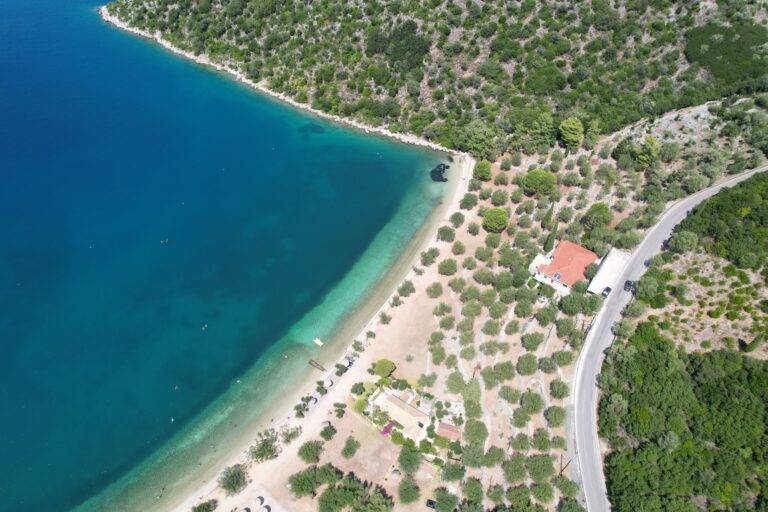
From Vathy (the capital of Ithaca), drive north on the main road for approximately 25 to 30 minutes through the mountain interior. The road passes Agios Ioannis and descends toward the north coast. From Stavros village, follow the signs for Polis Beach — the paved road descends directly to the bay. Parking is at the end of the road.
Stavros is the main settlement of north Ithaca — 5 minutes above the beach by car. All supplies, tavernas, and the Archaeological Collection of Northern Ithaca (the museum with the finds from Loizos Cave) are in Stavros. The museum is a mandatory companion to the beach visit.
The Beach: Smooth White Pebbles, Calm and Sheltered, Organised in Parts, Motorboat Hire, Canteen
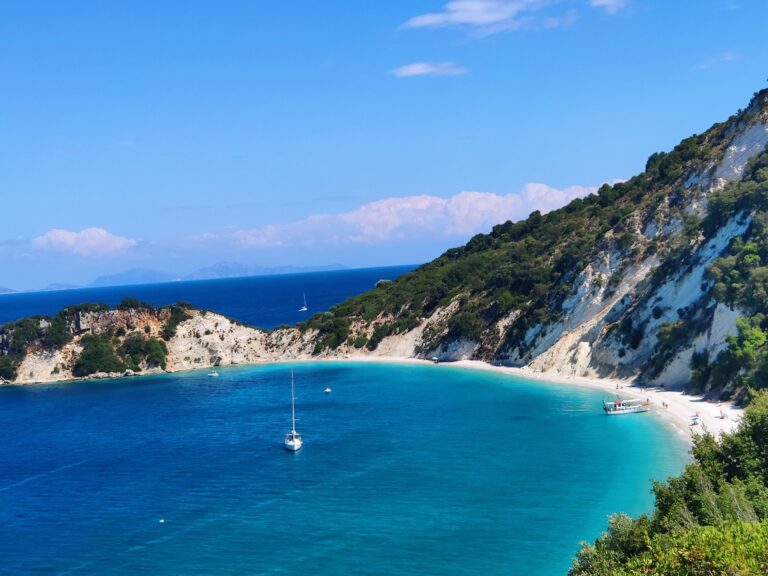
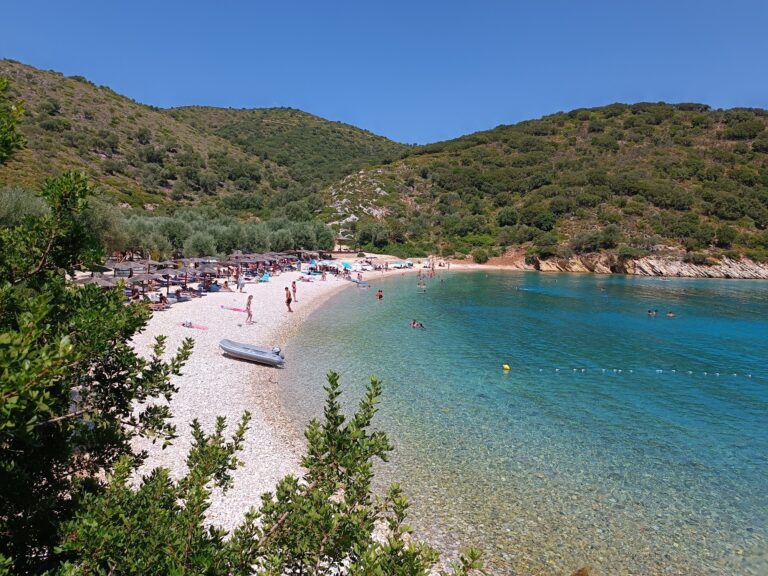
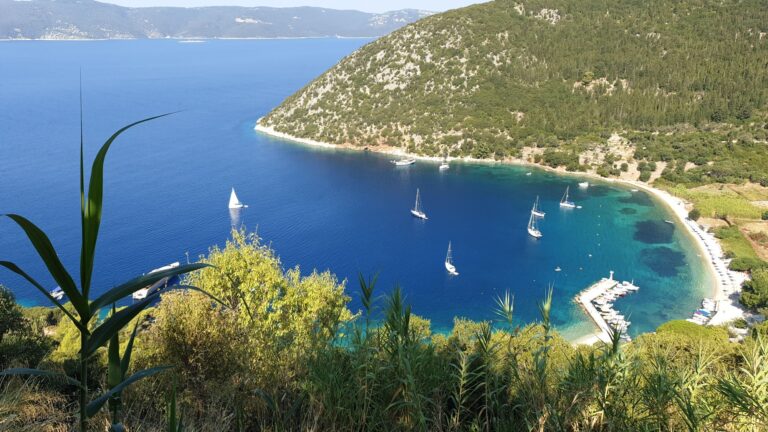
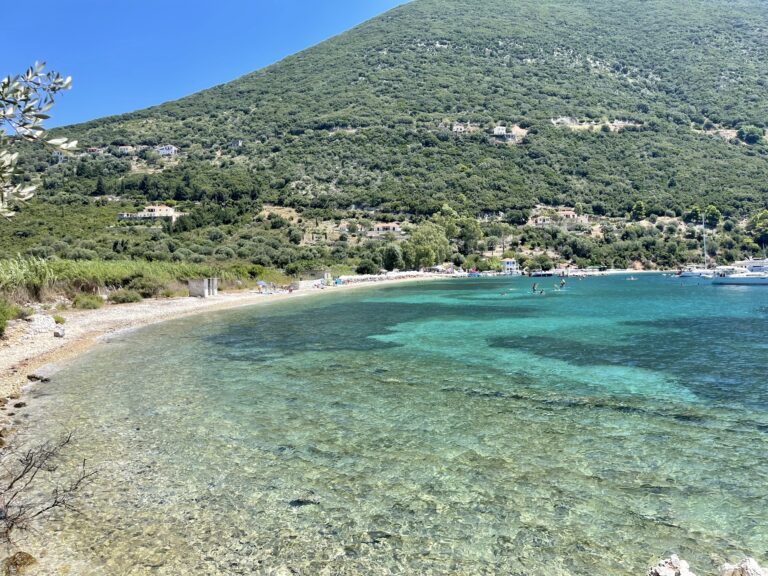
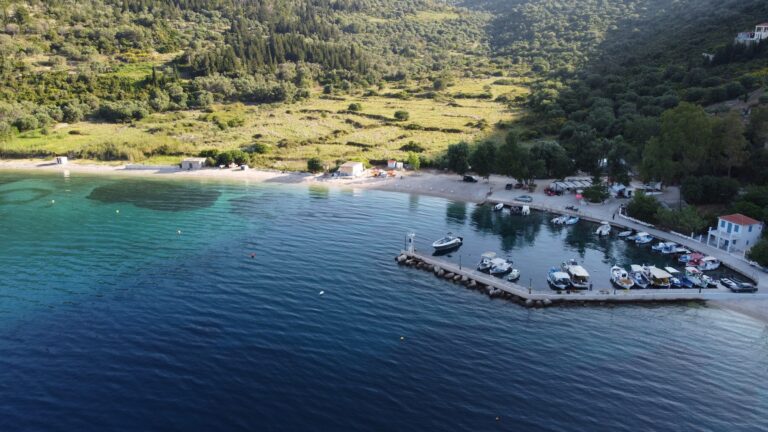
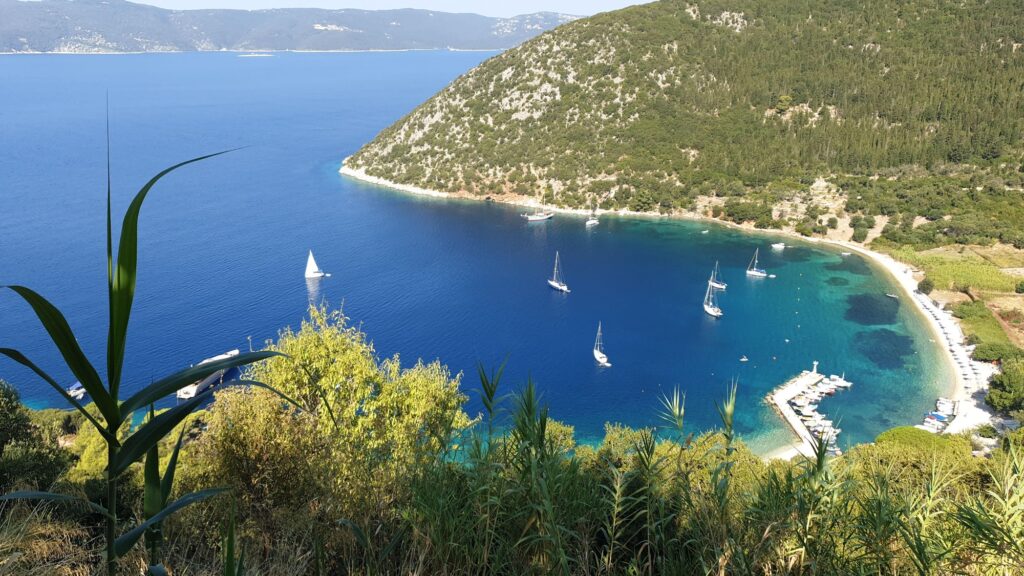
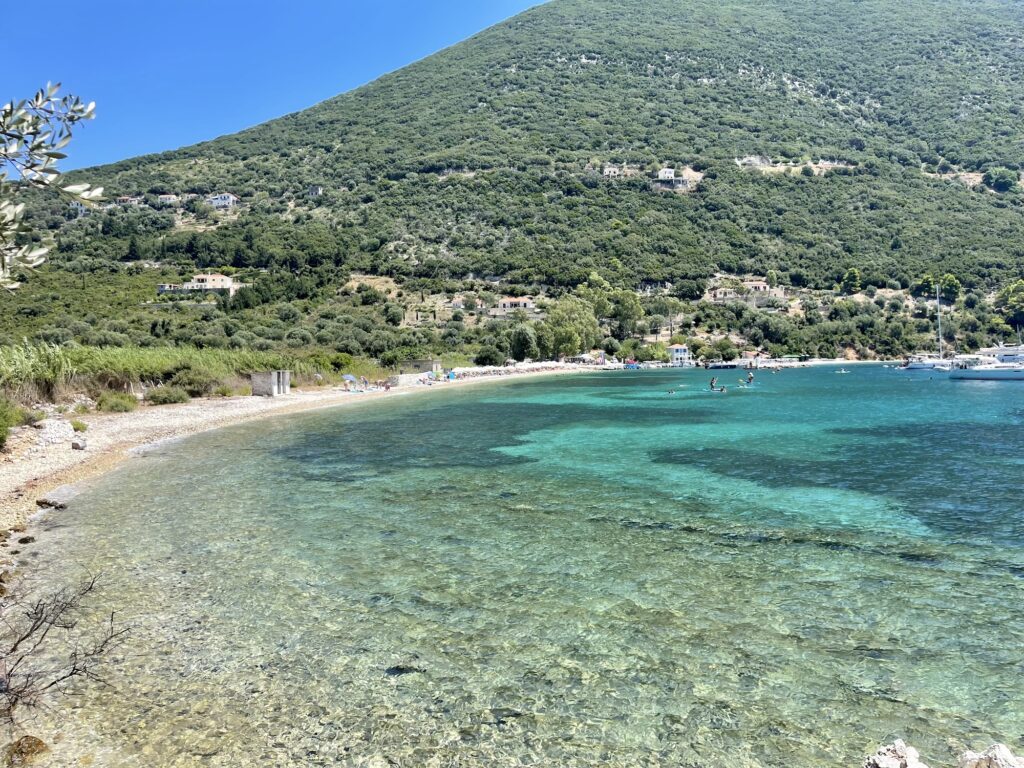
Polis Bay is well-sheltered — the bay’s geometry provides protection from the prevailing winds that make nearby Afales Beach Ithaca Greece to the northwest often turbulent. The water is calm and deep, characteristic of the protected northern Ionian bays. The seabed deepens steadily from the shore.
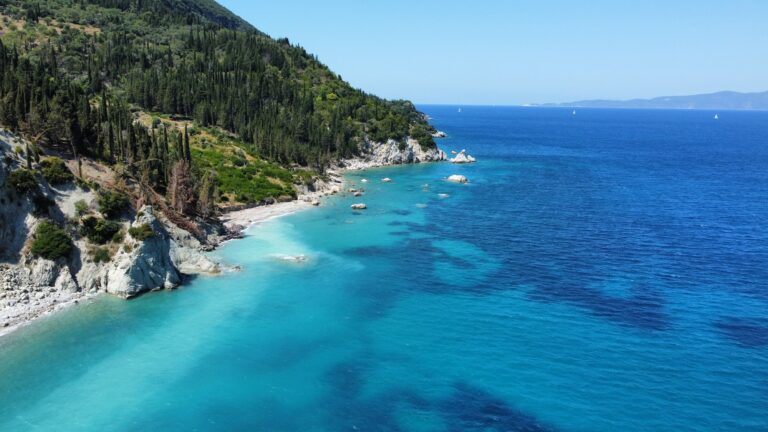
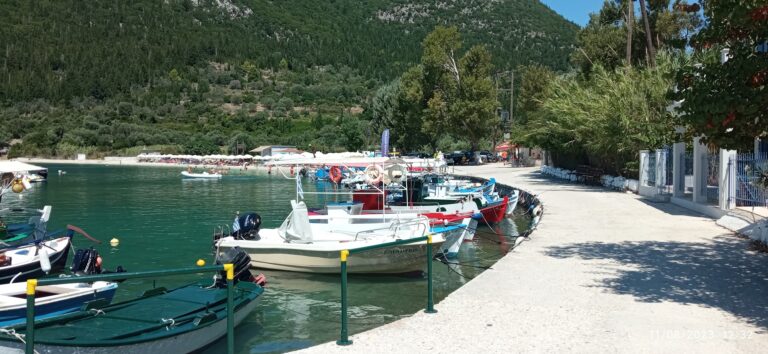
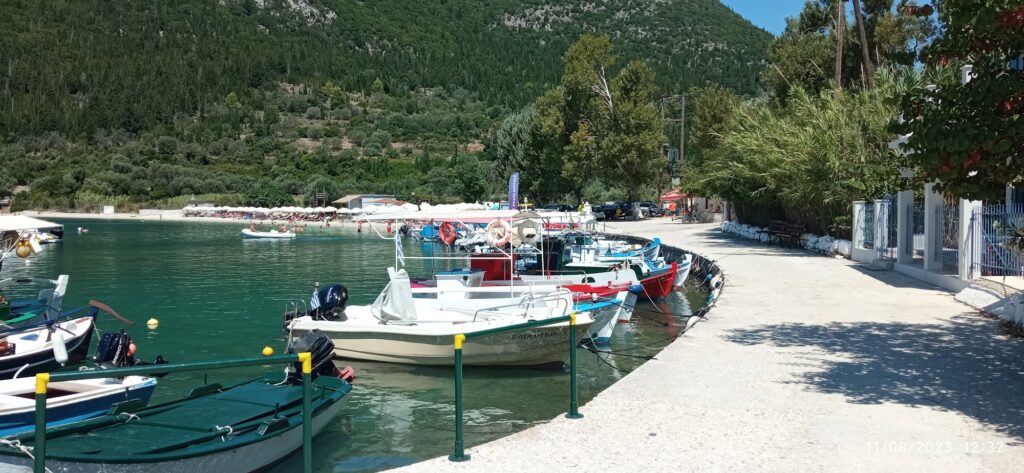
The beach has sunbeds and umbrellas in the organised section. A canteen provides refreshments. Motorboat hire operates from the beach — small motor dinghies that visitors can take without a licence and use to explore the northern Ithaca coast independently. The boats reach the accessible coves around Polis Bay and the further beaches of the north coast within minutes.
The trees at the back of the beach provide afternoon shade. No permanent lifeguard. The bay is calm enough that this is a low-risk swimming environment in normal conditions.
The Cave of Loizos: The Specific Finds, the 1953 Earthquake, the Stavros Museum
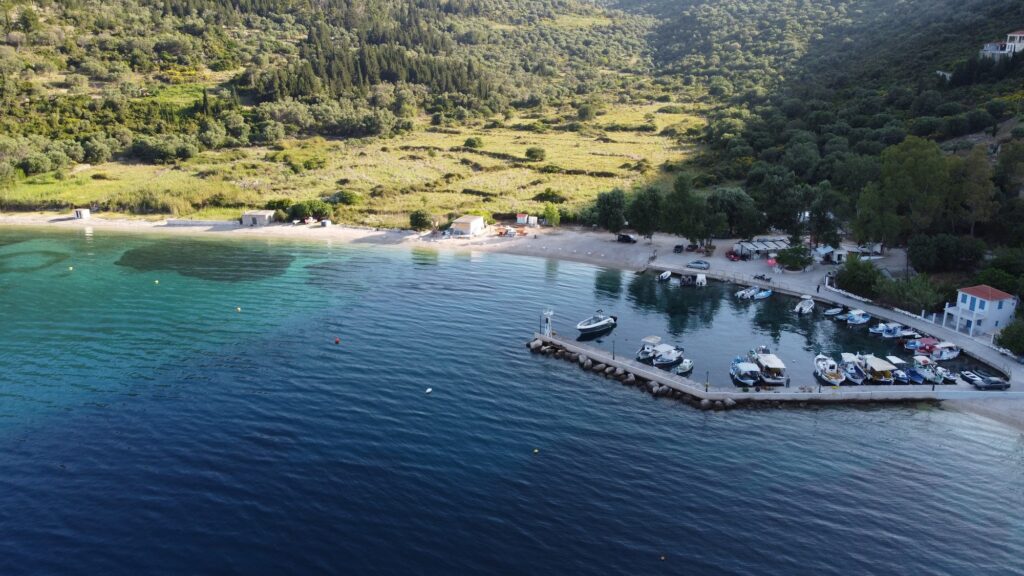
The northwest corner of Polis Bay is where the Cave of Loizos opens toward the sea. The cave is also known as the Cave of Polis, because it is located at the northwestern side of Polis Bay. The cave was a devotional site from the late Bronze Age to the 4th century CE — spanning a period of approximately 1,500 years of continuous use as a sacred site.
The cave was a devotional site from the late Bronze Age to the fourth century CE. Among the archaeological artefacts found inside the cave are lamps, and vessels for eating and drinking. There are standing and sitting female figures, and dedication to and reliefs of the nymphs. Other discoveries include scarabs, coins, bronze tripods, and a dedication to Odysseus.
The cave is now on the beach waterline and partially underwater — the 1953 earthquake changed the island’s geology and sealed the accessible sections. Visiting it requires snorkelling or diving to reach the underwater entrance. The objects that could be recovered before the earthquake are in Stavros. The ones that could not are still inside.
The Stavros Archaeological Collection: The Museum That Makes the Beach Visit Meaningful
The Archaeological Collection of Northern Ithaca is housed in a small building on Pilikata hill in Stavros, 5 minutes above Polis Beach by car. The exhibits date from the early Bronze Age (3000 BC) through to the Roman Age. They have been sourced from four sites: Pilikata hill, Stavros village, Loizos’ Cave and Treis Lagkades. The most impressive and significant exhibit is the fragments of the bronze geometric tripod with its elaborate decoration. There is also the piece of a Hellenistic mask upon which is engraved ΕΥΧΗΝ ΟΔΥΣΣΕΙ or “Pray to Odysseus”.
Visiting the museum and then going to the beach — or the other order — is the specific Polis Bay day programme. Standing on the beach looking toward the cave location after seeing the tripods and the inscription in the museum is a qualitatively different experience from either one alone.
The Sunken Ancient City: The Seabed of Polis Bay
On the sea-bed lie the ruins of an ancient sunken city. The city of Polis — the ancient settlement that gave the bay its name — is partially underwater as a result of seismic activity over the past two millennia. Snorkelling in the bay reveals stone structures on the seabed. The sunken city is not a formal archaeological dive site and is not signposted, but its presence is confirmed and the structures are visible in clear water.
Polis Beach on Ithaca is the ancient sunken harbour below Stavros — the Cave of Loizos on the northwest side of the bay found 12 bronze tripods (the Odyssey mentions 13 gifts of the Phaeacians) and the ΕΥΧΗΝ ΟΔΥΣΣΕΙ inscription (“Prayer to Odysseus”, 2nd century BC), cave destroyed in the 1953 earthquake (now inaccessible, partially underwater), finds in the Archaeological Collection of Northern Ithaca in Stavros (5 minutes above the beach — visit the museum first or after), ancient sunken city visible on the seabed in clear water, smooth white pebbles, calm sheltered water, sunbeds and canteen, motorboat hire for the northern coast, 25 to 30 minutes from Vathy.
Drive from Vathy. Stop at the Stavros museum. Descend to the beach. Look toward the cave location. Swim in the harbour where the tripods were hidden.
Map
Sorry, no records were found. Please adjust your search criteria and try again.
Sorry, unable to load the Maps API.
Near by places: