Afales Beach Ithaca: Wild North Bay, Mistral Warning
Profile
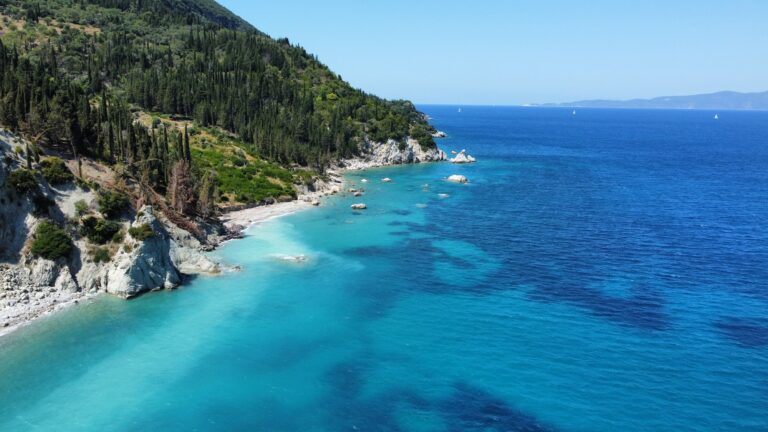
Afales Beach, Ithaca: The Large North Bay Facing the Mistral Where Lefkada Is on the Horizon, the Palace of Odysseus May Have Been Between the Two Villages Above, and the Only Sandy Beach on the Island Is Hidden Inside the Bay — Accessible Only by Boat
Greece | Platrithias | Ithaca (Ithaki), Ionian Islands
The Kalamos Spring near Platrithias has been flowing for thousands of years. This clear, fresh water spring has been running for thousands of years and has quenched the thirst of thousands including that of Lord Byron, Heinrich Schliemann, Queen Frederica, Aristotle Onassis and Jackie Kennedy. The list is not curated for effect — these are the actual documented visitors. Byron passed through the Ionian Islands on his way to Greece. Schliemann came to Ithaca to look for Troy’s equivalent — the material evidence for the world of the Odyssey. Onassis had the personal mythology that the Odyssey conferred on the entire island. Jackie Kennedy came with him. The spring is still running. It is a 20-minute walk from the road in the Platrithias area, and the people who drink from it are walking in identifiable company.
At the borders of Platrithias and Exogi there is the archaeological site of Agios Athanasios, or Homer’s School, where archaeologists place the palace of Odysseus, the Homeric hero and king of Ithaca. The excavations are ongoing and the site has limited tourist infrastructure, but it is accessible and the ruins are visible. The location between two villages above a large north-facing bay is consistent with the descriptions of the palace in the Odyssey — the view north from the hillside reaches Lefkada and the open Ionian, while the bay below is the specific geography that makes the location plausible.
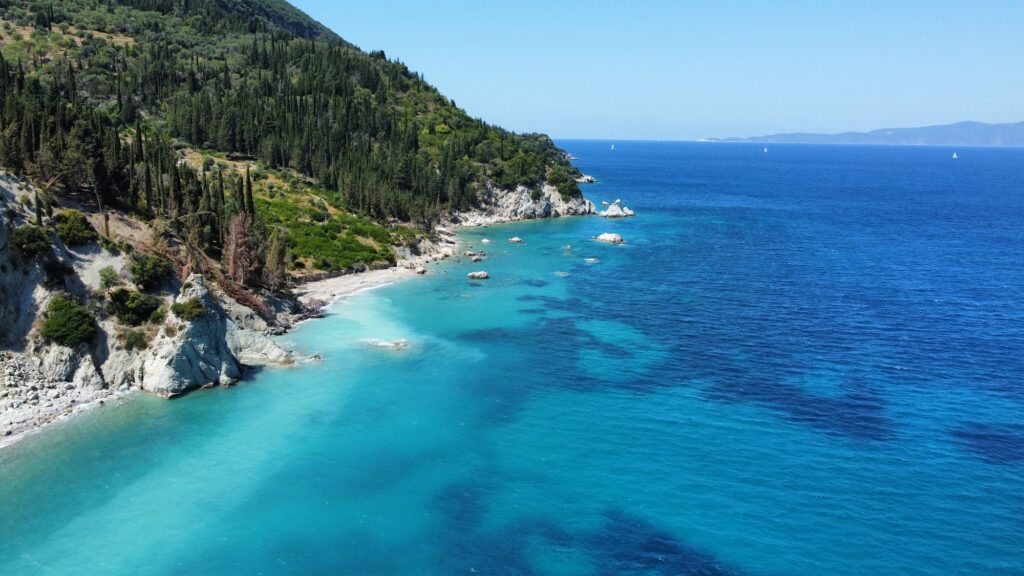
The bay below these sites is Afales — a large gulf on the north coast of Ithaca, reached by a paved road from Platrithias that descends through what the official Ithaca tourism guide describes as “tropical vegetation.” The road is paved, not a dirt track as some descriptions suggest. It is steep in places but manageable in a standard hire car.
Getting There: Paved Road From Platrithias (Correcting the Dirt Road Claim), Parking at the Beach, Boat for Platia Ammos Inside the Bay
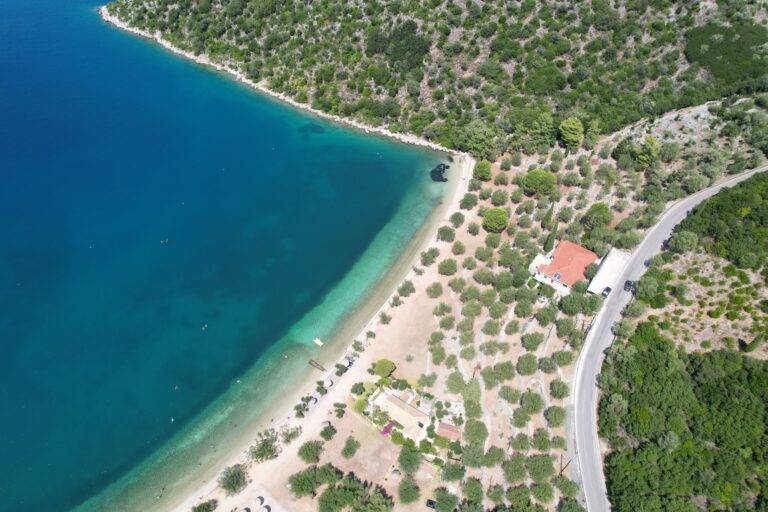
Access to Afales is possible by car, by taking the paved road from Gefyri in the village of Platrithias. The route is dreamy with lush vegetation and tall trees. The road ends at a parking area from which the main pebble beach is immediately accessible and the smaller hidden beaches — Kouloumi and Perivoli — can be reached on foot along the beach or via small paths.
From Vathy (the capital, also called Ithaki Town), the drive north takes approximately 30 to 40 minutes through the island’s narrow mountain roads. Stavros — the main north Ithaca settlement — is the last larger village before Platrithias.
Ithaca has no airport. The island is reached by ferry from Kefalonia (Fiskardo to Frikes, approximately 20 minutes; Sami to Pisaetos, 50 minutes), from Lefkada (Vassiliki to Frikes, 1 to 1.5 hours), or from the mainland (Astakos to Pisaetos). It is one of the harder Greek islands to reach, without an airport and with ferry connections only from Astakos in the Peloponnese and the neighbouring islands of Lefkada or Kefalonia.
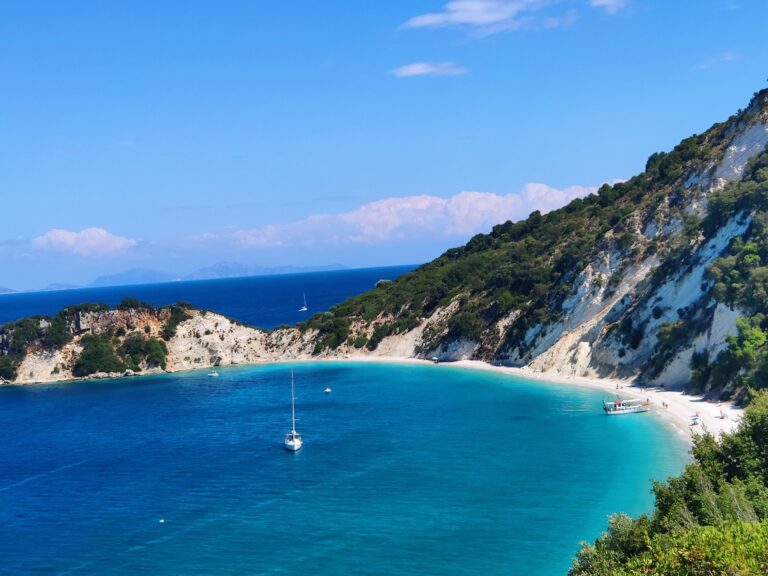
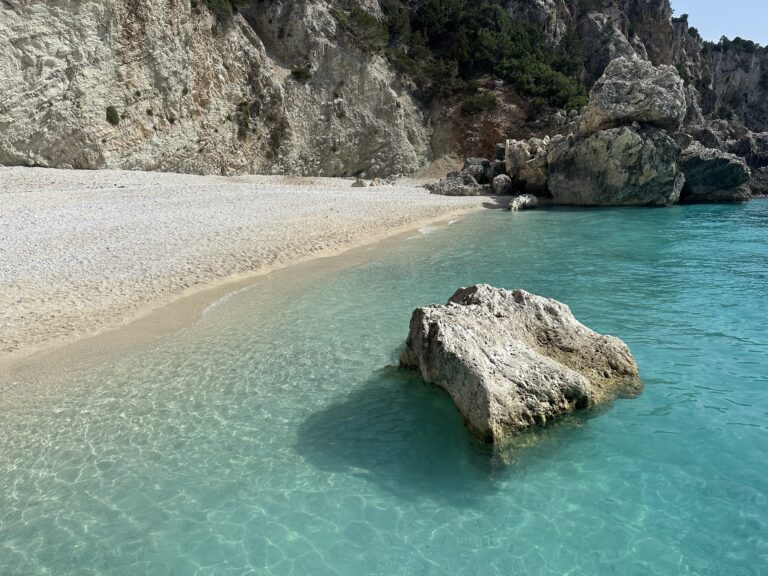
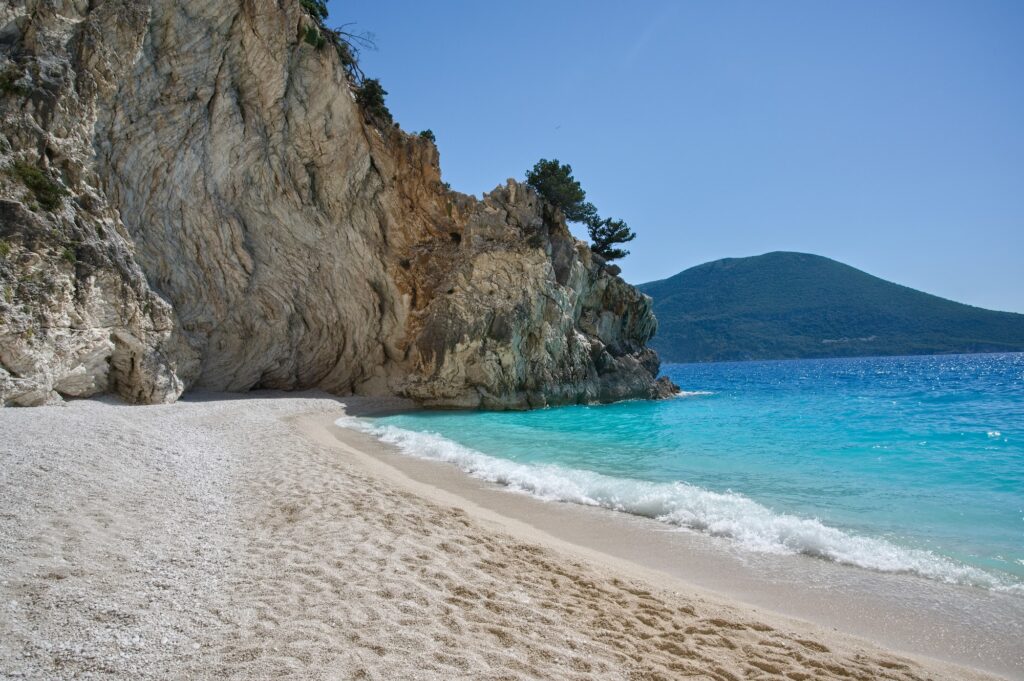
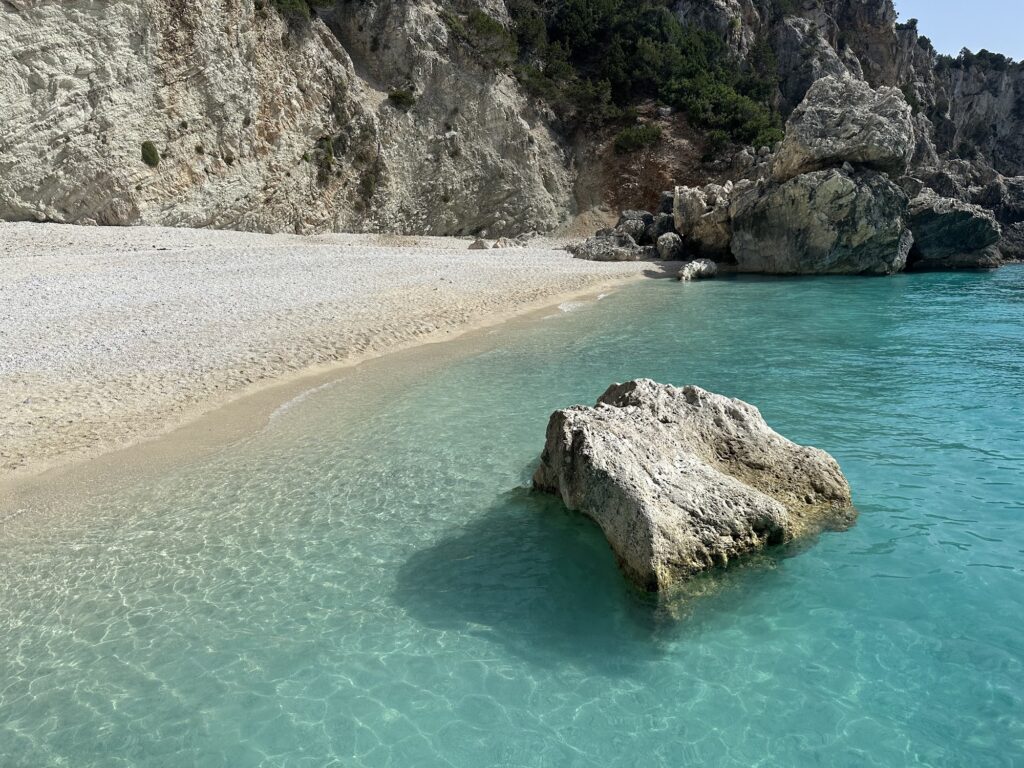
Platia Ammos — within the Afales bay — is accessible only by boat. It boasts fine white sand — it is the only sandy beach on Ithaca — as well as the clearest turquoise waters. There’s nothing by way of amenities and no land access.
The Beach: Large Pebbles, Kouloumi and Perivoli Hidden to the Left, Faces the Mistral — Often Turbulent
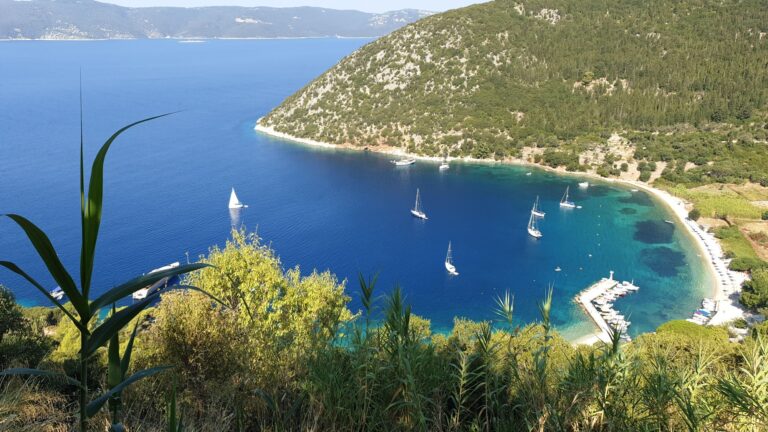
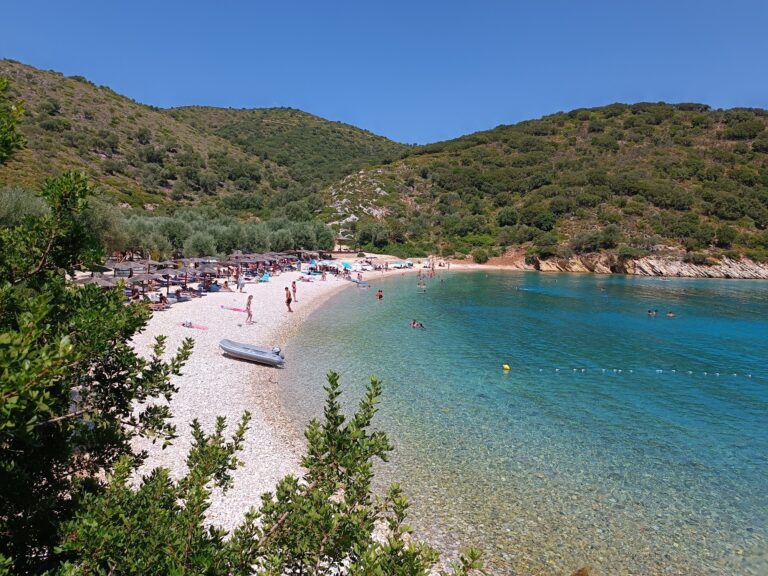
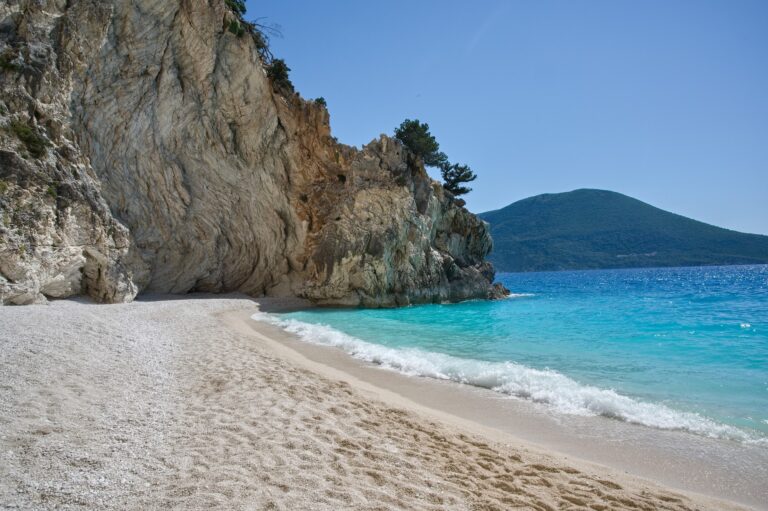
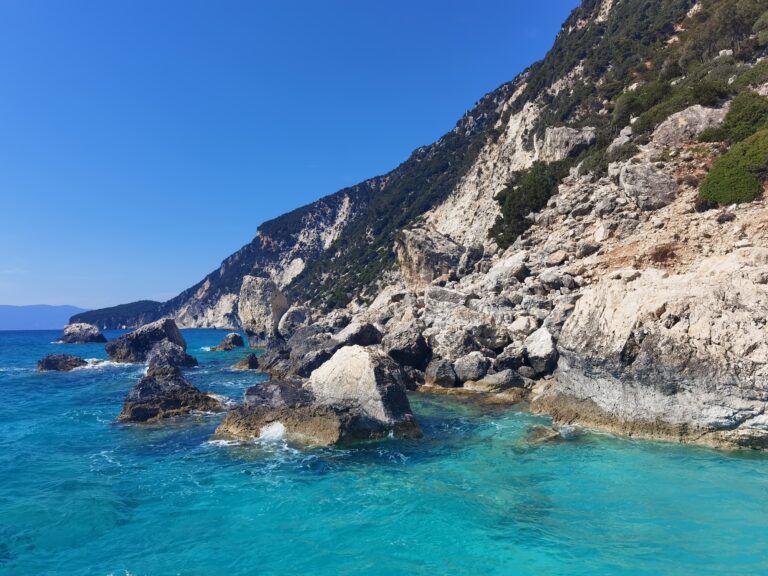
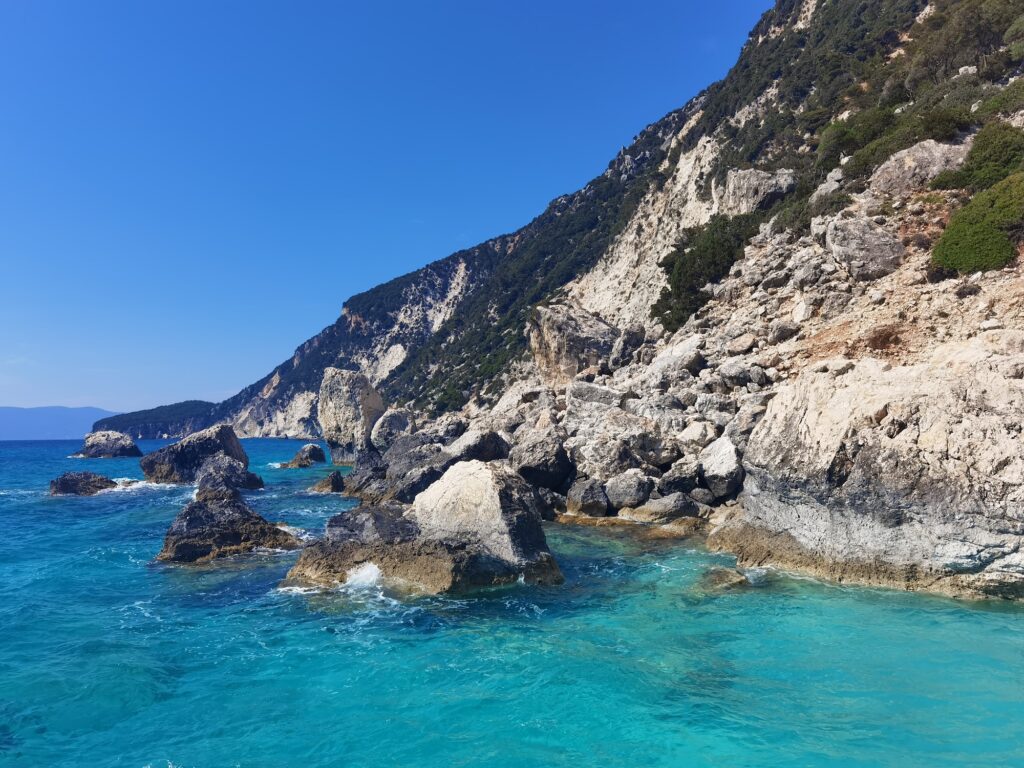
At the heart of Afales bay is a series of pebbled beaches with rocks and blue, turquoise waters. The landscape has a rugged beauty with steep bare cliffs on one side and lush vegetation on the other. The trees descend right to the sea: olives, cypresses, pines and shrubs give a special colour to the landscape and make Afales unique.
The honest wind caveat: The sea at Afales is often slightly turbulent, since the beach faces the Mistral head-on. The Mistral is the northwest Mediterranean wind — in the Ionian, it arrives from the north and northwest. Afales faces north and takes it directly. This is the specific condition that distinguishes Afales from the southern Ithaca beaches like Gidaki, which are sheltered. On calm days the water at Afales is clear, deep blue, and extraordinary for snorkelling in the rock formations. On Mistral days it is rough. Checking conditions before making the 35-minute drive is the practical advice.
Kouloumi and Perivoli are ideal for those that seek out absolute calm. They look northwards and the island of Lefkada lies on the horizon.
Platia Ammos: The Only Sandy Beach on Ithaca, Inside Afales Bay, Boat Access Only
Platia Ammos is widely regarded to be one of the most exotic beaches in Ithaca. Framed by a tall limestone cliff, it boasts fine white sand — it’s the only sandy beach on Ithaca — as well as the clearest turquoise waters. There are some shade-giving tamarisk trees on the beach. Otherwise, you’re on your own.
Boat hire from Vathy or Kioni is the standard approach. Motorboats can be hired without a licence for boats under a certain engine size. The journey from Kioni or Frikes to Platia Ammos takes approximately 20 to 30 minutes.
The Palace of Odysseus: Between Exogi and Platrithias, the Site Where Archaeologists Look
It is believed that the Palace of Odysseus used to be in the area between Exogi and Platrithias, which is now an archaeological site. The site at Agios Athanasios (Homer’s School) has Mycenaean remains. The excavations are incomplete and the interpretation is contested — there is no academic consensus that Ithaca is definitively the Ithaca of the Odyssey, though the island’s case is strong and the local tradition insists on it.
Exogi sits on top of a 340-metre tall mountain, and has great views to the cliffs around Afales Beach and the Ionian Sea. It is one of the oldest still-existing settlements in Ithaca, as many of the stone houses were built in the 18th century.
The Ionian Islands Context: Ithaca, Kefalonia, Lefkada
Ithaca sits in the cluster of Ionian Islands with Kefalonia to the south and west and Lefkada to the north. The three islands form a natural sailing circuit from any of the major Ionian marinas. Vasiliki Beach Lefkada Greece — the famous windsurfing bay on the south Lefkada coast — is visible in the direction of the wind that makes Afales rough; the channel between the two islands is the same water. The sailing community that uses Afales bay as a yacht anchorage comes largely from the same Ionian circuit.
Afales Beach on Ithaca is the large north bay reached by paved road from Platrithias — faces the Mistral directly (often turbulent, check conditions before driving), large pebbles with Kouloumi and Perivoli hidden to the left, Platia Ammos the only sandy beach on Ithaca inside the same bay (accessible only by boat, tamarisk shade, nothing else), Lefkada visible on the northern horizon, the Palace of Odysseus archaeological site between Exogi and Platrithias above the bay, the Kalamos Spring nearby drunk by Byron, Schliemann, Onassis, and Jackie Kennedy, no airport (ferry from Kefalonia or Lefkada), and boat hire from Kioni or Vathy for the coves accessible only from the sea.
Drive from Vathy to Platrithias. Take the paved road to the bay. Check the Mistral first.
Map
Sorry, no records were found. Please adjust your search criteria and try again.
Sorry, unable to load the Maps API.
Near by places: