Faneromeni Beach Antiparos: Tiny Cove, No Facilities
Profile
Faneromeni Beach, Antiparos: The Small Sheltered Cove at the End of the Dirt Road Through Soros, Where Locals Debate Whether It or Agios Sostis Is the Most Beautiful on the Island
Greece | Agios Georgios Area | Antiparos, Cyclades
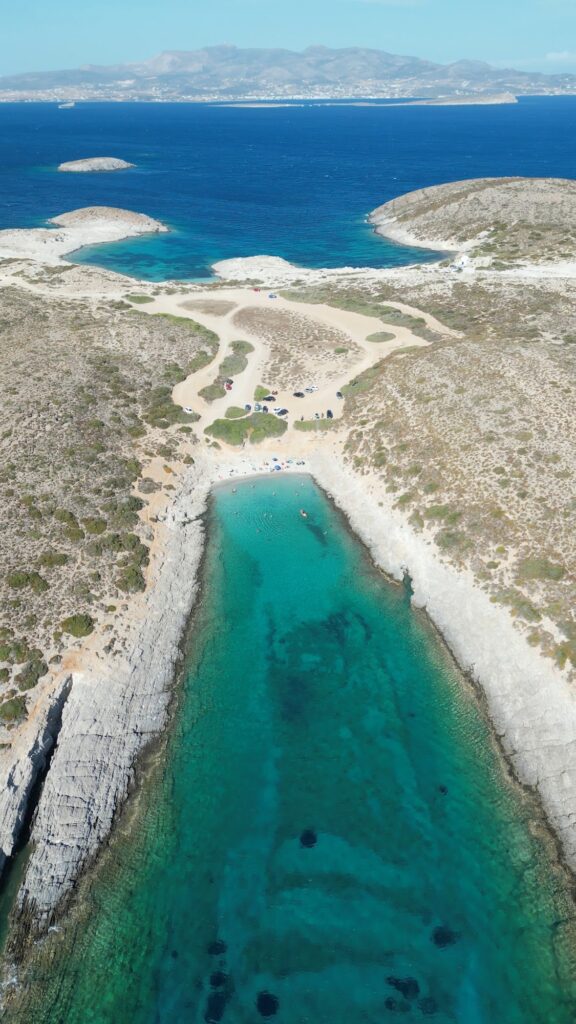
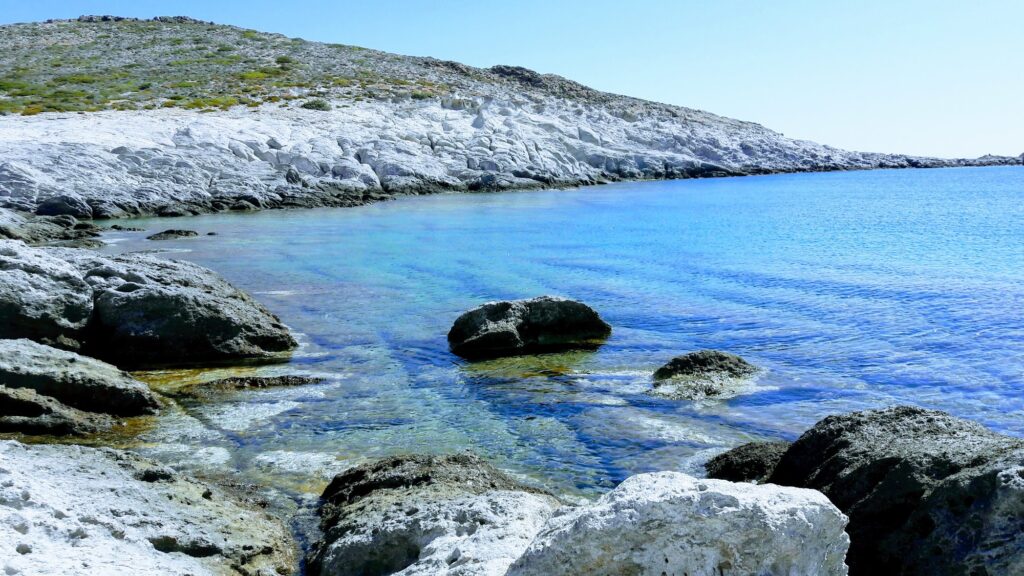
The local debate runs like this: which is more beautiful — Agios Sostis or Faneromeni? Local guides and island sources mention the debate specifically, without resolving it, which is a useful piece of honest travel advice: both are worth visiting and neither wins clearly. Faneromeni is at the southernmost part of the island, reached by a dirt road through Soros, also known locally by its other name — Tou Garbi to Avlaki — the calm hollow of the south wind. The name describes what the beach physically is: a small cove oriented so that the southerly wind creates a calm in it even when other parts of the island are rough.
Antiparos is a small island — 35 square kilometres — directly west of Paros. From Paros, the car ferry crosses in about 10 minutes to Antiparos Town (the port and main settlement combined). The island has approximately 1,500 permanent residents and the character of a place that retains its dignity under summer visitor pressure — smaller than Paros, less commercially developed, with a port promenade, a pedestrian high street, and the specific atmosphere of a Cycladic island that has not yet lost its centre.
The most famous attraction on Antiparos is the Cave of Antiparos — an 82-metre-deep natural cave in the island interior with extraordinary stalactite and stalagmite formations, visited by Lord Byron, King Otto of Greece, and various other notable figures over two centuries of tourism. Faneromeni beach is as far as possible from that cave in terms of character: one is organised, visited by crowds, and lit artificially; the other is a tiny cove reached by a difficult road with no sign of commercial activity beyond a white chapel at its edge.
Getting There: Ferry to Antiparos From Paros (10 Minutes), Then South Through Soros by Dirt Road, or by Private Boat
Antiparos is reached from Parikia (the capital of Paros) by car ferry via Pounta — approximately 5 to 10 minutes crossing. The ferries run frequently in summer. Antiparos Town is the combined port and village. Hire cars and scooters are available from the port.
From Antiparos Town, drive south toward Agios Georgios. Before reaching the village, look for signs for Faneromeni or follow the track that continues south through the settlement of Soros. The final section is a dirt road. Multiple sources describe the road as manageable rather than extreme — one source notes “the road is quite good so don’t hesitate,” contrasting with others that recommend a sturdy vehicle or 4WD. The honest assessment is: it is a rough dirt track, not a paved road. Standard rental cars manage in dry conditions; a 4WD or ATV is more comfortable.
Parking is a small unpaved area near the Church of Agia Faneromeni, followed by a short walk to the beach.
By boat, Faneromeni is accessible from Antiparos Town port directly, or as part of a coastal excursion.
The Beach: Very Small, No Facilities, White Sand, Clear Water, The Chapel at the Edge, Pack Everything
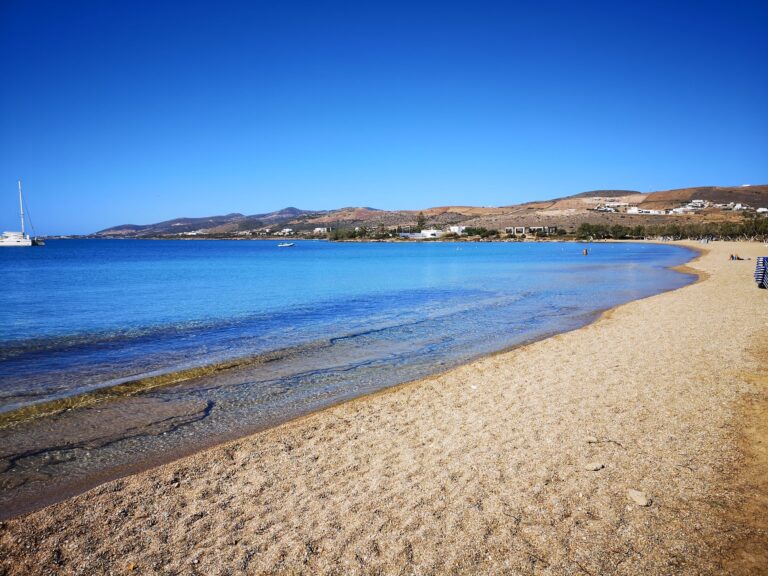
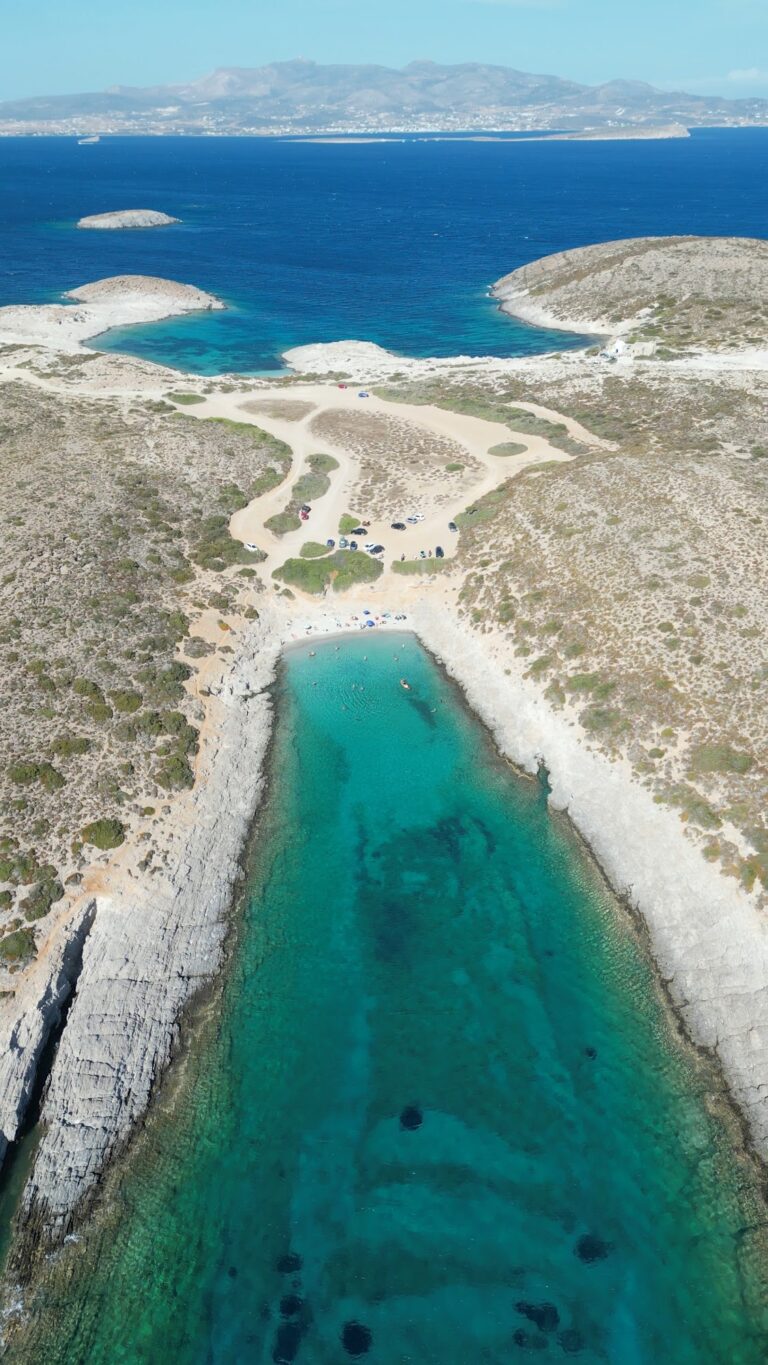
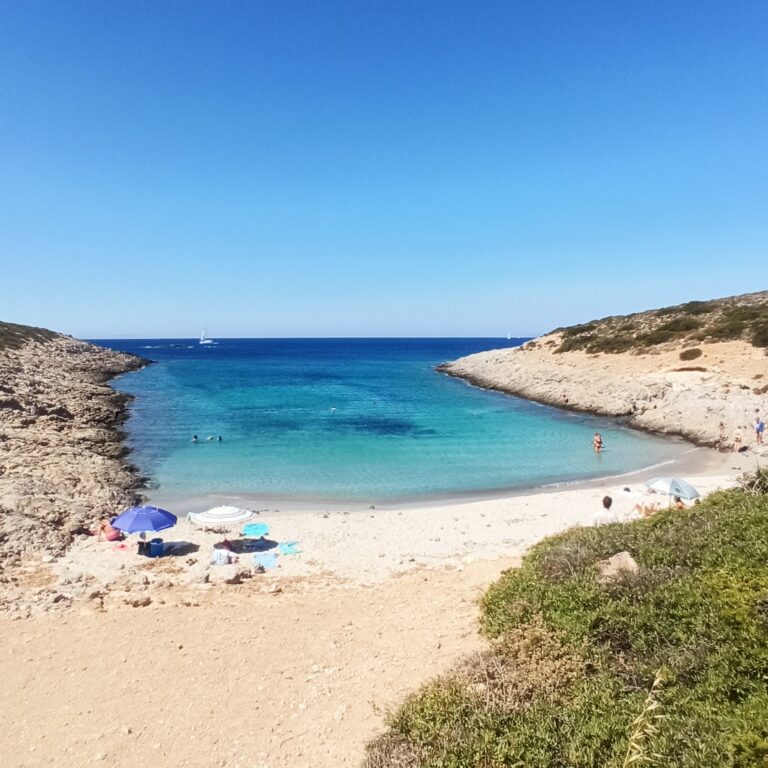
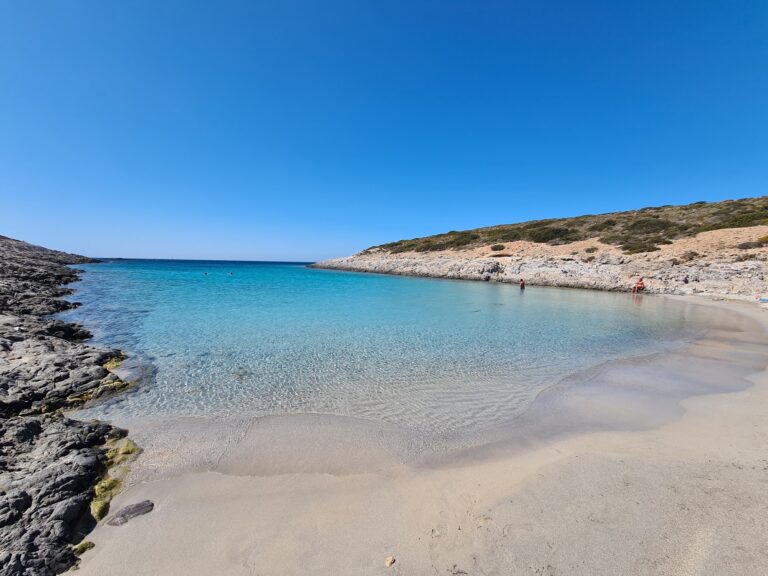
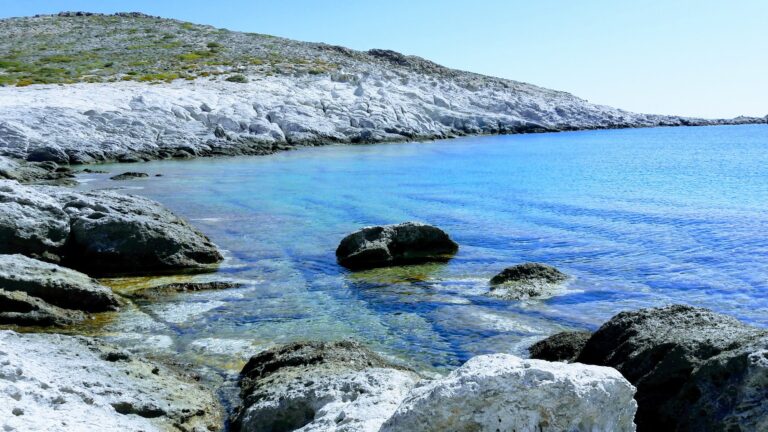
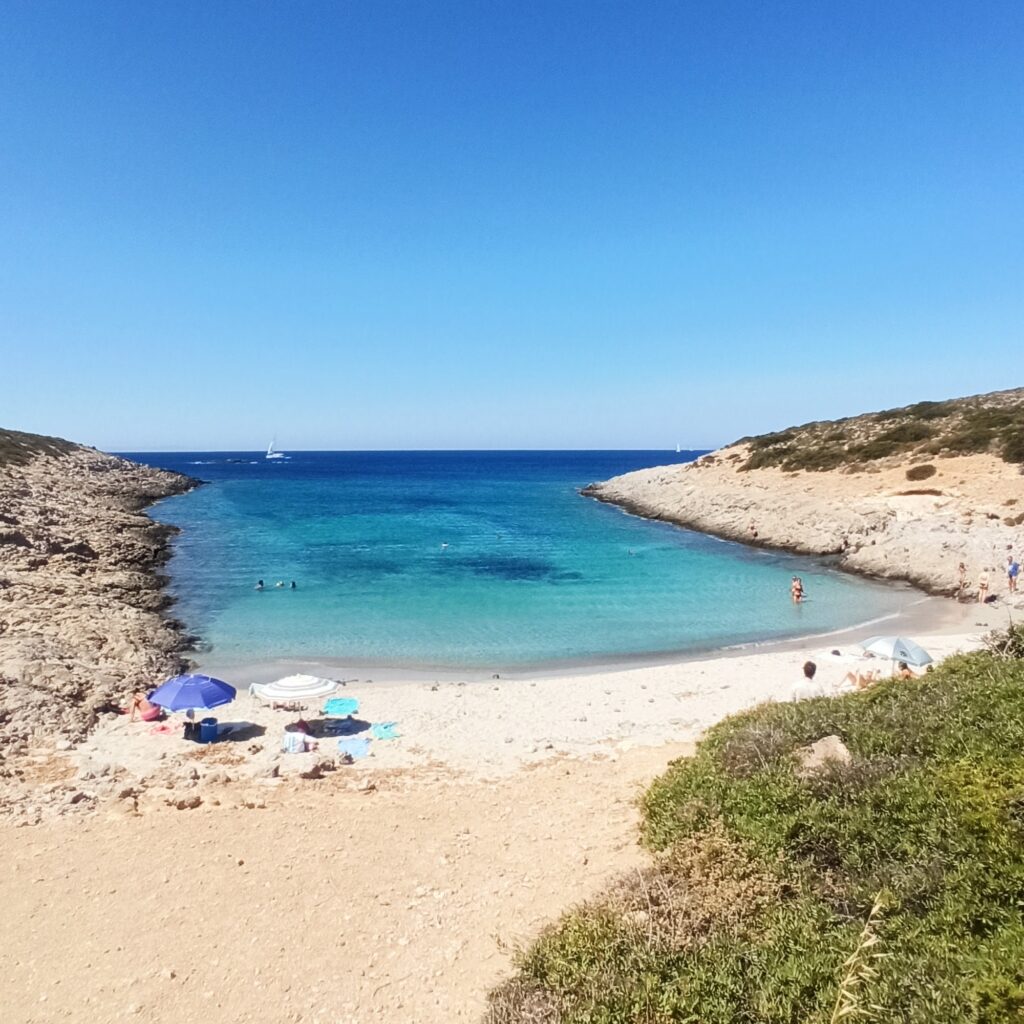
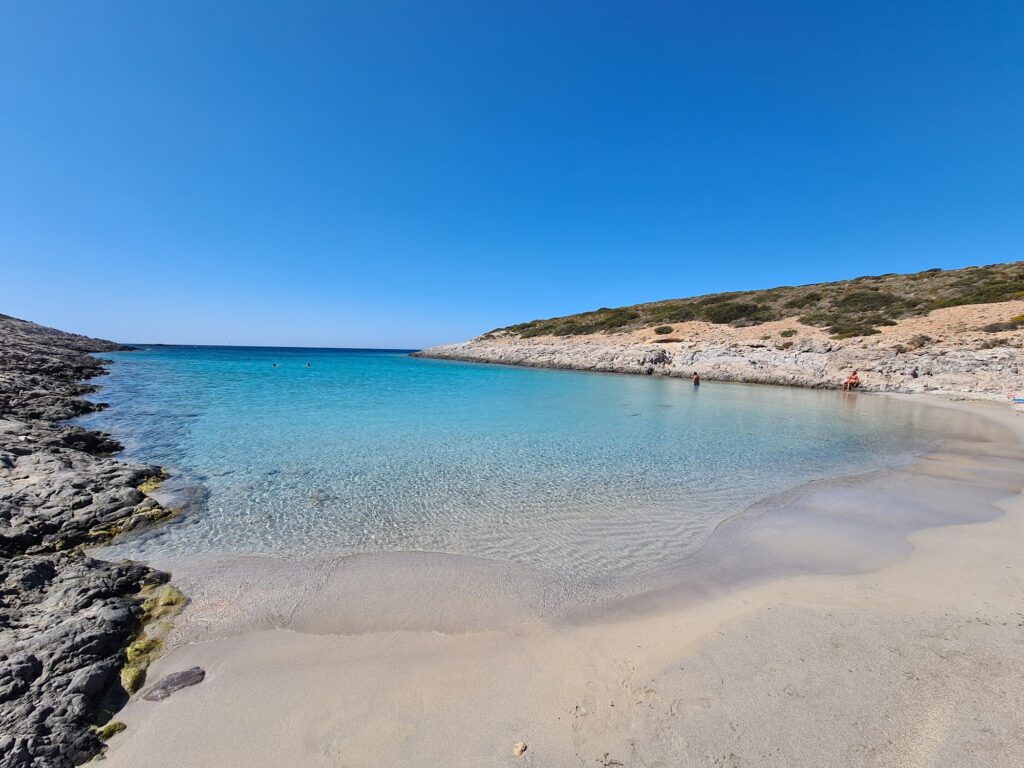
Faneromeni is a tiny cove — this is not a large beach. In peak July and August, it fills to the point where finding a towel-sized space requires arriving early. The sand is white and fine. The water is crystal clear and calm due to the wind-sheltering geometry of the surrounding rocks. No sunbeds, no umbrellas, no beach bar, no facilities of any kind on the sand. The small white Chapel of Agia Faneromeni sits at the beach edge — the structure that gives the beach its name, its simple whitewashed form with a tiny bell the specific Cycladic building type that appears at almost every wild beach in the archipelago but is particularly well-placed here.
The preparation list is the one that applies to any completely unorganised Cycladic beach: water, food, sun protection, personal shade, snorkelling equipment. The snorkelling is described consistently as excellent — the fish population around the rocks, the clarity of the water, and the rock formations on the seabed make it a productive snorkelling site.
Agios Sostis: The Comparison Beach, Also at the Southern End
Agios Sostis is the other southern cove in the local debate — also at the southernmost part of Antiparos, also unorganised, also sheltered from the north wind. It is slightly more accessible than Faneromeni. The comparison is genuine: the two beaches are similar in character and quality, and visitors who can reach one can usually reach the other in the same day.
Despotiko: The Uninhabited Island With an Ongoing Apollo Sanctuary Excavation, Reachable by Boat From Agios Georgios
Despotiko is the small uninhabited island visible from the Agios Georgios area — a 10-minute boat ride from the Agios Georgios bay. It has beautiful beaches accessible only by boat and an ongoing excavation that has revealed a large Archaic sanctuary dedicated to Apollo — one of the most significant active archaeological discoveries in the Cyclades in recent decades. The excavation is directed by Yannos Kourayos and has been in progress since the 1990s; the Apollo sanctuary is dated to approximately 700–480 BC and the remains of the temple, the altars, and the associated buildings are visible to visitors who reach the island by boat.
The combination of Faneromeni beach and a boat trip to Despotiko for the archaeology is the specific southern Antiparos day programme. The boat trip from Agios Georgios takes 10 minutes; the excavation is open to visitors.
The Cave of Antiparos: The Island’s Most Famous Attraction, Lord Byron’s Signature on the Wall
The Cave of Antiparos — 82 metres deep, discovered in the 15th century but visited extensively from the 17th century onward — has signatures and inscriptions from notable visitors carved or written on its walls. Lord Byron signed the cave in 1810 during his Grand Tour. King Otto of Greece and the King of Bavaria visited in 1840 and held a Christmas midnight mass inside. Count of Nointel, the French ambassador to the Ottoman court, held a 480-person Christmas mass in the cave in 1673. The specific social history of the cave — who visited, when, and what they did there — is a remarkable accumulation over four centuries.
The cave is in the island interior, 8 kilometres from Antiparos Town, accessible by bus in summer. It is the most visited site on the island and the primary reason some visitors come specifically to Antiparos rather than stopping there as part of a Paros day trip.
Antiparos Town: The Short Ferry, the Venetian Kastro, the Port Promenade
Antiparos Town has the specific character of a small Cycladic port that retains its village scale while hosting significant summer visitor numbers. The Venetian Kastro — a medieval square-plan tower house settlement built in the 15th century for protection from pirates — is at the centre of the old town. The Cycladic houses built into the exterior of the Kastro walls form the most distinctive architectural feature. The port promenade and the pedestrian main street (with shops, tavernas, cafes, and bars) are the social infrastructure.
Faneromeni Beach on Antiparos is the tiny sheltered south cove at the end of the dirt road through Soros — also called Tou Garbi to Avlaki (the calm hollow of the south wind), white chapel of Agia Faneromeni at the edge, no facilities (bring everything), very small in peak season (arrive early), white sand, crystal clear water, excellent snorkelling, the companion to Agios Sostis in the local debate about the most beautiful beach on the island, Despotiko Apollo sanctuary boat trip from Agios Georgios 10 minutes away, the Cave of Antiparos (Lord Byron, 82 metres, 4 centuries of notable visitors) in the island interior, and Antiparos itself reached from Paros by 10-minute car ferry.
Take the ferry from Paros. Hire a 4WD. Drive south through Soros. Arrive before 10am.
Map
Sorry, no records were found. Please adjust your search criteria and try again.
Sorry, unable to load the Maps API.
Near by places: