Vathi Beach Sifnos: Horseshoe Bay, No Cars, Revithada
Profile
Vathi Beach, Sifnos: The Horseshoe Bay Where Cars Are Banned, Sand Lilies Bloom in Mid-August, a 12th-Century BC Mycenaean Wall Overlooks the Bay, and the Best Revithada on the Island Is Served Three Metres From the Water
Greece | Vathi | Sifnos, Cyclades
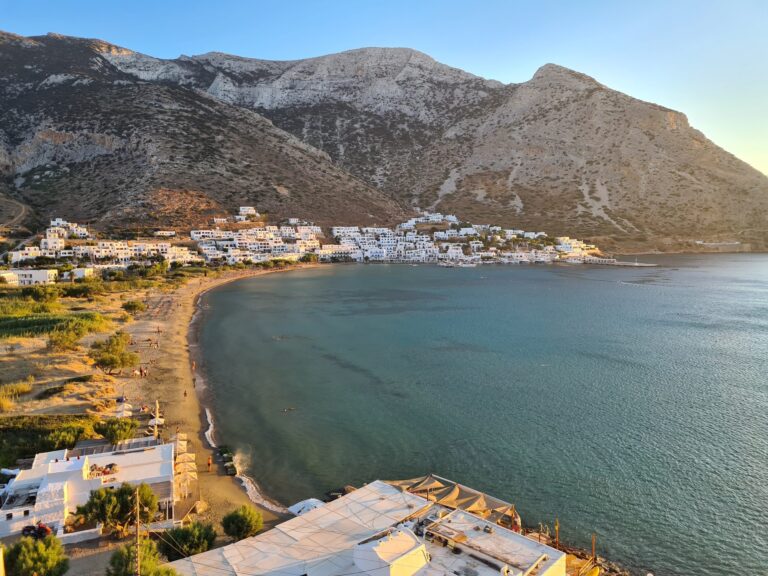
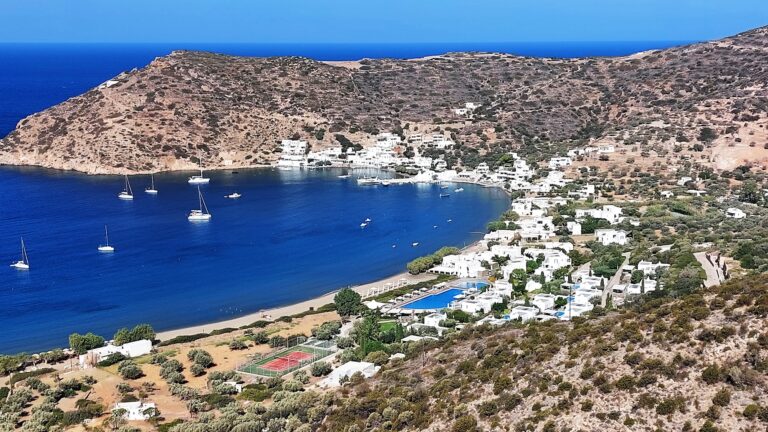
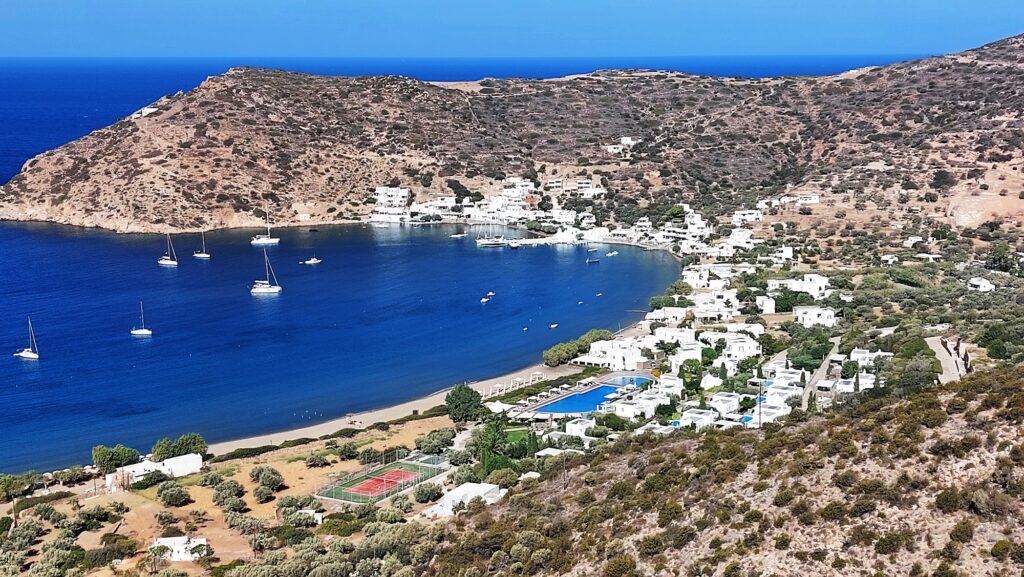
The road descending to Vathi offers a view of the bay before you reach it — a full panorama of the horseshoe from above, with the golden sand curving around the enclosed water and the small whitewashed chapel of Taxiarches visible at the right edge where the beach meets the village. Coming down that road is one of those approaches that arrives at the beach before you do.
No cars are allowed in the settlement of Vathi itself. The parking area is at the village entrance, and the beach is accessed on foot. The promenade along the sand is consequently free of traffic — families, dogs, evening walkers, and the overspill from the taverna tables all share a car-free strip along the waterfront in a way that requires no management because there is nothing to manage.
Vathi means deep in Greek, and the name is geographical: the port is at a lower elevation than the surrounding area, so the bay feels sunken into the landscape. The hills enclosing it cut the Meltemi before it reaches the water, which is why Vathi is consistently described as one of the most sheltered bays in the Cyclades. The sea is calm here on days when other Sifnos beaches are rough.
The beach is the longest and most beautiful sandy beach on Sifnos. In mid-August, a rare protected species of sea lily — Pancratium maritimum — blooms around the edges of the sand. The flowers are white with a faint green stripe, found across Mediterranean coasts but protected specifically here. The timing is specific: mid-August.
Getting There: 10km From Apollonia, 15–20 Minutes by Car, Buses Connecting Apollonia and Kamares, Park at the Village Entrance
Vathi is 10 kilometres southwest of Apollonia, the capital of Sifnos, and approximately 15 to 20 minutes by car on a well-paved winding road through the Sifnos interior. The road offers the views of the bay from above — the full horseshoe panorama — before descending to sea level.
Sifnos is reached by ferry from Piraeus in approximately 3 to 5 hours depending on the service. From Kamares port, the bus to Apollonia and then onward to Vathi covers the connection; the Sifnos bus service is reliable and well-regarded. In summer, buses run directly between Kamares and Vathi at certain times.
Park at the village entrance. The beach, the tavernas, and the pottery workshops are all walkable from the car park.
The Beach: Golden Sand, No Cars, Sheltered, Sand Lilies in Mid-August, the Taxiarches Chapel on the Water’s Edge
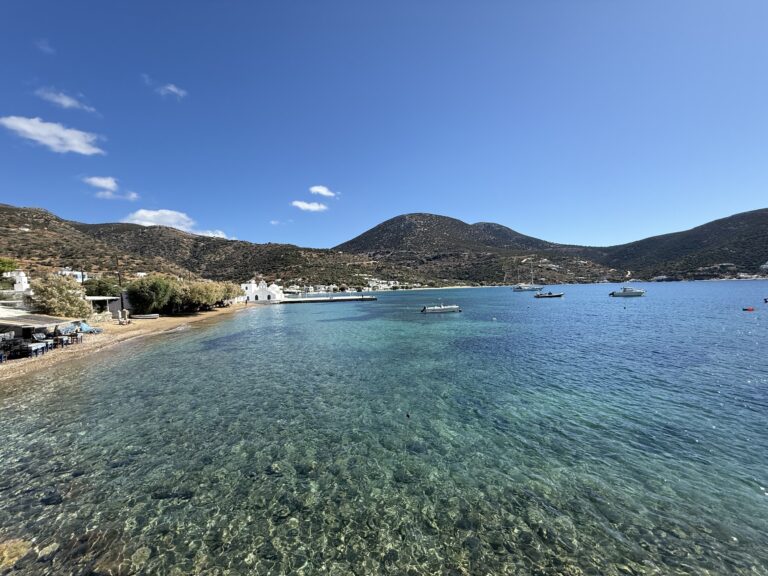
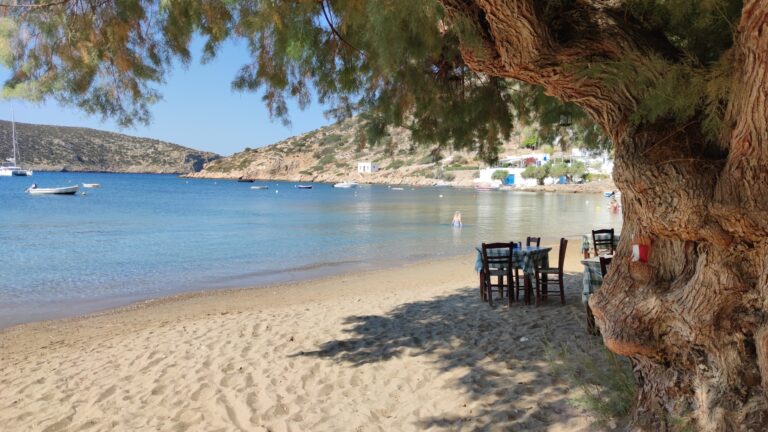
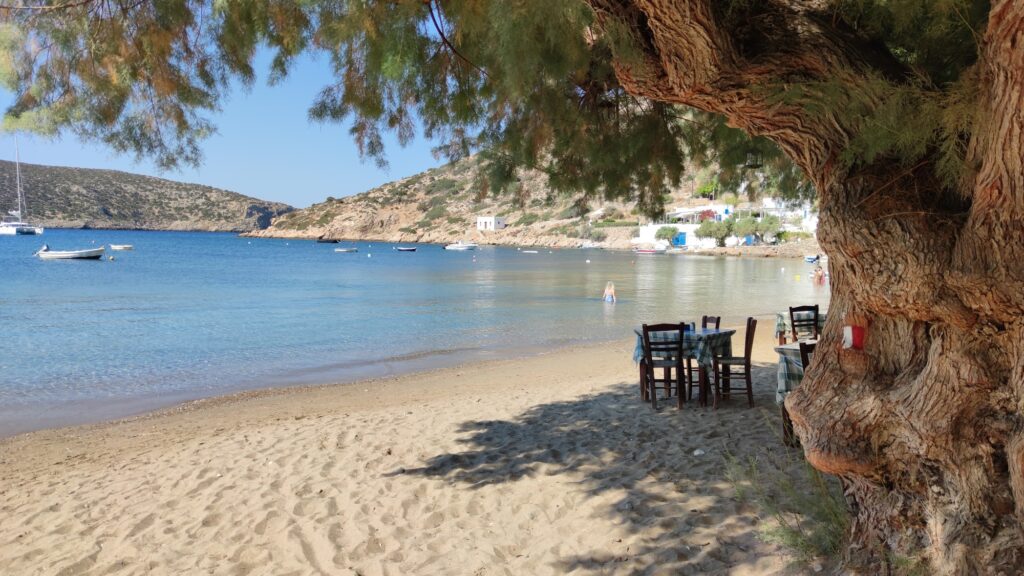
The sand is fine and golden — the best quality on Sifnos by consistent account. The seabed slopes gently. The bay is effectively wave-free throughout summer. Sunbeds and umbrellas are available but do not dominate the beach. Some tamarisk trees provide natural shade. There is no permanent lifeguard.
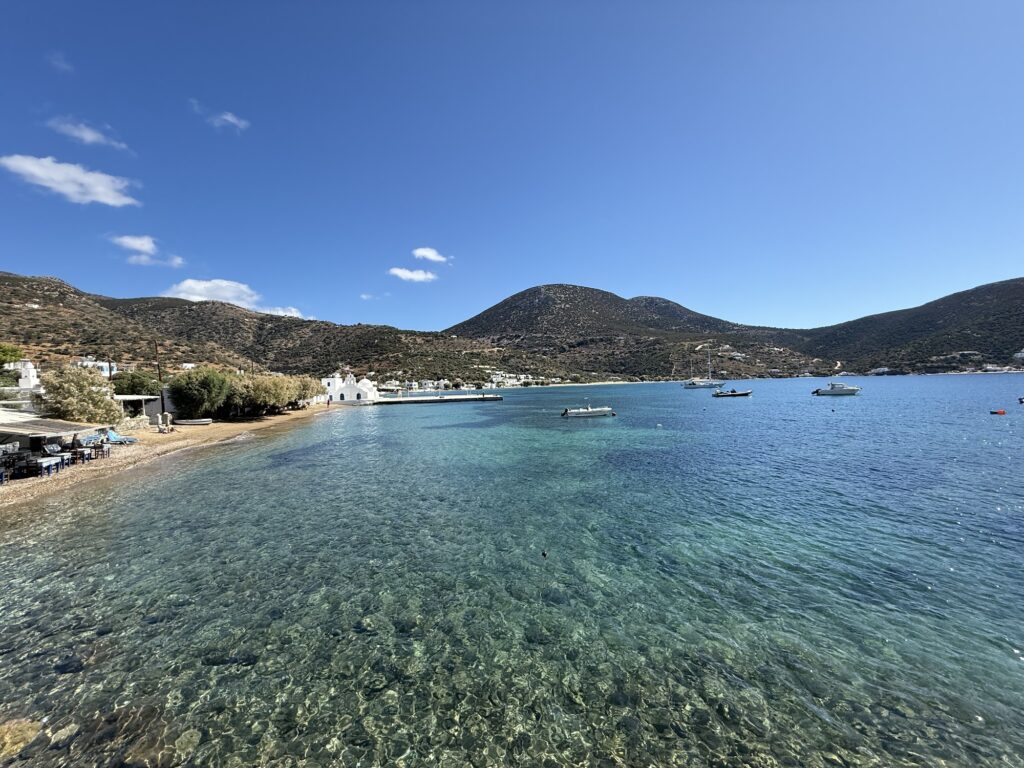
The Chapel of Taxiarches and Evangelistria — a 17th-century dual-aisled church — stands at the right edge of the beach where the sand meets the village pier. It celebrates three times annually: July, September, and November. The monastery cells that once housed the monks have been converted into guesthouses. The chapel is the specific visual landmark that appears in every photograph of Vathi from the water — whitewashed, small, at water level, impossibly correct in its positioning.
Sailing boats and yachts moor in the bay throughout summer — Vathi is one of the most protected natural anchorages in the Cyclades and attracts cruising sailors who find the conditions as reliable as the taverna tables.
The Pottery Workshops: The Industry That Built Vathi, Still Operating
Sifnos has one of the oldest continuous ceramic traditions in Greece, dating back over a thousand years. The local clay and the firing techniques specific to the island produced the tsikalia (terracotta cooking pots), the glazed storage jars, and the specific forms that Sifnian pottery is known for. Vathi was a village of potters until after the Second World War; the craft is still practised there. The Atsonios Pottery Workshop at the north end of the bay is the specific active operation visible from the beach. Classes and demonstrations are available — the process includes the local clay, the wood-fired kilns, and the traditional glazes.
The connection between the pottery and the food is specific to Sifnos: the revithada (chickpea stew) is cooked overnight in sealed clay pots — the ceramic vessel is part of the recipe, not just the container.
The Tavernas: Manolis, Tsikali, Okeanida — and the Revithada
Sifnos is the most gastronomically significant island in the Cyclades. Nikolaos Tselementes — the author of the first modern Greek cookbook, published in 1910, whose name became the generic Greek word for a cookbook (tseleméndes) — was born in Sifnos. The island’s cooking tradition predates his influence and has been developed in the tavernas and home kitchens across the island over centuries.
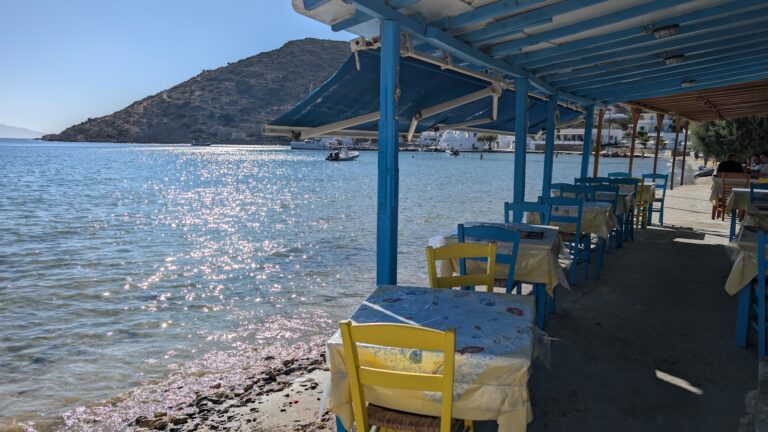
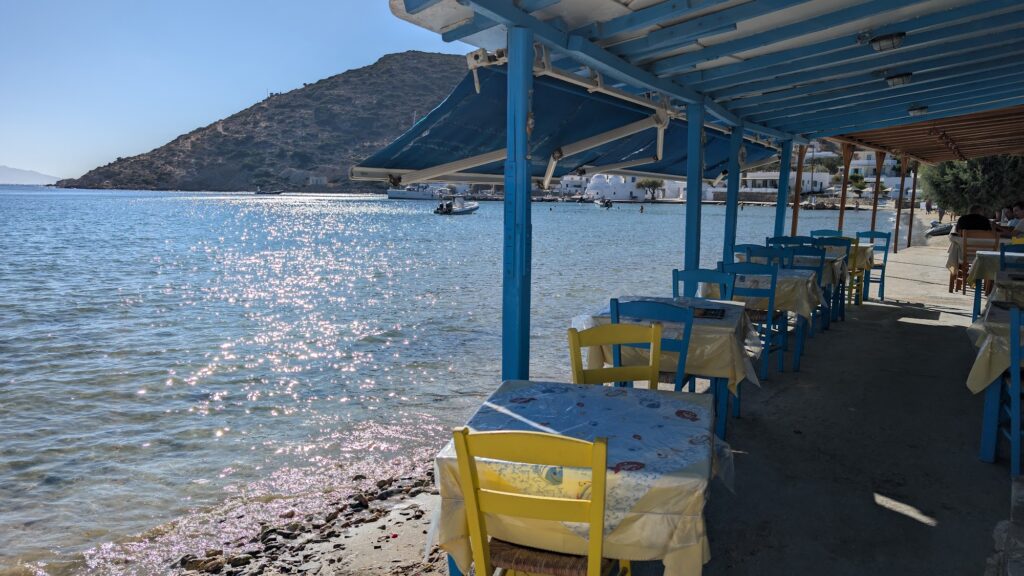
Vathi’s three main tavernas — Manolis, Tsikali, and Okeanida — serve directly from tables set at the water’s edge or immediately beside it. Manolis is consistently cited for the best revithada in Vathi — the chickpea stew cooked overnight in a clay pot, traditionally baked in the village baker’s oven on Saturday night and served Sunday morning. Mastelo — lamb cooked in red wine and dill in a clay pot — is the other specific Vathi dish at Manolis. Tsikali specialises in wood-fired oven cooking, their outdoor seating under the trees close to the water. Okeanida covers fresh seafood and the Sifnian chickpea fritters (revithokeftedes).
Agios Andreas Acropolis: Mycenaean Wall from the 12th Century BC, on the Road Down to Vathi
On the road descending to Vathi, the Agios Andreas archaeological site occupies a hilltop with panoramic views over the bay. Excavations brought to light a Mycenaean defensive wall dating to the 12th century BC and the remains of an ancient settlement. The church of Agios Andreas was built in 1701 on the site. The scale of the Mycenaean wall — preserved sections several courses high — is visible from the viewing area beside the church. The site is free and open; the views from Agios Andreas over Vathi bay are the specific elevated perspective that the descent road also provides but the Agios Andreas hilltop holds longer.
The Hiking Trail to Platy Gialos and Fikiada
Vathi is a central node in the Sifnos walking trail network. The trail east toward Fikiada and Platy Gialos covers the coastal terrain between the island’s two main southwestern beaches. Platy Gialos is the long sandy beach on the southeast coast — sandy, partly organised, with tavernas and accommodation — approximately 1.5 hours’ walk from Vathi through the nature protection zone.
Vathi Beach on Sifnos is the horseshoe golden sandy bay 10 kilometres from Apollonia — cars banned in the settlement (park at the entrance), sand lilies blooming around the beach in mid-August, the Taxiarches 17th-century chapel at the water’s edge, the Atsonios pottery workshop at the north end, the Mycenaean wall at Agios Andreas above on the road down, revithada cooked overnight in clay pots at Manolis taverna, mastelo lamb and wood-fired oven at Tsikali, sailing boats moored in the most sheltered bay in the Cyclades, and the hiking trail to Platy Gialos east.
Drive down to the parking area. Leave the car. Walk to the water. Order the revithada.
Map
Sorry, no records were found. Please adjust your search criteria and try again.
Sorry, unable to load the Maps API.
Near by places: