Mazida Ammos Beach: Sand Above Ancient Ruins
Profile
Mazida Ammos Beach: Sand That May Be Hiding an Ancient Salt Works
Greece | Crete | Lasithi | Libyan Sea
Xerokampos carried a different name in antiquity, Ambelos, and archaeological surveys have identified a substantial Minoan settlement at nearby Katsounakia that’s never actually been excavated, left largely as it was found. Close to the beach at Psili Ammos, a short distance from Mazida Ammos, the remains of an ancient stone quarry once supplied material for building the ancient city itself, and researchers have identified a series of salterns nearby, ancient canals and basins carved directly into the coastal rock for producing sea salt, most of them now believed buried beneath the sand that’s since accumulated along this stretch of shore. I found something genuinely striking about swimming at a beach that might be quietly sitting on top of an active piece of Bronze Age industry, never dug up, never fully understood, just resting under sand tourists now spread their towels across.
Fourteen kilometers northeast, the Minoan Palace of Zakros, one of the four great palatial centers of Minoan Crete alongside Knossos, Phaistos, and Malia, was inscribed as a UNESCO World Heritage Site in 2025, part of a broader recognition of just how significant this remote corner of eastern Crete actually was to Bronze Age civilization, considerably more significant than its current reputation as a quiet, hard-to-reach beach destination might suggest.
Neon Turquoise Water Over Startlingly Shallow Sand
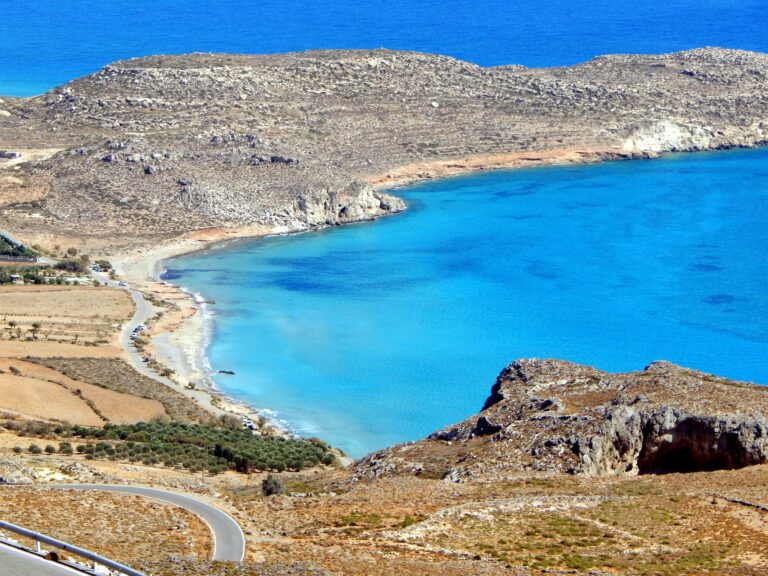
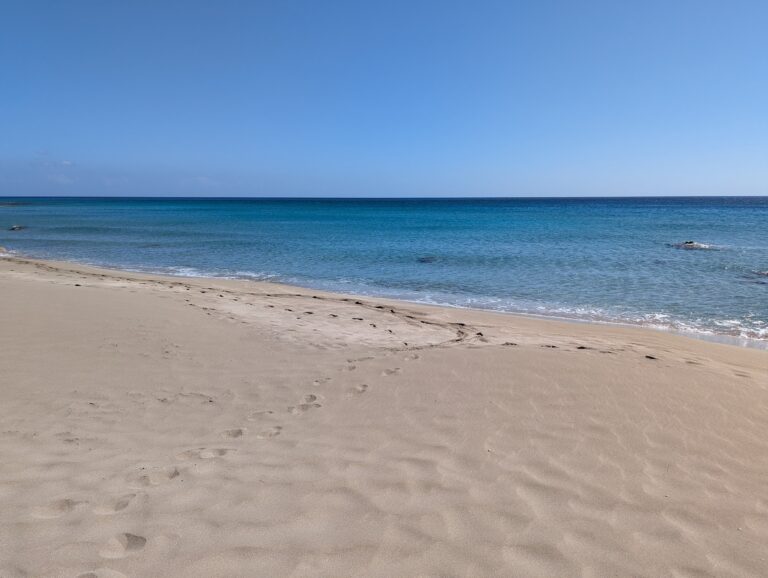
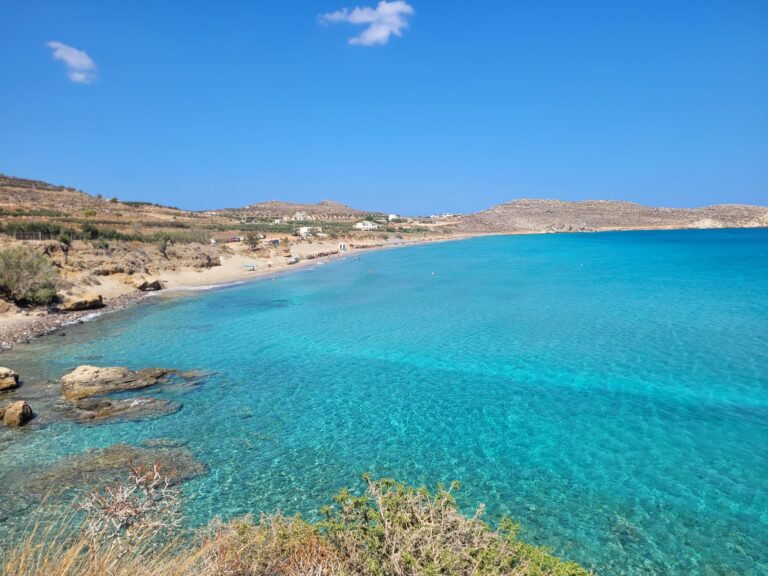
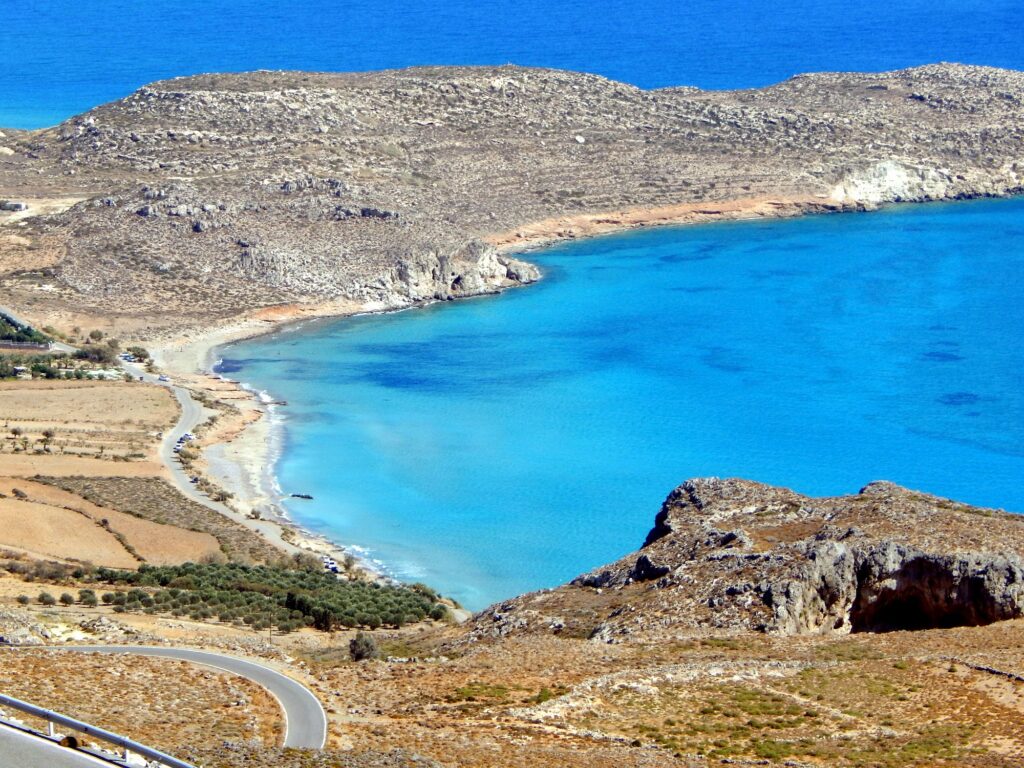
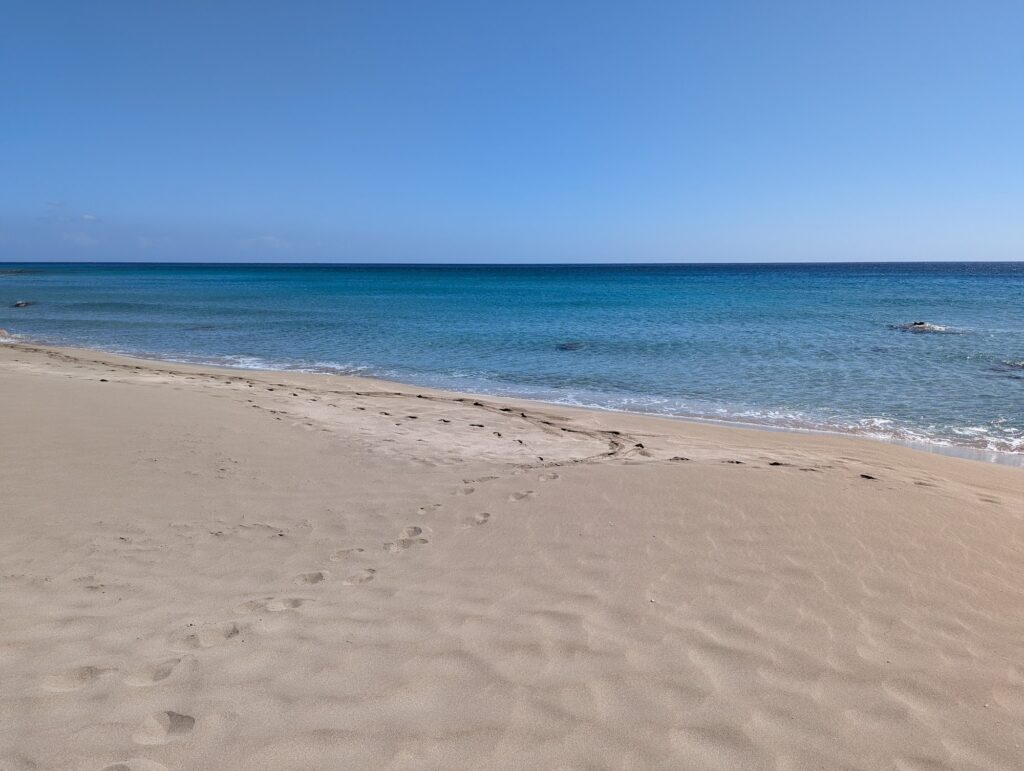
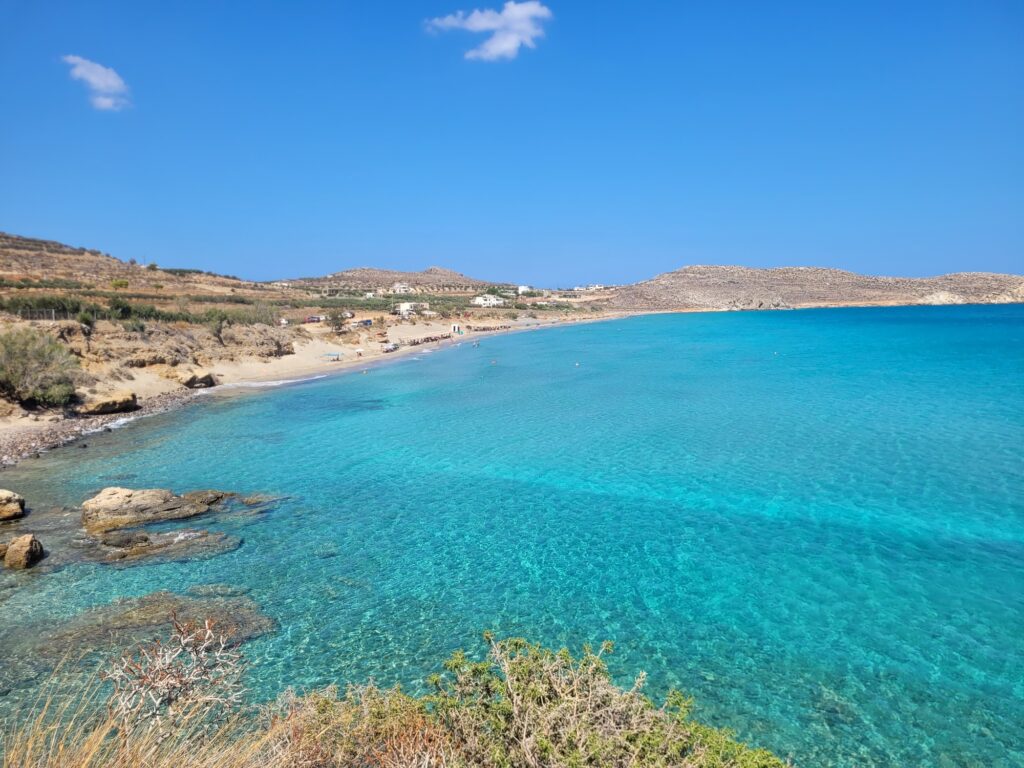
Mazida Ammos earns its reputation as the largest and most striking beach in the Xerokampos cluster, water so shallow for such a long distance that it takes on a genuinely bright, neon turquoise, the fine white sand beneath keeping visibility sharp enough to see every ripple on the seabed even from the cliffs above. I found the three limestone islets known as Kavalloi, rising from the Libyan Sea just offshore, gave the whole bay a dramatic, fixed point to look toward, and the surrounding hills blocked enough of eastern Crete’s northerly winds to keep the water flat and calm even when nearby beaches were visibly choppier.
Minimal Organization, Maximum Space
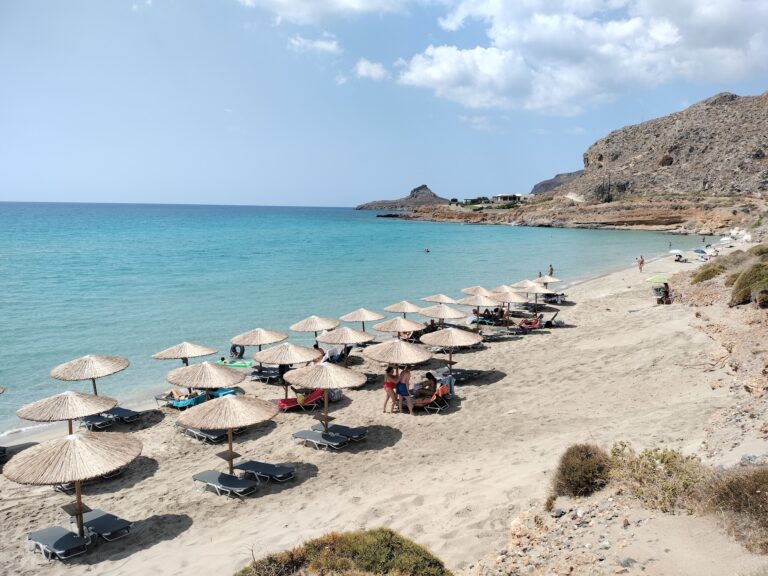
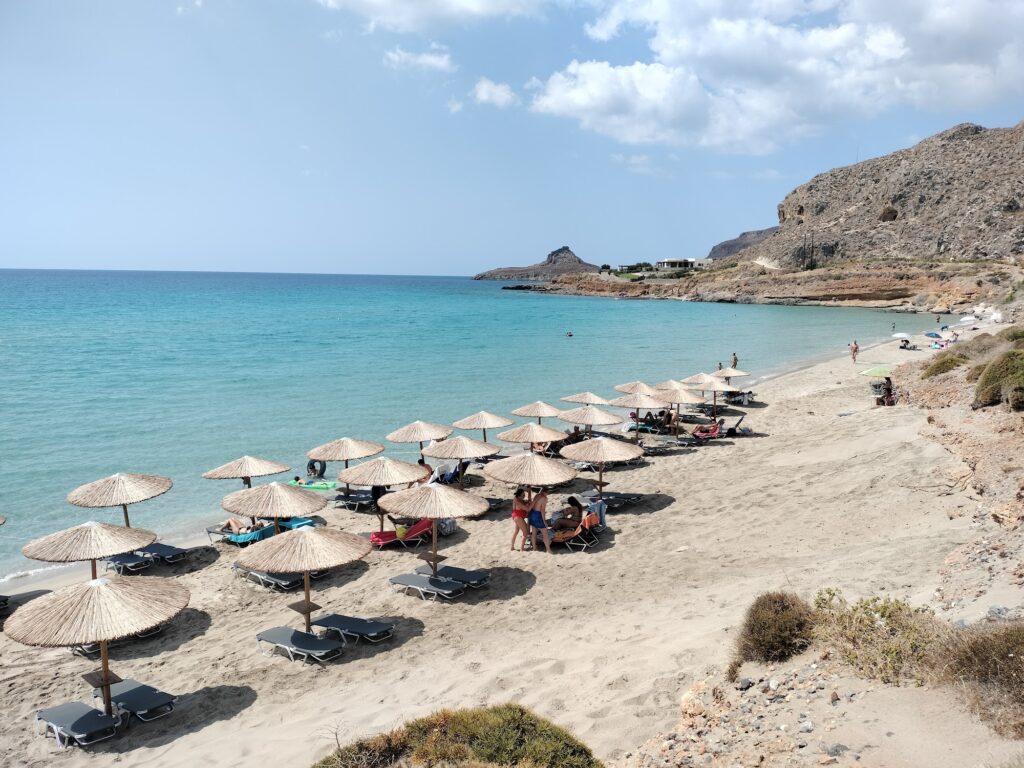
Beyond a few clusters of umbrellas during peak summer, Mazida Ammos remains largely open, genuine room to find a private stretch of sand rather than competing for space among rows of sunbeds. Given how lightly organized this beach stays, dogs would likely be fine here on a leash following the standard rule for Greek beaches, and I found the whole atmosphere suited visitors specifically seeking distance from the more developed resort beaches further north.
Grey Clay and a Genuinely Dark Night Sky
The surrounding area holds real clay deposits, and I found the local ritual, working the mineral-rich grey clay into a paste, letting it dry in the sun, rinsing off in the sea, worth trying at least once, skin left noticeably smoother afterward. With almost zero light pollution reaching Xerokampos, I found the stargazing here genuinely exceptional too, the Milky Way visible to the naked eye on clear nights, reflected faintly in water calm enough to double the view.
Getting There Down the Hairpin Road From Ziros
Mazida Ammos sits roughly 45 kilometers from Sitia and 68 kilometers from Ierapetra, most commonly reached through the town of Ziros before descending toward Xerokampos along a genuinely dramatic series of hairpin turns, the road offering sweeping views over the Libyan Sea the whole way down. Plenty of roadside parking sits directly behind the beach, and the walk to the sand itself is flat and easy once you’ve arrived. Anyone combining this with other stops in eastern Crete will find Sitia Beach Crete Greece a reasonable base further north, considerably more developed and accessible than the remote drive down to Xerokampos itself.
Standing Above Whatever the Sand Still Hides
By the time I left Mazida Ammos on my last evening, the Kavalloi islets had gone dark against a sky already thick with stars, and I found myself thinking about that unexcavated Minoan settlement somewhere in the hills behind me, and the salt canals possibly still intact beneath the very sand I’d been lying on all afternoon, this remote stretch of coast holding onto considerably more history than its quiet, empty beaches let on.
Map
Sorry, no records were found. Please adjust your search criteria and try again.
Sorry, unable to load the Maps API.
Near by places: