Foneas Beach Kardamyli: The Killer's Cove in Mani
Profile
Foneas Beach, Kardamyli, Mani: The Pebble Cove at the End of an 8km Gorge Named After a Shipwrecked Pirate Who Killed Passers-By
Greece | Kardamyli | Messinia, Peloponnese
Foneas means killer in Greek. The name comes from a legend: a pirate was shipwrecked on the beach and found refuge in its cave. Until he managed to repair his ship, he killed passers-by to rob them, and so he remained in the local tradition as the Foneas — the killer. When he finally repaired the vessel, he set sail again, leaving only the name behind.
The gorge that delivers the beach has a different name. The locals call it “Noupanti’s Gorge” — noupanti being an old Greek word for arrangement or agreement, because in the old days the meetings and marriage arrangements of the neighbouring villages (Saidona, Exochori, Proastio) took place in the gorge. The gorge for arranging marriages and the beach named after a murderous pirate are the same gorge-and-beach system: the gorge begins 8 kilometres inland at the Monastery of Vaidenitsa and ends at Foneas Beach on the Messenian Gulf coast.
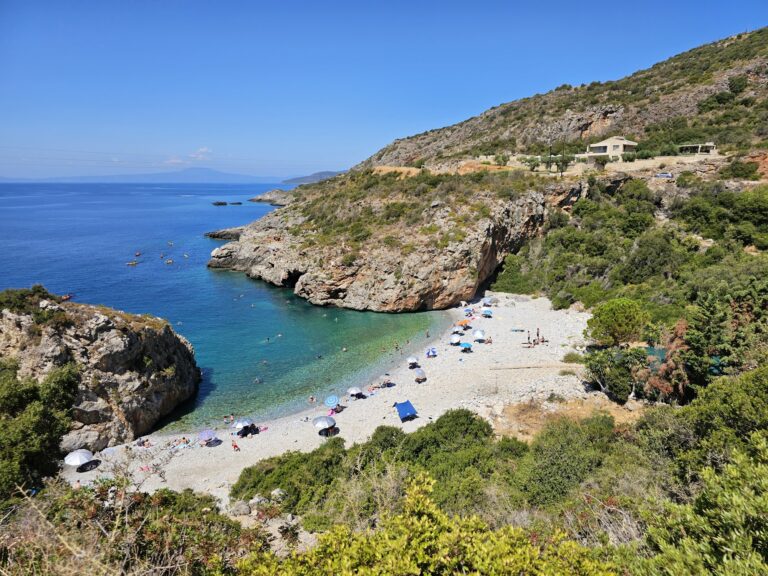
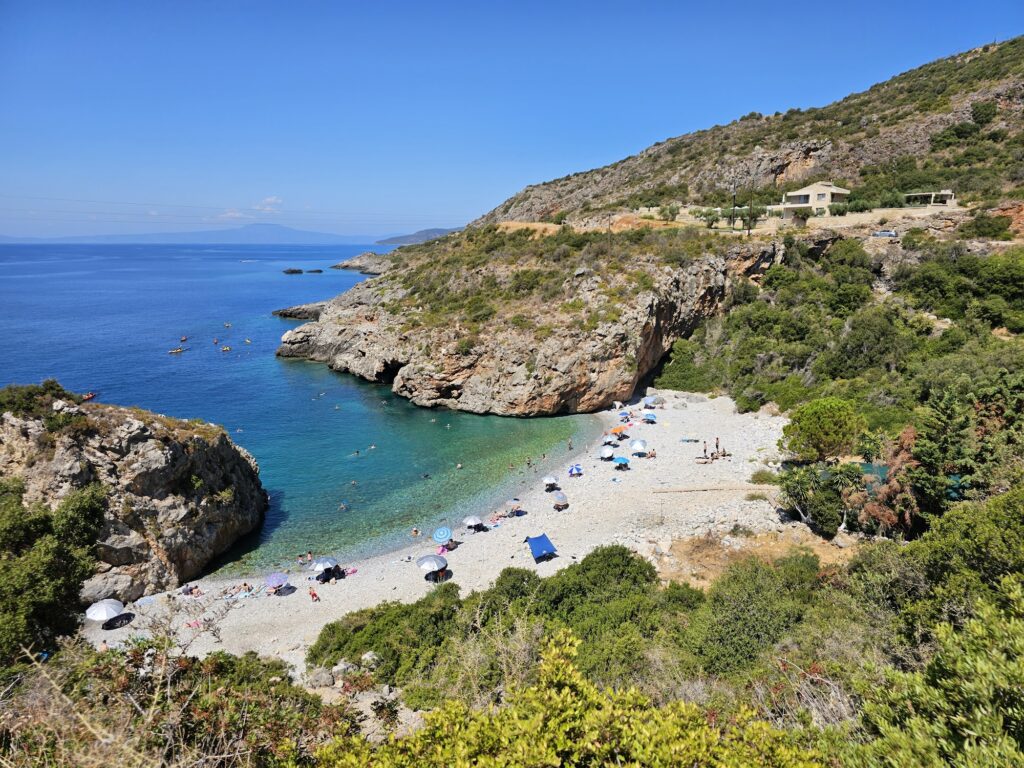
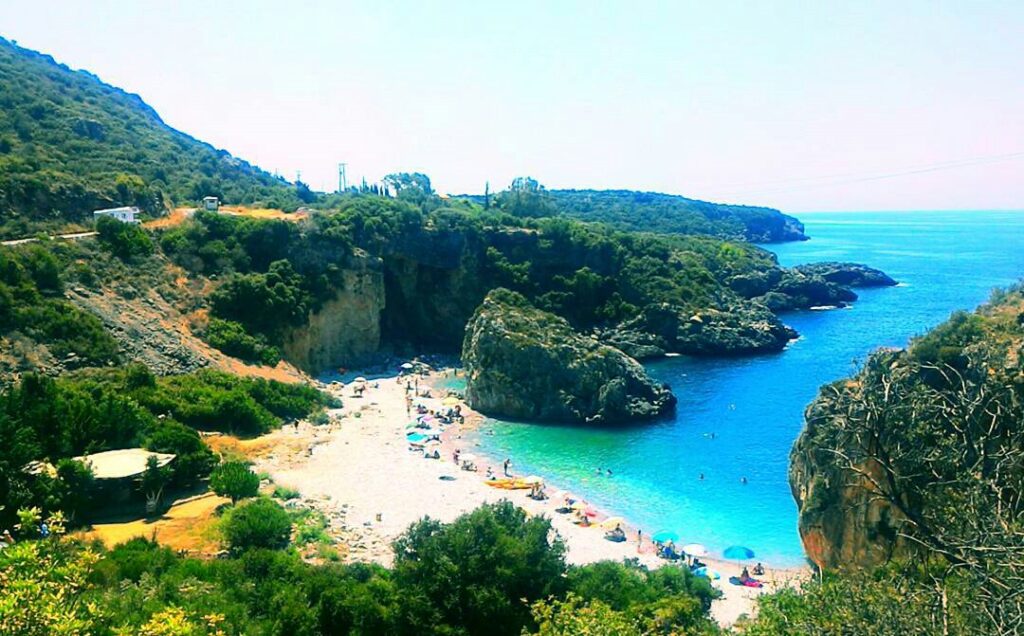
Foneas Beach is 4 kilometres southeast of Kardamyli on the road toward Stoupa and Laconia. It is considered one of the top 10 beaches in the Peloponnese and one of the most famous in Western Mani. It is a pebble beach with crystal-clear blue-green waters divided in two by a distinctive, colossal rock.
Getting There: 4km from Kardamyli, Look for the Bridge, Path Through Trees, Limited Parking
From Kardamyli, drive south on the coastal road toward Stoupa and Areopolis for approximately 4 kilometres. Watch for a small bridge crossing a ravine — the entrance to the beach is a discreet paved path next to the bridge, between the trees. The first time you visit, GPS is recommended as the turn-off is easy to miss.
A short paved road descends from the highway to a small parking area at the top of the path. From the parking area, the walk through the trees to the beach takes approximately 2 minutes.
Parking is limited due to the narrow ravine. In July and August, arriving before 10am is the specific instruction — the parking fills and the beach reaches comfortable capacity shortly after.
From Kalamata, the drive takes approximately 1 hour on the coastal road through the Messinian Mani. The road is scenic throughout — the Taygetos mountain range descending to the Messenian Gulf with the stone-tower villages of Mani visible on the slopes.
The Central Rock: The Defining Feature, The Cliff Jump, The Natural Shade
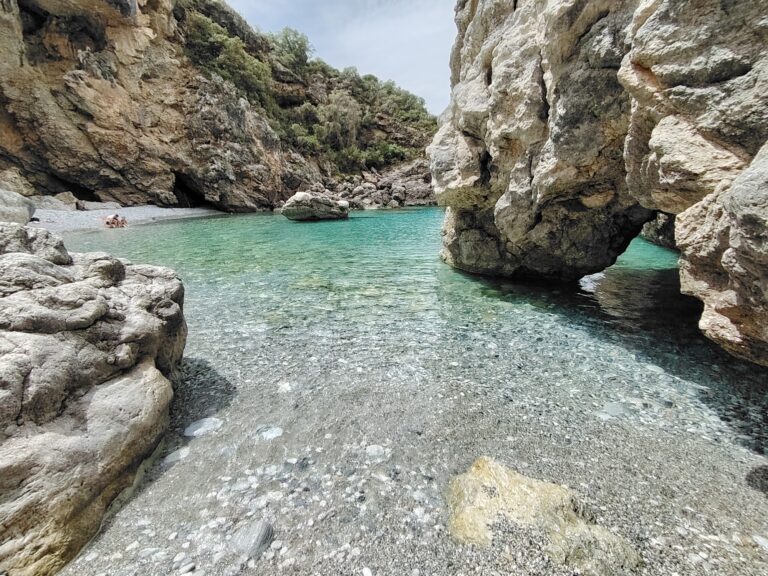
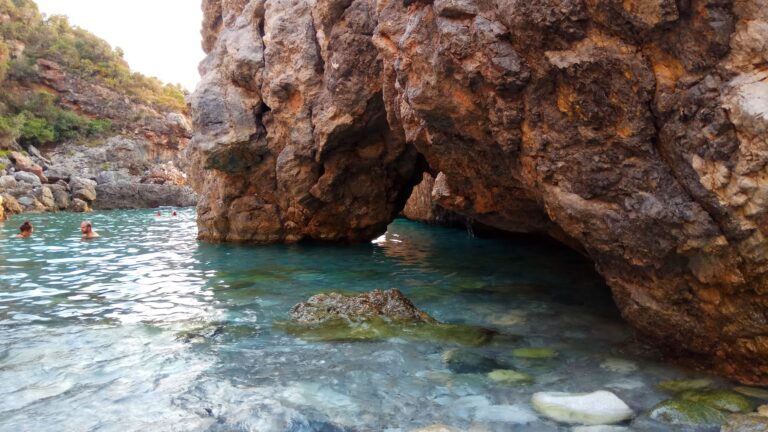
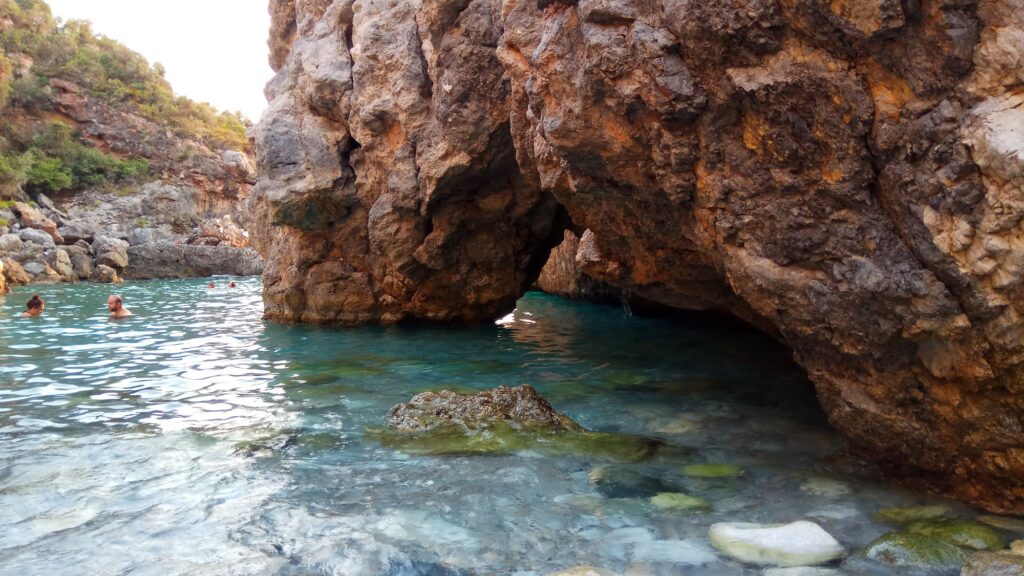
The central feature of Foneas is the huge rock in the middle of the sea — a massive limestone monolith that divides the bay. It is tailor-made for jumping or diving into the surrounding crystal-clear, blue waters. Locals and visitors climb its rugged edges to plunge into the deep water below. The rock also creates natural shade — the specific practical use that the adventurous use for jumping and the rest use for shade.
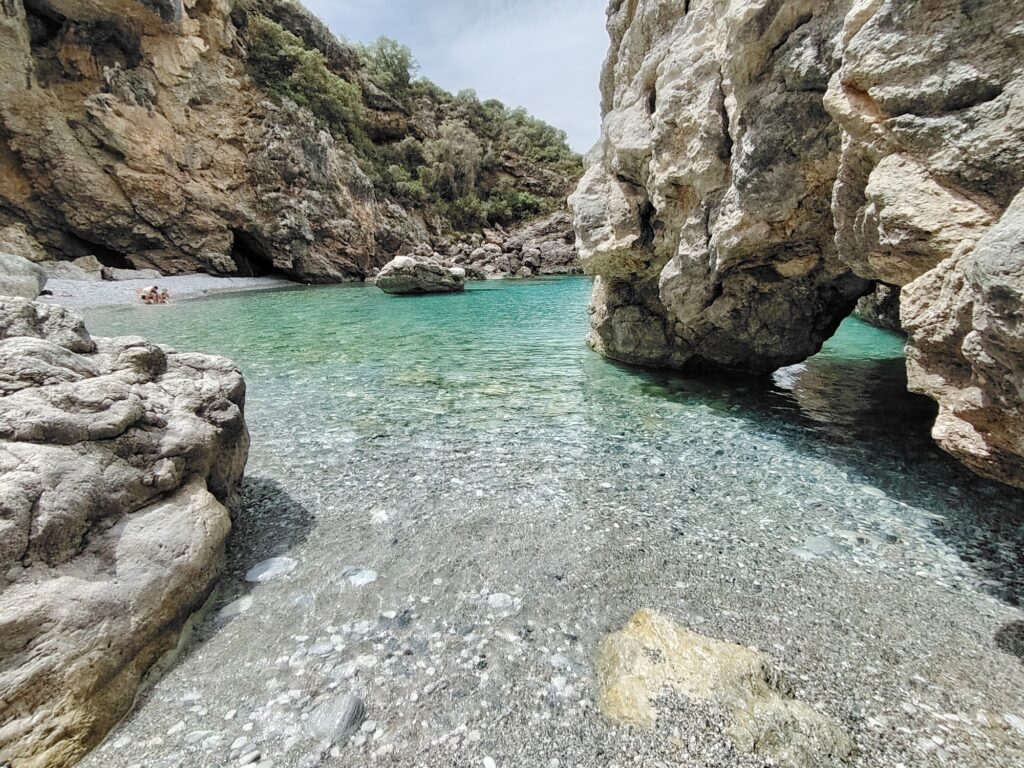
The beach itself is white pebbles. The pebbles are the reason the water stays clear even in light wind — no sand to be suspended by wave action, no turbidity from the seabed. The clarity is exceptional. Water shoes are strongly recommended: the pebbles are beautiful but tricky to walk on, and the entry into the sea requires care on the rounded stones.
No Organisation, Seasonal Canteen, No Sunbeds or Umbrellas
Foneas is completely unorganised. There are no sunbeds, no umbrellas for hire, no permanent facilities. During peak season a small seasonal canteen typically operates at the top of the path — cold water, basic snacks, coffee. Bring everything else: your own water, food, umbrella if you need shade beyond what the cliffs and the central rock provide, and the water shoes.
The high cliffs surrounding the bay provide natural shade in the early morning and late afternoon. The central rock provides shade at the base on the side facing away from the sun. Midday in July and August is the hot window when the full sun reaches the pebbles — this is when the arrival time matters and when the limited natural shade becomes fully occupied.
The Gorge: 8km from the Monastery of Vaidenitsa to the Sea
The Foneas Gorge (also called Noupanti Gorge) starts from the Monastery of Vaidenitsa — located 8 kilometres inland — and descends to the sea at the beach. The gorge is accessible as a hiking route from the monastery to the beach: an 8-kilometre walk through the Taygetos foothills, arriving at the pebble beach after the descent.
The gorge hike is the specific programme for visitors who want more than the beach alone: the monastery at the upper end, the gorge descent through the forested ravine, and the arrival at the sea. The walk is achievable in a single day as a point-to-point hike with transport arrangement at either end.
Kardamyli: The Village Patrick Leigh Fermor Called Home
Kardamyli — 4 kilometres north of Foneas Beach — is one of the most celebrated small villages in Greece, primarily because the travel writer and war hero Patrick Leigh Fermor chose to build his house there in the 1960s and lived in it until his death in 2011. Fermor is the author of Mani: Travels in the Southern Peloponnese (1958) — the book that introduced the Mani peninsula to the anglophone world. The house is now managed by the Benaki Museum and partially open to visitors.
Kardamyli is a stone-built village with a Byzantine castle, the old town quarter, and the waterfront square with fish tavernas — the specific combination that makes it the recommended base for the Western Mani beach sequence including Foneas, Stoupa, Kalogria (Zorbas Beach), and the further south Laconian Mani coast.
Stoupa and the Mani Beach Sequence
Stoupa — 4 kilometres south of Foneas Beach — is the main tourist resort of the Western Mani area. Kalogria Beach (Zorbas Beach) at Stoupa is where Nikos Kazantzakis and his model for Alexis Zorbas resided — the literary connection that gives the beach its alternative name. The sequence from Kardamyli south through Foneas and Stoupa covers the highest-quality coastal section of the Western Mani in 8 kilometres of road.
Foneas Beach near Kardamyli in the Mani is the white pebble cove at the end of the 8-kilometre Noupanti Gorge — named after a shipwrecked pirate who killed passers-by to survive while repairing his ship, the central limestone rock dividing the bay for cliff jumping and shade, completely unorganised with seasonal canteen only, arrive before 10am in July and August, water shoes essential, and Kardamyli 4 kilometres north with Patrick Leigh Fermor’s house.
Drive south from Kardamyli. Watch for the bridge. The path through the trees is next to it.
Map
Sorry, no records were found. Please adjust your search criteria and try again.
Sorry, unable to load the Maps API.
Near by places: