Kalogeros Beach: Clay Cliffs Near Marpissa
Profile
Kalogeros Beach: Clay Cliffs Below a Village Pirates Once Conquered
Greece | Paros | Cyclades | Aegean Sea
Marpissa, the village that serves as the gateway to Kalogeros Beach, carries a history considerably deeper than its current role as a scenic stopover between the mountains and the coast. Known as Tsipidos until 1926, the settlement traces its roots back to the late Neolithic period, and archaeological finds from the nearby Cave of Demons on Mount Prophet Elias have turned up artifacts spanning the early and late Cycladic periods through to the Mycenaean era. The village’s Venetian castle, the third built on Paros after Parikia and Naoussa, is believed to have fallen to the notorious pirate Barbarossa in 1537, and the Monastery of Agios Antonios now stands where that fortress once did, its illuminated silhouette visible from Marpissa and neighboring villages after dark.
The beach itself takes its name from a considerably more somber, and much-repeated, local legend: a monk, kalogeros in Greek, is said to have died falling from the cliffs above the bay generations ago, the story passed down without much explanation of what led him there, the beach quietly carrying his name ever since.
Clay Cliffs and a Genuine Natural Spa
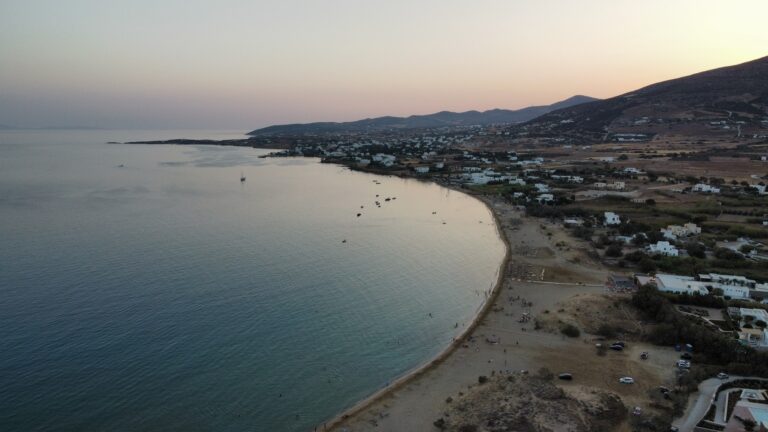
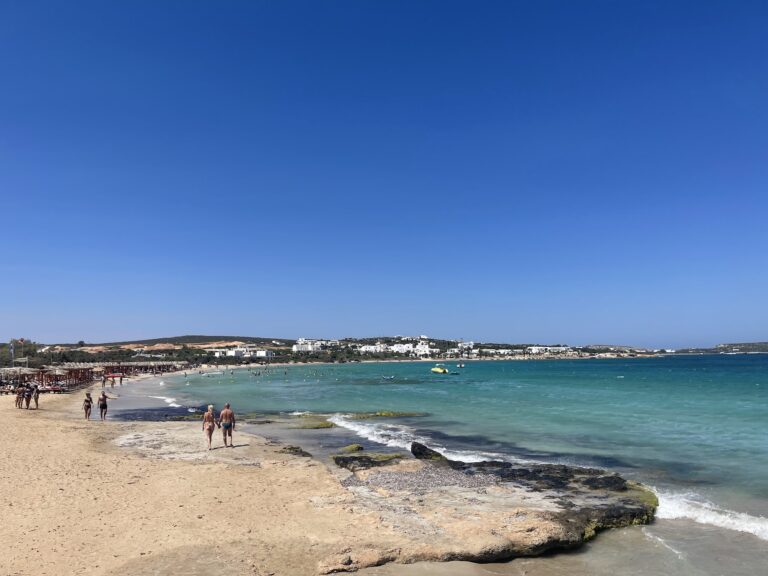
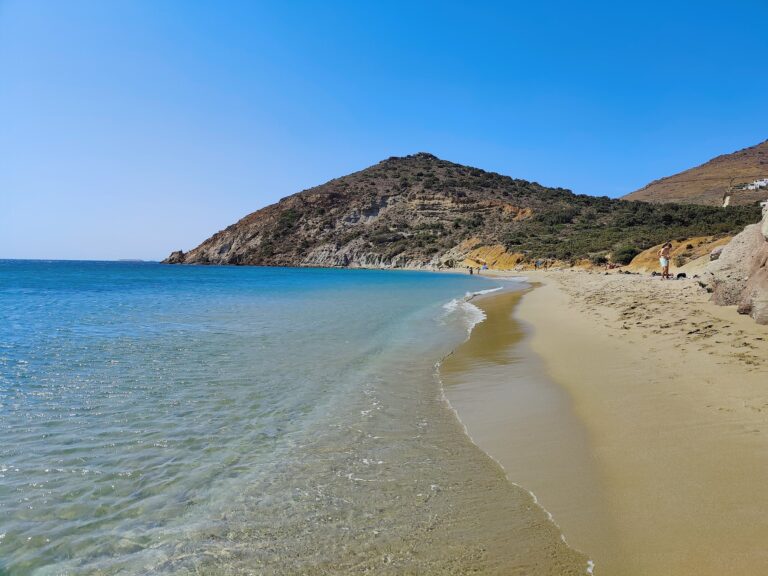
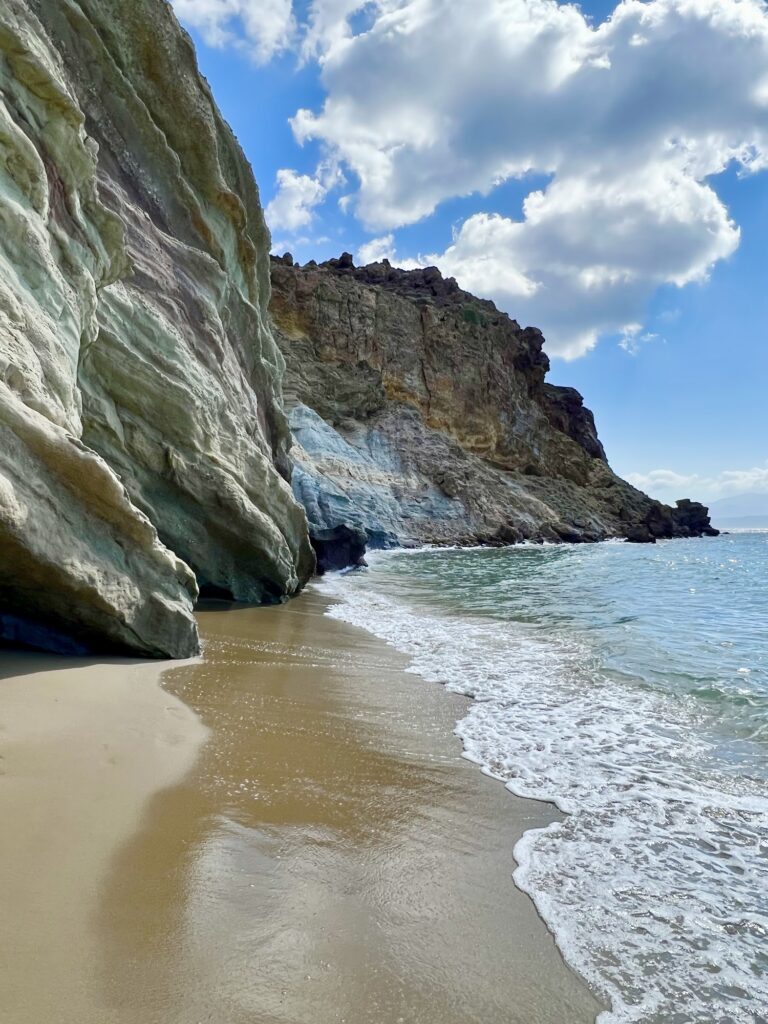
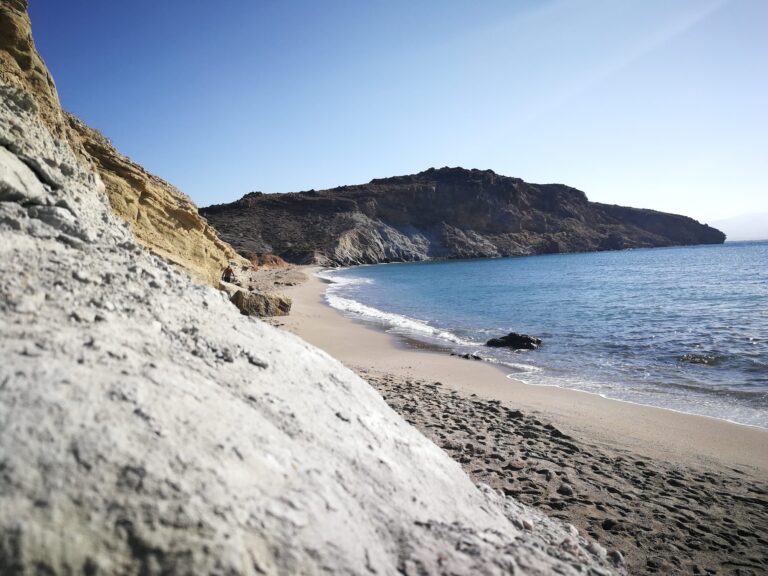
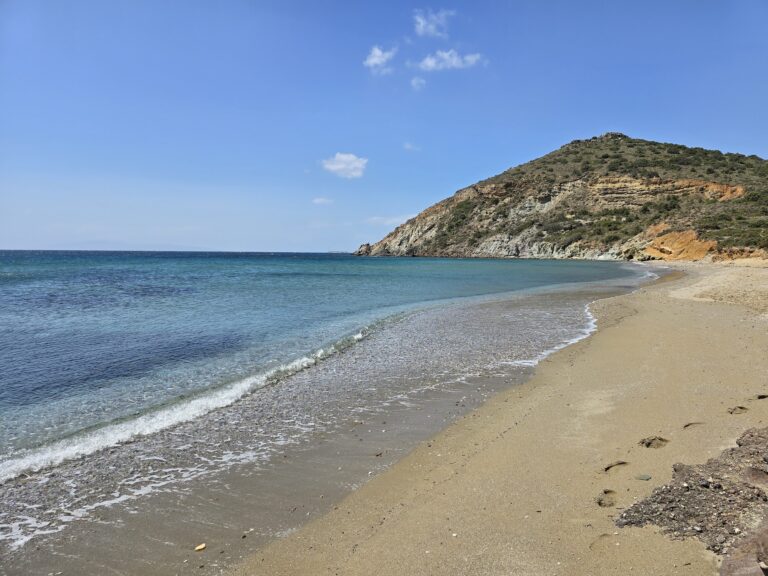
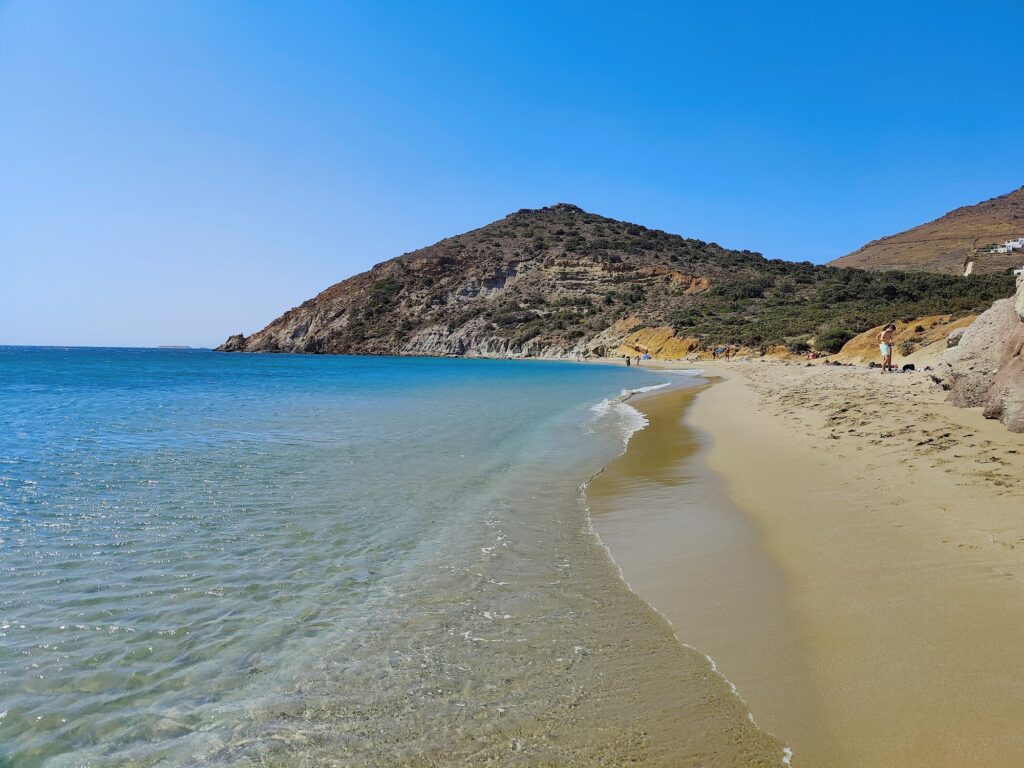
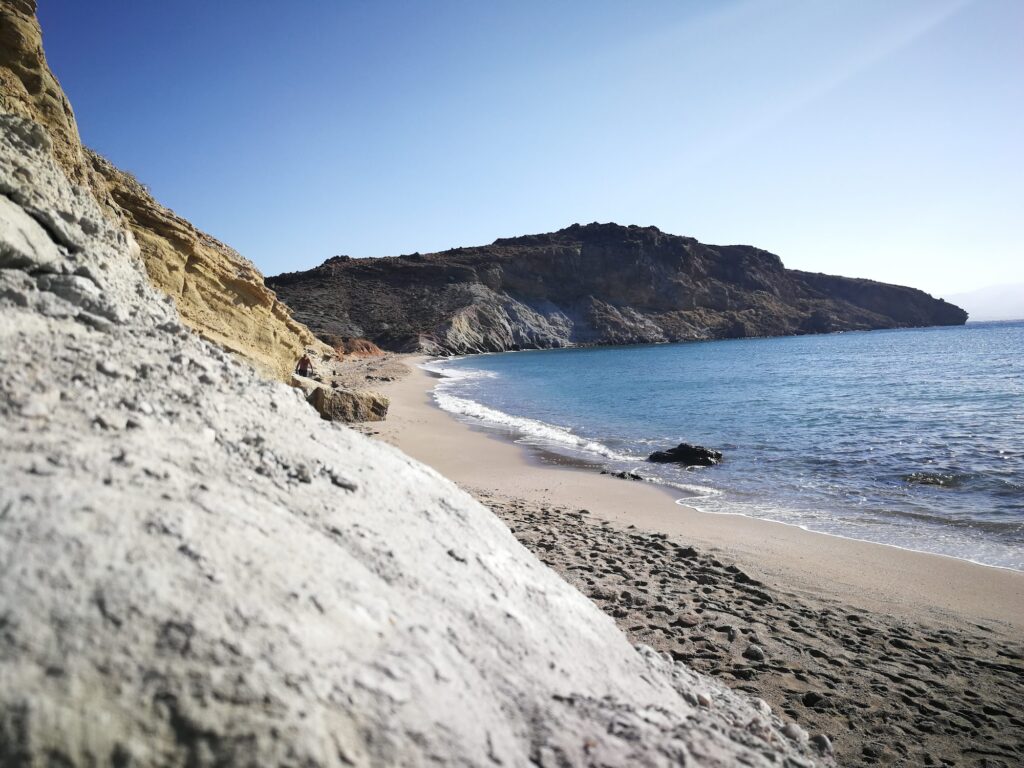
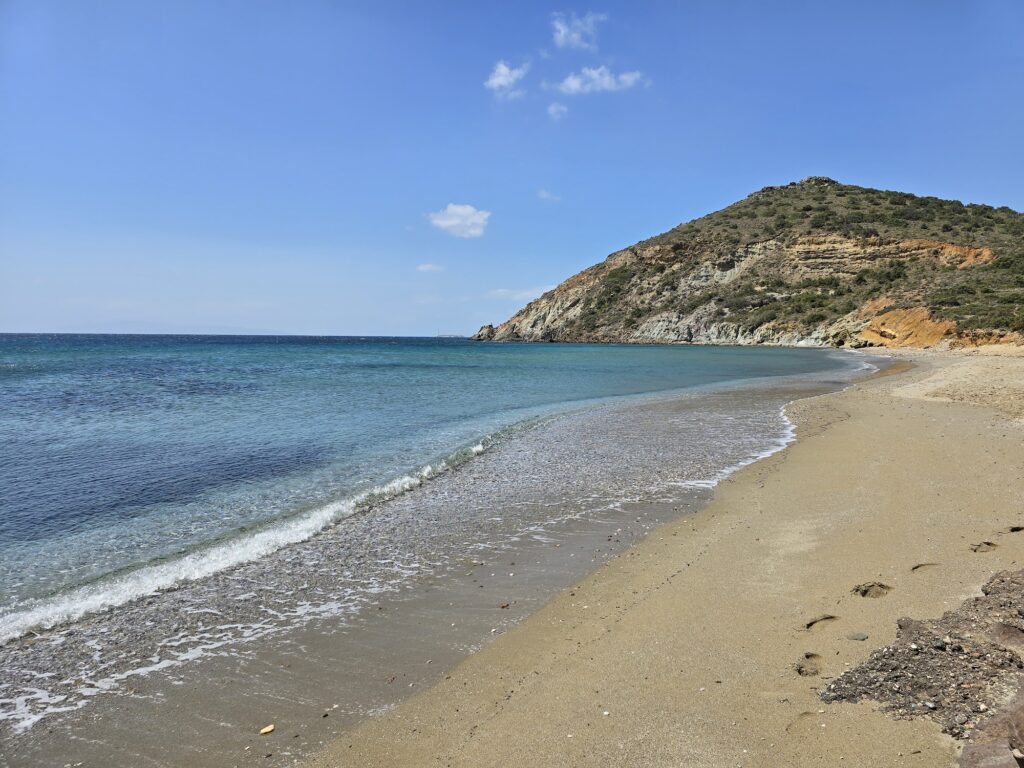
What draws most visitors to Kalogeros today has nothing to do with that older story. The cliffs flanking the bay are composed of mineral-rich clay, and I found the ritual genuinely widespread, visitors working small handfuls of clay mixed with seawater into a paste, letting it dry in the sun, then rinsing off in the sea for skin left noticeably softer afterward. The minerals give the water itself a distinctive, milky turquoise cast unlike anything I found at other Paros beaches, and the mixed sand-and-rock seabed made for genuinely interesting snorkeling along the darker, volcanic-tinted shoreline.
No Sunbeds, No Noise, Deliberately
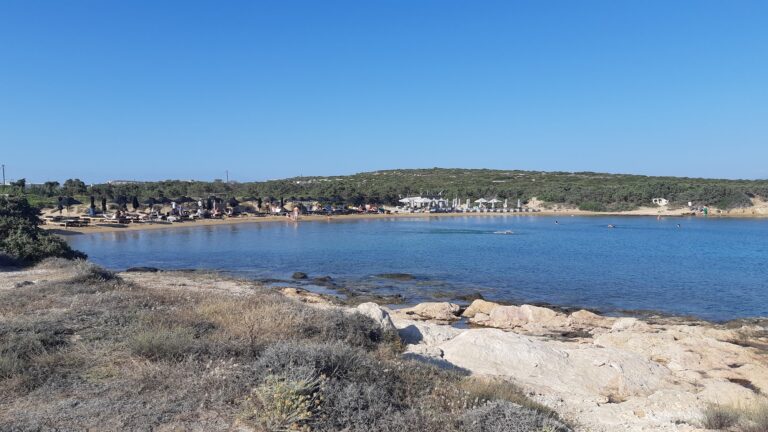
Kalogeros remains entirely unorganized, no rented loungers, no beach bar soundtrack, just wind against the cliffs and the ordinary sound of small waves. Given how thoroughly wild this cove stays, and its status within a protected Natura 2000 area, dogs would likely need to be kept on a leash at minimum, and I’d check current signage carefully given the ecological sensitivity of the site.
A Dirt Road That Filters the Crowd on Its Own
Reaching Kalogeros requires genuine intention, an unpaved, occasionally dusty road that serves as its own natural crowd control even during the height of summer. I found the effort worthwhile specifically because of what it kept out, and I’d recommend treating the drive itself as part of the experience rather than an inconvenience to rush through.
Getting There Near Marpissa and Molos
Kalogeros sits roughly 17 kilometers from Parikia and 12 kilometers from Naoussa, reached by following signs toward Marpissa and continuing on the road to Molos; just before reaching Molos’ wide bay, a small dirt road marked for Kalogeros branches off, leading through a narrow pass between the hills to a small natural parking area right at the sand’s edge, arriving before eleven worth planning around given how tight that space gets during peak season. Since the beach is completely unorganized, I’d pack water, snacks, and a towel not too precious to pick up some clay.
Standing Where a Village Outlasted Its Own Conquerors
By the time I left Kalogeros on my last visit, the clay had dried on my skin exactly as promised, and I thought about Marpissa up the hill, a settlement old enough to have been called something else entirely for most of its history, its Venetian castle taken by pirates centuries ago and quietly replaced by a monastery, the whole village continuing on regardless, considerably more resilient than the solitary monk this beach still remembers by name alone.
Map
Sorry, no records were found. Please adjust your search criteria and try again.
Sorry, unable to load the Maps API.
Near by places: