Kamares Beach: Gateway to an Island's Gold
Profile
Kamares Beach: The Port an Island’s Gold Once Left Through
Greece | Sifnos | Cyclades | Aegean Sea
Herodotus described Sifnos as the wealthiest island in the Aegean during the sixth century BC, a reputation built entirely on gold and silver mines that made the island rich enough to begin minting its own coins around 600 BC, earlier than Athens or Corinth. The Siphnians used a tithe from those mining profits to build the Siphnian Treasury at Delphi around 525 BC, the first building on the Greek mainland made entirely of marble, and by most accounts the single most lavishly decorated structure standing anywhere in the sanctuary of Apollo, its friezes depicting scenes from the Trojan War still counted among the finest surviving examples of archaic Greek sculpture. According to Pausanias, the island’s fabulous wealth eventually collapsed, the mines said to have flooded, some accounts suggesting divine punishment after the Siphnians failed one year to send their expected tithe to Delphi. The island’s own name may even preserve that memory, one theory holding that Sifnos derives from a word meaning “empty,” a reference to the honeycombed, hollowed-out mine tunnels left beneath the ground once the gold ran out.
Kamares Beach sits at the harbor where every visitor to Sifnos still arrives, the same general point from which centuries of that ancient mineral wealth would have been shipped out toward Delphi and beyond.
Shallow Water in a Sheltered, Mountain-Framed Bay
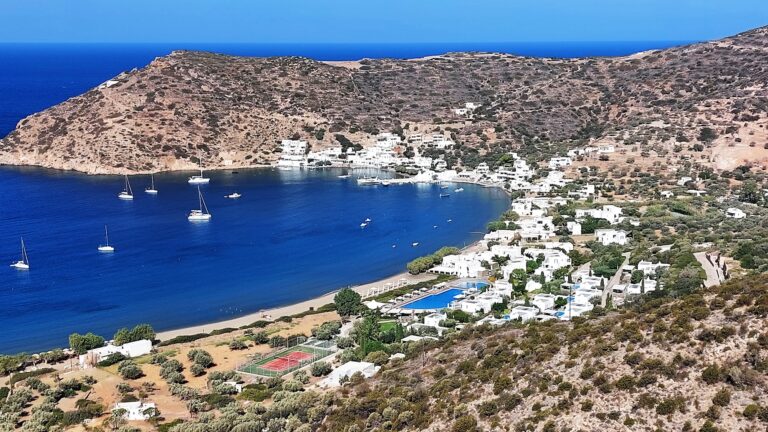
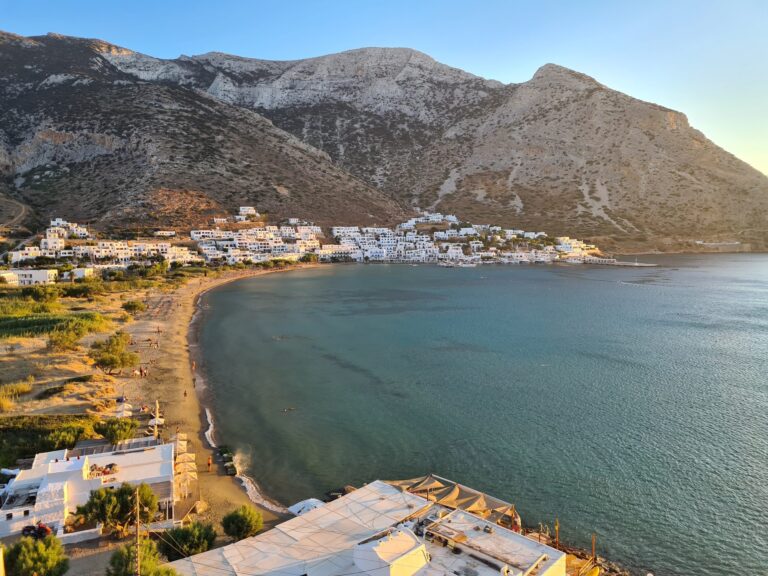
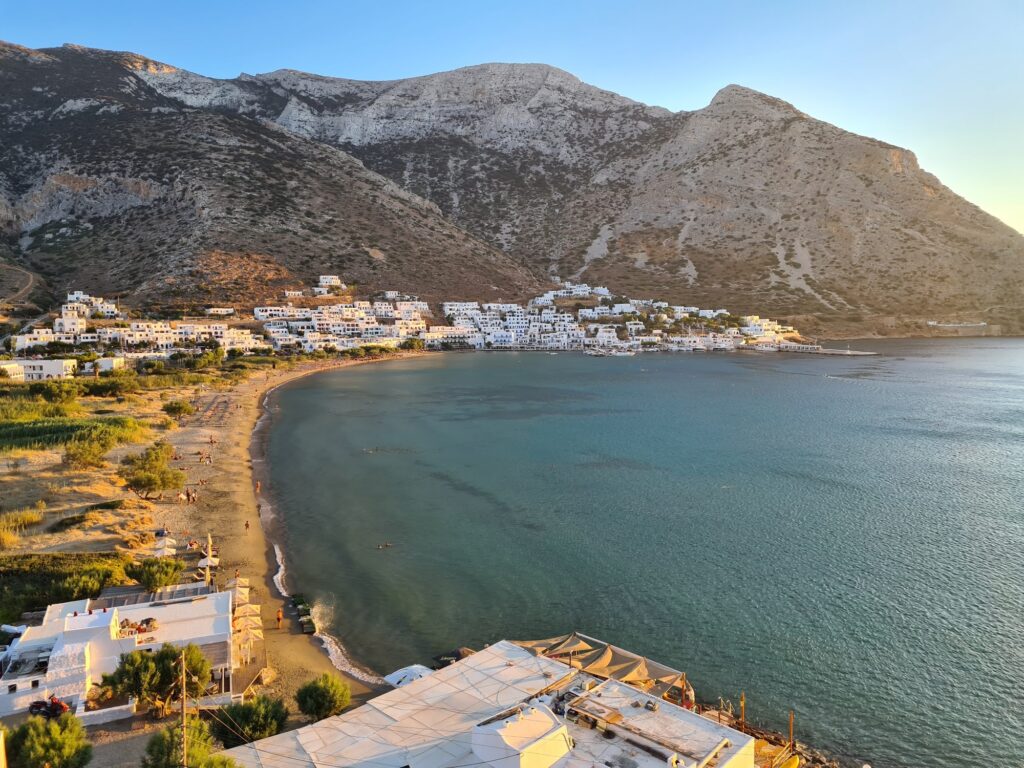
Kamares occupies a deep, horseshoe-shaped bay flanked by the peaks of Profitis Ilias and Agios Symeon, and I found the mountains gave the whole beach a genuine sense of scale that flatter Cycladic beaches don’t manage. The sandy seabed slopes gently enough that I could wade out a considerable distance while the water stayed only knee-deep, making this one of the more reassuring beaches in the Cyclades for families with young children, and the surrounding peaks block enough of the Meltemi wind to keep conditions calm even when the open sea beyond the bay turns choppier.
A Ferry Port That Somehow Stayed Genuinely Clean
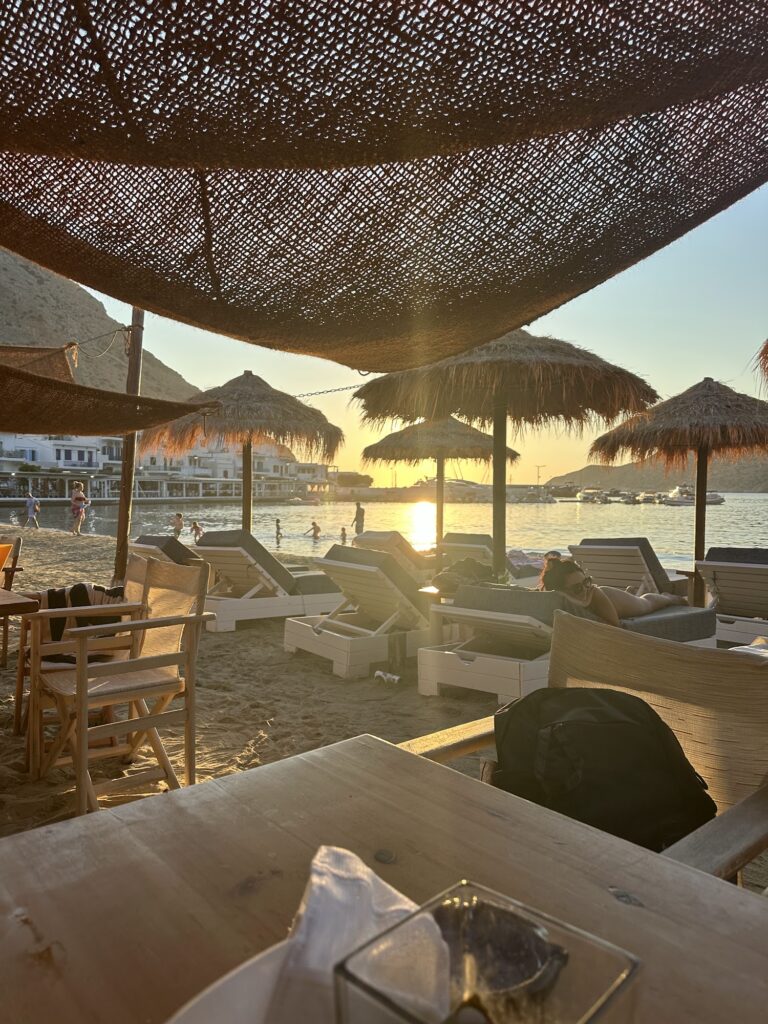
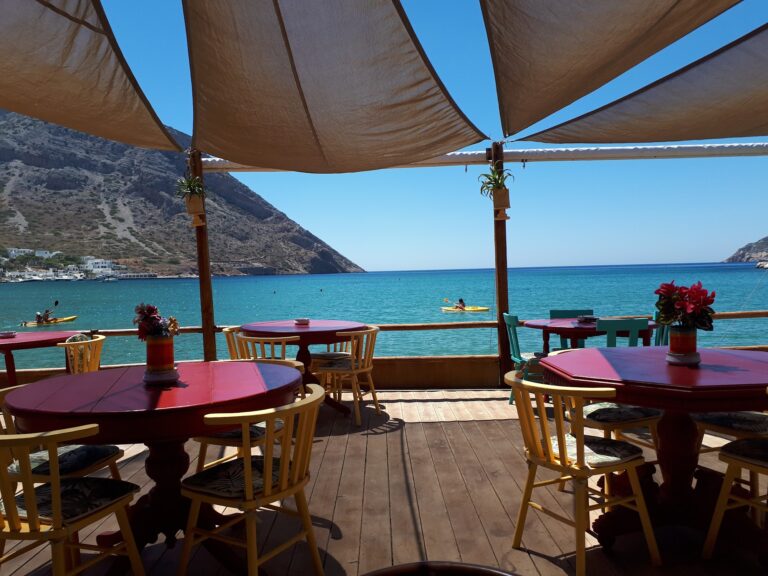
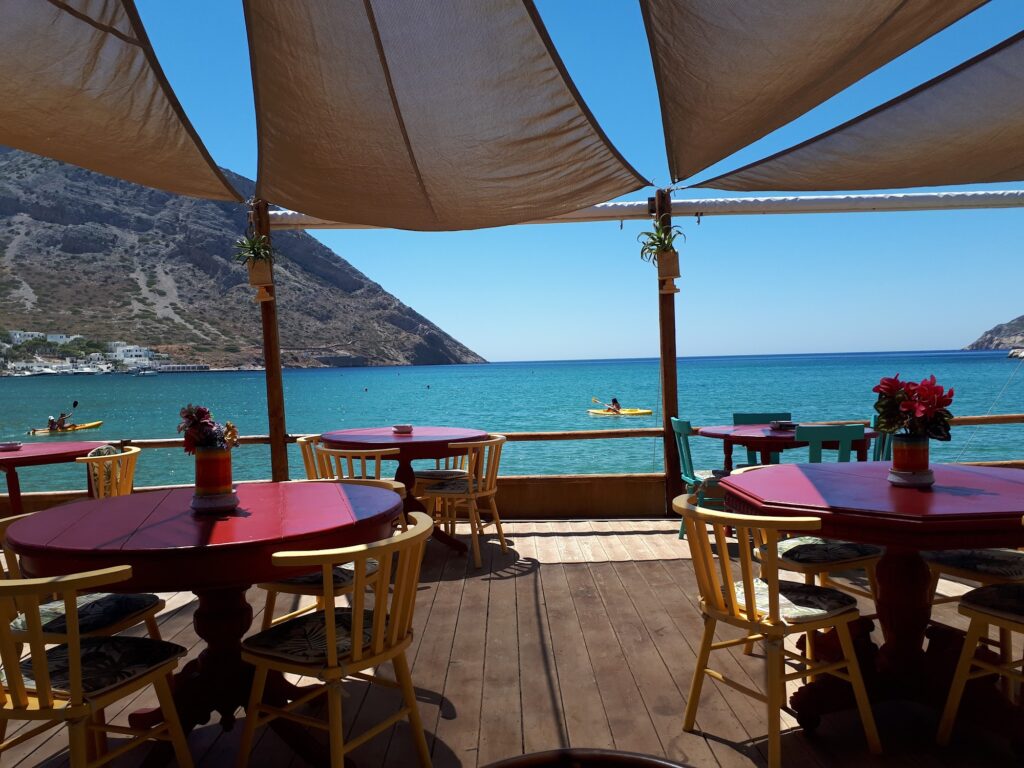
Given how much traffic passes through Kamares as the island’s primary arrival point, I found the water quality genuinely impressive, consistent Blue Flag certification reflecting real environmental upkeep rather than a formality. The fine, soft sand extends along a promenade lined with restaurants close enough to the water that I ate more than one meal with my feet still in the sand, revithada, the local chickpea stew Sifnos is genuinely known for, and fresh calamari both worth seeking out specifically.
An Island Still Known as Greece’s Culinary Capital
Sifnos has built a reputation as the country’s foodie island, and I found that reputation held up consistently at Kamares itself, the beachfront tavernas taking real pride in ingredients and preparation rather than serving anything obviously aimed at a quick tourist turnover. As evening arrived, the same beach bars shifted from relaxed daytime spots into something closer to a proper cocktail scene, a transition I found genuinely well managed rather than jarring. Given how organized and commercially active this stretch is, I’d expect dogs to need explicit permission at any managed beachfront section, consistent with organized Greek beaches generally.
Getting There the Moment You Step Off the Boat
For anyone staying in Kamares village itself, the beach sits less than three minutes from the ferry ramp, genuinely the easiest arrival of any beach I’ve written about in this series; from Apollonia, the island’s hilltop capital, the drive covers about 5 kilometers and ten minutes along a well-paved, winding road with steady valley views, and Sifnos’ notably reliable bus network runs frequent services from both Apollonia and Artemonas directly to Kamares, with the stop sitting just steps from the sand. A large organized public parking area serves the village entrance for anyone arriving by car or scooter.
Standing Where a Fortune Once Sailed Out to Delphi
By the time I left Kamares on my last evening, the mountains behind the bay had gone dark, and I thought about how much of this small island’s ancient identity was built on wealth that’s long since been spent, mined out, and mythologized into a story about divine punishment, the harbor in front of me now simply welcoming ferries rather than shipping out anything more valuable than the day’s departing tourists.
Map
Sorry, no records were found. Please adjust your search criteria and try again.
Sorry, unable to load the Maps API.
Near by places: