
Kalopigado Beach: Ammouliani's Given-Away Island
Profile
Kalopigado Beach: The Island a Monastery Gave Away
Greece | Halkidiki | Aristotelis | Athonite Gulf
Ammouliani belonged entirely to the Vatopedi Monastery on Mount Athos until 1925, worked through the centuries by a small handful of monks and roughly twenty agricultural laborers who tended olive groves, ran salt pans, and fished these waters to help sustain the larger monastic community across the strait. When Vatopedi finally granted the island to the Greek state, it wasn’t handed to just anyone. Refugees from the Sea of Marmara islands, Pasalimani, Gallimi, and Skoupia, arrived to build the first permanent settlement here, and they brought with them a specific culinary tradition that’s survived intact: local women still shape marzipan into flower forms, a craft passed down directly from those original Marmara families rather than picked up from anywhere else in Greece.
Kalopigado sits along Ammouliani’s coastline, one of more than twenty beaches scattered across an island barely 4.5 square kilometers in size, and reaching it means first crossing the short stretch of water separating this small, permanently inhabited island from the Halkidiki mainland.
Clear Water Along a Coast Built by Monks and Refugees
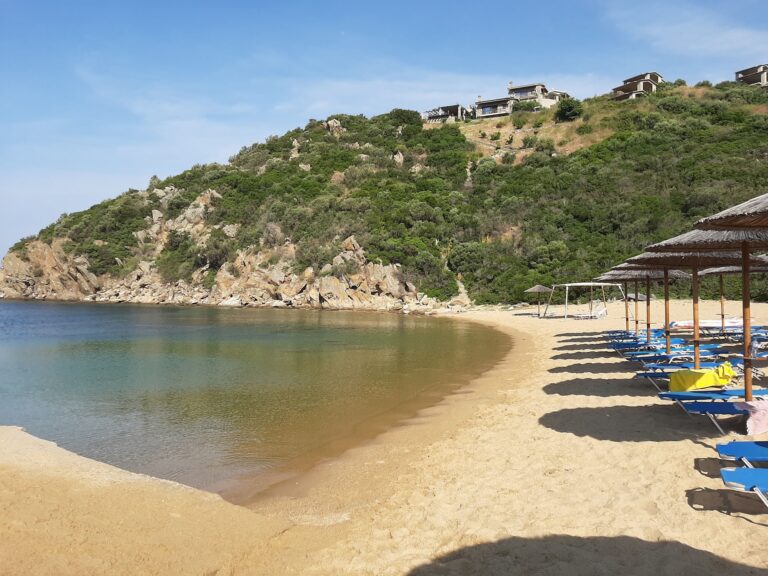
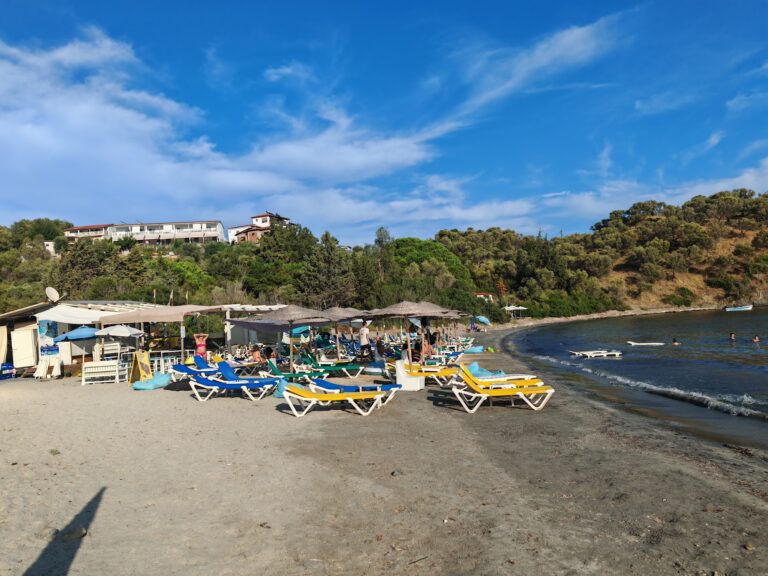
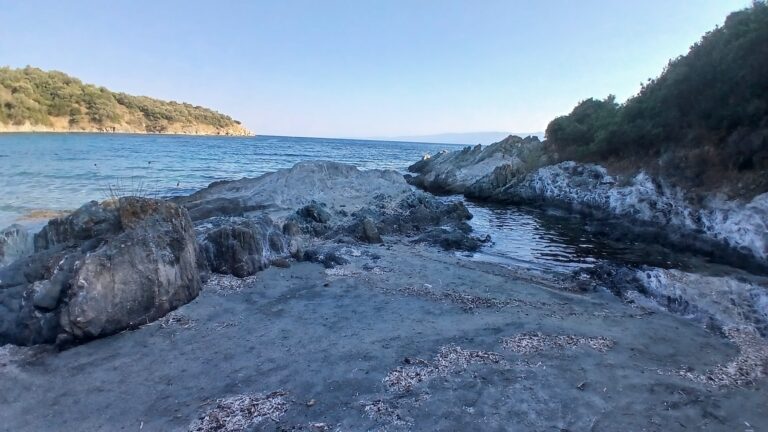
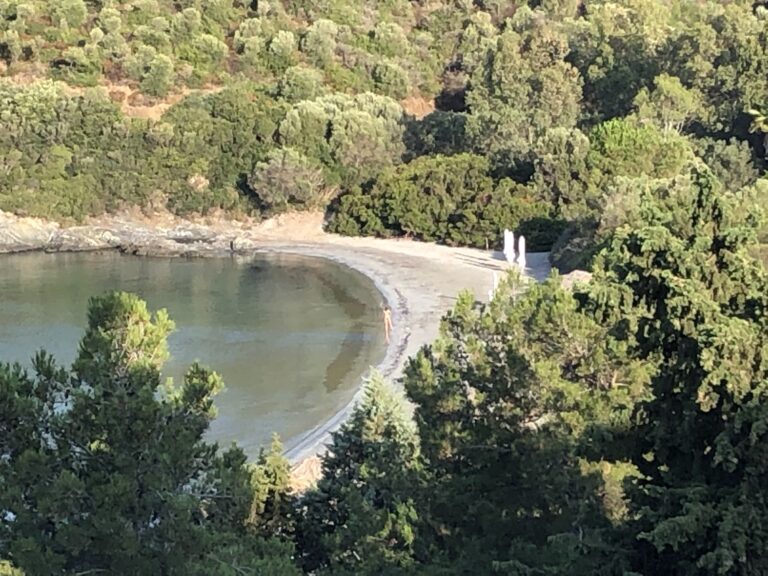
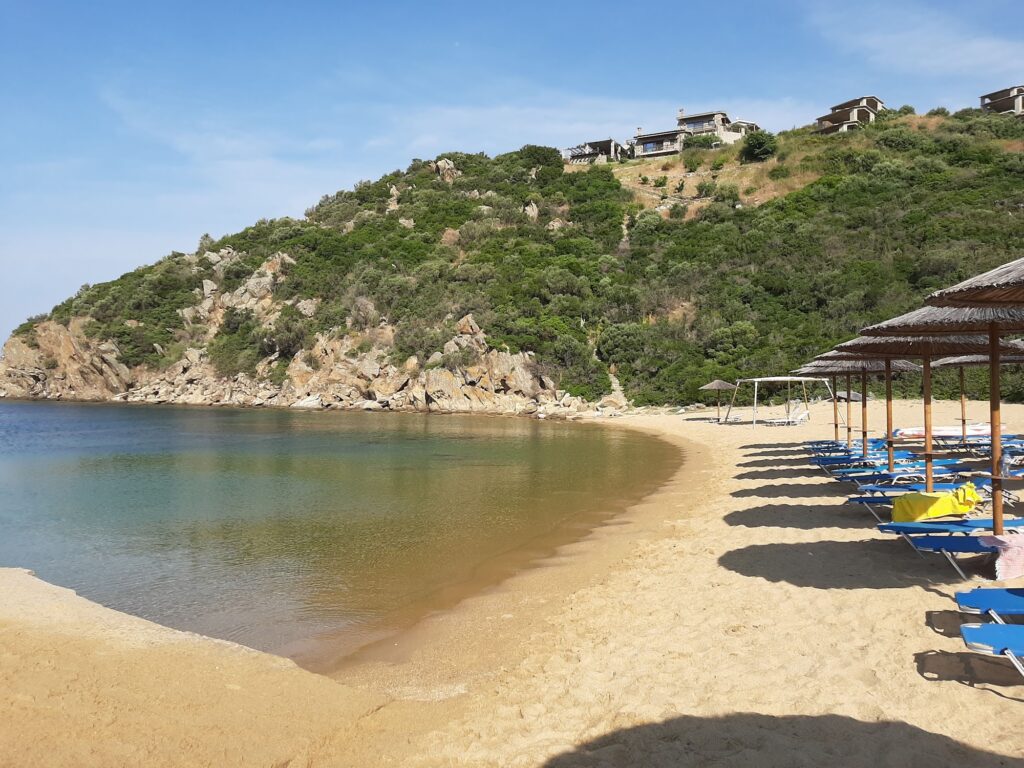
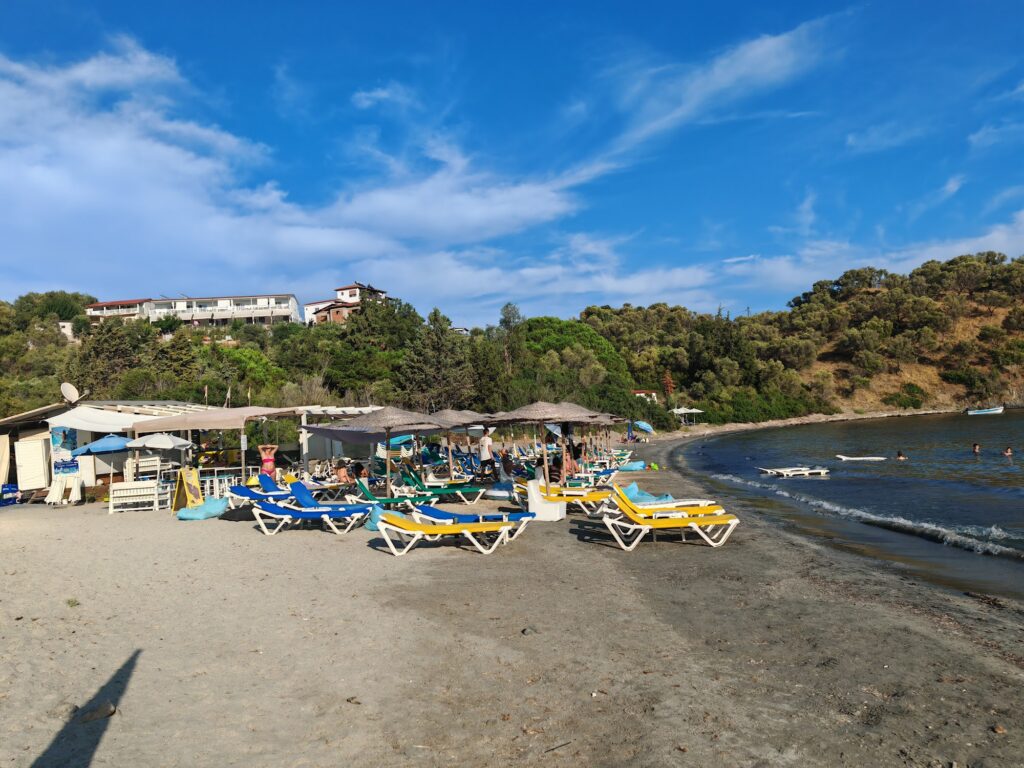
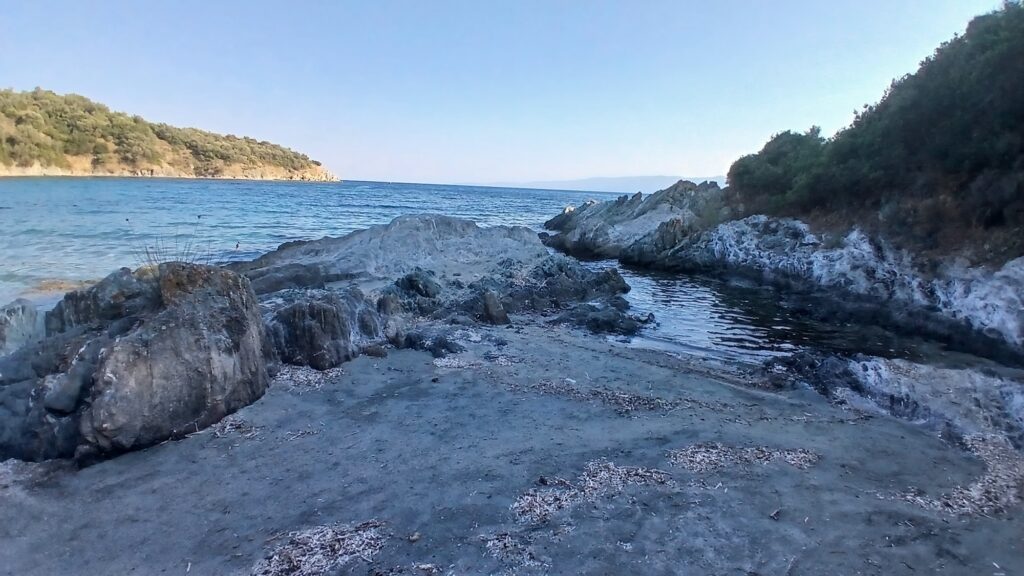
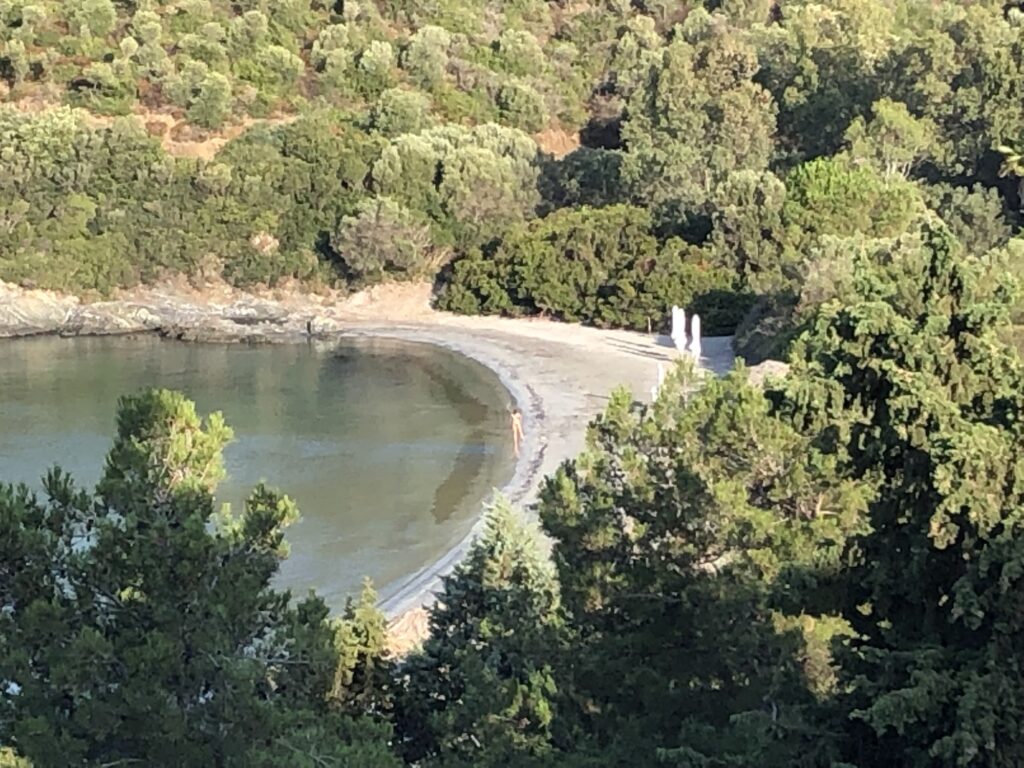
The beach itself offers the same crystal-clear water that’s earned several of Ammouliani’s shores Blue Flag recognition, and I found the clarity genuinely impressive, the seabed visible clearly even at a reasonable depth. The gentle, gradual slope common to this stretch of coast made for comfortable swimming, and I’d call this a reasonably safe choice for supervised swimming with children, though I’d still keep a close eye given how the exact contour shifts along different sections of the shoreline. Given how much of Ammouliani’s coast remains genuinely unorganized, dogs would likely be fine on a leash following the standard rule for Greek beaches, with any managed beach-bar sections nearby requiring separate permission.
A Shipyard the Monks Built to Maintain Their Boats
Near the island’s main port stands the Arsanas, a structure built by the monks in 1876 and expanded in 1902, originally used as a small shipyard where boats were kept safe and repaired during rough weather. I found it a genuinely tangible link back to the centuries when this whole island functioned as a working outpost rather than a destination, its architecture recognizably tied to the same building style found across Mount Athos itself, a short boat ride away across the strait.
Pirates, Rebels, and a Church Built for Sailors
During the 1821 Greek War of Independence, Ammouliani served as a hiding place for rebels and pirates operating along this stretch of coast, a considerably rougher chapter than the quiet fishing and farming island the Vatopedi monks otherwise maintained. The Church of Agios Nikolaos, built in 1865 on the island’s central square, was originally dedicated to Saint Modestos before monks added a second floor honoring Saint Nicholas, patron of sailors, a fitting choice for a community whose fortunes have always depended on the sea around it.
A Fishing Village That Outgrew Its Own Size
The refugees who settled here after 1925 brought fishing techniques from the Marmara islands that took hold quickly, and Ammouliani has since grown into what locals describe as the second-largest fishing power in northern Greece relative to its population, a genuinely striking claim for an island this small. I found fresh catch on nearly every taverna menu near the beach, sardines, anchovies, and octopus prepared simply and well.
Getting There and Settling In
Reaching Kalopigado means first driving to the small port of Trypiti, roughly two hours from Thessaloniki along the road through Halkidiki toward the Athos border region, and boarding one of the frequent short ferries that cross the two-nautical-mile strait to Ammouliani in well under fifteen minutes; once on the island, the beach itself sits a short drive or manageable walk from the main port, with informal parking available nearby. Anyone combining this with a broader tour of the Athos coastline will find Komitsa Beach Halkidiki Greece, on the mainland peninsula the monastery border itself cuts across, a useful comparison point, one island shore granted away by monks, one mainland beach still running directly up against the border those same monastic communities maintain today.
Watching the Boats Come In Near the Old Shipyard
By the time I made my way back toward the port on my last evening, fishing boats were returning for the day, passing close enough to the old Arsanas that I could imagine, without much effort, monks doing the same work here more than a century ago, the island having changed hands entirely since then without ever quite losing the rhythm those original caretakers first established.
Map
Sorry, no records were found. Please adjust your search criteria and try again.
Sorry, unable to load the Maps API.