Malia Beach Crete: Party Strip and Minoan Palace
Profile
Malia Beach, Crete: The 6km Party Resort Shore with a Minoan Palace at One End and the Gold Bee Pendant at the Other
Greece | Malia | Heraklion Prefecture, Crete
Malia has a dual personality that makes it one of Crete’s most interesting resorts. On one hand, it has a famous party strip that draws young holidaymakers from across Europe. On the other, it has a genuine Cretan old village, a long golden beach and the remains of a Minoan palace that rivals Knossos in archaeological importance. This combination of beach-holiday fun and real cultural substance gives Malia more depth than its party reputation might suggest.
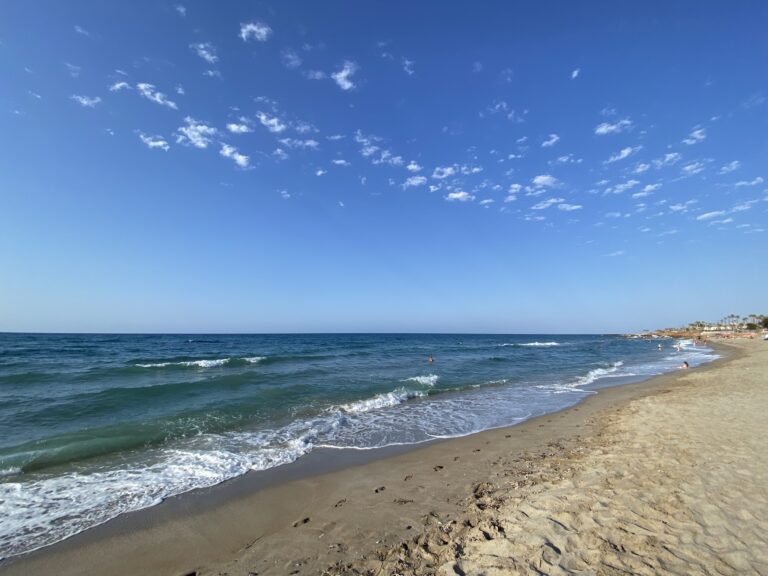
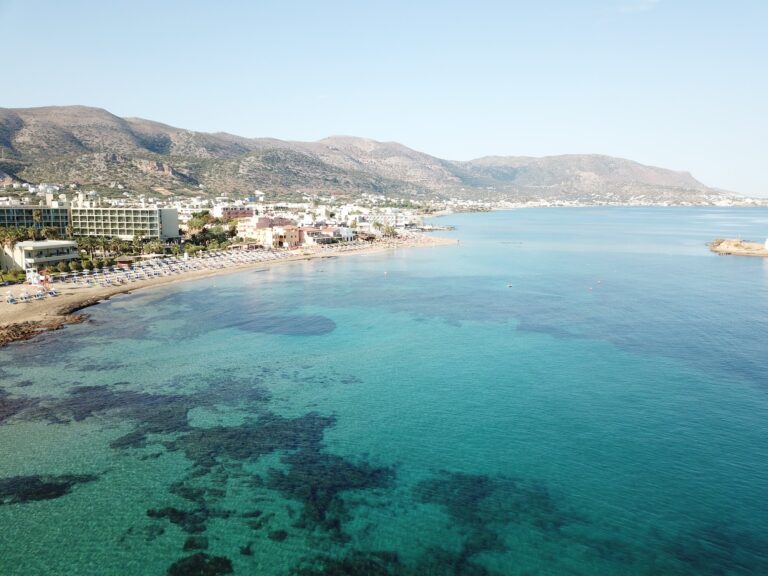
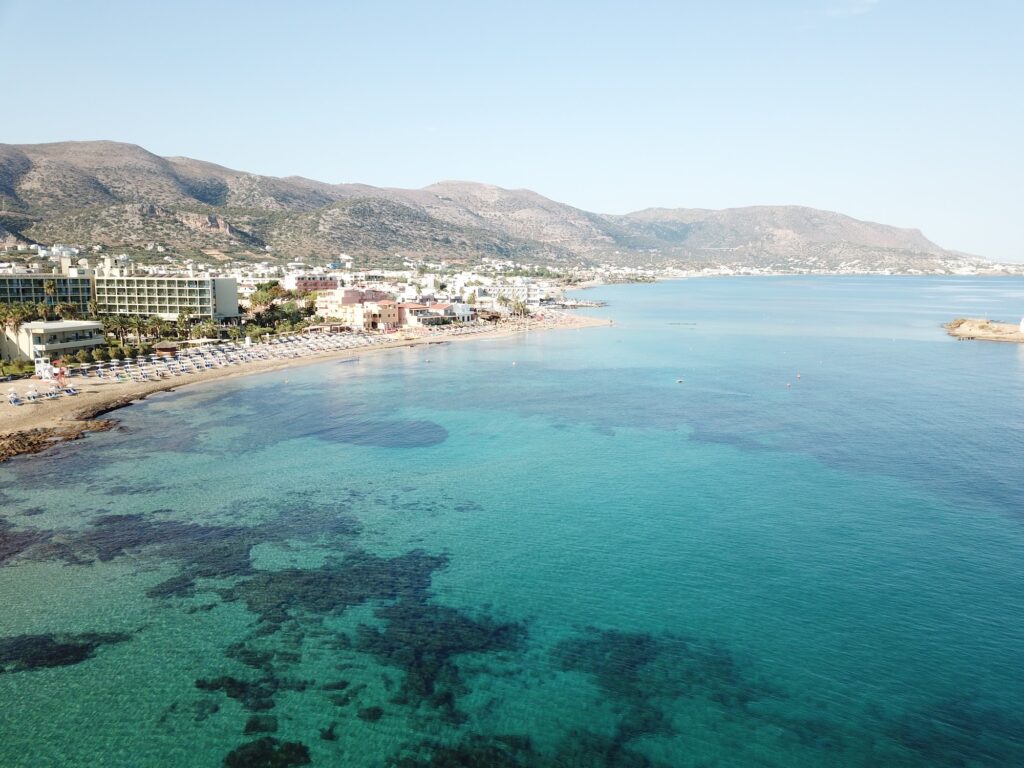
Malia’s 6-kilometre-long coastline features sandy beach stretching from the base of the strip and extending eastward toward the vicinity of the Minoan palace. The seaside Dimokratias Street (Malia Beach Road) is the main thoroughfare in the newer part of the town, along which many bars, restaurants, and nightlife venues are located.
The party character and the archaeological character coexist in the same resort for the specific geographical reason that the Minoan palace of Malia sits 3 kilometres east of the nightclub strip, with the 6-kilometre beach connecting them. The visitor who spends the day at Potamos Beach by the palace ruins and the evening on the strip has, in a single day, covered 3,500 years of Cretan history in both directions.
Getting There: 35 Minutes from Heraklion Airport, by KTEL Bus, or Car on the E75
Malia is approximately 34 kilometres east of Heraklion. From Heraklion Airport (HER), the drive takes approximately 35 to 40 minutes on the E75 national road east toward Agios Nikolaos — take the Malia exit and follow signs to the resort.
By KTEL Heraklion bus, the service runs from the central bus station in Heraklion along the northern coastal road. Malia is a popular coastal town and tourist resort in Hersonissos, on the northeastern part of the Greek island of Crete. The journey from Heraklion to Malia takes 30 to 40 minutes by car or bus, depending on traffic conditions. The bus drops off in the town centre, from which the beach is a 10-minute walk.
The beach is 1 kilometre from the town centre at the nearest point.
The Beach: 6km, Sandy, Well-Organised, Gently Shelving, Three Sections With Different Characters
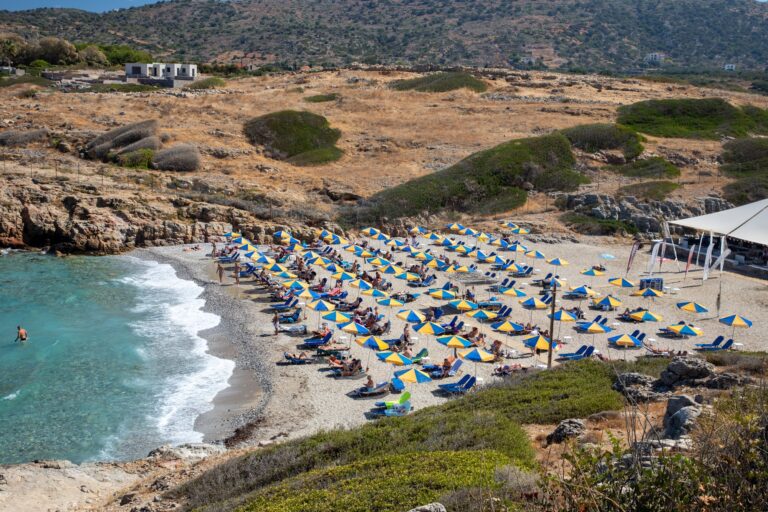
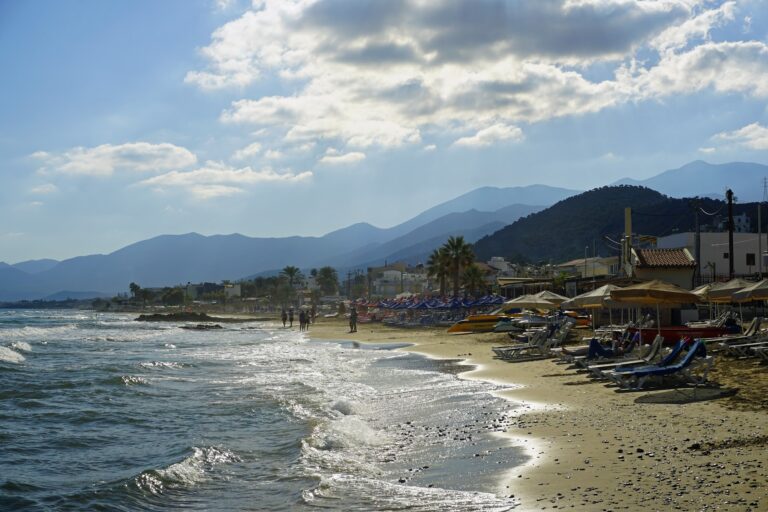
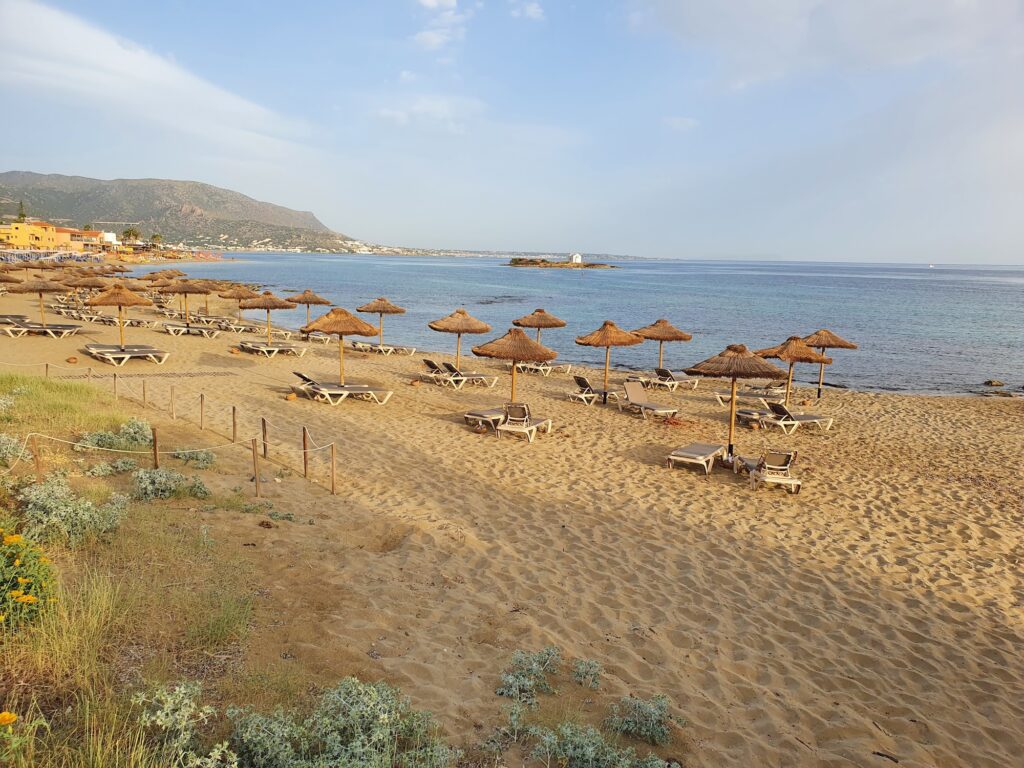
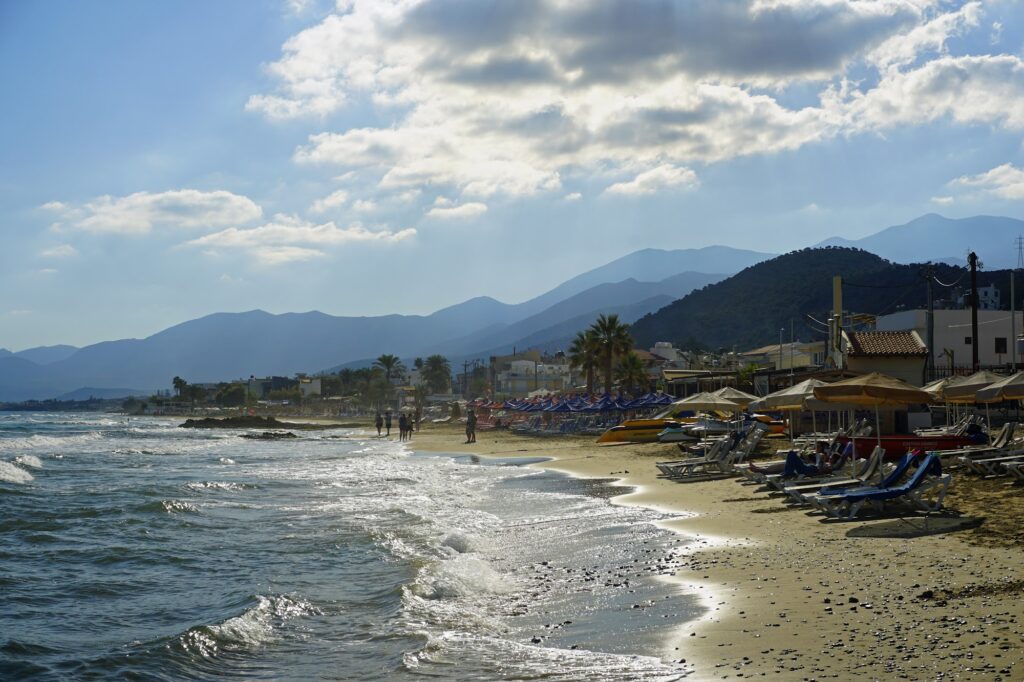
The main beach in Malia, also called Glozanie Beach, is located a kilometre from downtown. It is a beach of fine golden sand about 3km long on which free and equipped areas alternate, bathed by a clean blue sea and calm waters.
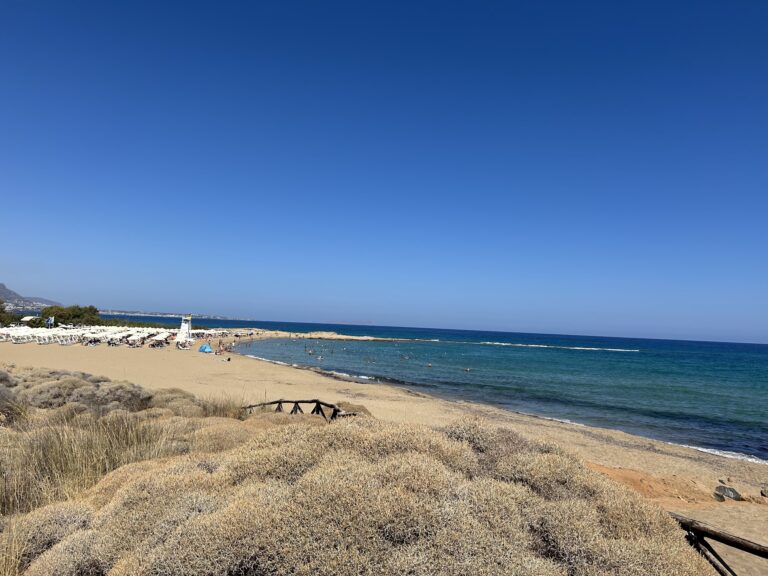
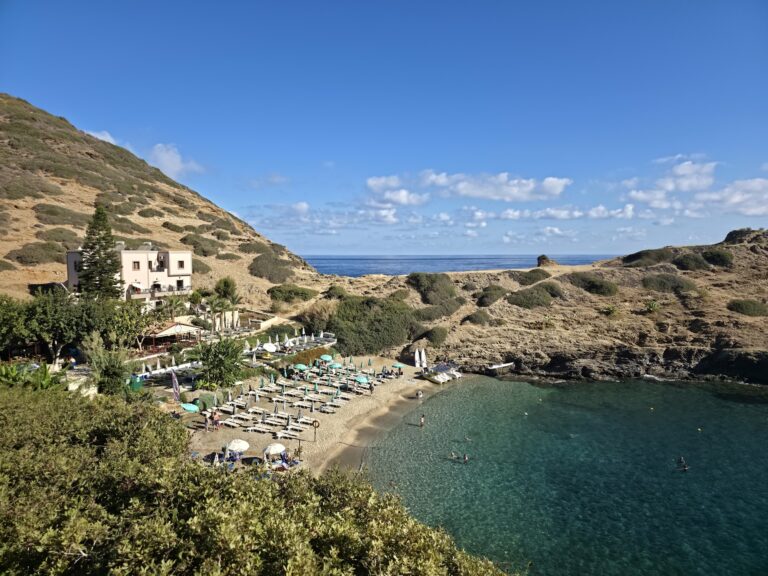
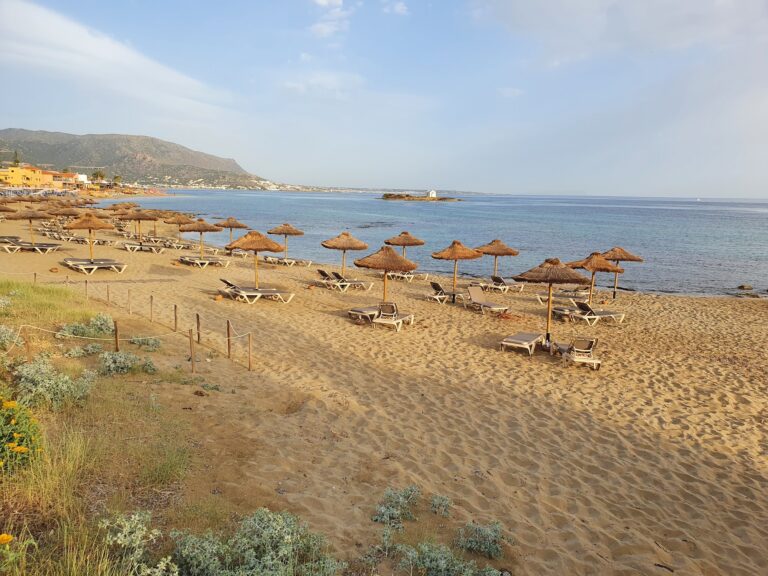
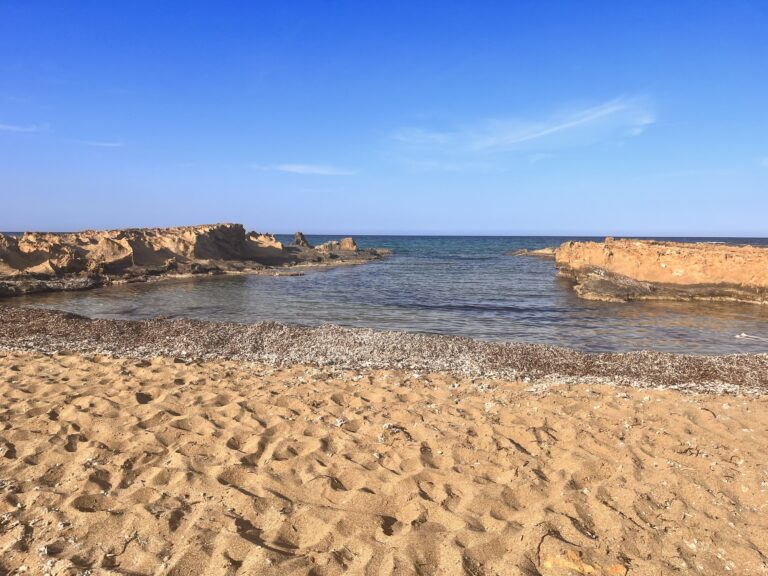
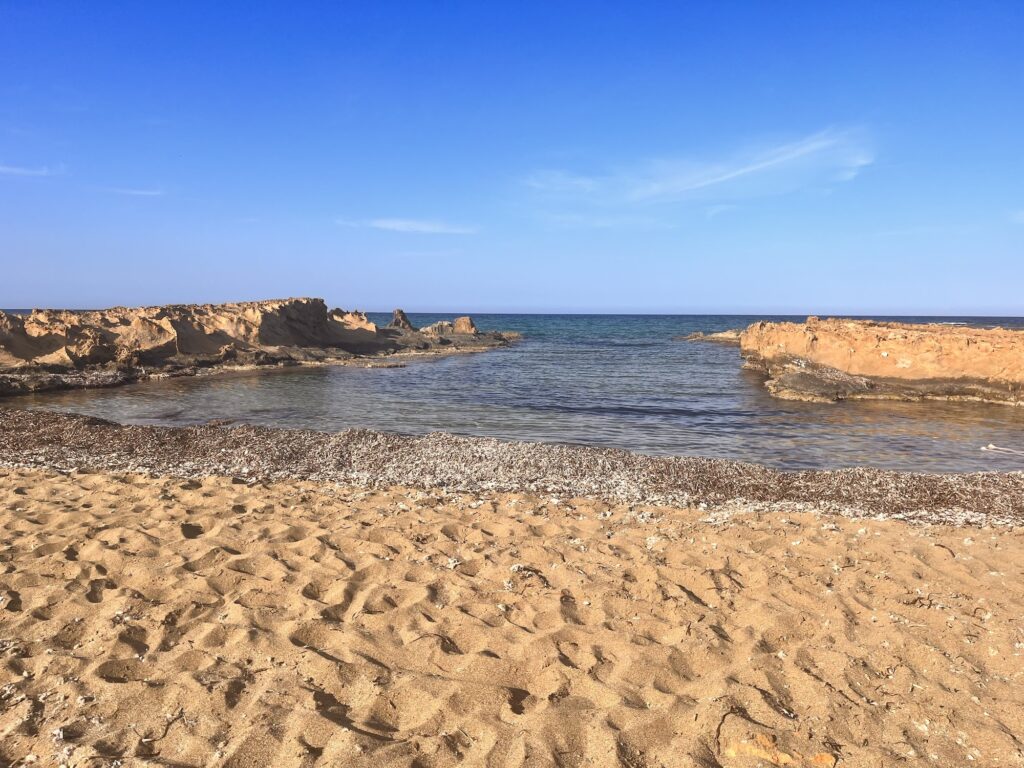
Potamos (in translation, “river”) is the largest and quietest beach, semi-wild and with a few coves with calm water, having only the eastern sector developed — about 200 metres, out of a total length of 700 metres. If you prefer to swim or sunbathe without the loud music from the bars, go straight to Potamos, but avoid weekends as it is the locals’ favourite beach. Nearby is the Minoan Malia Palace archaeological site, and consequently the area is protected, with no constructions that interfere with the beauty of the natural landscape.
The three sections of the Malia coastal experience run east along the 6 kilometres from the resort centre: the main beach with beach bars and organised sunbeds at the western resort end; the quieter central sections away from the strip; and Potamos beach at the eastern end near the Minoan palace, the quietest of the three and the locals’ preferred section. Moving east reduces the party atmosphere and increases the archaeological proximity.
The Minoan Palace: Third Largest on Crete, the Gold Bee Pendant, €6 Entrance
The Malia Minoan Palace, located on the eastern edge of the resort, is one of the three great Minoan palatial centres of Crete. Less visited and less reconstructed than Knossos, it offers a more atmospheric archaeological experience.
The Palace of Malia covers a floor area of 7,500 square metres and is aligned along a north-south axis, consistent with other Minoan palaces. In terms of architectural design and amenities, it is comparatively smaller and less elaborate than palaces like Knossos and Phaestos. Malia was initially uncovered in 1915 by Greek archaeologist Joseph Hadzidakis.
Without moving from Malia, it is possible to see a necropolis along the coast and the remains of an important Minoan Palace — third largest of the island, after the most famous of Knossos and Festos.
The Palace of Malia is 3km east of the city centre. In addition to the 5,000-year-old ruins, the excavations also revealed a wealth of artefacts, the most notable being the famous golden bee pendant, which is now housed in the Heraklion Archaeological Museum. Entrance is €6 per person. A direct bus runs every 15 to 30 minutes from the city’s bus station.
The golden bee pendant — two bees facing each other around a honeycomb disc, executed in gold with granulation and filigree technique dating from around 1700 BC — is the single most celebrated artefact from Malia and one of the finest pieces of Minoan goldwork. The twin bees, a well-known artefact excavated from the palace, inspired the logo of the Malia Bay Hotel.
The Strip: Beach Road, Foam Parties, 24-Hour Entertainment, Ibiza Comparisons
The nightlife area in Malia is essentially one — a pedestrian avenue about 1.5km long that leads to the beach, known as “The Strip” — here is where most of the nightclubs in Malia are concentrated. It is a street that sleeps during the day and wakes up when the sun goes down, fully animated when it gets dark and the sky is illuminated by an uninterrupted succession of multicoloured neon lights. In many clubs and disco pubs in Malia, admission is free — you only pay for the drink.
Malia has emerged as a top tourist hub in Crete and Europe, drawing comparisons to destinations like Ibiza and Magaluf. Malia is particularly popular with British holidaymakers aged 18–30 for party and leisure-themed vacations. Malia gained prominence as the setting for the 2011 British comedy film The Inbetweeners Movie, depicting a lads’ holiday adventure.
For visitors who want the beach without the strip soundtrack: families tend to stay at the quieter end of the resort, away from the strip. Just maybe avoid the Beach Road area after dark.
The Old Village and the Dikti Mountains
Malia used to be known for its delicious potatoes, but times changed and as tourism flourished in the area, the potato fields were replaced by hotels, tavernas, and bars — eventually creating a town with two different faces: the old Malia with its narrow streets, houses with bougainvilleas and little tavernas with live Greek music, and the coastal central resort with its bars, nightclubs and frenzied nightlife.
The old village inland — winding lanes, bougainvillea, tavernas with live Greek music — is the authentic Cretan settlement that the resort development has not displaced. The Dikti Mountains immediately south provide the hiking backdrop that day-trip operators use for the contrast-with-beach programme.
Malia Beach on Crete’s north coast is the 6-kilometre sandy shore 35 minutes from Heraklion Airport — the party strip at the western end, the quiet Potamos beach at the eastern end near the ruins, the Minoan palace 3 kilometres east (€6 entrance, the golden bee pendant now in Heraklion Museum), the old village inland with bougainvillea and live music, and the 1.5-kilometre strip of nightclubs between them running until dawn.
Drive east from Heraklion on the E75. Decide which end of the beach you want.
Map
Sorry, no records were found. Please adjust your search criteria and try again.
Sorry, unable to load the Maps API.
Near by places: