Gramvousa Beach Crete: Pirate Island and Venetian Fort
Profile
Gramvousa Beach, Crete: The Pirate Island With 137 Metres of Venetian Fortress Above the Shipwreck
Greece | Imeri Gramvousa | Chania Prefecture, Crete
In August 1825, 300 to 400 Cretan insurgents dressed as Ottoman soldiers walked into the fortress at Gramvousa and took it. They stormed the fortress and captured it to use as their base. The Ottomans never retook the island and the insurgents created a community within the fortress. They were besieged, cut off from supply lines, and ran out of food. So they did what people do when they are armed, isolated on a strategically positioned island in the Aegean Sea, and hungry: since there was no food or other supplies, they started attacking both Turkish and European ships. So Gramvousa became known as “the pirate island.”
Of course, the European powers did not like that. With the approval of the government, the English and French forces occupied the fort in January 1828.
Gramvousa refers to two small uninhabited islands off the coast of the Gramvousa Peninsula in northwestern Crete. Imeri Gramvousa (which translates to “Tame Gramvousa“) is the one visitors can reach — the island with the beach, the fortress, and the shipwreck. Agria Gramvousa (Wild Gramvousa) to the north is inaccessible due to steep cliffs and is closed to visitors. The beach is only accessible by sea.
Getting There: Boat from Kissamos Port, 1 Hour Each Way, Buy Tickets in Advance for July–August
Tours run from June through October. They leave from the port of Kissamos, which you can reach by car or public bus from Chania in about 40 minutes. Keep in mind boats get pretty full in July and August, so it’s best to book early if you’re travelling during those months.
From Chania city, the drive to Kissamos Port takes approximately 40 to 45 minutes on the national road west. The bus connection runs between Chania and Kissamos multiple times daily in summer. Tickets can be bought at the port or online in advance.
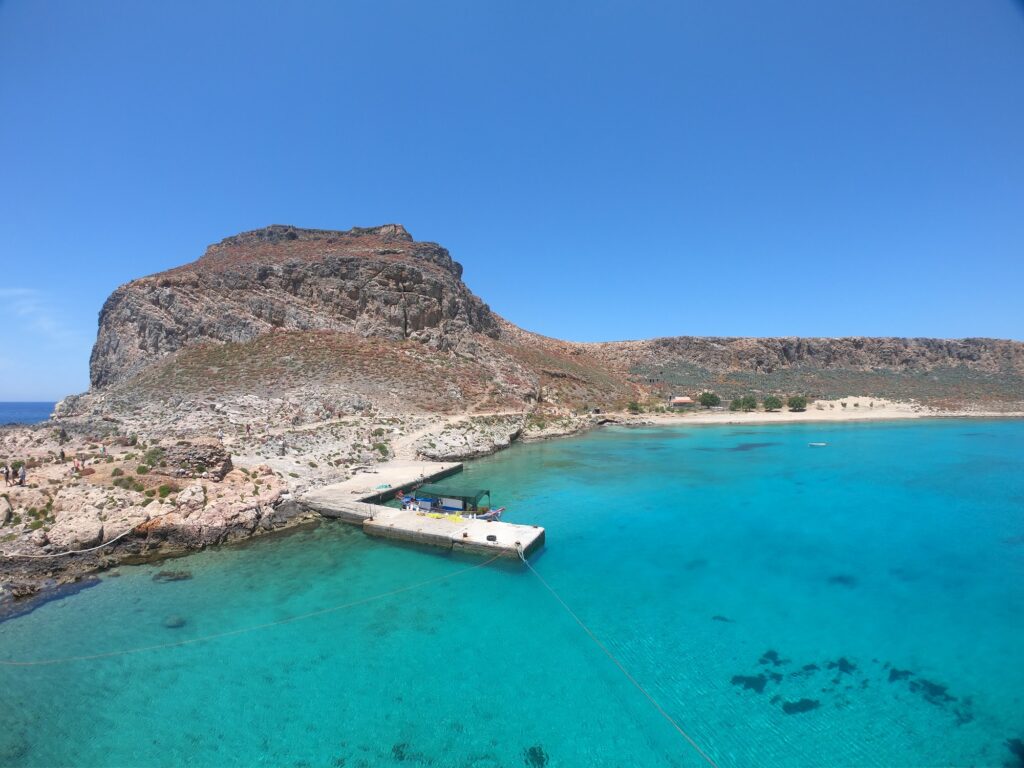
The excursion boat from Kissamos Port takes approximately one hour to reach Gramvousa. The boat stays approximately 90 minutes at Gramvousa before continuing to Balos Lagoon.
Private rib-boats and yacht charters depart from Kissamos and Chania harbour for more flexible schedules and the option to arrive before the excursion fleet. Private charter allows earlier access and longer time at the island than the standard ferry programme permits.
The standard excursion programme is Gramvousa first, then Balos Lagoon 15 minutes south. The boat sounds its horn loudly before departure — the warning that you have 10 minutes to return to the pier. Missing the boat on an uninhabited island is the specific consequence of ignoring it.
The Beach: Pebble, Turquoise, Rocks in the Water, Tamarisk Shade, No Permanent Facilities
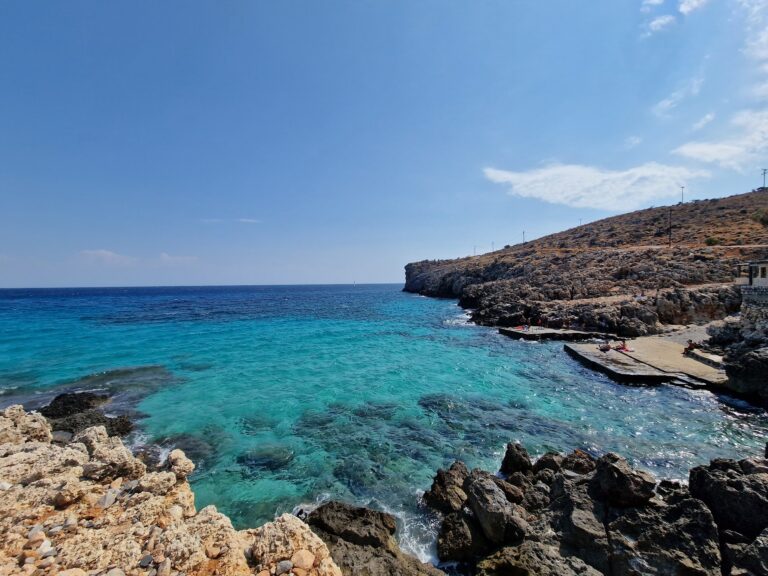
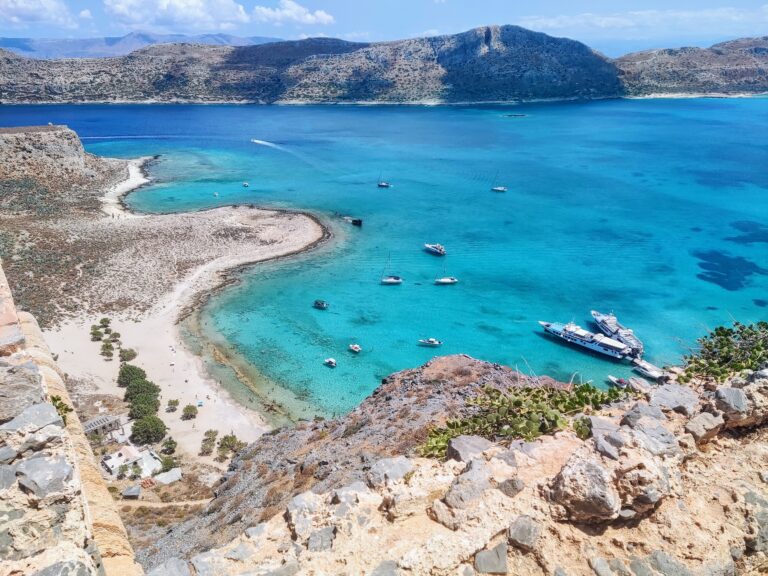
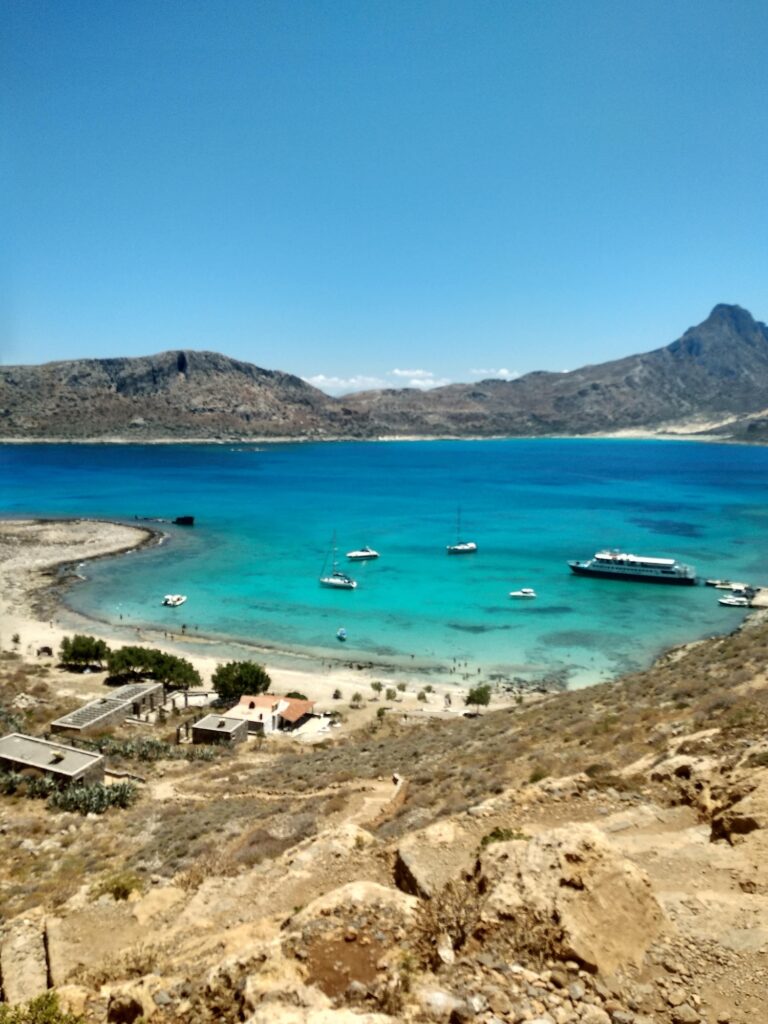
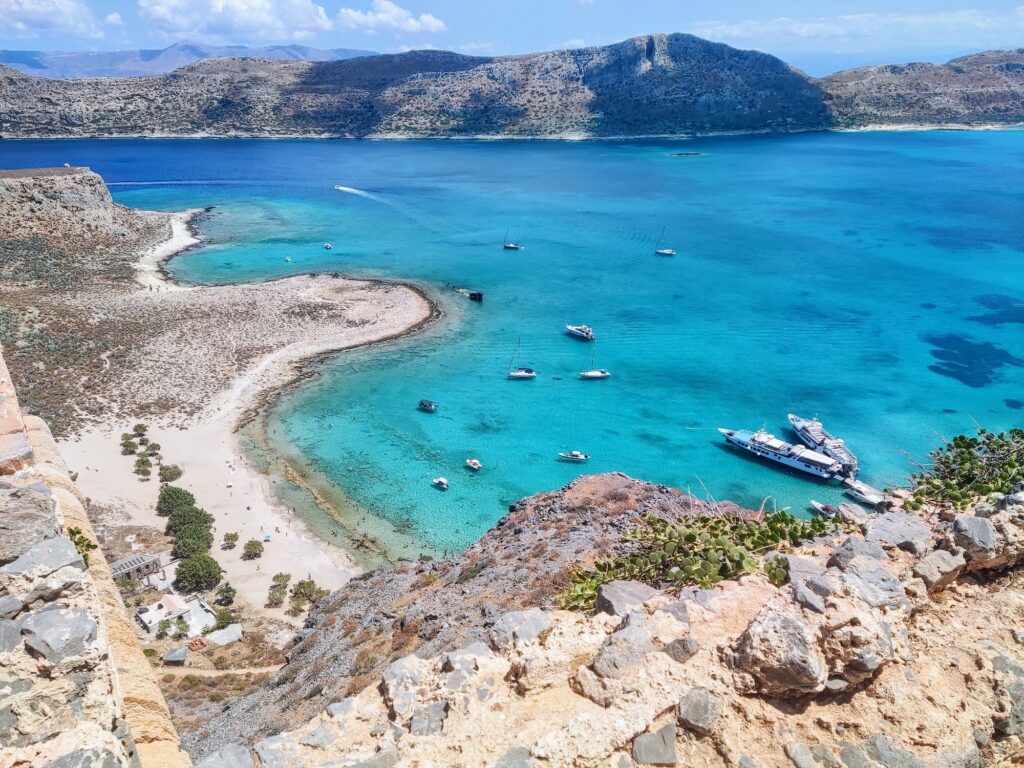
On Imeri Gramvousa there is a small pebbled beach with a view of the shipwreck and the lagoon of Balos. Tamarisk trees near the beach provide natural shade. The beach features a mix of white sand and occasional rocky spots. The area’s seabed is a snorkeller’s delight.
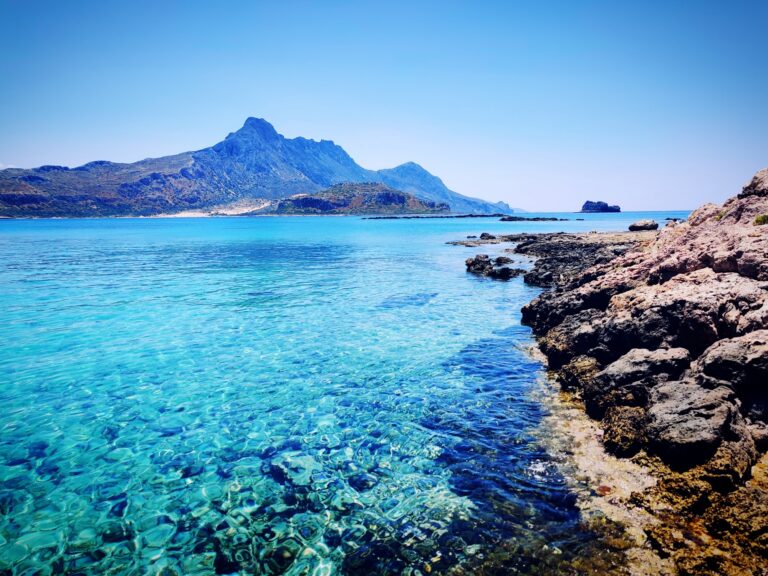
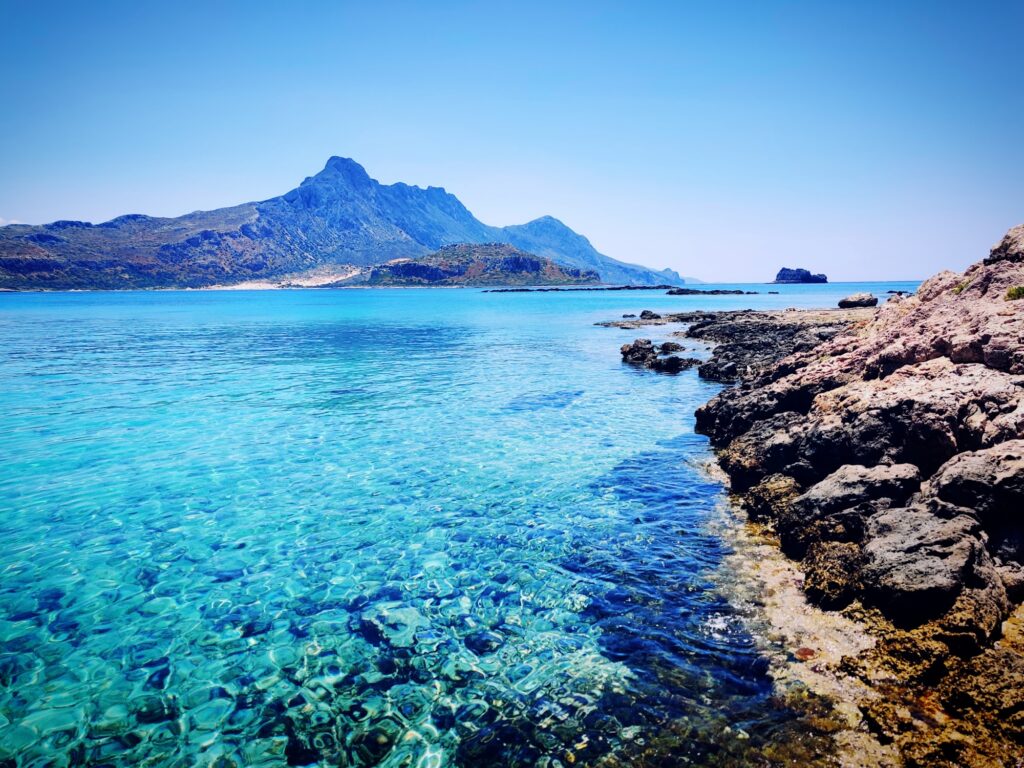
The beach is on the west side of the island, directly below the fortress walls. The water is turquoise with the clarity that the pebble and rock seabed produces. There are rocks in the water — the warning is consistent across visitor accounts. The excursion boats act as the floating facility hub: cafeteria, bar, and restrooms are available on board during the stop. Due to the area’s protection under the Natura 2000 programme, no additional facilities are available on the island itself, and overnight stays are prohibited.
100 species of birds and 400 species of flora have been recorded in the Gramvousa area. The Mediterranean monk seal breeds in the local caves. The endangered sea turtle (Caretta caretta) seeks its food in the area.
The Venetian Fortress: 137 Metres, 400 Steps, Built 1579–1584, Bring Water
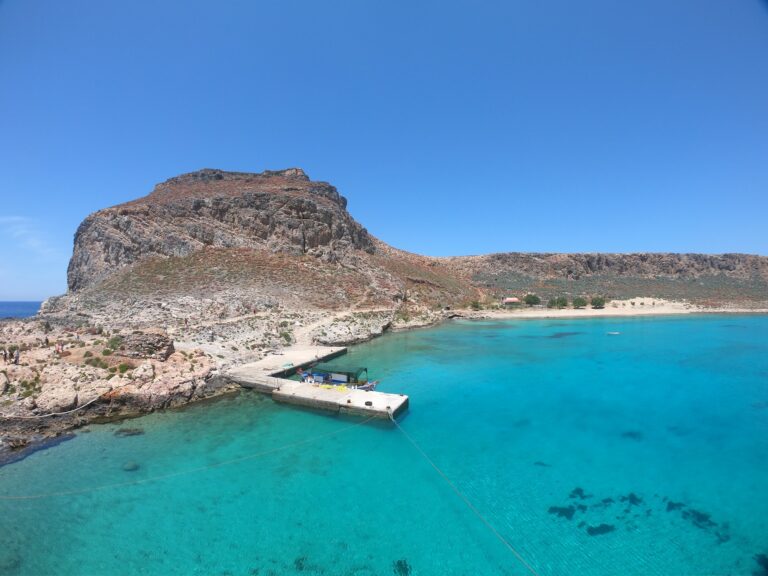
The fortress was built by the Venetians between 1579 and 1584 to defend the island from the Ottoman Turks. It is located 137 metres above sea level and has a triangular shape on which every side is about 1 km long. Even today, the ramparts and fortified walls can be seen, as well as the ruins of a large underground cistern, barracks, church, and some foundations.
It takes approximately 20–30 minutes to climb to the fortress. Wear comfortable shoes because the path is rocky and it becomes more narrow as you climb towards the top. Bring water — there is nothing in the fortress. The total step count from the boat pier to the fortress top is estimated at approximately 400 steps.
Together with the fortresses of Souda and Spinalonga, it defended Venetian trade routes. All of these forts were strategic bases in the Ottoman–Venetian war for Crete. The Ottomans captured the island by bribing the Venetian commander in 1692.
The view from the fortress looks down to the beach and the shipwreck below, and south across the Balos Lagoon and the Gramvousa Peninsula mountains. The panorama encompasses the full scale of the northwestern Cretan coastline and the open Mediterranean to the west.
For visitors who cannot or choose not to climb: the beach itself, the shipwreck, and the memorial to the Cretan freedom fighters at the base of the path already provide the full historical and visual experience without the ascent.
The Dimitrios P Shipwreck: 440 Tons of Cement, January 8, 1968, Still There
The Dimitrios P is an old cargo ship that ran aground during a storm on January 8, 1968. It had left from the town of Chalkida with a load of 440 tons of cement and was en route to North Africa.
The ship, a cargo vessel named Dimitrios P, ran aground here in 1968. It’s been stuck ever since, slowly decaying into the bay. While you can’t go on or inside it (and shouldn’t try), it’s become an iconic part of the Gramvousa scenery.
The wreck is between the two bays on the south side of the island — visible from the excursion boats as they approach the pier, and visible from the beach to the right. The rusting hull and the exposed framework of the vessel have become the specific visual element of Gramvousa that photographs most dramatically against the turquoise water — the combination of the industrial decay and the pristine sea is the specific Gramvousa aesthetic.
Balos Lagoon: 15 Minutes by Boat from Gramvousa, the Second Half of the Excursion
Balos Lagoon — located between Imeri Gramvousa island and the rocky Cape Tigani — is the second destination on the standard excursion. Balos is characterised by shallow waters and white sand, which in some places is pink due to crushed shells and corals.
The combination of the Gramvousa island fortress and shipwreck with the Balos lagoon pink-sand beach is the specific pairing that makes the northwestern Crete full-day boat excursion the most frequently booked day trip from Chania.
Gramvousa Beach on Imeri Gramvousa island off the northwestern tip of Crete is the pebble beach below the 137-metre Venetian fortress — only accessible by boat from Kissamos (1 hour), 90 minutes on the island, 400 steps to the top with no water at the summit, the Dimitrios P cargo ship from 1968 still on the south shore, Natura 2000 protection preventing any permanent facilities, tamarisk shade at the base, and the Balos Lagoon 15 minutes south by the same boat.
Buy tickets in advance for July and August.
Bring water and walking shoes. Listen for the horn.
Map
Sorry, no records were found. Please adjust your search criteria and try again.
Sorry, unable to load the Maps API.
Near by places: